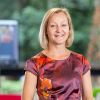
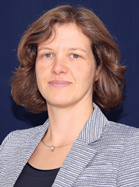
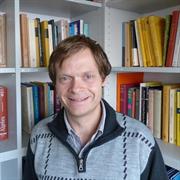
Stefan Røpke is a Professor in the Department of Technology, Management and Economics at the Technical University of Denmark (DTU). His research focuses on Operations Research and Management Science, with a particular emphasis on logistics optimization, vehicle routing, and sustainable transportation systems. He has contributed to advancements in adaptive algorithms for scheduling, berth allocation, and stochastic optimization. Røpke is actively involved in PhD supervision, mentoring students in projects such as university timetabling, hybrid power plant design, and sustainable delivery systems. He received the Hedorfs Fond's Prize for Transportation Research in 2019, recognizing his impactful work in transportation science. His research often addresses UN Sustainable Development Goals, particularly those related to climate action and sustainable cities. Røpke collaborates internationally, contributing to projects like optimizing liner shipping networks with alternative fuels and improving port operations through heuristic methodologies. As a supervisor, he oversees multiple PhD projects, including studies on stochastic optimization acceleration, hybrid energy systems, and crowdsourced delivery networks. His work bridges theoretical advancements with practical applications, driving innovations in logistics and operational efficiency.
Graziana Cavone is an Assistant Professor in Systems and Control Engineering at the University Roma Tre. She holds a Ph.D. in Electronic and Information Engineering from the University of Cagliari and is qualified as an Associate Professor in Automatica. Her research focuses on decision support systems, transportation networks, energy systems, and industrial automation, with expertise in Model Predictive Control (MPC), Petri Nets modeling, and resilient infrastructure design. Education: Ph.D. (Excellent with Honors), Electronic and Computer Engineering, University of Cagliari (2018) Master’s (Summa Cum Laude), Control Engineering, Polytechnic of Bari (2013) Research Interests: Optimization of intermodal transport terminals and railway networks Energy-efficient building management and microgrids Cyber-physical systems in Industry 4.0 Resilient critical infrastructure control Human-robot collaboration and safe ergonomics Grants & Leadership: Principal Investigator for a National Natural Science Foundation of China grant (2020–2021) Recipient of multiple RTD-B and research fellowships in control systems and automation Organizer of international conferences like IEEE CASE 2024 and MED 2021 Labs & Collaborations: Member of the Decision and Control Laboratory at University Roma Tre Collaborations with institutions like Delft University of Technology and Southwest Jiaotong University Industry partnerships with Enel, Fiat Chrysler Automobiles, and Elettric80
Dr. Ramin Raeesi is a Reader in Management Science and Director of the Centre for Logistics and Sustainability Analytics (CeLSA) at the University of Kent's Department of Analytics, Operations and Systems. He holds a PhD in Management Science from Lancaster University Management School, where he won the Kingsman Prize 2019 for Best Doctoral Dissertation. His research focuses on optimization problems in supply chain, logistics, and transport networks with a strong emphasis on decarbonisation, hydrogen fuel ecosystems, and sustainable infrastructure. He currently leads several major funded projects, including 'Maritime Hydrogen Highway' (£2.1M) and 'Dover Clean Ferry Power' (£438K). **Education**: PhD in Management Science (Lancaster University), Postdoctoral Research Fellow at Brunel University London. **Research Interests**: Combinatorial optimization, multi-objective algorithms, vehicle routing problems, hydrogen supply chains, maritime logistics, and renewable energy systems. His work integrates operational research and big data analytics to address environmental and economic challenges in logistics. **Key Projects**: Over £3.5M in funded research across 7 projects (2018–2026), including hydrogen infrastructure development and decarbonisation strategies for road/maritime transport. Scientific Awards : Kingsman Prize 2019 Labs/Teams : Director of CeLSA, leading interdisciplinary teams on green logistics and sustainability.
B. Atasoy is an Associate Professor at Delft University of Technology's Transport & Mobility Institute, specializing in Mechanical Engineering with a focus on Transport Engineering and Logistics. His work integrates operations research, synchromodal transport planning, and sustainable logistics systems. He leads projects like ADAPT-OR (2024-2028) and PATH2ZERO (2023-2027), addressing adaptive transportation systems and zero-emission shipping. His research explores intermodal freight optimization, electric ground support equipment, and future mobility scenarios. He has received awards including the Swiss Operations Research Society prize (2014) and the 2024 Best Academic Paper Award. His recent work includes analyzing the Dutch mobility system's 2050 scenarios and developing learning-based frameworks for synchromodal transport planning. He collaborates with industry and academic partners on projects such as NOVIMOVE and TRiLOGy, advancing waterborne logistics and autonomous shipping. Research Interests: Transport Engineering, Operations Research, Synchromodal Transport, Freight Optimization, Sustainable Mobility, Electric Vehicle Transition, and Urban Logistics. His projects often involve interdisciplinary collaboration, combining data-driven modeling with real-world applications. Grants & Projects: ADAPT-OR (2024-2028), PATH2ZERO (2023-2027), TRiLOGy (2020-2025), NOVIMOVE (2020-2024). These focus on adaptive systems, zero-emission shipping, and waterway logistics. Awards: 5 notable prizes including the 2014 Swiss OR Society award and 2024 Best Paper for synchromodal planning research.
S. Fazi is a researcher at the Department of Technology, Policy and Management , Delft University of Technology. Her work focuses on transport logistics , operations research , and container shipping , with particular attention to offshore wind energy , multimodal networks , and freight transportation . Transport & Logistics network design Operations Research for optimization Offshore wind farm logistics Recent research trends include multimodal hub location problems , container drayage optimization , and collaborative air cargo frameworks . She has contributed to offshore wind turbine substructure installation strategies and dry-port logistics through data-driven models and decision support systems. Scientific awards : NWA - ORC 2022 - Onderzoek op Routes door Consortia (2023) Open Education Stimulation Fund 2022 (2023) Her work spans freight network design , maritime container stowage , and resource sharing in wind energy maintenance , often involving large-scale optimization algorithms and collaborative frameworks.
Ralf Borndörfer is a Professor and Head of the Network Optimization Department at the Zuse Institute Berlin (ZIB) , a leading research institution in mathematical algorithmic intelligence. His work focuses on optimizing complex transportation systems, particularly in railway operations, public transit, and air cargo logistics. He leads projects like Timetabling with Duality and Zonotopes, Symmetric Line Planning, and WILSON-LEARN, which address challenges in train scheduling, electric vehicle integration, and predictive maintenance. Key Research Areas : Mathematical optimization, railway timetabling, public transport planning, game theory for toll enforcement, and electric vehicle scheduling. Notable Collaborations : Projects with Deutsche Bahn, BIFOLD, and MATH+ Cluster of Excellence. His recent publications (2023-2025) explore: Non-linear battery modeling in electric bus scheduling Predictive maintenance integration in rolling stock rotations Logic-constrained shortest paths for flight planning Price-sensitive routing in public transport He has contributed to algorithmic frameworks like the Restricted Modulo Network Simplex Method and Bayesian rolling horizon approaches, emphasizing computational efficiency and real-world applicability.
Grammati Pantziou is a Professor at the Department of Informatics and Computer Engineering, University of West Attica (since 2018). She previously held roles as Vice Rector for Administrative Affairs (2019–2023), member of the Governing Committee, and president of the Research Committee at the same institution. Earlier positions include Assistant Professorships at Dartmouth College (1992–1994) and University of Central Florida (1994–1995), and Professor at the Technological Educational Institute of Athens (1998–2018). She served on the Greek Data Protection Authority (2003–2013). Education: Ph.D. in Computer Science, University of Patras, Greece (1991) Research Interests: Focuses on algorithmic optimization, parallel/distributed computing, mobile networks, and cybersecurity. Specializes in sensor networks, pervasive computing security, and smart city applications. Her work bridges theoretical algorithms with real-world systems like tourism route planning, vehicular networks, and IoT. Publications & Impact: Authored/co-authored 11 books, 165+ papers, and edited 5 books. Her research has 5,600+ citations (h-index:34, i10-index:80). Leads 29 funded projects on cybersecurity, transportation optimization, and smart systems. Editorial Roles: Editor-in-Chief of Algorithms Journal's 'Parallel and Distributed Algorithms' section, and editor for journals like Cybersecurity & Privacy (MDPI) and Security and Communication Networks (Wiley). Contributions: Developed frameworks like eCOMPASS for tourist route planning and ETHACA for cybersecurity training. Pioneered algorithms for vehicle relocation in sharing systems and energy-efficient data aggregation in sensor networks.
Professor Julia Bennell is the Executive Dean of Leeds University Business School, overseeing academic and strategic operations. She holds a First Class Honours degree in Mathematics and Management Science (1994) and a PhD in Management Science (1998) from the University of Swansea. Previously, she served as Professor of Management Science at the University of Southampton Business School (promoted 2010), where she directed CORMSIS (a leading UK OR/MS group), led the Department of Decision Analytics and Risk Research (2012–2015), and acted as Deputy Head of School (2015–2018). Her roles also included executive coaching and mentoring. Her research focuses on optimization models for logistics, particularly cutting and packing, vehicle routing, scheduling, network design, and heuristic algorithms. She has published over 45 papers in top journals like European Journal of Operational Research and has secured £1+ million in research funding from EPSRC, BBSRC, and KTP. She chairs the European Working Group on Cutting and Packing and holds leadership roles in the Association of European Operational Research Societies. Bennell’s teaching spans 20 years across undergraduate, postgraduate, and MBA programs, emphasizing operational research and management science through industry-driven problems. She advises current postgraduate researcher Nesma ElShishtawy. Her professional activities include keynote speaking at major conferences (EURO, IFORS), guest editing, and organizing international conferences. She maintains strong industry ties through consultancy, HMRC training programs, and collaborations with SMEs and government bodies.
Iris Vis is a Professor of Industrial Engineering at the Faculty of Economics and Business, University of Groningen. Her expertise lies in the design and optimization of complex logistics systems, with particular focus on container terminals, vehicle routing, inventory management, and sustainable supply chains. She has established herself as a leading researcher in operations management and operations research, with strong connections to both academic and industry partners. Vis earned her Master's degree in Mathematics from Leiden University and completed her PhD at Erasmus University Rotterdam. Prior to joining the University of Groningen, she served as an Associate Professor at VU University Amsterdam. She has held visiting researcher positions at CIRRELT (Canada), Virginia Tech (USA), and Georgia Institute of Technology (USA), establishing an international research network. Her research interests span multiple domains within logistics and operations management, with recent emphasis on sustainable transport solutions, LNG as an alternative fuel, and the application of mathematical modeling to optimize complex systems. Vis has pioneered the application of Lean principles to educational logistics, working with secondary schools to optimize personalized learning processes. Her work bridges theoretical operations research with practical applications in maritime transport, energy infrastructure, and supply chain management. Analysis of her recent publications shows a clear trend toward sustainability-focused logistics research, with increasing attention to renewable energy integration, alternative fuels (particularly LNG), and environmentally conscious supply chain design. Her work combines rigorous mathematical modeling with practical implementation considerations, making significant contributions to both academic literature and industry practice. Captain of Science of the Top Sector Logistics (2023) Presentation of research results to Queen Máxima Multiple NWO grants for sustainable logistics research Vis has extensive experience collaborating with industry partners, having served as Dean of Industry Relations at the University of Groningen. She actively seeks engagement with businesses and non-profit organizations through direct visits and collaborative projects that bridge fundamental research questions with practical business challenges. Her research has led to numerous industry implementations, particularly in the areas of sustainable transport and logistics optimization. She frequently presents research findings at in-house company trainings and professional conferences. Her work with Groningen Seaports and the logistics industry has established her as a key figure in developing sustainable transport solutions. She leads research teams focused on optimizing container terminal operations, vehicle routing, and inventory management systems, with particular attention to environmental sustainability. Her collaboration with the Top Sector Logistics has positioned her at the forefront of Dutch logistics research and innovation.
Line Reinhardt is an Associate Professor at Roskilde University's Department of People and Technology Programming, Logic and Intelligent Systems, and leads the Centre for Maritime and Marine Research. His primary research focuses on combinatorial optimization and operations research, with applications in maritime logistics, rail systems, healthcare operations, and IoT-enabled transportation solutions. He collaborates extensively with industry partners to ensure practical relevance of his work. Key research areas include container stowage planning, route optimization for maritime networks, and AI-driven solutions for energy-efficient liner shipping. His work bridges theoretical optimization with real-world implementation, addressing challenges in port operations, hospital resource allocation, and sustainable transportation systems. Reinhardt has led or participated in multiple research projects, including the Innovation Fund-backed 'Stowage Algorithms and AI for Energy Efficient Liner Shipping' (2022–2025) and the EU-funded 'Game For Green' project (2023–2026). He was awarded a prize for cargo transport optimization in 2023 and has been featured in media for advancing green maritime solutions. Recent Projects: Game For Green (2023–2026): Developing green transition strategies for the blue economy. ROROGREEN (2020–2024): Digital innovation for sustainable roll-on/roll-off shipping. His academic contributions span over 25 peer-reviewed publications, with a focus on algorithmic innovation and systems optimization. Reinhardt also engages in academic outreach, organizing PhD courses and serving as an examiner in doctoral evaluations.
Marielle Christiansen is currently the Dean at the Faculty of Economics and a Professor at the Department of Industrial Economics and Technology Management (IØT), Norwegian University of Science and Technology (NTNU). She holds a civil engineering degree (1989) and a doctorate (1996) from NTNU. Her career includes roles as a researcher at SINTEF and Head of Department of IØT from 2017 to 2025. Her research focuses on maritime transport optimization, logistics, and healthcare applications, with notable contributions to liner shipping networks, inventory routing, and healthcare operations. She has authored/co-authored over 60 publications, including influential reviews on maritime transportation and optimization methods. Notable awards recognize her pioneering work in maritime logistics. Education: Ph.D., NTNU (1996) Civil Engineering, NTNU (1989) Research Interests: Combining operational research with real-world applications, including: Maritime logistics and fleet optimization Healthcare operations management Supply chain design Stochastic modeling for transportation networks Articles Trends: Recent work emphasizes sustainability in transportation (e.g., modal shift analysis, green shipping), healthcare logistics (surgery scheduling), and methodological advances in inventory routing and stochastic optimization. Advising & Grants: Supervised numerous graduate students and led projects funded by industry and governmental bodies. Collaborates with St. Olav's Hospital on healthcare optimization and Sintef on industrial projects. Labs/Teams: Leads the Industrial Logistics research group at IØT, focusing on maritime and healthcare systems.
Hilmi Berk Çelikoğlu is a full Professor specializing in Traffic Flow Theories and Transportation Network Modeling at Istanbul Technical University (ITU) Department of Civil Engineering. He has served as the head of the ITU ITS Research Lab since 2014 and previously held a Visiting Professor position at PennState Department of Computer Science & Maths between 2014-2015. His educational background includes B.Sc. (2000), M.Sc. (2002), and Ph.D. (2006) degrees, all from Istanbul Technical University in Transportation Engineering. Professor Çelikoğlu's research spans multiple critical areas in modern transportation systems. His primary focus includes Traffic Flow Theories and Transportation Network Modeling, with significant contributions to on-demand mobility systems and sustainable urban transportation solutions. He has pioneered work in dynamic network management, traffic flow control and simulation, and Intelligent Transportation Systems (ITS). His recent research has increasingly focused on the integration of electric vehicles into transportation networks, cooperative adaptive cruise control systems, and environmentally conscious transportation planning. His work bridges theoretical modeling with practical applications, particularly in the context of Istanbul's complex urban transportation challenges. His recent publications demonstrate a strong trend toward addressing contemporary transportation challenges, particularly the integration of emerging technologies like connected and autonomous vehicles into existing infrastructure. A significant portion of his work focuses on optimizing traffic flow in mixed environments containing both traditional human-driven vehicles and newer cooperative adaptive cruise control systems. His research also shows increasing emphasis on sustainability, with multiple studies examining emissions reduction, electric vehicle routing, and environmentally conscious transportation network design. Professor Çelikoğlu has received notable recognition for his work, including: Project Performance Award from TUBITAK (2018) Throughout his career, Professor Çelikoğlu has secured substantial research funding from prestigious organizations including TUBITAK, EU COST, and EU Horizon programs. His current research portfolio includes multiple active projects focusing on demand-based mobility systems, integrated mobility services, cooperative vehicle dynamics, and environmentally sensitive transportation network optimization. He has mentored numerous students and researchers through his leadership of the ITU ITS Research Lab, fostering the next generation of transportation engineers and researchers. Professor Çelikoğlu leads the ITU ITS Research Lab, which serves as a hub for cutting-edge transportation research. The lab focuses on applying advanced computational methods to solve complex transportation challenges, with particular expertise in traffic simulation, network modeling, and intelligent transportation systems. Under his leadership, the lab has become a center for innovation in transportation engineering, collaborating with both national and international partners to address pressing urban mobility issues.
Associate Professor Marc Demange is affiliated with RMIT University's School of Science in Melbourne, Australia. Previously, he served as a Professor and held leadership roles such as Vice Dean at ESSEC Business School in Paris and Singapore. His research focuses on combinatorial optimization, algorithmic graph theory, and operational research with applications to disaster management (e.g., wildfire shelter location and firefighting strategies). He is also involved in teaching discrete mathematics and computer science courses, including MATH 1150 , MATH 2415 , and COSC 2627 . His work aligns with UN Sustainable Development Goals 4 (Quality Education) and 11 (Sustainable Cities). Key research themes include probabilistic optimization, graph coloring algorithms, and robust network design. Recent articles explore wildfire management through network models and approximation algorithms for facility location problems under uncertainty. Dr. Demange has supervised projects on shelter location in wildfire contexts and peer-to-peer healthcare systems. His expertise bridges theoretical computer science and practical operational challenges, with a focus on developing efficient solutions for complex combinatorial problems.
Professor John Hearne is an Honorary Professor in the School of Science at RMIT University, specializing in Operations Research, spatial optimization, and natural resource modeling. His research focuses on applied mathematics, environmental science, ecological applications, and wildfire management. He has contributed to over 80 research outputs, including models for wildfire asset protection, flood evacuation planning, and healthcare logistics optimization. His work integrates stochastic programming, spatial analysis, and decision support systems to address real-world challenges in resource management and emergency response. Notable projects include optimizing prescribed burning strategies and developing algorithms for asset protection during wildfires. Professor Hearne is actively involved in supervising research students in areas such as routing problems, clinical decision support, and sustainable development. His academic contributions span environmental conservation, disaster management, and healthcare systems, with a strong emphasis on interdisciplinary approaches to complex problems. While no specific awards are listed, his extensive publications highlight a commitment to impactful research in operations research and environmental sciences.
Dr. Sadeque Hamdan is a Senior Lecturer in Data Analytics at Bangor Business School, Bangor University, UK. His academic work focuses on optimization problems in sustainable transportation and supply chain management, with applications in both theoretical and practical domains. Education Postgraduate Certificate in Higher Education, University of Kent (2023) PhD in Complex Systems Engineering, University of Paris-Saclay (2020) MSc in Engineering Management, University of Sharjah (2015) BSc in Civil Engineering, University of Sharjah (2013) Research Focus Dr. Hamdan's research spans several interconnected domains: sustainable supply chain operations, transportation management, and operational research applications. His work employs advanced data analytics to solve complex optimization problems in logistics, aviation management, and green transportation systems. Publication Trends Recent publications (2023-2025) demonstrate a strong focus on sustainable transportation optimization, particularly electric vehicle charging systems, maritime logistics, and air traffic management. Methodologically, Dr. Hamdan frequently applies heuristic algorithms, multi-objective optimization, and combinatorial approaches to solve complex supply chain and transportation problems. Projects & Advising Dr. Hamdan leads the ongoing research project 'Sustainable Aviation and Emerging Technologies: Maximizing Operational and Resource Efficiency' (2025-2026). He actively supervises postgraduate students, though specific student names are not listed in available materials.