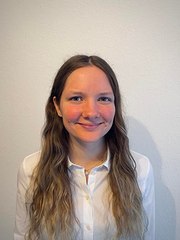
Laura Flinkert is a researcher at the University of Hamburg Business School, where she is part of the Operations Research team led by Prof. Dr. Wolfgang Brüggemann. Her institutional affiliation includes Room 4001 at Moorweidenstraße 18, 20148 Hamburg, with contact details: phone +49 40 42838 6412, fax +49 40 42838 6440, and email laura.flinkert@uni-hamburg.de. Consultation hours are available by appointment. Her research concentrates on applied Operations Research with emphasis on logistical optimization in industrial contexts. Key focus areas include port terminal operations (evidenced by HafenplanZEN project involvement), container logistics (RMGC Container Lagerblock), sequencing algorithms for automotive assembly lines, and educational resource allocation through the Students Assignment Problem. She contributes to the OSCM publication series, demonstrating expertise in translating theoretical models to practical supply chain solutions. The research group actively engages in industry-relevant projects addressing real-world transportation and manufacturing challenges, with ongoing collaborations across automotive and maritime logistics sectors. Current work emphasizes buffer sequencing optimization and container terminal management systems.
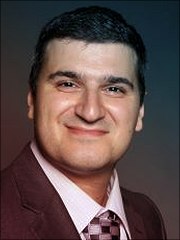
Dr. Abtin Nourmohammadzadeh is a scientific assistant (Researcher) at the Institute for Business Information Systems, University of Hamburg Business School, since July 2019. He previously served as a doctoral researcher at Clausthal University of Technology (2014-2019) and holds a PhD in Informatics. Current Role: Researcher at University of Hamburg Education: Master's and Bachelor's in Industrial Engineering Research Focus: Optimization techniques, transportation logistics, and machine learning His research integrates meta-heuristic optimization (e.g., genetic algorithms, particle swarm optimization) with transportation problems (truck platooning, container terminals) and machine learning (ANNs, SVMs) for industrial fault diagnosis. Publications demonstrate applications of mathematical programming , swarm intelligence , and hybrid algorithms to logistics and engineering challenges. Recent work emphasizes fuel-efficient vehicle coordination , noise-resilient diagnostic systems , and port operations optimization . No specific scientific awards are mentioned in the provided text.
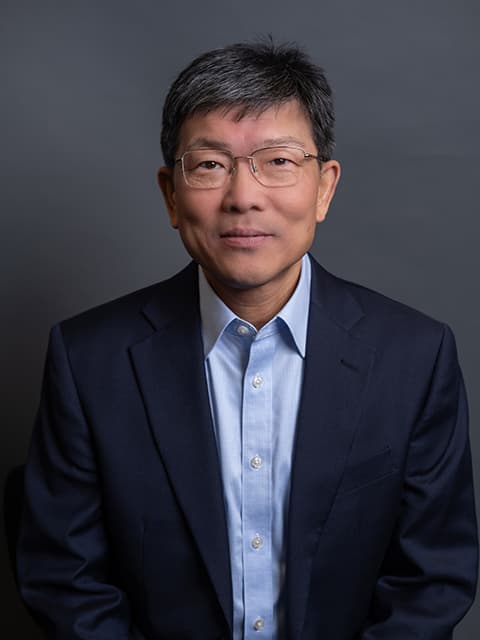
Professor Jiyin Liu is a Professor of Operations Management and Director of Undergraduate Studies at Loughborough Business School. He holds a BEng (1982) and MEng (1985) in Industrial Automation and Systems Engineering from Northeastern University, China, and a PhD (1993) in Manufacturing Engineering and Operations Management from the University of Nottingham. His career includes roles as an Assistant Professor at Hong Kong University of Science and Technology (HKUST), where he contributed to logistics management program development and received teaching awards. He joined Loughborough in 2003, became a Professor in 2005, and served as Head of the MIDO Group (2008–2013). His expertise focuses on operations planning, scheduling, and supply chain/logistics optimization, blending academic rigor with industry relevance. Education: BEng in Industrial Automation, Northeastern University of China (1982) MEng in Systems Engineering, Northeastern University of China (1985) PhD in Manufacturing Engineering and Operations Management, University of Nottingham (1993) Research Interests: Professor Liu’s work addresses complex optimization challenges in logistics, manufacturing, and service systems. His research bridges theoretical models and practical applications, with a focus on scheduling algorithms, risk-aware decision-making, and sustainable operations. Key areas include steel production optimization, vehicle routing, crane scheduling in ports, and dynamic pricing strategies. His methodologies often involve metaheuristics (e.g., genetic algorithms, differential evolution) and machine learning approaches. Recent Research Trends: His publications (2020–2023) emphasize logistics and manufacturing optimization, with notable contributions to steel industry operations, green vehicle routing, and risk-aware scheduling. He also explores decision support systems for bundling shipments and optimizing resource allocation in dynamic environments. Awards: Teaching Excellence Appreciation award (twice, Hong Kong University of Science and Technology) Collaborations & Impact: He collaborates with global firms such as Hongkong International Terminals, Baosteel, and Philips Electronics. His work on Baosteel’s operations optimization and container terminal logistics has demonstrated real-world impact. He also contributed to developing decision support systems for field service scheduling and emergency resource allocation post-disasters. Labs/Teams: Leads research initiatives in operations management, focusing on industrial applications through partnerships with industry stakeholders. His team specializes in mathematical modeling (MILP, heuristic algorithms) and data-driven solutions for complex operational problems.
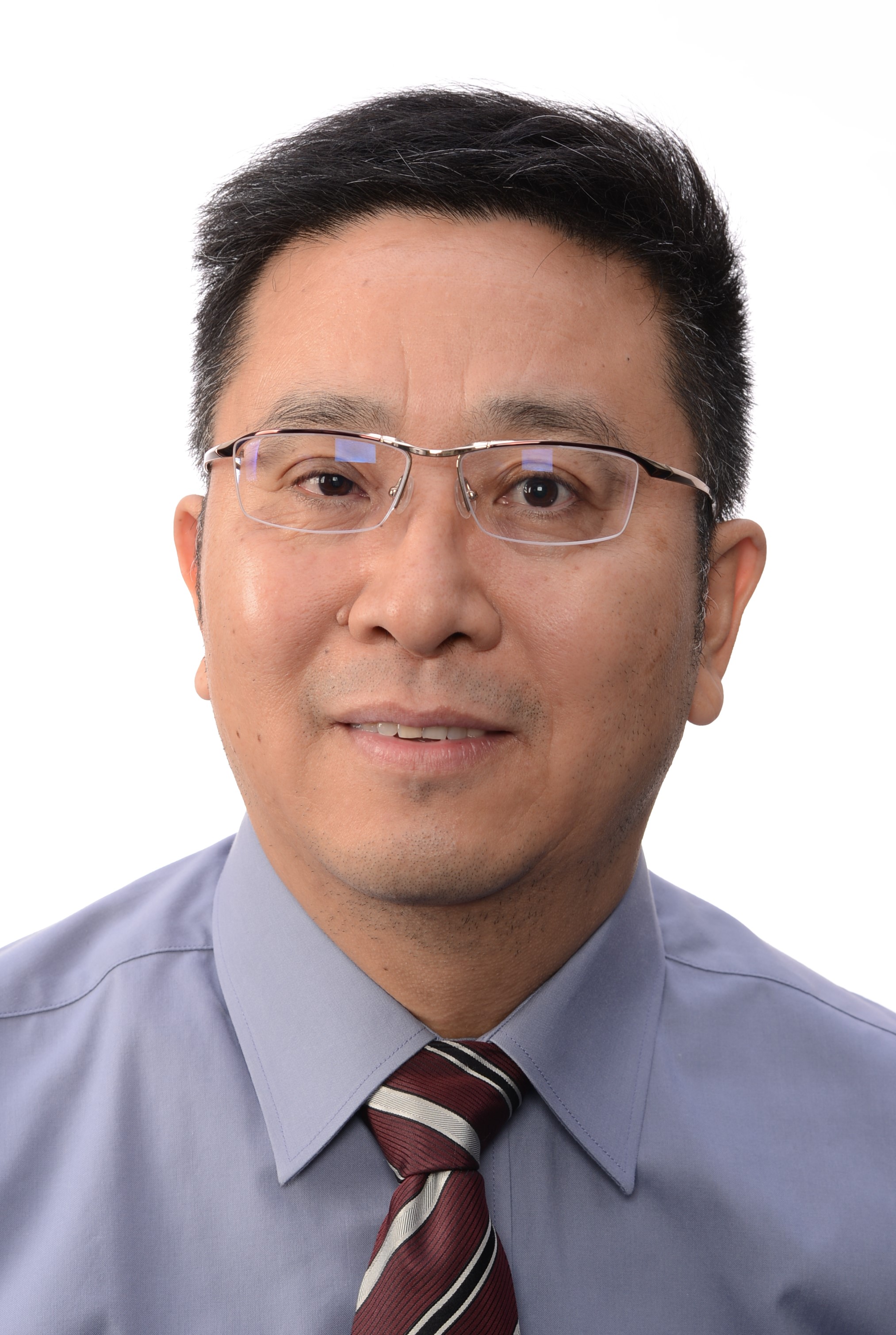
Professor Meng Qiang serves as Professor in the Department of Civil and Environmental Engineering (CEE) at the National University of Singapore (NUS), where he directs both the Centre for Transport Research (CTR) and the NUS Guangzhou Research Translation and Innovation Institute (NUS-GRTII). His academic leadership extends to editorial roles including Co-Editor-in-Chief of Multimodal Transportation and Advisory Editor for Transportation Research Part E . His educational background spans Bachelor of Science from East China Normal University (1984), Master of Science from Chinese Academy of Sciences (1989), and PhD in Civil Engineering from Hong Kong University of Science and Technology (2000). Prior to joining NUS, he held academic positions at Shandong Normal University where he became Professor in the Information and Management School after completing his PhD. Professor Meng's research expertise focuses on three interconnected domains: urban mobility modelling and optimization (including AI-based traffic prediction, autonomous vehicle operations, and EV infrastructure planning); shipping and intermodal freight transportation (covering liner network optimization, container logistics, and maritime cybersecurity); and quantitative risk assessment of transport operations (particularly for urban tunnels and maritime safety). His work integrates advanced computational methods with real-world transportation challenges, as evidenced by over 260 high-impact publications. His scholarly impact is demonstrated through consistent recognition as a Top 2% Scientist in logistics and transportation (Stanford University, 2019-2022) and numerous prestigious awards including the Omega Best Paper Award (2023), TSL Freight Transportation Award (2020), and Singapore MOT Minister's Innovation Award (2009). His publications reveal evolving research trajectories toward autonomous vehicle integration, maritime decarbonization, and AI-driven transportation solutions. Best Paper Award of Omega 2023 Member, Academy of Engineering Singapore (2022) TSL Best Paper Award in Freight Transportation and Logistics (2020) OCDI Takeuchi Yoshio Logistics Award (2019) Chang Jiang Scholar Chair Professor (2017) WCTR Society Prize for Best Paper (2013) Singapore MOT Minister's Innovation Award (2009) Professor Meng has supervised 17 PhD students and mentored 20 postdoctoral fellows, with many graduates achieving prominent academic positions internationally including Distinguished Young Scholars in China. His industry contributions include the QRAFT risk assessment software for road tunnels and an AI-based traffic prediction model developed with ST Engineering. He leads the Centre for Transport Research which conducts government and industry-funded projects addressing Singapore's transportation challenges through advanced modeling and optimization techniques.
Marta Borowska-Stefańska is an Assistant Professor at the Institute of the Built Environment and Spatial Policy, Faculty of Geographical Sciences, University of Lodz. She serves as Deputy Director of the Institute, overseeing organizational matters. Her academic roles include teaching and research. Education: PhD in Geography (2014) from University of Lodz, with a thesis on flood-prone area management. She has participated in extensive professional development, including ESRI GIS training, DAAD-funded stays in Germany, and ERASMUS+ collaborations in Romania and Slovakia. Research focuses on spatial planning, flood risk management, GIS applications, and urban mobility. Key projects include optimizing flood evacuation strategies, analyzing pandemic-induced transport changes, and assessing road network vulnerability under flooding. She leads grants like IDUB-funded studies on mobility patterns of the elderly and post-pandemic transport systems. Her work emphasizes interdisciplinary approaches, with international collaborations and publications spanning disaster management, transport systems, and spatial policy. Projects often involve applied tools like network analysis and simulation modeling. Grants and Projects: IDUB grants on flood risk management and elderly mobility; ERASMUS+ initiatives enhancing academic exchange. Active in conferences and editorial roles, including co-editing the 'Biuletyn Uniejowski.'
Rommert Dekker is a Professor of Econometrics (Operations Research and Informatics) at the Department of Econometrics, Erasmus School of Economics (ESE), Erasmus University Rotterdam, affiliated with ERIM since 1999. His research focuses on operations research, quantitative logistics, and IT applications in logistics systems. He leads industry-sponsored research on service logistics and co-founded the REVLOG network for reverse logistics. His work spans reverse logistics, inventory control, maintenance optimization, container logistics, and transport systems. He has held roles at Shell Research (1992-1999), publishing over 100 papers during that period. Research interests include service logistics, synchromodal transportation, spare parts management, and sustainable supply chains. He integrates quantitative methods with real-world applications, addressing challenges like container terminal optimization, wildfire risk modeling, and vaccine supply chain management. His recent work explores quantum computing applications in logistics and environmental regulations' impact on maritime networks. Awards: ERIM Impact Award (2025), OR Society Goodeeve Medal (2023) Research Initiatives: Business Intelligence, Data Analytics, Smart Port@Erasmus Grants & Partnerships: Industry-sponsored programs on service logistics, collaborations with maritime and energy sectors His publications emphasize practical impact, with over 170 articles in areas like supply chain resilience, maintenance policies, and green logistics. Current research includes real-time container yard allocation algorithms and AI-driven wildfire risk models.
Dr. Anastasios Chassiakos is a Professor in the Department of Electrical Engineering at the California State University, Long Beach (CSULB), affiliated with the College of Engineering. His research spans robotics, neural networks, structural control, transportation logistics, and port operations. He has contributed to projects such as the METRANS initiative and the STEER Program, focusing on infrastructure resilience, container management, and structural health monitoring. Notably, he received the CSULB Outstanding Professor Award in 1994. His work integrates advanced modeling techniques, including neural networks for structural diagnostics and heuristic algorithms for optimization challenges. Key areas of focus include mitigating port disruptions, improving truck traffic efficiency, and enhancing container reuse strategies in the Los Angeles/Long Beach port area. Dr. Chassiakos also explores applications in robotics and space reflectors, showcasing interdisciplinary innovation. Publications highlight his expertise in structural dynamics, transportation systems, and logistics, with a strong emphasis on real-world applications. His research often bridges theoretical frameworks with practical solutions for urban and port infrastructure challenges. Awards: CSULB Outstanding Professor Award (1994) Key Projects: METRANS PROJECT 07-14, STEER Program, Port Dynamic Empty Container Reuse Labs/Teams: Engaged with university and industry collaborations on transportation and structural engineering initiatives.
Stefan Guericke is a Professor of Business Informatics at the University of Applied Sciences Osnabrück since 2022, specializing in Data Science and Business Intelligence. He holds a PhD in Decision Support & Operations Research from the University of Paderborn (2014) and a degree in Business Informatics from the University of Paderborn and Beijing Institute of Technology. His professional experience includes roles at A.P. Møller-Mærsk, where he served as Senior Engineering Manager and Senior Data Scientist, focusing on logistics optimization and data-driven solutions. Research interests span logistics network design, mathematical optimization, containerization problems, and the application of advanced analytics in microservices architectures. He has contributed to solving complex problems in liner shipping, cargo allocation, and fleet deployment through both heuristic and exact methods. His work bridges academic research and industrial applications, emphasizing practical solutions for supply chain challenges. Teaching responsibilities include courses on Data Science fundamentals, Deep Learning, Operations Research, and Statistics. He is affiliated with the Faculty of Management, Culture, and Technology at HSO, contributing to interdisciplinary projects and student mentoring.
Prof. Rolf H. Möhring is a Professor at the Department of Mathematics, Faculty II – Mathematics and Natural Sciences, Technical University of Berlin. He specializes in Combinatorial Optimization, Graph and Network Algorithms, and Operations Research with applications in industrial and transportation systems. His research bridges theoretical foundations and practical implementations, addressing challenges in scheduling, distributed computing, and algorithmic game theory. Key research interests include graph algorithms, project scheduling optimization, and robust optimization methodologies. Notable contributions span network flow analysis, traffic equilibrium design, and logistics optimization in container terminals and shipping routes. Awards: 2025 Research.com Mathematics in Germany Leader Award, 2010 EURO Gold Medal. Publications: Over 127 papers with 16,279 citations in Computer Science and 113 papers with 15,733 citations in Mathematics. His work frequently explores combinatorial structures, invariant theory, and practical applications in distributed systems. His advising focuses on PhD students in combinatorial optimization and algorithmic theory, with contributions to the Mathematics Genealogy Project. Collaborations include industrial projects like Kiel Canal ship traffic optimization and AGV routing in container terminals, emphasizing real-world problem-solving through mathematical frameworks.
G. William Daub is the Seeley W. Mudd Professor of Chemistry at Harvey Mudd College, where he has been a faculty member since 1978. He holds a B.A. in Chemistry from Pomona College (1972) and a Ph.D. in Organic Chemistry from Stanford University (1977). His research focuses on Claisen rearrangements , regio- and diastereoselectivity , and organic synthesis , with significant contributions to stereochemical control in pericyclic reactions. He has supervised over 70 undergraduate students in research, highlighted in the Family Lab Hall of Fame . Dr. Daub has held administrative roles including Associate Dean for Academic Affairs (2019-20), Chair of the Chemistry Department (1995-2008), and Director of the Core Curriculum (2012-2015). He received the prestigious Camille and Henry Dreyfus Teacher-Scholar Award (1982-87). His work extends to textbook authorship, including Basic Chemistry and In Preparation for College Chemistry . His publications span Journal of the American Chemical Society , Journal of Organic Chemistry , and educational journals like Journal of Chemical Education . Collaborations with colleagues like Dr. Robert J. Cave and Dr. Hal Van Ryswyk highlight interdisciplinary efforts in computational chemistry and curriculum reform. His lab focuses on DFT calculations for reaction mechanisms and fluorinated olefin synthesis .
Mahdi Homayouni is a Senior Lecturer in Industrial Engineering and Management at the School of Business, Social & Decision Sciences, Constructor University. His expertise lies in scheduling optimization, logistics, and operations research. He holds a PhD in Industrial and Systems Engineering from Universiti Putra Malaysia (2012), an MSc in the same field (2008), and a B.Eng. in Industrial Engineering (2003). His research focuses on advanced scheduling methodologies for manufacturing systems, maritime operations, and container terminals. He has developed algorithms such as hybrid genetic algorithms, particle swarm optimization, and biased random key genetic algorithms (BRKGA) to address complex problems like energy-efficient job shop scheduling, integrated production-transport systems, and port automation. His work emphasizes sustainability, resource optimization, and the application of metaheuristics to real-world logistical challenges. Dr. Homayouni has held academic positions at institutions including the University of Porto (FEP), Islamic Azad University, and served as a research assistant at INESC Technology and Science. His contributions span theoretical advancements in scheduling models and practical applications in supply chain management, with a strong emphasis on interdisciplinary solutions. His recent publications highlight innovations in digital twin technology for seaport sustainability, energy-efficient manufacturing systems, and multi-objective optimization in transportation logistics. He continues to explore cutting-edge applications of AI-driven algorithms to enhance operational efficiency in industrial and maritime sectors.
Stefano DE LUCA is a Full Professor at the Department of Civil Engineering (DICIV) of the University of Salerno. His research focuses on transportation systems, traffic flow modeling, sustainable mobility, and infrastructure planning. He actively contributes to projects addressing electric vehicle adoption, smart traffic management, and urban development. His work often integrates advanced modeling techniques with real-world data analysis. Key areas of expertise include hybrid traffic flow models, signal optimization for noise reduction, and the impact of transportation infrastructure on socio-economic factors. He is involved in international collaborations through Erasmus+ agreements and leads initiatives related to port logistics and container terminal efficiency. His academic contributions span over 150 publications, with recent work emphasizing electric vehicle adoption in emerging markets and interdisciplinary approaches to transportation challenges. Dr. DE LUCA is associated with laboratories focusing on transportation systems and sustainability, and he maintains active participation in academic committees and advisory roles within the university.
Ali Skaf is an Associate Professor at CESI LINEACT, affiliated with the Engineering and Numerical Tools Research team. His research focuses on scheduling problems, supply chain resilience, multi-objective optimization, and port logistics. He holds a PhD in Automatics from Belfort Montbéliard University of Technology (2020) and a Master's in Computer Science from the Lebanese-French University (2012). His educational activities span Computer Science, Operational Research, and Mathematics across engineering cycles and preparatory courses. Skaf's work emphasizes port terminal operations, including quay crane scheduling, yard truck coordination, and mixed-integer programming models for container handling. His recent publications (2018–2022) highlight contributions to NP-completeness analysis of scheduling problems and optimization algorithms for maritime logistics. His research integrates exact methods, heuristics, and computational complexity analysis to enhance supply chain efficiency. No scientific awards are explicitly mentioned, though his active publication record reflects ongoing scholarly engagement. His advising and grants details are not documented here, but his team's focus on numerical tools and engineering applications suggests collaborative projects in industrial automation and logistics systems. Labs/Teams: Member of the Engineering and Numerical Tools Research team at CESI LINEACT, focusing on applied operational research and port logistics solutions.
Magdalene Marinaki serves as a Researcher and permanent laboratory teaching personnel at the Technical University of Crete (TUC), School of Production Engineering and Management. She also teaches in the Hellenic Open University's Social Sciences Graduate Program. Her expertise lies in optimization methodologies, optimal control systems, and nature-inspired algorithms applied to logistics and manufacturing. She holds a Diploma, MSc, and PhD from TUC, specializing in Production Engineering and Management. Her research focuses on computational optimization, metaheuristics, vehicle routing problems (VRP), energy-efficient transportation systems, and structural control. She has authored 4 books and over 50 journal articles, with additional contributions to conference proceedings. Notable projects involve EU-funded research on blockchain applications in maritime logistics, electric vehicle routing, and unmanned aerial vehicle (UAV) path optimization. Her recent work emphasizes sustainable transportation solutions, including EV charging infrastructure planning and drone-integrated delivery networks. She has developed algorithms like teaching-learning-based optimization and hybrid swarm intelligence techniques, addressing real-world challenges in supply chain management and smart manufacturing systems.
Hans-Jürgen Appelrath is a Professor in the Department of Information Systems at the University of Oldenburg. His research focuses on data stream management systems, process mining, energy informatics, and database systems. He has made significant contributions to the development of modular frameworks for real-time data processing and multidimensional process analysis. His work integrates ICT solutions for energy systems, healthcare, and logistics, emphasizing practical applications in smart grids and distributed computing. Key research areas include: Data stream management and real-time systems Process mining and business intelligence Energy informatics and smart grid technologies Database systems and data integration Recent publications highlight advancements in crash recovery for streaming systems, interactive process mining tools like PMCube, and energy-efficient logistics solutions. His work combines theoretical contributions with practical implementations, such as the Odysseus framework for data stream management and CARESS for healthcare data analysis. Publications reflect collaborations across multiple domains, including energy markets, healthcare analytics, and distributed systems. Projects often address interdisciplinary challenges, such as integrating cloud-based dashboards for electricity trading and optimizing resource allocation in container terminals.