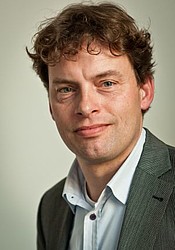
Jake Wagner is a Scholarly Assistant Professor in the School of Economic Sciences at Washington State University. He received his Ph.D. in Economics from Washington State University in 2020 and holds a BA and BS in Economics and Mathematics from Western Washington University. His research focuses on Discrete Choice Econometrics, Development Economics, Environmental and Resource Economics, and Transportation Economics. Education: PhD, Economics, Washington State University – 2020 BA, Economics, Western Washington University – 2016 BS, Mathematics, Western Washington University – 2016 Wagner's research intersects four primary areas: Discrete Choice Econometrics , which involves modeling individual decision-making processes; Development Economics , particularly in rural contexts like Kenya; Environmental and Resource Economics , examining natural resource allocation and sustainability; and Transportation Economics , focusing on urban mobility and pandemic-related disruptions. Recent publications highlight Wagner's engagement with post-pandemic recovery strategies and transportation efficiency. Key works include a decision support tool for rural water supply planning, analyses of commuter behavior and parking decisions, and studies on pandemic-related shipping container and labor shortages affecting agricultural trade. These articles reflect his commitment to addressing real-world challenges through economic modeling and policy development. Wagner has secured significant grant funding for his work on transportation planning. He served as Lead-PI for a $40,000 grant (plus in-kind match) from Pullman Transit to create planning tools for transit managers, and as Co-PI for a similar $40,000 grant from WSU Transportation Services focused on parking planning. These grants underscore his role in developing actionable solutions for urban and regional transportation systems.
Cristofer Juan Expósito Izquierdo is an Assistant Professor in Computer Science at Universidad de La Laguna, affiliated with the GA2 Grupo de Algoritmia Avanzada research group. Education: PhD (2016) in optimization of maritime container terminal operations. Research Interests: Focuses on heuristic optimization for port logistics, sustainable operations, and industrial process efficiency. His work integrates computational methods with real-world maritime and production challenges. Publications: Recent articles cover sustainable port operations, production planning optimization, and maritime logistics, emphasizing algorithmic solutions for efficiency. Facilities: Part of IUDR institute's advanced computing research infrastructure.
Dr. Haoning Xi is a Lecturer in Business Analytics at the Newcastle Business School, University of Newcastle (UON), Australia. She previously served as a Research Fellow at the Institute of Transport and Logistics Studies (ITLS), The University of Sydney Business School. Dr. Xi received her Ph.D. in Transportation & Operations Research from the University of New South Wales (UNSW) Sydney, where she was also a co-cultured Ph.D. student at CSIRO Data 61. She holds a Master's degree from Tsinghua University and a Bachelor's from Central South University, China, and has research experience at the University of California, Berkeley and Hong Kong University of Science and Technology. Ph.D. in Transportation & Operations Research, University of New South Wales Master of Engineering, Tsinghua University, China Bachelor of Engineering, Central South University, China Research Assistant, University of California, Berkeley Visiting Researcher, Hong Kong University of Science and Technology Dr. Xi's research focuses on applying business analytics, machine learning, and operations research to mobility services and transportation systems. Her work centers on Mobility-as-a-Service (MaaS), travel behavior analysis, data-driven optimization, and sustainable transportation. She investigates how to leverage millions of smart card data from various transport modes to uncover user travel patterns and preferences, enabling intelligent decision-making for transport authorities. Her research also explores predictive analysis using AI and ML algorithms to forecast travel patterns, service disruptions, and resource allocation strategies. A significant portion of her work examines personalized mobility services and how to integrate transportation with non-mobility offerings to create comprehensive subscription models. Dr. Xi has published over 23 SCI/SSCI indexed papers, including 9 ABDC A* journal articles (8 as first/corresponding author) in top journals like European Journal of Operational Research and Transportation Research series. Her publications reveal a strong emphasis on mathematical modeling of transportation systems, with increasing focus on AI/ML applications in recent years. The articles demonstrate progression from traditional transportation modeling toward more sophisticated data-driven approaches integrating machine learning with operational research techniques, particularly in the context of Mobility-as-a-Service ecosystems and pandemic-related travel behavior changes. Rising Stars Women in Engineering, Asian Deans' Forum (2024) Best Research Silver Award, International Symposium on Sustainable Development of Urban Transport Systems (2024) Best Paper Award, International Workshop on Computational Transportation Science (2024) Global Talent Independent Scheme, Australian Government (2021) University Postgraduate Award, UNSW (2021) CSIRO Data 61 Top-up Ph.D. Scholarship (2020) Dr. Xi currently supervises 5 PhD students across various topics including digital transformation's impact on ESG, digital sustainability measurement, data analytics for hospitality management, social media sentiment analysis, and organizational capabilities in regulated environments. She has secured over $463,500 in research funding from multiple sources including National Natural Science Foundation of China ($80,000), iMOVE Australia Limited ($300,000), and various internal university grants. Her current projects focus on AI-driven bus network optimization, parking management models, and enhancing user mobility experience through business analytics. Dr. Xi serves as CHSF College Research Committee Member and NBS Equity Diversity and Inclusion (EDI) Committee Member at the University of Newcastle. She is Co-chair of the Multimodal Urban Transportation Systems Analysis Committee in the World Transport Congress (2024-2026) and serves on editorial boards for International Journal of Transportation Science & Technology and Transportation Safety and Environment. She also acts as a peer reviewer for top transportation journals including Transportation Science and Transportation Research series.
Marcin Przywarty is a researcher at the Department of Marine Traffic Engineering within the Faculty of Navigation at Maritime University of Szczecin. His work focuses on maritime safety, fairway design, and simulation methods for ship navigation. His research interests center on maritime traffic engineering with emphasis on: Ship maneuvering safety and fairway bend dimensioning Risk assessment in emergency navigation scenarios Port infrastructure optimization for LNG tankers and container vessels Environmental impact analysis of slow steaming operations Analysis of his publication trends (2016-2020) reveals a consistent focus on simulation-based approaches to maritime safety challenges. Key thematic clusters include fairway design optimization (30% of publications), risk assessment methodologies (25%), port infrastructure planning (20%), and specialized applications like oil spill response and LNG terminal design (25%). His work frequently employs kinematic modeling and full-mission bridge simulators to address practical navigation problems.
Xiaojun Li is a Professor affiliated with the Department of Mechanical Engineering at the University of Maryland, with additional research ties to Texas A&M University and institutions in China. His work spans interdisciplinary fields including machine learning, computer vision, and engineering systems. He has contributed to over 130 publications since 1985, focusing on topics like deep learning applications in healthcare, seismic modeling, and intelligent systems for infrastructure. His research emphasizes practical solutions in domains such as medical diagnostics, tunnel construction optimization, and energy forecasting. Key contributions include the development of JaunENet for jaundice detection, advanced seismic wave modeling techniques, and intelligent systems for automated tunnel construction. He collaborates extensively with experts in data science, environmental engineering, and computer science. His work bridges theoretical advancements with real-world applications, addressing challenges in healthcare technology, sustainable infrastructure, and energy management. Recent projects highlight innovation in multimodal hate speech detection, smart evacuation systems using VR, and the application of graph-based methods for EEG emotion recognition. His research often integrates big data analytics and AI-driven approaches to solve complex problems in both technical and societal contexts.
René de Koster is a Professor of Logistics and Operations Management at the Department of Technology and Operations Management, Rotterdam School of Management (RSM), Erasmus University Rotterdam. He holds a PhD from Eindhoven University of Technology (1988) and has been affiliated with Erasmus University since 1995. His research focuses on warehousing, material handling, container terminals, behavioral operations, and sustainable logistics. He has authored eight books and over 250 publications in journals like *Transportation Science* and *European Journal of Operational Research*. He serves on eight editorial boards, chairs Stichting Logistica, and founded the Material Handling Forum. Teaching spans all RSM levels, including executive programs. Notable recognitions include the honorary Francqui Chair (2018) and being named 'the most influential researcher' in material handling. Education: PhD in Technology, Eindhoven University of Technology (1988) Research Highlights: Warehouse design and optimization Container terminal operations and automation Behavioral aspects of logistics operations Sustainability in logistics systems Publications Focus: Recent work emphasizes container terminal layouts, urban freight sustainability, and warehouse efficiency. Early contributions include foundational studies on order picking routing and return handling strategies. Awards: Honorary Francqui Chair (Hasselt University, 2018) Recognized as 'most influential researcher' in material handling Advising & Grants: Supervised over 30 PhD candidates Active in editorial roles for journals including *Transportation Science* and *Operations Research* Collaborated with industry on projects like the Aalsmeer flower auction scheduling Labs/Teams: Leads research initiatives in facility logistics through ERIM and collaborates with industry partners on warehouse automation and sustainability.
Rob Zuidwijk is a Professor of Global Supply Chains and Ports at Rotterdam School of Management (RSM), Erasmus University Rotterdam. He holds the title of Fellow ERIM and serves as Captain of Science for the Topsector Logistics in the Netherlands. His research focuses on sustainable supply chains, synchromodal transport networks, and inter-organisational systems in logistics. He has coordinated numerous funded research projects and teaches courses on freight transport systems, international logistics, and global supply chain management at BSc, MSc, and PhD levels. Education: PhD in Mathematics from Erasmus University Rotterdam. Research Interests: Sustainable supply chain governance, synchromodal transport optimization, and logistics information systems. His work bridges operational research and practical applications in ports and global logistics networks. Publications: Over 40 academic articles in journals like Transportation Science , Production and Operations Management , and European Journal of Operational Research . Recent work addresses sustainable governance, data-driven logistics platforms, and truck platooning optimization. Awards: Fellow of the Erasmus Research Institute of Management (ERIM). Advising/Grants: Supervised 33+ PhD students and led projects on international logistics, container transport, and port-hinterland networks. Active in ERIM and Smartport initiatives. Labs/Teams: Co-founder of the Smartport research community, contributing to port-related logistics innovation.
Sedat Baştuğ is an Associate Professor at the Department of Maritime Transportation and Management Engineering, part of the Maritime Faculty at Bandırma Onyedi Eylül University. He holds additional administrative roles, including Vice Dean and Head of the Department. His academic career includes prior appointments as a Doctor Lecturer at Iskenderun Technical University (2018–2022) and Bandırma Onyedi Eylül University (2022–2024). Contact details include email address: sbastug@bandirma.edu.tr and internal phone number 2025. Research interests focus on supply chain management, logistics, maritime transportation, port operations, and sustainability. He explores blockchain applications, decarbonization strategies, risk mitigation, and talent management within the shipping industry. His work also addresses humanitarian logistics, energy efficiency in ports, and brand positioning. Notable contributions include over 39 articles (44% of his department’s total publications) and 11 book chapters. His research spans topics like port competitiveness, DEA-SCOR models for efficiency evaluation, and the Belt and Road Initiative’s impact on logistics. He emphasizes interdisciplinary approaches, combining technical, economic, and environmental dimensions to address industry challenges. His articles highlight trends in digital transformation, climate resilience, and stakeholder collaboration. Despite no explicitly listed awards, his prolific publication record underscores his academic impact. Advising and grants sections remain underdeveloped in the provided data, though his administrative roles suggest involvement in institutional and educational initiatives.
Rune Møller Jensen is an Associate Professor in Data Science and Head of The Maritime Hub at the IT University of Copenhagen. He specializes in container vessel stowage planning optimization, with expertise in metaheuristics, constraint programming, and mathematical programming. His work bridges academia and industry through projects like churn prediction and AIS-based ETA forecasting. He co-founded Sealytix, a leading stowage analytics firm, and previously led Optivation until 2022. Jensen holds awards including the Hede Nielsen Prize (2005) and The McKinsey Award (1998). Education: Studied Symbolic AI at Carnegie Mellon University (CMU). Research focuses on optimizing maritime logistics, energy-efficient transportation, and decision support systems for liner shipping. Key projects include Greenship (2014-2016), REALCAP (2016-2018), and BAYSTOW (2008-2012). Media engagements include discussions on AI ethics and industry collaboration. His research portfolio spans 86 publications and 10+ projects, emphasizing optimization algorithms and real-world maritime applications. As head of The Maritime Hub, he supports emerging researchers through interdisciplinary initiatives.
Teresa Esteban Casanelles is a Lecturer in Economics and Policy at King's College London, based in the Department of Political Economy within the Faculty of Social Science & Public Policy. Her work bridges political economy, applied microeconomics, and behavioral/experimental economics with a focus on health policy and electoral dynamics. She maintains an active research agenda analyzing treatment timing in oncology and voter behavior under electoral systems. Education Background: While specific degree details aren't explicitly listed, her academic position implies terminal qualifications in economics or political science from a top-tier institution. Her website https://testcas.github.io/ likely contains full academic credentials. Research Focus: Combines quantitative methods to study: - Immunotherapy scheduling impacts on cancer outcomes - Experimental economics of decision-making under incentives - Electoral advertising effects in Spain - Economic shocks and political party formation Recent Work Trends: Recent articles (2022-2024) emphasize healthcare policy applications of political economy frameworks, particularly in oncology treatment protocols. Earlier work (2020) explored electoral dynamics and political economy relationships. Professional Engagement: Organized the 2024 POLECONUK Annual Conference on June 6-7, 2024, highlighting her role in advancing political economy discourse. Office hours: Tuesdays 16:30-17:30 and Thursdays 16:00-17:00 at Bush House North East Wing, 30 Aldwych, WC2B 4BG.
Daniel Seong-Hyeok Moon is Professor and Vice-President/Provost at World Maritime University. With over 25 years' experience at Korea Maritime University, his expertise centers on port economics, management, operations and maritime education. His research examines shipping efficiency strategies like slow steaming, container terminal modeling, port choice decision-making, and charter negotiation frameworks. He maintains active industry engagement through research projects with maritime organizations and has published extensively on port planning and development economics. Professor Moon holds professional certification as a First Class Navigation Officer and has extensive seafaring experience including service as ship captain. He contributes to maritime policy through membership in IAME (International Association of Maritime Economists) and other professional organizations.
Monica Canepa is a Lecturer in Maritime Energy Management Research at World Maritime University, specializing in transport economics and policy with PhD research focused on energy economics in ports. Her work examines socio-economic dimensions of maritime decarbonization, including cold ironing systems, LNG adoption, and port microgrids. She coordinates research conferences and manages projects for the University of Genoa. Canepa's extensive publication record addresses port energy transitions, cybersecurity in maritime logistics, circular economy implementations, and LNG market expansion in the Baltic region. She develops specialized training programs for maritime energy technologies and has contributed to EU Horizon cybersecurity projects.
Professor Pierre Pinson is the Chair of Data-centric Design Engineering at the Dyson School of Design Engineering, Imperial College London (UK). He also serves as a Chief Scientist at Halfspace (Denmark), Editor-in-Chief of the International Journal of Forecasting, and holds affiliated roles at Technical University of Denmark and Aarhus University. His research focuses on generating societal value from data through interdisciplinary approaches combining mathematics/statistics with applications in energy, logistics, and business analytics. Notable contributions include probabilistic energy forecasting, market design innovations, and optimization under uncertainty. Research interests span forecasting methodologies, stochastic optimization, game theory (with energy applications), and data markets. He has held visiting roles at institutions like the University of Oxford and the European Centre for Medium-Range Weather Forecasts. Awards include the prestigious INFORMS Edelman Award (2024) and IEEE Fellow status. Prof. Pinson actively advises PhD candidates with strong applied mathematics/programming backgrounds. His work bridges academia and industry, addressing challenges in renewable energy integration, grid management, and decentralized market mechanisms. Collaborative projects include the Smart4RES initiative for advanced renewable forecasting. Awards: INFORMS Edelman Award (2024), IEEE Fellow, Simons Fellowship (2021) Labs/Teams: Dyson School Research Group, Halfspace R&D Team, CoRE (Aarhus University) Grants: Imperial College President's PhD Scholarship, EU Smart4RES Project
Barton P. Miller is a Vilas Distinguished Achievement Professor and the Amar & Balinder Sohi Professor of Computer Sciences at the University of Wisconsin, Madison, where he has made significant contributions to computer science research and education. As a faculty member in the Computer Sciences Department within the College of Engineering, he directs major research initiatives including the Paradyn Tools project and leads cybersecurity efforts as Chief Scientist of the DHS-funded Software Assurance Marketplace (SWAMP) research center. Miller received his B.A. degree from the University of California, San Diego in 1977, and M.S. and Ph.D. degrees in Computer Science from the University of California, Berkeley in 1980 and 1984. His educational background laid the foundation for his pioneering work in software testing and analysis. His research spans multiple critical areas of computer science, with a primary focus on binary code analysis and instrumentation , software security , and distributed and parallel program performance . Miller is particularly renowned for founding the field of Fuzz random software testing in 1988 and dynamic binary code instrumentation in 1992. His work bridges theoretical computer science with practical applications, addressing real-world challenges in high-performance computing systems, cybersecurity, and scalable distributed systems. His research has direct applications in national security through his work with DHS and TrustedCI, the NSF Cybersecurity Center of Excellence. Miller's publications reveal a consistent focus on binary analysis tools, security vulnerability detection, and performance optimization techniques. His recent work shows increasing emphasis on ransomware analysis, GPU performance optimization, and practical security tool development for developers. The trajectory of his research demonstrates how foundational work in binary instrumentation has evolved to address contemporary cybersecurity challenges while maintaining relevance to high-performance computing environments. Among his notable honors, Miller is a Fellow of the ACM and recipient of the prestigious Jean-Claude Laprie Award in Dependable Computing , an R&D 100 Award , and multiple best paper awards including at HPDC 2009 and CCGrid 2018. His contributions to the field have been recognized through distinguished lectureships at institutions including Ben Gurion University and IBM T.J. Watson Research Center. As an educator, Miller has mentored numerous students and taught courses spanning operating systems, software security, and distributed systems. He has received teaching awards and developed educational resources including free and open software security training materials. His work with TrustedCI has focused on cybersecurity for scientific communities, helping researchers secure their computational infrastructure while maintaining research productivity. Miller also co-directs the MIST software vulnerability assessment project in collaboration with colleagues at the Autonomous University of Barcelona. Miller directs the Paradyn Tools project, which investigates program scalability and binary program analysis technologies for use in HPC, systems design, and cyber-security. His work extends to practical applications through collaborations with government agencies including DHS and the U.S. Secret Service Electronic Crimes Task Force. His research group has developed tools like Dyninst, MRNet, and the Wisconsin Safety Analyzer that have become foundational in their respective domains.
Dr. Robert Stahlbock is a faculty member at the University of Hamburg's Institute of Business Information Systems within the Hamburg Business School. He holds roles such as General Chair of the International Conference on Data Science (ICDATA) and is on the editorial board of the Journal of Shipping and Trade . His academic career includes positions at FOM University of Applied Sciences and Nordakademie Elmshorn. Currently: Lecturer at Nordakademie Elmshorn (since 2021) Member of the Board of the Graduate School at the University of Hamburg Editorial Board Member of the Journal of Shipping and Trade (since 2018) Research focuses on Data Science, Business Intelligence, and Logistics, particularly in container terminal operations and applications of AI (neural networks, evolutionary algorithms). He has contributed to over 68 publications, including conference proceedings and books on data science and computational logistics. His awards include multiple Achievement Awards from the World Congress in Computer Science for contributions to data mining and applied computing. He has also received travel grants from the Deutsche Forschungsgemeinschaft (DFG) for research in logistics and container management. Teaching responsibilities span Business Analytics, Data Science, and Logistics at both undergraduate and graduate levels. He advises and supervises academic works in these fields. Professional activities include organizing international conferences (e.g., ICDATA, DMIN) and serving on program committees for events such as Computational Logistics and Data Mining.