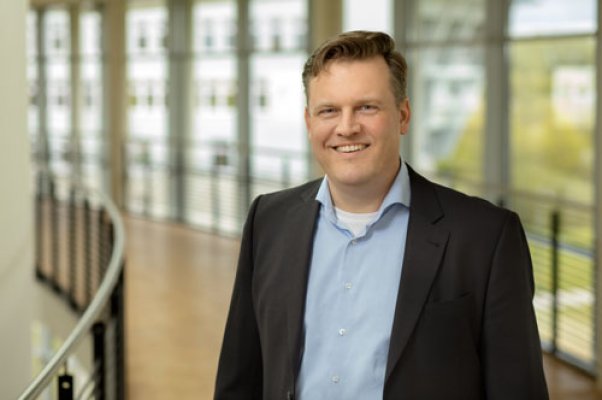
Dr. Leonard Heilig is a Researcher at the Institute of Information Systems within the University of Hamburg Business School at the University of Hamburg. His work focuses on integrating advanced technologies such as digital twins, blockchain, and cloud computing into maritime logistics and port operations. He is affiliated with the Von-Melle-Park 5 office in Hamburg and can be reached at leonard.heilig@uni-hamburg.de . He holds a Ph.D., though specific educational details are not provided in the text. His research interests include optimizing automated container terminals, reducing environmental emissions in ports, and enhancing enterprise architecture management through agile methodologies. He has contributed to frameworks for port-centric information management and inter-terminal truck routing, emphasizing real-time data utilization and sustainability. His recent publications highlight trends in digital twin applications for port operations, blockchain integration in maritime logistics, and cloud-based optimization solutions. While no scientific awards are explicitly listed, his work demonstrates significant contributions to smart port systems and digital transformation in logistics. He collaborates within the Institute of Information Systems team and has been involved in projects like port-IO , a mobile cloud platform for truck routing optimization. Grants and advising roles are not detailed in the provided texts.
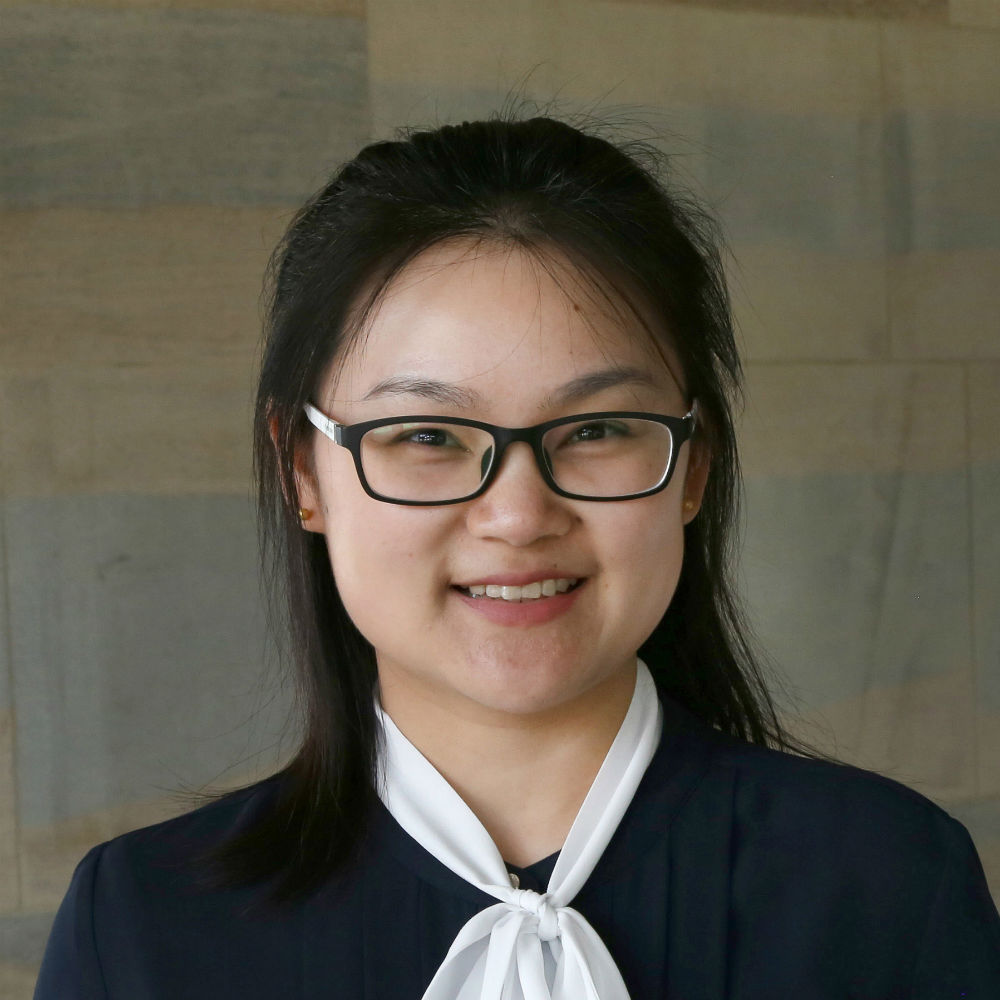
Yang Yang is a Researcher and PhD student at the University of Hamburg Business School's Maritime Economics Research Center since 2019. She holds a B.Sc. in Logistics Engineering from Changsha University of Science & Technology (2015) and an M.Eng in Logistics (focusing on port operations) from Shanghai Maritime University (2017). Her work includes roles as a logistics planning engineer in an automotive company (2015–2017). Her research focuses on maritime logistics optimization, carbon emissions reduction in transportation and port operations, and environmental science dynamics in river systems. Key areas include port connectivity, shipping networks, and sustainable infrastructure strategies. Recent studies analyze carbon emissions in river basins (e.g., Pearl River, Elbe River), the impact of land use on CO₂ outgassing, and optimization of container terminal operations. Her work bridges environmental sustainability with industrial logistics, addressing both natural and anthropogenic factors in global supply chains. Yang has no listed awards but contributes actively to interdisciplinary research at the intersection of maritime economics and environmental science. She collaborates with the Maritime Economics Research Center and engages in doctoral studies exploring sustainable port logistics.
Dr. Navid Sahebjamnia is a Lecturer in Operations Management & Analytics at Middlesex University London, affiliated with the Strategy, Leadership & Operations department. His research focuses on integrating operational research with big data analytics to address sustainability challenges in logistics and supply chain systems. He has contributed to advancing resilient supply chain network design and green terminal operations. Research interests include optimizing supply chain resilience through business continuity principles, leveraging big data for sustainable logistics, and enhancing operational efficiency in container terminals. His work bridges theoretical frameworks with practical applications in environmental and industrial engineering contexts. Recent publications emphasize the synergy between operational research and big data for greening logistics, as well as resilient supply chain design under uncertainty. No scientific awards or grants are explicitly mentioned in the provided text.
Professor Xinan Yang is a faculty member at the University of Essex, affiliated with the School of Mathematics, Statistics and Actuarial Science. He holds a PhD in Optimization from the University of Edinburgh (2011), an MSc in Operational Research (with distinction) from the same university (2007), and a BSc in Applied Mathematics from Fudan University (2006). His research focuses on optimization, logistics, and operations research, with applications in energy systems, drone/robot-assisted delivery, and stochastic programming. Prior to Essex, he worked as a Senior Research Associate at Lancaster University Management School. Research interests include combinatorial optimization, metaheuristic algorithms, and their applications in transportation, energy management, and healthcare logistics. His recent work explores AI-driven solutions for surgery scheduling and dynamic routing in last-mile delivery systems. He also contributes to energy systems modeling, particularly in integrating renewable energy sources. Publications highlight advancements in collaborative caching, container terminal operations, and volcano eruption algorithms for optimization. His academic support hours follow an open-door policy, and he is based at STEM 5.17 on the Colchester Campus.
Dr Navid Sahebjamnia is a Senior Lecturer in Operations and Information Management at Brunel Business School, Brunel University London. He earned his PhD in Management Science and Operations Research from the College of Engineering at the University of Tehran and has held academic positions at Middlesex University London and Brunel University London. His work bridges operations research, sustainability, and digital transformation in supply chains. Research Interests: Dr Sahebjamnia specializes in sustainable and resilient operations management, with a focus on supply chain and logistics optimization. He develops advanced mathematical models, including multi-objective and stochastic programming, to enhance decision-making under uncertainty. His research supports industries such as transportation, agri-food, and manufacturing in achieving environmental sustainability and operational resilience. Publication Trends: His recent publications reflect a strong trend toward integrating operational research with digital technologies such as AI, big data analytics, and digital twins to address global challenges like pandemic response, green port operations, and humanitarian logistics. There is a consistent emphasis on resilience, sustainability, and quantitative modeling across diverse industrial contexts. Scientific Awards: No specific awards are mentioned in the provided text. Advising and Grants: Dr Sahebjamnia supervises PhD students in areas including resilient supply chains and AI-driven risk mitigation. He is actively involved in securing research funding, notably as a key participant in the NARRATE project funded by the European Commission (2023–2026), which focuses on building regenerative resilient smart manufacturing networks using AI and IoT. He has extensive experience in forming European research consortia and submitting proposals to major funders like UKRI and ERC. Labs and Research Groups: He is affiliated with the OISM (Operations and Information Systems Management) Research Group at Brunel Business School and collaborates closely with Prof Afshin Mansouri and other researchers in innovation and sustainability. His work involves co-author networks and interdisciplinary teams focused on smart manufacturing and supply chain transformation.
Steffen Jaap Skotvoll Bakker is an Associate Professor at the Department of Industrial Economics and Technology Management, Norwegian University of Science and Technology (NTNU). His research bridges energy systems, digitalization, and transport logistics through interdisciplinary modeling approaches. Specializes in energy system optimization under uncertainty Focuses on automated container terminal efficiency and freight decarbonization Combines econometrics with routing/scheduling algorithms for complex systems Recent work includes collaborations with SINTEF, IFE, and UIO on strategic energy scenarios, and contributions to bioconversion technologies for circular economies. His publications span operations research journals and logistics conferences, emphasizing data-driven decision-making frameworks.
Kunpeng Li is an Associate Professor of Logistics and Supply Chain Management at the Graduate School of Engineering and Management , Air Force Institute of Technology . He holds a Ph.D. in Operations Management from the University of Illinois at Urbana-Champaign, an M.S. in Business Administration from Nankai University, and a B.S. in Electrical Engineering from Shandong Institute of Technology. Education Ph.D., Operations Management, Gies College of Business, University of Illinois at Urbana-Champaign (2008) M.S., Business Administration, Graduate School of Management, Nankai University (1999) B.S., Electrical Engineering, Shandong Institute of Technology (1996) His research spans supply chain management , blockchain technology , smart logistics , and consumer behavior . Recent work focuses on blockchain applications in maritime and food supply chains, electric vehicle subsidy design, and strategies for online platform competition. Key trends in his publications (2017–2024) include: Blockchain integration in maritime and food supply chains Smart technology adoption in port operations Optimization models for yard cranes and electric vehicles Consumer behavior analysis in e-commerce and green markets Warranty and refund policy designs Pandemic-era educational logistics Collaborations with scholars like A. Gharehgozli , J. Lee , and L. Wang highlight interdisciplinary research in operations, technology, and sustainability.
Jésica De Armas is an Associate Professor at the Department of Economics and Business, Universitat Pompeu Fabra (UPF) in Barcelona, Spain. She holds a prestigious Ramon y Cajal Fellowship from the Spanish Ministry of Science and Innovation, recognizing her outstanding research contributions. Her academic career spans multiple institutions, with previous postdoctoral positions at the Open University of Catalonia (UOC) and the University of La Laguna (ULL). PhD in Computing (Cum Laude) from University of La Laguna (2012) Computer Engineering degree with special award for best academic record Ramon y Cajal Fellowship recipient (2022) PhD Extraordinary Award from University of La Laguna (2012) PhD Award from Spanish Association of Artificial Intelligence (AEPIA) (2014) Her research focuses on developing and applying optimization techniques to solve complex real-world problems. She specializes in combinatorial optimization, metaheuristics, and machine learning approaches applied to logistics, transportation, and health care systems. Her work bridges theoretical advancements with practical implementations, particularly in vehicle routing, scheduling, and resource allocation problems. She has established herself as a leading researcher in optimization for social good, with significant contributions to humanitarian logistics and health care delivery systems. Dr. De Armas's publications reveal a strong trajectory in operations research with applications spanning multiple domains. Her research shows a clear evolution from theoretical optimization methods toward increasingly complex real-world applications, particularly in health care and social services. Her most recent work demonstrates a sophisticated integration of simulation, machine learning, and optimization techniques to address challenges in refugee resettlement, home care services, and public infrastructure planning. The consistent publication in high-impact journals reflects her growing influence in the field of operations research. Ramon y Cajal Fellowship (2022) Best Paper Award from Energies (2019) Luis Azcárraga Award from ENAIRE Foundation (2017) PhD Award from Spanish Association of Artificial Intelligence (2014) PhD Extraordinary Award from University of La Laguna (2012) HPC-Europa2 Fellowship (2011) Dr. De Armas has successfully secured multiple competitive research grants and has advised numerous students across various academic levels. She has served as Principal Investigator for projects including REASON (2024-2027) on optimizing health care delivery in rural areas, and previously led the EPHoCaS project (2020-2022) focused on sustainable home care services for the elderly. Her advising portfolio includes three PhD students to completion and numerous master's and undergraduate thesis students, demonstrating her commitment to mentoring the next generation of researchers. Her research has led to tangible industry applications, particularly in vehicle routing optimization where her algorithms have been implemented by companies as key business tools. Dr. De Armas maintains an active international research network with collaborations spanning institutions in Edinburgh, Nottingham, Cosenza, Boulder, Hamburg, and Montreal. Her work on the ROAR-NET research network demonstrates her leadership in advancing optimization algorithms research across European institutions. She has also contributed significantly to the academic community through conference organization, including the International Conference on Computational Logistics (ICCL2022) and the Metaheuristics International Conference (MIC 2017).
Oriana Skylar Mastro is a Center Fellow at Stanford University's Freeman Spogli Institute for International Studies and a nonresident scholar at the Carnegie Endowment for International Peace. She serves as a courtesy assistant professor of political science at Stanford and is actively engaged in the U.S. Air Force Reserve as deputy director of reserve China global strategy. Education: B.A. in East Asian Studies (Stanford University), M.A. and Ph.D. in Politics (Princeton University). Her research focuses on Chinese military and security policy, Asia-Pacific security issues, war termination, and coercive diplomacy. She has testified before Congress on Chinese security matters and authored influential works such as *The Costs of Conversation* (2019) and *Upstart: How China Became a Great Power* (2024). Her recent projects analyze Sino-Russian military alignment and U.S. defense policy in the Indo-Pacific. Key article trends highlight China's military modernization, Taiwan Strait dynamics, Sino-Russian strategic cooperation, and U.S. deterrence challenges in Asia. Awards include the 2020 APSA International Security Section Best Book by an Untenured Faculty Member and Individual Reservist of the Year (2016 and 2022). Scientific Honors: 2020 APSA International Security Section Best Book 2016 Individual Reservist of the Year (CGO) 2022 Individual Reservist of the Year (FGO) Mastro contributes to major media outlets like Foreign Affairs, The New York Times, and The Economist. She actively engages in policy advising through congressional testimonies and military strategic planning at INDOPACOM J56 and the Pentagon. Her work has broader implications for the U.S. role in maintaining the international liberal order and safeguarding democratic institutions in Asia.
Prof. Marcus Brandenburg is a Professor of Business Administration at the Department of Economics, Flensburg University of Applied Sciences. His research focuses on Sustainable Supply Chain Management, Supply Chain Performance Management, and Production Economics. He holds a habilitation in economics and serves on the Editorial Review Board of the International Journal of Operations & Production Management (IJOPM) since 2017. Key research interests include sustainability in logistics, automotive supply chains, and maritime operations. He leads the university's Sustainability Network and contributes to Data Science and AI initiatives in production planning. His work bridges theoretical frameworks and practical applications, emphasizing interdisciplinary collaboration and real-world impact. Teaching responsibilities include courses in Business Administration and Supply Chain Management. He advises students and collaborates with industry partners on projects like GrønBusiness, focusing on sustainable practices in emerging markets such as Ethiopia's textile sector. Recent publications address supply chain resilience during the pandemic, automation challenges in container terminals, and sustainability certifications in apparel industries. Awards: Editorial Board Membership (IJOPM, 2017) Responsibilities: Committee for Research & Knowledge Transfer, Director of the Sustainability Network Key Projects: System Dynamics modeling for supply chain sustainability, AI/ML in production planning
Dr. Ernest Czermański is a Professor at the Faculty of Economics, University of Gdańsk, holding dual appointments in the Department of Maritime Transport and Trade and the Department of Maritime Economy. He serves as Director of the Rector's Administration and University-wide Units, Vice-Rector for Development and Finance, and heads the Maritime Economy Research Centre. His work bridges maritime logistics, environmental sustainability, and economic policy. Education details are not explicitly listed, but his roles suggest advanced academic training in economics and maritime studies. His research focuses on decarbonization of shipping, port governance, air pollution impacts, and maritime spatial planning. He evaluates trade-offs between economic growth and environmental sustainability, particularly in Polish ports and Baltic Sea regions. Key research areas include data integrity in AIS systems, circular economy practices, energy transition costs in shipping, and health-economic analysis of air pollution. Over 50+ publications span technical journals and policy analyses, emphasizing practical solutions for sustainable transport systems. He has advised on major infrastructure projects like Gdańsk's Sustainable Urban Mobility Plan and container terminal feasibility studies. His work often involves cross-disciplinary teams and governmental collaboration, addressing both academic and policy challenges in maritime economics. Labs/Teams: Leads the Maritime Economy Research Centre and collaborates with the University Center for Applied and Interdisciplinary Research. Active in policy advisory roles for Polish maritime development strategies and Baltic Sea regional initiatives.
Dr. George VanDyck is a Lecturer in Business Strategy and Operations at Plymouth Business School, part of the Faculty of Arts, Humanities and Business at the University of Plymouth. He holds advanced degrees in Transport Economics and Management from Shanghai Maritime University, Logistics and Supply Chain Management from Cranfield University, and Ports and Shipping Administration from the Regional Maritime University. His professional experience includes roles as Dean of the Faculty of Maritime Studies and Coordinator of Graduate Studies at the Regional Maritime University, as well as a Research Fellow at Stellenbosch University. Dr. VanDyck’s research focuses on port development, maritime governance, supply chain management, and logistics operations. His work addresses critical issues such as post-harvest loss reduction in agricultural supply chains, port efficiency in West Africa, and strategic logistics for offshore engineering projects. He is a Chartered Member of the Chartered Institute of Logistics and Transport (CILT) and an active member of the International Association of Maritime Economists. His teaching portfolio includes courses on Global Logistics Operations, Sustainable Supply Chains, and International Supply Chain Management. His research outputs span topics such as port competitiveness evaluation using AHP/DEA methodologies, pandemic impacts on logistics, and industry-school partnerships. He has contributed to policy boards influencing national transport strategies and emphasized curriculum development in maritime education. Contact details: Room 309, Fitzroy Building, Drake Circus, Plymouth, PL4 8AA.
Dr. Evangelos Mennis is a researcher affiliated with the University of the Aegean, holding a PhD in Business Administration with a focus on maritime systems. His academic work bridges stochastic modeling and 3D printing technologies. Doctoral Dissertation: "Stochastic modeling for the assessment risks and the reliability study of maritime systems" (2009) Bachelor’s Degree in Business Administration (1996) Master’s Degree in Shipping (2005) His research spans maritime risk assessment, stochastic systems, and 3D printing applications in manufacturing. Key methodologies include Markov modeling and performability analysis for safety-critical systems. Publications highlight trends in maritime safety, reliability engineering, and efficiency optimization in container terminals and ship systems. Recent work explores 3D printing integration into manufacturing post-COVID-19 (co-authored with Maria Mavri).
Emrah Akdamar is an Associate Professor at the Department of Maritime Business Administration within the Maritime Faculty at Bandırma Onyedi Eylül University, where he also serves as the Head of the Department of Maritime Economics and Policies. His academic career includes roles as Doctor Lecturer (2019-2024) and current Associate Professorship. He specializes in maritime economics, logistics performance analysis, multivariate statistical techniques, and sustainable development strategies. His research focuses on port performance metrics, maritime trade dynamics, and statistical methodologies applied to maritime industries. He has authored/co-authored multiple books including R İle Veri Analizi 1 (2022) and contributed to international journals in logistics and maritime economics. Notable awards include the 2018 Best PhD Thesis Award from Uludağ University's Institute of Social Sciences. He teaches courses such as Operations Research and Maritime Applications, Logistics Performance Analysis, and Data Analytics. His administrative roles include Department Head and Academic Committee positions at his university. His work spans over 23 articles, 14 conference papers, and 6 books/book chapters, reflecting his commitment to advancing maritime business administration and logistics research.
Dr. Elnaz Irannezhad (also known as "Elli") is a Senior Lecturer at the School of Civil and Environmental Engineering, University of New South Wales (UNSW Sydney). She leads research at the Research Centre for Integrated Transport Innovation and bridges transport engineering with blockchain technology, automated vehicles, and decarbonisation. PhD in Civil Engineering from the University of Queensland (2014-2017) Postdoctoral Research Fellow at UQ Business School (2017-2020) Principal Engineer at Australian Road Research Board (2020-2022) Her research spans cross-disciplinary domains including: Behavioral and agent-based freight transport modelling Logistics 4.0 and blockchain applications Automated heavy vehicles and hydrogen fuel cell technology Smart supply chains and IoT integration Circular economy in logistics Decision support systems for transport networks Recent publications focus on blockchain platforms like LogisitcChain for supply chain optimization, machine learning for GPS-based truck behavior analysis, and behavioral econometric studies of maritime transport demand. She also contributes to human rights discourse as Associate of UNSW's Australian Human Rights Institute and Equity, Diversity, and Inclusion (EDI) Officer for the School of Civil Engineering. Teaching activities include: CVEN9421: Transport Logistics Engineering ENGG1400: Infrastructure Systems Engineering CVEN3402: Transport Engineering and Environmental Sustainability She co-leads the JINA Program for refugee background female students and co-chairs the virtual Bridging Transport Researchers (BTR) conference to reduce academic travel emissions.