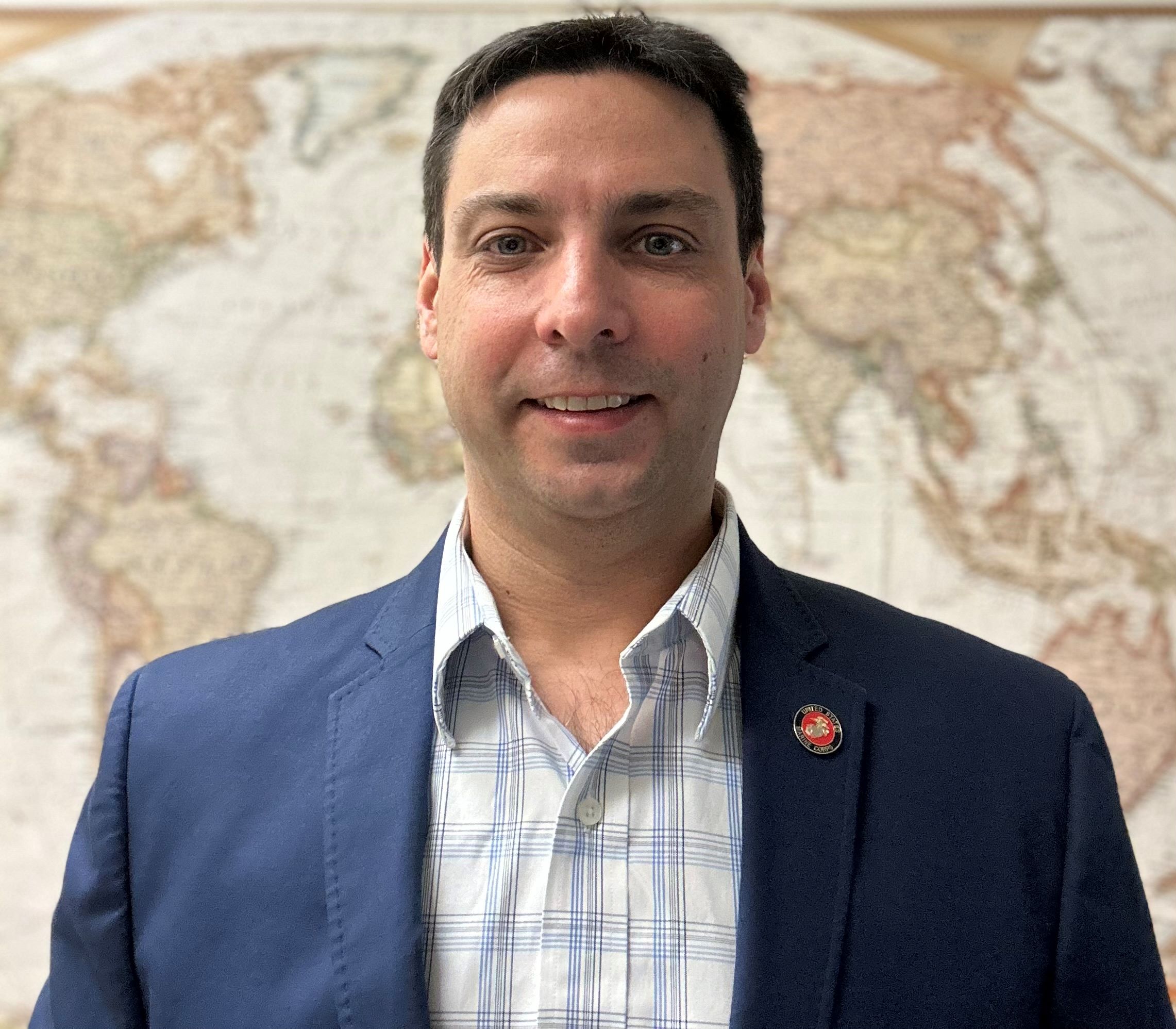
Toby J. Rider is an Associate Professor in the Department of Political Science at Texas Tech University . He earned a Ph.D. in Political Science from the University of Illinois (2009), an M.A. from the University of Kentucky (2006), and a B.A. in Political Science and History from Louisiana State University (2001). His research focuses on international rivalry, territorial conflict, arms races, and conflict resolution mechanisms. Research Interests : Bargaining theory, sovereignty, border settlements, alliance behavior, and causes of war. Teaching : Graduate courses on international relations theory, conflict resolution, and research design; undergraduate courses on American foreign policy and introduction to international relations. His publications explore themes such as territorial bargaining, rivalry termination, and the interplay between trade and conflict, with a focus on quantitative datasets like the Conventional Arms Race dataset. Recent work includes analyzing how gender representation and sovereignty issues impact peace outcomes. Articles span journals like the Journal of Politics , Journal of Peace Research , and Political Research Quarterly . Scientific Awards : FY 2012 CAHSS Award at Texas Tech University for research support. Advising & Grants : Mentored multiple Ph.D. and M.A. students, served on graduate affairs committees, and participated in veteran support initiatives. Created datasets on armed groups and arms races, contributing to empirical conflict studies.
Oren Tsur is an Assistant Professor in the Department of Software & Information Systems Engineering (SISE) at Ben Gurion University of the Negev, where he heads the NLP and Social Dynamics Lab (NAS-LAB) and directs the Center for the Study of Digital Politics and Strategy (DPS@BGU). He joined the university in September 2017 and teaches core courses including Natural Language Processing, Social Network Analysis, and Introduction to NLP at both undergraduate and graduate levels. His research focuses on computational modeling of social dynamics through language and network analysis. Key interests include social contagion, language evolution, political network analysis, and sentiment analysis. He employs methodologies from exponential random graph models (ERGM), machine learning, and natural language processing to study how language shapes and is shaped by social interactions, particularly in political contexts and online communities. His publication trends reveal strong interdisciplinary work spanning computational linguistics, political science, and social network analysis. Recent research emphasizes hate speech detection in platforms like Parler, suicide risk identification in counseling services, and modeling semantic drift in emoji usage. His work consistently bridges technical NLP innovations with real-world social applications, particularly in political discourse and community dynamics. NSF Political Network Fellowship (2014, 2015, 2016) TIME Magazine's 50 Best Inventions of 2010 for sarcasm detection research Work featured in Science Magazine, BBC, The Atlantic, CNET, and Politico Best Paper award at HICSS 2020 Tsur actively mentors prospective students through his lab, emphasizing excellence in candidates through academic transcripts and research interest statements. His grants include multiple NSF Political Network Fellowships supporting computational social science research. He serves as Director of BGU's Cyber Politics and Policy Research Center and organizes major NLP workshops including the Natural Language Processing and Computational Social Science series at top conferences. His NAS-LAB focuses on data-driven modeling of social coordination and influence, with applications in sentiment analysis, dialogue systems, and digital forensics. The lab maintains strong industry connections through past collaborations with IBM Research (Watson Debater project), Yahoo! Research, and startup consulting.
Christopher Roberts serves as Associate Professor at The Chinese University of Hong Kong's Faculty of Law, holding leadership roles as Deputy Director of the LLM Programme (Legal History) and Chair of the Transnational Legal History Group. He maintains external affiliations as Associate Research Fellow at the University of London's Institute for Commonwealth Studies and Editorial Board member for Constitutional Studies. His academic credentials include a JSD and JD from NYU School of Law, MA from the School of Oriental and African Studies, and BA from Brown University, with admission to the New York State Bar. These qualifications underpin his transnational legal expertise spanning academia and practice. Professor Roberts' research critically examines legal history of the British Empire, focusing on labor coercion, human rights evolution, and repressive governance during the First World War and interwar periods. His work bridges Legal History, British Empire studies, International Procedural Law, and Labor Law, revealing how colonial legal mechanisms shaped modern international norms through detailed analysis of vagrancy laws, forced labor definitions, and emergency powers. His 2019-2025 publications demonstrate consistent scholarly impact across top law journals, showing increasing integration of historical analysis with contemporary human rights challenges. Key trends include decolonizing labor law historiography, examining transnational repression models, and exploring procedural innovations in human rights bodies - all reflecting his dual commitment to academic rigor and practical legal reform. Scientific Awards: No formal awards documented in source materials Research funding highlights include two General Research Fund (GRF) projects: 'The Origins of Development: Anti-Colonial Resistance, Social Struggles and Labor Reform in the Interwar British Empire' and 'Empire, Internationalism and Global Labor Governance in the Inter-War Period', plus an Early Career Scheme (ECS) grant for 'The Exportation and Evolution of Vagrancy Laws in the Nineteenth Century British Empire'. His administrative contributions as former Assistant Dean for Undergraduate Studies and current LLM leadership demonstrate significant institutional engagement. He directs the Transnational Legal History Group at CUHK while maintaining active collaboration with international bodies including the African Commission on Human and Peoples' Rights, where his 'Guidelines on Freedom of Association and Assembly in Africa' achieved formal adoption in 2017.
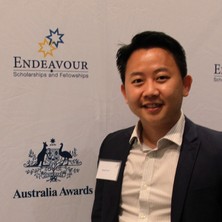
Rand Low serves as Honorary Associate Professor at the University of Queensland's School of Business and Associate Professor of Quantitative Finance at Bond Business School. His expertise bridges academia and industry with extensive experience leading quantitative research teams at Bank of America Merrill Lynch and BlackRock in New York City. He actively contributes to financial discourse through media engagements with major outlets including Australian Financial Review, BBC, and ABC News, while advising governmental bodies on bond market development. Dr Low holds a Doctor of Philosophy from the University of Queensland. His educational background includes Chartered Engineer designation from Engineers Australia earned during engineering management roles at Honeywell on landmark projects including GOMA and Mater Mothers' Hospital. Professor Low's research spans four critical domains in quantitative finance: Portfolio Optimization: Specializing in multi-asset strategies (commodities, fixed income, private equity) using vine copulas for crisis-period dependence modeling Risk Management: Developing frameworks for credit/market/operational risk including VaR/CVaR metrics and regulatory model validation Digital Assets: Pioneering research on cryptocurrency derivatives, blockchain applications, and ESG integration in digital finance Systematic Trading: Creating factor-based and event-driven strategies validated through neural network analysis of commodity risk premia His 15 most recent publications reveal three dominant trends: increasing integration of machine learning in commodity risk analysis (2023-2025), growing emphasis on ESG factors in credit rating determinants (2024), and innovative applications of blockchain technology beyond finance into conservation (2025). The research consistently addresses volatility spillovers during crises while expanding into digital asset derivatives and sustainable investment frameworks. Professor Low's scientific recognition includes: GSITA Award and 3MT Competition Winner during PhD studies Dean's Award for Research Higher Degree Excellence Australia Awards - Endeavour Fellowship Australian Institute of Business and Economics (AIBE) Scholar designation Research Fellowship on Portfolio Optimization & Risk Management Techniques He actively supervises doctoral candidates in corporate credit risk modeling, robo-advisor development, and multi-asset optimization. His funded research includes the Accounting and Finance Association of Australia and New Zealand grant (2014-2015) on risk-adjusted retirement metrics and the UQ Postdoctoral Research Fellowship (2014-2016) on crisis-period portfolio optimization. Industry collaborations include advisory roles for BitOrb (Digital Assets Exchange) and Australian Bond Exchange. Professor Low leads cross-sector initiatives connecting academic research with financial practice, having directed quantitative teams at top-tier institutions where he defended model development practices to US regulators including the Federal Reserve. His current focus involves applying statistical learning to automate investment processes across cryptocurrency, commodities, and corporate credit markets.
Christy Galletta Horner is an Associate Professor at the School of Counseling, Higher Education, Leadership and Foundations , part of the College of Education & Human Development at Bowling Green State University (BGSU) . She holds a Ph.D. in Applied Developmental Psychology from the University of Pittsburgh (2017) and specializes in mixed-methods research designs. Her academic work bridges emotional development, educational leadership, and socio-emotional outcomes in educational settings. Ph.D. in Applied Developmental Psychology, University of Pittsburgh (2017) M.S. in Applied Developmental Psychology, University of Pittsburgh (2013) B.S. in Psychology, University of Pittsburgh (2005) Horner's research focuses on emotional culture and its impact on education, particularly through the lens of adolescent socio-emotional development and teachers’ emotional labor . She emphasizes mixed-methods approaches to explore how emotional transactions can be leveraged in schools, after-school programs, and social media to promote thriving environments. Her recent publications examine topics such as fake news dynamics, financial well-being of educators, and culturally responsive pedagogy. She has secured significant funding, including a $4.5 million US Department of Education grant as co-investigator and multiple BGSU Research Development Council grants . Horner serves on editorial boards and university committees related to research development and educational policy, and she actively contributes to advancing teacher preparation through collaborative projects and peer-reviewed publications.
Robin Welsch is an Assistant Professor in the Department of Computer Science at Aalto University, specializing in Human-Computer Interaction (HCI) with strong interdisciplinary connections to psychology. Their work bridges computer science and cognitive/clinical psychology, focusing on virtual reality, social robotics, and human augmentation technologies. Affiliated with both the Engineering Psychology (ENGPSYCH) and Human-Computer Interaction and Design (HCID) research areas, Welsch maintains an active international research profile with publications in top-tier venues including CHI, IEEE Transactions, and PLOS One. Research interests center on the psychological and behavioral aspects of emerging technologies. Key areas include interpersonal distance regulation in virtual environments, social dynamics in VR/AR, cognitive and placebo effects of AI augmentation, and ethical considerations in human-robot interaction. Their work frequently examines how psychological factors (social anxiety, psychopathy traits, aging) influence technology interaction, with strong emphasis on experimental methodologies combining physiological sensing, behavioral observation, and computational analysis. Recent publications (2023-2025) reveal three dominant trends: 1) Social VR research exploring proxemics, privacy, and gaze behavior; 2) Investigations into placebo effects and performance expectations in human-AI interaction; 3) Methodological contributions to bias detection in ML annotation and AR social media applications. This work consistently applies rigorous experimental psychology frameworks to HCI problems. Award highlights: CHI PLAY 2023 Honorable Mention for VR locomotion research Welsch actively collaborates across institutions (Germany, Finland, Australia) and disciplines, with notable partnerships in psychology departments and HCI labs. While specific grant details aren't provided, the volume and venue quality of publications suggest sustained research funding. Current work shows increasing focus on generative AI's impact on design processes and ethical implications of emerging interaction paradigms. Research occurs within Aalto University's Engineering Psychology and HCID groups, with emphasis on experimental VR/AR setups and physiological measurement systems. Recent projects involve social VR scenarios, location-based AR applications, and human-robot interaction studies in public spaces.
Ernest Park serves as a Professor of Social Psychology in the Psychology Department at Grand Valley State University. His academic appointments include teaching foundational courses such as PSY 101 (Introductory Psychology), PSY 300 (Research Methods in Psychology), and PSY 360 (Social Psychology). Located in 2136 Au Sable Hall, he maintains active faculty status with current contact information as of the April 19, 2024 page update. Dr. Park received his academic training through the following educational pathway: B.A. from University of Virginia M.A. from University of Oregon Ph.D. from Michigan State University His research program centers on understanding how group contexts fundamentally shape individual cognition, emotion, and behavior. Specifically, he investigates how perceptions of reality and morality are influenced when individuals function as group members. This research trajectory spans multiple dimensions of group processes, including emotional contagion within groups, regulatory focus theory applications in organizational settings, and the complex relationship between social networks and collective performance. His theoretical approaches frequently integrate motivational systems theory with cognitive consistency frameworks to explain group phenomena. Analysis of his publication record reveals a consistent scholarly trajectory focused on group dynamics, with particular emphasis on how group membership affects cognitive processes, emotional states, and moral judgments. His work demonstrates methodological diversity, employing both experimental approaches and meta-analytic techniques across various group contexts from workplace settings to political collectives. The temporal pattern shows sustained scholarly productivity with publications spanning from 2012 to 2022, indicating an active and evolving research program. While specific advising relationships aren't detailed in the available information, his teaching responsibilities suggest ongoing mentorship of undergraduate students through research methods courses and specialized social psychology instruction. His departmental context within a comprehensive psychology program offering both BA/BS degrees and graduate programs in school psychology provides infrastructure for potential research collaborations and student involvement in scholarly work.
Mariano Massimiliano Croce serves as Full Professor in the Department of Finance at Bocconi University, holding significant academic appointments including Director of the PhD in Economics and Finance program since 2019. His institutional affiliations extend to CEPR, IGIER, and Baffi-Carefin research centers, reflecting his standing in the international academic community. Professor Croce teaches an extensive curriculum including Capital Markets, Understanding Investments, Empirical Methods for Finance, and advanced topics in Asset Pricing across undergraduate, Master's, MBA, and PhD programs at Bocconi and other leading institutions worldwide. His educational foundation includes: PhD in Economics from New York University Master's and Bachelor's degrees in Economics from Bocconi University, Milan Professor Croce's research program centers on asset pricing within general equilibrium frameworks where uncertainty about long-horizon economic perspectives (growth news shocks) plays a critical role. His work systematically explores international asset prices and exchange rate dynamics, the global interplay between asset prices and investment decisions, connections between investor information processing and market outcomes, and the growth implications of fiscal policy risks. As a pioneer in MacroFinTech, his theoretical contributions have reshaped understanding of how long-term economic uncertainty manifests in financial markets across international boundaries. His methodological approach combines sophisticated theoretical modeling with rigorous empirical analysis, particularly focusing on high-frequency data applications in contemporary financial research. Analysis of his recent publications reveals a clear progression from foundational theoretical work on recursive preferences and long-run risk toward increasingly applied research examining real-world phenomena including climate-related financial risks, pandemic market reactions, and innovative applications of text analysis to financial markets. The interdisciplinary nature of his work bridges traditional finance with macroeconomics, environmental economics, and policy analysis, demonstrating growing relevance to contemporary global challenges. Professor Croce's scholarly achievements have been recognized through: CEPR Research Fellowship (awarded September 2017) NBER Research Associate appointment (April 2018) Teaching Award in PhD Program Co-Editorship of Economics Letters (since 2021) Appointment to the American Economic Review Editorial Board (2025) As academic leader of Bocconi's PhD program since 2019, Professor Croce shapes the next generation of financial economists while maintaining an active research agenda. His teaching portfolio spans institutions including Wharton, STERN, ISB, and Kenan-Flagler, demonstrating global recognition of his expertise. Research support for his work comes through prestigious affiliations including prior research internships at the Federal Reserve Board of Governors and European Central Bank, and ongoing collaborations through CEPR and NBER networks that facilitate international scholarly exchange. Professor Croce maintains active research leadership through his editorial role at Economics Letters and as Co-Editor of the Reading Group in Asset Pricing at Bocconi. His research team focuses on developing new methodologies for analyzing long-term economic risks and their financial market implications, with recent expansion into climate finance and text-based analysis of market reactions to emerging global challenges.
Professor Monique Smeets holds a chair in Sensory Systems in Social Context at Utrecht University within the Social, Health and Organisational Psychology section of the Faculty of Social and Behavioural Sciences. She maintains an active research program investigating chemosensory and cross-modal perception in social contexts, with particular focus on body odor as a medium of social communication. Her work bridges academic psychology with industry applications, having previously held a dual affiliation with Unilever R&D Science & Technology from 2011-2024. Professor Smeets' research interests center on understanding how sensory systems, particularly olfaction, function within social contexts. Her work explores the psychological, physiological and social dimensions of smell perception, including how body odors communicate emotions like fear and anxiety between individuals. She has established the Smell Lab at Utrecht University, which investigates the impact of environmental odors on health and wellbeing, with research spanning from basic sensory mechanisms to applied consumer science contexts. Her interdisciplinary approach integrates experimental psychology with applications in sustainability, health, and consumer behavior. Analysis of her recent publications reveals a strong trajectory in human chemical communication research, with increasing focus on the universality of chemosignaling across cultures, the development of assessment tools for odor awareness, and applications of olfactory science to sustainability challenges. Her work increasingly connects basic sensory research with practical applications in consumer products, health screening, and environmental psychology, demonstrating the growing recognition of olfaction's importance in human behavior and wellbeing. Professor Smeets has secured significant research funding including a Vidi-Verniewingsimpuls grant from NWO that enabled the establishment of the Smell Lab. Her research on chemosensory irritation from environmental odors produced novel insights about health effects resulting directly from odor exposure versus indirect mechanisms involving learning and anticipation. She leads the Smell Lab at Utrecht University, which serves as the primary research hub for her investigations into sensory systems in social contexts. The lab facilitates collaborative research between social science and industry R&D within innovation ecosystems, continuing her longstanding interest in applying psychological science to drive impactful innovations that promote consumer wellbeing and sustainability.
Frank McAndrew is the Cornelia H. Dudley Professor of Psychology at Knox College, where he has been teaching since 1979. His distinguished career spans over four decades with significant contributions to evolutionary and environmental psychology. He has received multiple teaching awards including the Philip Green Wright-Lombard College Prize for Distinguished Teaching in 1983 and 2000, and the Caterpillar Faculty Achievement Award in 2003. McAndrew earned his Ph.D. in Experimental Psychology from the University of Maine in 1981 and his B.S. in Psychology from King's College in 1974. His research focuses on human social behavior from an evolutionary perspective, particularly exploring the psychology of everyday life, creepiness, gossip, and environmental psychology. He is the author of the influential textbook Environmental Psychology which has been translated into multiple languages. His research on creepiness, gossip, and evolutionary psychology has gained widespread recognition, appearing in over 2,000 media outlets and featured in more than 100 radio and television appearances including NBC's Today Show, BBC, CNN, NPR, and The Wall Street Journal. His Psychology Today blog 'Out of the Ooze: Navigating the 21st Century with a Stone-Age Mind' has attracted over twenty-five million readers. McAndrew has published extensively in academic journals and popular media, with recent work focusing on evolutionary explanations for modern behaviors, environmental influences on psychological states, and the social functions of gossip. His most cited research includes studies on creepiness, celebrity gossip, and the evolutionary psychology of haunted houses. Fellow of multiple prestigious societies including Association for Psychological Science Knox Faculty Exceptional Achievement Award recipient (1999, 2009, 2013, 2019) Nominated for CASE Professor of the Year Award (2005) Identified as a key figure in environmental psychology history (2005) Invited Editor-in-Chief of Journal of Environmental Psychology (2016) As an educator, McAndrew has mentored numerous students through co-authored research, served as Psychology Department Chair, and founded Knox College's Environmental Studies Program. His teaching interests include introductory psychology, social psychology, environmental psychology, and evolution and human behavior. He has also served in various administrative roles including Interim Associate Dean and Faculty Tutorial Director for the Ronald E. McNair Program.
Michael Macy is the Goldwin Smith Professor of Arts and Sciences at Cornell University , affiliated with the Department of Sociology and Department of Information Science. He directs the Social Dynamics Laboratory , focusing on computational models of social behavior. Harvard B.A. & Ph.D., Stanford M.A. Research spans political polarization, cultural dynamics, network science, and digital traces analysis. His work uses Twitter data, Spotify logs, and telecom records to study mood cycles, economic correlations with networks, and social wormholes. Recent studies examine partisan consumption patterns in science and cultural polarization mechanisms. Key publications appear in Science , Nature Human Behaviour , PNAS , and American Journal of Sociology . Collaborations include Nathan Eagle (telecom networks), Robb Willer (false enforcement norms), and Damon Centola (complex contagion).
Amir Goldberg is an Associate Professor of Organizational Behavior at Stanford Graduate School of Business and, by courtesy, Professor of Sociology in the School of Humanities and Sciences. He serves as co-director of the Computational Culture Lab and Director of the Stanford GSB/CEO Presidents Seminar. His work bridges cultural sociology, data science, and organizational behavior to understand how social meanings emerge through interaction and shape organizational outcomes. His educational background includes: PhD in Sociology from Princeton University (2012) MA in Sociology from Goldsmith's College, University of London BA in Computer Science & Film Studies (double major) from Tel Aviv University Goldberg's research focuses on the social mechanisms underlying meaning construction and action, with particular emphasis on cultural dynamics in organizations. He develops and applies computationally intensive network- and language-based methods to study cultural categories, diffusion, and fit. His work spans cultural sociology, organizational studies, and computational social science, examining how people construct meaning through interaction and how these meanings shape organizational outcomes. His background as a software programmer and IT consultant informs his innovative methodological approaches. An analysis of his recent publications reveals a strong focus on cultural dynamics, language-based analysis of social processes, and computational approaches to studying organizational behavior. His work increasingly integrates AI and machine learning methods to analyze large-scale textual data, exploring topics like cultural fit, boundary crossing, and the emergence of social meanings. The interdisciplinary nature of his research bridges sociology, organizational behavior, and data science, with applications to understanding organizational culture, team dynamics, and cultural evolution. His scientific contributions have been recognized with several prestigious awards: John A. and Cynthia Fry Gunn Faculty Scholar (2021-22) Younger Family Faculty Scholar (2016-17) MBA Class of 1969 Faculty Scholar, Stanford GSB (2014-15) Harold W. Dodds Honorific Fellowship, Princeton University Goldberg teaches courses on organizational behavior, people analytics, and modeling culture. His research has led to the development of Relational Class Analysis (RCA), a method for addressing ideational heterogeneity in attitudinal data. His work has been published in top journals including American Journal of Sociology, American Sociological Review, Management Science, and Review of Financial Studies. He has received research funding supporting his work on cultural dynamics and computational methods. As co-director of the Computational Culture Lab, Goldberg leads an interdisciplinary team that develops and applies novel computational methods to study cultural processes in organizations. The lab combines insights from sociology, computer science, and organizational behavior to create innovative approaches for analyzing cultural dynamics through language and network data, with applications to understanding organizational culture, team dynamics, and cultural evolution in the digital age.
Laura Pylväs is a Postdoctoral Researcher at the Department of Educational Sciences, University of Helsinki, affiliated with the Centre for University Pedagogy (HYPE). Her work focuses on educational psychology, teaching processes, and wellbeing in academic environments. Active in projects like THEwellbeing (2022-2026) and REPOSE (2021-2023) Collaborates with researchers across Finland and OsloMet Her research explores: Physiological and emotional responses in teaching Basic psychological needs in educational contexts Student burnout and dropout prevention Workplace wellbeing for academic staff Recent publications analyze: Teacher wellbeing interventions Vocational education psychology Emotion triggers in engineering pedagogy Contact: laura.pylvas@helsinki.fi
Volodymyr Rizun serves as Professor and Head of the Complex Systems Modelling Department at the Institute of Journalism, Taras Shevchenko National University of Kyiv. A Laureate of Ukraine's State Prize in Science and Technology and Honored Worker of Science, his career spans over five decades establishing social communication as a scientific discipline. His work bridges theoretical frameworks with practical applications in Ukrainian journalism and media studies. His academic foundation includes postgraduate studies (1969-1972) and Candidate of Science degree (1972-1975) from the university's Mechanics & Mathematics Faculty, followed by a Ph.D. in Physical and Mathematical Sciences (1984). He achieved Associate Professor status in 1985 and full Professorship in 1986. Rizun pioneered Ukraine's social communication science branch, defining its object, methodology, and terminology. His research examines Ukrainian journalism standards, media content in social contexts, and psychophysiological mechanisms of news perception. Current work focuses on media effects measurement and societal impact assessment through international collaborative projects. His theoretical contributions establish mass communication as a distinct subsystem within broader social communications. Publication analysis reveals evolving expertise from foundational mass communication theory (2001-2009) toward empirical media effects research (2011-2016), with increasing international collaboration. Key trends include methodological innovation in stimulus selection, cross-cultural news effects comparison, and journalism education modernization aligned with national qualification frameworks. His distinguished recognitions include: State Prize of Ukraine in Science and Technology Honored Worker of Science of Ukraine Honored Professor designation Rizun has led significant research initiatives including the "Problem of Control in Uncertain Dynamic Systems" (1997-1999) and "Software-hardware means for Microsatellites" (2001-2003) under international partnerships. Current leadership focuses on developing Ukraine's social communication scientific school with emphasis on media impact measurement and youth audience studies. His department maintains active collaborations with European research institutions through conference participation and joint publications.
Søren Obed Madsen serves as an Associate Professor in the Department of Business, Strategy and Political Sciences at the University of South-Eastern Norway's School of Business (Campus Drammen). His academic work bridges organizational theory, strategic management, and implementation science, with a distinctive focus on translation frameworks. His research explores management tools as viral phenomena , organizational immunology, and the multi-dimensional nature of implementation . Key themes include: Power dynamics in strategic translation Othering processes in public organizations Crisis response mechanisms (e.g., COVID-19) Linguistic constraints in strategy documents Publication trends reveal a consistent emphasis on metaphorical frameworks (e.g., strategy as virus, organizational immunology) and discursive analysis of implementation gaps. His work spans healthcare governance, public administration, and strategic leadership, with increasing focus on crisis management since 2020. Teaching responsibilities include: Strategic Management Implementation in Practice Philosophy of Science Organization Theory Translation Theory











.jpg)
