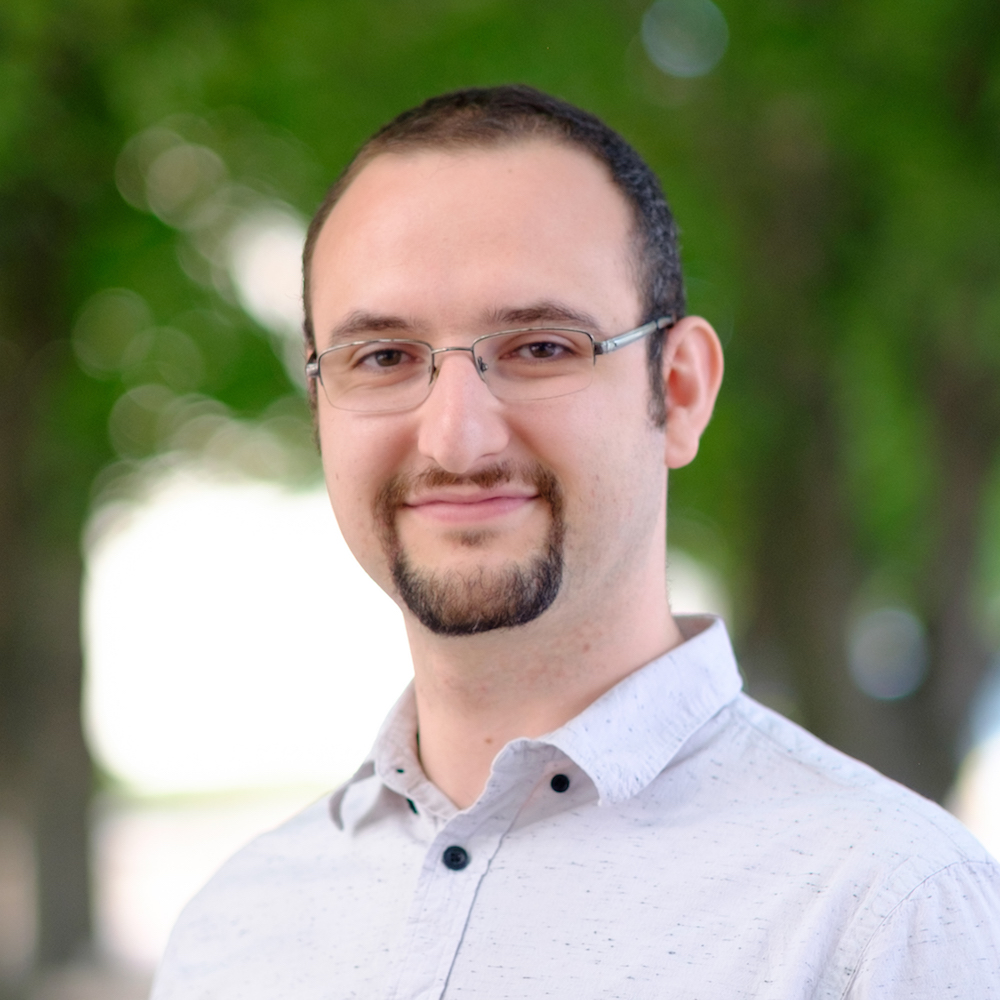
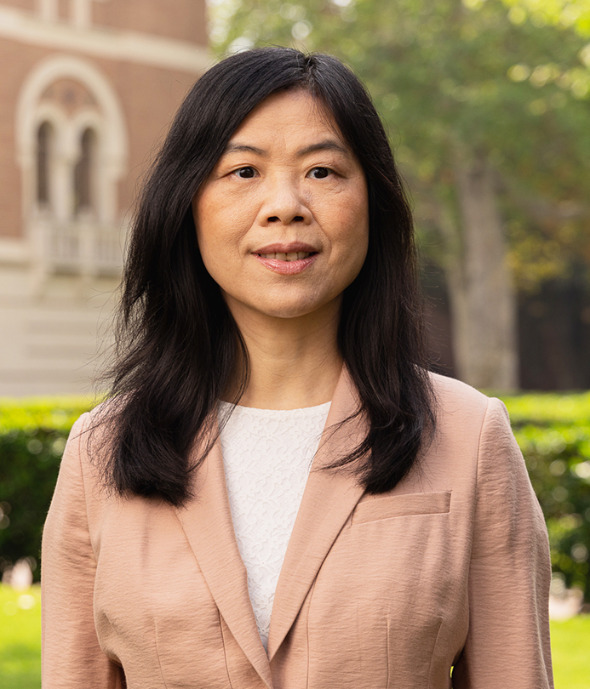
Christopher Polk is Professor of Finance at LSE and former Head of the Finance Department. His research on asset pricing and investment strategies has received numerous awards including the Fama-DFA Prize for best paper in capital markets. Polk developed influential models integrating stochastic volatility into intertemporal asset pricing theory and has made significant contributions to understanding value investing cycles. He currently teaches Sustainable Finance and Impact Investing while leading research on factor premia variation across business cycles. Fama-DFA Prize (2018) AQR Insight Award (2014) Jensen Prize (2002) Q Group Research Award Inquire Europe Research Award
Alin Coman is a Professor at Princeton University 's School of Public and International Affairs, leading the Cognition in Collectives Lab . His research explores how cognition emerges and evolves within social contexts, focusing on collective memory, belief dynamics, and emotion regulation through interactions. Education: Ph.D. from the New School for Social Research Research Focus: Integrating laboratory experiments, field studies, social network analysis, and agent-based simulations, his work demonstrates how macro-level phenomena like collective memories and synchronized beliefs arise from micro-level cognitive processes. Key themes include memory convergence, belief propagation in networks, and socially triggered prediction errors. Article Trends: His recent publications address vicarious memory frameworks, emotion regulation contagion, moral narratives, political belief change, pandemic-related belief dynamics, and the role of social norms in cognitive processes. Methodologies often involve network science and experimental paradigms. Advising: Mentors graduate researchers including Ari Dyckovsky, Gracielle Li, and Naomi Vaida. Lab: The Cognition in Collectives Lab employs a social-interactionist approach to study emergent psychological phenomena across groups and networks.
Christine A. Parlour is the Sylvan C. Coleman Chair of Finance and Accounting at the Haas School of Business, UC Berkeley. She co-directs the Berkeley Center for Responsible Decentralized Intelligence. Her research focuses on Fintech, digital payments, and market microstructure, particularly in cryptocurrency and decentralized finance (DeFi). She has served on the Nasdaq Economic Advisory Board and the New Special Study of Securities Markets steering committee. Education: PhD and MA in Economics from Queen’s University (Kingston), BSocSci from University of Ottawa. Her work explores payment system externalities, blockchain protocols, and banking innovation. Recent research includes analysis of Bitcoin transaction fees, decentralized exchange liquidity, and systemic risks in DeFi markets. Publications span top finance journals, addressing topics like Uniswap’s AMM model, miner collusion in Bitcoin, and the impact of Fintech on traditional banking. She frequently engages with policymakers on digital currency regulation and CBDC design.
Dr. Yanqing Hu is an Associate Professor at the Department of Statistics and Data Science, School of Science, Southern University of Science and Technology (SUSTech). With a Ph.D. in Systems Theory from Beijing Normal University (2011) and postdoctoral experience at the Levich Institute, City University of New York (2011-2013), his work focuses on big data analysis of complex systems, particularly in social media dynamics, network resilience, and graph neural network applications. Ph.D.: Beijing Normal University (Systems Theory, 2011) Postdoctoral: Levich Institute, CUNY (2011-2013) Research spans complex network analysis, information spreading mechanisms, and predictability of network structures. His work combines theoretical frameworks with real-world applications in social networks, infrastructure systems, and brain connectivity. Recent publications explore information percolation in social media, resilience quantification in interdependent networks, and intrinsic structure predictability. These studies appear in high-impact journals like Nature Human Behaviour (IF: 24.3), Nature Communications (IF: 17.7), and PNAS (IF: 10). World AI Conference Youth Outstanding Paper Nomination Beijing Outstanding Doctoral Dissertation Award Guangdong Special Support for Young Talents Guangdong Outstanding Youth Fund Collaborations include leading researchers from Boston University, King's College London, and Shenzhen-Hong Kong Institute of Microelectronics. His work informs network defense strategies and efficient navigation mechanisms in complex systems.
Professor Susan Thorp is a Finance academic at the University of Sydney Business School . With a PhD in Economics from UNSW and prior roles at University of Technology Sydney and the Reserve Bank of Australia, she focuses on household finance , retirement planning , and financial market behavior . BEc (Hons) - University of Sydney Dip. Ed. - University of New England PhD - University of New South Wales Her research interests include: Life-cycle financial decision-making Behavioral influences on savings and investments Superannuation policy and market integration Commodity market dynamics Economic impacts of financial literacy Crises-driven market contagion Recent publications analyze retirement decumulation , financial trust , and commodity-equity market correlations . She leads cross-disciplinary teams applying dynamic programming , econometric modeling , and experimental design to financial challenges. Her grants include ARC Linkage Projects and ASIC commissions for improving financial communication and regulatory frameworks . Media outlets frequently cite her expertise on superannuation policy , market volatility , and retirement savings behavior .
Andrea Vedolin is a Professor of Finance at the Questrom School of Business, Boston University. He is also a Research Associate at the National Bureau of Economic Research (NBER) and a Research Affiliate at the Centre for Economic Policy Research (CEPR). His research focuses on international finance, asset pricing, and macroeconomic uncertainty, with particular emphasis on exchange rate dynamics, risk premia, and monetary policy effects. Vedolin holds a Ph.D. in Economics from the University of Lugano (2010). His work spans topics such as bond risk premia, variance risk across assets, and the impact of central bank communication on financial markets. Key contributions include analyses of global factor structures in exchange rates, the role of uncertainty in shaping asset prices, and the modeling of systemic risk in international contexts. His research often integrates theoretical frameworks with empirical evidence to address questions in macro-finance and financial economics. Vedolin’s articles explore themes like interest rate risk management, liquidity in international markets, and the interplay between economic uncertainty and credit markets. His studies frequently employ advanced econometric techniques and model-free approaches to derive insights about market behavior and policy implications. Despite his prolific output, no specific scientific awards or grants are mentioned in the provided texts. His advising record and lab affiliations remain unspecified, though his work suggests involvement in collaborative projects with institutions like NBER and CEPR. The summary highlights his role as a leading scholar in understanding how uncertainty and policy regimes influence financial markets globally.
René M. Stulz is the Everett D. Reese Chair of Banking and Monetary Economics at The Ohio State University's Max M. Fisher College of Business , where he also serves as Director of the Dice Center for Research in Financial Economics . He has held academic positions at MIT, University of Chicago, and University of Rochester. Ph.D., Massachusetts Institute of Technology Marvin Bower Fellowship (Harvard Business School) Doctorat Honoris Causa (University of Neuchâtel) Risk Manager of the Year (Global Association of Risk Professionals) His research spans corporate finance , financial institutions , and asset pricing , with recent work on unicorns , cyberattack economic impacts , and banking regulation . His articles show expertise in market volatility , governance , and financial globalization . Stulz has won multiple scientific awards and served as editor of the Journal of Finance and Journal of Financial Economics . He consults for the IMF , World Bank , and major financial institutions , and has testified in federal/state courts .
Onur Varol is an Assistant Professor at Sabanci University's Computer Science Department and leads the VIRAL Lab, which focuses on computational social science, network science, and machine learning. He has affiliations with the Center of Excellence for Data Analytics. His research spans social bot detection, misinformation analysis, and online behavior modeling.
Saleem Bahaj is an Associate Professor of Economics and Finance at University College London (UCL), serving as Programme Director for MRes/PhD in Financial Economics. He joined UCL in 2021 after seven years at the Bank of England's research department and holds a PhD from the University of Cambridge. His research focuses on the intersection of macroeconomics and finance, emphasizing international finance, corporate behavior, and bank capital regulation. Notable work includes studies on cross-border financial policy coordination, central bank liquidity lines, and the implications of bank capital requirements. Bahaj's research also explores topics such as open banking's impact, inflation risk markets, and the effects of monetary policy through collateral channels. He is affiliated with UCL's Department of Economics and School of Management, with a professional presence at Drayton House in London. Research interests include global financial stability mechanisms, the macroeconomic effects of fiscal policies, and the transmission channels of monetary policy. His work often addresses systemic risks and policy coordination in international contexts. He has contributed to discussions on liquidity management, solvency hedging strategies, and the anatomy of currency pegs. Bahaj's publications span topics from corporate behavior during crises to the economic impacts of residential collateral dynamics. His advising and grants activities are not explicitly detailed in the provided materials. He maintains a lab or team focused on financial stability and macroeconomic policy analysis, though specific team names are not mentioned. Contact information and a personal website are available via his UCL profile.
Dr. Andrzej Nowak is a Professor of Psychology at the Charles E. Schmidt College of Science, Florida Atlantic University , where he has created a unique interdisciplinary research program since 1991. His work bridges social psychology, computational modeling, and complex systems theory. University of Warsaw, Psychology Stanford University, 1974-1975 M.A. and Ph.D. in Psychology from University of Warsaw (1978, 1987) Nowak's research focuses on applying dynamical systems theory to understand social processes through computational modeling. He investigates: Emergent properties of social systems Self-organization in group dynamics Conflict and radicalization mechanisms Synchronization of psychological states Behavioral economics and social dilemmas Technology-mediated social transitions His publications demonstrate interdisciplinary breadth across psychology, computational science, and socioeconomic modeling. While many articles (1990-2010) focus on social impact theory and neural network applications, recent work (2008-2010) expands to intractable conflict modeling, social entrepreneurship, and cross-scale systemic dynamics. Dr. Nowak has co-edited multiple volumes on: Complex human dynamics Computer modeling of social processes Non-equilibrium social science He has developed simulation platforms like Attractor for multi-stakeholder negotiation training and contributed to understanding: Warsaw as an emergent structure Polish political cleavage stability Behavioral economics foundations
Thorsten Chmura is a Professor in the Department of Economics at Nottingham Business School, Nottingham Trent University. His work focuses on experimental and behavioral economics, utilizing laboratory and field experiments to address real-world challenges. He maintains collaborations within NTU’s Applied Economics and Policy Research Group, Public Service Management Research Group, and international partnerships across Europe, China, and the US. Chair of Industrial Economics at University of Nottingham (previous) Director, Centre for Research in the Behavioural Sciences (previous) PhD in Economics and Physics from University of Bonn Research interests span behavioral economics, experimental economics, game theory, and traffic modeling. His work examines decision-making under risk, wage discrimination, and behavioral responses in complex systems. Recent publications explore AVOD streaming economics (2024), social trading herding (2022), and toll road choice dynamics (2014). Key article trends include: Behavioral responses in financial markets Risk attitudes across 30 countries Cultural value impacts on loyalty programs Traffic flow simulations Game theory applications in coordination problems Experimental validation of economic theories
Sandra Paterlini is a Full Professor in the Department of Economics and Management at the University of Trento, Italy. She holds academic roles including Co-Chair of the ERCIM Working Group on Optimization Heuristics and Vice-Chair of the IEEE Task Force on Portfolio Optimization. Her career includes visiting positions at institutions such as the University of Minnesota and Ludwig-Maximilians-Universität München. She earned a PhD in Computational Methods for Financial and Economic Decisions from the University of Bergamo, an MSc in Financial Mathematics from the University of Warwick, and a Laurea in Economics from the University of Modena and Reggio E. Her research focuses on quantitative finance, risk management, portfolio optimization, and network analysis, with applications to ESG, systemic risk, and financial stability. Key research contributions include methodologies for sparse graphical modeling, systemic risk analysis, and ESG scoring frameworks. She has received multiple awards for research excellence and serves on editorial boards of journals like Computational Statistics & Data Analysis and Frontiers in Applied Mathematics and Statistics . Her work bridges academia and policy, with contributions to the European Central Bank’s Financial Stability Directorate and involvement in global conferences on computational finance and econometrics.
Sha Yang serves as the Ernest Hahn Professor of Marketing at the Marshall School of Business, University of Southern California, where she has held full-time faculty positions since 2017 after progressing from Assistant to Associate Professor roles at New York University and UC-Riverside. Her research examines interdependencies in consumer preferences, social influences on decision-making, and competitive dynamics in advertising, pricing, and platform growth. Her educational background includes a PhD in Marketing (2000) and MA in Statistics (1998) from Ohio State University, complemented by an MA in Economics (1995) and BA in International Economics (1994) from Renmin University of China. Her methodological expertise spans Bayesian methods, structural modeling, and data analytics applied to consumer behavior. Yang's research portfolio reveals consistent focus on digital marketing phenomena, with recent work analyzing cross-category spillovers in advertising, review impacts under negotiated pricing, and psychological pricing effects in luxury markets. Her publications in Journal of Marketing , Management Science , and Marketing Science demonstrate interdisciplinary approaches bridging econometrics and behavioral insights. Among her recognitions is the Marketing Science Institute Young Scholar award. She has served as Associate Editor for Journal of Marketing (2017-present) and Marketing Science (2017-2024), reflecting her scholarly impact. Marketing Science Institute Young Scholar Associate Editor, Journal of Marketing (2017-present) Associate Editor, Marketing Science (2017-2024) VP, INFORMS Society for Marketing Science Administratively, Yang served as Vice Dean and Senior Vice Dean for Faculty and Academic Affairs at Marshall School of Business (2020-2023), overseeing faculty development and academic strategy. Her current research integrates causal inference methods with media and entertainment industry applications, supported by grants from marketing research institutions.
Elisa Faraglia is a Professor of Macroeconomics and Finance at the Faculty of Economics, University of Cambridge, and a Research Fellow of CEPR and CERF. She coordinates the Euro Area Business Cycle Network (EABCN) and has published extensively on fiscal policy, debt management, and financial economics. PhD, New York University (2005) Network Coordinator, Euro Area Business Cycle Network (EABCN) Affiliated with King's College and CEPR Her research spans Macroeconomic Theory, focusing on optimal fiscal policy, debt management, asset pricing, and numerical methods. Recent work examines gender dynamics in academic collaboration post-MeToo and the unequal impacts of the pandemic on economists' productivity. Professor Faraglia's publications include analyses of cross-country stock market comovement, government debt strategies, and sovereign default risks. Her work combines theoretical modeling with empirical studies of financial markets and macroeconomic policy. J M Keynes Fellowship (2023) She supervises PhD students including Lennart Niermann (Sovereign Default, Financial Contagion) and Luigi Dante Gaviano (Sovereign Debt, Firm Dynamics). Her affiliations include King's College, CEPR, and EABCN, with contributions to institutions like the Janeway Institute for Economics.
Prof. Rama Cont is a Statutory Professor of Mathematics at the University of Oxford and a Professorial Fellow at St Hugh's College . He serves as Director of the Centre for Doctoral Training in Mathematics of Random Systems , Faculty Member of the Stochastic Analysis Group , and Senior Research Fellow at the Institute for New Economic Thinking . Additional roles include Director of the Oxford Martin Programme on Systemic Resilience , Principal Investigator at the Oxford Suzhou Centre for Advanced Research , and Editor-in-Chief of Mathematical Finance . His research interests span pathwise methods in stochastic analysis, rough analysis, functional Ito calculus, mathematical modeling in finance, systemic risk, and data-driven decision systems. Recent publications focus on causal transport, rough volatility, and deep residual networks, reflecting his interdisciplinary approach to mathematics and finance. Functional Ito calculus and pathwise integration Rough volatility and financial market dynamics Systemic risk in financial networks Deep learning applications to finance and stochastic processes He has received prestigious awards including the Louis Bachelier Prize , SIAM Fellowship, Royal Society APEX Award, and IMA Fellowship. His editorial roles and seminar leadership underscore his influence in mathematical finance and stochastic analysis.