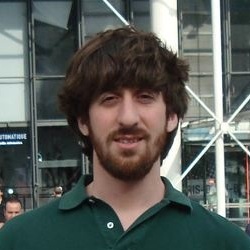
Steven Sivek is a Reader in Pure Mathematics at Imperial College London, affiliated with the Geometry group within the Department of Mathematics. His research focuses on contact and symplectic geometry, knot theory, gauge theory, and low-dimensional topology. He has taught courses on contact geometry, symplectic geometry, mapping class groups, and Morse theory at institutions including Imperial College London, Harvard University, and the University of Bonn. His work includes advanced topics such as Floer homology, Legendrian knots, and the interplay between contact structures and 3-manifolds. Sivek's contributions bridge geometric topology with algebraic structures, addressing questions about knot invariants, representation varieties, and topological field theories. His courses emphasize foundational texts and advanced research topics, such as the classification of tight contact structures, Morse theory applications, and symplectic fiber bundles. He has organized seminars on mapping class groups and taught graduate-level material on advanced geometry and topology. Sivek's research has been published in numerous high-impact papers, exploring themes like Khovanov homology, instanton Floer homology, and the geometry of 3- and 4-manifolds. His academic profile reflects a commitment to both teaching and cutting-edge research, with a focus on geometric and topological questions that intersect algebraic and differential structures.
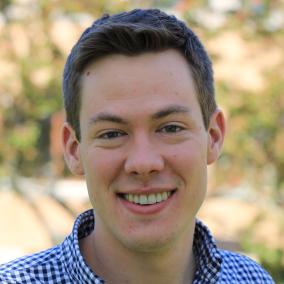
Richard Hind is a Professor in the Department of Mathematics at the University of Notre Dame, part of the College of Science. He holds a B.A. from Cambridge University (1992) and a Ph.D. from Stanford University (1997). His research focuses on differential geometry, particularly complex and symplectic geometry, with an emphasis on the interplay between Riemannian metrics and canonical geometric structures. His work explores symplectic embeddings, Lagrangian submanifolds, and geometric rigidity, utilizing pseudoholomorphic curves as a key tool. Key research areas include symplectic packing problems, Stein manifolds, and the topology of symplectic manifolds. Recent work addresses symplectic barriers, packing stability, and geometric invariants of ellipsoids. His publications span journals like Geom. Funct. Anal., Duke Math. J., and Invent. Math., often collaborating with leading researchers in the field. Teaching includes MATH 10270: Mathematics in Architecture, linking geometric principles to historic structures. Professional roles include service on editorial boards and contributions to conferences. Office: 238 Hayes-Healy Bldg, Email: rhind@nd.edu and hind.1@nd.edu.
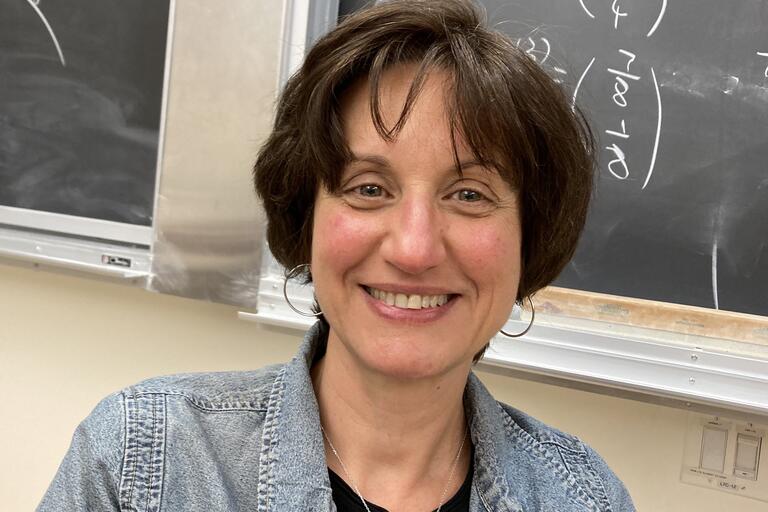
Guglielmo Scovazzi is a Professor at Duke University with appointments across multiple departments including the Department of Civil and Environmental Engineering, the Thomas Lord Department of Mechanical Engineering and Materials Science, and as Professor of Mathematics. His interdisciplinary research bridges computational mechanics, scientific computing, and engineering applications. Dr. Scovazzi earned his B.S/M.S. in aerospace engineering (summa cum laude) from Politecnico di Torino (Italy), followed by an M.S. and Ph.D. in mechanical engineering from Stanford University. Prior to joining Duke, he was a Senior Member of the Technical Staff at Sandia National Laboratories' Computer Science Research Institute. His research focuses on developing advanced numerical methods for computational mechanics, particularly finite element methods for fluid and solid mechanics. Key areas include multiphase porous media flows, computational methods for materials under extreme conditions, turbulent flow computations, and instability phenomena. His work emphasizes creating accurate computational approaches that reduce design/analysis costs for complex engineering problems involving fluid-structure interactions and transient phenomena in complex geometries. Dr. Scovazzi's most significant recent contribution is the development of the Shifted Boundary Method, an innovative computational framework that enables efficient simulations on complex geometries without requiring boundary-fitted meshes. This method has found applications in geomechanics, energy systems, and resilient infrastructure design. Kavli Fellow, National Academy of Sciences & Kavli Foundation (2018) Presidential Early Career Award for Scientists and Engineers (PECASE), White House (2017) Early Career Award, U.S. Department of Energy, Advanced Scientific Computing Research Program (2014) Dr. Scovazzi teaches multiple courses in computational mechanics including Nonlinear Finite Element Analysis and Introduction to the Finite Element Method. His research has been supported by substantial federal funding, and he actively collaborates across disciplines to address challenging problems in energy, environment, and infrastructure resilience through advanced computational methods.
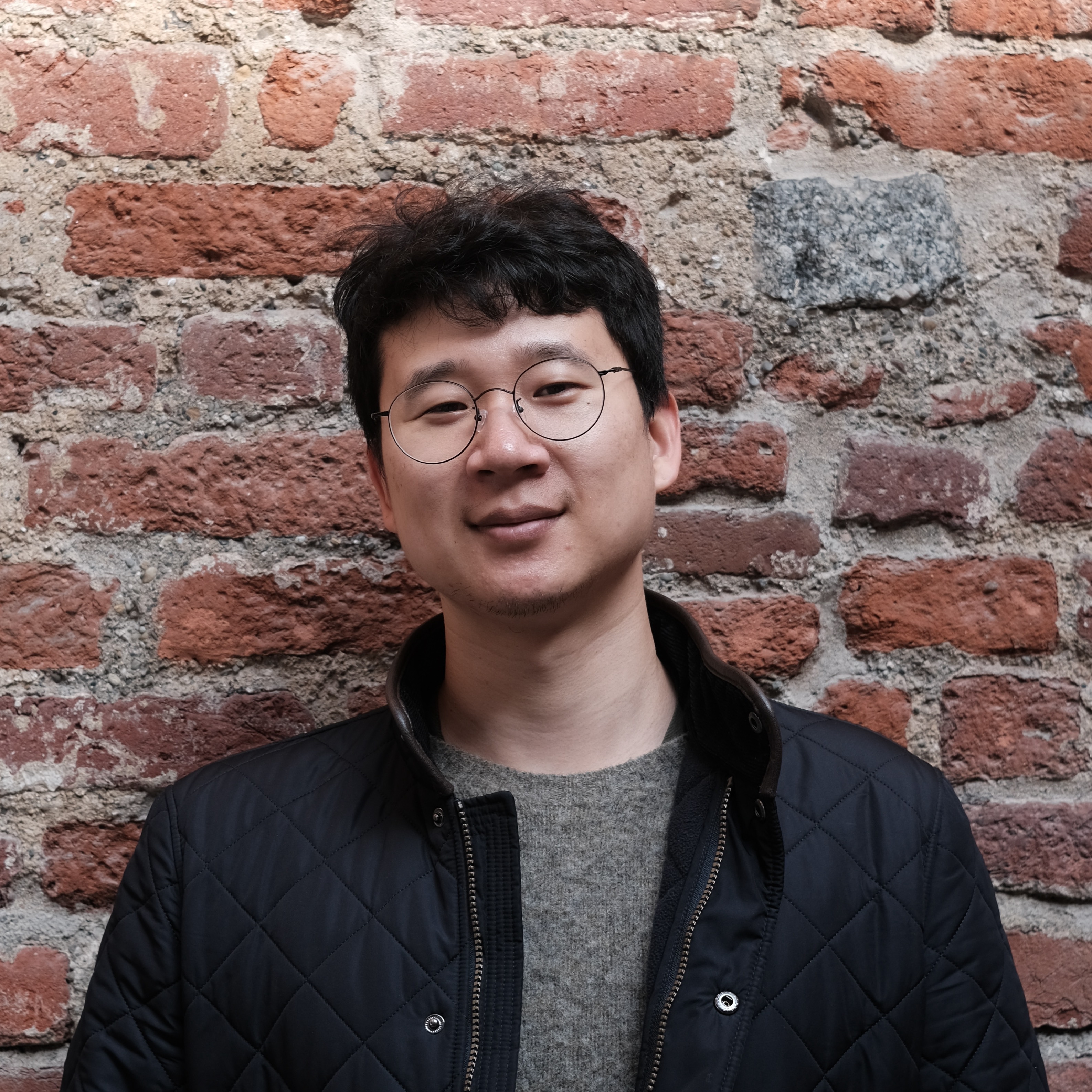
Prof. Dr. Kai Cieliebak is a Professor of Mathematics at the University of Augsburg, where he holds the Chair of Analysis and Geometry within the Institute of Mathematics under the Faculty of Mathematics, Natural Sciences, and Materials Engineering. He has been at Augsburg University since 2012, following a professorship at Ludwig-Maximilians-Universität München from 2001-2012. His research group includes several researchers and postdocs working on symplectic geometry and related fields. Dr. Cieliebak earned his Diplom in mathematics summa cum laude from Ruhruniversität Bochum in 1992, with thesis on "Pseudo-holomorphe Kurven und periodische Orbits auf Cotangential Bündeln" under advisor H. Hofer. He completed his PhD in mathematics at ETH Zürich in 1996, with thesis "Symplectic boundaries: closed characteristics and action spectra," also advised by H. Hofer. His academic journey included positions at Harvard University, Stanford University, and research at IBM Zürich before his professorships in Munich and Augsburg. Prof. Cieliebak's research focuses on symplectic and contact geometry , with significant contributions to understanding symplectic manifolds, Lagrangian and Legendrian knots, Stein manifolds, and string topology. His work in Hamiltonian dynamics explores variational methods, periodic orbits, and celestial mechanics problems, particularly the restricted three-body problem. In global analysis , he investigates solution spaces of elliptic PDEs and symplectic field theory. His approach often bridges differential geometry, topology, and dynamical systems, with applications to mathematical physics. Over the past decade, Prof. Cieliebak's publications reveal a consistent focus on symplectic homology, Floer theory, and their applications to geometric problems. His work shows increasing integration of algebraic structures with geometric methods, particularly in cyclic homology and string topology. Recent research demonstrates strong collaboration with Urs Frauenfelder on celestial mechanics problems, applying symplectic techniques to the restricted three-body problem and related orbital dynamics. Prof. Cieliebak has secured significant research funding throughout his career, including multiple DFG grants under project codes CI 45/1 through CI 45/12, NSF grants, and participation in European Science Foundation networking programs. His most notable grants include "Foundations of Symplectic Field Theory" (2009-2015) and the current "Rabinowitz Floer Homology" project (since 2023), both in collaboration with U. Frauenfelder. He has mentored numerous researchers and maintains an active research group at Augsburg University, including postdocs and collaborators working on symplectic geometry problems. His team includes researchers such as Dr. Filip Broćić, Zhen Gao, Dr. Hanna Häußler, Emilia Konrad, Shuaipeng Liu, Dominik Meidert, Dr. Airi Takeuchi, Dr. Evgeny Volkov, Milan Zerbin, and PD Dr. Lei Zhao. Prof. Cieliebak has also organized numerous workshops on symplectic geometry, including the annual "Symplectic Field Theory" workshop series.
Ian Ball is the Gary Loveman Career Development Assistant Professor of Economics at the Massachusetts Institute of Technology , specializing in economic theory , mechanism design , and information design . He is affiliated with the Department of Economics and contributes to theoretical advancements in strategic decision-making frameworks. Contact: ianball@mit.edu His research focuses on mechanism design , where he explores probabilistic verification and contingent payment systems, and information design , emphasizing dynamic provision and content filtering. Key themes include incentive compatibility, strategic agent behavior, and robustness in economic models. The articles highlight his work on probabilistic verification, dynamic information provision, and bias in delegation mechanisms, spanning journals like Econometrica , Journal of Economic Theory , and American Economic Journal: Microeconomics . Topics include reputation systems, optimization, and multi-period contracts. Scientific Awards: Review of Economic Studies Tour (2020) China Star Tour (2020) Contact details include his office location E52-556 and assistant Ruth Levitsky at phone number 617-253-3399 .
Dond Asha Kisan is an Assistant Professor at the School of Mathematics , Indian Institute of Science Education and Research Thiruvananthapuram (IISER TVM). His research focuses on numerical analysis and computational mathematics , particularly in finite element methods for partial differential equations. He can be contacted at ashadond@iisertvm.ac.in or via phone at +91 (0)471-2778247. PhD : Mathematics, Indian Institute of Technology Bombay M.Sc. : Mathematics, K.T.H.M. College, Nashik Kisan's research spans adaptive finite element methods , stabilized formulations for convection-diffusion problems , and optimal control governed by Stokes equations . His work includes convergence analysis, nonconforming discretizations, and hybrid numerical schemes. Recent publications (2023-2025) address stochastic modeling in liquid crystal physics, advanced WENO schemes, and adaptive algorithms for control problems. Scientific Awards : No explicit awards mentioned in the data, though he held prestigious postdoctoral fellowships including National Post-Doctoral Fellowship and NBHM Post-Doctoral Fellowship. Kisan has extensive teaching experience , including MATLAB workshops and undergraduate course assistantships. He has presented at major international conferences like ICIAM and Hyperbolic Problems, demonstrating global engagement in computational mathematics.
Ali Lazrak is an Associate Professor at the Sauder School of Business , University of British Columbia , specializing in Finance . He holds the Peter Lusztig Professorship in Finance and teaches courses such as International Financial Markets and Institutions and Theory of Finance (2024-2025). His research bridges Political Economy , Asset Pricing , and Behavioral Finance , with a focus on ESG concerns , Voting Theory , and Time Inconsistency . Education: ENSAE (B.Sc.), Sorbonne (M.Sc.), Toulouse (Ph.D.) Contact: Henry Angus Building (HA 872), +1 604.822.9481, ali.lazrak@sauder.ubc.ca His work explores group decision-making in corporate investment, green finance (e.g., the green premium in ESG markets), and time-inconsistent preferences in continuous games. Recent publications highlight how responsible consumption and demand elasticity shape asset prices, and how institutional divestiture impacts harmful asset stranding through informational and economic channels. Scientific accolades include the Jacob Gold & Associates Best Paper Prize (2019), Best Paper Awards at HEC-McGill, UBC, Luxembourg, and Stanford conferences, and the Peter Lusztig Professorship . His methodological expertise spans stochastic control , recursive utility , and dynamic equilibrium analysis .
Zvezdelina Stankova is a Teaching Professor of Mathematics and Director and Founder of the Berkeley Math Circle at the University of California, Berkeley . Her contact details include an office in 713 Evans Hall and the email stankova@math.berkeley.edu . Research Interests: • Algebraic Geometry • Representation Theory • Combinatorics • Olympiad Problem-Solving • Mathematics Education Publications and Research Trends: Her work bridges Combinatorics and Algebraic Geometry , with a focus on permutation patterns, avoidance, and moduli spaces of curves. She has also contributed significantly to Mathematics Education through her leadership in the Berkeley Math Circle, emphasizing problem-solving techniques and outreach programs for students. Teaching and Outreach: Stankova has taught various courses at UC Berkeley, including MATH 52 Calculus II (2025), MATH 110 Linear Algebra , and MATH 74 Transition to Proofs . She actively engages with the Berkeley Math Circle, providing resources for mathematical competitions and advanced training for students.
Jeong Joon (JJ) Park is an Assistant Professor in the Department of Computer Science and Engineering at the University of Michigan. His research focuses on computer vision, graphics, and artificial intelligence with applications in 3D/4D reconstruction, generative modeling, robotics, and medical imaging. He holds a position in the College of Engineering and actively seeks PhD students and postdoctoral researchers aligned with his research interests. Dr. Park’s work emphasizes interdisciplinary approaches, combining geometric deep learning with generative models to address challenges in scene understanding, novel view synthesis, and multi-modal perception. His lab explores both foundational techniques and applied systems, often collaborating with industry and academia on real-world problems. Key research directions include diffusion models for sparse data restoration, trajectory-conditioned 4D generation, and uncertainty-aware sensor fusion for autonomous systems. His publications span top-tier conferences like CVPR, ICCV, and NeurIPS, reflecting a strong publication record in computer vision and graphics. He teaches courses in computer vision and advises students on advanced projects requiring significant weekly commitments. Prospective applicants are encouraged to apply through the U-M CSE PhD program and contact him directly for collaboration opportunities.
Pauli Murto is a Professor and Head of the Department at Aalto University School of Business, Department of Economics. His research spans microeconomic theory, information economics, and game theory, with a focus on strategic decision-making under uncertainty. Aalto University School of Business, Espoo, Finland Member of Helsinki Graduate School of Economics Research Interests: Dr. Murto's work examines strategic timing in economic decisions, information aggregation in games, auction theory, and investment behavior under uncertainty. His publications address topics like: Common value auctions and affiliated signals Stepwise investment under multi-dimensional uncertainty Equilibrium delay and neighborly coordination Irreversible investment in oligopolistic markets Publications (2002–2024): His research appears in top journals like Review of Economic Studies , Theoretical Economics , Journal of Economic Theory , and RAND Journal of Economics , often collaborating with scholars such as Juuso Välimäki and Chang-Koo Chi. Contact: Available at pauli.murto@aalto.fi or +358 40 353 8174. Office located in Room V308, School of Business building, Aalto University.
Kristin Shaw is a Professor in the Department of Mathematics at the University of Oslo, specializing in Algebra, Geometry and Topology. She leads the research group on Algebraic and Topological Cycles in Tropical and Complex Geometries, funded by the BFS. Her office is located in room 1114 of Niels Henrik Abels hus, with contact information including email krisshaw@math.uio.no and phone +47 22855940. Shaw's research focuses on the connections between combinatorics and algebraic geometry over the real and complex numbers, with particular emphasis on tropical geometry. Her work bridges abstract mathematical theory with concrete geometric structures, exploring how combinatorial methods can illuminate deep properties of algebraic varieties. She has made significant contributions to understanding matroids, real algebraic curves, and the topology of hypersurfaces through tropical techniques. Her research demonstrates how combinatorial structures can reveal fundamental insights about algebraic varieties and their topological properties. Analysis of Professor Shaw's recent publications reveals a consistent focus on tropical geometry and its applications to classical algebraic geometry problems. Her work frequently examines the interplay between real and complex geometries, with particular attention to combinatorial structures underlying algebraic varieties. Key themes include matroid theory, enumerative geometry, and the topology of algebraic varieties, demonstrating how tropical methods can provide new insights into longstanding problems in algebraic geometry. Her research shows remarkable depth across multiple subfields while maintaining a coherent theoretical framework that connects combinatorial and geometric approaches. Professor Shaw leads the research group on Algebraic and Topological Cycles in Tropical and Complex Geometries, which is funded by the BFS. Prior to her position at the University of Oslo, she held postdoctoral positions at the Max Planck Institute Leipzig, the Technical University of Berlin, the University of Toronto, and participated in the Fields' Institute semester in Combinatorial Algebraic Geometry. Her collaborative work spans multiple international institutions, reflecting her active engagement in the global mathematical research community.
Mehdi Yazdi is a Lecturer in Pure Mathematics at King's College London, part of the Department of Mathematics within the Faculty of Natural, Mathematical & Engineering Sciences. His research focuses on low-dimensional topology, geometry, and dynamics, with particular emphasis on 3-dimensional manifolds, foliations, mapping class groups, and algorithmic aspects of topology. He holds a PhD from Princeton University (2017) and has held postdoctoral fellowships at the University of Oxford, including the Glasstone Research Fellowship in Science, Titchmarsh Research Fellowship, and a UKRI Postdoctoral Research Fellowship. Education: PhD in Pure Mathematics from Princeton University (2017). Prior to King's College, he was at Oxford from 2017–2021. Research interests include the study of geometric structures on manifolds, algorithmic problems in topology, and the interplay between dynamics and geometry. His work has contributed to understanding foliations, knot theory, and computational aspects of topological invariants. Publications span topics like the stability of foliations, Thurston norms, and computational complexity of knot genus, reflecting his expertise in both theoretical and algorithmic dimensions of geometry and topology. He is a member of the Geometry Group at King's, which explores areas such as algebraic geometry, cohomology theories, and symplectic geometry. His research also engages with broader questions in geometric analysis and low-dimensional dynamics.
Petter N. Kolm serves as a Clinical Professor of Mathematics and Program Director at New York University, with his office located in Warren Weaver Hall (520). He can be contacted at petter.kolm@nyu.edu or 212-998-4855, and holds an editorial board position at the Journal of Portfolio Management. His academic qualifications include: Doctorate in Mathematics from Yale University M.Phil. in Applied Mathematics from the Royal Institute of Technology in Stockholm M.S. in Mathematics from ETH Zurich Dr. Kolm's research centers on quantitative finance, with primary focus areas including quantitative trading strategies, delegated portfolio management, financial econometrics, risk management, and optimal portfolio strategies. His work integrates advanced mathematical modeling with practical investment applications, bridging theoretical frameworks and real-world market dynamics through rigorous empirical analysis. Analysis of his 15 most recent publications reveals consistent emphasis on portfolio optimization techniques—particularly Bayesian methods and the Black-Litterman model—alongside significant contributions to algorithmic trading systems, factor-based equity portfolio construction, and machine learning applications for financial sentiment analysis. His scholarly output demonstrates evolution from foundational portfolio theory toward contemporary computational finance challenges. As Program Director, Dr. Kolm oversees academic programming and likely mentors graduate students in quantitative finance, though specific advisee details are not documented. His prior industry role at Goldman Sachs Asset Management provided direct experience in developing hedge fund strategies, informing his applied research approach. Dr. Kolm's professional trajectory includes significant industry engagement through his tenure in Goldman Sachs' Quantitative Strategies Group, where he developed quantitative investment systems. His current academic leadership position leverages this practical experience to shape quantitative finance education and research at NYU.
Ketika Garg is a Postdoctoral Scholar Research Associate in the Division of the Humanities and Social Sciences at the California Institute of Technology (Caltech), with an office in the Broad Center for Biological Sciences. Her research focuses on the interplay between individual and social decisions, using experimental and computational methods to explore how social environments influence decision-making and collective behavior. She investigates contexts ranging from traditional foraging paradigms to modern social media landscapes, developing innovative experimental frameworks to study these dynamics. Her research interests span computational neuroscience, social media analysis, and collective behavior, with a particular emphasis on understanding exploration-exploitation trade-offs in both natural and digital environments. She has contributed to studies on hunter-gatherer foraging networks, online toxicity dynamics, and the evolution of search strategies in collective foraging systems. Her work bridges disciplines such as psychology, ecology, and computer science to address fundamental questions in decision-making and social interaction. Dr. Garg’s publications reflect her interdisciplinary approach, covering topics like synergy in collective problem-solving, the roots of online toxicity, and the application of Lévy walks in virtual foraging experiments. While no formal awards or grants are explicitly listed in the provided materials, her research trajectory demonstrates a commitment to advancing methodologies in computational social science. Contact: kgarg@caltech.edu Office: Broad Center for Biological Sciences (96) Phone: 626-395-1755
Professor Dhruv Ranganathan is affiliated with the Department of Pure Mathematics and Mathematical Statistics at the University of Cambridge, working within the Algebraic Geometry research group. His research spans foundational and applied aspects of algebraic geometry, focusing on enumerative geometry, Gromov-Witten theory, moduli spaces, tropical geometry, logarithmic structures, and classical geometry of curves. Research Focus Enumerative geometry and Gromov-Witten theory, particularly in toric varieties and tropical settings. Moduli spaces of curves and stable maps, with expansions and logarithmic structures. Applications of tropical geometry to classical problems in algebraic geometry. Brill-Noether theory and its combinatorial analogues for graphs and finite structures. Recent Publications The articles reflect a strong emphasis on logarithmic and tropical geometry, with connections to moduli spaces, enumerative invariants, and combinatorial algebraic structures. Topics include Donaldson–Thomas theory, double ramification cycles, chip firing on graphs, and motivic zeta functions. Contact Email: dr508@dpmms.cam.ac.uk Room: E1.01, Telephone: 01223 337990 Personal Homepage