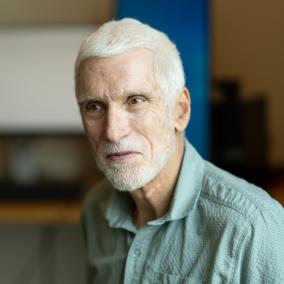
Professor James Banks is a leading economist at University College London , specializing in retirement economics, health disparities, and socioeconomic inequality. His work bridges microeconomic analysis with public policy, focusing on aging populations, pension systems, and the intersection of health and economic behavior. Key affiliations: Institute for Fiscal Studies (IFS), English Longitudinal Study of Ageing (ELSA) Education: Implied PhD in Economics (based on career trajectory) Research Interests : Banks' work explores how retirement decisions affect health outcomes, the international comparison of socioeconomic health gradients, and the economic consequences of aging . He has extensively studied the UK and US pension systems, wealth distribution, and the impact of policy reforms on labor participation. Recent Publications reveal a focus on: Cognitive and physical benefits of extended employment Global inequality trends in mortality and health Cross-national tax equity analysis Longitudinal studies of disability and education Scientific Contributions : Banks co-founded the ELSA study, a major data source for aging research, and has shaped debates on retirement savings adequacy and health policy. His work on the Deaton Review of Inequalities and UK Household Longitudinal Survey informs national and international policy.
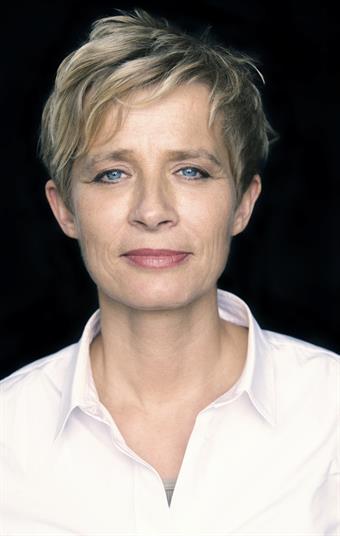
Claudia Gerhards serves as Professor of Communication and Multimedia at the University of Applied Sciences Düsseldorf within the Faculty of Business Studies. Since 2005, she has held this position while also serving as program director for the Bachelor's program in Communication and Multimedia Management. Her academic profile bridges extensive industry experience with scholarly research, having worked for thirteen years as editorial manager, producer, and format developer for television production companies specializing in nonfiction entertainment prior to her academic career. Her educational background includes studies in German Philology, Theater/Film/Television Studies, and English Philology at the University of Cologne, where she also completed her doctoral studies. Her research focuses on digital media transformation, specifically examining new business models for traditional media companies in digital environments, social media communication strategies for brands (particularly on Snapchat, Instagram, and YouTube), and innovative storytelling formats in digital spaces. Analyzing her publication history from 2002-2025 reveals consistent scholarly engagement with evolving digital media platforms as they emerge. Her work demonstrates methodological adaptability, moving from television studies to contemporary social media research while maintaining focus on content creation, audience engagement, and commercial applications. The publications show progression from traditional media analysis to cutting-edge investigations of influencer culture, platform nomenclature, and moral dimensions of digital content creation. Jury Member of German Radio Prize (2012-2014) Jury Member of Adolf-Grimme-Preis (2007) Professor Gerhards actively supervises bachelor's theses, with students required to contact her six months before thesis registration. Her guidance focuses on communication and multimedia management topics, reflecting her expertise in digital media business models and content strategies. While specific grant information isn't detailed in the provided text, her extensive publication record suggests successful research funding throughout her career. Her industry background provides practical insights that likely inform applied research projects with media organizations. Her work environment centers around the Communication and Multimedia department, where she develops curriculum for digital media management education. Her research approach combines theoretical frameworks with practical industry insights, particularly valuable given her thirteen years of professional experience in television production before entering academia. Current teaching includes courses on digital storytelling, PR & social media relations, and communication theories, all supported through Microsoft Teams platforms as indicated for the 2025/26 winter semester.
Syon Bhanot is an Associate Professor of Economics at Swarthmore College , with additional appointments as an Adjunct Associate Professor at the Wharton School (University of Pennsylvania). He specializes in behavioral economics , public economics , and experimental economics , focusing on pro-social behavior , decision-making , and development economics . Academic Affiliate, Office of Evaluation Sciences Board Member, Busara Center for Behavioral Economics Senior Researcher, MIT Applied Cooperation Initiative Co-Founder, Philadelphia Behavioral Science Initiative Member, American Economic Association His research emphasizes field experiments using behavioral science concepts to influence decision-making, with applications in public policy , poverty reduction , and environmental sustainability . Recent publications explore topics like political messaging effects , administrative burden reduction , and social norm influences on conservation behavior. His work has appeared in journals like The New England Journal of Medicine , Journal of Development Economics , and Organizational Behavior and Human Decision Processes . He is a frequent media commentator in outlets including the New York Times , NPR , and The Philadelphia Inquirer , with notable contributions on quarantine compliance and vaccine hesitancy . His interdisciplinary approach bridges economics with environmental studies and public health .
Ken Peattie is a distinguished Professor of Marketing and Strategy at Cardiff Business School, Cardiff University, where he has been employed since 1986. His academic career spans over three decades of research and teaching focused on sustainability, ethics, and social responsibility in business contexts. He has established himself as a leading authority in sustainability marketing, corporate social responsibility, and social enterprise research, with significant contributions to both theoretical frameworks and practical applications. BA Hons Degree in Management and Geography from Leeds University (1983) Industrial experience: 3 years with Kimberly-Clark UK in Marketing, Distribution and Information Systems 2 years in strategic planning within UK electronics industry Professor Peattie's research interests center on sustainability marketing, corporate social responsibility, social marketing, and social enterprise. His work explores how management and marketing practices can be oriented toward ethics, environmental sustainability, and social responsibility across diverse contexts including Fair Trade, consumption reduction, fire prevention, and low-carbon behaviors. He has developed theoretical frameworks examining the interplay between CSR, sustainability, leadership, and ethics, while also investigating practical applications of social marketing principles in novel contexts. His recent publications demonstrate an evolving research trajectory from theoretical development toward increasingly applied research addressing specific sustainability challenges. The articles reveal a consistent focus on the intersection of temporal and spatial dimensions in sustainability marketing, practical implementation of CSR across diverse cultural contexts, and innovative business models for social enterprise. His work increasingly examines urban environments, consumer behavior patterns, and the practical challenges of implementing sustainable practices in real-world settings. 2010 Business Book of the Year award by the German Academic Association for Business Research for 'Sustainability Marketing: A Global Perspective' (co-authored with Frank-Martin Belz) 2000 Marketing & Public Policy Conference, Outstanding Paper Award 1998 Marketing Intelligence & Planning, Outstanding Paper Award 1992 Marketing Education Group Conference, Best Paper in Marketing Education Professor Peattie has supervised numerous PhD students focusing on corporate social responsibility, fair trade, social enterprise, and sustainability marketing. From 2001 to 2013, he directed the ESRC-funded BRASS Centre, securing over £13 million in research funding. As a Principal Investigator for Cardiff University's Sustainable Places Research Institute (PLACE) from 2010 to 2020, he collaborated with researchers across 11 different schools. His research has been supported by major organizations including Defra, BIS/DTI, the Welsh Government, and the Environment Agency. Professor Peattie directed the ESRC-funded Centre for Business Relationships, Accountability, Sustainability and Society (BRASS) for over 11 years, establishing it as the UK's largest social science research center dedicated to business sustainability and CSR. From 2010 to 2020, he co-directed Cardiff University's interdisciplinary Sustainable Places Research Institute (PLACE), which integrated researchers from diverse disciplines to address sustainability challenges. He has also been actively involved with various research networks and initiatives focused on sustainability policy and practice, contributing to the development of interdisciplinary approaches to complex sustainability issues.
Peter Gray serves as the William G. Shenkir Eminent Scholar Professor of Commerce at the University of Virginia, conducting influential research on technology-organization-society interactions. His work bridges academic rigor and managerial practice through publications in top journals and editorial leadership at MIS Quarterly. His academic credentials include: Ph.D. in Information Systems and Organizational Behaviour from Queen’s University, Canada M.Sc. in Information Systems from Queen’s University, Canada B.Comm. from the School of Business at Carleton University, Canada Gray's research program centers on organizational network dynamics, examining how collaboration structures drive innovation and performance. He investigates social media's transformative impact on workplace interactions, strategic IT applications for competitive advantage, and technology's societal consequences including political polarization. His methodology combines network analysis with behavioral studies to generate actionable insights for executives navigating digital transformation. Recent publications reveal accelerating focus on network-driven solutions to modern workplace challenges: return-to-office optimization, collaboration overload mitigation, and social media's role in societal fragmentation. His 2020-2023 work consistently connects micro-level employee behaviors with macro-level organizational outcomes through sophisticated network analysis frameworks. Recognition for his contributions includes: University of Virginia Research Achievement Award (2022) As Senior Editor of MIS Quarterly, Gray shapes the field's scholarly discourse while mentoring emerging researchers. His collaborative projects, particularly with Rob Cross on organizational networks, demonstrate sustained research leadership though specific grant details remain undisclosed in available materials. Gray maintains active research partnerships exploring network interventions for cultural transformation and technology-mediated sensemaking. His current work with the University of Virginia academic community continues advancing understanding of how digital connectivity reshapes organizational capabilities and societal structures.
Mari-Ann Letnes serves as Associate Professor of Pedagogy at the Department of Teacher Education within the Faculty of Social and Educational Sciences at the Norwegian University of Science and Technology (NTNU). She leads the New Technologies and Educational Design Research Group (NTED) and coordinates Norway's participation in the international KiDiCoTi project examining children's digital experiences during the pandemic. Her work spans three interconnected thematic areas: children's encounters with digital technology, digital technology in teacher education, and art-pedagogical approaches to play and learning. Her research focuses on creative applications of digital technology in educational contexts rather than consumption patterns, with particular emphasis on how children and youth engage with digital tools in school and kindergarten settings. She investigates socio-digital divides, professional digital competence development among teachers, and multimodal media production as meaning-making processes. Her recent work analyzes how variations in parental mediation and pedagogical approaches affected remote schooling experiences during the Covid-19 pandemic. Letnes participates in multiple European research projects including NOTELEB (No Teacher Educator Left Behind), which aims to improve teacher education quality through digital competence development. Her publication trends reveal consistent focus on digital pedagogy in early childhood education, art education, and teacher professional development, with increasing attention to pandemic-related educational challenges since 2020. She teaches courses including 'Professional Digital Competence for School' and 'Pedagogy and Pupil-related Skills 3 (5-10)', drawing on extensive teaching experience from primary school, art school, upper secondary school, and teacher education. Her grant portfolio includes leadership roles in DigSkoleForsk (examining co-created change through school-university partnerships) and the KiDiCoTi international study on children's digital lives during coronavirus times. Letnes directs the NTED research group exploring how digital technologies can enhance learning and teaching in schools. Her team collaborates with schools, school owners, and other stakeholders to increase teachers' professional digital competence through the DigSkoleForsk development project. She also contributes to the NOTELEB Erasmus+ project focused on quality development in teacher education.
Dr. Jakob Henke is a Researcher at the Department of Media and Communication Sciences, Faculty of Philosophy, University of Erfurt. His work focuses on media trust, journalism research, political communication, and digital privacy. Academic Affiliation: University of Erfurt, Faculty of Philosophy Core Research Areas: Media credibility, audience perception, mHealth app privacy, data journalism His recent publications explore dynamics of news trust restoration, privacy decision-making in health apps, and the impact of statistical evidence on media credibility. Presentations include topics on journalistic independence, error tolerance in news, and cognitive effort in digital news consumption. Key trends in his work include: Media Trust & Accountability Digital Privacy & Health Informatics Political Communication & Data Journalism Dr. Henke actively collaborates on interdisciplinary projects, including studies on mHealth adoption and cross-cultural migration reporting. His methodological expertise spans experimental research, panel studies, and audience-focused media analysis.
Carey W. King is a Research Scientist at the Energy Institute and Lecturer in the Department of Business, Government, and Society at the Red McCombs School of Business, both at The University of Texas at Austin. He also holds appointments in the Jackson School of Geosciences and the LBJ School of Public Affairs. His interdisciplinary research focuses on energy systems, their interactions with economic and environmental systems, and policy implications. King earned his Ph.D. and B.S. in Mechanical Engineering from The University of Texas at Austin. Education Ph.D., Mechanical Engineering, 2004 B.S. with High Honors, Mechanical Engineering, 1997 Research Interests King’s work bridges economic and biophysical perspectives, emphasizing rigorous analysis of energy systems, net energy metrics (e.g., EROI), and long-term sustainability. He explores trade-offs in energy policy, climate change mitigation, and resilience of infrastructure to extreme weather. His recent focus includes modeling the energy-water-food nexus and systemic drivers of economic growth. Key Contributions He authored The Economic Superorganism (Springer, 2021), a seminal work on energy-economy interactions. His peer-reviewed publications span energy policy, climate science, and systems modeling. Key contributions include frameworks for assessing energy transitions, resilience to climate impacts, and metrics for sustainability. Awards & Recognition Rosenfeld Plaque (2010), Environmental Research Letters Best Paper Award, ASME Energy Sustainability Conference (2010) National Science Foundation Graduate Fellowship (1998) Professional Activities King advises numerous graduate students and has served on thesis committees across disciplines. He has delivered keynote speeches at global conferences and testified on energy-water policy. His research has been featured in outlets like The Wall Street Journal , Marketplace , and American Scientist . Labs & Teams His research group focuses on interdisciplinary systems analysis, integrating energy, economics, and environmental data. Collaborations include the Biophysical Economics Institute and the Planetary Limits Network.
Michael Friedman is an Assistant Research Professor and Lecturer in the Department of Kinesiology at the University of Maryland, specializing in the Physical Cultural Studies Program. His research examines the intersections of public policy, urban design, and professional sports in postindustrial cities, with a focus on how spaces like stadiums and arenas reflect and perpetuate power dynamics, social identities, and societal structures. Friedman’s work bridges cultural studies and geography, analyzing the commodification of sports spaces and their role in urban development. He has published widely in journals such as Sociology of Sport Journal , International Review for the Sociology of Sport , and Journal of Urban Affairs , and authored a notable chapter in Critical Geographies of Sport (2016). His research highlights the cultural and economic tensions in mallparks—hybrid spaces merging stadiums with shopping malls and theme parks—as emblematic of late capitalism’s consumption-driven logic. Friedman’s scholarly contributions include analyses of urban governance, environmental justice in stadium development, and the historical narratives embedded in sports facilities. He received the 2008 Barbara S. Brown Outstanding Student Paper Award for doctoral research. His work often critiques the economic and social impacts of sports infrastructure projects, emphasizing the need for equitable urban policies.
Drew Fudenberg is the Paul A. Samuelson Professor of Economics at MIT, where he has made significant contributions to economic theory, game theory, and behavioral economics. He received his A.B. in applied mathematics from Harvard College in 1978 and his Ph.D. in economics from MIT in 1981. His research focuses on several key areas: Game theory, including foundational work on learning and equilibrium, repeated games, and reputation effects Theoretical industrial organization, analyzing competition between firms and market dynamics Behavioral economics and decision theory, particularly self-control and stochastic choice Fudenberg's recent publications reveal a continued focus on learning under misspecification, strategic behavior in complex environments, and the intersection of behavioral economics with traditional game theory. His work often combines theoretical rigor with practical applications to real-world economic phenomena. His notable scientific achievements include: Fellow of the Econometric Society (and President in 2017) Member of the National Academy of Sciences Member of the American Academy of Arts and Sciences Recipient of fellowships from the Guggenheim Foundation and Alfred P. Sloan Foundation Past editor of Econometrica Co-founder of the open access journal Theoretical Economics Fudenberg has advised numerous doctoral students who have gone on to prestigious academic and industry positions. His research has been supported by various grants throughout his career, though specific grant details are not provided in the source material. He has also authored four influential books in his field.
Leslie Paris is an Associate Professor in the Department of History within the Faculty of Arts at the University of British Columbia. Her research focuses on modern American social and cultural history with particular expertise in childhood, youth, gender, sexuality, and popular culture. Currently working on a history of American childhood during the 1960s and 1970s, she examines how social and political movements shaped children's culture while also publishing on middle-aged American women and generational cohorts. Her research interests span multiple interconnected fields including modern American social history, cultural history, childhood history, youth history, generational studies, gender history, sexuality history, and popular culture history. Dr. Paris has made significant contributions to understanding American summer camps, twentieth-century American girlhood, and the cultural significance of toys and play. Her work often bridges historical analysis with contemporary cultural concerns, particularly regarding how age and generational identity function in American society. Dr. Paris's publications reveal consistent engagement with how cultural institutions shape and reflect American identity formation, particularly through childhood experiences. Her scholarship demonstrates particular strength in analyzing how gender, age, and generational identity intersect in American cultural production and consumption. The recurring theme across her work is the examination of seemingly mundane cultural practices—summer camps, dolls, children's media—as sites where broader social transformations occur. National Endowment for the Humanities Fellowship, 2017 SSHRC Connections grant, 2014-15 Yasuo Sakakibara Prize (awarded twice by American Studies Association) Multiple UBC research grants including Humanities and Social Sciences Research Grant Multiple Social Sciences and Humanities Research Council of Canada grants Undergraduate research mentorship awards Dr. Paris has received substantial research funding including multiple Social Sciences and Humanities Research Council of Canada grants, UBC research awards, and prestigious external fellowships. Her mentorship of undergraduate researchers has been formally recognized through multiple AURA Undergraduate Research Awards and Undergraduate Research Opportunities Mentorship Awards at UBC. While specific grant amounts aren't detailed, her sustained funding record demonstrates significant scholarly impact and recognition within her fields of expertise.
Dr. Mel Ó Cinnéide is an Associate Professor at the School of Computer Science, University College Dublin. He holds a PhD from Trinity College Dublin (2001) and has over three decades of experience in academia and industry. His research focuses on automated refactoring, search-based software engineering, design patterns, and energy-efficient software development. He leads the Masters in Advanced Software Engineering program at UCD and has received multiple research grants and best paper awards. Prior to academia, he worked as a software engineer at Philips (Netherlands) and Motorola (Cork). Education: BSc in Computer Science, University College Cork MSc in Computer Science, University College Cork PhD in Computer Science, Trinity College Dublin Diploma in Gaeilge Fheidhmeach (Computing Irish), UCD Research interests emphasize practical applications of refactoring techniques to improve software quality and energy efficiency. He pioneers tools like Code-Imp and RefDetect for automated refactoring, integrating multi-objective optimization and interactive systems. His work bridges theoretical software engineering principles with real-world industry challenges. Awards and Grants: - Best Paper Awards in peer-reviewed conferences - Competitive research grants supporting software engineering projects Advising & Leadership: - Director of UCD's Masters in Advanced Software Engineering - Supervisor of numerous academic and industrial projects Labs & Projects: - Co-lead of the CodeImp Project (automated search-based refactoring) - Involved in international workshops on refactoring and software engineering
James O'Donnell is an Associate Professor in the School of Mechanical and Materials Engineering at University College Dublin (UCD). He joined UCD in 2013 after working at Lawrence Berkeley National Laboratory. His research focuses on multi-scale energy modeling, interoperable BIM solutions, and sustainable building design. He contributes to buildingSMART’s Energy Modelling Expert Panel and teaches modules on building physics and energy analysis. Education: B.E. Civil and Environmental Engineering, University College Cork Ph.D. in Holistic Building Performance Analysis, University College Cork Professional Diploma in University Teaching & Learning, University College Dublin Research Interests: James specializes in energy informatics, building energy simulation, and semantic web technologies for the built environment. His work bridges BIM integration with energy modeling to optimize urban-scale performance. Grants & Funding: PROBONO (2022–2026): Integrator-centric approach for energy-efficient buildings NexSys (2022–2026): Next-Generation Energy Systems ALIVE (2020–2024): Indoor Environmental Quality in Energy-Efficient Buildings Teaching & Editorial Roles: James coordinates courses like Energy Systems in Buildings and serves as an Associate Editor for Journal of Building Engineering and editorial board member of Advanced Engineering Informatics . Professional Affiliations: Member of Engineers Ireland, International Building Performance Simulation Association (IBPSA), and European Council on Computing in Construction.
Kathy-Ann Fletcher is a Lecturer in Marketing at the Division of Accounting, Business and Management within Dundee Business School, Abertay University since December 2018. She holds a PhD from the University of East London (UEL) focused on social media’s role in consumer-brand relationships, alongside an MSc in International Marketing Management. Her research explores consumer behavior, digital media’s impact on consumption patterns, and brand communities, with a focus on identity creation and social media’s role in emerging markets. Teaching includes modules such as Marketing, Digital/Social Media Marketing, Strategic Marketing, and Customer Relationship Management. She has co-coordinated Research Seminars and chairs the Staff Engagement Team in her School. Her work contributes to UN Sustainable Development Goals, particularly Education and Gender Equality. Key research areas include social media brand communities, consumer identity dynamics, and digital consumer behavior. Recent studies investigate Ghanaian women entrepreneurs’ sustainability practices, luxury brand adaptation in dynamic markets, and live-streaming’s influence on consumer decisions. She has presented at international conferences (e.g., British Academy of Management) and co-authored chapters on topics like religion’s role in consumer decision-making and Caribbean/Latin American Gen Y consumption patterns.
Dr. Teresa Crew is a Senior Lecturer in Social Policy at Bangor University's School of History, Law and Social Sciences. Her research focuses on social inequality, working-class academics, Gypsy/Roma/Traveller communities, and higher education policy. She holds a PhD in Sociology from Bangor University (2014), MA in Social Research (2008), and BA in Criminology (2006), all from the same institution. Her teaching includes modules on gender perspectives, social divisions, and tackling inequalities. Notable awards include the Policy Press Outstanding Teaching Award (2018) and Senior Fellowship of the Higher Education Academy (2019). She has presented at conferences worldwide and contributes to editorial boards of journals like Journal of Class and Culture . Research highlights include exploring mental health challenges among working-class academics, class barriers in clinical psychology training, and systemic discrimination faced by marginalized communities. She co-edits a handbook on class and culture and has authored two books addressing working-class academics' experiences. Editorial Roles: Journal of Class and Culture Professional Memberships: British Sociological Association Key Projects: Collaborative autoethnography on information literacy, Gypsy/Traveller rights advocacy Dr. Crew's work integrates qualitative methods like autoethnography and ethnography, emphasizing transformative pedagogy and inclusive practices. Her research often bridges academia and policy, advocating for equity in education and labor markets.