Professor John Muellbauer is a Senior Research Fellow at Nuffield College and Professor of Economics at the University of Oxford. He co-directs the Macroeconomics and Finance Programme at the Institute for New Economic Thinking (INET) Oxford Martin School. His work bridges household economics, housing markets, and finance-real economy interactions, with a focus on credit channels and monetary transmission mechanisms. Education: B.A. from Cambridge University, Ph.D. from UC Berkeley Former roles: Professor at Birkbeck College (London), Lecturer at Warwick University His research emphasizes systems approaches to consumption, house prices, and debt, critiquing conventional central bank models. Recent work includes international house price cycles (Journal of Economic Literature, 2021) and ECB policy model critiques (2022). He collaborates with central banks globally and contributes to macroprudential policy frameworks. Scientific awards include the 2014 Kendrick Prize for his work on credit and housing markets. He is a Fellow of the British Academy, Econometric Society, and European Economic Association, and a CEPR Research Fellow. Policy engagement spans HM Treasury, OECD, Swedish Prudential Authority, and the Resolution Foundation. He advocates for a Green Land Value Tax to address UK housing challenges and frequently contributes to VoxEU debates.
Dr Fumihito (Fumi) Gotoh is a Lecturer in East Asian Studies at the University of Sheffield, affiliated with the School of Languages, Arts and Societies. He previously served as a Teaching and Research Fellow in the Department of Politics and International Studies at the University of Warwick (2017–21) and completed his PhD in Politics and International Studies there in 2018. His research focuses on Japanese and East Asian politics, international political economy, and comparative capitalism, particularly examining resistance to globalization, financialization, and digitalization. He has extensive experience in corporate credit analysis, having worked at major financial institutions like Industrial Bank of Japan, Merrill Lynch, and UBS Investment Bank for 20 years before academia. Education: PhD in Politics and International Studies, University of Warwick (2018) Master’s in International Political Economy, London School of Economics His research interests delve into the interplay between social norms and global economic systems, analyzing divergent paths of consumer credit, vehicle electrification, and corporate governance models across Japan, China, and Anglo-American countries. Current work emphasizes the globalization-financialization-digitalization nexus and its societal impacts. Notable publications include studies on Japan’s resistance to American financial hegemony and the political economy of credit rating agencies. Scientific Awards: Nikkei Credit Analyst #1 Rank (2004, 2005, 2007, 2008, 2009) Advising and grants details are not explicitly listed, but his research is supported by interdisciplinary collaborations, including co-editing works on US-China rivalry and multilateralism. His career transition from finance to academia brings unique insights into the politics of finance and technology, bridging practical industry experience with theoretical research.
Christoph Frei is a Professor and Chair of the Department of Mathematical and Statistical Sciences at the University of Alberta. He holds a PhD in mathematical finance from ETH Zurich and previously worked as a researcher at École Polytechnique in Paris. His research focuses on quantitative finance, risk management, and mathematical economics, with applications to algorithmic trading, credit risk, and digital currencies. Education: PhD in Mathematical Finance, ETH Zurich Postdoctoral Researcher, École Polytechnique (Paris) Bachelor/Master in Mathematics, ETH Zurich His work bridges academia and industry through collaborations with institutions like ATB Financial, Canadian Western Bank, and the Federal Reserve System. Key research interests include over-the-counter markets, financial regulation, and machine learning applications in risk prediction. Frei has received notable recognition, including the Best Paper in Asset Pricing Award (2019). Current industry partnerships include AI-driven customer risk prediction projects with ATB Financial and credit risk analysis with Canadian Western Bank. He actively contributes to professional organizations like PRMIA Edmonton and advises on financial technology innovation. Research grants come from NSERC, SSHRC, and Mitacs. His consulting roles have spanned risk modeling at UBS and Credit Suisse, emphasizing practical applications of theoretical frameworks.
Professor Daniel Gottlieb holds the position of Professor of Managerial Economics and Strategy at the Department of Management, London School of Economics and Political Science (LSE). He joined LSE in 2019, after roles at Washington University’s Olin School of Business and the Wharton School of the University of Pennsylvania. Previously, he served as a visiting researcher at Harvard and Princeton Universities. He earned his PhD in Economics from MIT in 2009 and originates from Rio de Janeiro, Brazil. His research focuses on contract theory, behavioral economics, and insurance markets, integrating theoretical frameworks with experimental methods (field, lab) and observational data. Notable contributions include work on long-term contracting with time-inconsistent agents, stochastic impatience, and moral incentives in credit markets. His research has appeared in top journals such as the American Economic Review, Econometrica, and the Journal of Political Economy. He currently serves on editorial boards for leading economics journals, including the American Economic Review and the Journal of Economic Behavior and Organization. Key research interests include behavioral contract design, insurance market dynamics, and the interplay between time preferences and economic decision-making. His work bridges traditional economic theory with behavioral insights to address real-world inefficiencies in contractual and insurance frameworks. Prof. Gottlieb’s academic trajectory reflects a deep engagement with interdisciplinary research, combining rigorous theoretical analysis with empirical validation. His editorial roles and institutional affiliations highlight his influence in shaping contemporary economic discourse.
David R. Just is a Professor and Director of Graduate Studies at the Charles H. Dyson School of Applied Economics and Management at Cornell University. He holds a Ph.D. (2001) and MS (1999) from the University of California, Berkeley, and a BA (1998) from Brigham Young University. His research focuses on behavioral economics, examining how environmental and psychological factors influence economic decisions, particularly in food choices and agricultural contexts. His work on school lunch programs and low-cost behavioral nudges has been widely recognized. He co-directs the Cornell Center for Behavioral Economics in Child Nutrition Programs. Key research interests include the application of behavioral insights to public health, consumer decision-making, and agricultural policy. His studies often combine field experiments with econometric analysis to address real-world challenges, such as improving food accessibility and sustainability. His work has been featured in prominent media outlets and has influenced policy initiatives in food systems and nutrition. Roles: Professor, Director of Graduate Studies, Co-Director of Cornell Center for Behavioral Economics in Child Nutrition Programs. Education: Ph.D. and MS in Agricultural and Resource Economics (UC Berkeley), BA in Economics (BYU). Research: Behavioral economics, food policy, agricultural decision-making, and sustainable practices. Affiliations: Cornell SC Johnson College of Business, College of Agriculture and Life Sciences.
Paul E. Carrillo is a Professor of Economics and International Affairs at George Washington University, serving as full-time faculty. He holds editorial roles as Co-Editor of the Journal of Housing Economics and Associate Editor of Journal of Regional Science and Regional Science and Urban Economics . His research focuses on urban economics, public economics, and econometrics, particularly addressing issues like urban migration, tax compliance, and housing markets in Latin America and the U.S. Education: Ph.D. in Economics from the University of Virginia. Teaching includes courses like ECON 2101 (Intermediate Microeconomic Theory) and ECON 2157 (Urban and Regional Economics). His work examines policy interventions for cities, resource management (e.g., water metering), and systemic issues like tax fraud and misallocation in production. No scientific awards explicitly mentioned in texts. Research spans over two decades, with recent emphases on climate impacts, fiscal policy, and spatial equity.
Daniel W. Green is an Assistant Professor of Business Administration in the Finance Unit at Harvard Business School , Harvard University. He teaches Finance II to MBA students and pursues research at the intersection of corporate finance, capital markets, and financial intermediation. Education: PhD in Financial Economics – MIT Sloan School of Management BA in Economics & Mathematics – University of Rochester Research Interests: Professor Green’s scholarship centers on how the organization of financial markets shapes firm capital structure and broader economic activity. Current projects explore socially responsible capital allocation, bank exit policies in energy lending, transaction-tax externalities in real-estate markets, and retirement-income innovation. His work spans both theoretical modeling and empirical analysis, drawing on settings as diverse as high-yield debt markets and microfinance. Publications Profile: Across 16 refereed articles, working papers, and Harvard cases, Green’s recent output tackles pressing policy and market questions—from the fiscal impact of Los Angeles’ mansion tax to the real effects of bank divestment from coal. Collectively, these studies illuminate how financing frictions, regulatory policies, and investor preferences jointly determine capital flows, firm behavior, and household welfare. Teaching & Case Development: In addition to Finance II, Green has authored or co-authored multiple award-winning HBS cases covering divestment strategy (Harvard Endowment), retirement product design (RTX Lifetime Income), and competitive bidding (Anadarko Petroleum). Contact: Email: dgreen@hbs.edu Office: 235 Baker Library, Harvard Business School, Boston, MA 02163
Yan Huang is an Associate Professor of Business Technologies at the Tepper School of Business, Carnegie Mellon University. She holds a Ph.D. in Information Systems and Management from Carnegie Mellon University (2013) and a B.Sc. (with honors) in Information Systems and Management from Tsinghua University, Beijing, China (2009). Prior to joining Carnegie Mellon University, she served as an Assistant Professor of Technology and Operations at the University of Michigan–Ann Arbor, Ross School of Business (2013-2018). Her educational background includes: B.Sc. (with honors) in Information Systems and Management, Tsinghua University, Beijing, China (2009) Ph.D. in Information Systems and Management, Carnegie Mellon University, Pittsburgh, United States (2013) Dr. Huang's research examines the economic and social impacts of technologies and identifies effective designs and policies for technology-enabled markets and platforms. She employs economic theories, structural modeling, statistical modeling, machine learning methods, and an understanding of the underlying technologies in her research. Her recent work focuses on the economics of artificial intelligence (AI) and machine learning (ML), with particular attention to algorithmic fairness, transparency, and collusion. She is among the first to bring economic and social perspectives to research on fair ML. Additionally, she studies digital platforms and online markets, examining how firms can leverage data-driven strategies to optimize pricing, personalization, and user engagement. Her recent publications demonstrate a strong focus on the intersection of AI/ML with economic principles, particularly in areas like algorithmic bias, pricing strategies, and platform regulation. A significant portion of her work examines how machine learning algorithms impact financial lending decisions, housing markets, and content creation platforms. Her research methodology frequently combines structural econometric modeling with empirical analysis of real-world data, providing both theoretical insights and practical implications for platform design and policy. Dr. Huang has received several prestigious awards for her scholarly contributions: AIS Senior Scholar Best Publication of 2023 Award for "Algorithmic Transparency with Strategic Users" Runner Up, Best Paper Published in Information Systems Research for 2021 for "Crowds, Lending, Machine, and Bias" INFORMS Information Systems Society Sandy Slaughter Early Career Award Finalist, Best Student Paper Award, CIST 2021 for "Human-Algorithmic Bias: Source, Evolution, and Impact" Pounds Fellowship As an active member of the academic community, Dr. Huang serves on various committees at CMU including the MSBA Curriculum Review Committee and the Tepper School Strategic Plan Task Force. She has also held editorial positions for Management Science, Information Systems Research, and the International Conference on Information Systems. Her teaching portfolio includes courses on Human and Algorithmic Bias, Modern Data Management, and PhD-level instruction at the Tepper School.
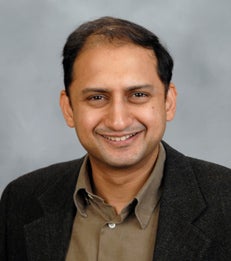
Viral V. Acharya is the C.V. Starr Professor of Economics in the Department of Finance at New York University Stern School of Business. He is a Research Associate at the National Bureau of Economic Research (NBER), a Research Affiliate at the Center for Economic Policy Research (CEPR), and a Research Associate at the European Corporate Governance Institute (ECGI). He previously served as Deputy Governor of the Reserve Bank of India (2017–2019), with responsibilities in monetary policy, financial markets, and financial stability. He is currently Director of Doctoral Education at NYU Stern (2025–), Advisor to the NYU Stern Henry Kaufman Initiative on Financial History (2023–2026), and a Scientific Advisor to the Sveriges Riksbank (2024–). He is also a member of the Climate-related Financial Risk Advisory Committee (CFRAC) of the Financial Stability Oversight Council (2023–2026), the Bellagio Group, and the Financial Advisory Roundtable of the Federal Reserve Bank of New York. Education: B.Tech. in Computer Science and Engineering, Indian Institute of Technology, Mumbai (1995) Ph.D. in Finance, New York University Stern School of Business (2001) His research focuses on systemic risk, financial regulation, sovereign and financial linkages, credit and liquidity risk, and the macroeconomic implications of financial frictions. He has also recently explored risks related to pandemics and climate change. His recent publications examine commercial real estate exposure in banks, spillover risks from non-banks, U.S. Treasury market dynamics, and industrial policy in India. The body of work consistently emphasizes financial stability, regulatory design, and the interaction between public policy and financial markets. Scientific Awards: Alexandre Lamfalussy Senior Research Fellowship, Bank for International Settlements (2017) Inaugural Banque de France – Toulouse School of Economics Junior Prize (2011) Senior Houblon-Norman Research Fellowship, Bank of England (2008) Clarivate Analytics Highly Cited Researcher (2020–2022) Acharya has held numerous editorial and leadership roles, including Editor of the Journal of Law, Finance and Accounting (2014–2016, 2020–), member of the Editorial Committee of the Annual Review of Financial Economics (2022–), Board Member of the American Finance Association (2024–), and Director of the Western Finance Association (2012–2015). He has served as an Academic Advisor to multiple Federal Reserve Banks and international institutions including the IMF, World Bank, and BIS. He advises on financial policy globally and is a frequent commentator in major media outlets. He is not known to advise specific students, but his leadership in doctoral education at NYU Stern underscores his role in mentoring the next generation of finance scholars. He is affiliated with research centers and policy initiatives focused on financial history, climate risk, and financial stability.
Gina-Gail S. Fletcher is a Professor of Law and Associate Dean for Intellectual Life at Duke University School of Law. She specializes in financial regulation, market manipulation, and corporate governance, with a focus on racial inequality, ESG frameworks, and AI accountability in financial systems. Professor of Law, Duke University (2024) Associate Dean for Intellectual Life, Duke Law (2024) Member, U.S. SEC Investor Advisory Committee (2024) Member, FINRA Investor Issues Committee (2024) Her research integrates legal and policy analysis on financial systems, emphasizing transparency, equity, and stability. Key themes include: AI and transparency in financial regulation Racial equity in banking and lending practices Climate-conscious procurement policies ESG compliance and fraud Market manipulation and macroeconomic consequences Recent publications appear in Yale Law Journal , New York University Law Review , and Vanderbilt Law Review , with forthcoming work on AI regulation and racial complicity in finance. She received her J.D. cum laude from Cornell Law School and B.A. magna cum laude from Mount Holyoke College.
Roine Vestman is a Professor of Economics at Stockholm University and a visiting researcher at the Swedish House of Finance. He serves as the director for CeMoF and is a Research Fellow at CEPR. Additionally, he holds significant advisory positions including board member at AP7 (Sjunde AP-fonden), scientific advisor to the Swedish Debt Office (Riksgälden), and has previously advised the Swedish FSA (Finansinspektionen) and government inquiries on macroprudential policy. Vestman's educational background includes: Ph.D. in Economics from New York University, USA M.Sc. degree from Stockholm School of Economics Professor Vestman's research focuses on household finance, examining how individuals make consumption, savings, and housing decisions and how these choices impact the broader economy. His work specifically investigates pension plan design, the functioning of mutual fund industries, and household debt dynamics. His research combines theoretical models with empirical analysis of detailed Swedish data to provide insights into financial behavior and policy implications. Vestman has made significant contributions to understanding how default options in pension systems can be optimized to improve outcomes for passive investors. His recent publications demonstrate a strong focus on household financial decision-making, with particular attention to pension systems, housing markets, and investment behavior. Vestman's work often employs sophisticated empirical methods using detailed administrative data from Sweden, allowing for nuanced analysis of household financial behavior. A recurring theme across his publications is the examination of how financial institutions and policies affect individual economic outcomes, with implications for designing better financial products and regulatory frameworks. Through his advisory roles at AP7, the Swedish Debt Office, and previous engagements with Sveriges Riksbank and Finansinspektionen, Vestman actively translates his research into practical policy recommendations. His work on default pension fund allocation has particularly influenced discussions about how to improve retirement savings systems through personalized approaches that consider individual financial circumstances beyond just age.
Dr. Nafis Alam is a Professor and Head of the School of Business at Monash University Malaysia. With over 20 years in higher education, he has held leadership roles at institutions including the Henley Business School Malaysia, University of Reading Malaysia, and Asia Pacific University. His expertise spans FinTech, financial regulation, and Islamic finance, with over 50 peer-reviewed publications and nine co-authored books. He actively engages with global industry and policy, contributing to reports by the Cambridge Centre for Alternative Finance (CCAF). Awards include the Global Islamic Finance Award's 'Upcoming Personality' (2016) and Monash University's Vice-Chancellor Medal (2016). Education: PhD in Banking and Finance (Monash University), MBA (Multimedia University), and Economics (Patna University). He holds a Postgraduate Certificate in Higher Education (PGCHE) from the University of Nottingham and is a Senior Fellow of the Higher Education Academy (SFHEA). Research focuses on FinTech regulation, digital currencies, AI ethics, and Islamic finance innovation. Recent projects include Malaysia's consumer credit framework and blockchain in energy legal systems. Media contributions include commentaries on cryptocurrency, fiscal reforms, and ESG evaluations. Key Supervision Areas: FinTech, Financial Regulation, Technology Adoption Grants/Projects: Active roles in 2023-2026 projects on legal frameworks for blockchain and consumer credit Labs/Teams: Collaborations with global institutions like CCAF and industry partners in Southeast Asia. Advocates for market-driven education programs and adult learning strategies.
Dr. Roger Moser is a Senior Lecturer at Macquarie University's Department of Management Innovation, Strategy and Entrepreneurship Research Centre. He also holds adjunct roles at the Indian Institute of Management Udaipur (since 2012) and the University of St. Gallen (since 2012). His research focuses on Decision Intelligence, Strategic Management, and International Management, particularly exploring how executives leverage data (small/big) to enhance decision-making frameworks. He has over 99 publications since 2005, with notable works in journals like Journal of Service Research and Journal of Business Research . Dr. Moser holds a Dr. rer. pol. from EBS European Business School (2006) and a lic. oec. HSG (MSc) from the University of St. Gallen (2003). His research interests include Decision Model Innovation, Social Capital in emerging markets, and strategic alignment in supply chains. He has conducted impactful studies on access-based services in India, supplier integration in China's automotive sector, and humanitarian logistics using satellite data. His recent work emphasizes technology integration in B2B value creation, decision frameworks for uncertainty reduction (e.g., in agriculture and disaster management), and AI-driven expert systems. He has presented at global forums on topics like digital transformation and decision intelligence applications, contributing to both academic and practitioner discourse. External Roles: Adjunct Professor of Business Policy, Indian Institute of Management Udaipur Titularprofessor / Permanent Lecturer, University of St. Gallen Notable impacts include a project providing clean drinking water in India through access-based solutions, recognized for quality-of-life and societal contributions. His research has been cited over 1,666 times with an h-index of 21.
Danilo Brozovic is a Senior Lecturer in Business Administration at the University of Skövde, specifically within the School of Business and the Department of Commerce and Entrepreneurship. He maintains his office in Room E219 and serves as a course coordinator for multiple undergraduate and graduate business courses, each carrying 7.5 credits. His academic work spans teaching, research, and project leadership within the business administration domain. Brozovic's research interests focus on entrepreneurial resilience, particularly in family businesses and small-to-medium enterprises (SMEs), strategic flexibility in business growth, value creation processes, and service ecosystems. He has extensively examined organizational resilience during crises, including the COVID-19 pandemic's impact on retail and tourism sectors. His work also explores sustainability in business models, food tourism, societal collapse scenarios, and the evolution of service systems. Brozovic employs diverse methodologies including literature reviews, scenario-based analyses, and empirical studies to investigate how organizations adapt to multiple crises and changing market conditions. His publication record demonstrates a strong trend toward interdisciplinary research connecting business administration with futures studies, sustainability science, and crisis management. Recent work shows increasing focus on entrepreneurial resilience in the face of multiple concurrent crises, with projects examining how SMEs navigate complex challenges. His research bridges theoretical frameworks like service-dominant logic with practical business applications, particularly in tourism, retail, and family business contexts. Brozovic leads the research project 'Entrepreneurial resilience in small and medium-sized enterprises in the face of multiple crises' (July 2023 - June 2025), which develops knowledge about how SMEs manage multiple concurrent crises. His collaborative approach is evident in numerous co-authored publications with researchers like Börje Boers, Marco Tregua, and Hiroaki Saito across various business disciplines.
Nicolás de Roux is an Associate Professor in the Department of Economics at Universidad de los Andes in Bogotá, Colombia. He holds a PhD in Economics from Columbia University and an MA from Universidad de los Andes. His academic work focuses on applied microeconomics with a specialization in development economics, particularly examining firm behavior, financial inclusion, agricultural economics, and labor markets in developing countries. He actively contributes to the academic community as a co-organizer of the biweekly Virtual Development Seminar (VDEV/CEPR/BREAD). De Roux's research interests center on understanding economic development challenges in the Global South, with particular emphasis on how weather shocks affect agricultural productivity, labor market power in developing economies, and the impacts of trade disruptions on firm performance. His interdisciplinary approach combines rigorous econometric methods with theoretical insights to address pressing development issues. His work demonstrates how microeconomic analysis can inform policy decisions that improve economic outcomes for vulnerable populations in developing countries. His publications span multiple high-impact journals including the Journal of Labor Economics, The Review of Financial Studies, and Journal of Public Economics. De Roux's research demonstrates consistent focus on labor markets, agricultural productivity, and financial inclusion, with recent work examining how weather risk affects small farms, the extent of employer power in developing country labor markets, and how firms adapt to trade partner collapse. His research methodology typically combines detailed administrative data with innovative econometric approaches to establish causal relationships. Featured Economist Interview, International Economic Association (IEA), July 2025 De Roux has mentored numerous students through his teaching at Universidad de los Andes, where he teaches courses including Introduction to Mediation, Econometrics 1, and Haciendo Economía 1. His research collaborations extend across multiple institutions, working with economists from around the world including Giacomo De Giorgi, Garance Genicot, Gianmarco León-Ciliotta, and Eric Verhoogen. His work on academic tracking revealed the counterintuitive finding that students perform better when they're at the top of a lower-ability group rather than at the bottom of a higher-ability group, challenging conventional wisdom about educational tracking. His research team includes collaborators working on projects examining internet access and banking competition in rural credit markets, as well as quality upgrading in the Colombian coffee sector. De Roux maintains an active presence in policy discussions through media outlets like VoxDev, World Bank blogs, and Colombian publications including Foco Económico and La República.