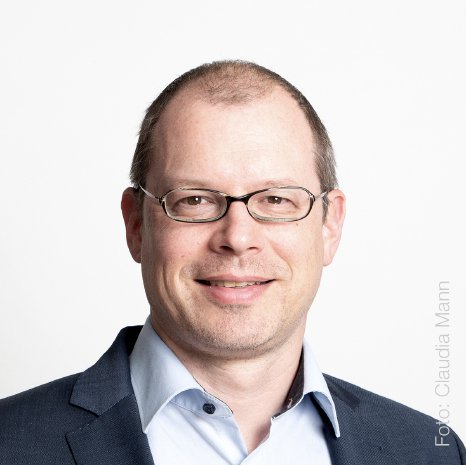
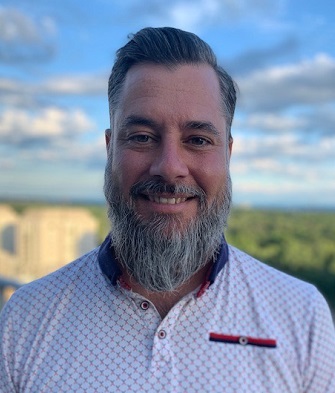
Prof. Ute-Christine Klehe is a Full Professor in Work and Organizational Psychology at Justus-Liebig-University Giessen (Germany) since October 2011, with prior tenured positions at the University of Amsterdam (2009-2011 as Associate Professor; 2005-2009 as Assistant Professor). She has conducted visiting research at Ghent University (2010) and maintains affiliations with the Academy of Management, Society of Industrial and Organizational Psychology (SIOP), and European Association of Work and Organizational Psychology (EAWOP). Ph.D. in Organizational Behaviour and Human Resource Management (University of Toronto, 2003) Diplom in Psychology (Philipps-Universität Marburg, 2000) Research focus spans career adaptability, job search dynamics, personnel selection validity, refugee labor market integration, and psychological assessment. Her work combines individual self-regulation with organizational factors, examining transitions across the lifespan. Recent publications emphasize: Career adaptability profiles and transitions Refugee integration barriers Age discrimination effects Psychopathy in workplace contexts Goal achievement strategies Scientific contributions include: 2017 Best Symposium Award (Academy of Management Careers Division) 2017 Highly Commended Award (Career Development International) 2014-2020 DFG grants for faking in selection & transparency effects Editorial roles in Journal of Organizational Behavior , Human Performance , and Journal of Vocational Behavior Grants and projects demonstrate €400,000+ funding for initiatives like TWOPAC training (2024-2025) and cross-European collaborations. She supervises funded PhD candidates and contributes to policy-oriented publications like SIOP White Papers.
Karsten Feucht (born 1965 in Stuttgart, Germany) serves as an Industrial Heritage Manager at the Berlin Centre for Industrial Heritage since 2021 and holds lecturing positions at the Technical University of Berlin and the University of Santiago, Chile. As an Architectural Engineer and Sociologist, he specializes in perceptual space designs and sustainable regional development based on his patented Percepción-workshops® (2003). His educational background combines architectural engineering with sociology, providing a unique interdisciplinary perspective on urban and regional development. Feucht's research interests focus on the intersection of industrial heritage, urban development, and perception studies, with particular expertise in post-mining landscape transformation and community participation in planning processes. Feucht's publications reveal consistent themes in industrial heritage management, with particular emphasis on how perception influences the revitalization of industrial sites. His work demonstrates a progression from theoretical frameworks in the early 2000s toward practical applications in post-mining regions across multiple continents, showing increasing focus on participatory approaches and sustainable development outcomes. As an active member of both the Georg Agricola Society in Germany and TICCIH (The International Committee for the Conservation of the Industrial Heritage), Feucht contributes to global discourse on industrial heritage management. His professional training workshops for professionals through studierhaus.de extend his academic work into practical applications across Europe and Latin America. Feucht's fieldwork spans Germany, Spain, Vietnam, Chile, and Colombia, with notable projects including the International Exhibition of Construction (2000-2007), Tourism Association of Mining (2007-2012), and EU project Laurin (2012-2014), demonstrating his commitment to international collaboration in industrial heritage management.
Jianmin Guan, Ph.D., serves as Associate Professor of Kinesiology within the College for Health, Community and Policy at the University of Texas at San Antonio (UTSA). His academic work bridges physical education pedagogy, motivational psychology, and cross-cultural fitness assessment methodologies, with emphasis on student engagement in activity settings. Education: Ph.D. in Sport Pedagogy, Texas A&M University (2004) Master of Education in Measurement and Evaluation, Wayne State University (1999) Master of Education in Sport Pedagogy, Shanghai Institute of Physical Education (1993) Bachelor of Science in Kinesiology, Huizhou Normal College (1984) Dr. Guan's research centers on achievement goal theory applications in physical education, examining how work-avoidance and mastery-approach goals influence student persistence across developmental stages. His work extends to health-related fitness evaluation among minority populations and sensory integration interventions using sport-based protocols, with particular focus on Chinese student cohorts. Methodologically, he employs longitudinal growth modeling, MIMIC analyses, and cross-cultural validation techniques. His recent publications (2022-2025) demonstrate consistent investigation of achievement goal trajectories from elementary through college levels, alongside innovative comparative studies of global fitness testing frameworks. The research reveals persistent gender disparities in physical competence perception and identifies declining mastery-goal intensity during adolescent transitions, while establishing basketball training as an effective sensory integration modality. Scientific Awards: Research Fellow, Society of Health and Physical Educators (SHAPE America, 2007) Research Funding: Secured $29,732 across two grants (2018-2019) for Psychological Skills Inventory development targeting law enforcement populations. His presentations at AAHPERD conventions and Pre-Olympic conferences reflect extensive national and international scholarly engagement, particularly with Chinese research institutions on fitness knowledge assessment and sensory processing interventions. Dr. Guan maintains active international collaborations, especially with Chinese universities, developing culturally responsive physical activity interventions while addressing measurement challenges in diverse educational contexts.
Rocío Araceli Badía Fumaz is a Researcher at the Faculty of Spanish Language and Literary Theory , Complutense University of Madrid. She specializes in Literary Theory , Poetics , and Intermediality , with a focus on relationships between literature and music in contemporary Spanish works. Key research areas : Explicit poetics, authorship theory, intermedial analysis, neoplatonic influences in poetry Collaborations : Works with authors like Clara Marías and Ottmar Ette Projects : "Tomar la palabra" (Intertextuality and Intermediality in pedagogy) Recent publications explore: Intermediality models (intrinsic, extrinsic, referential) Poetic career of María Victoria Atencia Authorship conflicts in explicit poetics Neoplatonic influences in contemporary Spanish poetry Teaching focuses on literary theory didactics and Golden Tradition pedagogical applications.
Carlo Alberto Avizzano serves as Associate Professor in Robotics and Automation at the University of Pisa's School of Engineering, Department of Information Engineering. He coordinates the Department of Excellence in Robotics & Artificial Intelligence (MUR) and leads the Intelligent Automation System Research Group. Research spans robotics, human-robot interaction, computer vision, and control systems Specializes in creating intelligent automation systems with cognitive capabilities Integrates AI, machine learning, and mechatronics for robust autonomous systems His research focuses on developing robots that learn from human examples, adapt to changing environments, and interact through advanced perception systems. Current work emphasizes wearable robotics, UAVs, and industrial automation solutions with applications in medical rehabilitation, firefighting, and manufacturing. He employs distributed computing architectures integrating sensors, real-time control, and knowledge transfer algorithms. Publications reveal strong emphasis on practical implementations: 15 recent works cover exoskeleton design (2024), UAV firefighting systems (2024), industrial bin-picking datasets (2024), and haptic interfaces (2012-2023). Key trends show progression from virtual reality systems (2006-2008) toward modern AI-integrated robotics with industrial and medical applications. Teaching responsibilities include PhD courses in Sensors for Construction, Python Programming for HealthScience, and Digital Perception; plus undergraduate Mechatronics and Computer Vision labs. He serves on PhD boards for Emerging Digital Technologies and Health Science Technology. Extensive patent portfolio including haptic interfaces (2012), sailing simulators (2006), and UAV systems (2024) Research directly translated to commercial products and spin-off companies
John B. Nezlek is a Professor at SWPS University in Poland, affiliated with the Institute of Psychology and the Center for Climate Action and Social Transformations (4CAST). His work spans multiple campuses including Poznań and Warsaw, where he conducts research at the intersection of social and personality psychology with contemporary societal issues. Nezlek's research primarily focuses on the psychology of vegetarianism as a social identity, climate change psychology, and the role of values in prosocial behavior. His work frequently employs diary methods and multilevel modeling techniques to examine within-person processes. He has made significant contributions to understanding how dietary choices function as social identities, the psychological consequences of vegetarianism, and the relationship between values and environmental action. His research on emotion regulation in everyday life has provided important insights into how people manage their emotions across different contexts. Analysis of Nezlek's recent publications reveals a strong emphasis on the intersection of dietary behavior and social psychology, particularly vegetarianism and its social implications. His work increasingly examines climate change distress and how it interacts with religious belief and political orientation. There's also a clear trend toward studying well-being mechanisms, with numerous papers exploring mediators like environmental mastery, basic need satisfaction, and gratitude in the relationship between various psychological constructs and well-being outcomes. Recognized as one of the most frequently cited researchers in the world Secured over PLN 4 million in research funding from the National Science Centre Published extensively in high-impact journals across psychology Nezlek leads research within the Center for Climate Action and Social Transformations (4CAST), where his team employs intensive longitudinal methods to study real-time psychological processes. His work on diary methodology has established him as an expert in within-person research designs. Current projects appear to focus on the psychological aspects of climate change adaptation, the social dynamics of dietary choices, and the interplay between religious belief, political orientation, and environmental concern. His research has practical implications for understanding how to promote sustainable behaviors and improve well-being through psychological interventions.
Jakub Mihálik is a philosopher specializing in metaphysical and epistemological questions related to phenomenal consciousness. He works as a Research Fellow in the Department of Analytic Philosophy at the Institute of Philosophy of the Czech Academy of Sciences and serves as an External Lecturer in the Department of Philosophy & Religious Studies at Charles University, Faculty of Arts. He was a Fulbright Visiting Scholar at NYU's Center for Mind, Brain and Consciousness (2022/23) and led The Consciousness & Matter Project at the University of Hertfordshire (2019-2021). Education : PhD in Philosophy (2016) from Charles University under Prof. James Hill Research : Focuses on non-reductive theories of consciousness including Russellian monism, inner awareness, and the metaphysics of subjectivity Grants : Fulbright Commission Grant (2022-23), Ministry of Education Grant (2019-2021), GAČR Grant (2012-15) His publications analyze the relationship between physicalism and consciousness, with a particular emphasis on panqualityism, explanatory gaps, and the problem of 'for-me-ness'. His work frequently engages with philosophers like David Chalmers, Sam Coleman, and Bertrand Russell. He has presented at major conferences including the Association for the Scientific Study of Consciousness and The Science of Consciousness Conference. He currently serves as principal investigator for the Czech Science Foundation-funded project Monism and the Subjectivity Challenge , overseeing a research team including PhD advisee Milan Zeman. His philosophical outreach includes public debates and media appearances discussing consciousness in technology and virtual reality.
Sina Moradi is a Lecturer in Project Management at University College London's Bartlett School of Sustainable Construction , where he teaches undergraduate and postgraduate modules since September 2024. Prior to joining UCL, he worked for six years at Tampere University (Finland) as a PhD student (2018–2021) and postdoctoral researcher (2021–2024). He also spent five years as a construction supervisor and project planning specialist in the Middle East before his PhD. Research Interests: Affordable housing, collaboration in construction, environmental sustainability, managerial competencies, project theory, and project delivery models Teaching Responsibilities: Module leader for Project and Programme Management, Strategic Quality Management, Procurement and Supply Chain, and tutorial lead for Organizations and People in Projects Publications focus on collaborative construction, lean methodologies, and sustainability, with 2025–2024 works analyzing mutual trust in projects, waste reduction, BIM integration, and sustainable delivery frameworks. He authored the Routledge Handbook of Collaboration in Construction (2024) and contributed to journals like Smart and Sustainable Built Environment , Building Research and Information , and International Journal of Managing Projects in Business . He serves as an editorial board member of Project Leadership and Society and International Journal of Project Management , reviews for multiple journals, and leads as Programme Director at CIB since 2024. His work aligns with UN Sustainable Development Goals 11 (Sustainable Cities), 12 (Responsible Consumption), and 13 (Climate Action).
Harald Wimmer is a Professor at St. Pölten University of Applied Sciences, where he serves as Academic Director of Digital Marketing and Communication (MA), Academic Director of Digital Media Management (MA), and Deputy Academic Director of Marketing and Communication (BA). He leads multiple academic programs within the Department of Digital Business and Innovation, including Digital Marketing (academic), Digital Marketing (MA), and Digital Marketing (MBA). Professor Wimmer's research spans digital marketing, media management, and strategic communication. His work explores consumer behavior in digital environments, advertising effectiveness, PR strategies, and generational marketing approaches. He has developed expertise in both traditional marketing research methods and newer digital analytics approaches. His research bridges theoretical frameworks with practical applications for businesses navigating digital transformation. His publication record shows a clear progression from early work on consumer acceptance of hybrid vehicles and digital camera branding toward contemporary research on digital marketing, social media, and strategic communication. Recent publications focus on Gen Z marketing, gender representation in media, semiotic analysis of advertising, and creative methodologies in communication. Professor Wimmer actively contributes to academic discourse through editorial roles, particularly with the PRaktivium publication series which examines evolving PR practices and the relationship between journalism and public relations. His work demonstrates strong industry connections and practical relevance to current marketing challenges. He has been instrumental in developing academic programs that address the rapidly changing digital marketing landscape, ensuring curriculum relevance through close industry partnerships and practical project work. His leadership extends to student competitions like the Mobile Marketing Rookie Award and Dialog Marketing Rookie initiatives that connect classroom learning with real-world marketing challenges.
Claire Levy is a Senior Lecturer in Film at the Bath School of Art, Film and Media , Bath Spa University. She holds an MA in Photography and Urban Cultures from Goldsmiths, University of London, and a BA Hons in French and German from Oxford University. As a Fellow of the Higher Education Academy (FHEA), she bridges academic and industry expertise. Her research explores young people's rural experiences , public space dynamics , and interactive documentary through a participatory lens. She is currently pursuing a PhD at Goldsmiths on these topics while serving as a Research Associate at the Centre for Community and Urban Research. Claire's filmography spans UK broadcast (Channel 4, BBC) and BFI-funded projects. She has collaborated with the NHS on educational materials and co-founded the Stroud Film Festival. Her consultancy includes corporate films for Beazley, ACCA, and HSBC. Scientific Awards & Honors Royal Television Society (RTS) Award nominations for documentary work (2009) Fellow of the Higher Education Academy (FHEA) Her corporate projects like 'Brent Council Citizenship Film' and 'ACCA Executive Team: Reflecting Back and Looking Forwards' demonstrate expertise in brand-aware filmmaking. She supervises students in documentary, participatory research, and non-linear storytelling.
Dr. Kodili Henry Chukwuma serves as an Assistant Professor of International Security within Durham University's School of Government and International Affairs, a position he assumed following the completion of his PhD at the University of East Anglia in 2022. His academic trajectory demonstrates consistent excellence in security studies with deep regional expertise in African contexts. Dr. Chukwuma's educational foundation includes: PhD from the University of East Anglia (2022) Undergraduate and postgraduate studies at the University of Ilorin, where he graduated as Valedictorian (2015) His research interrogates the politics of security through critical terrorism studies, postcolonial theory, and examinations of time/space in (in)security frameworks. With a pronounced focus on Nigeria and broader African security dynamics, his work challenges conventional counter-terrorism paradigms by analyzing how threats are constructed discursively and institutionally. He investigates how temporal narratives shape counter-terrorism responses and how spatial concepts like 'ungoverned spaces' function in security discourse. Analysis of his 2020-2025 publications reveals a cohesive scholarly trajectory centered on Nigerian counter-terrorism practices, with increasing methodological sophistication in examining juridical processes, researcher positionality, and archival practices. His work consistently bridges theoretical innovation in critical security studies with empirical investigations of African security contexts, particularly through analyses of terrorism trials, proscription mechanisms, and temporal dimensions of security policy. Dr. Chukwuma's scholarly recognition includes: UEA's Arts and Humanities 'Research Community Award' (2021) UEA's Arts and Humanities 'Best Graduate Article Award' (2020) University of Ilorin's 'Prestigious Scholar Award' (2012-2015) University of Ilorin 'Best Graduating Student Award' as Valedictorian (2015) 'Research in World History Award' (2013) Faculty of Arts 'Intellectual of the Year Award' (2012) While specific advising details remain undisclosed, his current research portfolio demonstrates active scholarly engagement through projects examining terrorism trials in Nigeria, postcolonial spatial theory in critical terrorism studies, and proscription mechanisms for terrorist organizations. His methodological contributions include innovative approaches to archival research and fieldwork adaptation during global crises.
Hannah Marcus is a historian of science at Harvard University , currently serving as Professor of the History of Science and Faculty Director of the Collection of Historical Scientific Instruments . Her research focuses on early modern European science and medicine (1400-1700), particularly examining censorship practices, the history of aging, and Galileo's epistolary networks. Department of the History of Science, Harvard University Director, Collection of Historical Scientific Instruments Co-director, History of Contagion in Harvard Library Collections Research Interests include: Scientific censorship in Counter-Reformation Italy Material history of medical books Gerontology in Renaissance thought Galileo's communication strategies Digital humanities approaches to historical contagion Scientific Awards : Winner of the Helen and Howard R. Marraro Prize Recipient of Morris D. Forkosch Prize Honorable Mention for Scholarly Edition in Translation Award Everett Mendelsohn Excellence in Mentoring Award Education : Ph.D. from Stanford University (2016), BA from University of Pennsylvania . She teaches courses on medieval-to-early-modern scientific transformations and supervises graduate research on premodern science.
Elisabeth Camp is a Professor in the Department of Philosophy at Rutgers University. She holds a PhD from UC Berkeley and previously taught at the University of Pennsylvania before joining Rutgers in 2013. Her work bridges philosophy of language, philosophy of mind, and aesthetics. Education: BA: University of Michigan PhD: University of California, Berkeley Postdoctoral Fellow: Harvard Society of Fellows (2003-2006) Research Interests: Her work investigates non-propositional thought and speech, focusing on: Metaphor and figurative language Loaded terms (e.g., slurs) Cognitive perspectives and emotional frames Non-sentential representation (maps/diagrams) Semantic-pragmatic boundaries Antagonistic conversation dynamics Scientific Awards: ACLS Fellowship (2020) NEH Fellowship (2019) Rutgers Board of Trustees Research Fellowship (2018) Key Article Trends: Recent publications explore metaphorical cognition, visual-verbal representation differences, and ethical implications of non-literal communication. Her 2017 work on Trumpian language became a reference in political discourse analysis.
Steve G. Hoffman is an Associate Professor in Sociology at the University of Toronto, teaching on the Mississauga (UTM) campus and participating in the tri-campus graduate program on the St. George (UTSG) campus. His research bridges social theory, science and technology studies (STS), cultural and political sociology, and critical disaster studies, united by an interest in the cultural politics of knowledge production. Ph.D. in Sociology, Northwestern University Hoffman's scholarship examines how institutions and professionals navigate ambiguity, commercialization, and societal impact through ethnographic studies of disaster management, artificial intelligence labs, and comparative analysis of post-disaster policy shifts. His work synthesizes empirical cases from AI development to sports training simulations. Recent publications focus on academic capitalism, epistemic cultures in AI research, and the sociological implications of anticipatory technologies. Hoffman's pedagogical approach emphasizes "learning by mistakes" to foster curiosity and long-term intellectual growth. He has taught courses in organizational sociology, environmental sociology, and contemporary sociological theory, including a 2023-24 course on disasters. His SSHRC-funded project "Managing the Unimaginable" investigates disaster management professionals' epistemic practices, while prior research analyzed the Fukushima nuclear disaster's impact on energy policy in Germany and the United States. Hoffman also explores the evolving ontology of social science in the 21st century, particularly through the lens of "real fictions" in AI research.
Nicolas Pitsos is a Lecturer qualified in Greek studies (section 15) and modern and contemporary history (section 22) at the University of Versailles Saint-Quentin-en-Yvelines. He is associated with the Institute of Cultural and International Studies (IECI) and the Center for the Cultural History of Contemporary Societies (CHCSC). Additionally, he serves as Collections Manager for the Greek domain at BULAC (University Library of Languages and Cultures) since 2020 and has been an Associate Researcher at CHCSC since 2019. His educational background includes: Doctorate in History, Societies and Literature, INALCO, Paris DEA/Master2 in Social and Cultural History 19th-20th Century, University of Paris 1-Panthéon-Sorbonne DEA/Master2 in Historical, Political and Cultural Geography, University of Paris IV Master's in History, University of Paris 1-Panthéon-Sorbonne Bachelor's in History, University of Paris 1-Panthéon-Sorbonne Bachelor's in Modern Greek, INALCO Nicolas Pitsos specializes in the sociocultural history of modern Greece and the Balkans, with particular expertise in the history of Greek-speaking press and publishing, as well as allophone press in France. His research explores representational, historiographical, media, and memorial issues surrounding the Eastern Question from the 19th to 20th centuries. He also investigates the sociocultural history of medicine and public health during this period, examining topics such as neurasthenia and the medicalization of boredom in Belle Epoque France. His interdisciplinary approach combines historical analysis with cultural studies to understand the complex dynamics of national identity formation and cross-cultural encounters in Southeastern Europe. His scholarly output demonstrates a consistent focus on Balkan history, particularly examining press coverage, political discourse, and cultural representation related to the Eastern Question. Pitsos' work reveals patterns in how French and Greek media portrayed Balkan conflicts, especially during critical periods like the Balkan Wars and World War I. His research shows particular attention to linguistic dimensions of national identity, interfaith relations in Ottoman and post-Ottoman contexts, and the representation of Balkan societies in European travel literature and press. A recurring theme is the examination of how historical narratives are constructed through various media channels and how these narratives influence diplomatic relations and public perception. Nicolas Pitsos has supervised master's students in Balkan studies at the Catholic Institute of Higher Studies (ICES) in La Roche-sur-Yon since 2008. His professional experience includes significant roles in library and research management, particularly with the Greek domain at BULAC, indicating institutional support for his scholarly work. As an Associate Researcher at the Center for the Cultural History of Contemporary Societies (CHCSC) and the Europe-Eurasia Research Center (CREE) at INALCO, Pitsos collaborates with interdisciplinary teams focused on historical and cultural research. His position at BULAC places him within a network of scholars and librarians specializing in languages and cultures, particularly those of Eurasia and the Balkans. These institutional affiliations provide him with access to specialized collections and collaborative opportunities that support his research on Greek and Balkan history.