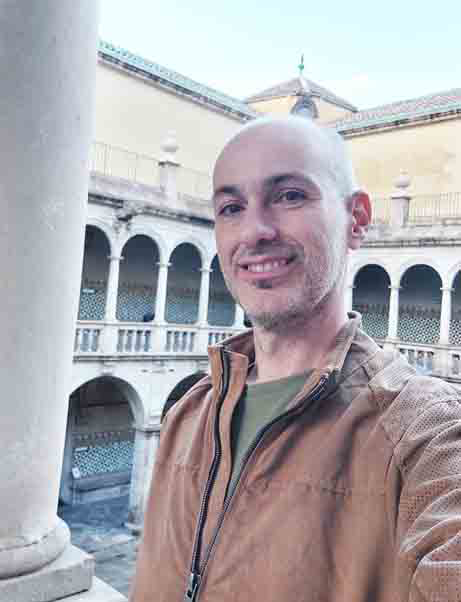
Martin Theobald is a Professor in the Department of Computer Science at the University of Luxembourg's Faculty of Science, Technology and Communications. Previously affiliated with University of Ulm, Germany, his research spans database systems, information retrieval, and knowledge extraction with over 120 publications since 2002. His work bridges theoretical database foundations with practical applications in large-scale data processing. His research focuses on: Probabilistic and uncertain database systems Stream processing frameworks (notably the AIR architecture) Knowledge extraction from heterogeneous data sources Integration of machine learning with database systems Efficient query processing for structured and semi-structured data Recent publications demonstrate an evolving research trajectory toward real-time data stream processing with machine learning integration. His work on the AIR (Asynchronous Iterative Routing) framework and its extensions (TensAIR, OPTWIN) addresses critical challenges in concept drift detection, neural network training on streaming data, and efficient resource utilization. These contributions sit at the intersection of database systems, distributed computing, and machine learning, with applications in knowledge graph construction and question answering systems. Martin Theobald has mentored numerous researchers including Mauro Dalle Lucca Tosi, Alessandro Temperoni, and Vinu E. Venugopal, who have become active contributors to the database community. His collaborative network spans institutions across Europe, with frequent partnerships with researchers from University of Ulm, Max Planck Institute, and other European universities. His laboratory work focuses on developing scalable systems for processing evolving data streams, with particular emphasis on creating lightweight architectures that maintain high performance while minimizing resource consumption. Current projects involve integrating knowledge graphs with real-time analytics and developing adaptive systems that can handle concept drift in streaming environments.