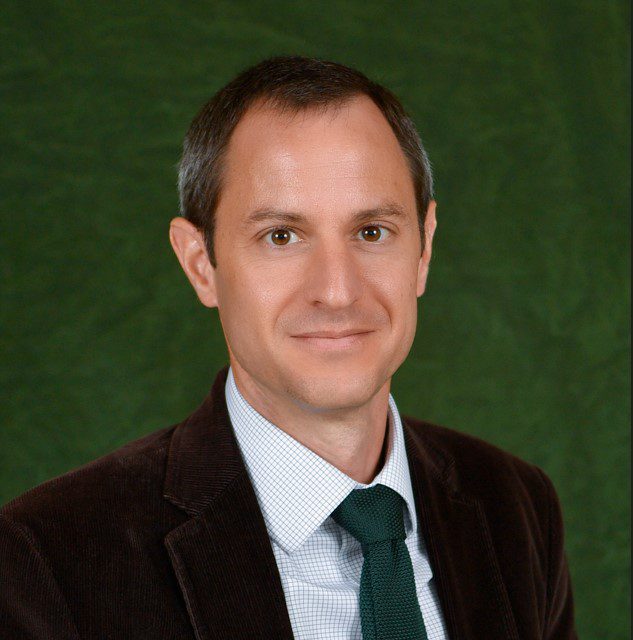
Steve G. Hoffman is an Associate Professor in Sociology at the University of Toronto, teaching on the Mississauga (UTM) campus and participating in the tri-campus graduate program on the St. George (UTSG) campus. His research bridges social theory, science and technology studies (STS), cultural and political sociology, and critical disaster studies, united by an interest in the cultural politics of knowledge production. Ph.D. in Sociology, Northwestern University Hoffman's scholarship examines how institutions and professionals navigate ambiguity, commercialization, and societal impact through ethnographic studies of disaster management, artificial intelligence labs, and comparative analysis of post-disaster policy shifts. His work synthesizes empirical cases from AI development to sports training simulations. Recent publications focus on academic capitalism, epistemic cultures in AI research, and the sociological implications of anticipatory technologies. Hoffman's pedagogical approach emphasizes "learning by mistakes" to foster curiosity and long-term intellectual growth. He has taught courses in organizational sociology, environmental sociology, and contemporary sociological theory, including a 2023-24 course on disasters. His SSHRC-funded project "Managing the Unimaginable" investigates disaster management professionals' epistemic practices, while prior research analyzed the Fukushima nuclear disaster's impact on energy policy in Germany and the United States. Hoffman also explores the evolving ontology of social science in the 21st century, particularly through the lens of "real fictions" in AI research.
Dr. Farzaneh Tahmoorian is a Senior Lecturer in Civil Transport at the School of Engineering and Technology, Central Queensland University (CQU). She has been with CQU since 2015, progressing from Sessional Lecturer to Lecturer (2018-2022) and now Senior Lecturer (2022-present). Dr. Tahmoorian leads the Civil Engineering and Built Environment Research Group (CEBERG) and has established and manages the CQU Pavement Lab in Mackay, equipped with comprehensive testing facilities for asphalt mix, bitumen, and other pavement materials. Dr. Tahmoorian's educational background includes: PhD in "Application of Waste Materials in Flexible Pavements" from Western Sydney University (2015-2018) M.Eng from the University of Technology Sydney (2013-2015) B.Sc. from International University of Qazvin, Iran (1996-2001) Prior to academia, she worked as a site engineer and project manager in construction projects, bringing practical industry experience to her research and teaching. As an expert in road and pavement materials, Dr. Tahmoorian's research spans asphalt mix design, binder modification, concrete pavement, ground improvement techniques, and sustainability in construction. Her work focuses on utilizing waste materials in asphalt mixes, demonstrating a 6% reduction in bitumen consumption while enhancing durability and performance. She has published over 25 peer-reviewed papers and received $80,000 in CAT-3 industry funding and $130,000 in university funding for pavement research. Dr. Tahmoorian's publication record reveals a strong trend toward circular economy applications in construction, with emphasis on waste material recycling in asphalt production, life cycle assessment of sustainable methods, and innovative modular pavement systems. Her research bridges material science with practical engineering, addressing both performance requirements and environmental considerations in infrastructure development. Her editorial contributions include: Editor-in-Chief of the Australian Journal of Modernity in Road and Pavement Engineering Editor for the Journal of Engineering Solid Mechanics Editor of the book "Sandy materials in civil engineering: Usage and management" As a dedicated mentor, Dr. Tahmoorian supervises multiple research students, serving as Principal Supervisor for a Master of Research project on modular prefabricated pavement lifecycle costs and Associate Supervisor for projects on construction processes, disaster risk management, and railway ballast stabilization. She has also developed field testing facilities at Mackay Ooralea Campus for transitioning research from laboratory to field conditions with time-based performance monitoring.
Dr. Matthew Whelan is an Associate Professor and EPIC Assistant Director of Research for Energy Infrastructure at the University of North Carolina at Charlotte. He is affiliated with the Department of Civil and Environmental Engineering and specializes in structural health monitoring, sensing technologies, and infrastructure resilience under dynamic loads. Current roles: Associate Professor, EPIC Assistant Director of Research for Energy Infrastructure Department: Civil and Environmental Engineering Research Interests: Dr. Whelan focuses on full-scale structural testing, ambient vibration monitoring, and the application of wireless sensor networks for bridge and building diagnostics. His work addresses deterioration modeling, blast and impact load responses, and digital twin integration for infrastructure management. Key Trends: Recent publications highlight advancements in concrete constitutive modeling, blast testing of cold-formed steel systems, and digital twins for construction quality monitoring. His work bridges computational simulations (e.g., LS-DYNA) with experimental validation using high-rate wireless sensors. Professional Background: He obtained all his degrees (B.S., M.S., Ph.D.) in Civil and Environmental Engineering from Clarkson University and has been a faculty member at UNC Charlotte since 2010. Dr. Whelan is a licensed Professional Engineer.
Rebecca Yang is a Visiting Professor at RMIT University's School of Property, Construction and Project Management, specializing in building, construction, and distributed renewable energy research. She integrates theoretical knowledge with cutting-edge technologies to advance sustainable urban development. Her research focuses on solar energy applications in buildings, construction innovation, and international energy policy frameworks through her leadership roles in the International Energy Agency's Photovoltaic Power Systems Programme (PVPS) Task 15 and Solar Heating and Cooling Programme (SHC) Task 66. She established RMIT's Solar Energy Application Lab and has 8 years of BIPV expertise. Notable achievements include: Australian representative in international BIPV standardization (IEC 63092) 2019 Facilitator Prize for BIPV Tool development She supervises research projects related to: Solar building envelope optimization Machine learning for energy systems Fire safety in BIPV installations Blockchain-enabled energy trading Circular economy for PV waste
Elena Kašťáková is an Associate Professor at the Department of International Trade, Bratislava University of Economics and Business . Her research focuses on EU trade strategies, geoeconomic relations, agri-food trade, and the impact of geopolitical changes on international commerce. Academic Rank: Associate Professor Department: International Trade Her recent publications address topics like the Eurasian Economic Union's influence on EU trade , agri-food trade under Russian sanctions , and China-EU trade dynamics via the Belt and Road Initiative . Her work often employs econometric models, trade intensity indices, and comparative advantage analysis. She leads VEGA projects such as Význam Eurázijskej hospodárskej únie pre formovanie obchodných stratégií EÚ and Vplyv geopolitických zmien na presadzovanie strategických zahraničnoobchodných záujmov EÚ . Her research has been published in journals like International Organisations Research Journal and Vestnik Sankt-Peterburgskogo universiteta .
Eugene Y. Vasserman is an Associate Professor in the Department of Computer Science at Kansas State University's College of Engineering, where he also serves as Director of the Center for Cybersecurity and Trustworthy Systems. His office is located in 2171 Engineering Hall, and he holds office hours on Tuesdays from 2:30 pm to 4:00 pm and Wednesdays from 11:30 am to 1:00 pm during the Fall 2025 semester. Dr. Vasserman's research spans multiple critical areas of cybersecurity including network and distributed system security, privacy and anonymity, censorship resistance, operating system security, medical and IoT security, usable security, and applied cryptography. His work bridges theoretical security concepts with practical implementations, addressing real-world challenges in diverse domains from medical systems to blockchain technologies. His recent publications reveal a research trajectory that has evolved from foundational network security work to increasingly interdisciplinary research intersecting with artificial intelligence, medical systems, and cybersecurity education. The 15 most recent publications demonstrate his ongoing commitment to both theoretical advances and practical security solutions across multiple domains. Outstanding short paper award for 'Hypersparse Traffic Matrix Construction using GraphBLAS on a DPU' at IEEE HPEC 2023 Best graduate student poster award for 'Empowering pre-service teachers to utilize programming in the classroom' at ASEE Midwest Conference 2013 Dr. Vasserman has mentored numerous graduate students through the Systems and Network Security (SyNeSec) Lab, with alumni now working at organizations including Paycom, Corelight, Sandia National Labs, Microsoft, and Cerner. He teaches multiple cybersecurity courses each semester including CIS 525: Introduction to Network Programming, CIS 755: Systems Security, and CIS 351: Cyber Defense Basics, demonstrating his long-term commitment to cybersecurity education since at least 2010. As Director of the Center for Cybersecurity and Trustworthy Systems, he leads initiatives that address critical security challenges across multiple domains, fostering collaboration between researchers, students, and industry partners to develop trustworthy systems for the future.
Sorin Tuluca serves as Professor of Finance at Fairleigh Dickinson University's Silberman College of Business within the Department of Finance, Decision Sciences, Economics, and International Business. With over 25 years in academia following a 12-year engineering career in aircraft construction, he integrates technical rigor with financial expertise across graduate and undergraduate programs. His educational foundation includes: MSAE in Aerospace Engineering from Polytechnic University of Bucharest MBA and DBA from Cleveland State University Research centers on global financial crises , derivative valuation , and real options theory applied to strategic decisions. Recent work explores NFT project valuation, ESG integration in S&P 500 firms, and capital budgeting conflicts using Bloomberg Terminal data. His publications span top journals like The Financial Review and practitioner outlets including The Journal of Wealth Management. Current scholarship reveals three dominant trends: (1) Real options frameworks for emerging assets like NFTs, (2) Liquidity-profitability-ESG interrelationships in corporate performance, and (3) Educational innovation through financial data platforms. This bridges theoretical finance with actionable industry applications. Key recognitions include: Bright Idea Award from NJPRO (2017, 2019) for business faculty research Bartlett Professor of Teaching Innovation (2016-2018) for Bloomberg Terminal integration He mentors students through courses like Corporate Finance and Derivatives while leveraging institutional resources including Wharton Research Data Services. Media commentary in The Wall Street Journal and Bloomberg Business Week demonstrates policy-relevant economic analysis. His teaching innovations receive dedicated university funding for technology-enhanced finance education. Active engagement with Bloomberg Terminals defines his data-driven approach, supporting both research on market volatility and hands-on student training. Editorial board service for finance journals and conference program chair roles reflect ongoing scholarly leadership within the finance community.
Kristin J. Jacobson is a Professor of American Literature, American Studies, and Women's, Gender and Sexuality Studies at Stockton University in New Jersey. Her academic career spans multiple interdisciplinary fields focusing on American literary traditions and their intersections with gender, environmental concerns, and domestic spaces. Dr. Jacobson completed her educational journey with a B.A. from Carthage College in Kenosha, WI, followed by an M.A. from the University of Colorado-Boulder, and ultimately earning her Ph.D. from Penn State University. This strong foundation in literary studies has informed her distinctive scholarly trajectory. Her research interests demonstrate a sophisticated interplay between American literary traditions and contemporary theoretical frameworks. Jacobson specializes in American Literature with particular focus on women's writing, domestic fiction, and environmental literature. Her work consistently employs ecofeminist perspectives to examine how American narratives construct relationships between gender, domestic spaces, and the natural environment. She has developed expertise in identifying and analyzing emerging literary genres, most notably with her work on the 'American Adrenaline Narrative' as a distinct category of travel and environmental literature. Her scholarship bridges historical literary analysis with contemporary concerns about climate change, gender identity, and domestic spaces in American culture. Dr. Jacobson's scholarly contributions reveal an evolving trajectory from domestic fiction analysis toward increasingly environmentally-focused literary criticism. Her early work examined contemporary domestic novels through her book Neodomestic American Fiction (2010), while her more recent scholarship has expanded into environmental literature with The American Adrenaline Narrative (2020), where she defines and examines significant tropes from an ecofeminist perspective. This progression demonstrates her ability to identify and theorize emerging literary trends while maintaining her core interest in American narrative traditions. Fulbright-Greece scholar at Aristotle University of Thessaloniki Fulbright Specialist at the International University of Kyrgyzstan Dr. Jacobson's academic service includes significant international engagement through her Fulbright appointments in Greece and Kyrgyzstan, demonstrating her commitment to global scholarly exchange. Her ORCID profile (0000-0001-5906-2765) documents her extensive publication record across multiple interdisciplinary journals and presses. Her work has established her as a distinctive voice in American literary studies, particularly in the areas where gender studies, environmental concerns, and narrative form intersect. While specific laboratory or research team information isn't documented in the available materials, Dr. Jacobson's scholarly network appears extensive given her international Fulbright appointments and interdisciplinary publication record spanning American literature, women's studies, and environmental humanities.
Åste Marie Mjelve Hagen is a Professor at the Department of Special Needs Education within the Faculty of Educational Sciences at the University of Oslo. Her work focuses on evidence-based interventions for language and reading development in children, particularly those with special educational needs. Her educational background includes: Ph.D in Educational Psychology, University of Oslo, 2012 M.A. in Educational Psychology, University of Oslo, 2005 B.A., University of Oslo, 2003 Professor Hagen's research centers on language acquisition trajectories, vocabulary development in preschool settings, strategic reading comprehension, and school-based psychological interventions. She investigates how early childhood education impacts language outcomes and develops assessment tools for at-risk populations. Her methodology frequently employs systematic reviews and randomized controlled trials to establish causal relationships in educational interventions. Analysis of her 15 most recent publications reveals dominant themes in vocabulary interventions for second language learners, long-term language prognosis studies, and writing support for students with intellectual disabilities. Her work consistently bridges theoretical linguistics with practical classroom applications, emphasizing measurable outcomes through standardized assessments and treatment-inherent metrics. She leads significant research initiatives including “Better equipped for school”, “Inference skills in children”, and “Preventing and Improving Special Needs Education in Children with Language Problems”. As a core member of the Literacy and Numeracy in Context (LiNCon) research group, she contributes to Norway's national framework for evidence-based special education practices.
Professor Rhona Flin is a distinguished academic at Robert Gordon University's Aberdeen Business School, where she conducts groundbreaking research on human performance in high-risk work settings. Her expertise spans safety culture, organizational psychology, and non-technical skills development across various high-stakes industries including oil and gas, emergency management, and healthcare. Professor Flin earned her Bachelor's degree in Psychology from the University of Aberdeen in 1977, followed by a PhD in Psychology from the same institution in 1983. Her academic journey has positioned her as a leading expert in understanding how psychological factors influence safety, decision-making, and technology adoption in complex work environments. Professor Flin's research primarily focuses on human performance in high-risk settings, examining safety culture, organizational dynamics, and critical non-technical skills including situation awareness, decision making, teamwork, leadership, and coping with stress and fatigue. Her work bridges psychological theory with practical applications in industries where human error can have catastrophic consequences. A significant portion of her recent research investigates the psychological factors that influence the adoption of new technologies, particularly in the energy sector, where she has conducted innovative benchmarking studies on organizational innovation culture. Analysis of Professor Flin's recent publication record reveals several key trends. Her work increasingly focuses on emergency management decision-making, with multiple 2024 publications examining cognitive challenges in crisis situations and the training methods needed to improve performance. She has also expanded her research into renewable energy sectors, particularly wind power, where she investigates human factors in both onshore and offshore operations. Another significant thread in her recent work involves the development of behavioral marker systems for assessing non-technical skills across various domains, from helicopter operations to surgical settings. Professor Flin has contributed to professional guidelines such as those developed with the Difficult Airway Society and the Association of Anaesthetists on implementing human factors in anesthesia, demonstrating the practical impact of her research. As an academic supervisor, Professor Flin has guided numerous doctoral candidates through their research journeys. Her current and recent supervisees are investigating diverse topics including implementation of ISO 45003 in UK HEIs, sustainable business practices in the oil and gas industry, challenges facing Omani citizens in logistics, and decision-making competence in health supply chains. Her supervision portfolio demonstrates her ability to mentor research across multiple disciplines while maintaining focus on core themes of human performance, safety, and organizational culture. Professor Flin is actively involved in the Energy, Sustainability & Society Research Group at Robert Gordon University. Her collaborative approach is evident in her numerous multi-institutional projects that bring together experts from psychology, business, engineering, and healthcare to address complex human factors challenges in high-risk environments.
Dr. Kirti Ruikar is a Reader in Digital Construction with 19 years of experience, specializing in applying digital technologies like BIM and AI to enhance safety, resilience, and performance in construction and infrastructure projects. She holds a BArch, MSc, and EngD, and is a Fellow of the Higher Education Academy (FHEA). As a University Special Envoy for India, she bridges international collaborations. Her research focuses on BIM integration for site safety and sustainability, Data-driven solutions for infrastructure projects, AI applications in construction safety, Public-Private Partnerships in developing countries, Enterprise systems optimization, and policy interventions in roadworks management. Notable projects include Data Lakes for Indian highways (collaboration with IIT Delhi), BIM-based safety frameworks for staircases and ladders, Social network analysis for knowledge management, and FCDO-funded automated construction safety systems. Her work spans over 150 publications, including 3 books and 50 journal papers, with a strong emphasis on Q1 journals. She has secured £1m+ in funding from Innovate UK, EPSRC, and international bodies. Collaborations include Asite, Arup, and Derby City Council. Her research outputs highlight trends in Industry 4.0 adoption, AI-driven safety systems, and leveraging data lakes for infrastructure resilience. She advocates for ethical innovation and cross-disciplinary collaboration to address global construction challenges.
Prof. Dr. Ulrike Cress is the Director of the Leibniz Institute for Science and Mathematics Education (IWM) in Tübingen and a W3 Professor of Psychology at Eberhard Karls University of Tübingen. She leads the Knowledge Construction and e-teaching Transfer research groups, focusing on social and cognitive processes in collaborative knowledge creation, with applications in digital learning, science communication, and human-AI collaboration. Her work integrates theories of co-evolution in learning and knowledge construction, extending to mass collaboration (e.g., Wikipedia) and participatory decision-making in healthcare. Roles: Director of IWM since 2017, Co-Director of Tübingen LEAD Graduate School, and member of the Standing Scientific Commission for German Education Policy. Key Projects: Includes EU- and DFG-funded initiatives on digital learning, AI in education, and science communication. Awards: 2024 Order of Merit of Baden-Württemberg, 2022 ISLS Fellow. Her research interests span educational technology, collaborative learning, and the societal impact of digital media. She co-edits the International Journal of Computer-Supported Learning and contributes to national education policy through roles in UNESCO and the Deutsche Telekom Foundation. Recent work explores AI’s role in science communication and medical education, emphasizing ethical frameworks and human-AI synergies. She advises on institutional strategies for digital education transformation and collaborates with interdisciplinary networks like Leibniz Research Network Educational Potentials (LERN). Award-winning contributions include over 150 peer-reviewed articles and books, such as the International Handbook of Computer-Supported Collaborative Learning . Her lab develops practical tools for e-teaching and evaluates innovations in teacher training and medical curricula.
Kudirat Ayinla is a Lecturer in Construction Management and Programme Lead for the BSc (Hons) in Commercial Management and Quantity Surveying at the University of Loughborough. Her research focuses on enhancing construction industry efficiency through digital technologies like AI, BIM, and Digital Twins, with specific emphasis on offsite construction methods and sustainability. Education: BEng, MSc, PhD, PGCert Professional Affiliations: MCIOB, FHEA Key research areas include knowledge-based modeling, AI applications in construction, and circular economy integration in waste management. She leads the British Council UK grant project on Digital Manufacturing and collaborates with the Council for the Heads of the Built Environment on apprenticeship studies. Her recent articles explore TDABC models for offsite manufacturing, AI impacts on costing practices, and BREEAM perceptions in the industry. She actively supervises PhD candidates researching ontology applications and modern construction methods.
Professor Paul R Fleming is a Professor of Sports Surface and Ground Engineering at Loughborough University’s Wolfson School. He leads the Sports Technology Institute, focusing on innovative research in sports surfaces and transport infrastructure. With over 30 years of experience in geotechnical engineering, his work spans novel field testing methods, soil-structure interaction, and sustainable solutions for sports and transport systems. He holds a BEng and PhD, alongside professional memberships in MCIHT, GMICE, and SFHEA. His research themes include sports surface science (player safety, biomechanical performance, injury risk) and transport infrastructure resilience under climate change. He has supervised 21 PhD students and published over 150 articles. Recent projects include FIFA-funded studies on artificial turf safety, HS2 trackbed foundation innovations, and climate-resilient transport networks. His work bridges academic research with industry applications, emphasizing practical solutions for surface maintenance, drainage systems, and material durability. Key Research Areas: Artificial turf degradation, rotational traction mechanisms, sustainable drainage, and high-speed railway foundations. Collaborations: Nanyang University of Technology, Technical Surfaces Ltd., and EPSRC-funded initiatives. Expertise: Geotechnical testing, surface biomechanics, and infrastructure resilience. His publications analyze surface performance under dynamic loads, injury mitigation strategies, and the integration of sensor technology for real-time monitoring. Current work explores predictive modeling of artificial turf systems and advanced athlete-surface interaction analysis.
Dr. Matthew Frost is a Reader in Geotechnical Engineering at Loughborough University, serving as Associate Dean for Education & Student Experience and Director of Undergraduate Studies. He holds multiple professional certifications including CEng, FICE, FPWI, and SFHEA. With over 25 years of experience, he focuses on geotechnical and transport engineering, emphasizing industry-relevant research and applied solutions. His work bridges academic research with practical applications in infrastructure resilience, sustainability, and railway/highway systems. Key research interests include transport infrastructure resilience to climate change, railway and highway material performance, non-destructive testing, and sustainable drainage systems. He has led over £1.5m in research grants, including projects like Futurenet (assessing UK transport network climate resilience) and HS2 earthworks performance assessment. Notable contributions include developing LCA frameworks for pavement materials and evaluating the Nottingham Workplace Parking Levy's impact on urban mobility. His publications span geotechnical testing methodologies, railway vibration analysis, and sustainable infrastructure design. He has supervised over 15 doctoral students and pioneered tools for infrastructure maintenance management. Awards include an ICE Journal Award for work on Futurenet climate resilience studies. Current projects include geotechnical performance monitoring for high-speed rail and innovative drainage solutions for sports facilities. Matthew Frost actively collaborates with industry partners such as Network Rail, HS2, and Balfour Beatty, ensuring research translates to real-world engineering solutions. His educational role emphasizes student experience innovation and curriculum development in civil engineering education.