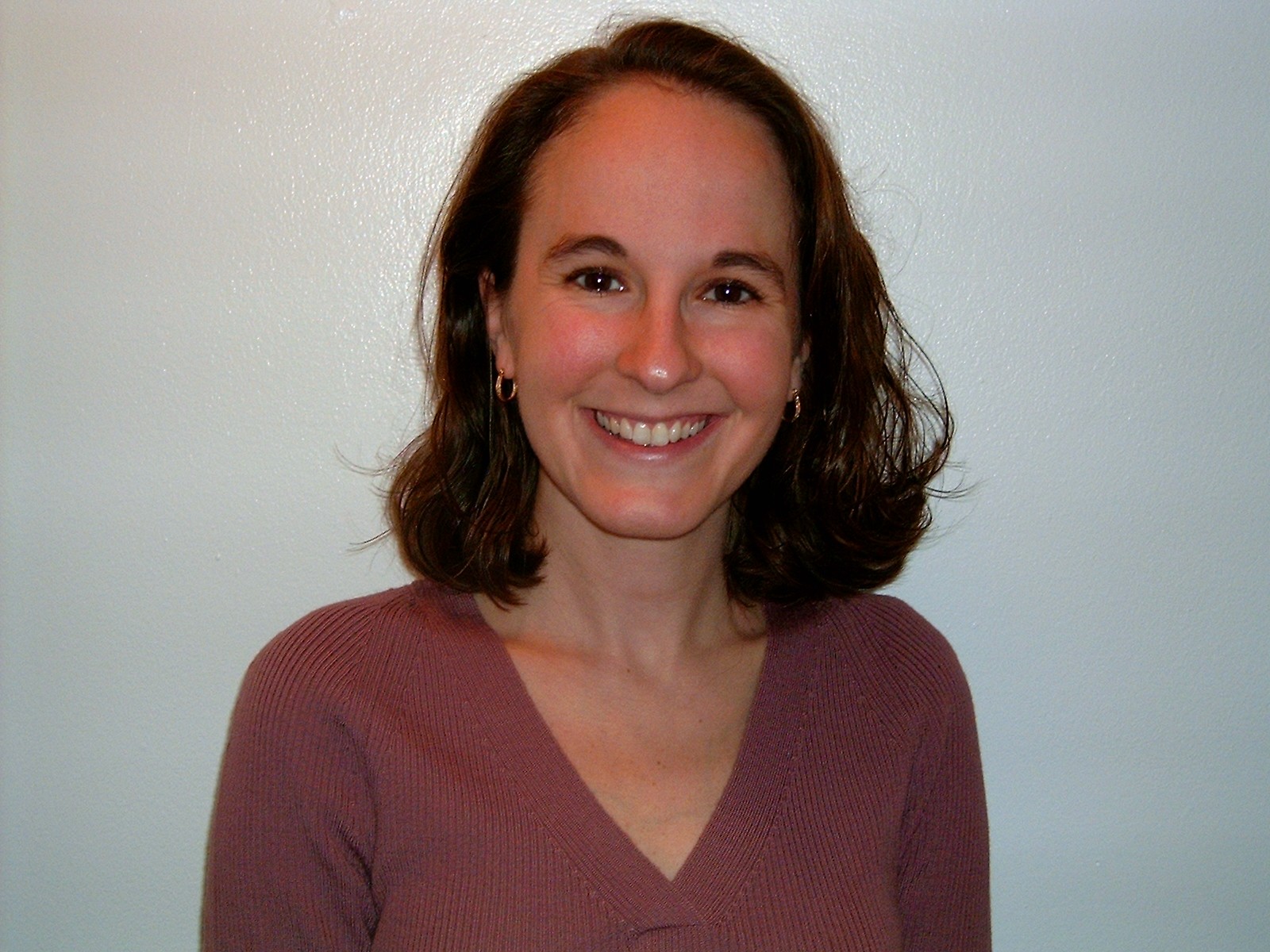
Kim L. Gratz is an affiliated faculty member in the Department of Psychology at the University of Toledo. She holds a PhD in Clinical Psychology from the University of Massachusetts Boston (2003) and completed her pre-doctoral internship at McLean Hospital/Harvard Medical School. Her career includes roles as a Clinical and Research Fellow at McLean Hospital, Assistant Research Psychologist at the University of Maryland, and Director roles at the University of Mississippi Medical Center (UMMC), including the Division of Gender, Sexuality, and Health. Her research focuses on emotion dysregulation in Borderline Personality Disorder (BPD), self-injury, and related risky behaviors. Key areas include mechanisms of emotional dysregulation, treatment development (e.g., Emotion Regulation Group Therapy), and intergenerational transmission of BPD traits. She has received prestigious awards, including the 2005 Young Investigator’s Award (NEA-BPD) and the 2015 Mid-Career Investigator Award (North American Society for the Study of Personality Disorders). Dr. Gratz has secured federal funding since 2003, serving as PI or co-PI on over 10 grants. Recent projects include studies on self-injury motives via ecological momentary assessment, ERGT efficacy in the U.S. and Sweden, and infant emotion regulation in BPD-affected families. She collaborates internationally to disseminate therapies and examines longitudinal risk factors like sexual revictimization. Her work bridges clinical interventions and population-level studies, emphasizing translational research. Current grants include investigations into implicit motivations for self-injury and parenting dynamics in inhibited temperament.
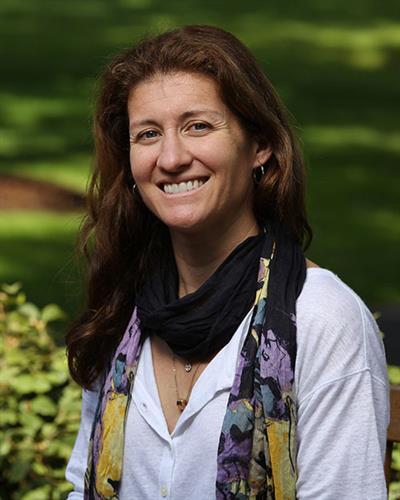
Jill Weinberg is an Associate Professor of Sociology and the Department Chair at Tufts University. She holds a joint appointment as Associate Professor at Tisch College. Her academic work bridges sociology, law, and social justice issues, with a particular focus on how social processes shape legal frameworks and vice versa. Education PhD in Sociology, Northwestern University (2015) MA in Sociology, Northwestern University (2010) MA in Social Psychology, University of Chicago (2009) JD, Seattle University School of Law (2008) BA in English and BS in Journalism, Boston University (2003) Research Interests Jill Weinberg is a scholar who examines decriminalization through social processes, focusing on how groups use rules, norms, and language of consent and choice. Her research spans several interconnected areas including crime, law, deviance, sports, the body, and research methods. She is particularly interested in how seemingly violent activities become socially acceptable through formalized rules and structures. Her work explores how communities navigate legal boundaries while maintaining legitimacy in the public eye. This includes examining mixed-martial arts and sexual sadomasochism communities, which develop elaborate law-like rules to organize themselves. Her current research extends to assisted death and how terminally ill people, their loved ones, and medical professionals navigate laws regarding aid-in-dying. Another significant research stream is the "Contested Constructions of Discrimination Project," which uses experimental research design and interviews to compare how ordinary people and trial judges define employment discrimination. This work bridges sociology, law, and social psychology to understand how legal concepts are interpreted in real-world contexts. Publication Trends Weinberg's scholarly output demonstrates a consistent focus on the intersection of law, social processes, and embodied experiences. Her publications reveal an evolving trajectory from studying consent in unconventional contexts like sports and sexuality toward examining legal decision-making processes in discrimination cases and end-of-life care. The methodological diversity in her work—from qualitative ethnographic approaches to experimental designs—highlights her commitment to rigorous interdisciplinary research that bridges theoretical insights with empirical evidence. Her publications appear in top sociology and law journals including Sociological Science, Sociological Methods & Research, and Law & Social Inquiry. She also engages with broader audiences through popular media outlets like the Huffington Post and the Society Pages, demonstrating her commitment to public sociology. Scientific Awards Neubauer Faculty Fellowship, Tufts University (2016-2017) Marion & Jasper Whiting Foundation award for "Conceptualizing Justice" (2017-2018) Advising and Grants As Department Chair and Associate Professor, Weinberg actively mentors students through honors theses and independent research projects. Her teaching portfolio includes courses on Law and Society, Body Culture & Society, Sports Sociology, and Quantitative Research Methods, reflecting her interdisciplinary approach. Beyond direct student supervision, she serves on various committees including the Undergraduate Student Article Prize Committee for the Sociology of Law Section of the American Sociological Association. Her research has been supported by significant funding, including the Marion & Jasper Whiting Foundation grant for her "Conceptualizing Justice" project. She is also an affiliated scholar at the American Bar Foundation, where her "Contested Constructions of Discrimination Project" has advanced understanding of how legal concepts are interpreted across different social contexts. Professional Activities Weinberg maintains an active role in the legal sociology community through presentations at major conferences including the Annual Meetings of the Law and Society Association and the American Anthropological Association. She has served as an expert consultant in multiple court cases, including State v. Baldwin, State v. Hoffman, and U.S. v. Christensen, demonstrating how her academic expertise translates to real-world legal contexts. Her editorial work for Law and Social Inquiry further establishes her as a key contributor to scholarly discourse at the intersection of law and society.
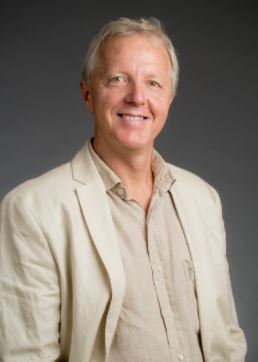
Professor Jean-Paul Pinelli is a faculty member in the Department of Mechanical and Civil Engineering at Florida Institute of Technology's College of Engineering and Science. His expertise focuses on Natural Hazards Risk Modeling, Wind Engineering, and Infrastructure Vulnerability and Resilience. He contributes to organizations such as the American Society of Civil Engineers and Earthquake Engineering Research Institute. His research emphasizes hurricane impact mitigation, structural vulnerability assessment, and multi-hazard modeling. Recent work includes developing wireless sensor networks for real-time hurricane monitoring and integrating geospatial data for hazard model validation. He has collaborated on projects analyzing wind effects on industrial facilities, mid/high-rise buildings, and coastal residences. Notable contributions include the Florida Public Hurricane Loss Model and DesignSafe cyberinfrastructure for natural hazards research. His research spans environmental monitoring technologies, cost-benefit analyses of mitigation strategies, and post-disaster recovery frameworks. Publications highlight innovative methods for assessing wind-driven rain intrusion, aerodynamic roughness, and structural resilience. While no specific awards or grants are listed, his work underscores interdisciplinary approaches to disaster risk reduction.
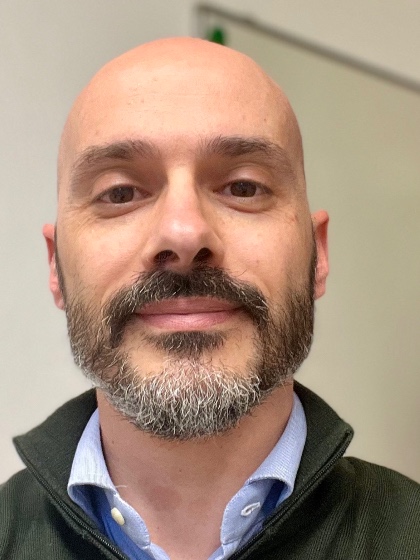
Tommaso Caselli is an Assistant Professor in the Faculty of Arts at the University of Groningen, specializing in Computational Linguistics. His work focuses on advanced NLP techniques including event extraction, storyline analysis, sentiment detection, and generative AI applications. He leads the 'AI and Language' theme at the Jantina Tammes School of Digital Society and contributes to initiatives like the Dutch Abusive Language Corpus (DALC) and the Event Storyline Corpus (ESC). His research addresses societal challenges such as climate communication, misinformation detection, and ethical AI use. Caselli has received awards for his contributions to NLP, including the Outstanding Area Chair (2023) and Best Paper Awards at COLING 2022. His recent projects explore generative AI's potentials and risks in healthcare and social media contexts. Affiliations: Faculty of Arts, Computational Linguistics Department, University of Groningen External Roles: Theme Coordinator (Jantina Tammes School), Former Board Member (Senso Comune) Research Interests: Event processing, temporal reasoning, causal relation extraction, abusive language detection, and the societal impact of NLP technologies. His work intersects with UN Sustainable Development Goals related to climate action and responsible innovation. Key Contributions: Developed benchmark corpora like EXCEPTIUS for legal texts analysis and TEXT-CAKE for evaluating language models. Active in CLEF labs (CheckThat!) addressing misinformation and check-worthiness detection. Supervised datasets such as the Dutch Abusive Language Corpus and the Content Type Dataset. Awards & Recognition: Recipient of multiple academic accolades including Outstanding Paper Awards (2022-2023), Best Student Paper (2022), and leadership in organizing NLP workshops (e.g., CLEF, CASE).
Dr. Charné Theron is affiliated with the Climate Adaptation Research Centre for Built Environment – NoorderRuimte at the University of Groningen. Her work focuses on climate resilience, water resource management, and sustainable development. She holds a PhD in Environmental Engineering (2023), a Master’s in Environmental Science (2015), and degrees in Civil and Structural Engineering (2000–2008). With over 25 years of professional experience in project and construction management, she bridges academic research with practical engineering solutions. Education: PhD (2023), MSc (2015), B.Tech (2008), National Diploma (2000) University Teaching Qualification (2023) Her research emphasizes climate adaptation strategies, including drought/flood risk management, resilient infrastructure design, and nature-based solutions. She investigates rainfall impacts on tailings dams, groundwater dynamics, and stormwater infrastructure resilience. Current projects include Thirsty Cities (2025–2030), GINA (2024–2027), and Floating Future (2024–2028), addressing water-sensitive urban environments and green infrastructure. Key collaborations involve international experts in hydrology, geotechnical engineering, and urban planning. Her work is funded by grants focused on climate-proofing built environments and floating solar energy systems.
Margaret Price is a Professor and Director of the Disability Studies Program at The Ohio State University. Their work focuses on rhetoric, disability studies, and qualitative research methods. They hold a PhD from the University of Massachusetts, an MFA from the University of Michigan, and a BA from Amherst College. Key research interests include academic accessibility, disability justice, and the intersection of mental health and education. Price co-leads the Transformative Access Project and has been recognized with the Alison Piepmeier Book Prize (2024) and a Fulbright Award (2020). Their writing explores concepts like 'access priming,' 'crip spacetime,' and institutional accountability. Recent publications address quiet rooms in higher education, nonclusive design, and temporal dynamics of disability. Price's work emphasizes proactive accessibility frameworks and radical inclusion practices, including their signature 'access invocation' ritual. They also engage in participatory research on accessible gatherings through interviews with community members. Grants include co-PI roles in the Transformative Access Project, and their advocacy extends to policy critiques around faculty accommodations and mental health support systems. Price's interdisciplinary approach bridges rhetoric, disability studies, and social justice activism.
Mark Taggart is a Senior Research Fellow and Theme Leader for "Environmental Contamination and Ecological Health" at the Environmental Research Institute (ERI), University of the Highlands and Islands. He holds a PhD in Arsenic Biogechemistry from the University of Aberdeen (2005), an MSc in Geochemistry from the University of Leeds (1996), and a BSc in Earth Science and Countryside Management from Liverpool John Moores University (1994). His research focuses on ecotoxicology, pollutants in higher trophic levels (e.g., birds, mammals), and advanced analytical techniques such as LC-MS/MS, GC-MS, and ICP-MS. Key projects include biochar applications in nutrient removal, eco-directed prescribing frameworks, and conservation efforts for endangered vultures via the SAVE consortium. He leads collaborations on lead ammunition impacts, pharmaceutical pollution, and wastewater treatment. Over 140 publications span topics like diclofenac toxicity to vultures, microbial dynamics in wetlands, and biochar optimization. His work aligns with UN Sustainable Development Goals related to clean water and ecosystems. Media coverage highlights his findings on failed lead ammunition phase-outs and vulture conservation. He advises policy through parliamentary motions and international collaborations, emphasizing interdisciplinary solutions to environmental challenges.
Giovanni Paolo Tomasi is an Associate Professor of Practice in Management Control Systems at SDA Bocconi School of Management, part of Bocconi University. He focuses on performance management, cost management, and strategic planning, with notable roles including Director of Domestic Executive Programs and past Director of Corporate Custom Division and Executive MBA programs. His research spans multinational group planning, accounting systems, and industry-specific analyses in entertainment, chemical-pharmaceutical, and luxury sectors. He holds a degree from Università Bocconi and a Ph.D. from Università Cattolica del Sacro Cuore. Education: Bachelor's Degree in Business Administration, Università Bocconi Ph.D. in Economics of Institutions and Business Systems, Università Cattolica del Sacro Cuore, Milan Research interests emphasize performance measurement systems, cost optimization, and strategic business planning, with a focus on applying these principles to creative industries and multinational contexts. His publications include works on construction sector cost competitiveness, tax incentives for film industries, and management accounting in arts and entertainment. Professional activities include consulting for major corporations in entertainment and luxury sectors, board memberships, and visiting scholar roles at Stockholm School of Economics and UCLA's Anderson School of Business. He has also collaborated with the ASK research center on interdisciplinary projects.
Professor Hussein Dia is a strategic leader in Future Urban Mobility at Swinburne University of Technology, holding roles as Chair of the Department of Civil and Construction Engineering and Program Leader of the Future Urban Mobility initiative at the Smart Cities Research Institute. His expertise spans decarbonization of transport, smart mobility systems, and interdisciplinary research collaboration with industry. He holds a PhD from Monash University (2017), with prior academic leadership roles and industry experience at AECOM and Aurecon. Education : Bachelor of Civil Engineering (Purdue University, 1983), Master of Civil Engineering (Purdue University, 1985), Doctor of Philosophy (Transport Studies, Monash University, 1997). Research : Focuses on sustainable urban transport, electric vehicle adoption, and policy frameworks for decarbonization. Key achievements include over 150 publications, including influential books on ITS and AI in transportation, and recognition as a top 2% most cited scientist in logistics and transportation. Awards & Affiliations : Fellowships from Engineers Australia, ASCE, and the Institute of Transportation Engineers; Senior Editor of IEEE Transactions on ITS. Advising & Grants : Supervised over 20 PhD/Master’s students across Swinburne and the University of Queensland. Collaborates with CRCs (iMOVE, Low Carbon Living) on industry-driven research. Leads projects funded by Australian Research Council, state transport departments, and federal agencies. Labs & Teams : Active in Swinburne’s Smart Cities Research Institute, focusing on interdisciplinary solutions for urban challenges, including AI-driven traffic prediction and low-carbon mobility assessment tools.
Izhar Mithal Jiskani is a Research Fellow at Aalborg University's Department of Sustainability and Planning, within the Technical Faculty of IT and Design. His research focuses on sustainability and green mining practices, particularly within the context of climate change mitigation and energy transition. Previously, he served as Head of the Department of Mining and Mineral Resources at Pakistan's National University of Sciences and Technology (NUST) and held an Assistant Professor role there from 2021 to 2023. Education: PhD in Green & Climate-Smart Mining (2018–2021), National University of Sciences and Technology (NUST), Pakistan Research Interests: Izhar's work emphasizes environmental impact assessment in mining, with a focus on sustainable practices, energy transition minerals, and climate neutrality. He actively promotes interdisciplinary approaches to balance economic, social, and environmental aspects of mining through frameworks like Mining 4.0 and green decision support systems. His recent projects include analyzing dust pollution control in open-pit mines and developing intelligent systems for slope stability. Publications Trends: Over 50 articles since 2018 highlight his focus on sustainable mining, environmental management, and technological innovation in mining operations. Themes include dust reduction technologies, geopolymer applications for mine infrastructure, and AI-driven environmental monitoring. Grants & Projects: As Principal Investigator of the 2022–2023 project 'Mining 4.0 and climate neutrality,' he explores safe, intelligent, and climate-smart mining systems. He also contributes to international collaborations, including the Danish Centre for Environmental Assessment. Professional Activities: Izhar serves as an external examiner for PhD and master's theses, presents at global conferences (e.g., the 44th Annual Conference of the International Association for Impact Assessment), and delivers guest lectures on topics like sustainable mining and natural resource governance. Labs/Teams: Affiliated with the Danish Centre for Environmental Assessment, focusing on interdisciplinary environmental research and policy.
Monica Löfman is a University Teacher in the Department of Civil Engineering at Aalto University, affiliated with the Aalto University School of Engineering. She also holds an external position as a Specialist at Ramboll Finland Oy since February 2022. Löfman earned her Doctoral degree and Doctor of Science (Technology) from Aalto University in 2022, alongside a Master’s degree in Engineering and Technology (2016). Her research focuses on geotechnical engineering, particularly clay mechanics, soil stabilization, and reliability analysis. Key areas include soft clay behavior, deep mixing techniques, and sustainable construction practices. She has contributed to datasets like the FI-CLAY database and led studies on carbon emissions reduction in ground improvement projects. Löfman has received notable awards, including the Oskari Vilamo Fund Doctoral Thesis Award (2023) and the Dean’s Master Thesis Award (2016). She actively participates in academic activities, such as organizing conferences, presenting at international events, and hosting academic visitors. Her work aligns with UN Sustainable Development Goals, emphasizing environmental sustainability and infrastructure resilience.
Dr. Lin Tian is a Senior Lecturer in the School of Engineering at RMIT University, Melbourne, Australia. She holds expertise in multi-scale modeling of fluid dynamics and micro/nano particles, with a focus on aerosol transport, inhalation toxicity, and drug delivery in respiratory systems. Her research integrates computational methods like Lattice Boltzmann simulations to solve multiphase flow problems. Current projects include developing risk assessment platforms for inhaled carbon nanotubes and hydrodynamic modeling for underwater vehicle systems. Her academic journey includes roles as a Research Fellow at RMIT (2015–2018) and Assistant Professor at SUNY Canton, USA (2008–2014). She leads funded projects such as the DECRA-supported multi-scale risk assessment platform and DSTG-funded underwater vehicle hydrodynamics research. Teaching interests span advanced thermo-fluids, mechanics of solids, and computational fluid dynamics. Research highlights include nasal airflow modeling, fiber transport dynamics, and HVAC system optimization for pathogen control. Awards include the DECRA grant (2018), and her work addresses critical areas like occupational exposure, drug delivery efficacy, and sustainable building systems. Dr. Tian is open to supervising Masters and PhD students in computational fluid dynamics and multiphase flow applications.
Professor Beatrice D'Ippolito holds the Chair in Strategic Management and Innovation at the University of York's York Management School, within the School for Business and Society. Her research bridges micro-level firm dynamics and meso-level industry evolution, focusing on knowledge creation, inter-firm collaborations, and digital transformation. She has conducted qualitative and archival studies across sectors including design-intensive industries, energy technologies, and research infrastructures in Europe. Education: PhD in Economics and Management of Innovation, University of Manchester (ESRC Fellowship) MRes, University of Manchester (ESRC Fellowship) MSc, Università Cattolica del Sacro Cuore, Italy BBA, University of Lancaster, UK Research Interests: Firm and industry-level knowledge systematisation Design as a strategic and innovative process Impact of digital technologies on creative industries Inter-firm collaboration and innovation ecosystems Her work explores how organizations leverage digital tools and design-driven approaches to innovate, with recent trends addressing climate adaptation strategies and the 'dark side' of business model innovation. She contributes to editorial boards of Research Policy and Journal of Management Studies . Grants and Projects: Principal Investigator for ESRC-funded project on skill mismatch at the BBC (2024-2026) Co-investigator for study on digital platforms in film distribution (2016-2017) Professor D'Ippolito advises PhD candidates in design and innovation management, emphasizing digital technologies' organizational impacts. She leads the 'Risk, Innovation, and the Economy' research theme and engages in global collaborations, including at the French GIANT campus and Tenerrdis cluster.
Ina Möller is an Assistant Professor in climate politics at the Environmental Policy Group of Wageningen University. Her research focuses on the governance of climate intervention technologies, particularly geoengineering and carbon dioxide removal. She holds a PhD in Political Science from Lund University (Sweden) with a thesis on 'The Emergent Politics of Geoengineering'. Her work addresses interactions between science, policy, and society, emphasizing how future climate solutions are shaped through expert networks. Key affiliations include the Climate Social Science Network and Earth System Governance project, where she contributes to working groups on geoengineering, net-zero targets, and agricultural emissions. In 2023, she secured a Veni grant from NWO to study EU carbon removal policies' impact on agricultural emitters. Collaborating with soil scientists, she explores the science-policy interface of soil-based carbon removal. Möller teaches International Environmental Policy and co-coordinates climate change economics courses at the Master’s level. She supervises Master’s theses on climate governance topics. Her research projects include analyzing the politics of climate engineering, EU removals policy implications for food systems, and anticipatory governance of speculative climate technologies. Her publications span journals like Global Environmental Politics and Environmental Politics , addressing governance frameworks, transparency in climate finance, and ethical principles for climate intervention research. She actively bridges academic and policy domains through interdisciplinary collaborations and educational initiatives.
Massimo Pizzol is a Professor at the Department of Sustainability and Planning, Aalborg University. His research focuses on Sustainability Science, Industrial Ecology, and Life Cycle Assessment (LCA), particularly evaluating emerging technologies like digital systems and circular bioeconomy solutions. He emphasizes interdisciplinary approaches, including stochastic modeling and uncertainty analysis. Education: PhD in Planning and Development, Department of Sustainability and Planning (2011) Master in Environmental Sciences, University of Parma (2007) Research Interests: Assessment of sustainability in emerging technologies Circular economy strategies Life Cycle Assessment methodologies Uncertainty and sensitivity analysis in environmental modeling Projects and Collaborations: SeaWeave: Developing functional textiles from seaweed ASCCENT: Carbon capture in construction products LCA4BIO: Harmonized LCA methods for bio-based systems TECH Centre for Circular Economy Awards: Best contribution to LCA modelling (2017) Grants and Advising: Supervised 5 PhD students Recipient of multiple EU and industry-funded projects Labs/Teams: Active in interdisciplinary teams at Aalborg University, focusing on bio-based systems, circular economy, and LCA innovation.