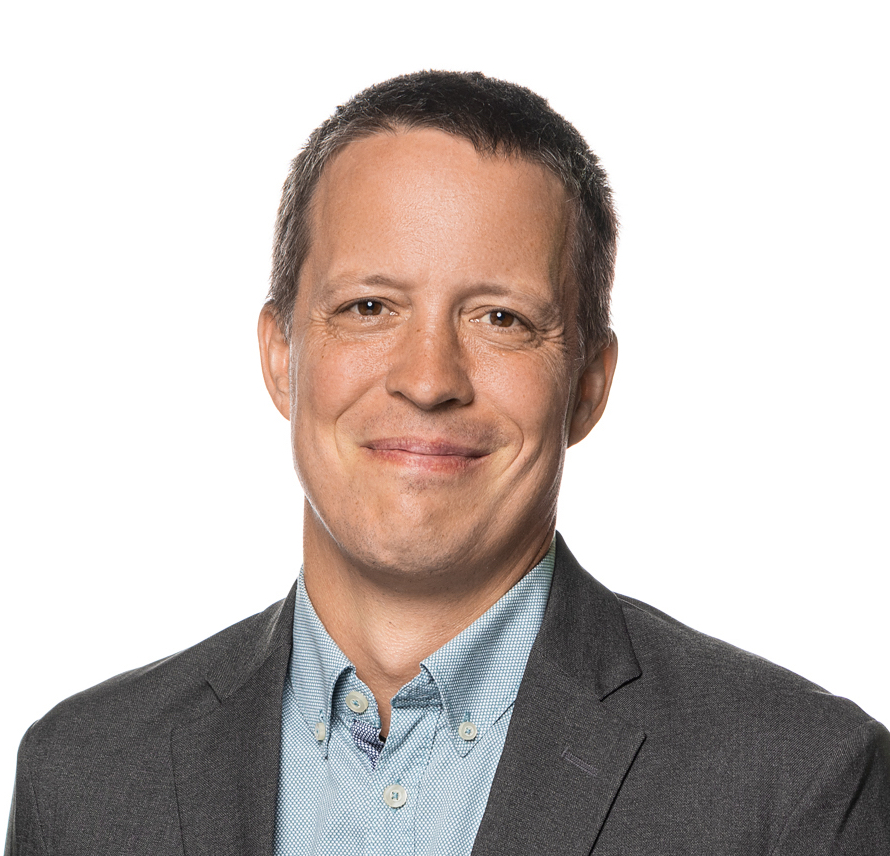
Ian Horrocks is a Professor of Computer Science at the University of Oxford and a Fellow of Oriel College. His research focuses on knowledge representation, description logics, automated reasoning, and semantic web technologies. He has held academic positions at the University of Manchester (2003–2007) and served as Chief Scientist at Cerebra Inc. (2001–2006). Horrocks earned his BSc (1st class), MSc, and PhD in Computer Science from the University of Manchester (1981–1997). His work includes foundational contributions to ontology languages (e.g., OWL) and reasoning systems such as HermiT and ELK. He has supervised over twenty doctoral students and postdoctoral researchers. His honors include Fellowships from the Royal Society (2011), ECCAI (2009), and the British Computer Society (2005). He serves as Editor-in-Chief of the Transactions on Graph Data and Knowledge and leads initiatives in semantic web standards and knowledge graph applications. Key Roles: Editor-in-Chief (Journal of Web Semantics), Co-Chair (W3C OWL Working Group) Grants: EPSRC Senior Research Fellowship (2005), numerous international collaborations Labs: Oxford Semantic Technologies, involvement in projects like RDFox and PAGOdA
Julian Jauk is a Researcher at the Institute for Architecture and Media, TU Graz. His work focuses on innovative material systems, digital fabrication, and sustainable architectural design. He explores the integration of clay composites, mycelium-based materials, and knitted structures with advanced manufacturing techniques like 3D printing. Key research themes include lightweight ceramic structures, biocomposite materials, and computational design methodologies. His research emphasizes material-driven innovation, structural optimization, and environmental sustainability. Notable projects include MyCera (clay-mycelium composites) and ClayKnit (3D-printed clay-knitted hybrids). He also investigates mixed reality tools for architectural sketching and kinetic architectural prototypes. Publications from 2021–2024 highlight trends in bio-based materials, additive manufacturing, and material-property analysis. His work bridges traditional craftsmanship with cutting-edge digital fabrication, aiming to redefine sustainable building practices.
Emanuel Sallinger is a Full Professor at TU Wien's Databases and Artificial Intelligence Group and Vice Dean of Academic Affairs for Business Informatics and Data Science. He leads the Knowledge Graph Lab, focusing on scalable knowledge-based systems, reasoning in knowledge graphs, and AI integration. His research spans computational logic, database theory, and blockchain applications. Education: PhD in Computer Science (awarded 'sub auspiciis praesidentis rei publicae'), Master's degrees in Computational Intelligence and Informatics Management, and a Bachelor's in Software and Information Engineering. Research Interests: Knowledge graphs (construction, reasoning, scalability), logic-based systems, AI/ML integration with databases, enterprise architecture modeling, and financial knowledge systems. His work emphasizes practical applications like enterprise modeling, sustainable waste management, and regulatory compliance. Grants & Projects: Lead Vienna Science and Technology Fund (WWTF)-funded Knowledge Graph Lab. Involved in projects like 'Knowledge Graph-driven Tour Management' (sustainability), 'SustainGraph' (waste processing), and 'Enterprise Architecture Knowledge Graphs'. Teaching: Offers courses on Knowledge Graphs, Generative AI, Database Systems, and research methodology. Supervises doctoral and master's students in AI, databases, and knowledge representation. Labs/Teams: Knowledge Graph Lab at TU Wien, collaborating with industry on blockchain-based systems, financial AI, and enterprise architecture frameworks.
Mathias Beiglboeck is a Professor at the Faculty of Mathematics, University of Vienna. His research spans Probability, Optimal Transport, and Mathematical Finance, with a focus on martingale constraints and stochastic modeling. Doctorate in Mathematics (2004, TU Vienna) Diploma in Mathematics (2003, TU Vienna) His work bridges geometric and probabilistic methods in finance, addressing problems like the Skorokhod Embedding, Weak Martingale Transport, and applications to financial institutions. Preprints and publications highlight advancements in Wasserstein distances, causal transport, and stability analysis under martingale constraints. Notable projects and awards include the OeNB-Anniversary-Fund Project (2024-), FWF-Project on Mimicking Processes (2022-), a START-Prize (2014-2022), and early recognition for his Master's thesis (2003). Teaching roles at University of Vienna and TU Vienna cover Stochastic Processes, Financial Mathematics, and Mathematical Finance courses. 2024: OeNB-Anniversary-Fund Project 18983 (250,000 EUR) 2023: Mentor in Daniel Bartl's Esprit-Project (280,000 EUR) 2022: FWF-Project on Mimicking Processes (400,000 EUR) 2014-2022: START-Prize (1,000,000 EUR) 2012: Austrian Mathematical Society Prize 2003: Best Master's Thesis Award, Austrian Mathematical Society His research trends integrate adapted Wasserstein distances, disease modeling, and financial applications, with collaborations across institutions like TU Vienna, Bonn University, and MSRI Berkeley. Grants emphasize geometric and entropic transport methods in finance and public health contexts.
Hojjat Adeli is an Academy Professor at The Ohio State University (OSU) with courtesy appointments in the Departments of Neurology, Neuroscience, and Biomedical Informatics. He has held the Abba G. Lichtenstein Professorship in Infrastructure Engineering (2003-2013) and served as Editor-in-Chief of Computer-Aided Civil and Infrastructure Engineering for 25 years. Academy Professor, OSU (2018–present) Professor of Neurology, Neuroscience, and Biomedical Informatics (by courtesy, since 2015-2002) His research interests span interdisciplinary domains at the intersection of engineering and neuroscience, focusing on: Computational neuroscience and neurocomputing Biomedical signal processing (particularly EEG-based diagnostics) Machine learning and computational intelligence applications Smart infrastructure systems and structural engineering Optimization algorithms in civil and biomedical contexts His research trends demonstrate a synergy between: Neural network development for medical diagnostics Wavelet and chaos theory in epilepsy detection Computational intelligence for structural engineering Hybrid models integrating fuzzy logic and genetic algorithms Scientific awards and honors include: Multiple IEEE Fellowships and AAAS Fellow Thomson Reuters Highly Cited Researcher in Engineering and Computer Science Hojjat Adeli Awards for Neural Systems and Innovation in Computing Elections to international academies in Poland, Lithuania, and Spain Scott Award for Engineering Education and Distinguished Member ASCE
Harald Pichler is an Associate Professor and Team Leader at the Institute of Biotechnology (IMBT) at Graz University of Technology. His research focuses on membrane biology, enzyme engineering, and industrial biotechnology using yeast systems like Pichia pastoris . Key projects include engineering microbial membranes for protein secretion, optimizing biocatalysts for terpenoid synthesis, and studying lipid interactions with membrane proteins. Collaborations with companies like DSM and LONZA highlight industrial applications of his work. Research interests span microbial membrane modifications, sterol biosynthesis, and metabolic engineering for producing valuable metabolites. Major contributions include developing yeast strains for high-throughput screening of terpenoids and engineering hydratases for biocatalytic applications. His team also explores protein secretion pathways and membrane protein expression in yeasts, with patent filings for key genetic targets. Current projects involve lipid raft dynamics, SARS-CoV-2 spike protein interactions with membranes, and low-cost cell culture media alternatives. Collaborations with academic partners like the University of Geneva and Wageningen University emphasize interdisciplinary approaches. Publications frequently address membrane biophysics, enzyme mechanisms, and yeast strain engineering, reflecting a blend of fundamental and applied research.
Christian Timmerer is a Professor at the Institute of Information Technology, Alpen-Adria-Universität Klagenfurt. His research focuses on adaptive video streaming , energy efficiency , MPEG standardization , and quality of experience (QoE) , with significant contributions to HTTP Adaptive Streaming (HAS), multi-codec optimization, and immersive media systems. Email: christian.timmerer@aau.at Office Hours: Monday 3:00-4:00 PM (by appointment) Projects: CD-Labor ATHENA, GAIA, SPIRIT His research integrates machine learning and generative AI to enhance video encoding, super-resolution, and voice dubbing, while prioritizing sustainability through energy-aware algorithms and open-source tools like GREEM and VEED. Current work emphasizes latency reduction and dynamic bitrate adaptation in live streaming environments. Recent publications address VVC optimization , multi-resolution encoding , and perceptual quality modeling , reflecting interdisciplinary efforts in networking , computer vision , and human-computer interaction . Awards include leading funded projects on adaptive streaming and green video systems.
Thomas Schnabel is a Research Group Leader and Senior Researcher in Design and Green Engineering at Salzburg University of Applied Sciences, where he heads the Green Materials and Processing research group and leads the Salzburg Center for Smart Materials 2.0 initiative. His work bridges academic research with practical industrial applications in sustainable materials science. His research focuses on: Valorization of wood byproducts, particularly tree bark extracts for multiple applications Development of natural fiber insulation materials from recycled wood residues Life cycle assessment of sustainable material production processes Application of bioactive compounds from bark for biomedical uses Green chemistry approaches to material processing and purification Dr. Schnabel's publication record shows a cohesive research trajectory focused on extracting maximum value from wood processing byproducts. His recent articles demonstrate increasing sophistication in characterizing bark extracts and developing practical applications across construction, biomedical fields, and sustainable manufacturing. The research directly contributes to UN Sustainable Development Goals related to responsible consumption, climate action, and industry innovation. He leads multiple significant research initiatives including: NETTLE: Cross-border cooperation for alpine plant bioactive compounds (2024-2026) DRWO4.0: Danube Region Wood Industry Transformation toward Industry 4.0 (2024-2025) SCSM 2.0: Salzburg Center for Smart Materials 2.0 (2023-2026) User-centered teaching materials development in forestry and bioeconomy (2023-2026) His collaborative network spans the Danube region and beyond, reflecting the international significance of his work in advancing sustainable materials science and engineering practices.
Axel Polleres is a full professor at the Institute for Data, Process and Knowledge Management in Vienna University of Economics and Business (WU Wien). He leads the department of Information Systems and Operations Management while maintaining active research in knowledge graphs, semantic web technologies, and ontology engineering. PhD and Habilitation from Vienna University of Technology Former positions at University of Innsbruck, Universidad Rey Juan Carlos, DERI Ireland, and Siemens AG Co-chair of W3C SPARQL working group Editorial board member for Semantic Web Journal and IJSWIS His research focuses on: Querying and reasoning over ontologies Graph schema languages (SHACL, SPARQL) Wikidata constraint formalization Ontology reuse in collaborative platforms Crisis management knowledge graphs FAIR data principles implementation Recent publications analyze knowledge graph evolution, constraint validation methodologies, and semantic web standardization efforts. Key topics include: OWL/RDF interoperability solutions Unit conversion systems for Wikidata Partition-based query processing frameworks Network resilience analysis for urban planning Open data platform discovery tools Temporal analysis of collaborative knowledge graphs He has co-organized major conferences like ISWC2023 and ESWC workshops while maintaining active roles in European research projects. Current work involves spatiotemporal knowledge graphs for city resilience and semantic web infrastructure development.
Bernhard Pucher is a Senior Scientist at the Institute of Sanitary Engineering, Industrial Water Management and Water Pollution Control (SIG), within the Department of Landscape, Water and Infrastructure at the University of Natural Resources and Life Sciences, Vienna (BOKU). He holds a doctorate in technical natural sciences and is actively leading and participating in multiple research projects focused on urban water management and nature-based solutions. His research interests lie at the intersection of urban sustainability and environmental engineering, with a strong focus on urban water management , circular economy , nature-based solutions , treatment wetlands , vertical greening systems , and greywater treatment . His work emphasizes process-based modeling of water and solute transport, particularly using the HYDRUS software, to optimize the design and performance of decentralized water treatment systems. The recent articles highlight a consistent trend in developing and evaluating nature-based technologies for sustainable urban water cycles. Key themes include the performance assessment of vertical and horizontal flow wetlands, numerical modeling for design optimization, the multifunctionality of green walls for cooling and water reuse, and the integration of blue-green infrastructure into circular city frameworks. His research bridges technical modeling with practical implementation, aiming to quantify resource recovery and improve urban resilience. Board member of the IWA national committee Austria (2023) Member of the Management Committee, IWA Specialist Group on 'Wetland Systems for Water Pollution Control' (2019) Active reviewer for journals including Chemical Engineering Journal , Science of the Total Environment , and Water Science and Technology Served on scientific advisory boards for major conferences like WETPOL and IWA ecoSTP He has supervised numerous master’s theses on topics such as greywater use for vertical greening, treatment performance of living walls, and modeling of rainwater use. His projects are funded by diverse sources including the European Commission (Horizon), FFG, national companies, and private foundations, demonstrating strong grant acquisition capability. He is also involved in knowledge transfer through public reports, media contributions, and participation in policy-relevant seminars. Bernhard Pucher is a key member of a research team that includes collaborators like Günter Langergraber, Ulrike Pitha, and Isabella Zluwa. His work is often conducted within interdisciplinary projects such as 'resilientRAIN', 'UrBan hEat islands REsilience', and the EU COST Action 'Circular City Re.Solution', reflecting a collaborative approach to addressing complex urban environmental challenges.
Rupert Wimmer is a Professor at the Institute of Wood Technology and Renewable Resources of the University of Natural Resources and Life Sciences, Vienna. He serves as an Editorial Board Member for journals like Frontiers in Chemistry and Wood and Fiber Science , and has been a Review Editor for ISRN Forestry (2009–2018). His work bridges wood science , renewable materials , and dendrochronology , with a focus on 3D-printed bio-composites , triboelectric wood processing , and climate reconstruction . His research spans Biocomposites: Innovations in lignin-based materials , wood-plastic composites , and fully recyclable wall systems . Wood Technology: Studies on surface activation , mechanical properties , and dust reduction during machining. Dendrochronology: Climate history analysis via tree rings and wood chemistry . The most recent articles explore circular economy in construction, electrostatic wood treatment , and drought proxies , reflecting his interdisciplinary approach. Awards include Rudolf Sallinger S&B Innovation Award nominations (2018, 2019) German Study Prize for Wood Materials Research (2010) Fellow of the International Academy of Wood Science (2005) He has supervised over 74 theses, including Roman Myna (2025) on innovative dust reduction and Raphaela Hellmayr (2024) on wood-based circular bioeconomy . Grants from EU , FFG , and Fonds zur Förderung der wissenschaftlichen Forschung fund his work. Collaborations span institutions in Australia, Germany, and the Czech Republic.
Manuel Wimmer is a Full Professor and Head of the Department of Business Informatics – Software Engineering at Johannes Kepler University Linz, Austria. He also serves as the Program Director for the Business Informatics master's program since 2019. His academic leadership extends to representing JKU Linz in the AutomationML society and leading significant research initiatives. Dr. Wimmer received his Ph.D. and Habilitation from TU Wien. His academic journey includes: Research associate at the University of Malaga, Spain Visiting professor at the University of Marburg, Germany Visiting professor at TU Munich, Germany Assistant professor at the Business Informatics Group (BIG), TU Wien, Austria Professor Wimmer's research focuses on Model-Driven Software Engineering and its applications, particularly in the emerging field of Digital Twins . His work bridges theoretical foundations with practical industrial applications, with special emphasis on model transformations, runtime modeling, and the integration of artificial intelligence techniques into model-driven approaches. More recently, he has been exploring the intersection of model-driven engineering with quantum computing, investigating how modeling principles can be applied to quantum software development. His recent publications reveal a strong trend toward Digital Twin engineering, with approximately 40% of his 2023-2025 publications focusing on various aspects of Digital Twin technology. Another significant strand of his work involves the application of AI and machine learning techniques to enhance model-driven engineering processes. The emergence of quantum software engineering as a research direction is also notable in his most recent publications, demonstrating his ability to identify and explore cutting-edge research frontiers. From 2017-2023, Professor Wimmer led the Christian Doppler Laboratory on Model-Integrated Smart Production (CDL-MINT), where he developed engineering approaches for digital twins. He is also the co-author of the influential book "Model-driven Software Engineering in Practice" (2nd edition, 2017). Professor Wimmer is actively involved in the organization of major scientific events including the IEEE International Conference on Quantum Software (QSW) and the International Conference on Engineering Digital Twins (EDTconf), demonstrating his leadership in these emerging research communities. His research has practical applications across various domains including smart cities, industrial automation, tunneling/construction, and quantum computing. The MATISSE project represents a significant multi-partner effort to develop a framework for federated digital twins of industrial systems.
Andreas Stollwitzer is a researcher affiliated with the Research Area Steel Construction at TU Wien. His academic titles include Univ.Ass. (University Assistant), Dipl.-Ing. (Diplom-Ingenieur), and Dr.techn. (Doctor of Technical Sciences). His research focuses on railway bridge dynamics, track-bridge interaction, and structural health monitoring. Key areas of investigation include the behavior of ballasted tracks on railway bridges, dynamic characteristics of bridge-track systems, and vibration analysis in high-speed rail infrastructure. His work emphasizes experimental and numerical methods to study phenomena such as longitudinal/lateral track-bridge interaction, dynamic stiffness and damping measurement, and destabilization of ballast beds under vertical vibrations. He has contributed to projects like DYS-GROS, analyzing the dynamic interaction between track components and bridge structures through both simulations and in-situ testing. Recent publications (2021–2023) highlight advancements in damping factor calculations, comparison of vehicle-bridge interaction approaches, and the application of indirect structural health monitoring techniques using vehicle-based sensors. His findings aim to improve bridge safety, reduce computational uncertainties in dynamic analyses, and optimize railway infrastructure design under high-speed conditions. He collaborates with institutions and researchers in Austria and internationally, focusing on railway engineering challenges. While no formal awards are listed, his extensive publication record reflects significant contributions to civil engineering dynamics and infrastructure systems.
Michael Krivelevich is a Full Professor at the School of Mathematical Sciences, Tel Aviv University, holding this position since 2005. He previously served as Associate Professor (2002-2005) and Senior Lecturer (1999-2002) at the same institution. From 2015 to 2020, he acted as Dean of the Faculty of Exact Sciences at Tel Aviv University. Research Interests: Probabilistic and extremal combinatorics Random structures Applications of combinatorics to computer science Scientific Contributions: Authored two books: Positional Games (2014) and Random Graphs, Geometry and Asymptotic Structure (2016) Published over 200 research papers in combinatorics and related fields Editor-in-Chief of the Journal of Combinatorial Theory Series B (JCTB) Recognitions: Clay Lecturer (2019) Fellow of the American Mathematical Society (2017) Invited Speaker at ICM (2014) Pazy Memorial Award (2007) Academic Leadership: Dean of Faculty of Exact Sciences (2015-2020) Supervised 9 PhD and 16 MSc students at Tel Aviv University
Ruth Breu is a Full Professor and Dean of the Faculty of Mathematics, Computer Science and Physics at the Universität Innsbruck, where she also leads the Quality Engineering research group. She has been a key figure in the Department of Computer Science since 2002 and served as its Head from 2013 to 2024. Her academic journey began with a PhD summa cum laude from the University of Passau in 1991, followed by a habilitation at the Technical University of Munich in 1999. Her research interests include: Quality Engineering Model and Security Engineering Requirements and Software Development Processes Enterprise Architecture Management Threat Intelligence and Digital Twins Her recent publications reflect a strong focus on model-based systems, automated programming assessment, security engineering, and digital twins in construction and energy systems. She frequently collaborates with researchers such as Michael Felderer, Clemens Sauerwein, and Philipp Zech, contributing to advancements in software testing, threat intelligence sharing, and cyber-physical systems. Notable awards include her PhD awarded summa cum laude. She has also been actively involved in national research governance, serving on the board of the Austrian Science Fund (FWF) from 2011 to 2020. She co-founded Txture GmbH in 2017 and holds advisory roles at Universität Passau and FH OST. Ruth Breu advises several students and leads a vibrant research group. Her leadership extends to organizing workshops and contributing to major conferences in software engineering and enterprise modeling. She is deeply engaged in both academic and applied research, bridging theory and practice in IT quality and security.