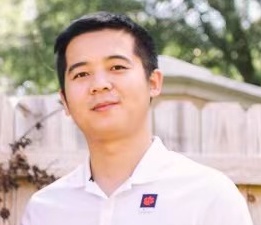
Dr. S. Athanasios Stasinakis is an Assistant Professor at the Environmental Engineering and Science Sector of the University of the Aegean . He holds a BSc (1997) and PhD (2002) in Environmental Sciences from the same institution. Education: BSc in Environment, University of the Aegean (1997) PhD in Environmental Sciences, University of the Aegean (2002) Research Focus: Toxicity of heavy metals and synthetic organic compounds in activated sludge systems Impact of operational conditions on bioflocculation and sedimentation in wastewater treatment Adoption of low-cost adsorbents for industrial wastewater Physicochemical methods for municipal/industrial wastewater treatment Wastewater reuse strategies Publications: Recent work emphasizes emerging contaminants in treatment systems, anaerobic digestion optimization, and innovative solar/wetland-based solutions. Key contributions include studies on PFAS behavior in sludge, microbial electrochemical systems, and valorization of agricultural byproducts. Lab/Infrastructure: Coordinates projects involving constructed wetlands, microbial electrochemical systems, and solar distillation setups for decentralized wastewater treatment.
Miroslav Popović is an academic affiliated with Singidunum University's Faculty of Informatics and Computing . His expertise spans nuclear engineering, materials science, environmental engineering, and medical research. He holds a PhD from the University of California, Berkeley (2013–2017) in Nuclear Engineering, and bachelor's degrees in Physics (2000–2009) and Chemistry (2000–2004) from the University of Belgrade. His research focuses on advanced materials for nuclear applications , environmental sustainability , and medical technologies . Key projects include corrosion studies in liquid metals (e.g., Pb-Bi eutectic), AI-driven waste classification systems, and clinical trials for scoliosis treatments. He has authored/co-authored over 30 peer-reviewed articles and a textbook Prirodni hazard (2024). Recent work highlights: Convolutional neural networks for waste management (2025) Randomized controlled trial for Schroth Method in adolescent scoliosis (2025) Hydrometallurgical recovery of metals from tailings (2024) Structural analysis of tungsten under helium ion irradiation (2022) He collaborates with institutions like UC Berkeley and the Serbian Academy of Sciences. No awards or grants are explicitly listed, though his prolific publication record indicates active research funding.
Shadi Mohamed is an Associate Professor at Heriot-Watt University's School of Energy, Geoscience, Infrastructure and Society, specifically within the Institute for Infrastructure & Environment. His research focuses on computational mechanics with applications spanning acoustic wave modeling, traffic flow simulation, and structural dynamics. He maintains an active research profile with over 100 publications and currently accepts PhD students for projects in computational mechanics, traffic modeling, and acoustic waves. His research interests center on advanced numerical methods for engineering problems, particularly finite element analysis for transient diffusion, wave propagation, and structural dynamics. Key focus areas include enriched finite element methods, partition of unity techniques, and machine learning integration for structural health monitoring and inverse problems. His work demonstrates strong alignment with UN Sustainable Development Goals through sustainable infrastructure development and environmental protection. Analysis of his recent publications reveals a clear trajectory toward hybrid computational approaches combining traditional numerical methods with machine learning, particularly for structural dynamics, fatigue analysis, and wave propagation problems. His work increasingly integrates convolutional neural networks for vibration analysis and employs isogeometric analysis for thermal and diffusion problems in composite materials. Best Post-graduate Research (2008) Japan Society for the Promotion of Science Invitational Fellowship (2019) Dr. Mohamed actively supervises PhD research and collaborates internationally, with recent work spanning vibration-induced fatigue assessment, dynamic load identification, and thermal analysis of composite materials. His research is supported by prestigious fellowships and demonstrates strong industry relevance, particularly in structural integrity assessment and sustainable infrastructure development. He is affiliated with the Institute for Infrastructure & Environment, which focuses on sustainable engineering solutions for global challenges.
Jonna Ljunge is a PhD Candidate in the Industrial Ecology group at the Norwegian University of Science and Technology (NTNU), affiliated with the Department of Energy and Process Engineering. She holds a B.Sc. in Civil Engineering (Chalmers University of Technology, 2020) and an M.Sc. in Industrial Ecology (Chalmers University of Technology, 2022). Her research focuses on sustainable infrastructure, particularly the life cycle pathways of construction aggregates in Norway, employing Material Flow Analysis (MFA) to address resource efficiency challenges. As part of the LIFELINE-2050 project under NTNU's Green2050 initiative, she collaborates on optimizing resource use in the built environment. Her work bridges civil engineering and industrial ecology, emphasizing circular economy principles and policy development. Education: Bachelor of Science in Civil Engineering, Chalmers University of Technology (2020) Master of Science in Industrial Ecology, Chalmers University of Technology (2022) Research Interests: Sustainable construction materials, resource efficiency in infrastructure, material flow analysis, policy frameworks for circular economies, and environmental impacts of construction aggregates. Her recent contributions include co-authoring articles on physical economy monitoring and sand flow dynamics. Outreach & Awards: Awarded for her two-minute video submission to the Buildings & Cities PhD Video Challenge, which highlighted the societal relevance of her research on construction aggregates. Active in academic conferences, presenting at the Industrial Ecology Gordon Research Conference (2024) and the ISIE 2023 conference. Teaching & Supervision: Supervised an M.Sc. thesis on concrete use in Trondheim’s residential buildings. Engaged in academic outreach through collaborations with industry and policy stakeholders. Labs & Teams: Core member of LIFELINE-2050, a multidisciplinary team within NTNU’s Faculty of Engineering, focusing on synergistic resource optimization in the built environment under the Green2050 initiative.
Matthew Sisk is an Associate Professor of the Practice at the University of Notre Dame's Lucy Family Institute for Data & Society, specializing in GIS and Data Science. He co-directs the Civic-Geospatial Analysis and Learning Lab (C-GaLL) and leads the Geospatial Analysis and Learning Lab (GALL). His research focuses on human-environment interactions, spatial analysis of environmental toxins, and community-driven data initiatives. Education: B.S. in Marine Science and Anthropology (University of South Carolina) M.A. and Ph.D. in Paleolithic Archaeology (Stony Brook University, 2011) Research Interests: Sisk's work bridges geospatial technologies with societal challenges, emphasizing environmental justice, urban sustainability, and public health. He develops tools like EcoSphere and BUILT2AFFORD to address carbon emissions and affordable housing. His community partnerships, such as Mulch Madness, tackle lead poisoning prevention through participatory methods. His expertise in GIS and machine learning enables innovative solutions for equitable urban development and global health disparities. Key Projects: C-GaLL: Focuses on civic geospatial analysis for policy and community action Ventana a la Verdad: Chatbot for Colombian Truth Commission archives Lead hazard screening kits validated for home environments Advising & Grants: While no formal advisee名单 are listed, Sisk collaborates extensively with graduate and undergraduate researchers on projects funded by grants related to environmental justice, urban planning, and digital scholarship. Labs: Civic-Geospatial Analysis and Learning Lab (C-GaLL) and Geospatial Analysis and Learning Lab (GALL).
Cihan Bayındır is an Associate Professor at Istanbul Technical University's Faculty of Civil Engineering, Department of Civil Engineering, specializing in fluid mechanics, coastal engineering, and computational methods. His research integrates advanced mathematical techniques with practical engineering applications across multiple disciplines. His primary research areas include Fluid Mechanics, Coastal Sciences and Engineering, Numerical Modeling, Fluid Physics, Acoustics and Vibrations, Nonlinear Dynamics, and Quantum Hydrodynamics. Bayındır's work demonstrates a strong interdisciplinary approach, bridging traditional civil engineering with cutting-edge computational methods and quantum phenomena. His research has significant applications in coastal protection, renewable energy systems, disaster management, and infrastructure resilience. Analysis of his recent publications reveals a clear trend toward applying artificial intelligence and machine learning techniques to traditional civil engineering challenges. His work increasingly focuses on using compressive sensing, deep learning (particularly LSTM networks), and fuzzy logic systems to solve complex problems in wave dynamics, vibration analysis, and tsunami prediction. The integration of quantum computing concepts with classical fluid mechanics represents another distinctive aspect of his research portfolio. ITU Doctoral Special Award-2024-Advisor (2025) ITU 2023 Academic Performance Award (2024) Turkish Academy of Sciences (TUBA) Outstanding Young Scientist Award (GEBİP) (2022) Elsevier Frontiers Article Award (2020) Kaleidoscope Award (American Physical Society, 2016) Bayındır leads multiple research projects funded by ITU's Scientific Research Projects Unit (BAP), including studies on dam break wave propagation using fractional equations, optimization of wave energy concentrators with AI methods, and three-dimensional vibration control in marine structures. His work involves collaborations with international institutions, including previous engagement with CERN on accelerator design. He maintains an active research laboratory focused on hydraulics and coastal engineering, with specialized equipment for wave and vibration analysis in the Hydraulics Laboratory HL 216 at ITU.
David B. Jones is a Professor at James Cook University's College of Science and Engineering, specializing in aquaculture genomics and genetic improvement of marine species. His research focuses on genomic selection, quantitative trait mapping, and biotechnological applications for commercially important aquaculture species including barramundi, pearl oysters, shrimp, and flounder. He maintains active collaborations with Dean Jerry, Kyall Zenger, and international research teams across Australia, South Korea, and Sri Lanka. His primary research interests involve developing genomic tools for selective breeding programs, with emphasis on growth traits, disease resistance, coloration phenotypes, and environmental adaptation. Jones employs advanced methodologies including GWAS, RAD-Seq, SNP array development, and machine learning for genomic prediction. His work bridges fundamental genomics with practical aquaculture applications, significantly contributing to genetic gain acceleration in breeding programs. Analysis of his recent publications (2023-2025) reveals a strategic expansion from foundational pearl oyster genomics toward multi-species applications, with increasing focus on climate resilience traits, viral disease resistance, and AI-driven phenotyping. His current work demonstrates strong industry relevance through optimized genomic prediction models and commercial trait development. While no specific awards are documented in the provided materials, his extensive publication record in high-impact journals reflects significant scholarly contributions. His research program appears supported by collaborative grants focused on genomic selection implementation and selective breeding optimization across multiple aquaculture species. Dr. Jones contributes to advanced breeding infrastructure through development of species-specific genomic resources including SNP panels, linkage maps, and prediction models. His work directly supports selective breeding programs for barramundi, olive flounder, pearl oysters, and black tiger shrimp, with particular emphasis on translating genomic research into practical aquaculture applications.
Dr. Elham Naghizade is a Lecturer at RMIT University's School of Computing Technologies. Her research focuses on machine learning, applied computing, data science, and human-centered computing. She has supervised projects addressing topics like cryptocurrency consensus algorithms, social media analysis, and urban sensing data. Her work integrates interdisciplinary approaches to solve real-world problems, including privacy-preserving data analysis, sentiment-driven service quality assessment, and error detection in spatial data. Recent contributions include advancements in time series classification, trajectory analysis, and fake news detection via Twitter data. Dr. Naghizade actively collaborates on research-based supervision projects, exploring cutting-edge areas such as prescriptive analytics and XAI-driven 3D model construction. Her publications span journals like Data Mining and Knowledge Discovery and Public Transport , reflecting her expertise in algorithm design, geospatial computing, and data-driven solutions. Advising and grants: Her research has been supported through collaborative projects focusing on urban mobility, healthcare communication, and public transport service quality. Key contributions include developing frameworks for vaccine information dissemination and improving spatial data quality through qualitative reasoning.
Dr. Frank Boukamp is a Senior Lecturer in the School of Property, Construction and Project Management at RMIT University, Australia. He holds a Dipl.-Ing. from Bauhaus University (Germany) and a Ph.D. in Civil Engineering from Carnegie Mellon University (USA). His research focuses on leveraging IT, data modelling, and emerging technologies like IoT, BIM, and generative AI to enhance construction management, decision-making, and safety. He co-founded MelBIM, a community fostering digital innovation in the AEC industry, leading to over 39 events and collaboration with government and industry stakeholders. His teaching interests include construction management, project management, and generative AI applications. Education: PhD in Civil Engineering (Carnegie Mellon University), Dipl.-Ing. in Computer-Aided Civil Engineering (Bauhaus University). Research interests span construction IT, sensing technologies, knowledge management, ontological engineering, BIM, and generative AI. He has supervised projects on IoT applications in construction and BIM-based digital product models. His work bridges academia, industry, and government, exemplified by contributions to Victoria's Digital Asset Strategy (VDAS). Supervision: Active in mentoring research students on topics like IoT integration and BIM advancements. Collaborations include industry partners and governmental bodies like the Office of Projects Victoria. Labs/Teams: Played a pivotal role in MelBIM, which became a hub for innovation in construction technology. Current research emphasizes generative AI for education and management, alongside continued work in safety engineering and data-driven construction practices.
Gillian Murphy is a Senior Lecturer in the School of Applied Psychology at University College Cork (UCC), Ireland, where she leads the Everyday Cognition Lab and serves as Chair of Teaching & Learning. She also acts as Student Champion on the School's Equality, Diversity & Inclusion Committee, reflecting her commitment to inclusive education. Education: PhD in Cognitive Psychology, University College Cork (2017) Research Focus: Dr. Murphy investigates attention and memory in everyday contexts , with emphasis on distraction in driving environments, eyewitness memory vulnerabilities, and misinformation susceptibility . Her work examines how false memories form in political contexts (e.g., referendums, Brexit), develops interventions against conspiracy theories, and pioneers ethical frameworks for misinformation research. Recent projects explore deepfake-induced memory distortions and automated driving attention. Publication Trends: Her 2023-2025 output reveals a sharp focus on digital misinformation , particularly deepfakes and conspiracy theories. Over 60% of recent work addresses ethical implications of false memory research and debriefing efficacy, while driving safety studies now integrate AI-driven scenarios. Methodologically, she combines experimental paradigms with real-world applications, often using political events as natural laboratories. Scientific Recognition: Charlemont Award (Royal Irish Academy, 2018) Fulbright Scholar at Albert Einstein College of Medicine (2015) APA Division 3 Best Poster Award (2015) Famelab National Audience Choice Award (2015) Supervision & Funding: She actively supervises 5 doctoral students on deepfake interventions, conspiracy theory resistance, and cancer misinformation. Major grants include €322,300 from Science Foundation Ireland for 'Deep Fake' research (2021-2025) and €82,500 from the Irish Research Council for conspiracy theory interventions. Her €72,000 IRC project 'What's Driving Selective Attention?' established foundational work on perceptual load in driving. Collaborative Networks: Leads the Everyday Cognition Lab with partners at UC Irvine (Elizabeth Loftus), UCD (Ciara Greene), and Nottingham Trent University (John Groeger). Her team frequently collaborates with emergency medical services and legal professionals to validate real-world applicability of findings.
Simon Wyke is an Assistant Professor at the Department of Sustainability and Planning, Aalborg University. His academic background includes a Master's in Building Informatics and a PhD in Civil Engineering from Aalborg University. He is actively involved in research on data and knowledge management, subsurface infrastructure, nature-based solutions, and IT-based solutions in organizations. His work contributes to UN Sustainable Development Goals related to sustainable cities, responsible consumption, and climate action. Education: PhD in Civil Engineering, Aalborg University Master's in Building Informatics, Aalborg University Research interests focus on: - Subsurface infrastructure management and digital twin technologies - Sustainable urban planning through permeable pavements and NBS - Construction project management and cost overrun analysis - Reality capture and augmented/virtual reality applications in infrastructure - Quality management in construction processes - Waste management optimization in construction sites Notable projects include: - DDU: The Digital Underground (2023-2026): Explores subsurface infrastructure data registration and collaboration networks. - NBRACER (2023-2027): Focuses on climate-resilient nature-based solutions in Atlantic regions. - Optimeret design af byggeaffaldssystemer (2025-2027): Aims to improve waste management through behavioral modeling. He has published widely in journals like Engineering, Construction and Architectural Management and the KSCE Journal of Civil Engineering. His work emphasizes interdisciplinary approaches, combining engineering, data science, and environmental science. Collaboration efforts include partnerships with Danish utility companies and international climate initiatives. He actively peer reviews for construction management journals and participates in climate action conferences like Det Nationale Klimatopmøde.
Kim Haugbølle is a Senior Researcher and Head of Research Group at the Department of the Built Environment, Faculty of Engineering and Science, Aalborg University. His research focuses on innovation, procurement, building performance, life cycle economics, and sustainable design, with over 250 publications. He develops tools like LCCbyg for lifecycle costing and actively contributes to the DGNB certification system. He holds a PhD from the Technical University of Denmark (1997), an MSc in Civil Engineering (1993), and a BSc in Political Science (1990). Research Interests: Innovation in construction processes, lifecycle costing (LCC), sustainable construction practices, and socio-technical systems. His work emphasizes bridging design and operation phases, integrating operational data into design, and fostering collaboration across construction stakeholders. Awards: Årets Underviser 2019 Best Paper Award (2016) CIB Programme Committee Commendations (2013 and 2007) Certificate of Appreciation (1996) Projects & Grants: Leads projects on lifecycle costing tools, sustainable certification, waste reduction strategies in construction, and industry practices. Active in CIB's Program Committee and Nordic CREON association. Labs/Teams: Manages the 'Management and Innovation for Sustainable Construction' research group and oversees LCCbyg tool development.
Piia Näykki, Associate Professor at the Department of Teacher Education, Faculty of Education and Psychology, University of Jyväskylä, specializes in digital learning and human interaction. She actively contributes to the JYULED - JYUnit for Learning and Digital Education research group, focusing on the intersection of technology and education. Her work examines collaborative learning dynamics and the integration of emerging technologies in pedagogical contexts. Academic Rank: Associate Professor (Digital Learning and Interaction) Research Groups: JYULed, Centre of Excellence for Learning Dynamics and Intervention Research Projects: EDUCA Flagship, LearnDigi, Robots4Inclusion, EduRESCUE Her research explores: Process-oriented approaches to cognitive, emotional, and motivational challenges in group learning Applications of artificial intelligence and XR technologies in education Development of digital competencies among student teachers Recent publications analyze collaborative learning regulation in STEAM modules, human-AI-human climate change education, and socioemotional competence in teacher training. Her work spans digital pedagogy, educational technology integration, and learning analytics. Scientific contributions include: Studies on virtual reality applications Investigations of generative AI's role in knowledge co-construction Research on affective learning dynamics Explorations of digital polarization in education Piia Näykki actively mentors students in technology-enhanced learning initiatives and contributes to national projects addressing education system resilience during crises.
Ruediger Ehlers is a Professor for Embedded Systems at Clausthal University of Technology, focusing on formal methods , automated reasoning , and cyber-physical systems . His research aims to bridge formal methods and artificial intelligence to enhance the efficiency and reliability of computational systems. University: Clausthal University of Technology Institute: Institute for Software and Systems Engineering Research Interests: His work centers on making correct-by-construction design processes more efficient, particularly through reactive synthesis , verification of finite- and infinite-state systems , and runtime monitoring . He has developed tools like slugs and planet for synthesis and neural network verification. Publications Trends: Recent articles emphasize temporal logic , reinforcement learning under constraints , and algorithm engineering for practical applications in manufacturing and quantum computing. Scientific Awards: Volkswagenstiftung Momentum endeavor (2023) Grants and Projects: He leads the EU/H2020 Project SAFE-10-T (2021) and secured funding from the German Science Foundation (2016) for synthesizing GUI code. His Open-MPW-6 program (2023) involves hardware implementation of runtime monitoring.
Weiwei Zhan is an Assistant Professor in the Department of Civil, Environmental, and Construction Engineering at the University of Central Florida (UCF), College of Engineering. He holds a Ph.D. in Civil Engineering from Clemson University (2020) and a B.S. in Geological Engineering from Chengdu University of Technology, China (2014). He is the director of the Geosystems Engineering and Intelligence Laboratory (GEI), which focuses on intelligent and systematic solutions for geohazard mitigation and infrastructure resilience. Ph.D. in Civil Engineering, Clemson University, USA, 2020 M.Sc. in Civil Engineering (non-thesis), Clemson University, USA, 2019 B.Sc. in Geological Engineering, Chengdu University of Technology, China, 2014 Dr. Zhan's research lies at the intersection of geotechnical earthquake engineering, geohazards, and data science. His primary interests include landslide hazard assessment and mitigation , soil liquefaction triggering and consequence assessment , earthquake site response and ground motion modeling , explainable machine learning and deep learning , geospatial modeling and uncertainty quantification , and multi-hazard infrastructure resilient design . His lab leverages interdisciplinary techniques from geotechnics, geology, geophysics, geodesy, and data science to advance smart cities and resilient infrastructure initiatives. His recent publications reflect a strong trend in applying machine learning and signal processing to geohazard detection. Key themes include accelerogram-based liquefaction detection , remote-sensing-based landslide early warning using satellite and UAV imagery , probabilistic seismic analysis of earthen levees , and geospatial modeling of seismic hazards . His work emphasizes uncertainty quantification, real-time hazard assessment, and the development of open-source tools like the OpenLIQ geospatial liquefaction database. Scientific awards and honors include: National Scholarship, Ministry of Education of China (2016) Travel Grants from NHERI SimCenter and EERI (2022) Top 10 Bachelor’s Thesis at Chengdu University of Technology (2014) Honorable Mentions in International and National Mathematical Modeling Competitions Dr. Zhan has served as a reviewer for numerous journals and as a convener for major conferences such as SSA and IAEG. His lab, GEI, conducts research on full-cycle landslide hazard management, near-real-time liquefaction detection, earthquake ground-motion modeling, and geospatial analytics. He has secured research support through travel grants and symposium funding, and his ongoing work includes developing globally applicable models for lateral spreading and improving ground-motion models using geospatial proxies.