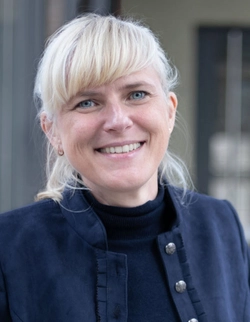
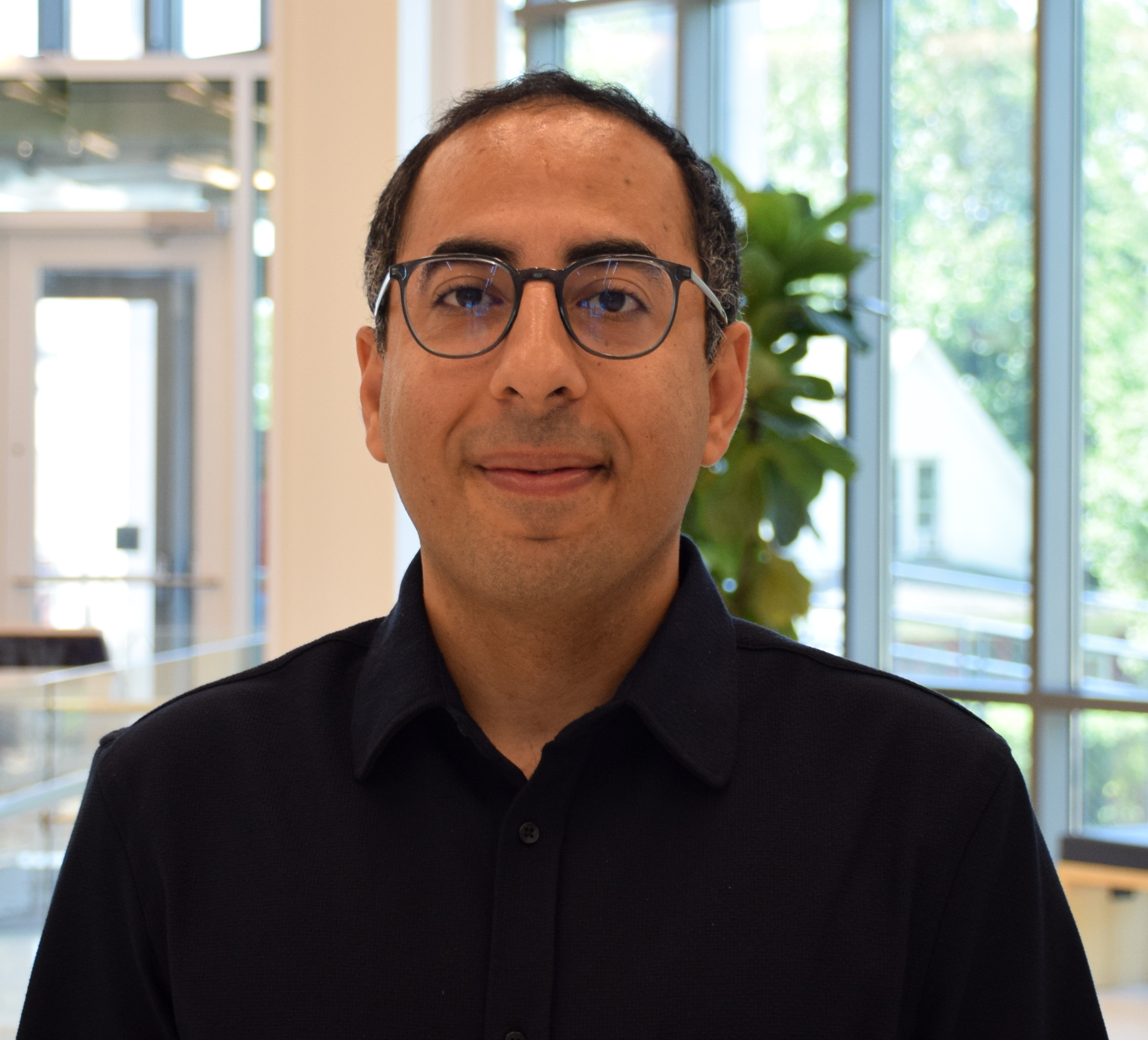
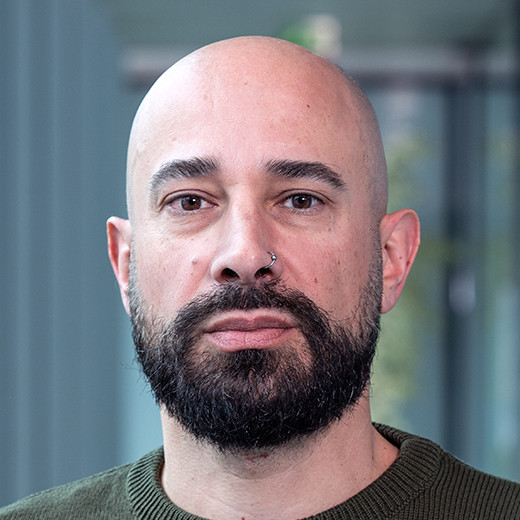
Prof. Dr.-Ing. Jana Bochert is a faculty member at the Faculty of Sustainable Infrastructure at Technische Hochschule Ingolstadt , specializing in Construction Informatics , Construction Mechanics , and Foundations of Civil Engineering . She focuses on seismic analysis, soil-structure interaction, and structural dynamics, particularly for critical infrastructure like nuclear power plants. Email: Jana.Bochert@thi.de Phone: +49 841 9348-2393 Office: Room CN115 Research Interests Her research centers on: Seismic soil-structure interaction Wave propagation in soil under dynamic loads Development of computational methods for structural analysis Dynamic response of nuclear power plant foundations Impact of transportation and demolition on soil vibrations Finite element modeling of civil structures Publications & Research Trends Her work spans 2008–2021 , with a focus on: Seismic safety protocols for nuclear infrastructure Time-domain modeling of soil dynamics Comparison of simulation methods (2D vs 3D) Acoustic and vibration analysis in urban environments Integration of soil nonlinearities into structural design Dynamic load effects from trains and demolition
H. Scott Asay is an Associate Professor of Accounting at the Tippie College of Business, University of Iowa, where he holds the Tippie Children Professorship in Accounting and serves as Director of the RSM Institute of Accounting Education and Research. He received his PhD and MS from Cornell University's Samuel Curtis Johnson Graduate School of Management. Research Interests: His research focuses on financial accounting, disclosure practices, and the judgment and decision-making processes of managers and investors. He investigates how narrative disclosures, presentation formats, and information environments influence financial reporting and investor behavior. His work often employs experimental methods to test behavioral theories in accounting contexts. The recent publications of H. Scott Asay span top journals such as The Accounting Review , Journal of Accounting and Economics , and Journal of Management Accounting Research . The articles reflect a consistent theme in behavioral accounting, with strong emphasis on disclosure format, investor cognition, managerial communication, and information asymmetry. Key trends include the psychological effects of numerical precision, platform design on investor perception, and strategic use of language in financial reporting. Scientific Awards & Honors: Outstanding Reviewer Award - Contemporary Accounting Research, 2024 Midyear Meeting Connecting to Practice Award - American Accounting Association, FARS, 2024 ABO Outstanding Service Award - American Accounting Association, 2021 David and Lois Gardner Faculty Award for Mid-Career Excellence - Tippie College of Business, 2020 Doctoral Fellowship - Deloitte Foundation, 2012 Advising and Service: While no formal advisees are listed, he frequently collaborates with junior researchers and PhD students. He has held significant editorial roles, serving on the boards of Contemporary Accounting Research , The Accounting Review , and Journal of Financial Reporting , indicating strong engagement with the academic community and mentorship through peer review. Labs and Research Centers: As Director of the RSM Institute of Accounting Education and Research, he leads initiatives focused on advancing accounting education and supporting empirical and experimental research in accounting. This role underscores his commitment to academic development and institutional leadership in the accounting discipline.
Mohsen Heidari is an Assistant Professor in the Department of Computer Science at Indiana University, Bloomington. He is affiliated with the IU Quantum Science and Engineering Center (QSEc) and the NSF Center for Science of Information (CSoI). He previously held positions as a Visiting Assistant Professor at Purdue University and as a Postdoctoral Research Associate at CSoI. Ph.D. in Electrical Engineering (2019) and M.Sc. in Applied Mathematics (2017) from the University of Michigan His research focuses span quantum computing, theoretical machine learning, and information theory. Key themes include: Quantum algorithm design and sample complexity Fourier-based learning frameworks Quantum-classical duality in learning problems Information-theoretic approaches to biological systems Article trends show a strong emphasis on quantum-classical learning intersections (6/15 papers), Fourier analysis applications (5/15), and information-theoretic foundations (12/15). Notable venues include NeurIPS, IEEE Transactions, and ISIT. He directs research involving: Quantum Neural Network development Quantum measurement simulation Quantum data compression techniques Quantum algorithm implementation constraints
Yakov B. Pesin is a Distinguished Professor in the Department of Mathematics at the Pennsylvania State University, within the Eberly College of Science. He is also the Director of the Anatole Katok Center for Dynamical Systems and Geometry, a leading research hub in dynamical systems. He holds a tenured, full-time faculty position and is actively engaged in research and academic leadership. B.S./M.S. in Mathematics, Moscow State University (1970) Ph.D. in Mathematics, Gorky State University (1979) Pesin's research is centered on dynamical systems , with profound contributions to nonuniform hyperbolicity theory (known as Pesin Theory), partial hyperbolicity , ergodic theory , dimension theory , and mathematical physics . His work underpins the mathematical understanding of deterministic chaos, particularly through the Pesin entropy formula , which links entropy to Lyapunov exponents. He has also made seminal advances in the study of SRB measures, geodesic flows, and coupled map lattices. The trends in his recent publications (2016–2023) reveal a sustained focus on extending thermodynamic formalism to non-uniformly hyperbolic and partially hyperbolic systems, constructing SRB measures via geometric methods, analyzing equilibrium states , and exploring multifractal and dimensional properties of invariant measures. His collaborations span leading figures in the field, and his work appears in top-tier journals such as Annals of Mathematics , Communications in Mathematical Physics , and Ergodic Theory and Dynamical Systems . Pesin has received numerous honors, including: Fellow of the American Mathematical Society (Inaugural Class, 2012) Member of Academia Europaea (2019) Member of the American Academy of Arts and Sciences (2023) Michael Brin Prize in Dynamical Systems He has advised many PhD students and contributed significantly to mathematical education through the MASS program at Penn State. While specific student names are not listed in the provided texts, his role as a thesis advisor is explicitly mentioned. Pesin has also been invited to deliver distinguished lectures worldwide, including at SIAM and AMS meetings and the Bernoulli Lecture series. His research is supported by long-standing academic and collaborative networks rather than specific grant details mentioned here. He leads the Anatole Katok Center, which fosters interdisciplinary research in dynamics and geometry.
Roberta Spallone is a Full Professor in the Department of Architecture and Design (DAD) at Politecnico di Torino, where she conducts research and teaches in architectural representation, digital modeling, and cultural heritage. Her work bridges historical architectural theory with cutting-edge digital technologies like AR, VR, and AI. Research Interests: Her research focuses on 3D and reconstructive modeling, augmented and virtual reality (AR/VR) for cultural heritage, descriptive geometry, history of architectural representation, and the study of architectural treatises—especially those on military engineering. She explores digital technologies for the survey, representation, and communication of cultural heritage, with a strong emphasis on geometric analysis and historical accuracy. The trends in her recent publications reflect a consistent focus on the digital interpretation of early modern military architecture, particularly through parametric modeling and geometric analysis of treatises by figures like Guarini. She applies AR and VR to enhance accessibility and storytelling in museum and urban heritage contexts, emphasizing inclusive and sustainable cultural tourism. Scientific Awards: Best paper award, Italian Union for Drawing - UID (2021) Best Paper, 40th International Conference of Teachers of Representation Disciplines UID (2018) Best paper, FORTMED Conference 2015 (Historical Research) UID Silver Plaque (1997) PhD 1st prize ex aequo, Italian Design Union (1997) Advising and Grants: She supervises PhD students including Enrico Pupi and Fabrizio Natta. She leads the national PRIN research project INFORTREAT and multiple applied research contracts involving AR/VR for heritage sites like Palazzo Carignano and Mirafiori Castle. She is the Scientific Responsible for collaborative agreements with Fondazione Torino Musei and the Regional Directorate of Museums in Piedmont. Labs, Teams, and Collaborations: She is a key member of the scientific committees of FORTMED, UID, and Nexus Architecture and Mathematics. She serves on editorial boards for journals such as Nexus Network Journal and Diseñar Con... , and has guest-edited special issues. She frequently collaborates with researchers across Europe on projects linking architecture, mathematics, and digital heritage.
Ana Costa is an Invited Assistant Professor at the Faculty of Philosophy and Social Sciences, Universidade Católica Portuguesa, where she actively contributes to research through the Centre for Philosophical and Humanistic Studies (CEFH). Her work is interdisciplinary, bridging psychology, education, and human development, with a strong focus on emotional intelligence, adolescent well-being, and academic outcomes. Faculty of Philosophy and Social Sciences, Universidade Católica Portuguesa Researcher, Centre for Philosophical and Humanistic Studies (CEFH), 2020–2025 Her research interests center on emotional intelligence, subjective well-being, psychometrics, and educational psychology. She investigates how traits like emotional intelligence, mindset, and cultural orientation (individualism vs. collectivism) influence academic achievement and personal development during adolescence. Her methodological approaches include longitudinal analysis, cluster analysis, and systematic reviews, often using self-report data from secondary school students. The recent body of her publications reveals a consistent focus on the psychological and educational dimensions of adolescence. Key themes include the developmental trajectories of emotional intelligence, the determinants of academic success, and the relationship between education and happiness. Her work also explores teacher well-being in Portuguese schools abroad, showing a broad interest in educational systems and stakeholder well-being. Emotional Intelligence Subjective Well-Being Academic Achievement Adolescent Development Psychometrics Longitudinal Analysis Mindset Research Teacher Well-Being Cultural Psychology Educational Policy Ana Costa is actively engaged in collaborative research, frequently co-authoring with scholars such as Luísa Faria, Paula C. Dias, and others within the CEFH network. She has not received any explicitly mentioned scientific awards, but her work is published in peer-reviewed journals and academic encyclopedias. She advises or mentors students indirectly through project participation, though no direct advisees are listed. She is involved in a major research project on adolescence, psychology, and education, contributing to systematic reviews and empirical studies. She is affiliated with the Centre for Philosophical and Humanistic Studies (CEFH), a research center fostering interdisciplinary inquiry into philosophical, psychological, and social aspects of human life. The center supports a vibrant community of researchers, students, and faculty, promoting collaborative and impactful scholarship.
Andreas Hepp is a Professor of Media and Communications and Head of ZeMKI at the University of Bremen , Germany. His work focuses on mediatization, datafication, and communicative AI, with affiliations to the ComAI Research Unit and Commfigurations. Previously held positions include roles at the University of Trier, Karlsruhe Institute of Technology (KIT), and others. He has been a Visiting Researcher at institutions like LSE, Stanford, and Goldsmiths. Research interests span media sociology, automation of communication, and digital futures. Current projects include the ComAI coordination project funded by DFG, exploring societal implications of AI in communication. He leads the Datafication and Mediatization Lab and co-develops the molo.news platform for local journalism. Notable publications include The Mediated Construction of Reality (2017) and Deep Mediatization (2020). Active in academic networks like DFG-funded ComAI, German Communication Association (DGPuK), and European Communication Research and Education Association (ECREA). Upcoming engagements include keynote speeches at AI meets HSS (Vienna) and ZeMKI's 20th-anniversary conference. Grants include DFG funding for ComAI research. Teaching and advising focus on media-society relationships and digital transformations. Collaborates on OpenQDA software for qualitative data analysis and advocates for alternative social media platforms.
Dominique Robert is an Associate Professor at the University of Ottawa, affiliated with the Faculty of Social Sciences and the Department of Criminology. Their work bridges Science and Technology Studies (STS) with criminological inquiry, focusing on environmental justice, qualitative methodologies, and pragmatic sociology. Ph.D. in Criminology, Université de Montréal (2003) M.Sc. in Criminology, Université de Montréal (1994) B.A. in Anthropology, Université Laval (1993) Robert's research explores the intersection of science, technology, and justice. Key themes include: Environmental harms (e.g., pesticide regulation, nuclear waste) Genetics and neuroscience in criminal justice Qualitative methods in criminology Prison disciplinary processes and implicit knowledge STS applications to sociotechnical systems Recent publications emphasize the role of rhetoric in scientific controversies, the politics of DNA analysis, and critical approaches to environmental and technological justice. Articles often employ Actor-Network Theory and pragmatic sociology to examine how technologies shape crime prevention and institutional practices. Scientific Awards and Collaborations: While no specific awards are listed, Robert collaborates extensively with scholars like Marie Dufresne, Élise Danais-Raymond, and Stacey Hannem, contributing to edited volumes on security technologies and contemporary criminological challenges. Robert supervises students interested in science-technology-environment-justice intersections and co-teaches courses such as CRM6720 (Research Methodology), CRM3735 (Qualitative Research), and CRM4730 (Justice and Technology).
Michele Cagol is a Professor at the Free University of Bozen-Bolzano , Faculty of Educational Sciences. Their work bridges pedagogy, emotional education, and ecological sustainability, with a focus on relational learning frameworks and multisensory educational practices. Research Themes : Emotional education, educational ecology, sustainability pedagogy, media and communication education, teacher training. Projects : Lead participant in the EU Interreg Alpine Space project FRACTAL , promoting green space awareness in the Alpine region. Recent publications emphasize radical relational pedagogy, ecological ethics, and the role of wonder in learning. Notable methodologies include intra-actionist music composition and microteaching for multilingual competencies. Teaching responsibilities span General Pedagogy , Social Education , and teacher training for primary/middle school contexts.
Xi Li is an Associate Professor at the University of Arkansas's Walton College of Business, Department of Finance. He holds a PhD and has previously served as faculty at Hong Kong University of Science and Technology, Boston University, University of Miami, and Vanderbilt University. With significant industry experience at Acadian Asset Management and State Street Global Advisors, Li bridges academic research and practical finance applications. His research focuses on investment strategies , corporate finance , and market anomalies , with expertise in predicting macroeconomic trends. Li's work examines: Financial market anomalies (low-volatility, asset growth effects) Impact of regulation on international markets Analyst performance and career dynamics Corporate governance reforms Li's recent publications demonstrate consistent focus on empirical finance in global markets, particularly: Market efficiency and post-earnings drift Quantitative investment strategies Regulatory impacts on cross-listed firms Behavioral aspects of financial analysis Trends show increasing emphasis on international applications and market structure analysis. He maintains active industry engagement through speaking engagements at major financial institutions (Citi, Deutsche Bank, IMF) and frequent media citations in Wall Street Journal and Financial Times .
Professor Julia Schlüter is a distinguished academic in the Chair of English Linguistics within the Humanities Faculty at the University of Bamberg, Germany. She has served as Senior Lecturer at the Chair of English Linguistics and Language History under Prof. Manfred Krug since June 2008, holding the title of Professor following her habilitation in 2008. Her institutional profile demonstrates deep commitment to both research and teaching innovation, particularly through her leadership of the KorPLUS project and development of open educational resources for corpus linguistics. Her research interests span corpus linguistics for English language learners, empirical methods for studying language variation and change, and the application of corpus methods to teaching. She specializes in examining grammatical, phonological, and lexical differences between British and American English across historical periods from Middle English to present-day usage. Her work investigates phonological variation (particularly phonotactically controlled alternations), morphological change, and syntactic variation through corpus analysis, with special attention to functional grammar and grammaticalization theory. Professor Schlüter's recent publications (2022-2025) reveal a strategic evolution in her research focus, with increasing emphasis on the intersection of corpus linguistics and digital education. While maintaining her foundational work in historical English linguistics, she has developed significant expertise in applying corpus methods to language teacher education and evaluating AI writing tools. Her work demonstrates consistent methodological innovation, moving from traditional corpus analysis to blended learning approaches and digital educational resource development. Her scientific recognition includes: Winner of the 2025 Teaching Innovation Prize from the International Society for the Linguistics of English for the KorPLUS project University of Bamberg Prize for outstanding habilitation (2009) Lise Meitner Programme post-doctoral scholarship (2005-2006) Rectorate Prize from University of Paderborn for outstanding Ph.D. thesis (2005) Multiple DAAD scholarships for international study Professor Schlüter actively supervises doctoral research, currently guiding three Ph.D. candidates (Katharina Deckert, Aklima Nahar, and Nikolai Beland) while having successfully completed supervision for several others. She leads the KorPLUS project (2021-2025), funded by the Stiftung Innovation in der Hochschullehre, which develops open educational resources for corpus linguistics. Her research has been consistently supported by the German Research Foundation (DFG) and other funding bodies throughout her career. She heads the KorPLUS team (with Carina Großmann and Katharina Deckert) which develops the interactive Open Educational Resource platform for corpus linguistics. Her YouTube channel offers video tutorials on corpus basics, and she has created the Video Podcast Series "How to Update your Grammar" for English teachers. She regularly organizes in-service teacher trainings and collaborates with the Virtual Linguistics Campus at RWTH Aachen University to deliver her educational materials globally.
Vincent Vargas is a French mathematician and Associate Professor at the University of Geneva, where he joined in 2021 after holding a research position at CNRS. He completed his PhD in mathematics at Paris-Diderot University under the supervision of Francis Comets. His primary research interests include: Probability Mathematical Physics Statistical Mechanics Quantum Field Theory Gaussian Multiplicative Chaos Liouville Quantum Gravity Vargas has made significant contributions to the rigorous probabilistic construction of Liouville field theory and the proof of the DOZZ formula, work that was featured in Quanta Magazine. His research bridges mathematics and theoretical physics through probabilistic methods applied to quantum gravity. Analysis of his recent publications reveals a strong focus on mathematical structures underlying conformal field theory, with particular attention to Liouville quantum gravity across various geometries and the connections between probability and quantum physics. His notable scientific achievements have been recognized with prestigious awards: Marc Yor Prize (2019) George Pólya Prize (2022) Vincent Vargas has mentored several PhD students including Romain Allez, Yichao Huang, Guillaume Rémy, and Tunan Zhu. He has been actively involved in the academic community through organizing conferences and workshops, including a trimester at the Institut Henri Poincaré in 2015 and a conference on 'Probability and quantum field theory' in 2019. His professional activities extend to industry applications through his previous consultancy with Capital Fund Management (2007-2013) and his current role on the board of their research foundation.
Jadranka Kolenović-Đapo is a Professor at the Faculty of Philosophy, University of Sarajevo, where she serves as Vice Dean for Teaching, Education, and Student Affairs. Her research spans personality psychology, social interactions, and cognitive reasoning, with a focus on adolescents and athletes. She has contributed extensively to understanding self-esteem development, humor styles, and psychosocial adjustment in post-conflict societies. Current position: Vice Dean for Teaching, Education, and Student Affairs Institution: Faculty of Philosophy, University of Sarajevo Main research areas: Personality traits, cognitive reasoning, self-efficacy, humor studies Her recent publications highlight the interplay between personality dimensions (e.g., the Dark Triad) and behavioral outcomes, including workplace stress and social interactions. She has validated multiple psychological scales for assessing competencies in sports and self-esteem metrics in youth populations. Key trends in her work include analyzing linguistic violence, imagined contact theory, and psychosocial resilience in clinical and educational contexts. Her interdisciplinary approach bridges psychology, linguistics, and sports science.
Professor Spiridon Ivanov Penev is a leading academic in the School of Mathematics and Statistics at the University of New South Wales. He holds a PhD in Mathematical Statistics from Humboldt University (Berlin, Germany) and has been affiliated with UNSW since 1992, progressing from Lecturer to Professor in 2019. His research spans wavelet methods, saddlepoint approximations, structural equation models, and stochastic risk analysis. Education: PhD in Mathematical Statistics, Humboldt University Current Affiliation: Department of Statistics, School of Mathematics and Statistics, UNSW His work focuses on advanced nonparametric techniques, including wavelet-based signal recovery with adaptive sampling rates, and robust inference in structural equation models. He has developed bias-corrected reliability measures for psychometric applications and contributed to stochastic optimization problems in finance and engineering. Recent publications highlight his expertise in semiparametric regression, robust portfolio optimization, and marine engineering applications using machine learning. Key trends include the use of Bregman divergence for shape-preserving estimation and Markov chain methods for climate model weighting. Scientific Awards: DAAD award Elected member of the International Statistical Institute (ISI) He has supervised numerous grants as Chief Investigator, including Australian Research Council projects and industry collaborations. Administrative roles include membership in the School of Mathematics and Statistics Executive Committee. Teaching duties span advanced statistical inference, multivariate analysis, and data science applications.
Will Beischel is an Assistant Professor in the Department of Psychology at Loyola University Chicago, specializing in Social Psychology. His interdisciplinary research bridges psychological science with queer and trans studies to develop inclusive frameworks for understanding gender and sexuality across diverse populations. Education: Postdoctoral Fellowship: Université de Sherbrooke Doctorate: University of Michigan Bachelors: Loyola University Chicago Dr. Beischel's research program focuses on three interconnected domains: (1) Positive experiences of gender and sexuality including gender euphoria and pleasure across identity spectra; (2) Methodological innovations like the Gender/Sex 3x3 framework for measuring beyond binaries; and (3) Developmental processes in gender identity formation, particularly during adolescence. His work employs mixed methods including surveys, interviews, and community-based approaches while centering intersectional perspectives on race, ethnicity, and social identity. He teaches PSYC 238: Sex and Gender: Similarities and Differences and actively seeks collaborators for social justice-oriented psychological research. Analysis of his 2022-2025 publications reveals a strong trajectory toward expanding psychological theory through non-binary gender frameworks, examining positive affect in gender experiences, and addressing health disparities among gender/sexual minorities. His work increasingly integrates biological markers with social identity constructs while developing practical tools for clinical and community settings. Scientific Awards: No awards were documented in the provided materials. Dr. Beischel is not recruiting Ph.D. students for Fall 2025. While specific grant details weren't provided, his research program demonstrates substantial external funding through national collaborations and community partnerships focused on LGBTQ+ health and methodology development. His work involves community-engaged research teams and interdisciplinary collaborations across psychology, gender studies, and public health. Current projects emphasize translating theoretical frameworks into practical tools for educators, clinicians, and policymakers while fostering spaces for gender and sexual diversity in academic settings.