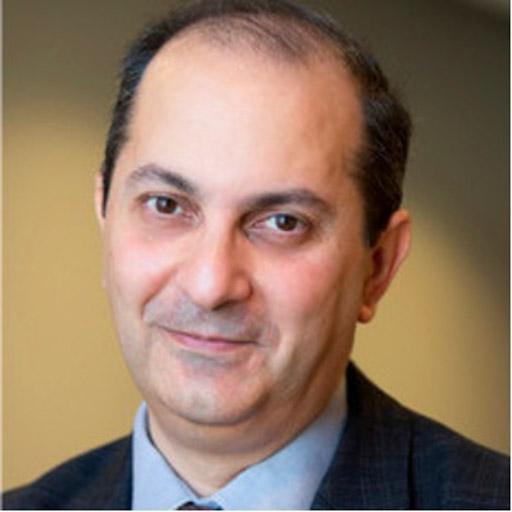
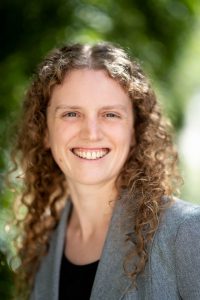
Professor Ihab Ilyas is a leading figure in data management and machine learning at the Cheriton School of Computer Science , University of Waterloo , where he holds the Thomson Reuters Research Chair in Data Quality . He is currently on leave from the university, serving as a Distinguished Engineer, Proactive Intelligence at Apple Inc . His research focuses on data cleaning , large-scale data integration , knowledge graphs , and machine learning applications in data quality . He has pioneered systems like HoloClean and Saga , with commercial impacts through co-founded startups Inductiv (acquired by Apple) and Tamr . PhD in Computer Science from Purdue University Co-founder of Inductiv (acquired by Apple) Co-founder of Tamr Research Interests include: Probabilistic and uncertain data management Machine learning for data quality and enrichment Big data systems and information extraction Knowledge graph construction and optimization Scientific Awards and Recognitions include: Fellow of the Royal Society of Canada (2024) C.C. Gotlieb Computer Award (2024) IEEE Fellow (2021) ACM Fellow (2020) Cheriton Faculty Fellowship (2013-2016) Ontario Early Researcher Award
Dr. Joey Paquet is a Tenured Associate Professor and Department Chair in the Department of Computer Science and Software Engineering at Concordia University in Montreal, Canada. He holds a PhD and specializes in research areas including Design and Implementation of Programming Languages, Context-Driven Computing, and Demand-Driven Computing. His work focuses on advancing programming paradigms and their applications in cybersecurity, distributed systems, and autonomic computing. Dr. Paquet is actively involved in thesis supervision across Computer Science and Software Engineering programs at both master's and doctoral levels. Research interests are centered around programming language design, particularly in demand-driven and context-aware systems. His contributions include frameworks like GIPSY and OpenISS, enabling scalable data processing and forensic computing. Recent work explores autonomic intent-driven networking, real-time gesture recognition, and IoT forensics. These efforts highlight his expertise in both theoretical constructs and practical implementations. His advising role supports students in MCompSc, MASc, and PhD programs. While specific grants are not detailed, his projects often involve interdisciplinary collaboration. Dr. Paquet is affiliated with platforms like LinkedIn and ResearchGate, reflecting an active academic presence. Key technical contributions include pioneering work on forensic computing backends, intent expression languages, and multimodal interaction systems. His research addresses challenges in cybersecurity, distributed systems, and service composition, with a focus on resilience and scalability.
Xianguo Li is a Professor in the Department of Mechanical and Mechatronics Engineering at the University of Waterloo, Canada. He holds prestigious fellowships including Fellow of the Canadian Academy of Engineering (FCAE), Fellow of the Engineering Institute of Canada (FEIC), and Fellow of the Canadian Society for Mechanical Engineering (CSME). His primary research focuses on thermal fluid science, energy systems, and fuel cell technology, with a strong emphasis on green energy solutions. **Education**: 1989: Doctorate in Mechanical Engineering, Northwestern University, USA 1986: Master's in Mechanical Engineering, Northwestern University, USA 1982: Bachelor's in Thermal Energy Engineering, Tianjin University, China **Research Interests**: His work spans fuel cells, spray dynamics, fluid dynamics, heat and mass transfer, power generation, and renewable energy systems. He leads the Fuel Cell and Green Energy Lab, advancing innovations in energy storage, propulsion systems, and sustainable technologies. **Awards**: Outstanding Performance Award (University of Waterloo, 2007) Frank Walk Service Award (2001) Best Paper Award (2003) Recipient of the Simpson Fellowship (1988) **Advising & Grants**: He supervises graduate students and research associates in projects funded by NSERC, Auto 21, CFI, and industry partners. His lab collaborates on fuel cell durability, thermal management, and green energy policy initiatives. **Editorial Roles**: Founding Editor-in-Chief of the International Journal of Green Energy , Field Chief Editor of Frontiers in Thermal Engineering , and serves on dozens of editorial boards. He chairs major conferences like the International Green Energy Conference and the World Fuel Cell Conference series.
Qingguo Li is a Professor and Associate Head at the Department of Mechanical and Materials Engineering , Queen's University , and a member of the Ingenuity Labs Research Institute . He specializes in biomechanical system design, energy harvesting, wearable sensors, gait analysis, and load carriage systems. His research integrates robotics, biomedical engineering, and sensor technology to develop human-centric devices and mobility aids. Current Roles : Professor, Associate Head, Queen's University Research Institute : Ingenuity Labs Research Institute Lab : Bio-Mechatronics and Robotics Laboratory His work focuses on biomechanical energy harvesting , IMU-based motion analysis , and assistive device development . Key applications include stroke rehabilitation, gait monitoring, and wearable power generation systems. Articles span cable-driven robots , smart walkers , and 3D printing mechanisms , emphasizing human-robot interaction and dynamic modeling . The lab explores sensor calibration , adaptive control algorithms , and human movement optimization . Areas of impact include rehabilitation engineering , load carriage stability , wearable sensor accuracy , and assistive robotics . His team develops solutions for gait asymmetry detection , post-stroke mobility , and low-cost energy systems , leveraging machine learning and kinetic modeling .
Mazdak Nik-Bakht is an Associate Professor at Concordia University's School of Building, Civil, and Environmental Engineering. His work bridges construction engineering with digital innovation, focusing on smart infrastructure and sustainable development. PhD, Construction Engineering & Mgmt., University of Toronto PhD, Structural Engineering, Iran University of Science & Technology MASc & BASc, Structural and Civil Engineering, Iran University of Science & Technology His research integrates Artificial Intelligence and Social Network Analysis into construction management systems. Key areas include: Smart infrastructure and urban computing Deconstruction and circular economy principles Building Information Modeling (BIM) and digital twinning Process mining in Architecture, Engineering, and Construction (AEC) industry Decision models in construction project management Semantic computing and computational linguistics applications Recent publications show a focus on BIM analytics , urban resilience , and social media's role in infrastructure planning . Papers often combine AI and network theory to solve complex construction challenges. 2015 Outstanding paper award - Built Environment Project and Asset Management journal He teaches courses on: Big Data Analytics for Smart City Infrastructure Building Information Modeling (BIM) for Construction Building Economics Project Cost Estimating
Ahmed Hammad is an Associate Professor in the Department of Civil and Environmental Engineering at the University of Alberta's Faculty of Engineering, where he also serves as Director of Academic Integrity, ENG WIL, Co-op and Career Connections. With 25 years of industry experience as a Project Planning & Control Manager on global mega-projects (including Oil Sands, LNG, and Infrastructure across Canada, UAE, Australia, and Egypt), he brings extensive practical expertise to academia. Education: Doctorate of Philosophy, Construction Engineering & Management, University of Alberta (2009) Master of Science, Construction Engineering & Management, University of Alberta (1999) Master of Engineering, Construction Engineering and Management, Cairo University (1996) Bachelor of Science, Civil Engineering, Mansoura University (1989) Research Focus: Dr. Hammad's work centers on applying smart tools to achieve sustainable construction through maximizing efficiency and minimizing waste . His research employs Machine Learning , Multi-Criteria Decision Making , Knowledge-Based Decision Support Systems , and digital twin technologies to optimize project planning, resource allocation, and sustainable material selection. He investigates the integration of BIM and Augmented Reality to enhance construction processes while reducing environmental impact. Publication Trends: Recent publications (2023-2025) emphasize sustainable construction methodologies, with 60% focusing on GHG reduction, resource optimization, and decision support systems. Key themes include machine learning for labor estimation, TOPSIS/MCDM for sustainable material selection, and digital twins for production planning, reflecting his NSERC-funded projects on KBDSS and construction-oriented digital twins. Scientific Recognition: Best Paper Award at 8th International Conference on Industrial Engineering and Operations Management (2018) Best Paper Award at HBRC Green Smart Sustainable Buildings Conference (2024) Research Leadership: Dr. Hammad secures major industry-academic partnerships, including NSERC Mission Alliance Grants ($1.2M+) with 16 industry partners for GHG reduction projects and NSERC Alliance Grants with 9 partners for digital twin development. His completed projects include collaborations with the City of Edmonton and Alberta Ministry of Infrastructure on resource allocation models. Research Ecosystem: As leader of the Sustainable Construction Research Group (SCRG), he fosters industry-academia collaboration through regular workshops with construction firms and government agencies, focusing on translating research into practical tools for sustainable project delivery.
Dr. Sheryl Staub-French is a Professor and Head (Pro Tem) in the Department of Civil Engineering at the University of British Columbia (UBC), Faculty of Applied Science. She directs the BIM TOPiCS Lab, focusing on digital delivery methods for sustainable construction using BIM. Her research spans over 100 publications in BIM, VDC, and collaboration frameworks. She previously served as Associate Dean of Equity, Diversity, and Inclusion (EDI), advancing inclusive practices in engineering education. She holds a BS from Santa Clara University and MS/PhD from Stanford University. Her research interests include BIM implementation challenges, design coordination, 4D visualization, and sustainable construction innovation. She teaches courses like CIVL 300 (Construction Engineering), CIVL 426 (Virtual Design and Construction), and advanced BIM topics. Her lab collaborates with industry/government to develop BIM guidelines and tools. Notable projects include UBC’s Brock Commons Tall Wood Building and studies on IPD adoption barriers in Canada. Her work bridges academia and industry, emphasizing digital transformation and EDI. She has pioneered BIM-based methods for facility management and energy modeling, addressing gaps in information quality and handover processes. Her contributions span policy development, tool innovation, and educational reforms to enhance construction sector efficiency and inclusivity.
Amin Hammad is a Professor at the Concordia Institute for Information Systems Engineering, with an additional appointment as Affiliate Professor in Building, Civil, and Environmental Engineering at Concordia University. His research focuses on advancing construction technology through digital transformation, automation, and AI integration. He leads work in BIM applications, 4D simulation, robotic systems, and sustainable infrastructure management. His interdisciplinary approach bridges civil engineering with computer science and data analytics. Key research areas include: Automation and robotics in construction (Construction 4.0) BIM and digital twin lifecycle management AI-driven defect detection and inspection systems Occupational safety through exoskeleton performance evaluation Multi-purpose utility tunnel optimization Energy-efficient building systems Recent work emphasizes applying machine learning to construction equipment activity recognition, UAV path optimization for infrastructure inspection, and ontology development for integrated systems. His research addresses industry challenges in productivity, safety, and sustainability through data-driven solutions.
Pascale Biron is a Professor in the Department of Geography, Urban Planning and Environment at Concordia University, Montreal. She holds a Ph.D. in Geography from Université de Montréal (1995) and has been with Concordia since 1998. Her research focuses on river dynamics, stream restoration for fish habitat, flood modeling, and climate change impacts. She specializes in hydrogeomorphology, river management in agricultural watersheds, and numerical modeling of fluvial processes. Research Interests: Her work includes river restoration strategies, flood risk assessment using LiDAR technology, and the 'river freedom' concept promoting ecosystem resilience. She collaborates closely with government agencies to translate research into practical river management policies. Professional Affiliations: Canadian Geomorphology Research Group, Canadian Association of Geographers, American Geophysical Union, GRIL (Limnology Research Group), and RIISQ (Quebec Flood Risk Network). Publications & Research: Recent studies address global salmonid biomass patterns, fluvial hazard detection via machine learning, and large-scale flood modeling. She supervises 19 graduate students in Ph.D./M.Sc. programs in Geography and Environmental Studies, focusing on topics like river confluence hydraulics and agricultural stream restoration. Grants & Funding: Active projects include river dynamics in fish habitats, flood modeling for road infrastructure vulnerability, and computational fluid dynamics simulations of river flows. She also leads research on societal dimensions of river restoration and policy frameworks for flood resilience.
Dr. Rachel Scholes is an Assistant Professor in the Department of Civil Engineering at the University of British Columbia. Her research focuses on protecting human and environmental health through the study of contaminants in urban water systems, with an emphasis on optimizing contaminant removal in engineered and nature-based treatment systems. She holds a B.S. in Chemical Engineering from Northwestern University and M.S. and Ph.D. in Environmental Engineering from the University of California, Berkeley. Her research interests include environmental chemistry, trace contaminants, water reuse, nature-based treatment systems, and stormwater treatment. She teaches courses such as ENVE 301 (Environmental Engineering Intermediate Design Project) and CIVL 562 (Environmental Data Collection and Analysis). Her lab, Scholes Lab, actively investigates contaminant dynamics in constructed wetlands, bioretention systems, and subsurface treatment environments. Key research contributions include enhancing contaminant removal via Fe (III)-EDTA-amended wetlands, studying 6PPD-quinone dynamics in salmon streams, and optimizing pharmaceutical attenuation in benthic wetland biomats. Her work bridges fundamental environmental chemistry with applied engineering solutions for sustainable water management. Dr. Scholes' lab collaborates on projects funded by grants focused on urban water systems, green infrastructure, and contaminant fate. She advises students through the Scholes Lab (www.scholeslab.org), which emphasizes interdisciplinary approaches to environmental challenges.
Ben Amor is a Full Professor in the Department of Civil Engineering at the Faculty of Engineering, Université de Sherbrooke, where he serves as Director and Founder of the CIRMIB (Integrated Research Center on Sustainable Materials, Infrastructure and Buildings) and Director of Sustainable Development for the Faculty of Engineering. Previously, he held associate professor positions at Université Laval and Université de Sherbrooke. His research focuses on Life Cycle Assessment (LCA) methodologies applied to sustainable construction, circular economy implementation in building sectors, and building decarbonization strategies. He has pioneered regionalized LCA approaches for Arctic regions and developed frameworks for carbon budgeting in building sectors. His work bridges environmental science with practical engineering solutions for sustainable infrastructure. His recent publications reveal strong trends in building decarbonization pathways, material circularity in construction, and the integration of biogenic carbon accounting. He emphasizes both technological solutions and behavioral change strategies for achieving net-zero emissions in the built environment. ACLCA 2018 Life Cycle Assessment Leadership Award Life Cycle Academy Awards 2019 (two awards) Quebec Public Administration Excellence Prize 2023 for Scientific Collaboration Multiple university teaching awards including the Jacques-Bazinet Merit Award Professor Amor leads significant research grants totaling over $20 million, including NSERC Alliance grants for sustainable building materials and a $2 million Research Chair on Net Zero Strategies and Life Cycle Assessment. He directs the CIRMIB research center and the LIRIDE (Interdisciplinary Research Laboratory in Sustainable Engineering and Eco-design), supervising multiple doctoral candidates. His work includes developing LCA tools for Quebec's construction industry and advising government bodies on sustainable procurement policies.
Mustafa Gül is a Professor in the Department of Civil and Environmental Engineering at the University of Alberta’s Faculty of Engineering. He also serves as Director of Internationalization at the Faculty of Engineering’s Deans Office. His research focuses on smart, sustainable, and resilient cities, with an emphasis on infrastructure monitoring and energy-efficient systems. Education: PhD in Civil Engineering (University of Central Florida, 2009), MSc in Electrical Engineering (University of Central Florida, 2011), MSc in Civil Engineering (Boğaziçi University, 2004), BSc in Civil Engineering (Boğaziçi University, 2002). Dr. Gül’s research spans two primary domains: Crowdsensing-based Monitoring of Built and Natural Environments (CoMBiNE) using AI, signal processing, and data analytics for infrastructure health; and Energy-Efficient Smart Cities through solar PV integration, IoT applications, and net-zero energy homes. His work bridges structural engineering, machine learning, and sustainable urban development. Recent publications highlight advancements in smartphone-based damage detection, UAV-assisted disaster assessment, and AI-driven energy systems. His team’s work on crowdsensing bridges, solar PV optimization, and smartphone analytics has been widely recognized in journals like Structural Control and Health Monitoring and Energy and AI . Notably, his 2017 paper earned the Best Paper Award at ISARC. Students supervised include Azim, R. , Keskin, M. , and Do, N. T. , among others. Scientific Awards: Best Paper Award, 34th International Symposium on Automation and Robotics in Construction (ISARC 2017) Dr. Gül’s projects often involve interdisciplinary collaboration, leveraging sensor networks, computer vision, and optimization algorithms to address urban resilience and energy sustainability. His leadership extends to course CIV E 779 and ongoing research initiatives in Alberta, Canada.
Rachel Pottinger is a Professor in the Department of Computer Science at the University of British Columbia within the Faculty of Science. She has been at UBC since 2004, progressing from Assistant Professor to Associate Professor in 2012 and to full Professor in 2021. She is affiliated with research centers including CAIDA (Centre for Artificial Intelligence Decision-making and Action) and DFP (Designing for People), and is part of ICICS (Institute for Computing, Information and Cognitive Systems). Her research focuses on data management, particularly semantic data integration, metadata management, and making data more accessible and understandable to users. She leads the Data Management and Mining Lab and has supervised numerous doctoral and master's students. Her work addresses three main areas: helping people understand and explore their data, managing data not well supported by databases, and coordinating data across multiple databases. Her recent publications demonstrate strong trends in database usability, data provenance visualization, query recommendation systems, and building information modeling integration. Her work bridges theoretical database concepts with practical human-centered applications, particularly in making complex data systems more accessible to non-expert users. UBC Computer Science Department Faculty Teaching Award 2013 Computer Science Department Teaching Award 2010 CS Department Teaching Award Denice Denton Emerging Leader Award 2007 Pottinger has supervised numerous PhD and Master's students, with research focusing on data provenance, database usability, and data coordination. She has been involved in significant research projects related to data lakes, open data navigation, and query recommendation systems. Her current research explores table annotation and discovery in data lakes, query refinement for aggregation queries, and query prediction based on past user behavior. She is actively involved in the academic community, serving as Secretary-Treasurer for SIGMOD, on the VLDB Journal editorial board, and as a member of the Computing Research Association's Board of Directors. She previously served as General Co-Chair of SIGMOD 2020 and as Associate Head for the Undergraduate Program of the Department of Computer Science from 2018-2020.
Hua Ge is a Professor in the Department of Building, Civil and Environmental Engineering at Concordia University's Faculty of Engineering and Computer Science. She holds a Tier II Concordia University Research Chair in High Performance Building Envelope for Climate Resilient Buildings and leads extensive research in building science and climate adaptation. Her research focuses on wind-driven rain analysis , hygrothermal performance of building envelopes , advanced building facades , innovative wood-frame construction , and low-energy buildings . Current work examines climate change impacts on wind-driven rain loads, urban micro-climate effects, climate-resilient building envelopes, dynamic facades, and low-carbon healthy buildings. Her methodology combines large-scale laboratory testing, field monitoring, and computational modeling. Her 15 most recent publications demonstrate strong trends in nature-based climate resilience solutions , overheating risk mitigation in educational buildings , advanced hygrothermal modeling of wood-frame systems , and carbon sequestration strategies for buildings. The work spans multiple sub-disciplines including computational fluid dynamics, life cycle assessment, stochastic modeling, and field validation studies across Canadian climates. Tier II Concordia University Research Chair (CURC) in High Performance Building Envelope for Climate Resilient Buildings Professional Engineers of Ontario American Society of Heating, Refrigerating and Air-conditioning Engineers ASHRAE TC4.4 Building materials and building envelope performance (Subcommittee Chair) Professor Ge has supervised 42 graduate students (26 PhD, 16 MASc), including current advisees working on nature-based solutions, climate-resilient envelopes, and building integrated photovoltaics. Her research is supported by Concordia University Research Chair funding and collaborative projects with institutions like BCIT. She directs activities at Concordia's Building Envelope Test Facility and contributes to national standards through ASHRAE.
Dr. Saiedeh Razavi is an Associate Professor and the inaugural Chair in Heavy Construction at McMaster University's Department of Civil Engineering, directing the McMaster Institute for Transportation and Logistics (MITL). She holds a multidisciplinary background with degrees in Computer Engineering (B.Sc., Sharif University), Artificial Intelligence (M.Sc., Iran), and Civil Engineering (Ph.D., Waterloo). Her research focuses on smart infrastructure, connected mobility, and construction safety, funded by NSERC and the Ontario Ministry of Transportation. Key areas include transforming construction management through AI, autonomous vehicles, and smart work zones. Education: B.Sc. (Sharif), M.Sc. (Iran), Ph.D. (Waterloo) Research Interests: Smart cities, connected vehicle systems, data fusion, risk analysis, and sustainable logistics Leadership Roles: Director of MITL, Associate Chair (Research), and lead of national/international multidisciplinary projects Her work bridges academia, government, and industry to enhance mobility and safety. Notable grants include NSERC funding for transformative transportation systems. Awards include teaching excellence and innovation in team-based projects. Grants & Projects: NSERC, Ontario Ministry of Transportation, and industry collaborations Labs/Teams: MITL, CPS-based construction safety initiatives, and autonomous vehicle research groups