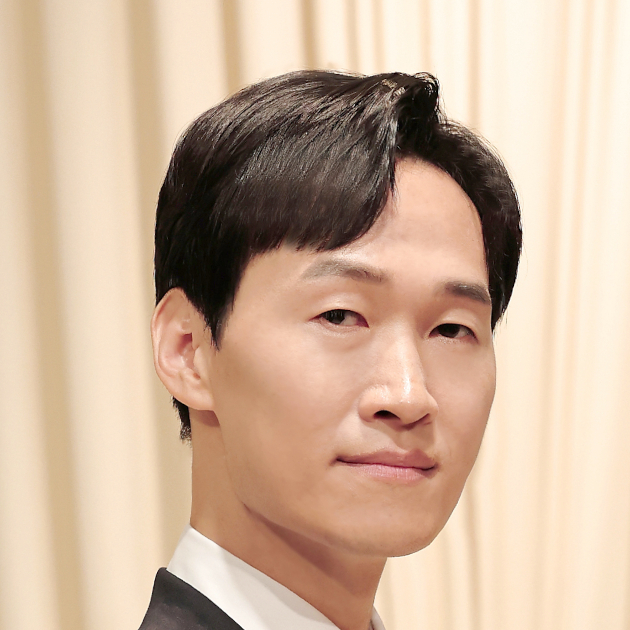
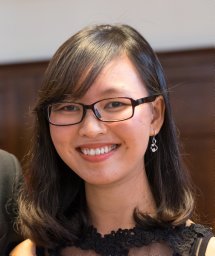
Kiwon Um is a tenured Assistant Professor in the Computer Graphics group at Télécom Paris, France, since October 2019. He focuses on physics-based simulations and data-driven approaches using deep learning, with an emphasis on human visual perception in computer graphics and engineering applications. Education: Ph.D. in Computer Science and Engineering from Korea University His research explores effective simulation of natural phenomena through refined data utilization and develops reliable data acquisition methods for machine learning. He also investigates perceptual evaluation of simulations to advance numerical method understanding. Recent work trends include: (1) turbulence modeling with machine learning integration, (2) elastic material simulation stability, (3) fluid dynamics optimization, and (4) differentiable physics frameworks. His publications range from 2008 to 2025, covering topics like SPH solvers, porous shell simulations, and numerical method validation.
Omar Rifki is an Associate Professor (Maître de Conférences) specializing in combinatorial optimization and artificial intelligence applications. His research bridges theoretical computer science with practical logistics challenges, focusing on routing problems, process mining, and machine learning integration for complex decision systems. His core research interests include phase transitions in NP-hard problems, vehicle routing optimization under time constraints, and healthcare process modeling. Rifki's work demonstrates a consistent pattern of integrating reinforcement learning with traditional optimization techniques to solve large-scale real-world problems in transportation and logistics, with particular emphasis on spatio-temporal data effects and collaborative systems. Analysis of his 15 publications (2019-2025) reveals three dominant research thrusts: (1) Fundamental studies of combinatorial problem hardness using phase transition frameworks, (2) Practical applications of deep reinforcement learning in vehicle routing and taxi assignment, and (3) Healthcare process optimization through advanced process mining techniques. His work consistently addresses scalability challenges in real-world implementations while maintaining theoretical rigor. No scientific awards were documented in the provided materials. His collaborative work with researchers like Christine Solnon and Thierry Garaix indicates active participation in European operations research communities, though specific grant details remain unreported. Rifki's research shows increasing integration of graph theory and machine learning in transportation applications, particularly evident in his Lyon City case studies on autonomous ride-sharing systems.
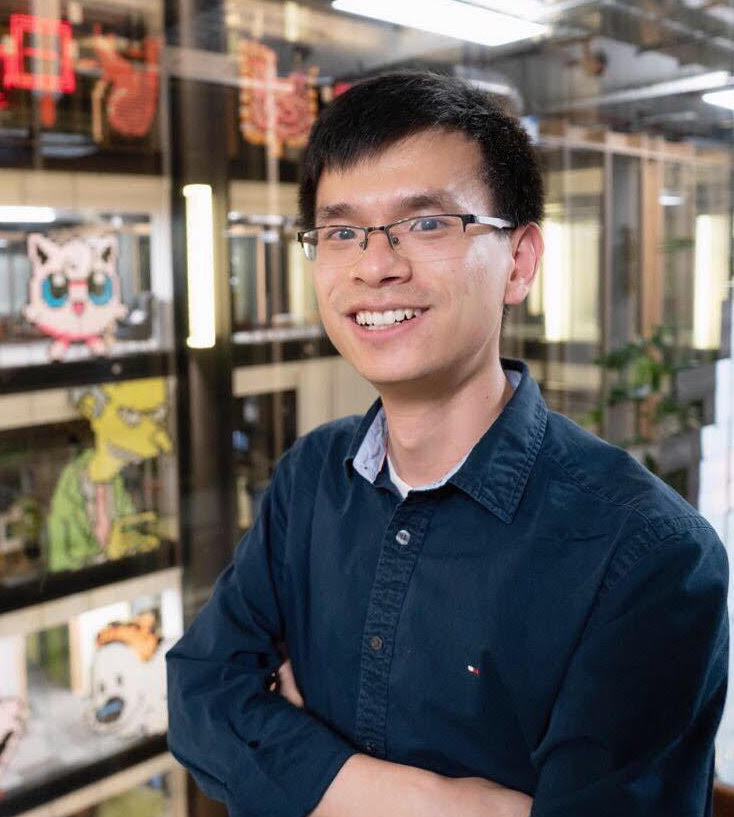
Xiaoning Qian is a Professor in the Department of Electrical and Computer Engineering at Texas A&M University, where he also serves on the Faculty Advisory Committee for the Texas A&M Institute of Data Science (TAMIDS) and the Executive Committee for the Texas A&M TRIPODS Research Institute for Foundations of Interdisciplinary Data Science (FIDS). He holds a joint appointment in the Applied Math group within the Computational Science Initiative at Brookhaven National Laboratory (BNL). Previously, he was an Associate Professor (2018-2022) and Assistant Professor (2013-2018) at Texas A&M, and an Assistant Professor in the Department of Computer Science and Engineering at the University of South Florida (2009-2013). Dr. Qian received his B.S.E. and M.S.E. degrees from Shanghai Jiaotong University, China, and his M.Ph. and Ph.D. degrees in Electrical Engineering from Yale University. Dr. Qian's research focuses on developing mathematical models and computational algorithms in signal processing, machine learning, and Bayesian methods, particularly in learning, uncertainty quantification, and experimental design. His work spans multiple disciplines, with applications in life sciences and materials science. His research group, the Biomedical Imaging, Sensing, and Genomic Signal Processing Group, actively applies probabilistic models and optimization algorithms to solve complex problems in interdisciplinary domains. His research has evolved from foundational work in bioinformatics and biomedical image processing to more recent applications in materials science and broader AI for science initiatives. Dr. Qian has received numerous scientific awards and recognitions including: National Science Foundation (NSF) CAREER Award Segers Family Dean's Excellence Professorship II in the College of Engineering TEES (Texas A&M Engineering Experiment Station) Senior Faculty Fellow Montague-Center for Teaching Excellence Scholar J. T. Oden Faculty Fellow at the University of Texas, Austin Finalist of the 2023 INFORMS QSR Best Paper Faculty Impact Fellow from the Department of Electrical & Computer Engineering As an advisor , Dr. Qian has mentored numerous graduate students through their PhD and MS programs, with many of his alumni securing positions at prestigious institutions and companies including NIH/NCBI, Microsoft, Baidu Research Lab, and Qualcomm. His research has been supported by multiple grants, including an NSF CAREER award and collaborative research funding from the Information Integration and Informatics program. He is actively recruiting postdoc and graduate student research assistants for projects in machine learning and optimization methods with applications in bioinformatics and materials science. Dr. Qian is involved with several research initiatives including the Objective-Based Uncertainty Quantification (ObjectiveUQ) project, which provides a mathematical framework for integrating prior knowledge and data while enabling effective operational and experimental design under uncertainty. He also co-organizes the Bio-Seminar series for the Biomedical Imaging, Sensing & Genomic Signal Processing group at Texas A&M.
Peter G. Troyan is an Associate Professor of Economics and Director of Graduate Studies at the University of Virginia, where he has served on the faculty since 2014. His research bridges theoretical and experimental economics with practical applications in market design, focusing on strategic behavior in matching systems and auction mechanisms. Education: Ph.D. in Economics, Stanford University (2014) B.S. in Mathematics (with High Honors) and Physics, University of Michigan (2008) Troyan's research centers on microeconomic theory with emphasis on game-theoretic foundations of market design. His work develops novel frameworks for matching under constraints, analyzes strategic manipulation in allocation mechanisms, and pioneers experimental validations of theoretical predictions. Key contributions include formalizing 'obvious strategyproofness' as a solution concept and designing ranking methods that improve welfare in competitive matching processes. His interdisciplinary approach integrates experimental economics to test theoretical models in real-world settings like school choice and labor markets. His publication record reveals a consistent trajectory toward foundational contributions in mechanism design, with increasing focus on simplicity principles and behavioral realism. Recent work in Econometrica establishes theoretical limits of mechanism simplicity, while experimental studies in Games and Economic Behavior validate preference structures in matching markets. The recurring themes across his publications demonstrate how theoretical insights can be operationalized to solve allocation problems with distributional constraints. Scientific Awards: Best Paper Award and Exemplary Theory Paper Award at ACM Conference on Economics and Computation (EC19) UVA Quantitative Collaborative (2022) and Arts & Sciences Research Grant (2022) Roger Sherman Fellowship (2019-2020) and multiple university research grants Stanford and University of Michigan fellowships during graduate training Troyan directs the Economics Department's graduate program while securing continuous research funding, including five consecutive Bankard Fund grants (2017-2024) supporting his theoretical and experimental work. His service includes editorial roles at the American Economic Journal: Microeconomics and extensive peer review for top economics journals. As an active conference participant, he regularly presents at the ACM Conference on Economics and Computation and Econometric Society meetings, contributing to the market design research community through the University of Virginia Bankard Workshop in Economic Theory. His leadership extends to mentoring graduate students in economic theory research and collaborating with international scholars like Marek Pycia and Thayer Morrill. Current projects explore desirable ranking methodologies and the boundaries of strategyproof allocation mechanisms, positioning his work at the forefront of market design theory.
John Leahy is the Allen Sinai Professor of Macroeconomics and Public Policy at the University of Michigan, holding dual appointments in the Department of Economics (College of Literature, Science, and the Arts) and the Gerald R. Ford School of Public Policy. As Chair of the Economics Department, he focuses on macroeconomic theory, monetary policy, and behavioral economics, particularly rational inattention models. His research emphasizes how cognitive limitations and information processing affect economic decisions, contrasting classical economic assumptions. Leahy has held positions at Harvard, NYU, and Boston University, and served as Coeditor of the American Economic Review and Editor of the American Economic Journal: Macroeconomics. He consults with Federal Reserve Banks, advocating for data-driven, question-first research methodologies. His work bridges theoretical rigor and practical applications, influencing policy analysis and academic discourse. Education: PhD in Macroeconomics from Princeton University; MSFS from Georgetown University; BA in Math and History. His research spans macroeconomic policy, structural change, and behavioral models of decision-making, with recent focus on wishful thinking and imperfect information processing. He collaborates widely, emphasizing interdisciplinary approaches and creative problem-solving. Key contributions include modeling rational inattention, analyzing age structure impacts on monetary policy, and exploring North-South economic disparities. His editorial leadership and academic mentorship reflect his commitment to advancing innovative economic inquiry.
Fima Klebaner is Professor in the School of Mathematics at Monash University and Director of the Centre for Modelling of Stochastic Systems. His research spans stochastic processes, financial mathematics, and population biology, with emphasis on limit theorems, branching processes, and diffusion models. Current projects include ARC-funded work on stochastic population dynamics and financial derivatives pricing. Key research areas: 1) Population-dependent stochastic systems; 2) Large deviation principles; 3) Financial mathematics (Dupire formula, volatility); 4) Approximation methods for complex processes. Recent publications (2018-2025) show balanced focus on theoretical probability (45%) and applied modeling (55%), particularly in ecology and finance. Article analysis reveals advanced methodologies in: 1) Stochastic calculus applications (33% of recent works); 2) Limit theorems for interacting systems (27%); 3) Financial mathematics innovations (20%). Theoretical contributions frequently interface with biological and financial applications.
David A. Plaisted is a Research Professor in the Department of Computer Science at the University of North Carolina at Chapel Hill. He joined UNC-Chapel Hill as a full professor after serving on the faculty of the Computer Science Department at the University of Illinois at Urbana-Champaign until 1984. His academic career spans several decades with significant contributions to automated reasoning and computational logic. Bachelor's degree in Mathematics from the University of Chicago (1970) Ph.D. in Computer Science from Stanford University (1976) Professor Plaisted's research focuses on mechanical theorem proving, term rewriting systems, logic programming, and algorithms. His work in term-rewriting systems investigates methods of combining them with first-order theorem provers, including techniques for applying efficient permutation group algorithms to equational theorem proving. In mechanical theorem proving, he has developed a sequence of methods including clause linking with semantics and ordered semantic hyper-linking. His research in logic programming includes developing tests to eliminate the occurrence check in Prolog while maintaining semantics. His work spans theoretical foundations to practical applications in program verification and generation. His recent publications demonstrate continued innovation in automated reasoning, particularly in semantic guidance for theorem proving. His work shows a consistent focus on improving the efficiency and effectiveness of automated deduction systems, with recent contributions to SGGS (Semantically-Guided Goal-Sensitive) theorem proving and analysis of the relationship between semantics and unification in proof systems. Professor Plaisted has served on numerous program committees and editorial boards including the Journal of Symbolic Computation, Information Processing Letters, Mathematical Systems Theory, and Fundamenta Informaticae. He is currently on the editorial board of ACM Transactions on Computational Logic and the electronic Journal of Functional and Logic Programming. He has organized significant conferences including serving as co-chair of the Second International Conference on Rewriting Techniques and Applications in 1987. He has spent several sabbaticals at prestigious institutions including SRI in Menlo Park (1982-1983), the Max-Planck Institute and University of Kaiserslautern in Germany (1993-1994), and research visits to groups in Grenoble and Nancy, France (1998).
Amy C. Edmondson is the Novartis Professor of Leadership and Management at Harvard Business School, holding a chaired position dedicated to human interactions in successful enterprises. She has been consistently ranked among Thinkers50's top management thinkers since 2011, achieving #1 status in 2021 and 2023. Her research focuses on psychological safety, teaming, and organizational learning, with significant contributions to understanding how organizations learn from failure. Key publications include The Fearless Organization (2019) and Right Kind of Wrong (2023), the latter winning the Financial Times and Schroders Best Business Book of the Year award. Her work spans organizational behavior, healthcare management, and innovation science, with articles in top journals like Administrative Science Quarterly and Harvard Business Review . Recent research trends show increasing focus on psychological safety dynamics in constrained environments, cross-boundary teaming, and the science of intelligent failure. Her 15 most recent articles (2021-2025) demonstrate expanding applications from healthcare to general management contexts, with growing emphasis on temporal dimensions of team learning and data-driven decision pitfalls. Major awards include: Thinkers50 #1 Management Thinker (2021, 2023) Thinkers50 Breakthrough Idea Award (2019) Financial Times Best Business Book Award (2023) Accenture Award for California Management Review (2003) Edmondson advises on organizational transformation through numerous Harvard Business School cases, including culture change initiatives at Microsoft, LEGO, and Cleveland Clinic. Her research has secured funding for studies on teaming in pharmaceutical development, smart city projects, and healthcare innovation. Current work examines psychological safety erosion in new hires and cross-boundary team dynamics in complex innovation projects.
Christian Smith is an Associate Professor and Lecturer at the Department of Robotics, Perception and Learning at Kungliga Tekniska Högskolan (KTH Royal Institute of Technology). His research focuses on robotics and applications in human-centered environments like home environments, small workshops, and healthcare facilities, including the development of new robotic systems for research. Teaching Roles: Course Coordinator/Teacher/Examiner for courses such as Introduction to Robotics (DD2410), Research Project in Robotics (DD2411), and Java Programming for Python Programmers (DD1380) Research Themes: Human-Robot Interaction, Behavior Trees, Exoskeletons, Intent Recognition, and Multimodal Perception Awards: No specific scientific awards mentioned in the provided text His KTH profile highlights work on adaptive robotics systems and formalized control strategies. The research portfolio spans from theoretical studies on behavior tree programming to applied work in assistive technologies and teleoperation systems.
Justin Gottschlich is an Adjunct Lecturer in the Computer Science Department at Stanford University, where he teaches the graduate course Machine Programming (CS 329M) . He also serves as Founder, CEO, and Chief Scientist of Merly Inc., a startup focused on machine programming systems to improve software development efficiency and quality. Previously, he led the Machine Programming Research group at Intel Labs, pioneering advancements in automating software development through a fusion of machine learning, programming languages, and systems research. His academic roles include prior positions as Adjunct Professor at University of Colorado-Boulder and Adjunct Assistant Professor at University of Pennsylvania. He has advised numerous graduate students across institutions, contributing to their research in machine programming and related fields. Gottschlich has authored dozens of research papers and holds multiple patents, with his work highlighted by prominent outlets like the Wall Street Journal and Communications of the ACM. He actively contributes to academic committees, including serving as Steering Committee Chair for the ACM SIGPLAN Machine Programming Symposium (MAPS). His research interests span machine programming, autonomous software development, formal methods, and the integration of AI into software engineering practices. Education: PhD in Computer Science from University of Colorado-Boulder Keynote Engagements: LADSIOS (2021), MIT DSAIL (2021), Penn PRECISE (2019) Labs/Teams: Intel Labs Machine Programming Research Group, Merly's R&D Team Grants & Funding: Extensive industry and academic research funding through Intel Labs and Merly
Xujie Si is an Assistant Professor in the Department of Computer Science at the University of Toronto. He is also a faculty affiliate at the Vector Institute and an affiliate member at Mila - Quebec AI Institute, holding a Canada CIFAR AI Chair. Previously, he served as an Assistant Professor at McGill University's School of Computer Science. Education: Ph.D., Computer and Information Science, University of Pennsylvania (advised by Mayur Naik) M.S., Computer Science, Vanderbilt University B.E. (with Honors), Nankai University Research Focus: His work bridges AI and program reasoning, emphasizing the integration of statistical and logical methods. Key areas include: Static analysis and verification using deep learning/reinforcement learning Neuro-symbolic systems for urban simulation (e.g., LogiCity) Automated theorem proving via LLMs and symbolic reasoning Program repair and compiler fuzzing Recent Article Trends: Recent work focuses on synergizing LLMs with symbolic reasoning (e.g., Olympiad inequality proving), advancing SAT solving with graph neural networks, and applying neuro-symbolic methods to Euclidean geometry formalization. Awards: Canada CIFAR AI Chair (2023) Lab/Teams: Leads research teams exploring program analysis, neuro-symbolic AI, and formal verification at the University of Toronto and Vector Institute.
Nguyen Dang is a Lecturer at the School of Computer Science, University of St Andrews, actively supervising PhD students and teaching AI-related modules including Artificial Intelligence (CS3105), Artificial Intelligence Practice (CS5011), Machine Learning (CS5014), and Uncertainty in Artificial Intelligence (CS5016). He leads the Centre for Interdisciplinary Research in Computational Algebra and maintains an active research profile with numerous publications in top conferences. University of St Andrews, School of Computer Science Lecturer (equivalent to assistant professor) Supervising PhD students including Tai Nguyen Teaching multiple AI and Machine Learning courses Dr. Dang's research focuses on the intersection of machine learning and optimization, particularly automated algorithm configuration and design. His work centers on leveraging machine learning techniques to automate the development of optimization algorithms, with special emphasis on deep reinforcement learning for Dynamic Algorithm Configuration and integrating machine learning into constraint programming. His research has significant applications across various domains, especially in automated constraint modeling. The publications reflect strong activity in combinatorial optimization, algorithm selection, and benchmark instance generation. His recent publications demonstrate consistent output in top venues including Artificial Intelligence Journal, GECCO, FOGA, and CP conferences, with notable achievements including Best Paper Awards at GECCO'2025 and GECCO'2022. The research spans theoretical foundations of parameter control, practical applications in constraint programming, and innovative approaches to algorithm configuration. Best paper award at GECCO'2025 Best paper award at GECCO'2022 Nomination for best paper award at FOGA'2023 Best paper award at GECCO'2017 Dr. Dang holds a Leverhulme Early Career Fellowship (2020-2023) worth £90,000 for his project on constraint-based automated generation of synthetic benchmark instances. He has secured additional funding including EPSRC High Performance Computing grants totaling over 2.2 million CPU hours and a COST Action grant. His research group actively develops tools and frameworks for automated algorithm configuration and benchmark instance generation, with several open-source datasets available on GitHub. He is involved with multiple research groups including the Centre for Interdisciplinary Research in Computational Algebra and collaborates extensively with researchers at University of St Andrews and internationally, including at Université de Paris I Panthéon-Sorbonne where he conducted visiting research.
Karthik Dantu is an Associate Professor in the Department of Computer Science and Engineering at the University at Buffalo, State University of New York, within the School of Engineering and Applied Sciences. His research focuses on mobile sensor networks, robot networks, networked embedded systems, mobile computing, wireless networks, and embedded operating systems. He leads the Distributed Robotics and Networked Embedded Sensing (DRONES) Lab and has received significant funding including an NSF CAREER Award. Dr. Dantu's educational background includes: PhD in Computer Science from University of Southern California (2009) BE in Computer Science from Sri Jayachamarajendra College of Engineering (1999) His research interests center on algorithmic and systems challenges in Edge Computing Systems, with particular focus on enabling seamless vision sensing in cloud-edge environments. Dantu's work bridges mobile systems and robotics, developing novel approaches for UAV software, visual SLAM, and distributed sensing. His research addresses critical challenges in resource-constrained environments, security, and real-time performance for mobile and robotic systems, with emphasis on practical implementations that solve real-world problems in autonomous systems. Dr. Dantu's publication record shows a strong trajectory in mobile systems and robotics research, with increasing focus on edge computing applications for visual sensing. His recent work demonstrates expertise in adapting visual SLAM to edge environments, securing mobile systems through technologies like Rushmore, and developing novel approaches for UAV software reliability and depth sensing. The research spans theoretical algorithms and practical system implementations, with particular strength in bringing academic research to practical applications in robotics and mobile computing. Dr. Dantu has received several scientific honors: NSF CAREER Award on Enabling Seamless Vision Sensing in Cloud-Edge Systems Outstanding service award from the Office of International Services NSF Travel Grant for SenSys 2005 Conference Travel Grant for SIGCOMM 2002 As an advisor, Dr. Dantu has mentored numerous PhD students to completion, with graduates now working at companies like Samsung Research and Zoox Inc., or continuing academic careers as Assistant Professors. His research is supported by substantial grants including a DARPA OFFSET Sprint 4 award ($470k), an NSF CAREER award ($550k), and multiple NSF collaborative grants totaling over $1.5 million. He serves on numerous conference committees including Mobicom, MobiSys, and ICRA, demonstrating leadership in the mobile systems and robotics research communities. Dr. Dantu leads the Distributed Robotics and Networked Embedded Sensing (DRONES) Lab at UB, which focuses on developing algorithms and systems for mobile sensor networks, robot networks, and embedded sensing applications. The lab's work spans theoretical foundations to practical implementations, with particular expertise in UAV systems, visual SLAM, and edge computing for robotics, maintaining strong collaborations with industry partners and other academic institutions to advance the state of the art in mobile and robotic systems.
Michel Gendreau is a Full Professor in the Department of Mathematics and Industrial Engineering at Polytechnique Montréal . His research focuses on the application of Operations Research to Transportation , Telecommunications , and Energy Systems , with an emphasis on Stochastic Optimization and Real-time Planning . He co-directs the Intelligent Transportation Systems Laboratory and is affiliated with the CIRRELT , IVADO , and Trottier Energy Institute . Education : Ph.D. in Computer Science (1984), Université de Montréal His work includes developing metaheuristics for complex optimization problems and dynamic transportation systems . Recent projects address smart supply chains and real-time logistics . He has supervised over 40 doctoral and master's students, including notable graduates like Sanchez-Martinez, Guillen Reyes, and Parada Pradenas. Dr. Gendreau has been recognized with prestigious fellowships from IFORS (2022) and INFORMS (2010). His academic contributions span 420 publications, with recent studies appearing in Reliability Engineering and System Safety and Networks , focusing on stochastic programming , multiperiod routing , and UAV network design . He collaborates extensively with industry partners and has secured grants from organizations like FRQNT and CIRRELT . His research integrates machine learning with operations research to solve real-world challenges in transportation , energy , and logistics .
Helen Haugh is Associate Professor in Community Enterprise at Cambridge Judge Business School, University of Cambridge, and serves as Research Director for the Cambridge Centre for Social Innovation. Her work bridges organizational theory, social entrepreneurship, and community asset development, with significant impact on policy and practice. Her academic credentials include a BSc from UMIST, MA from Brunel University, and PhD from Aberdeen University. These foundations underpin her empirical approach to studying community-driven enterprise models. Professor Haugh's research centers on organizational theory , institutional dynamics , and community asset ownership , with pioneering work on necessity entrepreneurship in Africa and the reimagining of religious buildings as community hubs. She employs ethnographic methods to explore how place-based contexts shape social innovation, emphasizing ethics of care and resilience in marginalized communities. Her scholarship consistently challenges conventional entrepreneurship frameworks by centering community agency and hybrid organizational forms. Analysis of her recent publications reveals three dominant trajectories: (1) transformational hybridity for societal challenges (2025), (2) decolonizing entrepreneurship research through Global South perspectives (2023), and (3) place-based community asset strategies (2022-2023). Her work increasingly examines institutional voids in refugee contexts and the moral economies of fair trade. Helen has directed the MSt in Community Enterprise (2001-2008), Tata Social Internship Scheme (2008-2011), and Arianne de Rothschild Fellowship (2010-2016). Current projects include the REACH Ely initiative reimagining churches as community assets (featured in Sky News 2022-2023) and historical analyses of community enterprise evolution. Her research is funded through partnerships with the Diocese of Ely and international development agencies. As Research Director of the Cambridge Centre for Social Innovation, she leads a multidisciplinary team investigating social enterprise ecosystems, with recent focus on the generative potential of community embeddedness and strategies for sustaining community assets amid financial constraints.