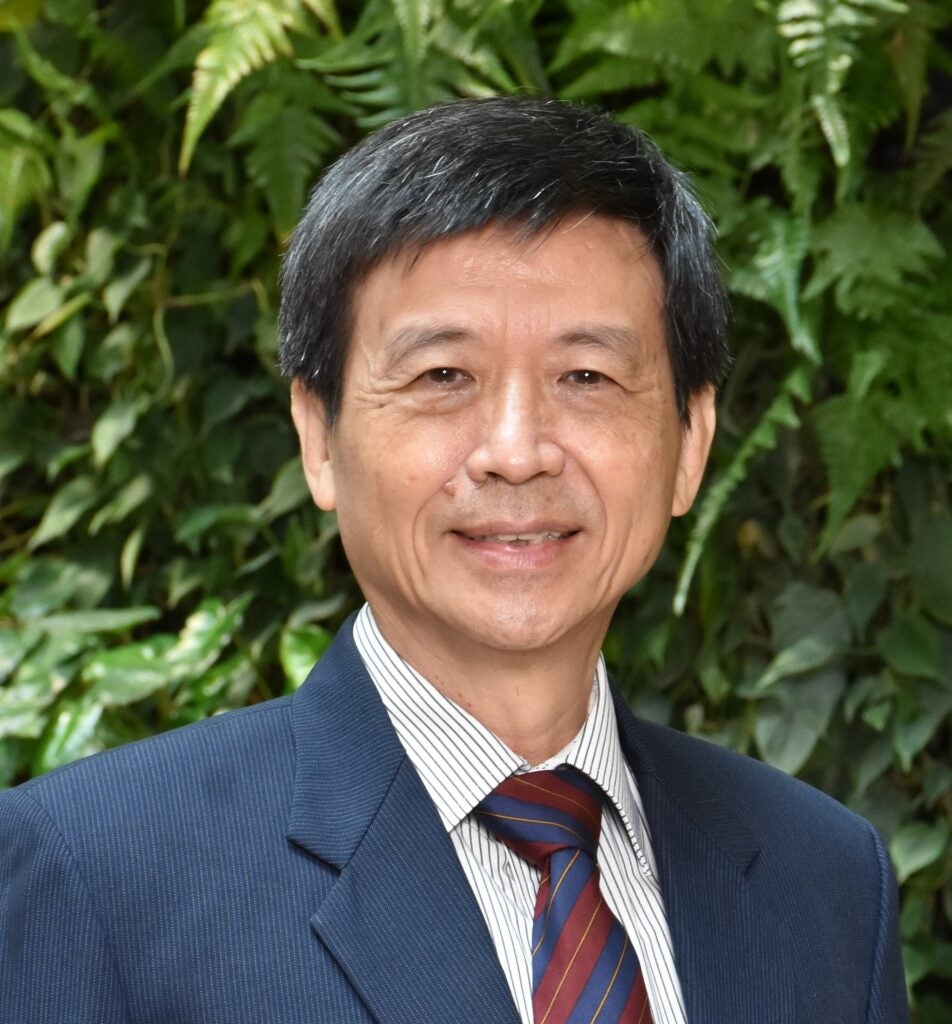
Kees Dorst is a Professor of Transdisciplinary Innovation at the TD School of the University of Technology Sydney. He bridges philosophical understandings of design with practical applications, focusing on tackling complex societal challenges through designerly thinking. His research develops methodologies for strategic transformation and networked problem-solving in public sectors. Professor of Transdisciplinary Innovation, UTS Director, Designing Out Crime Research Centre International keynote speaker and advisor on design thinking Research Interests Dorst specializes in: Transdisciplinary innovation for societal challenges Design thinking and co-evolutionary processes Reframing complex problems in public policy Design cognition and metacognition Urban environment design for safety Recent Research Trends show increasing focus on: Hypercomplex problem-solving frameworks Strategic transformation through design Cognitive models in design processes Public sector innovation methodologies Teaching & Leadership includes: Bachelor of Creative Intelligence and Innovation Master of Creative Intelligence and Strategic Innovation Founding the Designing Out Crime Research Centre International design research symposium leadership
Todd Millstein is a Professor in the Computer Science Department at the University of California, Los Angeles (UCLA), and served as Department Chair from 2022–2025. He is also an Amazon Scholar and a co-founder and former Chief Scientist of Intentionet (now at AWS). His research focuses on making software systems more reliable, particularly through network verification and programming language techniques. He pioneered the Batfish network configuration analyzer, which is used by AWS, Oracle Cloud, and dozens of companies, and received the ACM SIGCOMM Networking Systems Award (2025) for this work. His recent publications span probabilistic programming, network reliability, and interactive program verification, including papers at PLDI 2024 (on bit blasting probabilistic programs), NSDI 2024 (on behavioral testing of BGP), and HotNets 2024 (on network layering). Todd has received prestigious awards such as an NSF CAREER Award , a Microsoft Research Outstanding Collaborator Award , and multiple best paper awards at PLDI, OOPSLA, and SIGCOMM. He has advised Ph.D. students like Ana Brendel and Poorva Garg , and teaches courses such as CS30 (Principles of Computing), CS231 (Types and Programming Languages), and CS239 (Current Topics in PL and Systems). His professional roles include Program Chair for OOPSLA 2014 and ECOOP 2018, and committee member for numerous conferences including PLDI , SPLASH , and LAFI .
LU Wen Feng is an Adjunct Associate Professor in the Department of Mechanical Engineering at the National University of Singapore (NUS), affiliated with the College of Design and Engineering. His research focuses on advanced manufacturing technologies, including additive manufacturing, robotics, and AI-driven systems. He explores sustainable design methodologies, smart manufacturing innovations, and bioprinting applications. Key areas include optimizing material processes, enhancing mechanical properties of printed materials, and developing autonomous robotic solutions for industrial tasks. Contact: mpelwf@nus.edu.sg , located at E3-02-07. Research Interests : His work bridges AI and manufacturing, emphasizing Knowledge graph integration for additive manufacturing, Autonomous robotic systems in industrial settings, Bioprinting for tissue repair with smart bioinks, Topology optimization for lightweight and sustainable structures, Material characterization and process engineering for 3D-printed composites. Recent Article Trends : LU Wen Feng's 2025 articles highlight advancements in AI-augmented manufacturing systems (e.g., MaViLa, AutoMEX) and sustainable design workflows. His 2024 studies address material anisotropy, corrosion behavior, and topology optimization strategies for lattice structures. These trends reflect his interdisciplinary approach to solving challenges in additive manufacturing, robotics, and biomedical applications. Awards : No scientific awards explicitly mentioned. Advising & Grants : No current graduate students or grants listed. His research likely integrates industry-academia collaborations given the focus on applied manufacturing technologies. Labs/Teams : Not explicitly detailed, but his work suggests involvement in advanced manufacturing labs and AI-robotics teams at NUS.
Vijay Vazirani is a Distinguished Professor in the Department of Computer Science at the University of California, Irvine , where he directs the ACO Center @ UCI . He earned his Ph.D. in Computer Science from UC Berkeley and a S.B. from MIT. Vazirani is a Guggenheim Fellow , ACM Fellow , and 2022 INFORMS John von Neumann Theory Prize recipient. Research Areas: Algorithmic Game Theory, Matching Markets, Computational Complexity, Approximation Algorithms His groundbreaking work includes co-founding algorithmic game theory and solving a 30-year-old problem with an NC algorithm for perfect matching in planar graphs . Recent research focuses on matching-based market design, with a $500K NSF grant for advancing algorithms in matching and market equilibria. His 15 most recent papers explore topics like core imputations, stable matching lattices, and Nash bargaining solutions. Scientific Awards: Guggenheim Fellowship ACM Fellow 2022 INFORMS John von Neumann Theory Prize Vazirani advises numerous Ph.D. students and postdocs, including Tung Mai , Thorben Trobst , and Rohith Reddy Gangam . He contributes to major workshops and co-edited foundational texts like Algorithmic Game Theory and Online and Matching-Based Market Design .
Zhe Zeng is an incoming Assistant Professor in the Department of Computer Science at the University of Virginia starting July 2025. Currently, she serves as a Faculty Fellow in the Computer Science Department at New York University. She earned her Ph.D. in Computer Science from UCLA in 2024 under Professor Guy Van den Broeck, and her B.S. in Mathematics from Zhejiang University in 2018. Research Focus: Dr. Zeng specializes in neurosymbolic AI and probabilistic machine learning, developing methods that integrate symbolic knowledge (logical constraints, graph structures) with probabilistic uncertainty. Her work spans three core areas: Reasoning: Probabilistic inference, tractable probabilistic models Learning: Constrained deep learning, graph ML, weakly supervised learning Trustworthiness: Explainability, uncertainty quantification, domain-knowledge integration Awards & Honors: Rising Star in EECS (2023) Amazon Doctoral Fellowship (2022) NEC Research Fellowship (2021) ICML Travel Award (2018) Outstanding Graduate, Zhejiang University (2018) Advising & Mentoring: Has supervised six students including PhD candidates and undergraduates at UCLA, Tsinghua, and CAS, with placements at Princeton and UT Austin. Academic Service: Regularly reviews for NeurIPS, ICML, ICLR, UAI; served as UAI 2023 discussant; active in WiML mentorship programs.
Saras D. Sarasvathy is the Paul M. Hammaker Professor at the Darden Graduate School of Business, University of Virginia, where she is a member of the Strategy, Entrepreneurship and Ethics area. A leading researcher in entrepreneurship, she advises entrepreneurship programs globally across Europe, Asia, and Africa, while serving on boards of companies including Lending Tree (Nasdaq: TREE) and Upekkha, a SaaS accelerator in Bangalore, India. Her research focuses on the cognitive basis of high-performance entrepreneurship, particularly her groundbreaking work on effectuation theory. Sarasvathy's scholarship examines how expert entrepreneurs think and act under uncertainty, challenging traditional predictive approaches to business strategy. She has developed frameworks showing how entrepreneurs create markets and opportunities through action-oriented, non-predictive methods that leverage available means rather than predetermined goals. Sarasvathy's award-winning research has generated significant scholarly attention and practical applications worldwide. Her work has spawned over a hundred scholars involved in the effectuation research program, with publications available through www.effectuation.org. Her influential book Effectuation: Elements of Entrepreneurial Expertise and co-authored textbook Effectual Entrepreneurship (winner of the 2012 Axiom Business Book Awards Gold Medal) have shaped entrepreneurship education globally. Among her numerous accolades are the 2022 Global Award for Entrepreneurship Research (the highest recognition in the field), the Academy of Management's 2019 Foundational Work Award, and recognition as one of Fortune Small Business Magazine's top 18 entrepreneurship professors. She has received honorary doctorates from multiple universities in Europe and Asia and has been named a Visiting Professor at institutions worldwide. Before academia, Sarasvathy founded and ran five successful businesses across three countries. Her doctoral research at Carnegie Mellon University was supervised by Herbert Simon, the 1978 Nobel Laureate in Economics, with whom she collaborated to discover the essential elements of entrepreneurial know-how. She holds a B.Com. from the University of Bombay, India, and an MSIA and Ph.D. from Carnegie Mellon University.
Dr. Meng Fang is a researcher specializing in Artificial Intelligence with a focus on Reinforcement Learning, Large Language Models, and their applications in medical QA, game theory, and causal inference. Their work combines technical innovation with practical problem-solving in safety-critical and domain-specific contexts. Key research areas: Social bias in AI, data augmentation, embodied agents, and model-based reinforcement learning Teaching: Coordinated module COMP532 - Machine Learning and BioInspired Optimisation (2024-25). Recent publications address challenges in offline RL robustness, vision-based safe reinforcement learning, and strategic game generalization.
Dr. Leila Notash is a Professor in the Department of Mechanical and Materials Engineering at Queen's University, where she has been a faculty member since 1997. She is a Fellow of Engineers Canada (FEC) and a licensed Professional Engineer with Professional Engineers Ontario (PEO), with significant contributions to engineering education and professional service. Her educational background includes: Bachelor of Science in Mechanical Engineering, Middle East Technical University (Ankara, Turkey) - High Honor Student (2nd out of 166) Master of Applied Science in Mechanical Engineering, University of Toronto PhD in Mechanical Engineering, University of Victoria Dr. Notash's research centers on robotics and mechatronics, with specialized expertise in cable-driven parallel manipulators. Her work integrates kinematics, fault-tolerant design, and neural network applications to address challenges in robot calibration, workspace analysis, and motion control under real-world constraints like cable mass and elasticity. She investigates both theoretical frameworks and practical implementations for industrial and specialized robotic systems. Analysis of her recent publications (2020-2024) reveals a clear trajectory toward intelligent control systems, where machine learning techniques—particularly neural networks and reinforcement learning—are increasingly applied to solve complex problems in cable-driven robotics. This includes motion control optimization, path generation, and kineto-static analysis while accounting for physical limitations such as cable elasticity and mass effects, demonstrating a shift from traditional mechanical analysis to data-driven adaptive control methodologies. Her scientific recognition includes: Fellow of Engineers Canada (FEC) University of Toronto Open Fellowship University of Toronto International Differential Fee Waiver Charles S. Humphrey Graduate Student Award NSERC Doctoral Prize Nominee (1996) Dr. Notash has mentored 161 undergraduate students as Faculty Advisor for the Mechanical '06 cohort and pioneered international educational initiatives like the International Undergraduate Student Design project (IVDS), connecting Queen's University with Middle East Technical University and Union College. Her service extends to editorial leadership for Mechanism and Machine Theory and ASME journals, and governance roles including Faculty Senator at Queen's University (2009-2025) and PEO Council Councillor-at-Large (2019-2025). She has established collaborative research networks through initiatives like the Reading Week shop course 'Design Basics 1.0' and sustained leadership in the Canadian Committee for the Promotion of Mechanism and Machine Science (CCToMM) and the International Federation for the Promotion of Mechanism and Machine Science (IFToMM), where she chaired the Permanent Commission on Communications (2006-2011).
Mohsen Lesani is an Associate Professor in the Computer Science and Engineering Department at the University of California, Santa Cruz's Baskin School of Engineering. His research focuses on reliability and security of software systems, particularly concurrent and distributed systems, with recent emphasis on secure replicated systems and distributed machine learning. Dr. Lesani received his PhD from UCLA, MS in artificial intelligence from Sharif University of Technology, and BS in software engineering from University of Tehran. He was previously a postdoc at MIT. His educational background provides a strong foundation for his interdisciplinary research spanning programming languages, distributed systems, and security. His research interests center on creating reliable and secure distributed systems. Current projects include resilient and secure distributed systems, heterogeneous and reconfigurable secure distributed systems, automatic analysis and synthesis of replicated objects, verification of distributed systems, data analytics, secure exchange across blockchains, machine learning for performance models, domain-specific languages and type systems, and automatic fence insertion for concurrent systems. His work bridges theoretical foundations with practical implementations to address real-world challenges in distributed computing. Lesani's research has been recognized with several prestigious awards including the NSF CAREER award in 2020 and DARPA YFA award in 2022. His work has also received the SIGPLAN Research Highlight in 2019, a distinguished paper award at OOPSLA 2018, and a best paper award at ISSRE 2015. These accolades reflect the impact and quality of his contributions to the field. He actively mentors PhD students in the Safe and Secure Software (S3) lab, including Xiao Li, Eric Chan, Javad Saber-Latibari, and Tejas Mane. His research has been supported by multiple NSF grants, demonstrating sustained funding for his innovative work. Lesani serves on program committees for major conferences including POPL, PLDI, OOPSLA, and DISC, contributing to the academic community. Lesani leads the Safe and Secure Software (S3) lab at UC Santa Cruz, where his team works on cutting-edge research in distributed systems, programming languages, and security. The lab fosters a collaborative environment where theoretical insights are translated into practical systems that address real-world challenges in reliability and security of distributed applications.
Ruilin Shi serves as the William W. Elliott Assistant Research Professor in the Department of Mathematics at Duke University. Their office is located at 120 Science Drive, Durham, NC. Education: Ph.D. from Georgia Institute of Technology (2025) Dr. Shi specializes in combinatorial mathematics with particular focus on extremal graph theory and planar Turán problems . Their research investigates maximum edge counts in planar graphs avoiding specific substructures, particularly cycles of various lengths. This work bridges theoretical computer science and pure mathematics, contributing to fundamental understanding of graph limitations under planarity constraints. Recent publications demonstrate expertise in determining precise bounds for planar Turán numbers, with significant results for 7-cycles and general cycle graphs. Their work connects circuit graphs, near triangulations, and connectivity properties to solve longstanding conjectures in the field. No scientific awards are currently documented in the available information. For Fall 2025, Dr. Shi is teaching multiple sections of MATRICES AND VECTOR SPACES (MATH 218D and MATH 718D) across different time slots and locations including Physics 154, Physics 235, and LSRC A247. No laboratory or research team information is specified in the available documentation.
Christian Enz is a Full Professor at École Polytechnique Fédérale de Lausanne (EPFL), where he serves as Director of the Institute of Microengineering and Head of the Integrated Circuits Laboratory. With M.S. and Ph.D. degrees in electrical engineering from EPFL (1984 and 1989), he has established himself as a leading researcher in low-power analog circuit design and semiconductor device modeling. His research interests focus on very low-power analog and RF IC design , semiconductor device modeling , and increasingly on cryogenic electronics for quantum computing applications . Professor Enz is particularly known for his work on FDSOI MOSFET behavior at cryogenic temperatures, developing comprehensive models that address challenges in subthreshold swing saturation, threshold voltage shifts, and self-heating effects. As a Life Fellow of IEEE with 282 publications and over 7,400 citations, Professor Enz has made significant contributions to the field. His recent work demonstrates how the $G_{m}/I_{D}$ design methodology remains effective in advanced technology nodes and can be extended to cryogenic temperature operation. His research bridges fundamental semiconductor physics with practical circuit design considerations for quantum computing interfaces. Life Fellow, IEEE Director of the Institute of Microengineering, EPFL Head of the Integrated Circuits Laboratory 282 publications with 7,400+ citations Specialist in cryogenic CMOS for quantum computing Professor Enz's work on cryogenic electronics addresses critical challenges for quantum computing scalability. By developing accurate models for transistor behavior at temperatures as low as 3.3K, his research enables the design of specialized control electronics that can operate inside dilution refrigerators, potentially solving major wiring constraints that currently limit quantum computer scaling. His laboratory continues to advance the understanding of semiconductor device physics at cryogenic temperatures while developing practical circuit design methodologies for this emerging application domain.
Grégoire DANOY is a Researcher at the University of Luxembourg's Interdisciplinary Centre for Security, Reliability, and Trust (SnT) and Head of the Parallel Computing and Optimization Group (PCOG). He specializes in artificial intelligence, with a focus on optimization algorithms, machine learning, and swarm intelligence. His work addresses challenges in cloud computing, high-performance computing, smart mobility, and unmanned autonomous systems like drone swarms. He has authored over 150 publications, including articles in IEEE Transactions and conferences like NeurIPS and GECCO. He currently leads major projects such as UltraBO (€1.019M), ADHOC (€1.291M), and SERENITY (€1.228M), collaborating with institutions in France and Poland. Education: PhD in Computer Science (2008) from École Nationale Supérieure des Mines de Saint-Étienne, Master’s in Computer Science (2004), and Industrial Engineering Degree (2003) from Luxembourg University of Applied Sciences. Research Interests: Developing novel AI techniques for solving large-scale optimization problems, with applications in distributed systems, autonomous robotics, and federated learning. He emphasizes scalable solutions for combinatorial challenges using parallel computing and swarm intelligence. Grants & Projects: Principal Investigator for EU-funded initiatives like ADARS (2021–2024) and FNR PoC/SIMMS (2019–2021). His work bridges academia and industry, with technology transfer projects in autonomous robot swarms. Awards: Recognitions include the Best Student Paper Nomination (2022), IEEE CybConf Best Paper Award (2017), and ACM GECCO nominations (2016, 2009). He serves on the editorial board of Engineering Applications of Artificial Intelligence (EAAI). Labs & Teams: Leads the Parallel Computing and Optimization Group (PCOG), focusing on interdisciplinary research in AI and distributed systems. He also contributes to outreach programs like FNR's Researchers at School.
Miguel Nacenta is a Professor in the Department of Computer Science at the University of Victoria (UVic), Canada, and a founding member of the Victoria Interactive eXperiences with Information (VIXI) research group. Previously affiliated with the University of St Andrews (UK), his work bridges Human-Computer Interaction (HCI), Information Visualization, and Cognitive Science. He specializes in designing interactive systems that enhance human cognition, with a focus on Infotypography (using typography to encode data), collaborative problem-solving tools, and perceptual input/output devices. Research Interests: His key areas include cognitive augmentation, visualization techniques for complex tasks, multi-display environments, and tools for constraint problem-solving. Notable projects include the WriteReason tool for essay writing, InfoTypography studies on perceptual typographic parameters, and Solvi for visual constraint modeling. Grants & Collaborations: He collaborates internationally, including with the University of St Andrews on PhD scholarship programs. His work is supported by grants focusing on HCI innovations and accessibility. He actively mentors students (e.g., Adam Binks, Johannes Lang) and supervises postdoctoral researchers. Affiliations: Member of the VIXI group,他曾是St Andrews计算机科学学院的教授, 并参与多个学术服务活动, including conference program committees and journal reviews. Labs & Teams: Leads the VIXI lab at UVic, focusing on interactive technologies for cognitive tasks. Collaborates with industry partners on projects like TypoCartographer for infoTypographic maps and HaptiQ for accessible graph exploration.
LING Chun Kai is an Assistant Professor in the Department of Computer Science at the National University of Singapore (NUS), School of Computing. His research focuses on multiagent systems, computational game theory, and machine learning applications in adversarial real-world domains like cybersecurity and logistics. Educational background includes a PhD in Computer Science (2017-2023) from Carnegie Mellon University and a First Class BEng in Computer Engineering (2015) from NUS. Previously, he was a Postdoctoral Research Scientist at Columbia University. Current research interests span computational game theory, machine learning for multi-agent systems, equilibrium characterization in imperfect information settings, and applications in network security, logistics, and recreational games. Key methodological contributions include scalable algorithms for game solving, differentiable game solvers, and copula-based statistical modeling. Recent publications focus on attacker-defender graph games, language negotiation agents, and modeling games with incomplete information. Collaborations include researchers from Columbia University, Carnegie Mellon, and institutions working on GameSec, AAAI, Neurips, and ICML venues. Scientific Awards: IJCAI 2018 Distinguished Paper Award GameSec 2023 Best Paper Award GameSec 2024 Best Paper Award Singapore Teaching and Academic Research Talent Scheme (2024) Teaching includes courses on AI Planning and Decision Making (CS4246, CS5446) and Advanced Topics in Artificial Intelligence (CS6208).
Xiaolei Fang is Associate Professor in the Edward P. Fitts Department of Industrial and Systems Engineering at North Carolina State University. His research develops advanced statistical learning, deep learning, and optimization methods for industrial applications involving high-dimensional data, with particular focus on condition monitoring, failure prognostics, and system performance optimization. He holds a PhD in Industrial Engineering and MS in Statistics from Georgia Tech. Professor Fang's research integrates machine learning with industrial engineering to solve complex problems in predictive maintenance, quality control, and energy systems. His methodological innovations include federated learning approaches for privacy-preserving prognostics, distributionally robust machine learning models, and tensor-based statistical methods for manufacturing quality diagnostics. He has received multiple prestigious awards including the ISE Outstanding Research Award (2024), Sigma Xi Best PhD Thesis Award (2019), and SAS Data Mining Best Paper Award (2016). His research has been funded by NSF, Cisco Systems, and the US Department of Energy. Professor Fang teaches courses in Quality Design & Control, Statistical Models for Systems Analytics, High-Dimensional Data Analytics, and Optimization Models. He has supervised 9 PhD students to completion and currently advises 7 graduate students working on projects spanning federated learning for prognostics, tensor-based quality control, and machine learning applications in manufacturing and energy systems.