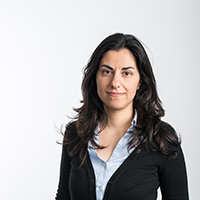
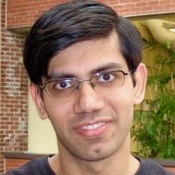
Hemanshu Kaul is an Associate Professor of Applied Mathematics at Illinois Institute of Technology (IIT), part of the College of Computing. He serves as Co-Director of the M.S. in Computational Decision Science and Operations Research (CDSOR) program. His expertise spans Discrete Mathematics, Operations Research, Graph Theory, and Network Optimization, with applications in transportation, computer science, and engineering. Education: PhD in Mathematics from the University of Illinois at Urbana-Champaign (UIUC), MS in Mathematics from the Indian Institute of Technology Bombay. He has held roles including Distinguished Teaching Fellow (2016–2018) and AMS Project NExT Fellow (2007–2008). Research Interests : Focus on Graph Packing, DP-coloring, List Coloring, and algorithmic solutions for discrete optimization problems. His work bridges theoretical foundations with practical applications such as transportation networks and computer science systems. Publications & Grants : Over 50 publications in combinatorics and optimization, including NSF/NSA-funded projects like the EXCILL III Conference (2016–17). Recent work explores spectral Turán problems, DP-coloring algorithms, and longitudinal network models. Awards : Board of Trustees Award for Excellence in Teaching (2019) Excellence in Teaching Award (2017, College of Science, IIT) Interdisciplinary Research Grant (2009–2010, Transportation Networks) Advising & Leadership : Co-advisor for IIT's SIAM Student Chapter. Led restructuring of the Applied Math M.Sc. program (2018–19). Advised teams in the Mathematical Contest in Modeling (MCM), including a 2019 Meritorious Winner team for a disaster response system design. Labs & Collaborations : Involved in interdisciplinary projects combining applied math with computer science and engineering, including work on equitable public transit systems and network optimization.
Tselil Schramm is an Assistant Professor at Stanford University in the Department of Statistics, with courtesy appointments in Computer Science and Mathematics. Her work bridges theoretical computer science and statistics, focusing on algorithm design and information-computation tradeoffs. Research interests include: Theoretical power of sum-of-squares semidefinite programs Fast spectral methods for high-dimensional estimation Characterizing computational complexity in statistical problems Interplay between different computation models Teaching: She has taught courses like Intro to Statistics , Machine Learning Theory , and The Sum-of-Squares Algorithmic Paradigm in Statistics since joining Stanford in 2022. Selected publications highlight: Robust algorithmic paradigms for high-dimensional data, computational barriers in low-degree polynomial estimation, and theoretical foundations of statistical query models. Scientific honors: NSF CAREER Award (2020s) COLT 2021 Best Paper Runner-up (Statistical query algorithms paper)
Prof. Michael Schneider is Universitätsprofessor and Chair of Computational Logistics at RWTH Aachen University since 2016. Previously, he held positions at TU Darmstadt (2013-2016) and earned his doctoral degree from TU Kaiserslautern (2012). His research focuses on logistics optimization, including transportation routing, warehouse management, and metaheuristic methods for solving complex operational challenges. He leads the Global Challenges Lab and serves as communication chair of VeRoLog (EURO's vehicle routing group). Research interests include: quantitative modeling for supply chains, heuristic/exact optimization methods, electric vehicle routing, territory design, and production planning. Notable achievements include the INFORMS Journal on Computing Meritorious Paper Award (2021) and editorial roles in journals like Applied Mathematical Modelling. Publications span topics like vehicle routing with time windows, electric logistics networks, and warehouse automation strategies. His work integrates advanced algorithms with real-world industry applications (e.g., DHL, Picnic). The Computational Logistics group collaborates on projects addressing sustainability, autonomous systems, and modern warehousing challenges. Education: Business Admin & Computer Science (University of Mannheim), PhD (TU Kaiserslautern) Professional Roles: VeRoLog Communication Chair, EURO Working Group Key Projects: Electric vehicle routing optimization, warehouse automation, and sustainable logistics networks
Daniel Paulusma is a Professor in the Department of Computer Science at Durham University, where he serves as Head of the Algorithms and Complexity research group (ACiD). He obtained his PhD and Master's degrees from the University of Twente in 2001 and 1997 respectively, and has been at Durham University since 2004, progressing from Lecturer (2004-2011) to Senior Lecturer (2011-2013), Reader (2013-2015), and finally to Professor in 2015. He previously served as Director of Research for the School of Engineering and Computing Sciences from 2014 to 2017. Paulusma's research spans two main areas: structural and algorithmic graph theory, with a focus on computational complexity of graph problems under input restrictions; and cooperative game theory, particularly matching games related to kidney exchange. His work has resulted in numerous survey papers and significant contributions to the field. He has received several prestigious awards including the CIAC 2025 Best Paper Award, ISAAC 2024 and 2023 Best Paper Awards, and the Glover-Klingman Prize for his work on graph contractions. His recent publications demonstrate a strong focus on complexity frameworks for forbidden subgraphs, matching cuts, graph coloring, and kidney exchange algorithms. The research shows a consistent pattern of exploring computational complexity within specific graph classes, particularly H-free graphs, and developing frameworks to classify problems based on graph structure constraints. CIAC 2025 Best Paper Award for "Atoms versus avoiding simplicial vertices" ISAAC 2024 Best Paper Award for "Complexity framework for forbidden subgraphs II: Edge subdivision and the \"H\"-graphs" ISAAC 2023 Best Paper Award for "Matching cuts in graphs of high girth and H-free graphs" Glover-Klingman Prize for "The Computational Complexity of Graph Contractions I, II" Paulusma has successfully supervised numerous PhD students including Yilin Li, Tala Eagling-Vose, Xin Ye, Siani Smith, Giacomo Paesani, Anthony Stewart, Carl Feghali, Jian Song, and Pim van 't Hof. He has secured substantial research funding including grants from the Leverhulme Trust, EPSRC, and Royal Society for projects on graph coloring, kidney exchange algorithms, and network structure analysis. His current projects include "Algorithmic Meta-classifications for Graph Containment" (2025-2028) and "KidneyAlgo: New Algorithms for UK and International Kidney Exchange" (2023-2025). As Head of the Algorithms and Complexity research group (ACiD), Paulusma leads a vibrant research team focused on theoretical computer science problems with applications in network analysis, optimization, and game theory. The group regularly organizes workshops and collaborates with international researchers in the field.
Prof. J. Rod Franklin, PhD is a Full Professor of Logistics and Academic Director of Executive Education at Kühne Logistics University (KLU) in Hamburg, Germany. With an extensive background spanning both academia and industry, Professor Franklin brings deep practical experience to his academic role. He has held significant leadership positions at KLU, including Dean of Programs, and was instrumental in the university's planning stages as he states: "KLU is near and dear to my heart, because I was one of the individuals that helped plan the university." His unique blend of academic rigor and industry expertise makes him a central figure in KLU's mission of providing world-class logistics education and research. Professor Franklin's academic foundation is impressive: Doctorate of Management, Case Western Reserve University, USA (2000) Master of Business Administration, Harvard Graduate School of Business, USA (1979) Master of Science in Mechanical Engineering, Stanford University, USA (1975) Bachelor of Science in Mechanical Engineering, Purdue University, USA (1974) His research focuses on applying modern management techniques to supply chain operations, with pioneering work in sustainable business models, green logistics, corporate social responsibility, and cloud-based supply chain management. Professor Franklin is a leading authority on the Physical Internet concept, which seeks to revolutionize logistics through interconnected systems inspired by the digital internet. His research consistently bridges theoretical frameworks with practical industry applications, addressing critical challenges in modern logistics networks while promoting sustainability and efficiency. Professor Franklin's publication record over the past two decades reveals a clear evolution from traditional logistics service innovation toward cutting-edge research on the Physical Internet, predictive analytics, and big data applications in supply chains. His recent work demonstrates increasing emphasis on urban logistics solutions, sustainability challenges, and the integration of digital technologies with physical logistics networks. His seminal 2020 paper "From the Digital Internet to the Physical Internet" has significantly advanced the conceptual framework for this emerging field, while his 2024 protocol design work continues to push the boundaries of practical implementation. Professor Franklin leads significant research initiatives including "Accelerating the Path Towards Physical Internet - SENSE," "Internet of Food and Farm 2020," and "URBANE - Upscaling innovative green urban logistics solutions." His work has been published in top-tier journals including Journal of Business Logistics, IEEE Transactions on Systems, Man and Cybernetics, and International Commerce Review, demonstrating substantial scholarly recognition. While specific individual awards aren't detailed in available information, his leadership in major funded research projects indicates significant institutional support for his work. As Academic Director of Executive Education at KLU, Professor Franklin oversees programs that effectively bridge academic theory with industry practice. His teaching portfolio includes MBA courses on Critical Thinking, Design Thinking, Managing Multiple Complex Expectations, and Systems Thinking - all emphasizing practical application of theoretical concepts. His extensive industry background, including executive roles at Kühne + Nagel and other major logistics firms, directly informs his approach to academic supervision and executive education. Professor Franklin has successfully secured research funding for multiple projects focused on sustainable logistics innovation, demonstrating his ability to translate theoretical concepts into impactful research initiatives. Professor Franklin leads collaborative research teams focused on the Physical Internet concept and its applications in modern logistics. Through projects like SENSE and URBANE, he works with international researchers, industry partners, and policymakers to develop innovative solutions for sustainable urban logistics. His research integrates expertise from computer science, operations research, and business management to address complex supply chain challenges. The BizSLAM App, developed as part of his work on multi-level SLA management, exemplifies his team's ability to create practical tools with direct industry applications, demonstrating the real-world impact of his research vision.
Evangelia (Eva) Kalyvianaki is a Senior Lecturer (equivalent to Associate Professor) in the Department of Computer Science and Technology at the University of Cambridge , where she is also a member of the Systems Research Group / netos group . Previously she held faculty positions as Lecturer at City University London and as post-doctoral researcher at Imperial College London. Education Ph.D. in Computer Science, Computer Laboratory (SRG/netos group), University of Cambridge M.Sc. in Computer Science, University of Crete, Greece B.Sc. in Computer Science, University of Crete, Greece Research Interests Her research spans the broad areas of Cloud Computing , Big Data Processing , Autonomic Computing , and Distributed Systems . A central theme is the design and management of next-generation, large-scale cloud applications, with an emphasis on applying mathematical reasoning—particularly control-theoretic techniques such as Kalman and H-infinity filtering—to address the complexity and uncertainty inherent in modern distributed infrastructures. Topics of active investigation include adaptive CPU and resource provisioning for virtualized servers, fairness and overload management in federated stream-processing systems, explicit state management for big-data frameworks, and distributed optimization algorithms for large-scale networked systems. Publications & Research Impact Across more than thirty peer-reviewed papers, her work demonstrates a consistent trajectory toward bridging rigorous control theory with practical systems challenges in the cloud. Signature contributions include the THEMIS framework for fair federated stream processing, dynamic block-sizing algorithms for data-stream engines, and robust resource-provisioning schemes based on advanced filtering techniques. Recent publications extend these ideas to fully distributed, finite-time coordination protocols that operate under quantized communications and time-varying delays, reflecting an expanding scope toward large-scale networked control systems. Scientific Awards No specific awards or fellowships are listed in the provided material. Advising & Funding While individual student names are not disclosed, her extensive publication record with numerous co-authors indicates active supervision of doctoral and master’s researchers. Funding acknowledgements in papers suggest support from UK research councils, EU projects, and industrial partnerships, although explicit grant details are not provided. Labs & Teams She is affiliated with the Systems Research Group (netos) within the Cambridge Computer Laboratory, a leading collective focused on networked and operating systems research, providing a collaborative environment for experimental cloud and distributed-systems work.
Lise Getoor is a Professor in the Department of Computer Science at the University of California, Santa Cruz, within the Baskin School of Engineering. She previously held positions at the University of Maryland, College Park and has established herself as a leading researcher in statistical relational learning and neuro-symbolic artificial intelligence. Her research focuses on developing principled approaches to reasoning and learning with rich, relational data. She has made significant contributions to probabilistic soft logic, statistical relational learning, knowledge graph construction, and the integration of symbolic and neural approaches to AI. Her work bridges theoretical foundations with practical applications in areas including social network analysis, sustainable recommendations, cyberbullying detection, and fair machine learning systems. Analysis of her recent publications reveals a strong trend toward neuro-symbolic integration, with increasing focus on combining neural networks with logical reasoning frameworks. Her research demonstrates consistent innovation in developing scalable algorithms for structured prediction across diverse application domains while addressing critical issues of fairness and interpretability in AI systems. Professor Getoor has advised numerous PhD students who have become active contributors to the field, including Connor Pryor, Charles Dickens, Eriq Augustine, and Varun Embar. Her research has been supported by multiple grants from major funding agencies, though specific details aren't provided in the current data. She leads research in the Statistical Relational AI (StaRAI) Lab at UC Santa Cruz, where her team develops frameworks that combine logical reasoning with probabilistic modeling to address complex real-world problems requiring both structured knowledge and statistical learning.
Samuel R. Buss is a Professor of Mathematics and Computer Science at the University of California, San Diego (UCSD). He holds a Ph.D. in Mathematics from Princeton University (1985) and has expertise spanning mathematical logic, proof complexity, computational complexity, and computer graphics. His work bridges foundational mathematics with theoretical computer science, particularly in formal systems, automated reasoning, and algorithm design. Key research areas include proof complexity (e.g., resolution and extended resolution systems), computational logic, and applications in computer graphics (e.g., OpenGL implementations and ray tracing). He authored influential books such as 3D Computer Graphics: A Mathematical Introduction with OpenGL and Introduction to Mathematical Logic . His software contributions include OpenGL-based tools and algorithms for computer graphics and satisfiability solving. Buss has advised notable Ph.D. students, including David Robinson and Nathan Segerlind, and has received funding from NSF grants and other institutions. His research often intersects interdisciplinary topics like bounded arithmetic, computational geometry, and formal verification.
Andrei Krokhin is a Professor in the Department of Computer Science at Durham University, UK. His academic roles include being a member of the Algorithms and Complexity Research Group. He holds a PhD in Mathematics from Ural State University (Russia) and has held positions at Warwick University and Oxford University. His research focuses on computational complexity, constraint satisfaction problems (CSP), universal algebra, and combinatorics. Education: PhD in Mathematics, Ural State University, 1990s Research Interests: Professor Krokhin investigates the mathematical and algorithmic foundations of CSP, emphasizing complexity classification and approximation. His work bridges universal algebra, logic, combinatorics, and graph theory. Key themes include algebraic approaches to CSP, constraint optimization, and the interplay between computational complexity and structural mathematics. Awards: EPSRC Advanced Research Fellowship (2006) Principal organizer of the 2006 Oxford Workshop on Mathematics of Constraint Satisfaction Invited plenary speaker at ISMVL 2003 (Tokyo) Invited lectures at NATO ASI Summer School (2003) Advising & Grants: Supervises PhD students (e.g., Yiming Qiu) and leads EPSRC-funded projects like 'Promise Constraint Satisfaction Problems: Structure and Complexity.' He recruits students for research on CSP complexity and approximation. Labs/Teams: Member of the Algorithms and Complexity Research Group at Durham University, collaborating internationally on CSP theory and applications.
Madhur Tulsiani is a Professor at the University of Chicago's Department of Computer Science and a researcher at the Toyota Technological Institute at Chicago (TTIC). His research focuses on theoretical computer science, particularly complexity theory and algorithm design, with applications in coding theory and information theory. He has been supported by NSF grants 1254044, 1816372, and 2326685. Education: Bachelor’s in Computer Science, IIT Kanpur (2001-2005) Ph.D. in Computer Science, UC Berkeley (2005-2009), advised by Luca Trevisan Postdoctoral fellowships at the Institute for Advanced Study (IAS) and Princeton University Research Interests: Mathematical foundations of computation Complexity theory and algorithm design Coding theory and error-correcting codes Sum-of-Squares hierarchies and approximation algorithms Recent Contributions: Pioneering work on list decodable codes and expander-based constructions Advances in approximation algorithms for high-dimensional expanders Lower bounds for Sum-of-Squares algorithms using high-dimensional expanders Teaching: Information and Coding Theory Mathematical Toolkit (linear algebra/probability) Summer REU programs in theoretical computer science Students: Advised PhD students including Fernando Granha Jeronimo, Goutham Rajendran, and Shashank Srivastava Co-advised students with Sasha Razborov, Janos Simon, and others Labs/Groups: Member of the Theoretical Computer Science Group at TTIC and UChicago, contributing to cross-disciplinary research in algorithms and complexity.
Samuel Fiorini is Associate Professor in the Department of Mathematics at the Université libre de Bruxelles (ULB) , member of the Algebra and Combinatorics group (CP 216). His research centres on polyhedral combinatorics, extended formulations, combinatorial optimisation and approximation algorithms , with frequent overlap into structural graph theory. Research in depth: Fiorini’s work explores how high-dimensional polytopes can sometimes be expressed compactly through extended formulations, proving exponential lower bounds when they cannot. He has contributed new approximation algorithms for classical problems such as vertex cover, clique transversal and odd-cycle packing, and has advanced the understanding of sorting and entropy in partially ordered sets. His papers often combine tools from graph minors, communication complexity and polyhedral theory. Scientific recognition: Best Paper Award, 44th ACM Symposium on Theory of Computing (STOC 2012) Programme committees: FOCS, IPCO, APPROX, STACS, WAOA Organiser, Sixth Cargese Workshop on Combinatorial Optimization Advising & grants: He currently supervises PhD students Carole Muller and Matthew Drescher and has mentored six completed PhDs as well as more than a dozen post-doctoral researchers. His group has been supported by an ERC starting grant and other national and international projects focusing on polyhedral approaches to hard optimisation problems. Lab & team: Fiorini leads a vibrant team within the Algebra and Combinatorics cluster at ULB, maintaining active collaborations with researchers worldwide and hosting frequent visitors working on discrete optimisation and polyhedral combinatorics.
Andrea Celli is an Assistant Professor in the Department of Computing Sciences at Bocconi University. He is affiliated with the ELLIS Society and the Bocconi Institute for Data Science and Analytics. Previously, he was a postdoctoral researcher at Meta (formerly Facebook Research) in London. He holds a Ph.D. in Computer Science from Politecnico di Milano and conducted research at Carnegie Mellon University's Electronic Marketplaces Lab. His research focuses on intersections of computer science, machine learning, and economics, particularly in strategic interactions and online learning environments. Notable achievements include a NeurIPS 2020 Best Paper Award and the 2017 Lesmo Prize for his MSc thesis. His research is supported by grants including an ERC Starting Grant (2024) for the PLA-STEER project and an MUR-PRIN grant (2022). He teaches courses such as Deep Learning and Reinforcement Learning, Machine Learning, and Optimization at the Ph.D. level. His work spans topics like equilibrium finding, online learning under constraints, and mechanism design. Key publications include contributions to ICLR, NeurIPS, EC, and other top venues. Celli advises Master’s students including Annalisa Barbara, Emanuele Coccia, Davide Drago, and Antonio Preiti. He collaborates with postdocs like Riccardo Poiani and Martino Bernasconi. He actively organizes academic events, such as the EC 2025 workshop on Online Learning and Economics. His research emphasizes theoretical foundations while addressing practical challenges in algorithmic game theory and data-driven decision-making.
Wei Li is a Professor at the School of Computer Science and Engineering, Beihang University (since 1986), and Director of the State Key Laboratory of Software Development Environment (since 1992). He has held visiting positions at institutions including the University of Minnesota and Universität Saarlandes. Education: Ph.D. in Computer Science, University of Edinburgh (1979–1983) B.Sc. in Mathematics, Peking University (1961–1966) Research Interests span Mathematical Logic, Concurrent Programming Languages, Satisfiability Problems, Artificial Intelligence, Software Crowdsourcing, and Big Data. His work includes foundational contributions to logical frameworks for belief revision and specification evolution, with applications in software trustworthiness and constraint satisfaction. Publication Trends reveal a focus on formal methods (R-calculus, open logic systems), software crowdsourcing, and phase transitions in constraint satisfaction problems. His research integrates theoretical rigor with practical applications in information science and engineering. Scientific Awards include: Chinese Government Award for Publishing (2017) Tsiolkovsky Medal (2007) National Prize of First Class for Achievements in Education (2005) Ho Leung Ho Lee Prize (1998) Academician, Chinese Academy of Sciences (1997) He also supervised 8 post-docs, 52 Ph.D., and over 100 graduate students.
Prof. Dr. Peter Sanders is a full professor in Theoretical Computer Science at the Karlsruhe Institute of Technology (KIT), leading the Algorithm Engineering group. His academic career includes a doctoral degree from Karlsruhe University and research stints at institutions like the Max Planck Institute for Informatics. He specializes in algorithm theory and engineering, focusing on parallel computing, large-scale data processing, and graph partitioning. His research bridges theoretical foundations with practical implementations, emphasizing real-world applications in optimization, route planning, and distributed systems. Education: Ph.D. in Computer Science, Karlsruhe University (1996) Bachelor/Master studies at Karlsruhe University (1988-1996) Research Interests: Algorithm design and analysis Parallel and distributed algorithms Graph algorithms and partitioning Algorithm engineering for big data High-performance computing Publications: Over 250 papers, emphasizing parallel algorithms, distributed systems, and graph theory. Recent work includes scalable SAT solving, hypergraph partitioning, and distributed string sorting. His contributions have advanced practical applications in route planning, load balancing, and large dataset processing. Awards: Recipient of the prestigious Leibniz Prize (DFG) and Baden-Württemberg State Research Prize. He coordinated the DFG Priority Program on Algorithm Engineering and is an active reviewer for major funding bodies. Consulting: Engages with companies like SAP and Google, focusing on optimization, route planning, and database algorithms. Leads projects on algorithm scalability and real-world problem-solving. Labs/Teams: Heads the Algorithm Engineering group at KIT, fostering collaborations in distributed computing and algorithmic research.
Bart Bogaerts is an Associate Professor in the Department of Computer Science at KU Leuven's Faculty of Engineering Science. He is affiliated with the Declarative Languages and Artificial Intelligence (DTAI) research unit and is a member of Leuven.AI - KU Leuven Institute for Artificial Intelligence. Bogaerts serves on the Council of the Faculty of Engineering Science as senior academic staff and participates in the Programme Committee for Artificial Intelligence curriculum development. His research focuses on foundational aspects of logic programming and knowledge representation, with particular expertise in approximation fixpoint theory, higher-order logic programming, and non-monotonic reasoning. Bogaerts investigates the theoretical underpinnings of stable model semantics, justification frameworks, and executable query languages. His work bridges theoretical computer science with practical applications in artificial intelligence and knowledge-based systems. Bogaerts' publication record demonstrates consistent contributions to top venues in logic programming and artificial intelligence. His recent work shows increasing focus on category-theoretic approaches to approximation theory, distributed web traversal specifications, and certified model expansion techniques. The publications reveal a strong emphasis on formal methods with applications spanning from theoretical mathematics to practical AI systems. As a promotor for multiple significant research projects, Bogaerts leads investigations into certified answer set programming (CertifASP), first-order model expansion (CertiFOX), proof generation for combinatorial optimization, distributed configuration problems, and knowledge integration paradigms. These projects, funded through 2028-2029, demonstrate his leadership in advancing the theoretical foundations of AI and logic programming. Bogaerts is actively involved in teaching courses on knowledge representation and reasoning, contributing to the development of next-generation AI researchers. His work within the DTAI research unit positions him at the forefront of declarative AI approaches in Belgium's leading research university.