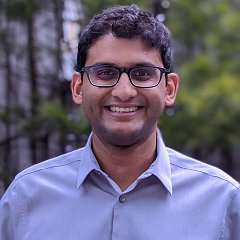
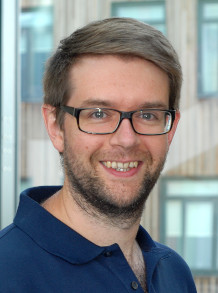
S. Roos is a Professor in the field of Electrical Engineering, Mathematics, and Computer Science, specializing in data-intensive systems. Their research spans multiple domains, including distributed systems, security, linear optimization, and flood protection. Roos actively contributes to cutting-edge innovations in blockchain technology, payment channel networks, and algorithmic design for decentralized environments. Primary Affiliation: Electrical Engineering, Mathematics and Computer Science (institution not explicitly stated) Research Themes: Security in distributed systems, optimization algorithms, flood protection modeling Roos’s work on payment channel networks like the Lightning Network emphasizes routing protocols, fee structures, and attack mitigation. In optimization, they focus on primal-dual methods, Chubanov’s algorithms, and theoretical foundations for linear systems. Their flood protection research integrates mathematical modeling with infrastructure planning to minimize costs while ensuring safety. Recent publications highlight explorations of generative adversarial networks (GANs) in decentralized environments, formal security analyses of blockchain protocols, and advanced applications of mathematical theorems like Farkas Lemma and Motzkin transposition. Roos’s scholarly contributions demonstrate a consistent emphasis on bridging theoretical rigor with practical system design.
Deepak D'Souza is a Professor in the Department of Computer Science and Automation at the Indian Institute of Science (IISc) Bangalore. He has been actively involved in research and teaching in theoretical computer science, particularly focusing on program verification, static analysis, and formal methods. His work bridges theoretical foundations with practical applications in software engineering and verification. His research interests span program verification, static analysis, model-checking, and models and logics for real-time systems. D'Souza has made significant contributions to automata theory, particularly in its applications to verification problems. He co-edited the book 'Modern Applications of Automata Theory' published by World Scientific, which focuses on verification and model checking technologies. His recent work shows a strong emphasis on logical LTL games, controller synthesis, and verification of embedded systems. Analysis of his publications reveals a consistent focus on verification techniques across different domains - from theoretical foundations in automata theory to practical applications in embedded systems like FreeRTOS. His work demonstrates a progression from foundational theoretical work to increasingly applied verification problems, while maintaining strong theoretical rigor. Recent publications show growing interest in synthesis techniques and applications of formal methods to real-world systems. D'Souza has mentored numerous PhD, MS, and ME students, with a current focus on verification problems. His research has been supported by significant grants from Siemens, DRDO, Robert Bosch Center for CPS, UKIERI, and Infosys, demonstrating both academic and industrial relevance of his work. He is actively engaged in the academic community, serving as General Chair for ATVA 2025, Program Committee member for numerous conferences, and previously as President of the Indian Association for Research in Computing (IARCS) from 2018-2023. He also chairs the Steering Committee for FSTTCS (2025-2027). D'Souza teaches advanced courses including Automata Theory and Computability, Formal Methods in Software Engineering, and Program Synthesis meets Machine Learning, demonstrating his commitment to educating the next generation of researchers in formal methods and verification.
Jan Dobrosolski serves as an Assistant lecturer at the Department of Computer Architecture within the Faculty of Electronics, Telecommunications and Informatics at Gdańsk University of Technology. His academic work focuses on performance-energy optimization in high-performance computing systems, with particular expertise in power management constraints. His research spans energy-efficient computing methodologies across multiple domains: deep learning acceleration, natural language processing tokenization, and reinforcement learning applications. Key specializations include power capping techniques for multi-core CPUs and multi-GPU architectures, neural network training optimization, and logic-based agent development using declarative programming frameworks. Dobrosolski's 2024 publications reveal a cohesive research trajectory centered on sustainable computing practices. His work systematically examines energy-performance trade-offs in tokenizer algorithms, deep neural network training, and neural agents for logic tasks—all under controlled power constraints. This integrated approach demonstrates significant contributions to resource-efficient computing across both CPU and GPU hardware platforms. Contact: jandobro@pg.edu.pl
Anne Siegel is a CNRS Research Director based at IRISA (Institute for Research in Computer Science and Random Systems), affiliated with the University of Rennes and CNRS. She currently serves as a Scientific Officer at CNRS Informatics (INS2I), overseeing the transversal mission for gender equality, having previously served as Deputy Scientific Director from 2021 to 2025. Her research focuses on the intersection of computer science and biology, particularly in developing symbolic methods for knowledge representation and integration to analyze large-scale biological systems. Former student of ENS Lyon Associate professor of mathematics Doctor of mathematics from the University of Aix-Marseille (2000) Joined CNRS in 2002 Research Director position since 2010 Anne Siegel's research spans the interface between computer science and biology, with particular emphasis on symbolic approaches to knowledge representation and integration for analyzing large-scale biological networks. Her early work focused on mathematics-computer science interfaces through the study of symbolic dynamic systems. She then transitioned to biology-computer science interfaces, developing methods to analyze metabolic networks of organisms including macro-algae. Her current research contributes to various scientific projects focusing on methods for modeling the metabolism of organisms in interaction with their microbiota. She has made significant contributions to bioinformatics, systems biology, and computational modeling of biological processes. Her publication record demonstrates a strong focus on developing computational methods for biological network analysis, particularly in metabolic modeling and logical signaling networks. The research trends show a consistent pattern of interdisciplinary work combining mathematical rigor with biological applications, with a recent emphasis on microbial communities, metabolic modeling, and the development of computational tools for systems biology. Her work often involves collaborations across multiple institutions and countries, reflecting the interdisciplinary nature of her research. Best paper award (CMSB 2012) Active involvement in gender equality initiatives in science Anne Siegel has supervised numerous PhD students and researchers throughout her career, with a particular focus on interdisciplinary projects at the interface of computer science and biology. Her leadership roles have included creating and leading the Dyliss team (bioinformatics, systems biology) within IRISA laboratory (2012-2019), and serving as head of the 'Data and Knowledge Management' department (2019-2021). She has been actively involved in multiple research projects funded by institutions including ANR, Inria, and CNRS, with focus areas spanning from algal metabolism to plant microbiomes and fermented products. She has been instrumental in establishing and leading the Dyliss team at IRISA, which focuses on bioinformatics and systems biology. Her leadership extends to national committees including the CNRS National Committee and the Inria Evaluation Committee. She has also played a key role in gender equality initiatives within CNRS Informatics, contributing to the creation of the transversal parity-equality mission.
Stefano Cirillo serves as an Assistant Professor at the Department of Computer Science, University of Salerno, Italy. His academic career spans roles including Research Fellow (2022-2023) and Adjunct Professor for Databases courses. He maintains significant editorial responsibilities as Associate Editor for Journal of Visual Language and Computing and Multimedia Tools and Applications , while serving on program committees for major conferences including EDBT/ICDT 2024. His research focuses on data-intensive domains with emphasis on Data Profiling, Mining, and Privacy . Core interests include Social Network analysis, AI-driven database optimization, and anomaly detection in data streams. His work bridges theoretical algorithms with practical applications in e-procurement, cybersecurity, and healthcare systems, particularly through projects like Profiling Data Streams for Anomaly Detection and Security and Rights in the CyberSpace (SERICS) . Analysis of his recent publications reveals strong trends in applied AI for societal challenges – including pandemic mental health detection, perinatal depression prediction, and smart city security. His work consistently integrates novel neural architectures (YOLO variants, LSTM hybrids, Transformer networks) with domain-specific constraints, demonstrating expertise in both algorithmic innovation and real-world implementation across transportation, healthcare, and public administration sectors. Professional service highlights include Program Co-Chair for International DMS Conferences (2021-2022), Local Arrangements Chair for EDBT/ICDT 2024, and editorial board membership for journals including Data Science and Management . His research has been supported through PON-funded PhD studies and the SERICS project, with active collaborations spanning Hasso Plattner Institute (Germany) and Italian research centers like CeRICT.
Hila Peleg is an Assistant Professor at the Technion - Israel Institute of Technology , working at the intersection of Programming Languages , Software Engineering , and Human-Computer Interaction . She co-leads the TecSE lab with Prof. Shachar Itzhaky, focusing on programmer tooling inspired by programming language theory.
Magnus O. Myreen is a Professor at Chalmers University of Technology in the Department of Computer Science and Engineering. His research focuses on formal verification , interactive theorem provers, compilers, machine code, and functional programming. He leads the CakeML project, aiming to create verified compilers and runtime systems. Education: B.A. in Computer Science from University of Oxford, Ph.D. in Program Verification from University of Cambridge. Current Roles: Professor at Chalmers, part-time researcher at Arm Ltd., and steering committee chair for ITP conference. His research integrates decompilation into logic , proof-producing synthesis , and verified stacks that connect software and hardware verification. Recent work includes verified compilers for Scheme and Dafny via CakeML, and end-to-end verification of subgraph-solving algorithms. Key publications highlight verified compiler ecosystems , including bootstrapping CakeML, cross-architecture compilation, and hardware verification. Trends in his work emphasize automated reasoning , compiler optimization , and verified computation for AI/ML . Scientific Awards: BCS Distinguished Dissertation Competition 2010 ACM SIGPLAN Most Influential POPL Paper Award 2024 Amazon Research Award for Compiling Dafny to CakeML (2023) Myreen has supervised PhD students Alejandro Gomez , Oskar Abrahamsson , and Andreas Loow . Funding includes grants from the Swedish Research Council and a Royal Society University Research Fellowship . He also contributes to projects like Milawa and HOL Light verification.
Philipp Ruemmer is a Professor of Theoretical Computer Science at University of Regensburg (2022–present) and a Senior Lecturer at Uppsala University's Department of Information Technology (2018–present). His research focuses on Program verification and theorem proving SMT/SAT solving and automata theory Embedded systems analysis and Java verification Machine learning applications in formal methods Concurrent and timed systems modeling His recent work includes string constraint solvers (Norn, OSTRICH, Sloth) and model checking tools (JayHorn, Eldarica). He has authored key papers in POPL, CPP, PLDI, and VMCAI on topics like Transducer-based string solving Certified decision procedures Regular constraint propagation Flattening techniques for constraints Notable scientific awards include the 2013 Uppsala University Oscar Prize and the 2005 SAP Award for academic excellence. He has led and participated in research grants from the Knut and Alice Wallenberg Foundation, Swedish Research Council, and Microsoft.
Andrés Eduardo Gutiérrez-Rodríguez is a Research Professor at Tecnologico de Monterrey, Campus Toluca, with additional affiliation as an Adjunct Researcher at the Institute for the Future of Education. His academic work spans computational and information sciences with a focus on data mining, machine learning, clustering, and optimization. He is a member of the National System of Researchers Rank 1 and the Mexican Academy of Computing. His research interests include: Machine Learning algorithms and applications Data Mining and pattern recognition Clustering techniques and validity indices Optimization and hyper-heuristic approaches Applications in healthcare, cybersecurity, and education Dr. Gutiérrez-Rodríguez's publication record shows a strong focus on developing novel machine learning approaches for complex problems. His recent work spans intrusion detection systems, medical image analysis for neurodegenerative diseases, EEG analysis for brain-computer interfaces, and educational data mining. He has developed innovative clustering algorithms using evolutionary computation and ensemble methods, with particular emphasis on explainability and validation of results. His notable scientific achievements include: National Mention of the Cuban Academy of Sciences for Young Researchers in Computer Sciences (2017) Mexican Researcher Certification - Level 1 Membership in the Mexican Academy of Computing Dr. Gutiérrez-Rodríguez has been actively involved in teaching undergraduate and graduate programs in Computer Sciences and has participated in research projects for industry and CONACyT. His work bridges theoretical computer science with practical applications across multiple domains.
Arnaud Carayol is a Professor of Computer Science at Gustave Eiffel University, where he has been working since September 2020. He is a member of the Models and Algorithms team at the Laboratoire d'informatique Gaspard Monge (LIGM). Prior to his current position, he was a full-time researcher at CNRS. His research focuses on theoretical aspects of computer science, with particular emphasis on: Automata Theory Formal Languages Logic in Computer Science Model Checking Pushdown Systems Games on Infinite Structures Professor Carayol's recent publications demonstrate a consistent focus on automata theory, particularly on infinite trees and pushdown systems, with applications to verification and game theory. His work often explores the connections between formal languages, logic, and computational models, with a particular emphasis on decidability and complexity questions. The trend shows increasing sophistication in handling higher-order systems and probabilistic elements in computational models. He has served on program committees for numerous prestigious conferences including LICS, STACS, ICALP, and FOSSACS. Notably, he was PC Co-Chair and organizer for CIAA 2017 and PC Chair and organizer for FICS 2013. Professor Carayol has led significant research projects: Head of project AMIS (2011-2014) financed by ANR Head of project VAPF (2011-2012) financed by Digiteo Member of project LiFoundations (2018-2022) His research continues to advance our understanding of theoretical models in computer science, with implications for program verification, formal methods, and computational theory.
Ashutosh Trivedi is an Associate Professor of Computer Science at the University of Colorado Boulder, specializing in formal methods for safety-critical learning-enabled systems. His research bridges computer science, control theory, and machine learning with a focus on trustworthy AI systems that operate safely, fairly, and responsibly. His research interests encompass Formal Methods , Reinforcement Learning , Software Fairness , and Software Accountability . Trivedi develops mathematical approaches to bring precision to AI system design, using formal languages, automata, and logic to transform vague natural-language instructions into clear specifications. His work emphasizes principled interaction with AI, creating explainable and reliable systems through techniques like reinforcement learning algorithms for cardiac pacemaker design, SAT solvers for grounding LLM outputs, and formal logic for capturing legal obligations. His recent publications reveal a strong trend toward integrating formal verification with machine learning systems, particularly focusing on fairness testing, safety constraints in reinforcement learning, and neurosymbolic approaches. The research spans applications from legal-critical software to medical devices, with consistent emphasis on accountability and ethical considerations in AI systems. 2022 NSF CAREER award Liverpool Fellowship Distinguished Paper Award at CAV for Regular Reinforcement Learning Senior Member of the ACM Royal Society Wolfson Visiting Fellowship NeuS 2025 Disruptive Idea Award Trivedi actively mentors PhD students, having supervised multiple successful thesis defenses including Shadi Tasdighi Kalat on multi-agent games, Mateo Perez on formal languages for reinforcement learning, John Komp on pacemaker therapy, Vishnu Murali on functional proofs, and Taylor Dohmen on sequential optimization. His group, the Programming Languages and Verification (CUPLV) at CU Boulder, focuses on making AI systems more trustworthy through mathematical precision and formal verification techniques. Currently on sabbatical at the University of Liverpool, Trivedi continues to bridge the gap between machine learning and responsible system design, helping AI systems earn the trust we increasingly place in them for critical applications.
Eunsuk Kang is an Associate Professor in the Software and Societal Systems Department at Carnegie Mellon University's School of Computer Science. He leads the Software Design and Analysis (SoDA) Group, focusing on the intersection of software engineering and formal methods to create safe, secure, and reliable software systems. His research spans several key areas including software design, requirements engineering, modeling, specification and verification, with particular emphasis on system safety, security, and cyber-physical systems. Kang's work addresses fundamental challenges in designing robust software systems that can withstand environmental deviations and uncertainties. Kang's publication record shows a strong trajectory of research contributions, with recent work focusing on specification engineering, robustness in software design, automated reasoning techniques, and safety in cyber-physical systems. His publications appear consistently in top-tier software engineering conferences including ICSE, ASE, FSE, and ESEC/FSE. As an educator, Kang teaches advanced courses including Designing Large-Scale Software Systems, Formal Methods, and Software Engineering for AI-enabled Systems, reflecting his expertise at the cutting edge of software engineering research and practice. He actively contributes to the academic community as a Program Co-Chair for SEAMS 2026, co-organizer of the Dagstuhl Seminar on Specification Engineering, and serves on program committees for numerous prestigious conferences including ICSE, ASE, and OOPSLA. Kang is also an Associate Editor for IEEE Transactions on Software Engineering (TSE).
Rohan Padhye is an Assistant Professor in the Software and Societal Systems Department (S3D) within the School of Computer Science at Carnegie Mellon University. He leads the Program Analysis, Software Testing, and Applications (PASTA) research group and serves as affiliate faculty at CyLab. His research spans software engineering, programming languages, systems, and security, with publications at top venues including ICSE, ASE, ISSTA, MSR, OOPSLA, SOSP, SoCC, NSDI, and USENIX Security. Padhye completed his Ph.D. in Computer Science at UC Berkeley under Koushik Sen, where he investigated techniques for specializing program analysis and automated testing tools. He holds a Master's degree from IIT Bombay in static program analysis. Prior to CMU, he worked with Amazon Web Services, Microsoft Research, Samsung Research America, and IBM Research India. His research focuses on automatically discovering software bugs using dynamic program analysis and coverage-guided fuzz testing. Recent projects include Fray (a concurrency testing platform for the JVM), Mu2 (mutation-based fuzz testing), and JQF+Zest (coverage-guided property-based testing). His work has identified numerous bugs in open-source software across Google Closure Compiler, OpenJDK, Apache projects, and others. Padhye's publications demonstrate a consistent focus on improving software testing through innovative fuzzing techniques, with recent work expanding into date/time bug analysis, distributed systems testing, and AI-driven legal reasoning. His research bridges theoretical foundations with practical applications, evidenced by tools like ChocoPy (used for teaching compilers at multiple universities) and JQF+Zest (integrated into Fuzzit cloud service). NSF grant as PI on Practical Controlled Concurrency Testing for Managed Code (2025) NSF grant as PI on Strengthening Correctness of Date and Time Logic in Software Systems (2025) Amazon Research Award for property-based testing (2025) Distinguished Reviewer Award for PLDI'25 ACM SIGSOFT Distinguished Paper Award for date/time bugs study Best Paper Award at SOSP 2019 Padhye advises multiple Ph.D. students in the PASTA Lab, including Ao Li, Vasudev Vikram, and Shrey Tiwari. He has served on program committees for major conferences including ASE, SPLASH, ISSTA, ICSE, and PLDI. His teaching at CMU includes courses on Program Analysis and Fantastic Bugs and How to Find Them, continuing his work from Berkeley where he was an Outstanding Graduate Student Instructor. The PASTA Lab conducts research on Program Analysis, Software Testing, and Applications with a focus on dynamic analysis and grey-box fuzzing. The lab follows an open science ethos, making all research artifacts openly accessible and reproducible under permissive licenses. Their research is funded by NSF, CyLab, and Amazon, with a commitment to responsible disclosure practices in security research.
Dr. Wojciech Saloni-Marczewski serves as Assistant Professor at the Institute of Artistic Education, Academy of Fine Arts in Lodz, leading the Film Scenography Studio within full-time, first-cycle studies. His academic role centers on developing pedagogical frameworks for audiovisual spatial design. His research explores the interplay between textual constraints and creative imagination in film set design, emphasizing script fidelity as a catalyst for innovation within spatial limitations. The studio curriculum progresses from foundational spatial composition exercises to comprehensive set design proposals for existing film scripts, integrating theoretical understanding with practical audiovisual form creation. Key methodologies focus on transforming narrative requirements into coherent visual environments through structured compositional logic. Based in room 215, the Film Scenography Studio operates within the Institute of Artistic Education's ecosystem alongside complementary units including the Studio of Light Dramaturgy and Intermedia Studio. The program cultivates specialized skills in film reality construction through iterative design processes that balance artistic expression with technical script adherence.
Dr. James A Walker is a Senior Lecturer in the Department of Computer Science at the University of York, UK. His primary affiliation is with the Artificial Intelligence research group within the department. He holds a permanent academic position and is actively involved in research and teaching. His research interests span multiple areas including artificial intelligence, machine learning, quantum computing, esports analytics, and constraint programming. He has contributed to high-impact studies on topics such as Bayesian frameworks for neural networks, SAT encoding techniques, and quantum error correction. Dr. Walker's work often intersects interdisciplinary fields, blending theoretical computer science with practical applications in gaming, healthcare, and aerospace. Department: Department of Computer Science University: University of York Research Group: Artificial Intelligence His recent publications highlight a focus on cutting-edge technologies such as quantum computing, esports strategy analysis, and advanced machine learning methodologies. He has consistently published in top-tier venues, demonstrating expertise in both foundational and applied computer science research. Dr. Walker's work on real-time 3D tracking and quantum phase correction underscores his ability to tackle complex technical challenges with innovative solutions. His contributions to esports analytics and game design parameters reflect an interest in applying AI techniques to dynamic, competitive environments.