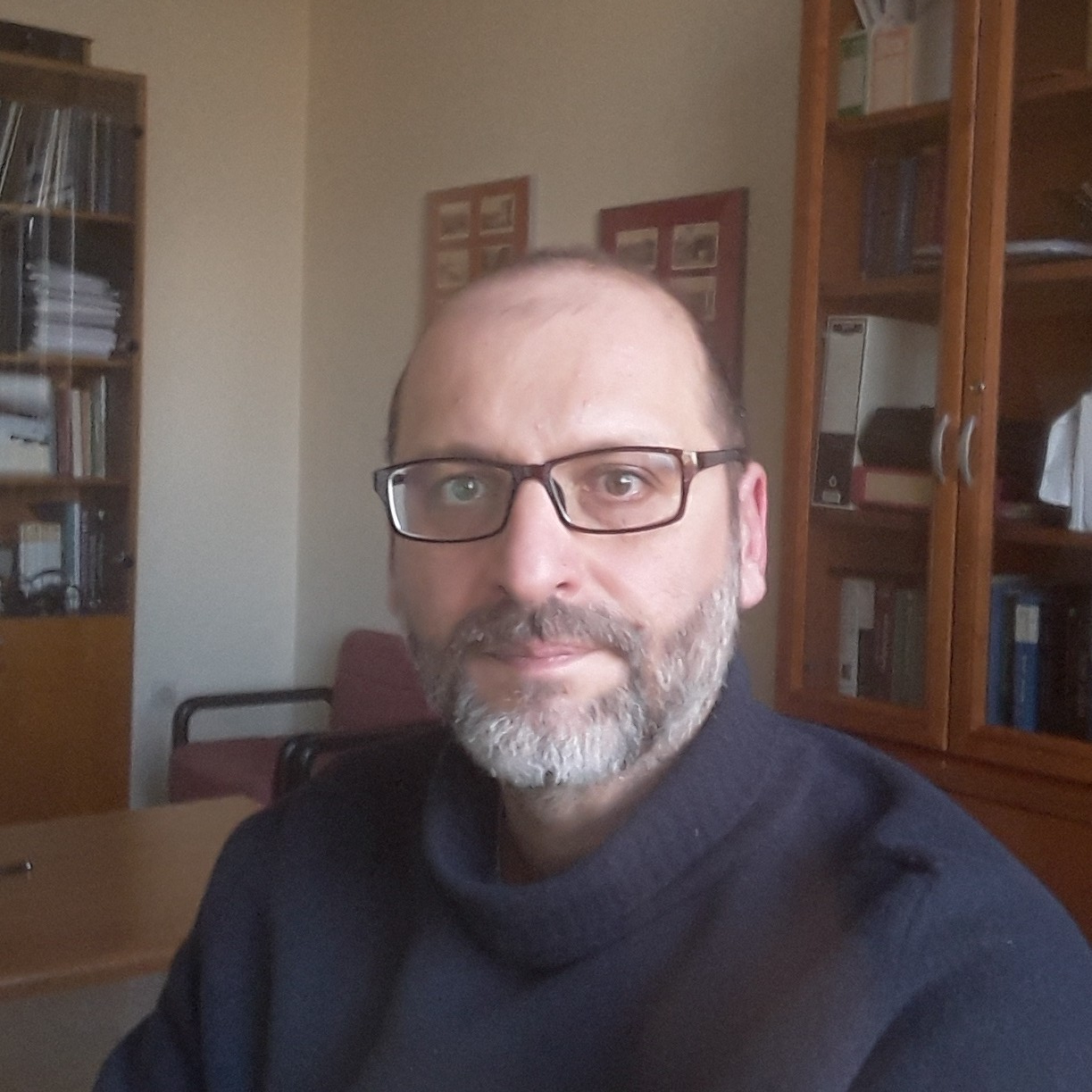
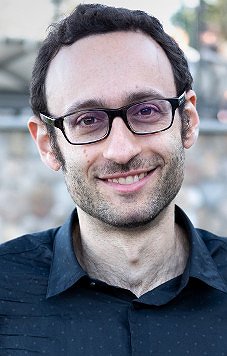
Ilias Sakellariou is an Assistant Professor in the Department of Applied Informatics at the University of Macedonia. He holds a BSc in Physics from Aristotle University of Thessaloniki, an MSc in Knowledge-Based Systems from the University of Edinburgh, and a PhD in Distributed Constraint Logic Programming from Aristotle University of Thessaloniki. Education: BSc in Physics, Aristotle University of Thessaloniki MSc in Knowledge-Based Systems, University of Edinburgh PhD in Distributed Constraint Logic Programming, Aristotle University of Thessaloniki Research Interests: Constraint Logic Programming, Multi-Agent Systems (BDI, Agent-Based Simulation), AI applications in 5G networks, cloud/network slicing, and distributed systems. His work includes projects like NECOS (cloud slicing) and UNIC (5G network infrastructure). Publications: His research spans agent-based modeling, network slicing, and AI-driven systems. Recent works focus on emotional agents in simulations and 5G infrastructure optimization. Projects & Grants: Participated in EU-funded projects such as NECOS (H2020) and UNIC (FED4FIRE+), contributing to cloud slicing and network architecture design. His work includes software tools like TXStates (NetLogo extensions for state machines) and eX-Machines for evacuation simulations. Labs/Teams: Develops simulation tools for agent-based systems, emphasizing NetLogo extensions for complex agent modeling and validation.
Stamatopoulos Panagiotis is an Assistant Professor in the Department of Informatics and Telecommunications at the University of Athens since May 2001. His career spans roles as Lecturer (1993-2001), Collaborating Researcher (1989-1993), and Research Associate (1989-1993) under EU programs. He holds a PhD in Computer Science (1988) and Physics degree (1982) from the University of Athens. Research Focus: Artificial intelligence, constraint programming, natural language processing, and combinatorial optimization. Teaching: Logic programming and introductory programming courses. His work bridges constraint programming with operations research for solving scheduling/resource allocation problems. No scientific awards or publications were listed in the provided text.
Elvira Albert is a Professor in the Department of Computer Systems and Programming at the School of Computer Science, Complutense University of Madrid, Spain. She leads the COSTA research group, which specializes in formal methods for program optimization and verification, with a strong focus on blockchain technologies and smart contracts. She holds a Ph.D. in Computer Science. Her research encompasses program verification, static analysis, and compiler construction, particularly applied to blockchain ecosystems. The COSTA group has developed influential tools including circom (for arithmetic circuit compilation), CIVER (for circuit verification), EthIR (EVM decompiler), and superoptimizers such as GASOL and SuperStack. Recent publications (2019-2024) demonstrate her expertise in smart contract safety (e.g., SAFEVM), concurrency testing, and bytecode superoptimization using constraint solvers. Her work consistently bridges theoretical formal methods with practical tool development for the blockchain industry. Albert has secured substantial funding from the Ethereum Foundation for multiple projects (GASOL, GREEN, SOPA, FORVES series, ZK-ARCKIT, GREY). She serves as an area editor for Theory and Practice of Logic Programming (TPLP) since 2019. The COSTA group, under her leadership, maintains an active research agenda in blockchain verification, zero-knowledge proofs, and formally verified compilers. Current projects include ZK-ARCKIT for arithmetic circuit analysis and FORYU for formal semantics of Yul.
Işıl Dillig is an Associate Professor of Computer Science at the University of Texas at Austin, where she leads the UToPiA research group. Her academic career spans over a decade of significant contributions to programming languages research, particularly in program analysis, verification, and synthesis. Dr. Dillig received all her academic degrees (BS, MS, and PhD) from Stanford University before joining the faculty at UT Austin. Her educational background established the foundation for her innovative research approach that bridges theoretical computer science with practical applications. Her research focuses on developing techniques to make software systems more reliable, secure, and easier to build through advanced program analysis, verification, and synthesis methods. She has pioneered approaches that combine symbolic reasoning with machine learning to tackle complex software engineering challenges across multiple domains including security, databases, and programming language theory. Her work demonstrates exceptional depth in creating practical tools that address real-world software development problems while maintaining strong theoretical foundations. Analysis of Dr. Dillig's publication record reveals a consistent trajectory of innovation in program synthesis, with recent work expanding into neurosymbolic approaches that bridge neural networks with formal methods. Her research shows strong connections between theoretical foundations and practical applications, particularly in security-critical systems, database technologies, and blockchain applications. The evolution of her work demonstrates increasing sophistication in handling complex program structures while maintaining practical usability. Dr. Dillig has received prestigious recognition for her research contributions: Sloan Fellowship NSF CAREER award As a dedicated educator and research leader, Dr. Dillig has served in significant roles including Program Chair for PLDI 2022 and Steering Committee member for PLDI. She has mentored numerous students through her UToPiA research group, guiding research in program synthesis, verification, and analysis. Her work has been supported by substantial research grants that have enabled innovative projects at the intersection of programming languages and security. Dr. Dillig leads the UToPiA (UT Austin Programming, Languages, and Analysis) research group, which focuses on developing novel techniques for program analysis, verification, and synthesis. The group maintains strong collaborations with industry partners and academic institutions worldwide, translating theoretical advances into practical tools that address real software engineering challenges.
Shachar Itzhaky is an Associate Professor in the Department of Computer Science at Technion - Israel Institute of Technology, Haifa. His research spans multiple areas of programming languages, formal methods, and software engineering, with a focus on making program development and verification more accessible and efficient. He has served on program committees for numerous prestigious conferences including PLDI, POPL, SPLASH, and ICFP. Dr. Itzhaky's research interests center around program synthesis, automated reasoning, and formal verification. His work in program synthesis explores techniques for automatically generating programs from high-level specifications, with applications in end-user programming and software development. In automated reasoning, he has made significant contributions to e-graph based reasoning, invariant inference, and property-directed verification. His research in formal methods focuses on practical applications for program verification, particularly for data structures and security properties. An analysis of his recent publications reveals a strong focus on leveraging advanced formal techniques for practical program understanding and generation. His work consistently bridges theoretical foundations with practical applications, particularly in program synthesis, verification, and end-user programming tools. The trend shows increasing integration of machine learning techniques with traditional formal methods, as well as expanding applications to security and privacy domains. ACM SIGPLAN John C. Reynolds Doctoral Dissertation Award Dr. Itzhaky has been actively involved in the programming languages research community, serving on numerous program committees and contributing to the advancement of formal methods and program synthesis. His work has practical implications for software development tools, security analysis, and end-user programming environments. While specific grant information isn't detailed in the provided text, his extensive publication record in top-tier venues suggests successful funding for his research endeavors. His work on projects like Object Spreadsheets and Lifty demonstrates a commitment to creating practical tools that address real-world programming challenges. Dr. Itzhaky's research is conducted within the vibrant programming languages and formal methods group at Technion's Computer Science department. His work intersects with multiple research threads including program synthesis, verification, and security, suggesting collaboration across these areas within the department. His tools like EPR-based Verification, PDR∀, and VeriCon represent significant technical contributions that likely form the basis of ongoing research projects with students and collaborators.
Mohamed Faouzi Atig is a Professor in Computer Systems at Uppsala University's Department of Information Technology since July 2021, following a progression from Assistant Professor (2014-2018) to Associate Professor (2018-2021). His academic career began with a post-doctoral position at Uppsala University (2010-2012) after earning his PhD from University of Paris Diderot-Paris 7 in 2010, followed by a docent degree (habilitation equivalent) from Uppsala University in 2017. His research focuses on formal verification of concurrent and infinite-state systems, with particular expertise in model checking , weak memory models (including x86-TSO, Release-Acquire), and automata theory applied to string constraints. His work bridges theoretical foundations with practical verification techniques for modern hardware and programming language semantics. Analysis of his publication record reveals a sustained focus on verification challenges in concurrent systems, evolving from foundational work on memory models (2015) to sophisticated techniques for string constraints (2017) and persistent memory (2024-2025). His research demonstrates consistent contributions to top venues like PLDI and POPL, with increasing complexity in handling real-world memory models while maintaining theoretical rigor. At Uppsala University, he has served on program committees for major conferences including POPL, VMCAI, and SPLASH, demonstrating active engagement with the programming languages research community.
Adam Chlipala is a Professor at the Massachusetts Institute of Technology working at the intersection of programming languages, formal methods, and computer systems. His research focuses on building practical verified systems with end-to-end machine-checked proofs, particularly using the Coq proof assistant. His educational background includes a Computer Science undergraduate degree from Carnegie Mellon University (2003) and a PhD in Computer Science from the University of California, Berkeley (2007). Following a postdoctoral position at Harvard University through 2011, he joined MIT as faculty. Chlipala's research spans multiple domains with strong emphasis on dependent types , verified compilation , and hardware-software co-verification . His work consistently bridges theoretical foundations with practical implementation, as evidenced by his development of the Ur/Web programming language and his focus on creating clean-slate hardware-software stacks with formal guarantees. Key research thrusts include cryptographic constant-time verification, side-channel security, and verified tensor compilation. His recent publications (2020-2025) reveal a clear trajectory toward increasingly complex verified systems, with growing emphasis on hardware-software integration, cryptographic implementations, and performance-critical applications. The work consistently leverages Coq for machine-checked proofs while addressing real-world constraints like timing channels and hardware interfaces. Chlipala is the author of the influential textbook Certified Programming with Dependent Types , which serves as a primary educational resource for Coq at numerous institutions worldwide. His professional activities include significant service to the PL community through program committees for major conferences including PLDI, POPL, ICFP, and CPP. He leads research initiatives connecting hardware and software verification, most notably through the DeepSpec project which aims to build fully verified computing stacks. His current work focuses on practical applications of dependent types for business applications through Ur/Web and verified cryptographic implementations.
Stephen Chong is a Gordon McKay Professor of Computer Science in the Harvard John A. Paulson School of Engineering and Applied Sciences, where he serves as Co-Director of Undergraduate Studies for Computer Science. His academic career spans over a decade of teaching and research at Harvard, where he has made significant contributions to programming languages and information security. Chong received his PhD from Cornell University under the guidance of Andrew Myers, and a bachelor's degree from Victoria University of Wellington, New Zealand. Prior to graduate school, he worked as a consultant and contractor in the software industry, bringing practical experience to his academic research. Professor Chong's research focuses on language-based information security, using programming language techniques to provide information security assurance. His work bridges the gap between theoretical foundations and practical applications, developing tools and frameworks that help programmers write trustworthy programs. His research has evolved to address increasingly complex security challenges in modern computing environments, from web applications to cyber-physical systems. His recent publications reveal a strong trend toward integrating advanced programming language techniques with security analysis, particularly through the use of Datalog, SMT solvers, and program synthesis. His work on Formulog has been particularly influential, extending Datalog with mechanisms to construct and reason about SMT formulas for static analysis. His research has expanded to address security challenges in cyber-physical systems, where sensor attacks pose unique threats to safety-critical infrastructure. Chong has received numerous prestigious awards including an NSF CAREER award, an AFOSR Young Investigator award, and a Sloan Research Fellowship. He has also served in leadership roles for major conferences including CSF 2012-2013, PLMW @ PLDI 2021, and as SIGPLAN-M Chair for 2025-2026. As an educator, Chong has mentored numerous students through Harvard's undergraduate research programs and has served as a thesis advisor. His teaching portfolio includes foundational courses like CS51, systems courses like CS61, and advanced topics in programming languages (CS152) and compilers (CS1530). He has been instrumental in shaping Harvard's computer science curriculum, particularly in security and programming languages. Chong leads a research group focused on language-based security, with projects including Formulog (for SMT-based static analysis), PRINCESS (for autonomous adaptation of software), and work on secure shell scripting (Shill). His group collaborates with researchers across Harvard and other institutions to tackle challenging problems at the intersection of programming languages and security.
Byron Cook is Professor of Computer Science at University College London (UCL) and Director of Automated Reasoning at Amazon Web Services. He leads Amazon's Automated Reasoning Group (ARG) and has driven the broad adoption of formal methods across AWS services. His career spans academia and industry, with significant contributions to program verification and automated reasoning. His research focuses on verification, automated reasoning, program analysis, computer/network security, programming languages, theorem proving, logic, and applications to hardware design, operating systems, and biological systems. Cook's work bridges theoretical foundations with practical applications in cloud security and system reliability, particularly through his leadership in applying formal methods to AWS infrastructure. Cook's recent publications demonstrate a strong focus on applying automated reasoning to cloud security challenges, particularly around access control policies, network reachability, and cryptographic implementations. His work shows a clear trajectory from theoretical program verification toward practical security applications in large-scale cloud environments, with emphasis on making formal methods accessible to developers through "one-click" verification tools. Scientific Awards: FREng (Fellow of the Royal Academy of Engineering) As an academic advisor, Cook has mentored numerous PhD students and interns who have gone on to significant careers in programming languages and verification research. His work at Amazon has secured substantial research funding for developing and deploying automated reasoning tools across AWS services. Cook founded and leads Amazon's Automated Reasoning Group (ARG), which develops tools like IAM Access Analyzer, Tiros, Zelkova, and T2. Previously, he managed the Programming Principles and Tools (PPT) group at Microsoft Research Cambridge, where he co-founded projects including TERMINATOR, SLAyer, and the Bio Model Analyzer (BMA).
José Fragoso Santos is an Assistant Professor in the Department of Computer Science and Engineering at Instituto Superior Técnico, University of Lisbon, and a member of INESC-ID where he conducts research as part of the SAT group. His research focuses on embedding formal methods into software development processes, with particular emphasis on JavaScript program analysis and verification. His educational background includes: PhD in Computer Science from University of Nice Sophia Antipolis (2014) Master's degree in Information Systems and Computer Engineering from Instituto Superior Técnico, Universidade de Lisboa (2008) Dr. Santos' research centers on JavaScript verification, symbolic execution, and secure information flow. He led the development of JaVerT, the first separation-logic-based tool for JavaScript analysis and testing, which has gained significant interest from both industry and academia. His work bridges theoretical formal methods with practical applications, particularly in web security and program analysis. He has made substantial contributions to understanding JavaScript semantics, symbolic execution techniques, and secure information flow in web applications, with publications in premier venues like PLDI, POPL, and ECOOP. His recent publications demonstrate a strong focus on symbolic execution for JavaScript and related languages, with applications in web security and program verification. The research shows progression from foundational work on information flow security to advanced techniques like compositional symbolic execution and multi-language analysis platforms. His work on JaVerT and Gillian has established significant research directions in program analysis for dynamic languages. His notable scientific achievements include: Facebook research award for the JaVerT project Dr. Santos has supervised numerous graduate students on projects related to JavaScript verification, symbolic execution, web security, and formal methods. His research has practical applications, as evidenced by the collaboration with Amazon R&D engineers to verify critical components of the AWS Encryption SDK using JaVerT. He has served on program committees for major conferences including PLDI, OOPSLA, and IJCAI, demonstrating his standing in the programming languages community. As a member of the SAT group at INESC-ID, Dr. Santos collaborates with researchers working on formal methods, program verification, and software security. His current projects include extending JavaScript symbolic execution to Web Workers, developing formal semantics for JavaScript regular expressions, and creating first-order solvers for program analysis. He continues to push the boundaries of what's possible in JavaScript program analysis and verification.
Magnus O. Myreen is a Professor in the Department of Computer Science and Engineering at Chalmers University of Technology, Sweden. He has been with Chalmers since 2014, becoming a tenured Associate Professor in 2015 and being promoted to full Professor in June 2023. Myreen has an extensive record of service to the programming languages and formal methods communities, including serving on program committees for major conferences like PLDI, POPL, ICFP, and CPP, and chairing the steering committee for the ITP conference series since November 2023. Myreen received his academic training at prestigious institutions: B.A. in Computer Science at the University of Oxford, tutored by Dr. Jeff Sanders Ph.D. on program verification in 2009 at the University of Cambridge, supervised by Prof. Mike Gordon Myreen's research focuses on program verification, interactive theorem proving, and compiler verification. He is best known for his work on the CakeML project, which is an ML-style language with a formal semantics and a growing ecosystem of proofs and tools that support construction of verified applications. As he states on his website, "My most recent work has focused on CakeML, which is an ML-style language with a formal semantics and a growing ecosystem of proofs and tools that support construction of verified applications. As far as I know, the CakeML compiler is the first verified compiler to have been bootstrapped." His research spans several key areas: Decompilation into logic — verification of machine code Proof-producing synthesis from logic Verified Lisp and ML runtimes Connecting things up: verified stacks Myreen's publication record shows a strong focus on verified compilation and theorem proving, particularly through the CakeML ecosystem. His work consistently bridges the gap between theoretical foundations and practical implementation, with numerous papers on verified compilers, program verification, and theorem proving. A significant trend in his recent work (2021-2024) has been extending CakeML's capabilities to handle more complex language features, improve performance, and verify increasingly sophisticated compilation techniques including bootstrapping and dynamic computation. Myreen has received several prestigious awards and recognitions: Winner of the BCS Distinguished Dissertation Competition 2010 for his PhD work Royal Society Research Fellow (UK) since 2012 ACM SIGPLAN Most Influential POPL Paper Award for the 2014 CakeML paper Amazon Research Award for his proposal "Compiling Dafny to CakeML" Myreen has advised several PhD students to completion, including Alejandro Gomez (Sep 2017 – Jun 2023), Oskar Abrahamsson (Aug 2017 – Dec 2022), and Andreas Loow (Sept 2016 – Sep 2021). He also collaborated with postdocs including Hira Syeda, Thomas Sewell, and Johannes Aman Pohjola. His research has been supported by various funding sources, though specific grants aren't detailed in the provided text. Notably, he received an Amazon Research Award for his work on compiling Dafny to CakeML, and his CakeML project has clearly attracted significant attention in the programming languages and formal methods communities. Myreen leads research on the CakeML project, which has grown into a substantial ecosystem for verified compilation. The project involves a team of researchers working on various aspects including compiler verification, program synthesis, and theorem proving. Myreen also collaborates with researchers at other institutions, as evidenced by his visits to EPFL (meeting Viktor Kuncak, Martin Odersky, and James Larus) and NUS (visiting Ilya Sergey's group). In October 2023, he began a ten-month sabbatical at Cambridge UK, where he worked part-time for Arm Ltd., indicating ongoing industrial collaboration.
Mayur Naik is the Misra Family Professor in the Department of Computer and Information Science at the University of Pennsylvania's School of Engineering and Applied Science. He holds office in Room 642B, Amy Gutmann Hall and maintains an active research program focused on the intersection of programming languages and artificial intelligence. Before joining UPenn, he was faculty at Georgia Institute of Technology and a researcher at Intel Labs, Berkeley. Naik received his PhD in Computer Science from Stanford University in 2008 under Alex Aiken, a Masters from Purdue University in 2003 under Jens Palsberg, and a Bachelors from BITS Pilani in 1999. He grew up in Goa, India. His primary research interests center around neurosymbolic programming, which combines symbolic reasoning with machine learning to create more accurate, interpretable, and domain-aware AI systems. His group develops language design, learning algorithms, and compiler optimizations in this space, with their most mature effort being the Scallop neurosymbolic programming language and compiler toolchain. He also conducts research in trustworthy AI for healthcare applications and AI-enabled programming tools that improve programmer productivity. Analysis of his recent publications shows a strong trend toward neurosymbolic programming frameworks (Scallop, TorchQL), LLM-assisted program analysis (IRIS), and applications of these techniques to security, healthcare, and computer vision. His work consistently bridges theoretical foundations with practical implementations, often releasing open-source systems. Misra Family Professor (endowed chair, effective July 2024) Multiple distinguished paper awards (PLDI 2019, FSE 2015, PLDI 2014) Test-of-Time Paper Awards (FSE 2013, FSE 2012, EuroSys 2011) His student Elizabeth Dinella won the 2025 ACM SIGSOFT Outstanding Dissertation award Naik has advised numerous PhD students who have gone on to faculty positions at top institutions including Peking University, University of Toronto, Ashoka University, Bryn Mawr College, and Johns Hopkins University. His research is supported by grants from NSF, Google, Amazon, and other industry partners. His lab maintains active collaborations with clinicians and bioinformatics researchers to apply neurosymbolic programming to healthcare problems. His research group, which includes current PhD students and postdocs, develops practical open-source systems and applies them to diverse domains including computer vision, cybersecurity, medicine, and bioinformatics. The group maintains strong industry connections with Google, Microsoft, Amazon, and other tech companies.
Marc Pouzet is a Professor at École Normale Supérieure (ENS) in the Department of Computer Science (DIENS), where he serves as Director of CS studies. He leads the INRIA project-team PARKAS and was a Junior Member of the Institut Universitaire de France (2007–2012). His research centers on synchronous programming languages for safety-critical embedded systems, with contributions to real-time software verification, hybrid systems modeling, and probabilistic reactive programming. Research Focus Pouzet's work bridges theory and practice in: Synchronous Languages : Design/extensions of Lustre, Lucid Synchrone, and Zelus for embedded control Formal Methods : Mechanized semantics (Coq) and verified compilers (Vélus) for correctness guarantees Hybrid Systems : Integrating ODEs with discrete logic (ProbZelus for probabilistic inference) Real-time Systems : Scheduling, latency constraints, and memory-safe compilation Awards & Leadership Inria–Académie des sciences Innovation Award (2016) Program committees: EMSOFT, PLDI, POPL, ECRTS Associate Editor: EURASIP Journal on Embedded Systems Advising & Projects Supervised 19+ PhD students on topics spanning compiler verification (Bourke, Pesin), probabilistic languages (Baudart), and hybrid systems (Pauget). Leads development of open-source tools: Zelus (synchronous language with ODEs) Vélus (verified Lustre compiler) ReactiveML (reactive extension of OCaml)
Ilya Sergey is an Associate Professor at the National University of Singapore (NUS) School of Computing, with previous faculty appointments at University College London (2015-2018). His academic career spans multiple prestigious institutions including IMDEA Software Institute (postdoctoral position) and KU Leuven (PhD). His educational background includes a PhD in Computer Science from KU Leuven (2012), an MSc in Mathematics and Computer Science from Saint Petersburg State University (2008), and professional experience as a software engineer at JetBrains prior to academia. Sergey's research focuses on the intersection of programming language theory and practical software verification, with particular emphasis on concurrent systems , smart contracts , and program synthesis . His work bridges theoretical foundations in type theory and separation logic with practical applications in blockchain technology and Rust programming. He has developed novel techniques for verifying heap-manipulating programs, analyzing commutativity in distributed transactions, and synthesizing correct-by-construction code. Analysis of his recent publications reveals a clear trajectory toward practical verification of blockchain systems and concurrent data structures, with increasing focus on Rust programming language applications. His work demonstrates consistent innovation in mechanized reasoning techniques while maintaining relevance to real-world software challenges, particularly in the domains of smart contracts and distributed systems. Sergey maintains an active research group at NUS, as evidenced by his social media references to lab traditions and student collaborations. He frequently participates in major programming languages conferences as both author and committee member, serving in leadership roles including General Chair for ICFP 2025. His research lab follows distinctive traditions, including location-based Mattermost status updates when traveling. Sergey is deeply engaged with the programming languages community through conference organization, mentoring activities, and outreach initiatives such as nature walks for conference attendees.