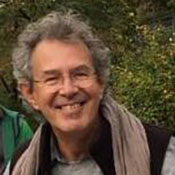
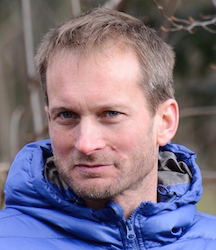
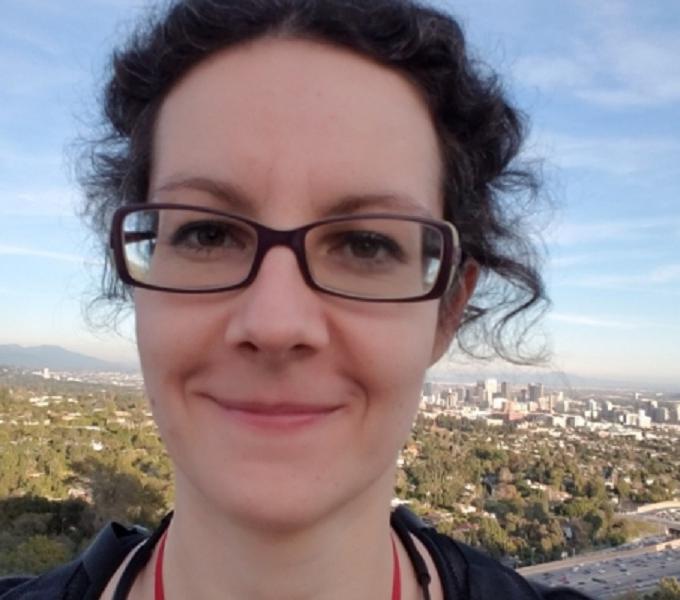
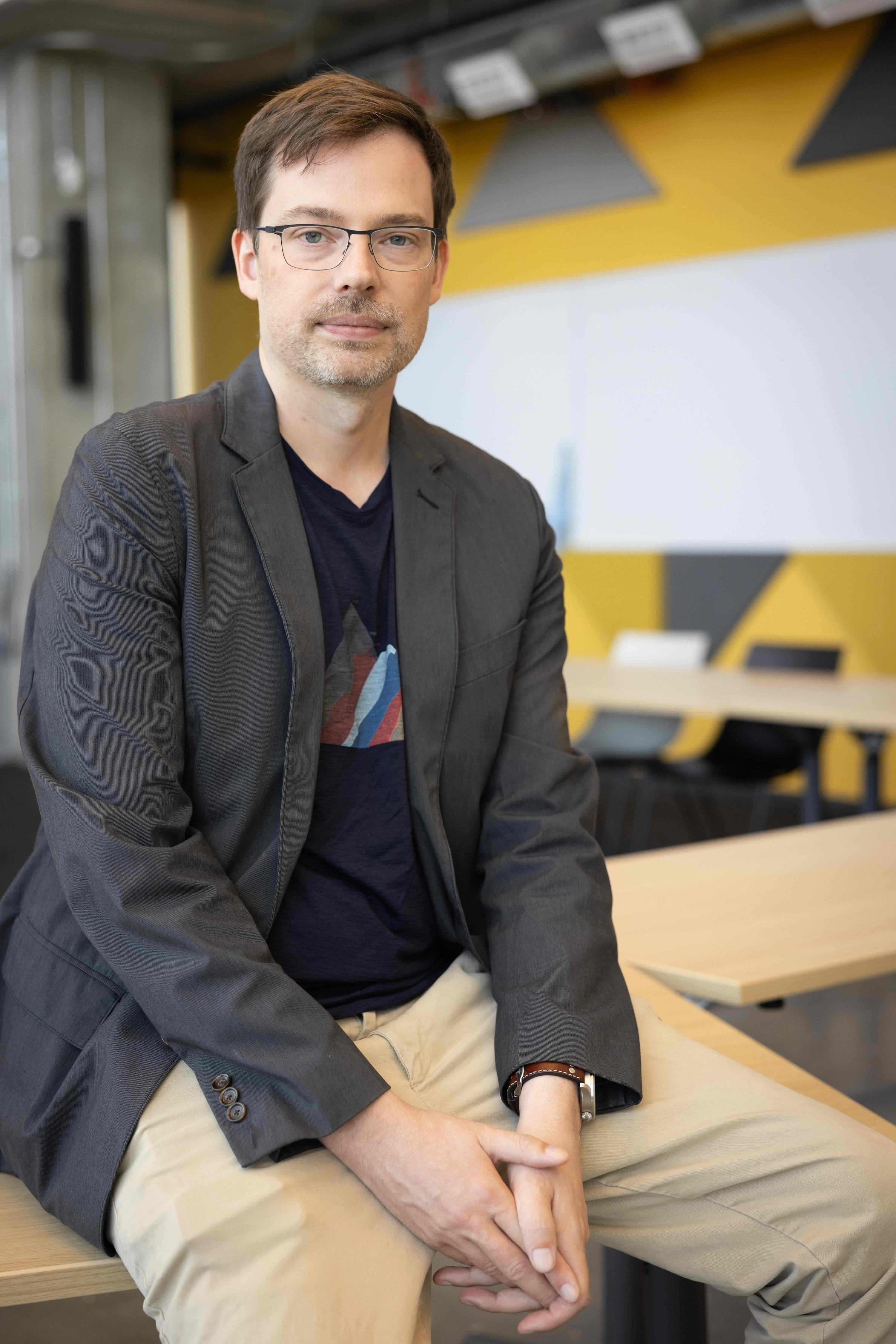
Nicholas Evans is Distinguished Professor of Linguistics and Director of the ARC Centre of Excellence for the Dynamics of Language (CoEDL) at the Australian National University’s School of Culture, History & Language. His work bridges fieldwork-based language documentation with theoretical questions in typology, cultural evolution, and social cognition. Focus on endangered Australian and Papuan languages Director of ARC Laureate Project on 'The Wellsprings of Linguistic Diversity' Co-leader of SCOPIC (Social Cognition Parallax Corpus) study Collaborator in global linguistic diversity initiatives His research explores how micro-level community multilingualism shapes macro-level linguistic diversity, with fieldwork spanning seven years in remote Indigenous communities. Recent projects include PARABANK (paradigm syncretism analysis) and Southern New Guinea language studies, particularly Nen and Yam family languages. Scientific recognition includes the Ken Hale Award (Linguistic Society of America), Anneliese Maier Forschungspreis, and fellowships in the Australian Academy of Humanities, Australian Social Sciences Academy, and the British Academy.
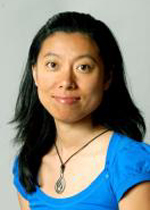
Dawn Song is a Professor in the Department of Electrical Engineering and Computer Science at the University of California, Berkeley, affiliated with multiple research centers including the Berkeley Artificial Intelligence Research Lab (BAIR) and the Berkeley Center for Responsible, Decentralized Intelligence (RDI). She holds leadership roles in AI safety, cybersecurity, and blockchain research. Her work bridges machine learning, security, and distributed systems, with notable contributions to formal verification, privacy-preserving technologies, and AI governance. Education: Ph.D. (2002) and M.S. (1999) in Computer Science from UC Berkeley and Carnegie Mellon University, respectively. She previously served as an Assistant Professor at Carnegie Mellon University before joining UC Berkeley in 2007. Research Interests: Dawn's work focuses on AI safety, cybersecurity, and the ethical implications of frontier AI. She explores topics such as large language model vulnerabilities, zero-knowledge proofs, blockchain security, and policy frameworks for AI governance. Her research combines theoretical rigor with practical applications, addressing challenges in secure systems, adversarial machine learning, and privacy-preserving computation. Publications: Her recent work includes groundbreaking studies on LLM memorization, smart contract decompilation, and AI agent cybersecurity evaluation. She also leads initiatives like the Singapore Consensus and California Report on AI safety priorities, emphasizing global collaboration in risk mitigation. Notable Awards: MacArthur Fellowship (2010), ACM Fellow (2019), IEEE Fellow (2019) Advising & Grants: She advises projects on AI policy and cybersecurity, securing grants from NSF, DARPA, and industry collaborations. Her lab develops tools like CyberGym for evaluating AI agents and zkPyTorch for secure machine learning. Labs & Teams: Her research groups at UC Berkeley focus on cutting-edge projects in AI safety, blockchain, and cybersecurity, collaborating with industry leaders and policymakers to advance both technical and ethical standards.
Prof. Ingmar Posner is a leading figure in applied artificial intelligence at the University of Oxford, where he serves as Principal Investigator for the Applied Artificial Intelligence Lab (A2I) and founding Director of the Oxford Robotics Institute. His work focuses on enabling robots to operate effectively in complex real-world environments through experience-driven learning. Key research areas: robot learning, scene interpretation, data-efficient learning, and transfer learning Applications in manipulation, autonomous driving, logistics, and space exploration His team has produced groundbreaking work in world models, sim-to-real transfer, and constraint-based manipulation systems (e.g., COMBO-Grasp). Notable contributions include the TWIST distillation framework and foundational research in tactile data generation (TactGen). He has received multiple best paper awards at top robotics venues. Publications reveal evolving research themes: 2025 work emphasizes language-conditioned learning (Lumos) and multi-agent decision-making, while 2024 focused on diffusion models for locomotion and differentiable simulators. Earlier work spans from urban scene analysis to physically plausible scene synthesis (RELATE).
Kai-Wei Chang is an Associate Professor at the University of California, Los Angeles (UCLA) in the Department of Computer Science, part of the Henry Samueli School of Engineering. He is also an Amazon Scholar at Alexa AI, focusing on advancing trustworthy AI and multimodal foundation models. His research bridges NLP, machine learning, and ethical AI, with a focus on fairness, robustness, and bias mitigation in language and vision-language systems. Education: Ph.D. in Computer Science (UIUC, 2015), M.S. and B.S. in Computer Science and Electrical Engineering from National Taiwan University. Research Interests: Trustworthy NLP (fairness, robustness), Multimodal Foundation Models (e.g., VisualBERT, GLIP), Reasoning in LLMs, and mitigating societal biases in AI systems. Notable contributions include pioneering work on aligning NLP models with human values and developing SOTA multimodal models like DesCo and GLIP. Awards: Sloan Research Fellowship (2021), Okawa Grant (2018), EMNLP Best Paper (2017), KDD Best Paper (2010). His work is funded by NSF, IARPA, ONR, and industry partners like Amazon, Google, and Facebook. Service: VP-Elect of SIGDAT, Ethics Committee Chair (NAACL 2022), Organizer of Trustworthy NLP Workshops, and Senior Area Chair for top conferences (ACL, NeurIPS, AAAI). Labs/Teams: Leads the UCLA Natural Language Processing Group, fostering interdisciplinary research on ethical AI and multimodal systems.
Christian Theobalt is a Professor of Computer Science at Saarland University and Scientific Director of the Visual Computing and Artificial Intelligence Department at the Max Planck Institute for Informatics . He leads the Saarbruecken Center for Visual Computing as a strategic partnership between Google and MPI. PhD in Computer Science (2005) from MPI-INF/Saarland University Postdoctoral Researcher at MPI (2005-2007) Visiting Assistant Professor at Stanford (2007-2009) His research focuses on the intersection of Computer Graphics, Computer Vision, and Artificial Intelligence , with specializations in: 3D/4D Human Reconstruction Neural Rendering Performance Capture Geometric Deep Learning Volumetric Video Quantum Visual Computing Recent article trends show emphasis on: Quantum computing applications in visual reconstruction Neural rendering with radiance fields Human motion capture from egocentric views Gesture-language interaction modeling Multi-modal scene understanding Real-time free-viewpoint rendering Scientific Awards : Fellow of EUROGRAPHICS (2022) CVPR Best Student Paper Honorable Mention (2020) ERC Consolidator Grant (2017) Karl Heinz Beckurts Award (2017) Busy Beaver Teaching Award (2016) ERC Starting Grant (2013) Advising over 50 students and researchers including: Current researchers: Viktor Rudnev, Linjie Lyu, Mohit Mendiratta Postdocs: Kwang In Kim, Kiran Varanasi Alumni: Franziska Mueller (Google), Dushyant Mehta (Qualcomm), Ayush Tewari (MIT) Grants include ERC grants, Google Glass Research Award, and multiple industry partnerships. His lab maintains cutting-edge facilities with: Multi-camera capture systems Quantum annealing infrastructure HDR radiance field technology GPU clusters for AI research Time-of-flight imaging systems Event camera arrays
Kevin Jamieson is an Associate Professor at the Paul G. Allen School of Computer Science & Engineering and an Adjunct Professor in the Department of Statistics at the University of Washington . His academic journey includes a B.S. (2009) , M.S. (2010) , and Ph.D. (2015) in electrical engineering from the University of Washington, Columbia University, and University of Wisconsin–Madison respectively. He completed a postdoc at UC Berkeley's AMP Lab before joining UW in 2017. Ph.D., Electrical Engineering, University of Wisconsin–Madison (2015) M.S., Electrical Engineering, Columbia University (2010) B.S., Electrical Engineering, University of Washington (2009) Jamieson's research lies at the intersection of interactive machine learning , active learning , and sequential decision making . His work focuses on: Adaptive sampling strategies in multi-armed bandits and reinforcement learning (RL) Developing instance-dependent optimal algorithms that adapt to problem difficulty Applications in robotics , human perception studies , and hyperparameter optimization Representation learning for large models and experimental design frameworks His 15 most recent publications (2025-2022) demonstrate expertise in bandit theory , contextual RL , and game-theoretic learning . Notable trends include sample-efficient optimization , adaptive A/B testing , and sim-to-real transfer in robotics. Jamieson has received: NSF CAREER award for foundational contributions Amazon Faculty Research award for innovation in learning systems He actively recruits graduate students and postdocs , emphasizing collaboration in areas like: Multi-agent RL and strategic actor learning Empirical process suprema and adaptive sampling theory Applications in robotics , large language model finetuning , and biomedical data analysis Jamieson leads the Washington AI Lab (WAIL) and develops open-source learning systems like the NEXT framework for real-world adaptive data collection. He serves as co-PI for the Institute for the Foundations of Data Science (IFDS) and co-organizes the Distinguished Seminar in Optimization & Data .
Fanny Yang is an Assistant Professor in the Computer Science Department at ETH Zurich . She previously held postdoctoral positions at Stanford University and a Junior Fellowship at the Institute for Theoretical Studies at ETH Zurich, advised by Nicolai Meinshausen . Her PhD was completed at the EECS Department of UC Berkeley , supervised by Martin Wainwright . Research Interests : Theoretical foundations of machine learning and statistics , particularly focusing on overparameterized models and high-dimensional data . Developing trustworthy ML models with emphasis on distributional robustness , domain generalization , and interpretability . Applications in medical diagnostics and treatment effect analysis , aiming to address reliability issues in real-world domains. Recent Work Trends : 2025 Articles : Theoretical analysis of semi-supervised multi-objective learning , test-time scaling with verifiers, and foundation models for efficient randomized experiments . 2024 Articles : Studies on robust mixture learning , privacy-preserving data synthesis via optimal transport , confounding quantification in causal inference , and semi-private learning frameworks. 2023 Articles : Investigations into active vs. passive learning in high dimensions, inductive bias in noisy interpolation , and semi-supervised novelty detection using model ensembles .
Nadia Figueroa is the Shalini and Rajeev Misra Presidential Assistant Professor in the Mechanical Engineering and Applied Mechanics (MEAM) Department at the University of Pennsylvania. She holds secondary appointments in Computer and Information Science (CIS) and Electrical and Systems Engineering (ESE), and is a core faculty member at the GRASP Lab. Prior to Penn, she was a Postdoctoral Associate at MIT’s CSAIL and earned her PhD in Robotics from EPFL under Prof. Aude Billard. Her research focuses on physical and perceptual adaptive intelligence for robots, enabling fluid collaboration with humans in dynamic environments. Key applications include robot learning from demonstration , human-robot co-manipulation , safe navigation in human-centric spaces , and rehabilitation robotics . Her work integrates machine learning control theory artificial intelligence biomechanics psychology with guarantees of stability, safety, and robustness . Recent publications highlight advancements in reactive collision avoidance dynamical system learning intent estimation EEG-driven assistive control origami-based reconfigurable robots across platforms like autonomous vehicles and humanoid robots. She has authored a 2022 textbook on dynamical systems for robot control and received the Presidential Assistant Professorship at Penn.
Colin Raffel , currently an Associate Professor at the University of Toronto and Associate Research Director at the Vector Institute , is a leading researcher in machine learning and natural language processing . His career spans roles at Hugging Face (Faculty Researcher), Google Brain (Senior Research Scientist), and UNC Chapel Hill (Assistant Professor). Education: PhD in Electrical Engineering (Columbia), MA in Music/Science (Stanford), BA in Mathematics (Oberlin) Key affiliations: Google Brain (2016-2020), Hugging Face (2021-present), Vector Institute (2023-present) His research focuses on language model development , attention mechanisms , efficient machine learning , and music information retrieval . Recent work explores model merging , parameter-efficient fine-tuning , and data-constrained language models . Teaching : Has instructed courses at University of Toronto and UNC Chapel Hill on Neural Networks , Deep Learning , and Information Theory . Academic service includes organizing ICLR workshops and serving as Senior Area Chair for NeurIPS and EMNLP . Notable awards : NSF CAREER (2022), Caspar Bowden Award (2023), NeurIPS Outstanding Paper (2023) Key contributions : Core developer of WT5 , Git-Theta , and mir_eval software
Elaine Francis is a Professor of English and Linguistics at Purdue University's College of Liberal Arts, where she serves as Associate Head of the Department of English and directs the Experimental Linguistics Lab. She holds additional affiliations as an Affiliate Faculty Member in the Department of Linguistics and a Courtesy Faculty Member in the Department of Speech, Language, and Hearing Sciences. Ph.D. in Linguistics, University of Chicago (1999) B.A. in Linguistics, College of William and Mary (1993) MA in Linguistics, University of Chicago (1995) Former Assistant Professor at the University of Hong Kong (1999-2002) Professor Francis's research focuses on syntax and its interfaces with semantics, discourse information structure, and language processing in production and comprehension. She employs experimental methods to investigate syntactic, semantic, discourse-pragmatic, and cognitive factors underlying complex sentence structures. Her primary research areas include word order alternations, filler-gap dependencies, resumptive pronouns, and grammatical acceptability. She examines how various factors contribute to grammatical alternations in language use and explores how processing pressures in production and comprehension contribute to grammatical conventions. Her recent publication record shows consistent output across multiple linguistic subfields, with a strong emphasis on experimental syntax and psycholinguistics. Her 2022 book, Gradient Acceptability and Linguistic Theory , represents a significant contribution to understanding acceptability judgment tasks in relation to syntactic theory. Her work spans theoretical syntax, experimental linguistics, second language acquisition, and cross-linguistic comparison, often bridging the gap between theoretical frameworks and empirical evidence. Regularly teaches short courses at Linguistic Society of America Linguistic Institutes Member of Linguistic Society of America Ethics Committee Editorial board member of Glossa Psycholinguistics Co-editor of Polymorphous Linguistics: Jim McCawley's Legacy (2005) Co-editor of Mismatch: Form-Function Incongruity and the Architecture of Grammar (2003) Professor Francis actively supervises graduate students in linguistics, though she has indicated she will be unable to take on new graduate students for the 2025-2026 academic year. She has received research support for her experimental work, particularly for investigating syntactic phenomena through controlled experiments and corpus analysis. Her collaborative work extends across multiple institutions and disciplines, including collaborations with researchers in computational linguistics, cognitive science, and clinical linguistics. She directs the Experimental Linguistics Lab at Purdue University, which conducts research on syntactic processing using various experimental methodologies. The lab investigates how speakers produce and comprehend complex sentence structures, with particular attention to how grammatical knowledge interacts with processing constraints. Current projects include research on relative clauses, syntactic islands, and acceptability gradient phenomena across multiple languages.
Paulina Łęska-Bayraktar is an Assistant Professor in the Department of English-Polish Comparative Linguistics at the Faculty of English, Adam Mickiewicz University in Poznań, where she conducts research and teaches in formal syntax and comparative linguistics. Her academic foundation is deeply rooted in the same institution, reflecting a sustained commitment to linguistic scholarship in Poland. Her educational background includes: B.A. in English Linguistics, Adam Mickiewicz University in Poznań (2012) M.A. in English Linguistics, Adam Mickiewicz University in Poznań (2014) Ph.D. in English Linguistics, Adam Mickiewicz University in Poznań (2019) Her research interests lie at the intersection of syntax, semantics, and cognitive grammar, with a strong focus on generative approaches to Slavic languages—particularly Polish. She investigates complex syntactic phenomena such as binding theory, pronoun distribution, quantifier scope, agreement, and the structure of relative and nominal clauses. Her work combines formal theoretical analysis with empirical data, often drawing on acceptability judgments and psycholinguistic methodologies. The trends in her recent publications reveal a sustained engagement with the syntax of Polish, especially in non-canonical constructions involving dative arguments, experiencers, and pronominal clusters. Her work contributes significantly to the understanding of how universal syntactic principles manifest in Slavic morphosyntax, and she frequently collaborates with leading scholars like Prof. Jacek Witkoś. She has received research funding from the Polish National Science Center through multiple grants, including OPUS, Beethoven, and Miniatura projects, which have supported her investigations into nominal expressions, pronouns, and anaphora in Polish. These grants underscore the national recognition of her research contributions. Paulina Łęska-Bayraktar actively participates in the international linguistics community, presenting her work at major conferences such as Formal Approaches to Slavic Linguistics (FASL), Formal Description of Slavic Languages (FDSL), and the Poznań Linguistic Meeting. She is also involved in collaborative research teams and has co-authored works with scholars from Humboldt-Universität zu Berlin and other institutions. Her academic presence is further strengthened by her profiles on ORCID and ResearchGate.
Pascal Frossard is a Full Professor at the Department of Electrical Engineering in the School of Engineering (STI) at EPFL, with a courtesy appointment in the School of Computer and Communication Sciences. He founded and directs the LTS4 laboratory since 2003, co-leads the EPFL AI Center and Swiss Data Science Center, and serves as Associate Dean for Research at STI. Research Focus: Machine Learning, Graph Signal Processing, AI Applications in Healthcare, Computer Vision Academic Leadership: IEEE Fellow, ELLIS Fellow, Conference Chair roles Key Projects: Digital Pathology for Oncology, Cardiac Digital Twins, Robust Machine Learning Research Interests: His work bridges signal processing, machine learning, and applied mathematics, emphasizing biomedical applications. Recent research includes adversarial robustness in classifiers, network representation learning, and 360-degree video analysis. Scientific Awards: IEEE Fellow ELLIS Fellow Leadership in IEEE technical committees Advising & Grants: Supervised 20+ PhD students and postdocs. Secured major grants from PHRT, Hasler Foundation, FNS-Sinergia, Armasuisse, Google, and Cisco.
Adriana Kovashka is an Associate Professor at the University of Pittsburgh , affiliated with the School of Computing and Information and serving as Department Chair . Her academic journey began with BA degrees in Computer Science and Media Studies from Pomona College (2008) and a PhD in Computer Science from The University of Texas at Austin (2014). Joined Pitt’s faculty in January 2015 NSF CAREER awardee (2021) Google Faculty Research Award recipient Dr. Kovashka’s research spans Computer Vision , Machine Learning , and Natural Language Processing , focusing on visual rhetoric, weak multimodal supervision, and domain adaptation. She pioneered techniques for analyzing political imagery, developing robust object detection frameworks, and exploring the intersection of visual and textual persuasion through large-scale annotated datasets. Her recent work emphasizes geographic diversity in vision-language systems, audio-visual fusion for domain generalization, and shape-texture bias mitigation in CNNs. Key publications include groundbreaking studies on symbolic reasoning, multimodal dialogue systems, and ethical AI applications in education. Scientific honors include: NSF CRII Award (2016) NSF CAREER Award (2021) Pitt CRDF Award (2016, 2018) Best Paper at ECV Workshop (2021) Google Faculty Research Award (2016, 2018) Dr. Kovashka actively mentors students in multimodal learning projects and collaborates with interdisciplinary teams on NSF-funded initiatives. She co-organizes workshops like the first CVPR workshop on advertisement understanding and leads research groups exploring human-AI co-learning systems.
Alan Ritter is an Associate Professor at the School of Interactive Computing , Georgia Institute of Technology, with additional affiliation to the Machine Learning Center . His research focuses on Natural Language Processing , particularly robust models across domains/languages with fewer labels and efficient resource use, plus data-driven dialogue agents for open-topic conversations. Research Interests : Robust NLP models, cross-lingual transfer, resource-efficient learning, dialogue systems, cultural bias measurement, and privacy-aware language models Students : Mentors Ph.D. students in Georgia Tech's ML and CS programs, including Junmo Kang, Yang Chen, and Duong Minh Le. Alumni include Fan Bai (Ph.D. 2023), Yang Chen (Ph.D. 2024), and Andrew Li (M.S. 2024). Awards : NSF CAREER Award, Amazon Research Award, ACL 2024 Best Social Impact Paper, IUI 2009 Best Student Paper. Recent Work : Studies training budget allocation between supervised and preference-based finetuning, cross-lingual information extraction, cultural bias in LLMs, and privacy risk mitigation in social media disclosures. Service : Served as Program Chair for NAACL 2025, Area Chair for multiple top-tier conferences (COLM, EMNLP, ACL, EACL, AAAI). Email : alan.ritter@cc.gatech.edu
Maria Gouskova is a Professor of Linguistics at the Department of Linguistics, New York University (NYU). She is affiliated with the College of Arts and Science and holds editorial roles as an Associate Editor of Language and board member of NLLT and Phonology . Her research focuses on phonology, morphology, and lexicon, with a particular emphasis on morphophonological interactions, sublexicons, and phonotactic constraints. She earned her Ph.D. in Linguistics from the University of Massachusetts, Amherst (2003) and a B.A. in English Linguistics and German Language/Literature from Eastern Michigan University (1998). Her work bridges theoretical phonology and experimental methods, addressing questions such as how phonological patterns interact with morphology, the role of sublexical phonotactics in grammatical processes, and the learnability of complex segmental inventories. Recent research includes studies on Russian diminutive affixes, gradient phonological constraints, and the phonological properties of compounds. Her publications span topics like allomorphy, lexical phonology, and the typology of morpheme structure constraints. She frequently collaborates on projects investigating the interplay between syntax, phonology, and morphology, as seen in studies of Russian prepositions and compound stress patterns. Her contributions to phonological theory include advancing models of sublexicon theory and nonlocal constraint induction.