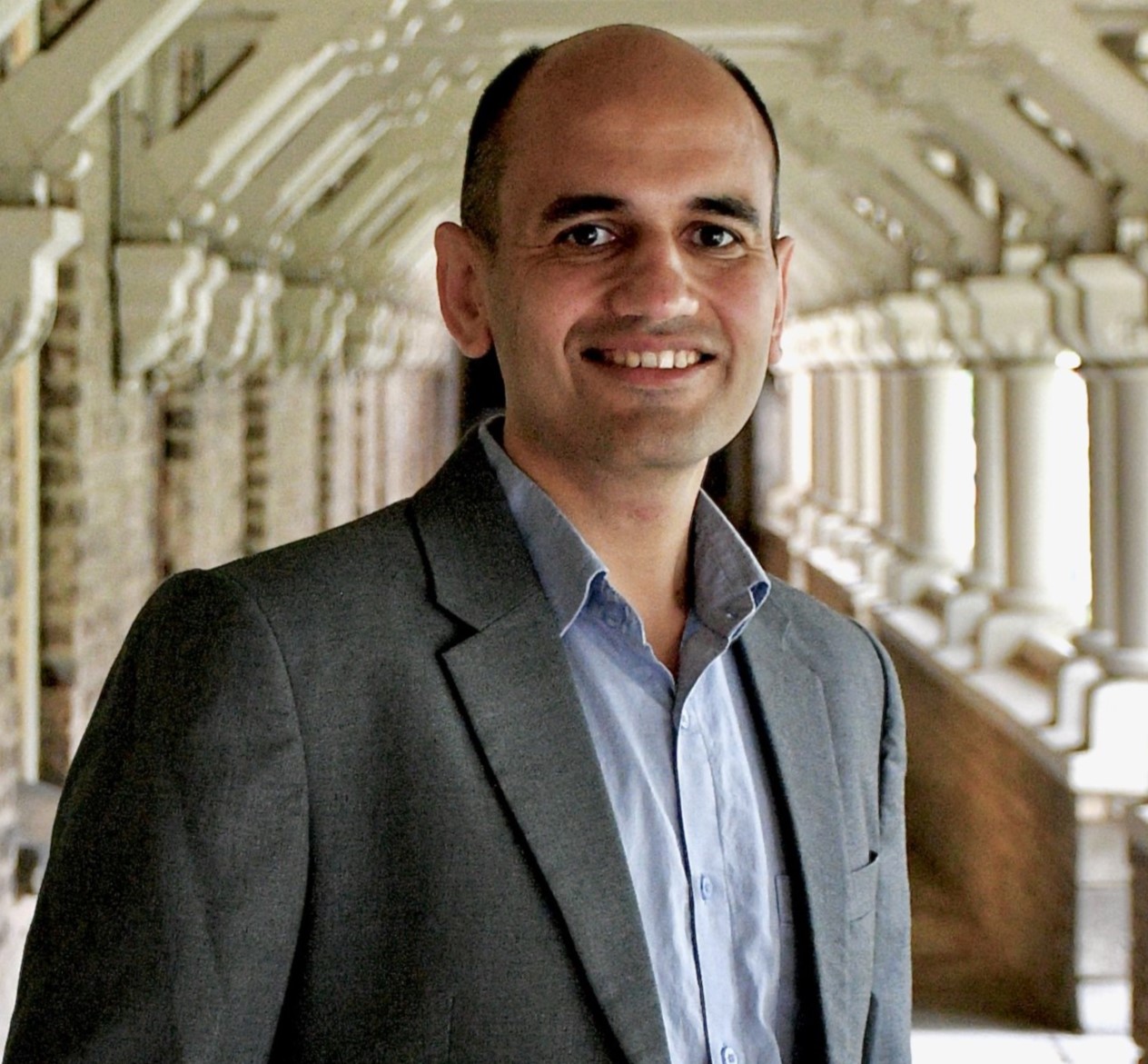
Kuldeep S. Meel is the Stephen Fleming Early-Career Associate Professor at the School of Computer Science, Georgia Institute of Technology, and an Associate Professor at the University of Toronto (on leave). He previously held a NUS Presidential Young Professorship at the National University of Singapore. His research focuses on automated reasoning, aiming to enable computing systems to handle uncertain real-world environments through scalable techniques integrating randomized algorithms, statistical inference, formal methods, distribution testing, and software engineering. Core research areas: Automated Reasoning, Formal Methods, Approximate Model Counting, Probabilistic Inference, Constraint Solving His research group has achieved significant recognition in both individual awards and publications. Key trends in his recent work include advancing model counting algorithms, developing frameworks for probabilistic explanations, and improving scalability in formal verification and constraint satisfaction. His tools have consistently ranked top in international competitions, demonstrating practical impact in automated reasoning. 2019 NRF Fellowship for AI 2022 ACP Early Career Researcher Award 2020 IEEE Intelligent Systems AI's 10 to Watch Top placements in Model Counting, SAT, and CAV competitions He mentors a diverse group of PhD and Master's students and collaborates with institutions worldwide. His group's publications span premier conferences in AI, formal methods, and design automation, reflecting interdisciplinary contributions to theoretical and applied computer science.
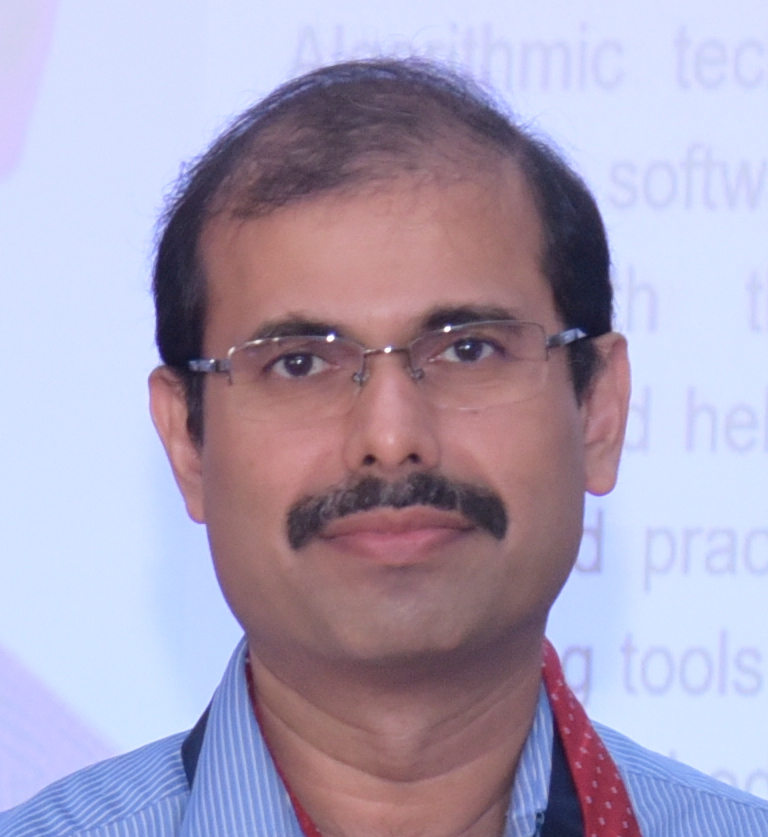
Supratik Chakraborty serves as the Bajaj Group Chair Professor in the Department of Computer Science and Engineering at Indian Institute of Technology Bombay. He maintains dual affiliations with the Centre for Formal Design and Verification of Software and the Centre for Liberal Education at IIT Bombay, demonstrating his cross-disciplinary engagement. Professor Chakraborty's research spans formal methods with focus on formal verification, rigorous analysis of system models, and automated synthesis of systems from specifications. His work bridges theoretical foundations with practical applications, particularly in developing mathematically provable guarantees for increasingly complex hardware, software, and intelligent systems. Current research interests include constrained counting and sampling, scalable formal verification of software and hardware systems, automated synthesis of programs and circuits, and applications of automata, logic and finite model theory to practical verification challenges. His publication trajectory shows a significant evolution from traditional hardware and software verification toward addressing verification challenges in machine learning and AI systems. Recent work increasingly focuses on interpretability of black-box models, verification of neural networks, and synthesis techniques applicable to intelligent systems. The research demonstrates strong interdisciplinary connections between formal methods, programming languages, and artificial intelligence. IIT Bombay Excellence in Thesis (CSE) Award 2011 (for Bhargav Gulavani's thesis) IIT Bombay Excellence in Thesis (CSE) Award 2017 (for Abhisekh Sankaran's thesis) Best Paper in Algorithms and Architecture track at IEEE International Conference on Computer Design: VLSI in Computers and Processors, 1998 Professor Chakraborty has successfully supervised 11 doctoral students, with research spanning formal verification techniques, Boolean functional synthesis, constrained counting, and applications to hardware and software systems. His students have gone on to positions at major institutions including Microsoft Research, TCS Research, Georgia Tech, and BARC, reflecting the strong industry and academic impact of his mentorship. Current research directions show increasing emphasis on verification challenges posed by machine learning systems and AI. His research group at IIT Bombay, while not explicitly named in the materials, appears to focus on formal methods with strong connections to the Centre for Formal Design and Verification of Software. The group maintains active collaborations with international researchers including Moshe Y. Vardi at Rice University, and has made significant contributions to verification tools like VeriAbs that bridge theoretical advances with practical applications.
Habib Ullah is an Associate Professor in Data Science at the Norwegian University of Life Sciences (NMBU), Norway, where he conducts research at the intersection of computer vision and machine learning. He is affiliated with the Institute of Data Science under the Faculty of Science and Technology. He has previously held academic positions at COMSATS University Islamabad, Pakistan, and the University of Ha'il, Saudi Arabia, and served as a postdoctoral researcher at The Arctic University of Norway. Educational Background: PhD in Information and Communication Technology (Computer Vision), University of Trento, Italy (2011–2015) MSc in Electronics and Computer Engineering, Hanyang University, South Korea (2007–2009) BSc in Computer Systems Engineering, NWFP University of Engineering and Technology, Pakistan (2002–2006) Habib Ullah's research is primarily focused on computer vision and machine learning, with applications in aquaculture, agriculture, and human behavior analysis. He investigates underwater fish feeding sounds using audio classification, develops zero-shot learning models for recognizing unseen classes, and applies deep learning to detect stress in salmon via skin dot patterns. He also explores AI-driven controlled environment agriculture, leveraging sensors and automation for optimal crop growth. His work emphasizes practical AI solutions for real-world challenges in environmental and biological domains. The recent publications highlight a strong trend in leveraging deep learning for zero-shot and semi-supervised learning, particularly in computer vision tasks such as sea ice classification, crowd anomaly detection, and agricultural monitoring. His research spans remote sensing, biomedical signal processing, and human activity recognition, demonstrating interdisciplinary versatility. The keywords reflect a focus on robust feature representation, knowledge transfer, and model generalization. Scientific Awards and Funding: Industrial PhD grant 'Advancing Controlled Environment Agriculture AI' from The Research Council of Norway (Project number 354125, 2 million NOK, 2024) Team member (Coordinator-Participant) in the Battery Cell Assembly Twin (BatCAT) project funded by Horizon Europe (7 mEuro, 2023–2027) Development of an AI-Based Image Analysis System for Monitoring Plant Status (Funding: 1.8 mNOK, starting 2025) Habib Ullah actively supervises PhD projects and contributes to academic service through editorial and organizational roles. He has served as an Associate Editor for IEEE Access, Guest Editor for MDPI Remote Sensing, and Editor of the Springer book Machine Learning Techniques and Sensor Applications for Human Emotion, Activity Recognition, and Support (ML-SHEARS) . He has also been a Track Chair and Program Committee Member for several international conferences, reflecting his leadership in the academic community. His research is supported by significant grants and collaborative projects, indicating strong institutional and international engagement. He is involved in multiple research teams and projects, including the BatCAT project on battery manufacturing and AI applications in controlled environment agriculture with RIFT LABS AS. His lab work integrates deep learning, sensor fusion, and data analytics for environmental and biological monitoring systems.
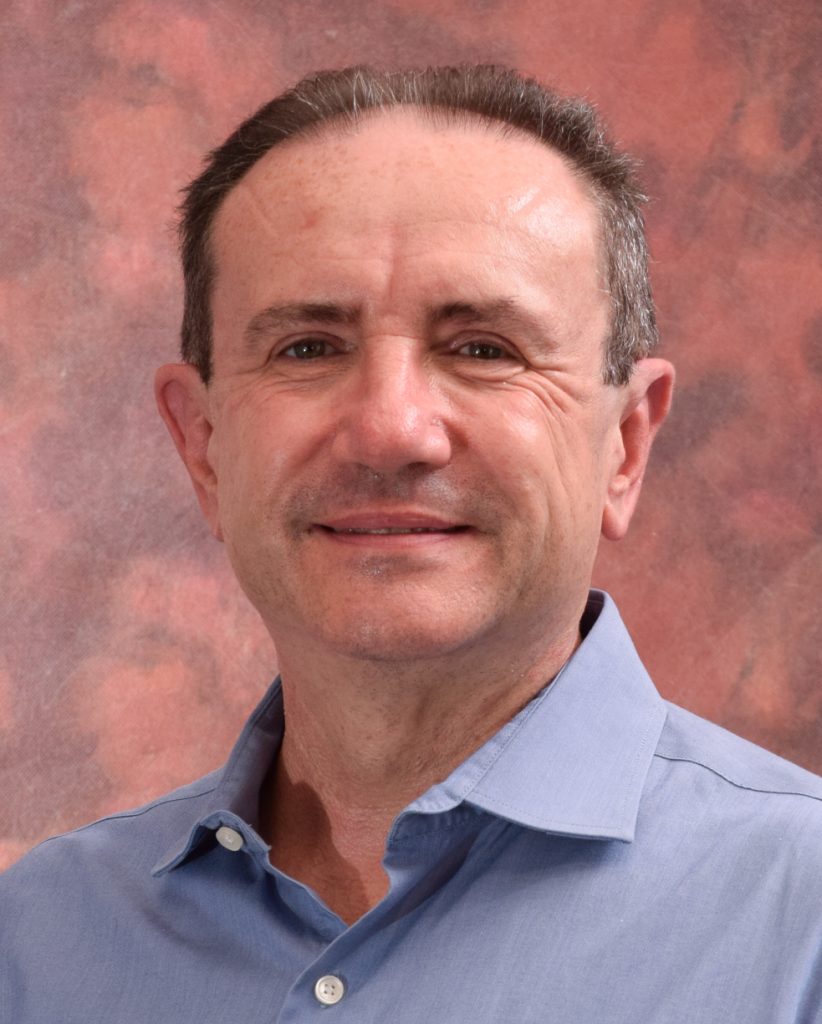
Professor Alessandra Russo leads the Structured and Probabilistic Knowledge Engineering (SPIKE) research group at Imperial College London's Department of Computing. With expertise spanning computational logic, symbolic machine learning, and neuro-symbolic AI, she develops foundational AI techniques applied to security, network management, healthcare, and adaptive systems. Professor Russo holds a PhD in Computing from Imperial College London and an MSc in Computer Science from Ionian University. Her research pioneers logic-based learning systems for intelligent adaptive technologies, with projects including declarative networking for security management, privacy-preserving federated learning, and hybrid neuro-symbolic approaches for robust reasoning. Her current work focuses on developing interpretable AI systems through neuro-symbolic integration, creating frameworks that combine neural networks with symbolic reasoning for explainable decision-making. Recent publications explore rule learning from knowledge graphs, transformer-based world models, and formal methods for representation learning. Professor Russo teaches courses on Logic-Based Learning and AI Applications, and has received the Google PhD Fellowship for her research contributions. She mentors numerous PhD students in areas spanning theoretical foundations and practical applications of computational logic and machine learning.
Bo Xiong is a researcher at the University of Stuttgart in the Analytic Computing group. His research focuses on machine learning and knowledge graphs , with a particular emphasis on geometric embeddings and hyperbolic neural networks. His research interests include: Knowledge graph embeddings Hyperbolic and pseudo-Riemannian geometry in AI Temporal knowledge graph reasoning Structured multi-label prediction Recent publications highlight his work on geometric relational embeddings, complex query answering, and temporal fact reasoning using advanced manifold-based techniques.
Hans Tompits is an Associate Professor in the Department of Knowledge-Based Systems at Technische Universität Wien (Vienna University of Technology). His research focuses on computational logic, declarative logic programming, and formal methods, with a particular emphasis on Answer-Set Programming (ASP). He coordinates the Master's program in Logic and Computation and leads projects in areas such as formal methods for optimization, fault-tolerant autonomous systems, and algorithmic composition. His work bridges theoretical advancements with practical applications, including tools like SeaLion (an ASP IDE with debugging support) and dlvhex (an ASP-based semantic web reasoner). He has contributed to foundational topics like program equivalence, debugging techniques, and integration of ASP with external systems. His recent projects address challenges in autonomous vehicle architectures, music composition algorithms, and safety-critical system design. Tompits has published extensively on topics ranging from nonmonotonic reasoning and modal logics to the development of declarative programming tools. His interdisciplinary approach spans computer science, mathematics, and AI, with applications in both academic and industrial contexts.
Nelson Nicolas Higuera Ruiz is a PreDoc Researcher at the Vienna University of Technology, affiliated with the Faculty of Informatics' Knowledge-Based Systems research group. His work bridges logic programming and deep learning for explainable AI. Research Focus: Neurosymbolic AI, Visual Question Answering (VQA), Answer Set Programming (ASP), and hybrid reasoning systems Projects: Leads optimization research in the LCS (2017–2025) project, developing neurosymbolic approaches for intelligent systems Key Contributions: Pioneering adaptive large-neighbourhood search algorithms for ASP optimization, modular neurosymbolic architectures, and contrastive explainability frameworks for VQA Collaborations: Active in international workshops and conferences including IJCAI, AAAI, and CLeaR, frequently collaborating with researchers like Thomas Eiter and Johannes Oetsch Publications: Focus on neurosymbolic integration, optimization algorithms, and explainability across AI, logic programming, and computer vision domains
Fabrizio Riguzzi is a Full Professor at the Department of Mathematics and Computer Science of the University of Ferrara, Italy. His academic career spans over two decades at the same institution, having served as Associate Professor (2014-2020) and Assistant Professor/Ricercatore (1999-2014). He is an active researcher in the fields of Logic Programming and Statistical Relational Artificial Intelligence with numerous publications and leadership roles in international conferences. His educational background includes: PhD in Electronic and Computer Engineering from the University of Bologna (1999) Laurea in Computer Engineering from the University of Bologna (1995) Riguzzi's research focuses on probabilistic approaches to artificial intelligence, particularly probabilistic logic programming and statistical relational AI. His work bridges symbolic reasoning with probabilistic methods, developing frameworks for uncertain knowledge representation and reasoning. He has made significant contributions to probabilistic answer set programming, neuro-symbolic integration, and applications in areas like network intrusion detection and knowledge graph completion. His research demonstrates how logical formalisms can be enhanced with probabilistic reasoning to tackle real-world problems with uncertainty. An analysis of his recent publications reveals a strong trend toward integrating neural and symbolic approaches in AI, with significant work on probabilistic answer set programming frameworks. His research spans theoretical foundations of probabilistic logic programming, practical implementations, and applications in cybersecurity, knowledge graphs, and decision-making under uncertainty. The interdisciplinary nature of his work connects computer science theory with practical AI applications. His notable awards include: Alain Colmerauer 10-Year Test-of-Time Award at ICLP 2021 Best Paper Award for "BUNDLE: A Reasoner for Probabilistic Ontologies" at RR-2013 Highly Commended Paper Award for "Probabilistic declarative process mining" at KSEM 2010 Riguzzi has supervised several PhD students to completion, including Elena Bellodi, Riccardo Zese, and Giuseppe Cota, who have gone on to win prestigious awards for their theses. He has served in numerous editorial roles, including Associate Editor of the Journal of Artificial Intelligence Research and Editor in Chief of Intelligenza Artificiale. His leadership extends to organizing major conferences like ILP 2018 and serving on program committees for top AI venues including IJCAI, AAAI, and ECAI. He is a member of the ML@unife research group and has developed several online systems including cplint, TRILL, and an Online AUC calculator. His work has fostered collaborations across the AI research community, particularly in the areas of probabilistic logic programming and neuro-symbolic AI.
Parke Godfrey is an Associate Professor in the Department of Electrical Engineering & Computer Science at York University. His research focuses on databases, data mining, and artificial intelligence, particularly cooperative query answering, skyline queries, and logic-based query optimization. PhD in Computer Science from University of Maryland, College Park (1999) MS in Information and Computer Science from Georgia Institute of Technology BS in Mathematical Sciences from University of North Carolina at Chapel Hill His current research endeavors include: SPQL (Skyline-based Preference Query Language) for extending SQL Understanding properties of skyline sets Relational algorithms for skyline computation Pareto Search for effective web search Optimizing RDBMS for data mining and scientific applications He has affiliations with: Laboratory for Computer Systems Research at York University IBM Visiting Research Scientist at IBM Toronto Laboratory
Axel Polleres is a full professor at the Institute for Data, Process and Knowledge Management in Vienna University of Economics and Business (WU Wien). He leads the department of Information Systems and Operations Management while maintaining active research in knowledge graphs, semantic web technologies, and ontology engineering. PhD and Habilitation from Vienna University of Technology Former positions at University of Innsbruck, Universidad Rey Juan Carlos, DERI Ireland, and Siemens AG Co-chair of W3C SPARQL working group Editorial board member for Semantic Web Journal and IJSWIS His research focuses on: Querying and reasoning over ontologies Graph schema languages (SHACL, SPARQL) Wikidata constraint formalization Ontology reuse in collaborative platforms Crisis management knowledge graphs FAIR data principles implementation Recent publications analyze knowledge graph evolution, constraint validation methodologies, and semantic web standardization efforts. Key topics include: OWL/RDF interoperability solutions Unit conversion systems for Wikidata Partition-based query processing frameworks Network resilience analysis for urban planning Open data platform discovery tools Temporal analysis of collaborative knowledge graphs He has co-organized major conferences like ISWC2023 and ESWC workshops while maintaining active roles in European research projects. Current work involves spatiotemporal knowledge graphs for city resilience and semantic web infrastructure development.
Gerhard Friedrich is a Full Professor at the University of Klagenfurt, leading the Institute for Artificial Intelligence and Cybersecurity. He previously served as Dean of the Faculty of Technical Sciences (2013–2021). His roles include Coordinator for International Relations of the Faculty of Engineering and Member of the Faculty Conference of Technical Sciences. He holds a PhD in Computer Science from Vienna University of Technology and has extensive industry experience, including heading departments at Siemens Austria and research roles at Siemens Corporate Research and Stanford Research Institute. Research focuses on knowledge-based systems, recommender systems, configuration and planning, and production informatics. His work bridges theoretical AI with practical applications in manufacturing, software development, and business processes. He has authored a book on recommender systems (translated into Japanese and Chinese) and contributed to prestigious journals like Artificial Intelligence and IEEE Transactions . He has organized major conferences such as the German Conference on Artificial Intelligence (2016) and served as editor and program committee member for leading venues. His awards include Fellowships from the European and Asia-Pacific AI Associations (2012, 2023). His advising and grants include leadership in applied AI projects and international collaborations. He directs the Intelligent Systems and Business Informatics research group, emphasizing interdisciplinary innovation.
Bart Bogaerts is an Associate Professor in the Department of Computer Science at KU Leuven's Faculty of Engineering Science. He is affiliated with the Declarative Languages and Artificial Intelligence (DTAI) research unit and is a member of Leuven.AI - KU Leuven Institute for Artificial Intelligence. Bogaerts serves on the Council of the Faculty of Engineering Science as senior academic staff and participates in the Programme Committee for Artificial Intelligence curriculum development. His research focuses on foundational aspects of logic programming and knowledge representation, with particular expertise in approximation fixpoint theory, higher-order logic programming, and non-monotonic reasoning. Bogaerts investigates the theoretical underpinnings of stable model semantics, justification frameworks, and executable query languages. His work bridges theoretical computer science with practical applications in artificial intelligence and knowledge-based systems. Bogaerts' publication record demonstrates consistent contributions to top venues in logic programming and artificial intelligence. His recent work shows increasing focus on category-theoretic approaches to approximation theory, distributed web traversal specifications, and certified model expansion techniques. The publications reveal a strong emphasis on formal methods with applications spanning from theoretical mathematics to practical AI systems. As a promotor for multiple significant research projects, Bogaerts leads investigations into certified answer set programming (CertifASP), first-order model expansion (CertiFOX), proof generation for combinatorial optimization, distributed configuration problems, and knowledge integration paradigms. These projects, funded through 2028-2029, demonstrate his leadership in advancing the theoretical foundations of AI and logic programming. Bogaerts is actively involved in teaching courses on knowledge representation and reasoning, contributing to the development of next-generation AI researchers. His work within the DTAI research unit positions him at the forefront of declarative AI approaches in Belgium's leading research university.
Torsten Schaub is a Professor at the Institute of Computer Science , University of Potsdam. His research focuses on Answer Set Programming (ASP) , constraint solving, temporal reasoning, and combinatorial optimization, with applications in multi-agent pathfinding, product configuration, and course timetabling. Key contributions include ASP-based tools for industrial-scale optimization problems, metric temporal logic implementations, and frameworks for dynamic equilibrium logic. Recent work explores efficient design space exploration, stream reasoning, and multi-shot ASP solving for complex domains. His publications emphasize hybrid ASP systems , integrating constraints and temporal logic, with co-authors across Europe and Asia. He actively develops tools like clingo and Clingraph for practical ASP applications in logistics, bioinformatics, and robotics. The articles reveal a trend toward multi-agent systems (e.g., pathfinding algorithms) and temporal extensions in ASP, combining formal logic with real-world problem-solving. Sub-fields include constraint satisfaction, logical abduction, and declarative modeling for optimization tasks.
Dr. Jorge Fandinno is an Assistant Professor of Computer Science at the University of Nebraska at Omaha since 2020. His academic journey includes an Alexander von Humboldt Fellowship at the University of Potsdam (Germany) and a Postdoctoral Fellowship at the Toulouse Institute of Computer Science Research (France). He earned his Ph.D. in Computer Science from the University of Corunna (Spain) in 2015. Current Role: Assistant Professor, Computer Science Department, University of Nebraska at Omaha (2020–present) Previous Roles: Alexander von Humboldt Fellow (University of Potsdam, Germany), Postdoctoral Fellow (Toulouse Institute of Computer Science Research, France) Dr. Fandinno’s research focuses on Artificial Intelligence , particularly in Knowledge Representation and Reasoning , Answer Set Programming , and Epistemic Logic . His work bridges theoretical and practical aspects, including the development of formal semantics, deductive systems, and applications in causal reasoning and constraint handling. Recent publications emphasize automated reasoning, strong equivalence verification, and integrating quantitative information into logic programming frameworks. His scholarly output includes over 60 publications in prestigious venues such as Artificial Intelligence , Journal of Artificial Intelligence Research , and conferences like AAAI, IJCAI, and LPNMR. He has received three best technical paper awards at LPNMR (2015, 2017, 2019) and mentored students who won best student papers at JELIA and ICLP. Notably, he secured a NSF CAREER award (2024) for his project on Answer Set Programming for Quantitative Information. Scientific Awards: NSF CAREER award (2024) Best technical paper, LPNMR 2015 Best technical paper, LPNMR 2017 Best technical paper, LPNMR 2019 Best student paper, JELIA 2019 (supervised student) Best student paper, ICLP 2020 (supervised student) Dr. Fandinno’s publications span theoretical advancements in logic programming, epistemic reasoning, and practical applications in causal analysis and constraint satisfaction. His recent work explores automated reasoning tools (e.g., Anthem 2.0 ), recursive aggregates, and complexity assessments in ASP.
Mario Alviano is a Full Professor in Computer Science (INF/01) at the University of Calabria, Department of Mathematics and Computer Science. He leads the LAIA lab (Laboratorio di Applicazioni dell'Intelligenza Artificiale) and serves as co-PI in the PRIN project PRODE ('Probabilistic Declarative Process Mining'). Current projects: FAIR ('Future AI Research'), Tech4You ('Technologies for climate change adaptation'), SERICS ('SEcurity and RIghts in the CyberSpace'), CAL.HUB.RIA , RADIOAMICA , and STROKE 5.0 His research focuses on Answer Set Programming (ASP), particularly in optimization, nonmonotonic reasoning, and applications to logistics, healthcare, and cybersecurity. He has authored over 120 publications in top venues like AIJ, AAAI, and IJCAI. Recent academic contributions includes work on: Temporal Many-valued Conditional Logics Weighted Knowledge Bases with Typicality Explainable AI via xASP and ASP Chef Defeasible Reasoning Scalability Notable awards: Artificial Intelligence Award 'Marco Somalvico' (2017) ICLP Best Paper Awards (2015, 2016) LPNMR Best Paper Award (2022) CILC Best Paper Award (2023)