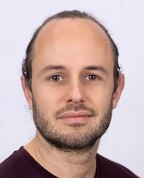
Prof. Nysret Musliu is an Associate Professor at TU Wien's Department of Databases and Artificial Intelligence within the Faculty of Informatics. His primary affiliation is with the E192-02 research area, focusing on optimization, scheduling, and AI applications. He leads projects like 'Artificial Intelligence in Employee Scheduling' and 'Predictive Analytics for Emergency Call Infrastructure,' demonstrating expertise in combinatorial optimization and real-world problem-solving. Academic Rank: Associate Professor Institution: TU Wien Key Projects: AI-driven scheduling, constraint programming, metaheuristics Research interests include scheduling algorithms, constraint programming, and hybrid optimization methods. His work bridges theoretical advancements with industrial applications, addressing challenges in manufacturing, healthcare, and transportation. Recent publications emphasize hyper-heuristics, large neighborhood search, and AI integration for complex scheduling problems. Notable contributions include systematizing test laboratory scheduling and developing exact methods for oven scheduling. His research group collaborates on projects involving personnel scheduling, production leveling, and parallel machine optimization.
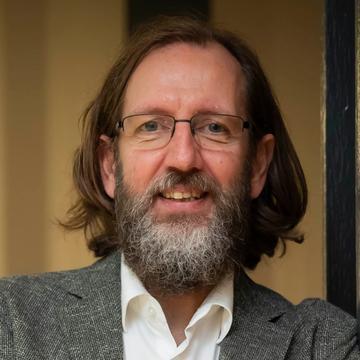
Thomas Eiter is a Professor at TU Wien's Institute of Logic and Computation. His research focuses on declarative programming paradigms, knowledge representation, and artificial intelligence. He leads projects in neurosymbolic systems, answer set programming (ASP), and stream reasoning, with applications in visual question answering, scheduling optimization, and semantic scene generation. Eiter has contributed to foundational work in ASP semantics, computational complexity, and hybrid reasoning frameworks. His work bridges logical formalisms with practical AI challenges, emphasizing explainability and scalability. Projects like ALASPO and neurosymbolic integration showcase his focus on advancing both theoretical and applied aspects of AI. Projects: HumanE AI Network, WASP, REWERSE Research Themes: Neurosymbolic AI, Answer Set Programming, Stream Reasoning Notable achievements include pioneering work on semiring-based reasoning frameworks and developing efficient ASP solvers like Alpha. His contributions span over 471 publications, emphasizing interdisciplinary applications in computer vision, robotics, and automated planning.
Johannes Oetsch is a researcher at TU Wien's Forschungsbereich Knowledge Based Systems within the Faculty of Informatics. His work focuses on Answer Set Programming (ASP) , neuro-symbolic computing , and visual question answering systems . He holds a Diplom-Ingenieur (Dipl.-Ing.) and a Doctor of Technical Sciences (Dr.techn.) in informatics. Key research areas include: Integration of large language models with symbolic reasoning frameworks Optimization techniques in ASP for scheduling problems Explainability mechanisms for neuro-symbolic systems Recent work emphasizes visual question answering using graph-based representations and contrastive explanation methods. He has contributed to the development of ALASPO , an adaptive optimization framework for ASP solvers. His research also explores applications in manufacturing scheduling and automated testing of logic programs. Notable contributions include: Neuro-symbolic pipelines combining ASP with vision-language models Lexicographical makespan optimization in parallel machine scheduling Large-neighbourhood search strategies for ASP-based optimization
Dr. Sarah Alice Gaggl is a Researcher at the International Center for Computational Logic (ICCL) within the Technische Universität Dresden , where she has served as Group Leader for Logical Programming and Argumentation since October 2020. She also leads the BMBF-funded project NAVAS - Navigation in the Solution Space of Answer Sets and was a Principal Investigator in the Collaborative Research Center 248 (CPEC) from 2019 to 2022. Her research centers on Abstract Argumentation , Answer Set Programming (ASP) , and Knowledge Representation . Doctorate in Computer Science, Vienna University of Technology, March 2013 Her work bridges Answer Set Programming with practical applications in Knowledge Representation and Nonmonotonic Reasoning , focusing on navigation in plan spaces, efficient algorithms for ASP, and multi-criteria answer set selection. She has supervised numerous theses on topics like Multi-Shot ASP , Abstract Argumentation Frameworks , and Reinforcement Learning in game environments. Recent publications highlight trends in Answer Set Navigation (e.g., PlanPilot , IASCAR ), Algorithm Refinement (e.g., Winning Snake ), and Rule-Based Argumentation (e.g., Grounding Rule-Based Argumentation ). Her contributions span Computational Logic , Automated Reasoning , and Software Systems . She has held editorial and organizational roles for journals and conferences, including the Argument & Computation journal, KR , IJCAI , and ICLP . Dr. Gaggl leads the Logical Programming and Argumentation group and has been affiliated with the Computational Logic Group at TU Dresden since 2013. Her teaching includes courses like Theoretical Computer Science & Logic and Advanced Problem Solving .
Mauro Vallati is a Full Professor of Artificial Intelligence at the Department of Computer Science, School of Computing and Engineering, University of Huddersfield. He is also the Director of the Centre for Autonomous and Intelligent Systems and holds leadership roles in several AI-focused research centres, including the Centre for Planning, Autonomy and Representation of Knowledge and the Centre of Artificial Intelligence for Mental Health. Additionally, he is a member of the Sustainable Living Research Centre. Vallati is currently accepting PhD students and is an active researcher with over 200 publications. His research expertise lies in Artificial Intelligence, with a strong focus on Automated Planning and Argumentation. He applies these techniques to real-world problems, particularly in Urban Traffic and Mobility, which is the central theme of his UKRI Future Leaders Fellowship. He also explores innovative applications of AI in Medicine and Computational Creativity. His work aligns with UN Sustainable Development Goals, especially in sustainable cities and communities. The recent articles highlight a consistent trend in applying AI and planning techniques to urban mobility challenges, including traffic signal optimization, autonomous vehicle routing, and passenger demand prediction. There is also a strong theoretical foundation in argumentation, plan robustness, and macro-actions. The research spans both practical implementations and algorithmic advancements, with increasing emphasis on sustainability and real-world impact. Scientific Awards and Recognitions: UKRI Future Leaders Fellow ACM Senior Member ACM Distinguished Speaker on AI for the UK Vallati has secured significant research funding through projects such as AI4ME, AI for Autonomic Urban Traffic Control, MIREL, and SimplifAI. He supervises PhD students and early-career researchers, contributing to the development of the next generation of AI scientists. His leadership in organizing key academic events, such as the UK Planning and Scheduling Special Interest Group workshop, underscores his active role in the international AI community. He leads and contributes to multiple research centres, including the Centre for Autonomous and Intelligent Systems, where he drives innovation in AI applications for traffic, mental health, and sustainability. His interdisciplinary collaborations span engineering, computer science, and environmental research, particularly evident in projects involving textile waste recycling and legal text mining.
Ronald de Haan is an Assistant Professor at the Institute for Logic, Language & Computation (ILLC) , University of Amsterdam, with primary affiliation in Theoretical Computer Science (TCS) and secondary affiliation in Mathematical & Computational Logic (MCL) . Since December 2019, he has held this position, following a postdoctoral role at the same institution from 2017 to 2019. He completed his PhD at the Algorithms and Complexity Group at Technische Universität Wien in 2016. Education: PhD in Computer Science, Technische Universität Wien (2016) MSc in Computational Logic, European Master's Program in Computational Logic (2010–2012) BSc in Cognitive Artificial Intelligence & BA in Linguistics, Utrecht University (2007–2010) Research Interests: His work lies at the intersection of theoretical computer science and artificial intelligence , with a strong emphasis on parameterized complexity theory . He explores the computational complexity of problems in AI, knowledge representation & reasoning, and computational logic. Specific areas include the Polynomial Hierarchy, subexponential-time complexity, the Exponential Time Hypothesis, and parameterized compilability. Scientific Awards: E.W. Beth Dissertation Prize 2017 for his PhD thesis "Parameterized Complexity in the Polynomial Hierarchy" Shortlisted for the Heinz Zemanek Prize 2018 Nominated for the GI-Dissertationspreis 2016 by the German Informatics Society Teaching & Supervision: He has taught a wide range of courses at the University of Amsterdam, including Computational Complexity , Knowledge Representation and Reasoning , and Recursion Theory for MSc Logic and MSc AI programs. He also supervises student research projects and theses, offering topics in ASP, complexity theory, and logic programming. Academic Service: He has served on the program committees of top-tier AI and logic conferences such as AAAI, IJCAI, KR, ECAI, and AAMAS, and co-organized events like PhDs in Logic VII.
João Leite is a Professor of Computer Science at the Department of Computer Science, NOVA School of Science and Technology, NOVA University Lisbon. His career spans roles as Head of Department, Vice President of APPIA, Principal Investigator of the Intelligent Systems Group at NOVA LINCS, and Senior Visiting Fellow at CSE, UNSW, Sydney, Australia. He is an International Partner of Potassco Solutions and a member of IFIP TC-12 Artificial Intelligence. João's research focuses on Artificial Intelligence , Knowledge Representation and Reasoning , Neuro-symbolic AI , Answer-Set Programming , Argumentation Theory , and Multi-Agent Systems . 2002 : PhD in Computer Science, NOVA University Lisbon 1997 : MSc in Computer Science, NOVA University Lisbon 1994 : BSc in Electronic Engineering, University of Coimbra João's articles demonstrate a consistent focus on Answer-Set Programming (ASP), with applications in Knowledge Forgetting , Modular Reasoning , and Hybrid Knowledge Bases . His work bridges ASP with Ontologies , Multi-Context Systems , and Neural Networks , emphasizing Explainable AI and Dynamic Knowledge Evolution . Recent papers explore Provenance in Heterogeneous Systems , Efficient Reasoning with Intensional Concepts , and Stream Reasoning using neural architectures. Scientific Awards : Senior Visiting Fellow at CSE, UNSW, Sydney Award-winning collaborative project: The Politics of constraints: Discursive strategies in a three-level game João has led significant research projects such as FORGET (2018-2022) on information forgetting and RIVER (2018-2022) on knowledge-stream integration. He contributed to NEURASPACE (2022-2025) and Knowledge-Aware Cyber-Physical Systems (2015-2019). His software developments include NoHR (Hybrid Reasoning), EVOLP (Evolving Logic Programs), and SWARG (Social Abstract Argumentation Tool).
Stefania Costantini is a Professor in Computer Science with a focus on logic programming, multi-agent systems, and healthcare applications. She has contributed to the development of intelligent ecosystems for patient monitoring, ontology frameworks for medical wearables, and formal verification methods for agent systems. Research Interests: Logic-based agent modeling Complex event processing Healthcare technology integration Temporal and metalevel logic applications Wearable device classification Recent Article Trends: Stefania's work combines artificial intelligence with biomedical engineering, emphasizing real-time data analysis from wearables, noise pollution mitigation, and agent-based healthcare systems. Her publications show a consistent focus on computational logic foundations applied to practical healthcare scenarios. Collaboration Network: Key co-authors include Lorenzo De Lauretis, Fabio Persia, and C. Bertoncelli across interdisciplinary projects blending computer science with medical research.
Carmine Dodaro is an active researcher in Answer Set Programming (ASP) at the University of Calabria's Department of Mathematics and Computer Science. With over 130 publications from 2011-2025, his work bridges theoretical advances in logic programming with practical healthcare applications. His primary research interests include: Answer Set Programming theory and implementation Compiler techniques for ASP solvers Healthcare scheduling optimization (operating rooms, nurse staffing, chemotherapy) Integration of ASP with other AI paradigms Real-world constraint satisfaction problems Dodaro's recent work demonstrates exceptional focus on healthcare applications of ASP, with multiple 2023-2024 publications addressing nurse scheduling, operating room management, rehabilitation planning, and nuclear medicine scheduling. His approach typically involves developing specialized ASP encodings that handle complex real-world constraints while maintaining computational efficiency. He maintains a highly productive collaboration network, particularly with Marco Maratea (52 co-authored papers), Mario Alviano (40), and Giuseppe Galatà (23), forming one of Italy's leading ASP research groups. His publications appear consistently in top venues including Theory and Practice of Logic Programming, IJCAI, AAAI, and specialized logic programming conferences. Dodaro has contributed significantly to both theoretical foundations (unsatisfiable core analysis, paracoherent reasoning) and practical implementations (WASP solver extensions, CNL2ASP translation tools). His 2024-2025 publications indicate ongoing research momentum with no signs of reduced activity.
Stephen Chong is a Gordon McKay Professor of Computer Science in the Harvard John A. Paulson School of Engineering and Applied Sciences, where he serves as Co-Director of Undergraduate Studies for Computer Science. His academic career spans over a decade of teaching and research at Harvard, where he has made significant contributions to programming languages and information security. Chong received his PhD from Cornell University under the guidance of Andrew Myers, and a bachelor's degree from Victoria University of Wellington, New Zealand. Prior to graduate school, he worked as a consultant and contractor in the software industry, bringing practical experience to his academic research. Professor Chong's research focuses on language-based information security, using programming language techniques to provide information security assurance. His work bridges the gap between theoretical foundations and practical applications, developing tools and frameworks that help programmers write trustworthy programs. His research has evolved to address increasingly complex security challenges in modern computing environments, from web applications to cyber-physical systems. His recent publications reveal a strong trend toward integrating advanced programming language techniques with security analysis, particularly through the use of Datalog, SMT solvers, and program synthesis. His work on Formulog has been particularly influential, extending Datalog with mechanisms to construct and reason about SMT formulas for static analysis. His research has expanded to address security challenges in cyber-physical systems, where sensor attacks pose unique threats to safety-critical infrastructure. Chong has received numerous prestigious awards including an NSF CAREER award, an AFOSR Young Investigator award, and a Sloan Research Fellowship. He has also served in leadership roles for major conferences including CSF 2012-2013, PLMW @ PLDI 2021, and as SIGPLAN-M Chair for 2025-2026. As an educator, Chong has mentored numerous students through Harvard's undergraduate research programs and has served as a thesis advisor. His teaching portfolio includes foundational courses like CS51, systems courses like CS61, and advanced topics in programming languages (CS152) and compilers (CS1530). He has been instrumental in shaping Harvard's computer science curriculum, particularly in security and programming languages. Chong leads a research group focused on language-based security, with projects including Formulog (for SMT-based static analysis), PRINCESS (for autonomous adaptation of software), and work on secure shell scripting (Shill). His group collaborates with researchers across Harvard and other institutions to tackle challenging problems at the intersection of programming languages and security.
Konstantin Schekotihin is an Associate Professor at the Department of Artificial Intelligence and Cybersecurity, Alpen-Adria University of Klagenfurt. His research focuses on artificial intelligence, machine learning, and semantic technologies with applications in industrial systems and semiconductor manufacturing. Reinforcement learning for industrial scheduling Answer Set Programming (ASP) and stream reasoning Failure analysis automation and ontology engineering Neuro-symbolic AI integration Knowledge-based systems in manufacturing Recent publications emphasize AI-driven optimization in semiconductor production, decomposition strategies for scheduling problems, and multi-agent systems for workflow management. His work combines symbolic reasoning with machine learning to address complex industrial challenges. Contact: Konstantin.Schekotihin@aau.at
Brice Chardin is an Associate Professor in Data Engineering at ISAE-ENSMA since 2013, affiliated with the LIAS (Laboratoire d'Ingénierie des Applications de la Connaissance et des Systèmes) Data and Model Engineering team. His work bridges academic research and industrial applications, focusing on data management solutions for critical systems. His research spans clustering algorithms under dissimilarity constraints , RDF query relaxation for explaining empty/overabundant results, pattern mining through the RQL language, and energy data management . Key projects include Chronos (a NoSQL system for industrial sensor data) and collaborations with energy companies SRD and Nexeya for predictive consumption analysis. Recent publications (2021-2024) emphasize constrained clustering techniques and cooperative query processing for RDF knowledge bases, revealing a strong trend toward practical solutions for industrial data challenges. His work integrates machine learning with database theory to address real-world data imperfections. PhD in Computer Science from INSA Lyon (2011) Postdoctoral position at LIRIS (2012-2013) on ANR DAG project Specialized in industrial data management since 2011 EDF collaboration Chardin actively supervises academic projects including drone simulation with Ardupilot and Smart Data mining initiatives. His industrial partnerships focus on energy sector applications, particularly predictive analysis for electricity distribution and storage systems. Current work involves developing clustering algorithms with error bounds and query relaxation frameworks for semantic web technologies.