California Institute of Technology (Caltech)United States
Andrew Stuart is the Bren Professor of Computing and Mathematical Sciences at the California Institute of Technology (Caltech), joining in 2016. He previously held faculty positions at the University of Warwick (1999–2016), Stanford University (1992–1999), and Bath University (1989–1992). He earned his PhD from the University of Oxford's Computing Laboratory in 1986. Professor Stuart's research focuses on applied and computational mathematics , particularly Bayesian inverse problems , data assimilation for dynamical systems , and stochastic modeling . His work bridges mathematical theory, algorithm development, and applications in geophysics, materials science, and biological systems. His recent publications emphasize operator learning , machine learning for PDEs , and uncertainty quantification . Key areas include ensemble Kalman methods , Gaussian processes , and neural operators for solving and learning from complex systems. Scientific awards include the Vannevar Bush Faculty Fellowship and election to the Royal Society of Great Britain . He advises graduate students in applied mathematics, computational science, and geophysics, including Edoardo Calvello , Hojjat Kaveh , and Florian Wolf .
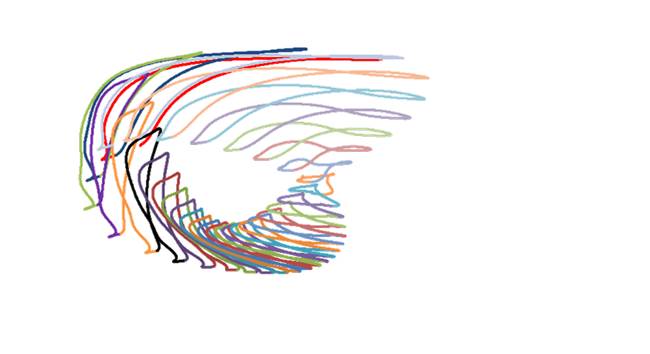
Renate Sachse is a Researcher at the Chair of Structural Analysis, Technical University of Munich (TUM), where she has worked since May 2024. Previously, she held postdoctoral positions at Harvard University's Bertoldi Lab (2024) and TUM's Chair of Computational Mechanics (2021-2024), following academic staff roles at the University of Stuttgart (2015-2020). Her interdisciplinary work bridges civil engineering, biomechanics, and computational modeling. Her educational foundation includes a Master's in Civil Engineering from the University of Stuttgart (2014; thesis: 'Isogeometric contact analysis of thin-walled structures') and a Bachelor's from the same institution (2011; thesis: 'A Primary School Pavilion for Magagula in South Africa - Structural Analysis'). She also completed ERASMUS studies at ESTP Paris and internships at Foster + Partners and Werner Sobek AG. Dr. Sachse's research centers on biomechanics and biomimetics, with pioneering work on plant-inspired structures. She investigates snapping mechanisms in carnivorous plants (Venus flytrap, waterwheel plant) to develop bio-inspired adaptive systems, soft robotics, and metamaterials. Her expertise spans motion design for large-deformation structures, isogeometric analysis, and hygroscopic actuation in 4D-printed materials, emphasizing computational modeling of contact mechanics and structural stability. Analysis of her 15 most recent publications reveals a dominant focus on biomechanics (60% of articles), particularly plant movement mechanics translated into engineering solutions. Her work consistently integrates computational structural analysis with biological principles, showing increasing emphasis on motion design (25% of recent output) and additive manufacturing applications (15%). Key trends include translating snap-buckling phenomena into robotics and developing material design spaces for responsive structures. Her distinguished awards include the Bertha Benz Prize (2022), Klaus Tschira Boost Fund Fellowship (2022-2024), and University of Stuttgart Publication Award (2022). Additional recognition comprises GAMM Juniors Fellowship (2020-2022), AVK Innovation Award (2017), and Emil Mörsch Study Prize (2014). She has secured independent funding through the Klaus Tschira Boost Fund for high-risk interdisciplinary projects and participates in collaborative initiatives including CoDA, MistralWind, WINSENT, and FlexWing. While teaching advanced courses at TUM (Advanced Finite Element Methods, Theory of Plates), her mentorship focuses on computational mechanics and biomimetic design principles. Currently based at TUM's Chair of Structural Analysis under Prof. Bletzinger, she maintains active collaboration with Harvard University's Bertoldi Lab in developing next-generation adaptive structures.
Professor Behzad Fatahi is a distinguished academic in Civil and Environmental Engineering at the University of Technology Sydney (UTS), specializing in geotechnical engineering, railway infrastructure, and sustainable construction technologies. With a career spanning over 16 years at UTS, he has served as Deputy Head of School - Teaching and Learning (2024-present), Head of Discipline (2020-2024), and School Research Coordinator (2012-2017). His research focuses on unsaturated soil mechanics , dynamic soil-structure interaction , and green infrastructure solutions . Academic Appointments : Professor (2024-present), Associate Professor (2017-2024), Senior Lecturer (2011-2017), Lecturer (2008-2011) Research Leadership : Supervised 21 PhD students to completion, developed groundbreaking techniques for landfill waste reuse and tyre-derived aggregates in railway construction His work on seismic resilience of LNG tanks and bioengineered soil stabilization has received international recognition, including the 2023 Best Research Paper Award at the Australasian Association for Engineering Education conference. Professor Fatahi's industry experience includes geotechnical engineering roles at Coffey International and SES Engineering prior to academia. Key Research Contributions : Developed green corridor models for railway lines using coupled flow-deformation equations Pioneered AI-integrated teaching frameworks for civil engineering education Advanced machine learning techniques for intelligent compaction and structural buckling analysis As a Category 1 supervisor , he mentors graduate researchers in Civil Engineering , Geomechanics , and Earthquake Engineering . His peer-reviewed work (>240 publications) demonstrates technical excellence and innovation across multiple geotechnical domains.
David Al-Attar is a Professor at the University of Cambridge's Department of Earth Sciences, actively involved in theoretical and computational geophysics research. He serves as a supervisor within the Cambridge NERC Doctoral Landscape Awards (Training Partnerships) program, particularly in the CREATES initiative focusing on climate and environmental science. Education: While specific educational details aren't provided in the text, his extensive publication record and professorial position at Cambridge indicate advanced training in geophysics and applied mathematics. Research Interests: Professor Al-Attar's work spans several interconnected areas within geophysics. His primary focus includes theoretical and computational problems in geophysics, with particular emphasis on continuum mechanics as applied to Earth systems. He develops new physical and mathematical theories for understanding Earth processes, including rigorous function space methods for inverse problems and uncertainty quantification. His sea level change research aims to constrain ice sheet evolution during the last glacial period to better understand modern contributions to sea level rise. Additionally, he investigates solid Earth dynamics including seismic free oscillations, body tides, and Earth rotation, contributing to our understanding of deep Earth structure and mantle dynamics. Research Themes: His publications demonstrate expertise in adjoint methods, glacial isostatic adjustment, mantle viscosity, planetary seismology, and computational methods for geophysical problems. Recent work emphasizes 3-D Earth modeling, sensitivity analysis, and the integration of satellite observations with theoretical models. Current Projects: Potential projects for students include inverse problems related to deglacial sea level change with focus on uncertainty quantification, modern sea level monitoring using satellite data, and solid Earth dynamics particularly regarding outer core viscosity in tidal and rotational dynamics. Contact: He can be reached at da380@cam.ac.uk for research inquiries and collaboration opportunities.
Jonas Faleskog is a Professor in the Department of Materials and Structural Mechanics at KTH Royal Institute of Technology. His research focuses on mathematical modeling of material deformation and failure mechanisms, particularly in metallic and polymeric materials. Key areas include ductile and brittle fracture analysis, fracture mechanics, and computational modeling of material behavior under various stress conditions. He leads a research group collaborating internationally to develop models describing material failure at microscopic scales. Faleskog teaches courses such as Fracture Mechanics (SE2139) and Modeling in FEM (SE2860), emphasizing practical applications of theoretical models. His work spans experimental and numerical methods, addressing challenges in material heterogeneity, porosity effects, and environmental degradation. Notable contributions include advancements in weakest-link modeling for brittle failure, probabilistic fracture models, and strain gradient plasticity analysis. His research bridges material science, applied mechanics, and numerical methods to optimize material utilization in engineering systems like reactor tanks, aircraft, and vehicles. Key collaborations involve international teams exploring microstructural influences on fracture behavior. While no specific awards are listed, his extensive publication record reflects sustained contributions to mechanical and materials engineering.
Professor Chongmin Song is a faculty member at the University of New South Wales (UNSW), affiliated with the School of Civil and Environmental Engineering. His academic rank is Professor, and he specializes in computational mechanics with a focus on innovative numerical methods. He holds a BE and ME from Tsinghua University and a DEng from the University of Tokyo. His research explores computational mechanics, fracture analysis, wave propagation, and soil-structure interactions. Key methodologies include the Scaled Boundary Finite Element Method (SBFEM), image-based modeling, and dynamic simulations of infrastructure systems. He leads significant ARC-funded projects like 'A scaled boundary framework for nonlinear dynamic analysis of structures' (DP250100955) and 'Developing sustainable graded porous cementitious structures' (LP240100123), totaling over $1M in recent grants. Recent publications emphasize adaptive modeling techniques, multiphysics simulations, and high-performance computing applications. Trends include topology optimization for structural dynamics, phase-field fracture modeling for brittle materials, and GPU-accelerated elastodynamics. His work integrates computational efficiency with real-world engineering challenges, particularly in geomechanics and material failure analysis. Professor Song collaborates extensively on projects involving computational fracture mechanics and maintains laboratories focused on numerical simulation advancements. Future work targets scalable algorithms for 3D crack propagation and multiphysics coupling in infrastructure systems.
Teng-Fong Wong is a Research Professor in the Department of Geosciences at Stony Brook University, where he has been a faculty member since 1982. His research focuses on the intersection of rock mechanics, earthquake processes, and environmental applications, making significant contributions to understanding deformation mechanisms in geological materials. Education: Sc.B., Brown University, 1973 M.S., Harvard University, 1976 Ph.D., Massachusetts Institute of Technology, 1981 Research Interests: Professor Wong's research centers on rock mechanics with emphasis on earthquake mechanics, energy resources, and environmental applications. He investigates both phenomenological and micromechanical aspects of rock deformation and fluid flow using an integrated approach combining high-pressure deformation experiments, quantitative microstructure characterization, and theoretical analysis. His work spans brittle-ductile transitions in porous rocks, permeability evolution, strength properties of fault zone materials from SAFOD and TCDP drilling projects, and submarine groundwater discharge systems. Publication Trends: Wong's recent publications (2006-2008) demonstrate a consistent focus on strain localization mechanisms in porous rocks, particularly examining compaction bands and deformation bands in sandstones. His work integrates advanced imaging techniques (X-ray radiography, CT scanning) with mechanical testing to understand the micromechanics of rock failure. A significant thread connects his research on fault zone properties from major drilling projects (SAFOD, TCDP) with fundamental rock deformation processes. Scientific Recognition: U.S. Patent 6,874,371 for Ultrasonic Seepage Meter (2005) U.S. Patent 7,107,859 for Ultrasonic Seepage Meter (2006) Co-author of "Experimental Rock Deformation - The Brittle Field" (2nd Edition, Springer-Verlag, 2005) Professional Activities: Professor Wong maintains an active international research profile with numerous visiting appointments including at Australian National University, MIT, ETH Zurich, and institutions in China and France. His work involves extensive collaboration with USGS and international research teams on major fault zone drilling projects. He has developed specialized equipment like the ultrasonic seepage meter for measuring submarine groundwater discharge. Research Infrastructure: Wong's laboratory utilizes advanced capabilities including high-pressure deformation equipment, 3D visualization through laser scanning confocal microscopy and synchrotron microCT, and integrates these with analytic modeling and numerical simulation techniques (finite element and discrete element methods) to investigate micromechanics of dilatant and compactant failure in geological materials.
Noel J. Walkington is a Professor in the Department of Mathematical Sciences at Carnegie Mellon University, affiliated with the Mellon College of Science. His research focuses on developing numerical algorithms for partial differential equations, bridging mechanical engineering and mathematics. Education: M.S. and Ph.D. in Mechanical Engineering from the University of Missouri-Rolla, and a Ph.D. in Mathematics from the University of Texas at Austin. Postdoctoral appointments at both institutions. Research interests include numerical methods for multiphase flows, viscoelastic fluids, and complex fluid dynamics. His work emphasizes computational techniques for engineering and mathematical challenges. Publications span topics like porous media flow, control volume approximations, and liquid crystal dynamics, reflecting a strong focus on computational and applied mathematics.
Endre Süli is Professor of Numerical Analysis at the University of Oxford, where he has maintained a distinguished academic career since 1985. He currently serves as Fellow and Tutor in Mathematics at Worcester College and Supernumerary Fellow at Linacre College. His progression at Oxford includes University Lecturer in Numerical Analysis (1985-1996), Reader in Numerical Analysis (1996-1999), and Professor of Numerical Analysis (1999-present). Süli completed his B.Sc. in Mathematics at the University of Belgrade (1974-1978), followed by an M.Sc. in Mathematics (1978-1980). As a British Council Visiting Student, he studied at Reading University and Oxford University in 1983/84, earned his Ph.D. from the University of Belgrade in 1985, and received his M.A. from Oxford University in the same year. Professor Süli's research centers on numerical analysis of nonlinear partial differential equations with applications across multiple scientific domains. His work spans free-discontinuity problems and computational modeling of fracture; finite element methods; Navier-Stokes-Fokker-Planck systems; adaptive algorithms with a-posteriori error control; implicitly constituted material models; and discontinuous finite element methods. His research bridges theoretical mathematics with practical computational approaches for complex physical phenomena. Recent publications (2024-2025) demonstrate Süli's continued leadership in numerical analysis, with focus areas including fractional calculus, stochastic PDEs, and advanced finite element techniques. His work shows strong interdisciplinary connections between mathematical analysis, fluid dynamics, and materials science, addressing challenging problems in polymeric fluids, porous media, and capillary flow modeling. Professor Süli's distinguished career has been recognized with numerous prestigious honors: Invited Speaker at the International Congress of Mathematicians, Madrid (2006) Fellow of the Institute of Mathematics and its Applications (2007) Foreign Member of the Serbian National Academy of Sciences and Arts (2009) Fellow of the European Academy of Sciences (2010) IMA Service Award (2011) SIAM Fellow (2016) Member of the Academia Europaea (2020) London Mathematical Society Naylor Prize and Lectureship (2021) Fellow of the Royal Society (2021) As an educator, Süli has received the Oxford University Teaching Excellence Award (2009) and the Mathematical Institute Teaching Award (2013). He has supervised numerous PhD students and postdoctoral researchers throughout his career, though specific names aren't documented in the available materials. His research has been supported by various grants enabling work on computational methods for partial differential equations. Süli maintains active service to the mathematical community through editorial boards and professional organizations. Professor Süli is affiliated with the Numerical Analysis research group and the Oxford Centre for Nonlinear PDE at the Mathematical Institute. These research centers provide a collaborative environment for theoretical and applied work on partial differential equations. His research often involves interdisciplinary collaborations with physicists, engineers, and computational scientists to develop and analyze numerical methods for complex physical phenomena.
Jinjin Ha serves as an Assistant Professor in the Department of Mechanical Engineering at the University of New Hampshire, with her office located in Kingsbury Hall, Room W101a, Durham, NH. She teaches core mechanical engineering courses including Statics (ME 525), Materials Processing in Manufacturing (ME 742/842), Theory of Plasticity (ME 927), and Doctoral Research (ME 999), demonstrating active engagement in both undergraduate and graduate education. Her research program integrates computational mechanics with advanced manufacturing, focusing on: Machine learning applications for plasticity modeling and fracture prediction Deformation mechanics in incremental sheet forming processes Martensitic phase transformations in stainless steels Anisotropic material behavior and yield function development Ductile fracture characterization of titanium and aluminum alloys Analysis of her 2023-2024 publications reveals a decisive shift toward AI-driven mechanics, where neural networks solve complex constitutive modeling challenges in metal forming. This interdisciplinary approach bridges fundamental material science with industrial manufacturing optimization, particularly in toolpath design and phase transformation control. No scientific awards were documented in the provided profile information. While doctoral research supervision is indicated through ME 999 course listings, specific student names, grant funding details, laboratory facilities, or collaborative team structures were not disclosed in the available text.
Professor Rob Poole holds the Harrison Chair in Mechanical Engineering at the University of Liverpool’s School of Engineering, part of the Faculty of Science and Engineering. Previously Head of Department (2017–2021), he co-edits the Journal of Non-Newtonian Fluid Mechanics . His research focuses on rheology, fluid mechanics, and turbulence, with recent work on polymeric drag reduction, superhydrophobic surfaces, and viscoelastic instabilities. Education: BEng (Hons) and PhD in Mechanical/Aerospace Engineering. Research Interests: Non-Newtonian fluid mechanics Elastic turbulence and viscoelastic instabilities Polymer solutions and additive effects Heat transfer in porous media Constitutive equation development Awards & Fellowships: EPSRC Complex Fluids and Rheology Fellowship (2015–2021) British Society of Rheology Annual Award (2018) 2015 Best Paper Award (Theoretical and Applied Mechanics Letters) Grants & Projects: Funded projects include Flexible Heat Pump development (£1.5M), Instabilities in Complex Fluid Flows (£1.2M), and Superhydrophobic Surface Drag Reduction (£0.8M) Industry collaborations: Schlumberger, Procter & Gamble, National Nuclear Laboratory Professional Activities: Editorial roles: Journal of Non-Newtonian Fluid Mechanics (Co-Editor-in-Chief), Physics of Fluids External examiner at Warwick, Strathclyde, and multiple Indian Institutes of Technology
Alireza Yaseri serves as an Adjunct Assistant Professor in the Department of Civil Engineering within Smith Engineering at Queen's University. He maintains a dual affiliation with the GeoEngineering Centre, a leading research institute at Queen's specializing in geotechnical and geoenvironmental challenges, where he contributes to advanced computational modeling initiatives. Education: PhD in Geotechnical Engineering, Université Laval (2021) MSc in Geotechnical Engineering, Shiraz University (2012) Dr. Yaseri's research program centers on computational geomechanics with emphases on seismic soil-structure interaction, railway-induced vibrations, and constitutive modeling of granular materials. His work bridges theoretical mechanics and practical infrastructure challenges through advanced numerical techniques, particularly hybrid FEM-SBFEM implementations for dynamic analysis of earth dams, canyon systems, and transportation corridors. He investigates nonlinear soil behavior under monotonic/cyclic loading and develops predictive models for vibration propagation in complex geological settings. Analysis of his publication trajectory (2014-2024) reveals consistent innovation in computational geotechnics, with recent work focusing on 2.5D/3D modeling of train-induced vibrations and sophisticated sand constitutive frameworks. His 2024 publications demonstrate dual expertise in railway vibration prediction methodologies and critical-state soil mechanics, while his earth dam-canyon system analyses from 2020-2022 established foundational approaches for seismic amplification in flexible geological formations. As an active member of Queen's GeoEngineering Centre, Dr. Yaseri collaborates on interdisciplinary projects addressing infrastructure resilience, with particular relevance to dam safety and transportation geotechnics in seismic zones. His technical leadership in scaled boundary methods contributes to the center's reputation for computational innovation in geomechanics.
Thomas K. Uchida is an Associate Professor in the Department of Mechanical Engineering at the University of Ottawa, a position he has held since May 2024. Prior to this promotion, he served as an Assistant Professor at the same institution from October 2018 to May 2024. Before joining the University of Ottawa, Dr. Uchida was an Engineering Research Associate (April 2015-August 2018) and Simbios Distinguished Postdoctoral Fellow (July 2012-April 2015) in the Department of Bioengineering at Stanford University. Dr. Uchida's research focuses on the modeling and simulation of dynamic systems, with particular emphasis on human movement biomechanics. His work spans multiple areas including: Simulation-guided design of assistive devices for improving mobility Modelling musculotendon dynamics and energy expenditure Parameter identification and model reduction methods Impact and contact dynamics Development of computational tools for biomechanical analysis He is a co-author of the book "Biomechanics of Movement: The Science of Sports, Robotics, and Rehabilitation" published by MIT Press, and actively contributes to the development of OpenSim, an open-source software platform for modeling musculoskeletal systems and generating simulations of human and animal movement. His work on OpenSim was featured on the cover of PLoS Computational Biology. Dr. Uchida's recent publications demonstrate strong activity in biomechanics, robotics, and computational modeling. His work bridges engineering principles with biological applications, particularly in understanding human movement mechanics. Key trends include applying machine learning to gait analysis, developing enhanced spine models, analyzing human balance stability with time delays, and advancing musculoskeletal simulation techniques. As an academic advisor, Dr. Uchida currently supervises seven graduate students: Firas Baklouti (expected completion August 2025) Shahin Sharafi Kazem Alambeigi Jiawei Gao Yuzhen Yan Manuel Lucas De Oliveira Blake Scott Miller Dr. Uchida collaborates with research teams focused on biomechanics and movement science. His work with OpenSim places him within an international community of researchers developing computational tools for biomechanical analysis, connecting mechanical engineering with biomedical applications in sports, robotics, and rehabilitation.
Guillaume Chiavassa is a Professor in Applied Mathematics at Ecole Centrale de Marseille, affiliated with the Laboratoire M2P2 (Mechanics, Modeling and Physical Processes Laboratory). He leads research in the Thermodynamics, Waves, Digital, Interfaces and Combustion team, focusing on advanced computational methods for complex physical phenomena. His research spans wave propagation in porous media, numerical modeling of plasma flows in Tokamak configurations, multilevel schemes for conservation laws, penalization methods for compressible flows, and wavelets in numerical analysis. Chiavassa's work demonstrates exceptional mathematical rigor applied to challenging physical systems, particularly in nonlinear wave dynamics and computational fluid mechanics. His methodologies bridge theoretical mathematics with practical engineering applications. Analysis of his recent publications reveals a strong focus on wave propagation phenomena across diverse media, with significant contributions to numerical methods for nonlinear systems. His work consistently addresses the mathematical challenges of modeling complex physical behaviors including material softening, fractional attenuation in porous media, and plasma dynamics in fusion devices. The interdisciplinary nature of his research connects applied mathematics with mechanical engineering, geophysics, and nuclear fusion technology. Chiavassa leads the PROSPERO Software project and participates in the ANR Espoir research initiative and the Consortium SEISCOPE. His teaching activities include courses on hyperbolic equations, finite elements, and heat transfer, with practical computational components developed for student instruction. He maintains an active research program through Laboratory M2P2, where his team develops advanced numerical methods for simulating complex physical phenomena with applications ranging from environmental engineering to nuclear fusion research.
William Parnell is a Professor of Applied Mathematics at the University of Manchester's School of Mathematics. His research focuses on continuum mechanics, metamaterials, and industrial composites, with applications in soft tissue mechanics and acoustic wave manipulation. He leads the Mathematics of Waves and Materials (MWM) group and co-founded the Manchester Materials Modelling Centre (M3C). He has held roles including EPSRC Fellowship 'NEMESIS' (2014-2019) and its extension, contributing to transformative materials science. Education: BSc Mathematics (First Class), University of Bristol (1996-1999) MSc Mathematical Modelling and Scientific Computing (Distinction), University of Oxford (1999-2000) PhD in Applied Mathematics, University of Manchester (2001-2004) His research interests span elastic wave propagation, cloaking, and viscoelastic modeling. He has pioneered hyperelastic cloaking techniques and developed mathematical methods for metamaterials. His work contributes to UN Sustainable Development Goals related to advanced materials and digital innovation. Key achievements include the 2019 Whitehead Prize and over 80 publications. His grants include funding for microstructured material design and collaborations with Thales UK and the National Physical Laboratory. Grants & Awards: EPSRC Fellowships (NEMESIS and extension) Whitehead Prize (2019) Labs/Teams: MWM Group (focusing on waves and materials) M3C (Manchester Materials Modelling Centre)