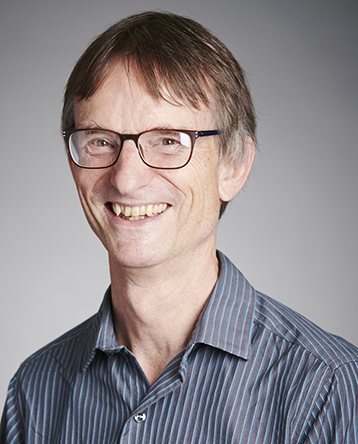
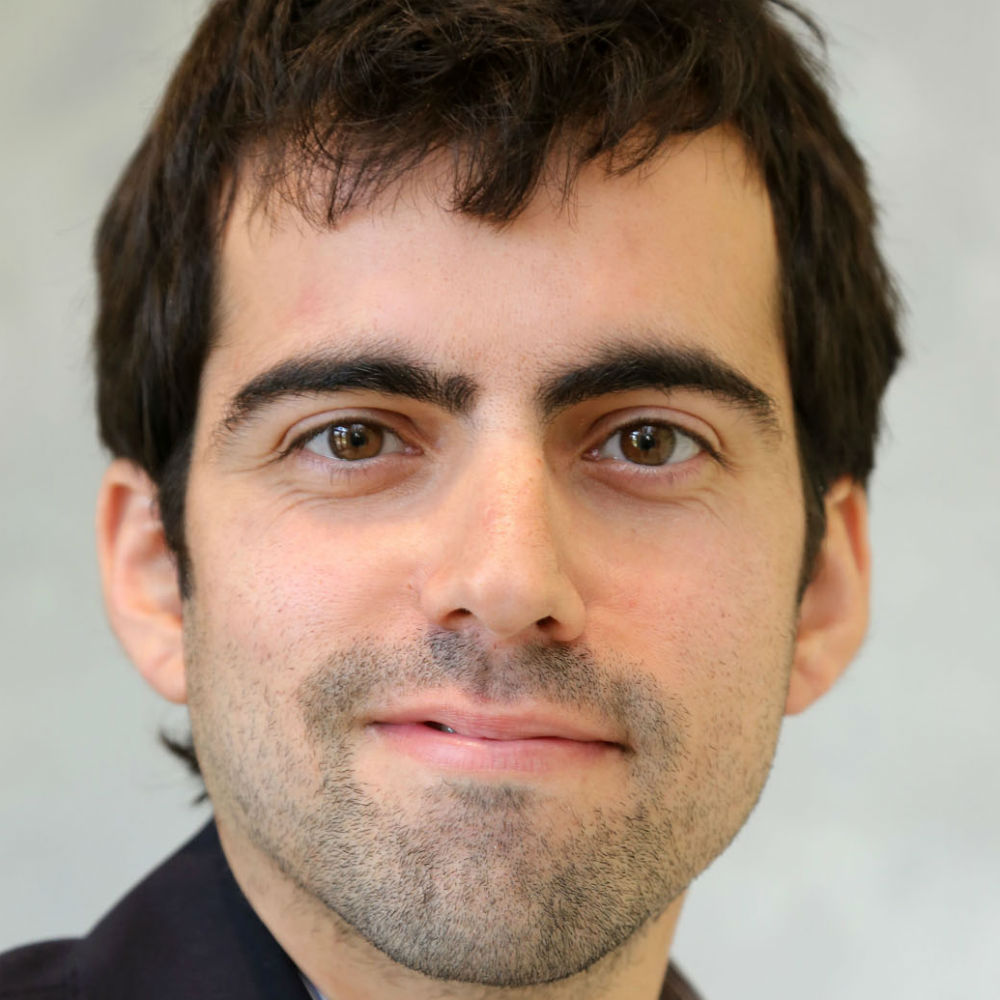
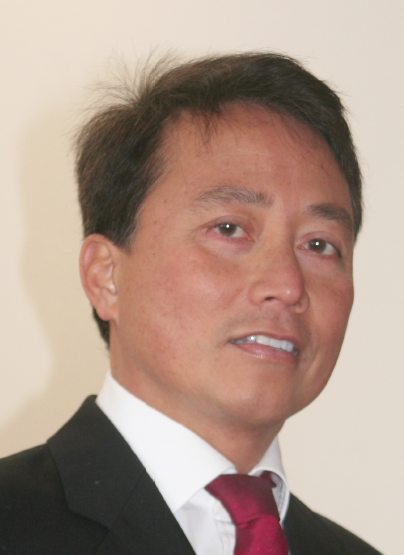
Prof. Dr. Alexander Stroh-Steckelberg is Professor of Political Science with a focus on African Politics & Development Policy at the University of Bayreuth since 2022. He serves as Deputy Head of the Bayreuth International Graduate School of African Studies (BIGSAS) until 2025 and has held prior roles as Junior Professor and Senior Fellow at BIGSAS (2015–2021). His academic career includes research associate positions at the GIGA German Institute of Global and Area Studies (2006–2015) and teaching roles at the Universities of Abomey-Calavi, Heidelberg, and Lüneburg. Stroh-Steckelberg’s research spans comparative democracy studies , judicial politics , electoral systems , political party dynamics , and development policy in Africa, with regional expertise in Francophone West Africa and Rwanda . His work emphasizes institutional diffusion, informal networks in courts, and the interplay between formal and informal governance structures. Recent publications reveal a focus on judicial appointment policies , electoral manipulation , and local governance challenges across Africa. He contributes to methodological advancements in comparative area studies and network analysis , particularly in non-Western democracies. Stroh-Steckelberg is actively involved in academic communities including the American Political Science Association , German Political Science Association , and Association for African Studies in Germany .
Karl Gustafsson is a Professor at Stockholm University within the Department of Economic History and International Relations. His work bridges security studies , collective memory , and digital research methods in international relations. Current Role: Professor of International Relations, Stockholm University Previous Positions: Post-Doc at Lund University, Researcher at Swedish Institute of International Affairs Visiting Appointments: University of Tokyo, Osaka University, Keio University, Academia Sinica, Nordic Institute of Asian Studies Research Focus: Karl specializes in memory politics , ontological security , and anxiety-driven international dynamics , particularly in Sino-Japanese relations and digital platforms . His studies explore how historical narratives and online memory construction influence state identity and policy. Awards & Grants: Recipient of the Wang Gungwu Prize (2014) and Stockholm University Association’s award (2011). Holds Swedish Research Council and Marianne & Marcus Wallenberg Foundation grants for projects on apologies in international politics and digital memory in East Asia . Publications: His work appears in journals such as International Studies Quarterly , European Journal of International Relations , and Memory Studies , addressing topics like narrative power in East Asia, anxiety’s role in policy change , and digital humanities applications in IR.
Abby Innes is an Associate Professor of Political Economy at the European Institute, London School of Economics , where she has been a faculty member since 1997. Her academic career includes a Visiting Fellowship at MIT (1995–1997) and a Jean Monet Fellowship at the European University Institute (2001–2002) . She has received multiple teaching awards , including the LSE Teaching Prize and European Institute Departmental Teaching Prize, and currently serves as the Teaching Chair of her institute. Research Interests : Dr. Innes specializes in the political economy of Central Europe , neoliberalism , and materialist utopias . Her work explores state capture , systemic transitions , and comparative capitalism , with a focus on the UK’s neoliberal transformation. Recent research addresses the political economy of the green transition and neoliberal institutional failures . British Academy Mid-Career Fellowship (2017-2018) LSE Teaching Prize (2002) LSE/ASRC Excellence in Education Award (2020) European Institute Departmental Teaching Prize (2011, 2013, 2015) Nominee for LSE Student-Led Teaching Excellence Awards (2014, 2020) Publications : Her 2023 book Late Soviet Britain: Why Materialist Utopias Fail argues that UK neoliberalism parallels Soviet economic dogma, leading to institutional rigidity , democratic erosion , and governance crises . She has published in journals such as The Review of International Political Economy and Comparative Politics , alongside frequent contributions to LSE Blogs and The London Review of Books .
Gerard A. Ateshian is the Andrew Walz Professor of Mechanical Engineering and Professor of Biomedical Engineering at Columbia University, where he has been a faculty member since 1991. He also served as Chair of the Department of Mechanical Engineering from 2011 to 2014 and is the founding director of the Musculoskeletal Biomechanics Laboratory (MBL), established in 1996. Education: BS (1986), MS (1987), MPhil (1990), and PhD (1991) in Mechanical Engineering from Columbia University. Research Interests: Professor Ateshian's research focuses on the mechanics of soft biological tissues , particularly articular cartilage . His work integrates theoretical, experimental, and computational approaches to understand cartilage lubrication, tissue engineering, and growth and remodeling in living tissues. He has extended continuum mechanics frameworks to model complex biological phenomena such as mass transport, osmotic effects, and reactive mechanics in tissue mixtures. His recent efforts include developing open-source computational tools (FEBio) and translating research into clinical treatments for osteoarthritis . Scientific Awards: H.R. Lissner Medal, ASME (2017) OARSI Basic Science Award (2013) Columbia Engineering Alumni Association Distinguished Faculty Teaching Award (2012) Great Teacher Award, Society of Columbia Graduates (2002) YC Fung Young Investigator Award, ASME (1997) Fellow: ASME, BMES, AIMBE Advising and Mentorship: Professor Ateshian has advised numerous PhD students, including recent graduates Vince Sise and Katherine Spack , who completed their dissertations on cartilage fatigue and osteochondral allografts, respectively. His lab actively mentors students from both Mechanical and Biomedical Engineering programs. Laboratory and Collaborations: He directs the Musculoskeletal Biomechanics Laboratory (MBL) , which collaborates closely with the Cellular Engineering Laboratory of Prof. Clark Hung and with Dr. Jeffrey Weiss at the University of Utah on computational modeling (FEBio). He also collaborates with Columbia University Medical Center faculty on clinical translation of cartilage research.
Professor Gabrielle Lynch is a leading scholar in Comparative Politics and African Studies at the University of Warwick. She holds the academic rank of Professor and serves as PAIS Impact Director, Comparative Politics cluster lead, and Warwick UCU Equalities Officer. Her research focuses on ethnic identities, elections, transitional justice, and social media's role in African politics. Lynch earned her BA, MPhil, and DPhil from the University of Oxford. She has conducted extensive fieldwork in Kenya, Ghana, and Uganda, supported by grants from the ESRC, Warwick Policy Support Fund, and others. Her awards include the ESRC Award for Outstanding International Impact (2019) and the Market Research Society’s President’s Medal. Lynch is editor of African Affairs and a member of the African Studies Association of the UK and British Institute in Eastern Africa. Lynch’s work bridges academia and public engagement, including columns in The Saturday Nation and The East African . She founded the African Judiciaries Research Network and co-authored influential books like Performances of Injustices and The Moral Economy of Elections in Africa . Her research emphasizes democratization challenges, electoral integrity, and the intersection of technology and politics in Africa.
Anthony Rollett is a Professor in the Department of Materials Science and Engineering at Carnegie Mellon University , where he has been a faculty member since 1995. He serves as the Principal Investigator and Co-Director of the NASA-supported Institute for Model-Based Qualification & Certification of Additive Manufacturing (IMQCAM) and co-director of the Next Manufacturing Center . Prior to CMU, he held leadership roles at Los Alamos National Laboratory (1991-1995). Education: Ph.D., Materials Engineering, Drexel University (1987) MA, Metallurgy and Materials Science, Cambridge University (1977) Research Interests: Rollett’s work focuses on microstructural evolution and microstructure-property relationships in 3D using experiments and simulations. His expertise spans additive manufacturing , metal 3D printing , materials for energy systems , grain growth , recrystallization , and stereology , with techniques like high-energy diffraction microscopy (HEDM) and dynamic x-ray radiography (DXR) . Scientific Contributions: He has over 320 peer-reviewed publications and an h-index >80 . His recent articles highlight machine learning for laser processing , fatigue analysis of additively manufactured alloys, and design optimization for heat exchangers in supercritical CO2 and solar thermal applications . Scientific Awards: Fellow of ASM International (1996) Fellow of the Institute of Physics (UK) (2004) Fellow of The Minerals, Metals & Materials Society (TMS) (2011) Cyril Stanley Smith Award (TMS, 2014) Member of Honor, French Metallurgical Society (2015) US Steel Professor (2017) Francqui International Professor (2020-2021) International FAME Award (2023) Leadership & Impact: Rollett co-led the development of a NASA Space Technology Research Institute for additive manufacturing and established a new master’s program in additive manufacturing (2018). His research group is funded by industry , federal agencies , and Pennsylvania state grants . He also serves on the Basic Energy Science Advisory Committee and Defense Programs Advisory Committee for the Department of Energy.
Marisol De La Cadena is a Professor in the Department of Anthropology at the University of California, Davis, with affiliations in Science and Technology Studies (STS). Her work bridges anthropology, political theory, and environmental thought, focusing on ontological divergence and multispecies relations in Latin America, particularly in Peru and Colombia. Department: Department of Anthropology School: College of Letters and Science University: University of California, Davis Email: mdelac@ucdavis.edu Office: Young Hall 315 Her research centers on the intersection of modern politics and non-modern or ahistorical ontologies, especially through what she calls "ontological openings." Drawing from deep ethnographic engagement with Quechua-speaking interlocutors in the Andes, she explores how earth-beings, humans, and nonhumans co-constitute worlds that exceed Western categories. Her theoretical contributions challenge conventional boundaries between nature and culture, history and timelessness, and politics and cosmology. Her recent fieldwork in Colombia examines human-cow relations on cattle ranches and in veterinary schools, situating these practices within broader ecological crises and post-conflict transitions. Her publications reveal a consistent interest in how ethnographic concepts function as both empirical observations and theoretical tools. The body of her work, including key articles like "Uncommoning Nature" and "Runa: Human but not only," reflects a deep commitment to rethinking anthropological method and theory. Her research trends emphasize ontological politics, multispecies ethnography, and the decolonization of knowledge, contributing significantly to contemporary debates in STS and anthropology. Her scientific honors include: John Simon Guggenheim Memorial Foundation Fellow (2008) Lewis H. Morgan Lecture Series Invited Speaker, University of Rochester (2011) Invited Researcher, Center for Advanced Studies, Norwegian Academy of Sciences (2015) Guest Speaker, Mellon-Sawyer Seminar, University of Cape Town (2010) She has been principal investigator on several major grants, including the John E. Sawyer Mellon-Sawyer Seminar on the Comparative Study of Cultures (2012–2016), a Wenner-Gren Conference Support Grant (2009–2010), and multiple research fellowships from the Guggenheim, Wenner-Gren, and American Philosophical Societies. These grants have enabled collaborative, transdisciplinary research on cosmopolitics, indigeneity, and the anthropology of worlds. She is affiliated with research initiatives such as the Sawyer Seminar on the Comparative Study of Cultures and contributes to global academic networks in anthropology and STS. Her work fosters dialogue between indigenous thought, continental philosophy, and ethnographic practice, creating spaces for alternative modes of knowing and being.
Deval Desai serves as Reader in International Economic Law at the University of Edinburgh's Edinburgh Law School, a position he has held since 2020 after serving as Lecturer from 2020-2023. His academic career includes research positions at Harvard Law School and the Geneva Graduate Institute. Dr. Desai also brings extensive practical experience from a decade working with the World Bank on rule of law and governance in sub-Saharan Africa, as well as advising the United Nations on rule of law issues. Dr. Desai's educational background includes an MA in History and French Literature from Oxford University, followed by legal training at City University/BPP Law School (PGDipL and PGDipLP), and advanced law degrees (LLM and SJD) from Harvard Law School. At Harvard, he held prestigious fellowships including the Byse Fellowship, Program on Negotiation Next Generation Fellowship, and Institute for Global Law and Policy Fellowship. MA (Oxon), History and French Literature PGDipL, PGDipLP, City University/BPP Law School LLM, Harvard Law School SJD, Harvard Law School Dr. Desai's research centers on law and development, administrative law and regulation, theories of the state, and patterns of knowledge and authority across the Global North and South. His work examines institutional reform processes, particularly how expertise and knowledge operate within rule of law initiatives. His interdisciplinary approach draws from legal and social theory, development studies, international relations, and performance studies, as evidenced in his monograph Expert Ignorance (Cambridge University Press). His recent work focuses on fiscal sociology, administrative law in the Global South, and the politics of social welfare provision. Dr. Desai's publications span leading journals in law, political science, and development studies, revealing a consistent focus on the intersections between legal institutions, governance, and development. His work demonstrates increasing engagement with comparative methodologies and critical perspectives on knowledge production in global governance. Recent articles show particular attention to fiscal policy, welfare systems, and responses to global crises like the Covid-19 pandemic, with comparative studies between India and European contexts. Dame Muriel Spark Medal (2024, Royal Society of Edinburgh) Chancellor's 'Rising Star' Award (2023, University of Edinburgh) Member of the Young Academy of Scotland Fellow of the Royal Society of Arts Fellow of the Young Academy of Europe Dr. Desai has secured significant research funding from diverse international sources, including a £2.1 million Swiss National Science Foundation Sinergia grant titled 'Reversing the Gaze: Towards Post-Comparative Area Studies' where he serves as PI. He also leads projects funded by the British Academy, University of Edinburgh's Big Ideas Accelerator, Scottish Funding Council, and Foreign, Commonwealth, and Development Office. His commitment to mentoring is evident through his recognition with the Susan Manning Award for Inspiring Mentor and his leadership in establishing programs like the Global Scholars' Academy at the Geneva Graduate Institute and the Global Justice summer school at CEU. As editor-in-chief of the Cambridge University Press book series 'Elements in Legal Theory and the Global South' and serving on multiple editorial boards, Dr. Desai plays a significant role in shaping scholarly discourse. His current research projects examine 'loss' in legal institutions guiding transitional processes, constitutional implications of fiscal arrangements in fragile contexts, and social welfare provision in India and Italy.
Kathleen R. McNamara is Professor of Government and Foreign Service at Georgetown University, where she also co-founded the Global Political Economy Project with Professor Abe Newman. Her work centers on the European Union, globalization, and the cultural and political foundations of market authority. Her research interests include the political economy of the European Union, monetary politics, culture and identity in global markets, institutional change, and the democratic legitimacy of supranational governance. She examines how ideas, norms, and collective identities shape economic integration and state formation, especially in Europe. Her recent publications (2020–2024) reveal a strong focus on the EU’s geopolitical turn, industrial policy transformation, the impact of crises like COVID-19 on globalization, and the interplay between democracy and populism. These works reflect a deep engagement with both theoretical and policy-relevant dimensions of contemporary European and global political economy. International Studies Association 2018 Distinguished Scholar in International Political Economy ISA 2020 SWIPE Award for Mentoring Women in International Political Economy German Marshall Fund Fellow Fulbright Fellow Simone Veil Fellow at the European University Institute (2023) McNamara has been a visiting scholar at the Russell Sage Foundation, taught at Princeton University and Sciences Po (Paris), and advised the US National Intelligence Council. She is active in public scholarship, writing for Foreign Affairs , Foreign Policy , and The Washington Post . She is a founding figure in the Global Political Economy Project, which aims to reframe the study of global markets through interdisciplinary and critical lenses.
Marcela Echeverri Muñoz is an Associate Professor in the Department of History at Yale University, affiliated with the Faculty of Arts and Sciences. Her scholarship bridges history, anthropology, and political theory, with a focus on Latin America, the Atlantic World, and the Spanish Empire. She is recognized for her interdisciplinary approach to understanding political subjectivities, state formation, and social transformation during the Age of Revolutions. PhD in Latin American and Caribbean History, New York University, 2008 MA in History of the Hispanic World, Fundación MAPFRE-Tavera and CSIC, Madrid, 2006 MA in Social and Political Theory, The New School for Social Research, 2001 BA in Anthropology, Universidad de los Andes, Bogotá, 1997 Her research centers on the interplay of race, gender, law, and political theory in colonial and 19th-century Latin America. She investigates how enslaved and Indigenous peoples navigated imperial and republican transitions, particularly through royalist affiliations. Her work challenges peripheral narratives of Spanish America in Atlantic slavery studies, positioning the region as a central site of abolitionist and constitutional experimentation. The trends in her recent publications reveal a sustained focus on slavery, abolition, and political transformation in the Spanish American mainland. She analyzes how anti-slavery movements were intertwined with republicanism, citizenship, and state formation, especially in Gran Colombia. Her scholarship spans legal history, Atlantic processes, and transimperial dynamics, often highlighting marginalized voices in revolutionary contexts. She frequently contributes to major reference works and edited volumes on Atlantic revolutions and Latin American independence. Her scientific awards and fellowships reflect her standing in the field: James Alexander Robertson Prize Michael Jiménez Prize Bolton-Johnson Prize Honorable Mention Yale Heyman Prize for Outstanding Scholarly Publication Alexander von Humboldt Research Fellowship MacMillan Research Fellow, Yale Mellon Residential Fellow, CUNY NEH Summer Institute Participant, Johns Hopkins Fellowships from John Carter Brown Library, CSIC, Fundación Mapfre, and Instituto Colombiano de Antropología e Historia Echeverri has secured significant research grants from Harvard’s Atlantic History Seminar, CUNY Research Foundation, and Yale. She has co-edited special issues on Gran Colombian history and Spanish American abolition, and led key academic initiatives including the Race and Slavery in the Atlantic World Working Group and the Early Modern Empires Workshop at Yale. Though student advising is not explicitly detailed, her role as a senior scholar implies mentorship of graduate students. She is affiliated with several research networks and has been a visiting scholar at institutions such as Freie Universität Berlin. Her ongoing book project on Gran Colombian slavery underscores her commitment to redefining the hemispheric significance of Latin American abolition. She remains an active contributor to both scholarly and pedagogical conversations in Atlantic and Latin American history.
Dr. Charilaos Nikolaidis is a Senior Lecturer at Essex Law School, University of Essex, specializing in international human rights law and the intersection of law and literature. He received his LLB from City, University of London, LLM in International Business Law from University College London, and PhD in Law from King's College London. His research focuses on international human rights law, particularly the theory and implementation of the right to equality, and the relationship between law and literature. Nikolaidis has published extensively on equality jurisprudence, comparative human rights law, and democratic challenges in European contexts. Nikolaidis's publications demonstrate consistent focus on human rights jurisprudence, particularly equality and non-discrimination within European legal frameworks. His work spans theoretical explorations of legal equality, comparative analyses of European and US privacy rights, and practical examinations of democratic challenges in Greece and beyond.
Dr. Hillary Briffa is a Senior Lecturer in National Security Studies and Assistant Director of the Centre for Defence Studies at King’s College London. She holds a Ph.D. in War Studies from King’s College London, focusing on small states’ grand strategy. Her roles include teaching National Security Studies, Small States and International Security at MA level, and leading BA3 Dissertation training. Research interests span small states’ security, climate security, grand strategy, and First World War propaganda. She leads the Climate Change and International Order portfolio at the Centre for Grand Strategy and co-organizes the annual U.S.-U.K. World Order summer school. Grants include maritime security for small states (with Georgetown University Qatar), national energy transitions, and foresight with the Estonian Defence Forces. Briffa advises the UK government on strategic reviews, international organizations, and defense policy. Awards include the U.S. State Department’s Emerging Young Leaders Award (2016), Hans J. Morgenthau Fellowship (2020/21), and Fellow of the Higher Education Academy (2023). She serves on King’s Academic Board, EDI committees, and chairs the Circle-U Climate Knowledge Hub. Her work bridges academia and policy, emphasizing small states’ strategic agency in global challenges. Publications include analyses of Maltese neutrality, Indo-Pacific maritime security, and small states’ pandemic responses. She co-authored sections in volumes on war studies, climate policy, and international order. Briffa’s research and outreach aim to enhance small states’ resilience and influence in evolving security landscapes.
Ronaldo I. Borja is a Professor in the Department of Civil and Environmental Engineering at Stanford University's School of Engineering. His academic career spans decades of research and teaching in theoretical and computational solid mechanics, geomechanics, and geosciences. He teaches undergraduate, graduate, and doctoral level courses including Geotechnical Engineering (CEE 101C), Mechanics and Finite Elements (CEE 281), Computational Poromechanics (CEE 314), and Plasticity Modeling and Computation (CEE 315). Professor Borja's research focuses on theoretical and computational solid mechanics, with particular emphasis on geomechanics and geosciences. His work includes the development of multi-scale discontinuity frameworks for crack and fracture propagation utilizing strong discontinuity and extended finite element methods; solution techniques for multi-physical processes such as coupled solid deformation-fluid diffusion in saturated and unsaturated porous media; stabilized finite element methods for solid/fluid interaction and nonlinear contact mechanics; and nanometer-scale characterization of the inelastic deformation and fracture properties of shales. His research spans multiple projects including shale characterization, poromechanics, and large deformation inelasticity. His recent publications demonstrate expertise across computational mechanics, geomechanics, and materials science, with a focus on finite element methods, constitutive modeling, and multi-scale analysis. His work bridges theoretical developments with practical applications in geotechnical engineering and earth sciences. 2016 ASCE Maurice A. Biot Medal for work in computational poromechanics Professor Borja serves as editor of two leading journals in his field: the International Journal for Numerical and Analytical Methods in Geomechanics and Acta Geotechnica. He has also authored the textbook 'Plasticity Modeling and Computation' published by Springer. His research is supported by multiple projects examining shale mechanics, poromechanics in unsaturated porous media, and large deformation inelasticity in crystalline materials.
Terrence Chapman is a Professor of Government at the University of Texas at Austin, affiliated with the Robert S. Strauss Center for International Security and Law, Center for European Studies, and Clements Center on History Strategy, and Statecraft. His research focuses on international organizations, conflict resolution, and political economy frameworks. Key research areas include: International institutional legitimacy Global regulatory regimes Public opinion in international affairs Conflict management mechanisms Formal modeling of diplomatic interactions Recent scholarly trends reveal expertise in climate governance negotiations, digital surveillance politics, and regulatory effectiveness. His work spans theoretical modeling and empirical analysis of international collaboration dynamics. Scientific recognition includes: 2011-2012 APSA Conflict Processes Section Book Award Teaching portfolio covers: Science Fiction and Politics International Organization and Law Research Methods in International Politics Previously served as associate/senior editor for International Studies Quarterly .
Assoc Prof Ng Teng Yong is an Associate Professor at the School of Mechanical & Aerospace Engineering (NTU), specializing in numerical modeling and simulation. With a background as Research Manager at A*STAR Institute of High Performance Computing, his work spans materials science, nanotechnology, and aerospace engineering. Current focus on graphene-based desalination membranes Expertise in molecular dynamics simulations Investigates nanoscale fluid mechanics and structural dynamics Recent publications highlight advancements in energy-efficient electrodialysis, smart robotics, and nonlinear vibration analysis. His interdisciplinary approach integrates computational methods with experimental validation in additive manufacturing and soft material mechanics.