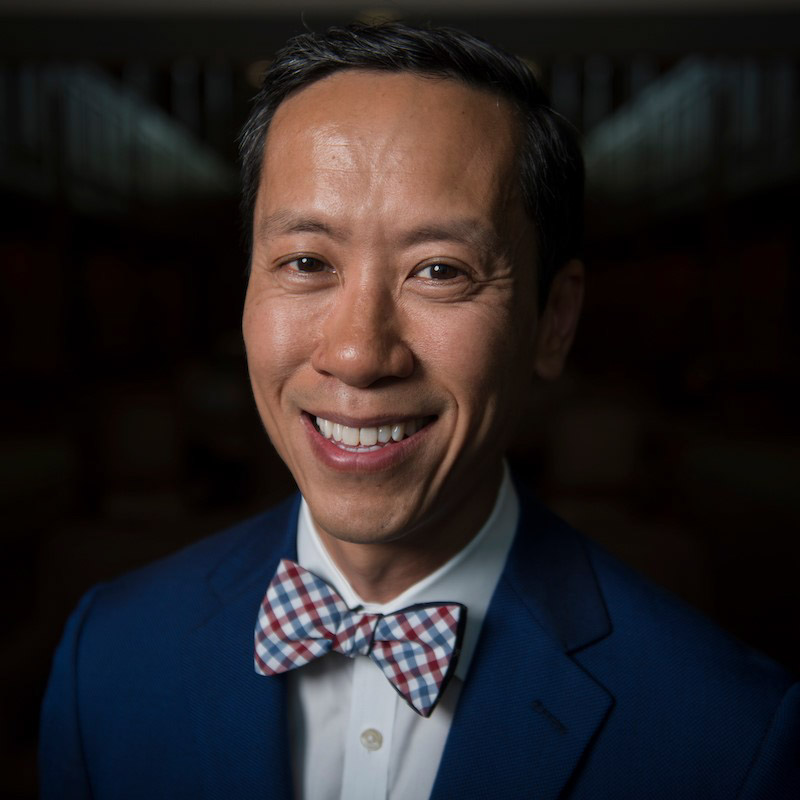
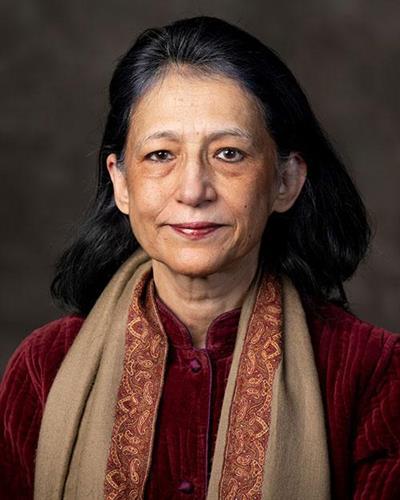
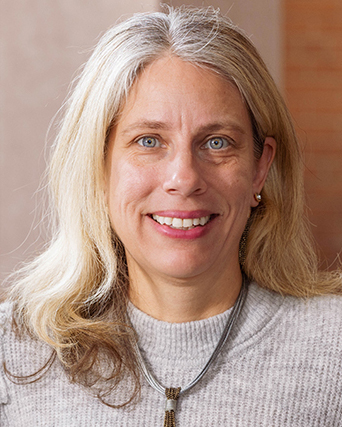
Sharese King is the Neubauer Family Assistant Professor of Linguistics at the University of Chicago, where she has taught since 2018. She earned her Ph.D. and Master's in Linguistics from Stanford University, focusing on language variation across African American communities. Her research bridges sociolinguistics, critical race theory, and phonetics to examine how African American speech is constructed, racialized, and socially evaluated. Education: Ph.D., Linguistics, Stanford University (2018) M.A., Linguistics, Stanford University Research Interests: Sociolinguistics Language Variation & Change African American Language Critical Race Theory Phonetic and experimental analysis Dialect and judicial systems Notable Contributions: Interdisciplinary studies on raciolinguistics and courtroom bias Analysis of /s/ articulation in intersectional contexts Reconceptualization of AAVE as AAL to emphasize linguistic diversity Fieldwork in Bakersfield, Rochester, and Chicago Publications in American Speech , Journal of Sociolinguistics , Language , and Nature Scientific Awards: Provost's Postdoctoral Fellowship Neubauer Family Assistant Professorship Labs & Projects: Co-founder of the Chicagoland Language Project
Joseph Thai is an Adjunct Professor specializing in constitutional law and Supreme Court jurisprudence. He holds an A.B. in English from Harvard College (1995) and a J.D. from Harvard Law School (1998). His legal career includes clerkships with Justices John Paul Stevens and Byron White of the U.S. Supreme Court and Judge David Ebel of the Tenth Circuit. He played a pivotal role in challenging Oklahoma's same-sex marriage ban, contributing to landmark civil rights advancements. Recognized as an outstanding educator by students, he is also an active scholar and litigator. Elected to the American Law Institute (2021) Consistently honored as outstanding professor
Mark Lloyd serves as a Clinical Professor at the Annenberg School for Communication and Journalism, University of Southern California. His career uniquely bridges legal advocacy, civil rights leadership, and broadcast journalism, with pivotal roles including Associate General Counsel at the Federal Communications Commission (2009-2012) where he advised on inclusion and localism policies, and Vice President at the Leadership Conference on Civil Rights. His research critically examines the intersection of media systems and democratic governance, focusing on structural inequities in communication infrastructure. Key interests include: Regulatory frameworks for equitable media access Civil rights implications of digital and broadcast platforms Historical analysis of communication policy failures Public interest advocacy in telecommunications Journalistic ethics in commercial media ecosystems Constitutional challenges in modern media landscapes Lloyd received an Emmy Award for his broadcast journalism work spanning public and commercial radio/television networks including NBC and CNN. His scholarly contributions include the book Prologue to a Farce: Communication and Democracy in America (University of Illinois Press, 2007) and co-editing The Communication Crisis in America and How to Fix It (Palgrave MacMillan, 2016). No information regarding student advising, research grants, or laboratory affiliations is documented in available sources. His professional trajectory emphasizes policy intervention over traditional academic mentorship structures.
Jared M. Trujillo is an Associate Professor of Law at the CUNY School of Law. He teaches Constitutional Law, legal writing, and courses focused on the criminal and juvenile legal systems. Previously, he served as Senior Policy Counsel at the New York Civil Liberties Union, President of the Association of Legal Aid Attorneys, and as a criminal defense attorney at the Legal Aid Society NYC. He also taught as an adjunct professor at Hofstra University School of Law from 2016 through 2021. CUNY School of Law - Associate Professor New York Civil Liberties Union - Senior Policy Counsel Legal Aid Society NYC - Juvenile Defense Attorney Hofstra University School of Law - Adjunct Professor His research and advocacy focus on sentencing reform , bail policy , solitary confinement , policing of LGBTQ+ communities , Communications Decency Act Section 230 , foster care , and decriminalization of sex work . His publications analyze legislative impacts, systemic inequalities, and policy advocacy within criminal and juvenile legal systems. Jared's recent law review article on sentencing reform (2023) explores multigenerational poverty reduction through legal system changes. His 2022-2023 essays address solitary confinement ethics, policing reform, and bail system critiques, reflecting ongoing engagement with media and policy debates.
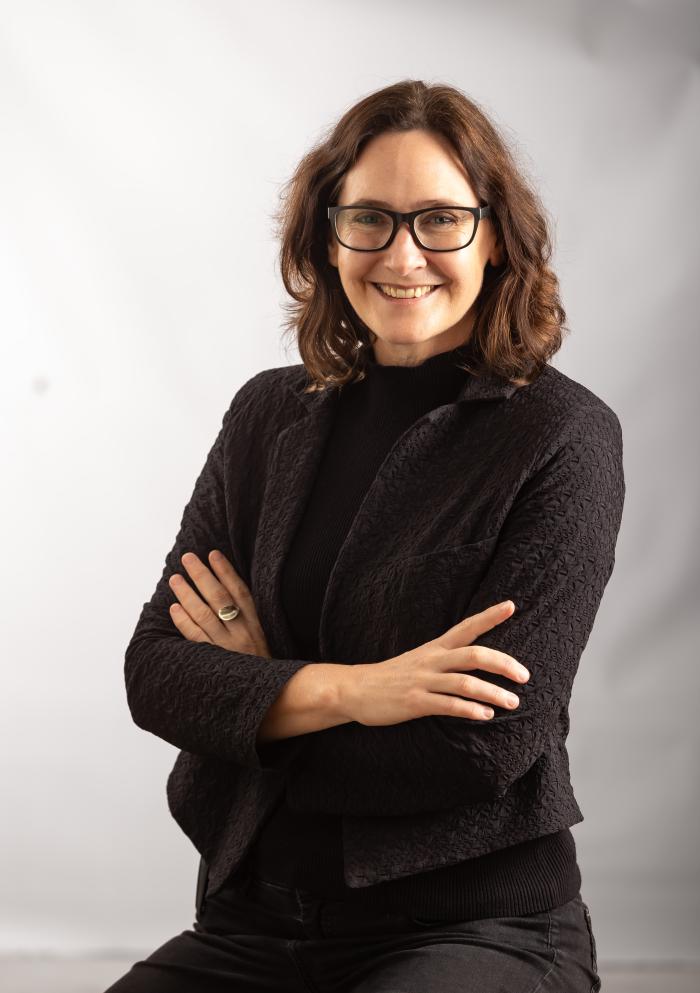
Susan Fino is a Professor at the College of Liberal Arts and Sciences, Wayne State University. Her research focuses on public law, American constitutional law, administrative law, and the role of state supreme courts. She holds a B.A. from Johns Hopkins University, an M.A. and Ph.D. from Rutgers University. She has received the President's Award for Excellence in Teaching. Her courses include American Government (PS1010) and Constitutional Law (PS5110/PS5120), taught across multiple terms from 2023 to 2025. Dr. Fino's research explores judicial federalism, state constitutional frameworks, and legal interpretations of rights. Her work analyzes topics like church-state relations, taxation provisions in state constitutions, and assisted suicide debates. She has written extensively on state supreme court dynamics, including landmark cases and institutional performance metrics. Her scholarship bridges legal theory with practical governance challenges at both state and federal levels. Her publications span over three decades, addressing evolving legal landscapes such as the Rehnquist Court’s federalism approach and technological impacts on criminal sentencing. She consistently engages with issues at the intersection of law, politics, and societal values.
California Institute of Technology (Caltech)United States
Jonathan N. Katz is the Kay Sugahara Professor of Social Sciences and Statistics at the California Institute of Technology (Caltech). He holds a S.B. from MIT (1990), M.A. from UC San Diego (1992), and Ph.D. from UC San Diego (1995). His career includes roles as Assistant Professor (1995-98), Associate Professor (1998-2003), and Professor (2003-11) at Caltech, with subsequent appointments as Sugahara Professor (2012–present), Executive Officer for Social Sciences (2007), and Division Chair (2007–14). His research focuses on statistical methods in social sciences, electoral systems, and public policy. Key affiliations include the Caltech/MIT Voting Technology Project and the Linde Institute of Economic and Management Sciences. Katz is Deputy Editor for Social Sciences at Science Advances and a Fellow of the American Academy of Arts and Sciences (2011) and the Society for Political Methodology (2008). Research interests span political methodology, formal theory, and American politics. Recent work addresses partisan fairness in electoral systems, statistical rigor in political modeling, and institutional dynamics in legislative and judicial contexts. Notable contributions include critiques of electoral college bias and audits of political behavior research methodologies. Awards: Career Achievement Award in Political Methodology (2024), Inaugural Fellow, Society for Political Methodology (2008). Grants/Labs: Caltech/MIT Voting Technology Project, Linde Institute Directorship (2013–14).
Peter Henderson is an Assistant Professor at Princeton University with joint appointments in the Department of Computer Science and the School of Public and International Affairs. He is affiliated with the Center for Information Technology Policy (CITP), Princeton Language and Intelligence Initiative (PLI), Center for Statistics and Machine Learning (CSML), and Program in Law & Public Policy (PLAW). J.D./Ph.D., Stanford University, 2023 M.Sc., McGill University and Montréal Institute for Learning Algorithms Henderson's research focuses on the critical intersection of artificial intelligence and law, with particular emphasis on AI safety, methods to improve reasoning in foundation models, interdisciplinary approaches to law and AI, and AI governance. His work spans language-grounded reinforcement learning, alignment techniques, strategic decision-making in legal contexts, and public interest artificial intelligence. He investigates how legal frameworks can guide the development of AI systems that benefit society while addressing potential harms. Henderson's recent publications reveal a strong trajectory toward addressing the safety, governance, and legal implications of foundation models. His work combines rigorous technical AI research with deep legal analysis, particularly examining how intellectual property law interacts with AI development, regulatory pathways that balance innovation with harm prevention, and the role of law in shaping responsible AI deployment. A significant thread throughout his research is the development of better evaluation methodologies for AI systems, especially in critical domains like law. SEAS Excellence in Teaching Award (2025) Henderson leads the Princeton Law+Language, AI, & Society (POLARIS) Lab, where he advises students and researchers working at the intersection of AI and legal studies. His research has been supported through collaborations with government agencies, including work with the IRS on audit selection algorithms. His findings have informed practical applications in government efficiency and equity, as well as legal system improvements. Henderson runs the POLARIS Lab at Princeton, which focuses on developing AI systems that work for the public interest, particularly in legal contexts. His team develops sequential decision-making systems for government efficiency, foundation models capable of reasoning about law, and improved safety evaluation frameworks for AI systems. The lab maintains strong connections with legal practitioners and policymakers to ensure research has real-world impact.
Lisa Ford is an Endowed Professor of Modern British Imperial History at the University of New South Wales. Her research focuses on legal history, settler colonialism, and the British Empire's legal frameworks. She holds a PhD from Columbia University and has authored/co-authored influential works such as *Settler Sovereignty* and *The King’s Peace*. Ford’s expertise spans the British Empire’s legal order, colonial governance, and Indigenous jurisdictions. **Education**: Columbia University (MA, MPhil, PhD) and University of Queensland (BA, LLB, MA). **Research Interests**: Legal history of the British Empire (1760–1840), settler colonialism, and the legal dimensions of early American and Australian settlements. Her work bridges legal theory with colonial practices, emphasizing the intersection of law, power, and Indigenous resistance. **Awards**: Dalton Award, Australian Academy of the Humanities Fellowship, Thomas J. Wilson Prize, and Bancroft Dissertation Prize. Her publications explore imperial legal reforms, colonial commissions, and the legacy of settler sovereignty. **Grants & Advising**: Recipient of Australian Research Council grants, including the Future Fellowship (2019–2024). She co-edits *The Cambridge Legal History of Australia* and collaborates on projects analyzing colonial legal systems and Indigenous governance. **Labs/Teams**: Involved in interdisciplinary initiatives on empire and law, including digital scholarship on colonial commissions and collaborative research with institutions like the University of Western Sydney.
Gerald L. Neuman is the J. Sinclair Armstrong Professor of International, Foreign, and Comparative Law at Harvard Law School (HLS), where he serves as Director of the Human Rights Program. His expertise spans human rights, constitutional law, immigration law, and international legal frameworks. Previously, he taught at the University of Pennsylvania Law School (1984-1992) and Columbia Law School (1992-2006). Research Interests: Neuman's work focuses on: Human rights in populist and pandemic contexts Transnational constitutionalism Immigration law and extraterritorial constitutional rights Age discrimination as a human rights violation Impeachment's role in human rights protection Indirect discrimination analysis Selected Trends: His recent articles examine pandemic-era immigration policies ( Title 42 ), impeachment mechanisms for human rights violations, and age discrimination frameworks. Publications show consistent engagement with: Constitutional law intersections Comparative legal analysis Administrative law critiques Human rights treaty body applications Scientific Contributions: Neuman's work appears in leading journals like Harvard International Law Journal and Harvard Human Rights Journal . He has organized workshops on indirect discrimination related to: Sexual orientation/gender identity Chronological age Religious practice Disability rights Pandemic policy impacts He has served as a UN expert workshop organizer and contributed to international human rights literature through edited volumes and treaty analysis.
Andreas Kalyvas serves as Associate Professor in the Department of Politics at The New School for Social Research, where he teaches courses on liberalism, oligarchy, and political thought. Previously, he taught at Columbia University and the University of Michigan, and has held visiting positions at institutions across Spain, Chile, Germany, Poland, and South Africa. His academic credentials include: PhD in Political Science, Columbia University (2001) MA in Political Science, Columbia University (1994) BA in Political Science and Public Administration, National and Kapodistrian University, Athens (1990) Professor Kalyvas's research explores democratic theory and political thought from ancient to contemporary contexts, focusing on sovereignty, constituent power, tyranny, and citizenship. His work bridges jurisprudence, history, and politics with particular emphasis on emergency rule, oligarchic power, and migration. He is currently finalizing Tyranny Legalized: Republicanism, Dictatorship, and the Enemy Within , examining the normalization of authoritarian practices within legal frameworks. Analysis of his recent publications reveals a sustained investigation into democratic foundations amid contemporary crises. His scholarship consistently connects historical political concepts to modern challenges, especially regarding constituent power, democratic breakdowns, and the tension between legal norms and political emergencies. This trajectory demonstrates increasing engagement with postcolonial perspectives and global democratic struggles while maintaining deep roots in classical political theory. His scholarly recognition includes: Laurance S. Rockefeller Visiting Fellowship at Princeton University (2009-2010) Polity Prize for best journal article (2006) Leo Strauss Award for doctoral dissertation excellence (2002) Professor Kalyvas actively mentors graduate students through dissertation supervision and independent studies, with research supported by prestigious fellowships like the Rockefeller award. His teaching portfolio reflects his research expertise, featuring courses on liberalism in crisis, oligarchy, and political thought that examine historical and contemporary power structures. While no formal lab structure is mentioned, his international collaborations and edited volumes with scholars like Federico Finchelstein demonstrate extensive scholarly networks across political theory and continental philosophy.
Patrick Metze is Professor of Law at Texas Tech University School of Law, where he has served since 2008. He initially joined as an adjunct professor teaching the criminal defense clinic in 2007 and became a full-time Associate Professor of Law and Director of the Criminal Defense Clinics in May 2008. He was promoted to Professor of Law with tenure in September 2012. Professor Metze has established several groundbreaking clinical programs including the Capital Punishment Clinic (2010), the Caprock Regional Public Defender Office and Clinic (2010) - the first full-time public defender office operated from within a law school, and the Texas Tech School of Law Innocence Clinic (2016). Professor Metze earned his B.A. from Texas Tech University in 1970 and his J.D. from the University of Houston in 1973. Before joining academia, he maintained a private law practice in Levelland and Lubbock, Texas for over 30 years, initially handling general practice including banking, collections, corporate law, and oil and gas matters, but shifting focus to criminal and family law following the 1986 oil industry collapse in West Texas. He was one of only 14 attorneys qualified for appointment as first chair in Capital Murder cases in the 9th Administrative Judicial Region. Professor Metze's research focuses on criminal law and procedure, with particular emphasis on capital punishment, innocence projects, and the school-to-prison pipeline. His publications reveal a consistent concern with constitutional protections, ethical obligations of courts and practitioners, and systemic reforms in criminal justice. His work spans both theoretical analysis of legal principles and practical guidance for criminal defense attorneys. Among his professional recognitions, Professor Metze is a Life Fellow of The Texas Bar Foundation and maintains membership in The Pro Bono College of the State of Texas. His presentations at numerous professional seminars demonstrate his active engagement with the criminal defense bar and commitment to advancing legal practice. Professor Metze has served on various committees including the Criminal Justice Council of the State Bar of Texas, the Advisory Committee to the Lubbock Special Needs Defenders Office, and as a former board member of the Lubbock Criminal Defense Lawyers Association (where he served as President) and the Texas Criminal Defense Lawyers Association.
Ayesha Jalal is a distinguished Professor of History at Tufts University's School of Arts and Sciences and holds a joint appointment at The Fletcher School of Law and Diplomacy. She currently serves as the Mary Richardson Professor and directs the Center for South Asian and Indian Ocean Studies. With a career spanning over three decades, Professor Jalal has established herself as a leading scholar in South Asian history, particularly focusing on Pakistan studies, the partition of India, and Muslim political thought in the region. Professor Jalal's academic journey began with a double major in History and Political Science from Wellesley College in 1978. She then pursued doctoral studies at the University of Cambridge, earning her PhD in History in 1983. Her early career included prestigious fellowships at Trinity College, Cambridge (1980-84), the Centre of South Asian Studies (1984-87), the Woodrow Wilson Center for International Scholars (1985-86), and the Harvard Academy for International and Area Studies (1988-90). Professor Jalal's research primarily centers on South Asian history with special emphasis on Pakistan, the partition of India, and Muslim political thought. Her work explores the complex interplay between religious identity, nationalism, and state formation in the region. She has made significant contributions to understanding democratic development in Pakistan, sectarian dynamics in South Asia, and the historical connections between the Indian subcontinent and the wider Indian Ocean world. Her recent scholarship has focused on 'Oceanic Islam,' examining transregional Muslim networks and universalist aspirations that transcended colonial boundaries. Professor Jalal's extensive publication record demonstrates a consistent focus on South Asian political history, with particular attention to Pakistan's formation and development. Her recent works show a progression from studies of partition and state formation toward broader examinations of Muslim intellectual history and transregional connections. The 2020-2024 publications reveal a sophisticated engagement with themes of democratic erosion, sectarianism, and the historical roots of contemporary political challenges in South Asia, while also exploring more cultural and religious dimensions through works on Muslim enlightened thought and oceanic connections. Patrus Bukhari Award for the best English language book, The Pity of Partition , Academy of Letters, Government of Pakistan (2015) Britannica Book of the Year recognition (2015) MacArthur Fellowship (1998-2003) As an educator, Professor Jalal has mentored numerous graduate students through thesis supervision and directed research projects. Her teaching portfolio includes courses on Modern South Asia, Contemporary South Asia, Islam and the West, and specialized seminars on South Asian history. She has taught at several prestigious institutions including the University of Wisconsin-Madison, Columbia University, and Harvard University before joining Tufts in 1999. In her role as Director of the Center for South Asian and Indian Ocean Studies, she has fostered interdisciplinary research and provided guidance to emerging scholars in the field. Professor Jalal directs the Center for South Asian and Indian Ocean Studies at Tufts University, which serves as a hub for interdisciplinary research on South Asia and its connections to the wider Indian Ocean world. The center facilitates collaborative projects, hosts visiting scholars, and organizes events that bridge historical, political, and cultural perspectives on the region. Under her leadership, the center has become a prominent institution for South Asian studies, promoting dialogue between academic research and contemporary policy issues.
Kathleen R. McNamara is Professor of Government and Foreign Service at Georgetown University, where she also co-founded the Global Political Economy Project with Professor Abe Newman. Her work centers on the European Union, globalization, and the cultural and political foundations of market authority. Her research interests include the political economy of the European Union, monetary politics, culture and identity in global markets, institutional change, and the democratic legitimacy of supranational governance. She examines how ideas, norms, and collective identities shape economic integration and state formation, especially in Europe. Her recent publications (2020–2024) reveal a strong focus on the EU’s geopolitical turn, industrial policy transformation, the impact of crises like COVID-19 on globalization, and the interplay between democracy and populism. These works reflect a deep engagement with both theoretical and policy-relevant dimensions of contemporary European and global political economy. International Studies Association 2018 Distinguished Scholar in International Political Economy ISA 2020 SWIPE Award for Mentoring Women in International Political Economy German Marshall Fund Fellow Fulbright Fellow Simone Veil Fellow at the European University Institute (2023) McNamara has been a visiting scholar at the Russell Sage Foundation, taught at Princeton University and Sciences Po (Paris), and advised the US National Intelligence Council. She is active in public scholarship, writing for Foreign Affairs , Foreign Policy , and The Washington Post . She is a founding figure in the Global Political Economy Project, which aims to reframe the study of global markets through interdisciplinary and critical lenses.
Marcela Echeverri Muñoz is an Associate Professor in the Department of History at Yale University, affiliated with the Faculty of Arts and Sciences. Her scholarship bridges history, anthropology, and political theory, with a focus on Latin America, the Atlantic World, and the Spanish Empire. She is recognized for her interdisciplinary approach to understanding political subjectivities, state formation, and social transformation during the Age of Revolutions. PhD in Latin American and Caribbean History, New York University, 2008 MA in History of the Hispanic World, Fundación MAPFRE-Tavera and CSIC, Madrid, 2006 MA in Social and Political Theory, The New School for Social Research, 2001 BA in Anthropology, Universidad de los Andes, Bogotá, 1997 Her research centers on the interplay of race, gender, law, and political theory in colonial and 19th-century Latin America. She investigates how enslaved and Indigenous peoples navigated imperial and republican transitions, particularly through royalist affiliations. Her work challenges peripheral narratives of Spanish America in Atlantic slavery studies, positioning the region as a central site of abolitionist and constitutional experimentation. The trends in her recent publications reveal a sustained focus on slavery, abolition, and political transformation in the Spanish American mainland. She analyzes how anti-slavery movements were intertwined with republicanism, citizenship, and state formation, especially in Gran Colombia. Her scholarship spans legal history, Atlantic processes, and transimperial dynamics, often highlighting marginalized voices in revolutionary contexts. She frequently contributes to major reference works and edited volumes on Atlantic revolutions and Latin American independence. Her scientific awards and fellowships reflect her standing in the field: James Alexander Robertson Prize Michael Jiménez Prize Bolton-Johnson Prize Honorable Mention Yale Heyman Prize for Outstanding Scholarly Publication Alexander von Humboldt Research Fellowship MacMillan Research Fellow, Yale Mellon Residential Fellow, CUNY NEH Summer Institute Participant, Johns Hopkins Fellowships from John Carter Brown Library, CSIC, Fundación Mapfre, and Instituto Colombiano de Antropología e Historia Echeverri has secured significant research grants from Harvard’s Atlantic History Seminar, CUNY Research Foundation, and Yale. She has co-edited special issues on Gran Colombian history and Spanish American abolition, and led key academic initiatives including the Race and Slavery in the Atlantic World Working Group and the Early Modern Empires Workshop at Yale. Though student advising is not explicitly detailed, her role as a senior scholar implies mentorship of graduate students. She is affiliated with several research networks and has been a visiting scholar at institutions such as Freie Universität Berlin. Her ongoing book project on Gran Colombian slavery underscores her commitment to redefining the hemispheric significance of Latin American abolition. She remains an active contributor to both scholarly and pedagogical conversations in Atlantic and Latin American history.
Stacey Lantagne is a Professor of Law at Western New England University School of Law , joining in 2022. Her research explores the intersection of digital creativity and intellectual property law, focusing on fanfiction and internet memes. She actively engages with pop culture and fan studies communities as a presenter and guest speaker. Education : B.A. summa cum laude, Boston College (English major, Computer Science minor) J.D. cum laude, Harvard Law School Her work addresses evolving legal challenges in digital communication, trademark expansion, and fair use doctrine. Articles like “Building a Better Mousetrap” and “Mutating Internet Memes” highlight her expertise in copyright law’s adaptation to internet culture. She serves on the Legal Committee of the Organization for Transformative Works , advocating for fan creators. Prior roles include teaching at the University of Mississippi and Loyola University New Orleans, along with intellectual property litigation experience at Goodwin Procter and Drinker Biddle & Reath.