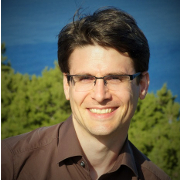
Prof. Dr. Alexander Stroh-Steckelberg is Professor of Political Science with a focus on African Politics & Development Policy at the University of Bayreuth since 2022. He serves as Deputy Head of the Bayreuth International Graduate School of African Studies (BIGSAS) until 2025 and has held prior roles as Junior Professor and Senior Fellow at BIGSAS (2015–2021). His academic career includes research associate positions at the GIGA German Institute of Global and Area Studies (2006–2015) and teaching roles at the Universities of Abomey-Calavi, Heidelberg, and Lüneburg. Stroh-Steckelberg’s research spans comparative democracy studies , judicial politics , electoral systems , political party dynamics , and development policy in Africa, with regional expertise in Francophone West Africa and Rwanda . His work emphasizes institutional diffusion, informal networks in courts, and the interplay between formal and informal governance structures. Recent publications reveal a focus on judicial appointment policies , electoral manipulation , and local governance challenges across Africa. He contributes to methodological advancements in comparative area studies and network analysis , particularly in non-Western democracies. Stroh-Steckelberg is actively involved in academic communities including the American Political Science Association , German Political Science Association , and Association for African Studies in Germany .
Max Planck Institute for Innovation and CompetitionGermany
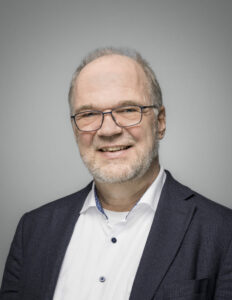
Prof. Dr. Dirk Heckmann is a prominent academic and legal expert currently serving as a member of the Bavarian Institute for Digital Transformation (bidt) Board of Directors and holding the Chair of Digital Law and Security at the Technical University of Munich . As a constitutional lawyer and judge at the Bavarian Constitutional Court, he bridges legal expertise with digital policy through advisory roles in the Federal Government's Data Ethics Commission and the Chancellor's National IT Summit. In 2020, he established the TUM Center for Digital Public Services to advance legally sound, common-good-oriented digitalization. His research focuses on digital education , digital administration , and healthcare digitalization , with particular emphasis on legal certainty for digital systems . Recent projects like ReDiKo (Regulating Digital Communication Platforms) and AFFAIRE (AI Regulation for Examinations) highlight his commitment to evidence-based digital governance. He has authored the juris Practical Commentary on Internet Law since 2021, shaping Germany's digital legal discourse. Professor Heckmann actively engages in public debates about digital sovereignty and platform regulation , most notably at the 2025 Nuremberg Digital Festival where he will discuss open-source foundations for digital sovereignty. His work spans constitutional law , data ethics , and AI policy , with recent publications analyzing social media harassment, AI's impact on education, and digital violence legislation.
Prof. Dr. Christian Volk is a Professor of Political Theory at Humboldt-Universität zu Berlin's Department of Social Sciences since 2020. Previously, he led the 'Politics and Law' research area at Freie Universität Berlin (2016–2020). His research focuses on democratic theory, legal and constitutional frameworks, and civil disobedience in modern democracies. He leads an ERC-funded project ('Protest and Order') exploring protest dynamics in Western democracies. Education: RWTH Aachen University (Political Science/Economics/Economic History), with a doctorate (2010) on Hannah Arendt's legal theory. Postdoctoral roles included managing DFG-funded projects on sovereignty concepts and coordinating research on international dissidence. Research Interests: Political Theory & Philosophy Democratic/Social Theory Legal/Constitutional Theory Civil Disobedience & Protest Movements Transnational Governance His work bridges classical thinkers like Arendt with contemporary issues like postcolonial critique and global order challenges. Publications Highlight: Over 30 peer-reviewed articles and monographs, including Arendtian Constitutionalism (2015) and Die Ordnung der Freiheit (2010). Recent work examines protest's democratic gestus and transnational civil society partnerships. Awards: Summa Cum Laude PhD (2010), 2013 'Outstanding Work' award for thesis. Active in academic leadership roles, including editorial boards for Democratic Theory and Zeitschrift für Politische Philosophie . Teaching: Offers courses on political terminology, Hannah Arendt's thought, and migration/postcolonial theory. Supervises doctoral candidates and maintains a public blog analyzing protest movements.
Mahmoud Abdallah is a Researcher at the Center for Islamic Theology , University of Tübingen, where he has worked since 2020. His career includes roles as Senior Scientist at the University of Innsbruck (2019–2020), Project Leader at ZITh (2016–2019), and Post-Doc researcher (2013–2018). He also held guest lectures at Marmara University (2017) and served as an Arabic Editor (2012–2013). Education : PhD in Comparative Linguistics (2012, Heinrich Heine University Düsseldorf), Master’s summa cum laude (2002, University of Minia), State Examination (1998, Al-Azhar University). Research Interests focus on Islamic Theology , Pastoral Care , Interreligious Dialogue , and Religious Institutions in Pluralistic Societies . He explores hermeneutics in Islamic counseling, Ḥisba in public order, and Umma dynamics in multicultural contexts. Recent Publications (2014–2022) analyze Qur’anic ambiguity , interfaith education , religious responses to crises (e.g., pandemic pastoral care), and Islamic social ethics . Key themes include Abrahamic unity , contextual theology , and religious hermeneutics . Scientific Awards : Master’s degree with summa cum laude distinction (University of Minia, 2002). Advising & Projects : Co-editor of Grundlagen muslimischer Seelsorge (2020) and Theologie des Zusammenlebens series (2017–2022). Led the 2016 project Scientific Education and Social Responsibility (Baden-Württemberg Ministry). Currently working on books about Prophetic Hermeneutics (2023) and Religious Transformations in Crisis (2022). Committee Memberships : Member of the German Islam Conference (since 2018), Scientific Advisory Boards at Zukunftsforum Islam e.V. (since 2017), and the DAVO (German Working Group on the Middle East, since 2009).
Prof. Dr. Matthias Jestaedt has held the Chair of Public Law and Legal Theory and served as Director of Department 3 (Legal Theory) at the Institute for Political Science and Philosophy of Law at Albert Ludwig University of Freiburg im Breisgau since 2011. He also heads the Research Center for Canon Law and Church-State Law at Freiburg. His career spans multiple institutions, including acting professorships at Bonn, Cologne, Bochum, Erlangen-Nuremberg, and others, with a focus on interdisciplinary collaboration through initiatives like the Intradisciplinary Forum Franconia (IFF). Research Focus: Constitutional law (dogmatics, history, theory), legal theory, European Union law, Church-state law, administrative law, and child/youth welfare law. Leadership Roles: Co-editor of JuristenZeitung (since 2006), Head of Hans Kelsen Research Center (since 2006), Dean of Freiburg’s Faculty of Law (2014–2016). Awards & Memberships: Member of the Academy of Sciences and Literature Mainz (since 2014), DFG Review Board 113 (2012–2020), and the Association of German Constitutional Law Teachers (2015–2017).
Catholic University of Eichstätt-IngolstadtGermany
Dr. Stefan Ihli serves as an Associate Professor at the Faculty of Theology at Katholische Universität Eichstätt-Ingolstadt, specializing in Canon Law and Church Legal History. His academic career spans over two decades with continuous scholarly contributions to ecclesiastical jurisprudence. His research focuses primarily on canon law, with particular emphasis on marriage law within the Catholic Church, church-state relations, ecclesiastical courts, and church labor law. His scholarly work demonstrates deep engagement with both historical and contemporary aspects of canon law, examining how legal traditions interact with modern legal systems. Professor Ihli's publication record reveals a strong trend toward analyzing the intersection of church law with civil legal systems, particularly in Germany. His work frequently addresses practical applications of canon law in contemporary contexts, including marriage validity, labor relations within religious institutions, and constitutional dimensions of church autonomy. His expertise in Bavarian church law indicates regional specialization within the broader German context. Multiple reviews of significant works in canon law (2015-2024) Substantial contributions to marriage law in Catholic canon law Analysis of church-state relations in German constitutional context Examination of labor law within ecclesiastical institutions Historical studies of church legal structures Commentary on ecclesiastical court procedures His scholarly influence extends through numerous book chapters, journal articles, and editorial contributions to major reference works in canon law. Professor Ihli has participated in significant academic collaborations, contributing to Festschriften and edited volumes that shape contemporary canon law scholarship. His institutional affiliation with Katholische Universität Eichstätt-Ingolstadt, Germany's only Catholic university, positions him at a unique intersection of theological scholarship and legal expertise within the ecclesiastical context.
Prof. Dr. iur. Dipl.-Soz. Marion Albers holds the Chair for Public Law, Information and Communication Law, Health Law and Legal Theory at the Faculty of Law, University of Hamburg. She has been a Full Professor at Hamburg University since October 2009 and serves as Managing Director of multiple research institutions including the Cyber Law Clinic and the Hamburg Center for Bio-Governance. Her academic career spans prestigious positions at the University of Augsburg, Humboldt-University Berlin, and international collaborations with institutions in Brazil, Japan, and the United States. Education: Studies of Law, Sociology, Political Sciences and Economy at the Free University of Berlin and University of Bielefeld State Exam in Law and Diploma in Sociology Doctorate of Law in Crime Prevention and Provisions for Prosecution at University of Bielefeld Habilitation in Informational Self-Determination at Humboldt-University Berlin Professor Albers' research focuses on the intersection of law, technology, and human rights, with particular expertise in data protection law, digital constitutionalism, bioethics, and health law. Her work examines how traditional legal frameworks adapt to emerging technological challenges, especially regarding informational self-determination in the digital age. She has pioneered research on the horizontal effect of fundamental rights, the legal implications of biotechnologies, and the balance between security measures and privacy protections. Her scholarship consistently bridges theoretical legal concepts with practical applications in rapidly evolving technological contexts. Analysis of her recent publications reveals a strong trajectory toward digital constitutionalism, with increasing focus on data subject rights within digital governance frameworks. Her work demonstrates sophisticated engagement with EU data protection regulations while simultaneously exploring comparative approaches across jurisdictions including Japan and Brazil. A consistent thread throughout her scholarship is the exploration of how constitutional principles apply in digital environments, particularly regarding the protection of personal data as a fundamental right. Scientific Awards and Fellowships: Scientific award of the Claussen-Simon-Foundation (2015) Opus Magnum-Fellowship of the Volkswagen Foundation (2015-2016) Fellow at Alfried Krupp Wissenschaftskolleg Greifswald (2014) Fellow at the Institute for Advanced Study Berlin (2017/2018) Professor Albers has secured significant research funding including the Volkswagen Foundation's Opus Magnum Fellowship and has served as Principal Investigator for the German/Brazilian DAAD/CAPES PROBRAL Research Project "Internet regulation and internet rights" (2015/2018). She has supervised numerous doctoral candidates and established productive international research collaborations, particularly with Brazilian institutions. Her advisory work extends to governmental bodies including service as an expert in the German Council for Scientific Information Infrastructures (RfII) since 2018 and previous membership on the Bundestag's Advisory Committee "Ethics and Law of Modern Medicine" (2003-2005). She directs the Hamburg Center for Bio-Governance (since 2013) and the Cyber Law Clinic at the Faculty of Law (since 2012), creating interdisciplinary research environments that bridge legal scholarship with practical applications in bioethics, health law, and digital governance. Her leadership extends to editorial roles including the book series "Schriften zum Bio-, Gesundheits- und Medizinrecht" and numerous edited volumes on data protection and constitutional law.
Professor Dr. Thilo Marauhn holds the Chair of Public Law and International Law at the Faculty of Law, Justus Liebig University Giessen, since 2001. He is also a Permanent Visiting Professor for Constitutional Theory at the University of Lucerne (Switzerland) and has served as Visiting Professor at the University of Wisconsin, Madison (USA) in 2005, 2008, and 2011. Max Planck Institute for Comparative Public Law and International Law, Heidelberg (1990-2001) Scientific Advisory Board roles (BMZ, HSFK, UN Political Advisory Board) Research Interests include Public International Law, European Law, Human Rights, Environmental Law, Arms Control, and Constitutional Law. His work focuses on conflict resolution, international security, and the interplay between legal frameworks and global challenges like climate change and armed conflict. Publications & Contributions span monographs and edited volumes on topics such as social fundamental rights, environmental law, and international financial regulation. Recent articles analyze human rights fact-finding, religious freedom, and compliance mechanisms in international law. Leadership Roles encompass directing the International Summer University (ISU), co-leading the US-German Summer Law Program, and serving on the Board of the German-Polish Projects (DPWS).
Jean Galbraith is a Professor at the University of Pennsylvania Carey Law School . Her scholarship focuses on the intersection of international law , foreign relations law , constitutional law , and human rights . Key areas include treaty design, separation of powers, administrative law, and domestic implementation of international obligations.
Bedirhan Erdem is a researcher at the Chair of German and International Criminal Law at the Leuphana Law School , Leuphana University. His work focuses on Turkish criminal law, international criminal justice, and comparative legal systems. Criminal Law International Criminal Law Comparative Law Victim Rights Legal Theory Environmental Law His recent publications analyze judicial integrity, victim standing, and procedural reforms in Turkey, alongside broader debates on political crimes and ecocide. Themes include corporate criminal liability, antitrust regulation, and academic integrity. Dr. Erdem contributes to the Joachim Herz Doctoral School and the Center for European and International Law (CEIL) , mentoring doctoral candidates and engaging in structured Ph.D. programs. His research often intersects European and international legal frameworks.
Professor Roland Broemel holds the Chair of Public Law, Economic and Currency Law, Financial Markets Regulation and Legal Theory at the Faculty of Law, Goethe University Frankfurt, and is Deputy Managing Director at the Institute for Monetary and Financial Stability (IMFS) since December 2021. His work bridges legal theory, financial regulation, and digital transformation. Research Interests: Broemel's scholarship centers on market regulation in digitalized sectors—particularly currency, telecommunications, energy, and media. A key cross-cutting theme is the legal dimension of digitalization and algorithm-based applications. He also contributes to Basic Law theory and legal methodology, exploring how legal systems adapt to societal shifts. His recent work emphasizes digital euro, AI governance, and platform regulation. Publication Trends: His recent publications reflect a strong focus on the legal implications of digital transformation in finance and public law. Themes include central bank digital currency, algorithmic regulation, and interdisciplinary legal responses to climate and digital transitions. He frequently publishes in top German and international law journals and handbooks, often in collaboration with economists and legal scholars. Scientific Awards: Doctorate Award 1st Class, University of Hamburg Law Department Hamburg Teaching Prize 2010, Department for Science and Research Advising and Grants: Broemel actively supervises student research through inquiry-based learning formats and leads externally funded initiatives such as the School Project: Digital Euro. He has received support from the Studienstiftung des deutschen Volkes during his early career and continues to secure institutional funding for interdisciplinary research at IMFS. Labs and Teams: As Deputy Managing Director of IMFS, Broemel is embedded in a multidisciplinary research environment focused on monetary and financial stability. He collaborates closely with economists like Volker Wieland and Alexander Meyer-Gohde, contributing a legal perspective to policy-oriented research. His team includes research assistants and doctoral candidates working on digital regulation, financial law, and legal theory.
Prof. Dr. Rachid Ouaissa serves as University Professor and Head of the Department of Middle Eastern Politics at the Center for Near and Middle Eastern Studies (CNMS), Philipps University of Marburg since March 2009. He concurrently holds affiliations with the Center for Interdisciplinary Religious Studies and Center for Conflict Research at the same institution, and maintains active roles in Berlin-based research networks including EUME and the Wissenschaftskolleg zu Berlin. His academic formation includes a PhD from the University of Leipzig (2004) supervised by Prof. Hartmut Elsenhans, preceded by undergraduate studies at Martin-Luther-Universität Halle-Wittenberg (1994-1999) where he received the DAAD-Preis in 1997. His scholarly trajectory includes a Visiting Scholarship at Dalhousie University (2008) and prior research positions at the University of Leipzig. Ouaissa's research program centers on Middle Eastern and North African political dynamics with four interconnected pillars: cultural-identitarian political movements (comparing BJP in India and Algerian parties), moderate Islamist parties as potential EU partners, state-class behavior during resource scarcity (Iraq case study), and fundamentalist movement development (FIS in Algeria vs. Mahdia in Sudan). His conceptual innovation emphasizes blocked middle classes mobilizing religious identity to challenge state power, while his recent work develops 're-configuration' frameworks for understanding post-Arab Spring transformations. His publication trajectory from 1999-2021 reveals evolving scholarly priorities: early work focused on Algerian state formation and political Islam, shifting toward comparative cultural-identitarian movements (2007-2009), then moderate Islamist parties' foreign policy (2009-2012), with contemporary research addressing Hirak protests and theoretical re-configuration models. The corpus demonstrates consistent engagement with Algeria while expanding to regional comparative frameworks, particularly through co-edited volumes on Maghreb entanglements and MENA transformation processes. His scientific recognition includes: DAAD-Preis der Martin-Luther-Universität (1997) Friedrich-Ebert-Stiftung PhD Fellowship (2000-2002) Friedrich-Ebert-Stiftung Scholarship (1998-1999) Professor Ouaissa has secured major research funding including two German Research Foundation (DFG) projects: 'New Cultural-Identitarian Political Movements' (2007-2009) and 'Moderate Islamist Parties as EU Partners' (2009-2012). He actively mentors emerging scholars through the Friedrich-Ebert-Stiftung's doctoral programs and serves on its selection committees, while his policy engagement manifests through frequent media contributions analyzing Algerian protests and regional dynamics for outlets including Le Monde, El Watan, and Deutsche Welle. He leads the Department of Middle Eastern Politics at CNMS while contributing to the university's interdisciplinary research infrastructure through the Center for Interdisciplinary Religious Studies and Center for Conflict Research. His international scholarly integration is evidenced by co-editing the book series 'Politik und Gesellschaft des Nahen Ostens' and 'Studien zur Geschichte und Zeitgeschichte Westasiens und Nordafrikas', alongside editorial leadership of the journal META (Middle East Topics and Arguments).
Max Planck Institute for Comparative Public Law and International LawGermany
Felix Herbert is a Research Fellow at the Max Planck Institute for Comparative Public Law and International Law (MPIL) in Heidelberg, Germany, where he has been working since January 2021. He also serves as a Lecturer at the University of Heidelberg's Faculty of Law since 2024 and as Associate Editor for the Max Planck Encyclopedia of Public International Law since 2025. In April 2025, he began a legal clerkship (Rechtsreferendariat) at the Heidelberg Regional Court as part of his German legal education path. Herbert's research focuses primarily on the prohibition of the use of force under international law and peremptory norms (ius cogens), with significant scholarly contributions analyzing these principles in the context of Russia's war against Ukraine. His dissertation project examines The Prohibition of the Use of Force as a Peremptory Norm of General International Law (ius cogens) . His work demonstrates how fundamental principles of international law apply to contemporary conflicts and challenges in global security. Herbert's publications reveal a strong emphasis on the practical application of international legal principles to current geopolitical conflicts, particularly examining the Russia-Ukraine war through the lens of ius cogens. His scholarship bridges theoretical international law with pressing real-world security challenges, contributing significantly to ongoing debates about the enforcement of fundamental legal norms during armed conflicts. Otto Schmidt Prize for the Promotion of the Europeanization and Internationalization of Law (2nd Prize, December 2024) for his contribution on ius cogens and Russia's war against Ukraine As an educator, Herbert has taught Working Groups on International Law at the University of Heidelberg since the Winter Semester 2021/22 and has served as a coach for the Heidelberg Jessup Moot Court teams. He has also been a judge for the Philip C. Jessup International Law Moot Court Competition since 2022. Additionally, he serves as the Environmental Officer for the MPIL, focusing on sustainability initiatives within the institute's operations.
Max Planck Institute for Comparative Public Law and International LawGermany
Jannika Jahn is a Senior Research Fellow at the Max Planck Institute for Comparative Public Law and International Law in Heidelberg, where she has been working since 2020. She also serves as an Associate Fellow at Maastricht University's Globalization and Law Network and as Associate Editor at Verfassungsblog for International Law and Human Rights Protection. Her work focuses on the intersection of international law, human rights, and environmental protection, with particular expertise in business and human rights law and climate litigation. Jannika Jahn received her LL.B. in English and German Law from University College London and the University of Cologne, where she completed her first state's exam. She earned her doctorate (summa cum laude) from the University of Heidelberg with a dissertation on "The media publicity of the judiciary and its limits." Her doctoral work was conducted at the Max Planck Institute for Comparative Law and Public International Law. Jahn's research spans European and international human rights law, business and human rights law, international environmental law (particularly climate law), comparative constitutional law and theory, and interdisciplinary legal analysis. She examines how national courts can serve as guarantors of global climate protection and investigates the role of judicial independence in multi-level governance systems. Her work on supply chain regulation explores how to create effective human rights due diligence frameworks for multinational corporations. Her scholarly output demonstrates a clear trajectory from foundational work on judicial independence and media coverage of courts toward increasingly focused research on climate litigation and business and human rights. Recent publications highlight her expertise in analyzing how constitutional courts worldwide are becoming key actors in climate governance and how supply chain legislation can be designed to effectively protect human rights across global value chains. Jahn has received several prestigious honors for her academic work, including: Ruprecht-Karls-Preis awarded by the Stiftung Universität Heidelberg for the best legal doctoral thesis in 2020 Scholarship for the doctoral thesis by Friedrich-Ebert-Stiftung Scholarship for law studies by Studienstiftung des Deutschen Volkes Scholarship for LL.B. studies by Alexander-Lüderitz-Stiftung As a Senior Research Fellow, Jahn leads her habilitation project and a business and human rights project at the Max Planck Institute. She has served as a legal expert for the Consultative Council of European Judges (CCJE) of the Council of Europe regarding judicial independence and freedom of expression of judges. Her advisory work extends to policy development, as evidenced by her contributions to the German Supply Chain Act. She regularly presents her research at international conferences and teaches courses on European human rights protection, climate change challenges, and comparative constitutional law. At the Max Planck Institute, Jahn is actively involved in research teams focused on business and human rights and climate litigation. She participates in the Institute's Gender Equality initiatives as the Gender Equality Officer and contributes to interdisciplinary discussions on current challenges in international law through the Institute's research colloquia and workshops.
PD Dr. Jannis Lennartz is a Senior Lecturer in Public Law at Humboldt University Berlin, specializing in constitutional law, administrative law, and digital legal issues. He holds a habilitation (2022) and has held visiting professorships at Göttingen and Cambridge. His research focuses on intersections of law and technology, fundamental rights in the digital age, and legal theory. He has published extensively on AI copyright challenges, algorithmic governance, and constitutional limits in administrative contexts. Education: BA Political Science (Erfurt, 2008), dual法学博士 (Göttingen/Berlin, 2013-2017), habilitation (Berlin, 2022). Key awards include the Leibniz Prize. Teaching includes Constitutional History (10 006), New Developments in Law (10 603), and General Administrative Law (10 450). Research highlights: Over 30 peer-reviewed articles since 2015 across constitutional law, intellectual property, and digital governance. Notable works include Chancellor Democracy (2023) and Forbidden Fruits? (2025), examining AI's impact on artistic creation and copyright frameworks. Recent publications address algorithmic filtering, digital trust mechanisms, and AI-generated content regulation. Awards: Leibniz Prize (specific details not provided but denotes Germany's top academic recognition). Active in interdisciplinary projects like LLCon and OSAIC initiatives. Serves as associated scientist under Prof. Möllers' chair, contributing to constitutional law research and academic leadership.