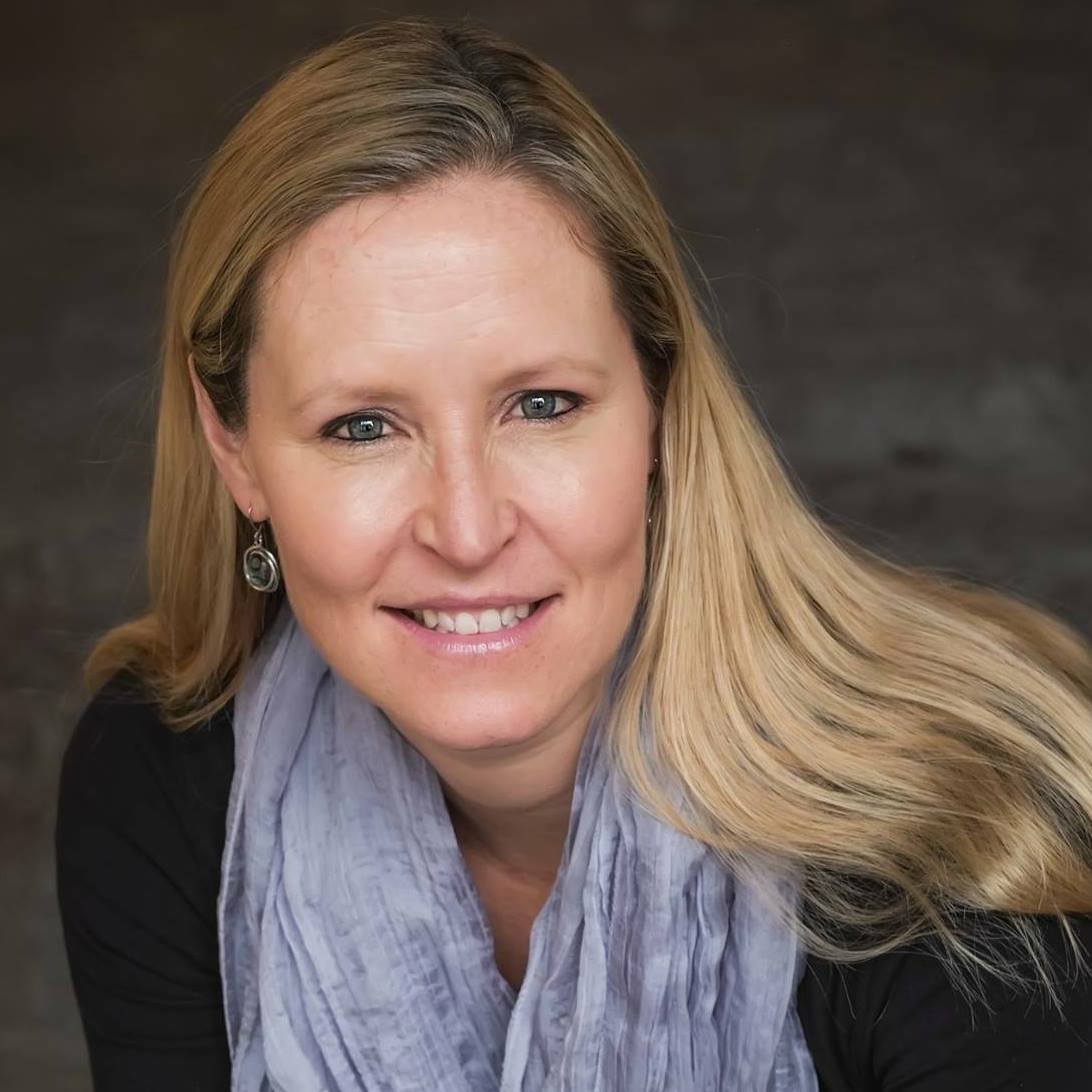
Rigel Oliveri is the Isabella Wade and Paul C. Lyda Professor of Law at the University of Missouri School of Law. Her expertise spans fair housing law, civil rights, and constitutional law, with a focus on housing discrimination, zoning, and sexual harassment. She teaches courses in Constitutional Law, Fair Housing, Employment Discrimination, and Civil Procedure. Her research has appeared in prestigious journals and influenced judicial decisions. She co-authored key casebooks such as The Right to Fair Housing and Sexual Harassment Law , and co-edited The Legal Guide to Affordable Housing Development . Her work includes analyses of disparate impact claims, gender discrimination, and policy reform. Scientific awards include the U.S. Attorney General's Special Commendation (2003) and multiple teaching and public service accolades. She has served as Associate Dean for Research (2009–2015), Commissioner for the Columbia Housing Authority, and Board member of Mid-Missouri Legal Services.
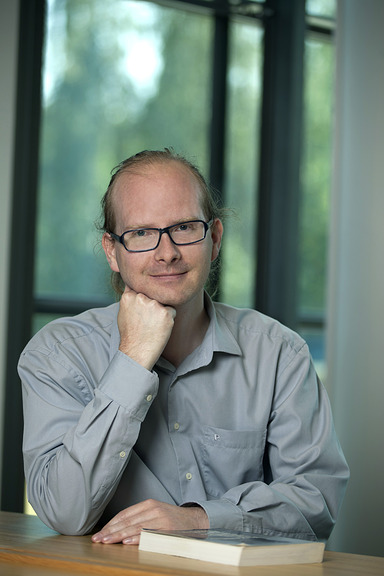
Dr. Wojciech Solowski is an Associate Professor at Aalto University , specializing in computational simulations of soils and granular materials with a focus on numerical methods and constitutive modeling. His research spans geotechnical engineering, environmental geomechanics, and computational mechanics. Research Interests : Numerical modeling (FEM/MPM), THMC behavior of soils, unsaturated soil mechanics, soil improvement, frost susceptibility, ground vibrations, and laboratory testing. Scientific Contributions : Dr. Solowski has extensively advanced the Material Point Method (MPM) for large deformation problems in geotechnics and developed the in-house finite element code Thebes for THMC coupling simulations. His work addresses critical challenges in nuclear waste repositories, soft soil stabilization, and offshore sediment characterization. Publication Trends : Recent articles focus on MPM for marine clay analysis, THMC coupling in bentonite barriers, 3D shrinkage deformation measurements, and geophysical-geotechnical integration for offshore wind farms. His research emphasizes practical applications in energy transition and infrastructure resilience. Affiliations : Mineral Based Materials and Mechanics research group at Aalto University. Committee Roles : International Secretary of the Finnish Geotechnical Society; member of ISSMGE TC106 (unsaturated soils) and ERTC7 (numerical methods).
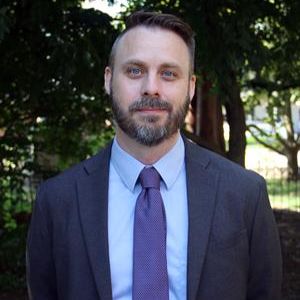
Sarah L. Orsak is an Assistant Professor in the Department of Women, Gender, and Sexuality Studies at the University of Virginia, where she researches the racialized intersections of disability, Blackness, and gender. Her work critically examines how disability functions as a racial category within scholarly fields and institutional practices. Education: Ph.D. in Women's, Gender, and Sexuality Studies, Rutgers University—New Brunswick Dr. Orsak's scholarship centers on the co-constitution of race and disability, with particular focus on anti-Blackness in disability frameworks and the politics of intersex athletic regulations. Her research interrogates how able-bodied normalcy is produced through racialized and gendered exclusions in sports, literature, and media. Key methodological approaches include Black feminist theory, critical disability studies, and postcolonial analysis. Analysis of her publications reveals consistent engagement with the racial politics of bodily norms across historical and contemporary contexts. Her work demonstrates how disability discourse has been whitened in academic and cultural institutions, while simultaneously exposing the specific violences enacted against Black disabled bodies. Recurring themes include the weaponization of ableism in sports governance, the erasure of Blackness in disability narratives, and the colonial legacies shaping contemporary bodily regulations. Scientific Awards: Rising Scholar Postdoctoral Fellowship Dr. Orsak has secured research funding from the Mellon Foundation and Rutgers Center for Research on Women. She actively contributes to academic community building as incoming co-chair of the Critical Disability Studies Caucus of the American Studies Association and through her membership in UVA's Disability Studies Initiative, where she collaborates on interdisciplinary projects examining disability justice frameworks. Her institutional engagement extends to developing curricular initiatives at the intersection of disability studies and critical race theory within the Department of Women, Gender, and Sexuality Studies.
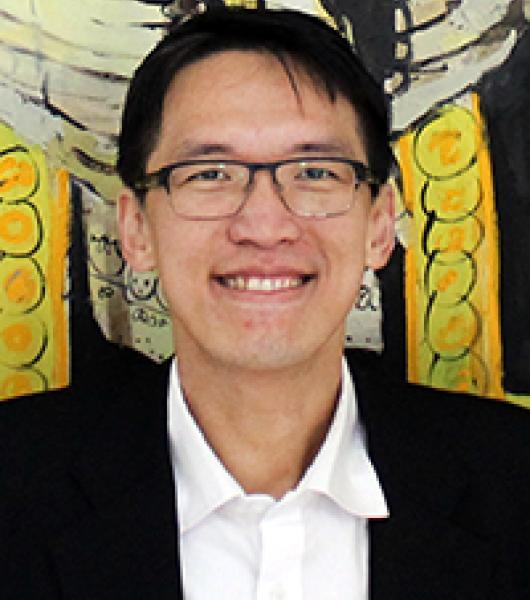
Mao-wei Lo is an Assistant Professor at the College of Law, National Taiwan University. He holds a J.S.D. and J.S.M. from Stanford Law School (2024 and 2019, respectively) and an LL.M. and LL.B. from National Taiwan University (2015 and 2012). His academic career includes teaching and research roles at Stanford University and prior experience as a senior legal officer at Taiwan's Mainland Affairs Council. Dr. Lo's educational background includes: J.S.D. in Law, Stanford Law School (2024) J.S.M. in Law, Stanford Law School (2019) LL.M. in Law, National Taiwan University Law School (2015) LL.B. in Law, National Taiwan University Law School (2012) Professor Lo's research focuses on international economic law, particularly WTO law and international investment law and arbitration. He also explores public international law and cross-strait relations, with an emphasis on empirical legal studies. His work often addresses contemporary challenges such as forced labor in global supply chains, pandemic-related regulatory measures, and the impact of geopolitical tensions on international legal frameworks. Lo's recent publications demonstrate a strong engagement with the intersection of international trade, investment law, and geopolitical issues. His work frequently examines Taiwan's unique position in international law, including its investment treaties and cross-strait relations. A notable trend is the application of empirical methods to analyze international legal instruments and their real-world implications, particularly in the context of China's economic policies and the Belt and Road Initiative. His scholarly contributions have been recognized with several awards: MOST Humanities and Social Sciences Overseas Talent Cultivation Program (2023) Hungdah Chiu Memorial Prize for International Law (2022) Levin Center Public Interest Summer Fellowship, Stanford Law School (2021) Salzburg Cutler Fellow in International Law, Stanford Law School (2021) John Hart Ely Prize for Outstanding Performance, Stanford Law School (2019) Franklin Family Fellowship, Stanford Law School (2018) Ministry of Education Overseas Study Scholarship (International Organizations and International Law) (2016) National Taiwan University Student Altruism Award (2015) While there is no explicit information on student advising, Dr. Lo's research has been supported by competitive grants and fellowships. Key projects include: WTO Chairs Programme (WCP) Phase III: Junior Research Fellow (2022-2025), funded by the World Trade Organization. Researcher at Stanford Center for Ocean Solutions (2021-2023).
Dr Emma McKinley is a Senior Research Fellow at Cardiff University's School of Earth and Environmental Sciences, where she has been based since 2016. An expert in marine social sciences, she focuses on understanding the complex relationship between society and the sea, examining diverse perceptions, attitudes, and values held by different communities and audiences to support effective ocean governance. Dr McKinley holds a BSc in Marine Biology from the University of Stirling, an MSc in Marine Environmental Protection from the University of Wales, Bangor, and a PhD from the University of Bournemouth examining marine citizenship in UK marine and coastal management. As an experienced mixed-methods researcher, she applies diverse techniques across her work, bridging natural and social science perspectives. Her research spans marine spatial planning, ecosystem services, public perceptions of marine issues, coastal community resilience, and the Blue Growth agenda. She has developed strong working relationships with government bodies, the United Nations Environment Programme – World Conservation Monitoring Centre (UNEP-WCMC), NGOs including the RSPB and Marine Conservation Society, and partners across Northern Europe. Her work emphasizes community and stakeholder engagement at local, regional, national, and international scales to inform marine policy and governance. Analysis of her recent publications reveals a consistent focus on ocean literacy, marine social science integration, and the human dimensions of marine governance. Her work demonstrates increasing attention to interdisciplinary approaches that bridge natural and social sciences, with growing emphasis on community engagement, cultural connections to the ocean, and policy-relevant research that addresses the UN Ocean Decade goals. Dr McKinley is the Founder and Chair of the Marine Social Science Network, Chair of the Royal Geographical Society's Coastal and Marine Research Group, and serves on the UK's Marine Science Coordinating Committee's Social Science Task Group and Working Group on Ocean Literacy and Communication. She also sits on Welsh Government groups including the Wales Marine Advisory and Action Group and the Marine Planning Stakeholder Reference Group. As an active supervisor, she mentors postgraduate students across marine social sciences topics. She serves as Interim Manager of the Severn Estuary Partnership, supporting community and stakeholder engagement activities including the Natural Resources Wales funded 'Discover the Severn' project. Her public outreach includes participation in NERC's 'UnEarthed' Event, Soapbox Science Cardiff, Pint of Science, and Eisteddfod events.
Arnulf Deppermann is Professor of German Linguistics at the University of Mannheim and Head of the Pragmatics Department at the Leibniz Institute for German Language. He specializes in conversation analysis, multimodal interaction, and the study of spoken German. His research examines how meaning, understanding, and social action are interactively constituted through linguistic and embodied resources. Research interests focus on interactional semantics, multimodal resource coordination, and the temporal organization of social interaction. Key areas include action ascription, the relationship between grammar and interaction, and methodological advances in conversation analysis. His work spans diverse contexts from psychotherapy to theater rehearsals. Recent publications demonstrate strong emphasis on: Interactional semantics and meaning negotiation Multimodal coordination in institutional settings Therapeutic communication patterns German linguistics and conversation analytic methodology Editorial roles include founding co-editor of the online journal 'Gesprächsforschung'. He organizes major conferences including the International Conference on Conversation Analysis (ICCA).
Susan P. Crawford is the John A. Reilly Clinical Professor of Law, emeritus at Harvard Law School. She previously served as Special Assistant to President Obama for Science, Technology, and Innovation Policy, and co-led the FCC transition team between the Obama and Bush administrations. A former partner at WilmerHale, her work focuses on telecommunications policy, climate adaptation, and public leadership. She holds a B.A. and J.D. from Yale University, and clerked for Judge Raymond J. Dearie of the U.S. District Court for the Eastern District of New York. Education: B.A., Yale University, 1984 J.D., Yale Law School, 1989 Research Interests: Professor Crawford’s research spans telecommunications policy, regulatory law, climate resilience, and civil rights. Her landmark books, including Captive Audience and Fiber , critique telecom monopolies and advocate for equitable infrastructure. Her recent work, Charleston , examines race, climate, and urban adaptation. She frequently addresses issues such as net neutrality, municipal broadband, and the intersection of technology and governance. Publications Overview: Her articles and books analyze topics like fiber-optic networks, police reform, and pre-K expansion, reflecting a commitment to data-driven governance and public accountability. Scientific Awards: Politico’s 50 Thinkers (2015) TIME Magazine’s Tech 40 (2013) Fast Company’s Most Influential Women in Technology (2009) IP3 Awardee (2010) Prospect Magazine’s Top Ten Brains (2011) Advising & Grants: As a legal scholar, Crawford has advised on FCC policy and municipal projects like Concord’s fiber network. She emphasizes community-driven solutions to systemic challenges in technology and climate adaptation.
Dael A. Norwood is an Associate Professor in the Department of History at the University of Delaware's College of Arts & Sciences. His research centers on nineteenth-century American history, emphasizing the global dimensions of U.S. political economy and international commerce. Specializes in global political economy of U.S. commerce Focuses on sovereignty, citizenship, and race in early America Currently researching the emergence of 'businessman' as political identity His publications explore themes like transnational trade networks, constitutional development through commerce, and historiographical methods in economic history. Professor Norwood teaches courses on American global history, capitalism, and political economy, integrating his research into classroom practice.
Dr. Brian Barry is an Associate Professor in Intellectual Property Law at Trinity College Dublin's School of Law. He specializes in judicial decision-making, AI in legal systems, and workplace dispute resolution. His research bridges psychology, court operations, and technology, with notable contributions to understanding judicial behavior and AI's role in justice systems. He holds a PhD in Workplace Dispute Resolution from Trinity College Dublin (2013) and an LL.B. (2009) from the same institution. Dr. Barry has advised government agencies on decision-making processes and delivers training to judges on judicial psychology. His work has been cited by courts like the Irish Supreme Court and Australian Federal Court. He has held visiting positions at Columbia University and the University of Toronto, and previously practiced law in Dublin. His 2021 book How Judges Judge explores empirical insights into judicial behavior. Recent research trends focus on AI applications in courts, judicial group decision-making dynamics, and the integration of behavioral economics principles into justice systems. He actively contributes to peer-reviewed journals in legal technology, judicial studies, and dispute resolution. Recognition includes the 2021 Teaching Hero Award from Trinity College Dublin. His advisory work extends to judicial councils and legal education reforms, emphasizing practical applications of empirical findings in legal practice.
Prof Caroline Humfress is a Professor of Medieval History and Deputy Head of the School of History at the University of St Andrews. She serves as Co-Director of the Institute of Legal and Constitutional Research and Convenor of the MLitt in Legal and Constitutional Studies. Her research focuses on Ancient, Late Antique, and Early Medieval law and religion, employing interdisciplinary approaches from legal theory, anthropology, and sociology. She recently co-edited The Cambridge Comparative History of Ancient Law (2024) and is completing a monograph on multilegalism in Late Antiquity for Oxford University Press. Her teaching spans undergraduate and postgraduate levels, including courses on Legal Cultures in Late Antiquity and Comparative Studies in Legal History. She supervises PhD students in legal history and related fields. Her research emphasizes comparative legal frameworks, legal pluralism, and the intersection of law with religious and social structures in pre-modern societies. Prof Humfress collaborates internationally on projects such as the comparative analysis of ancient legal systems across Greek, Roman, Indo-European, Near-Eastern, and Chinese contexts. Her work challenges modern legal assumptions through historical lenses, as seen in her 2024 Law and History Review article on legal pluralism's mythologized narratives. Affiliations: Institute of Legal and Constitutional Research, School of History Key Projects: MLitt Legal and Constitutional Studies program development, multilegalism monograph, comparative ancient legal history
Joshua Neoh is an Associate Professor at ANU Law School, where he serves as Sub-Dean (International) and sits on multiple university committees including the ANU Academic Board Steering Committee and Teaching and Learning Development Committee. His research focuses on the intersections of law, religion, and political theory, with particular emphasis on Kierkegaardian philosophy and constitutional frameworks. Educationally, he holds: PhD in Law from University of Cambridge (2015-2018) LLM from Yale Law School (2010-2011) LLB (First Class Honours with University Medal) from ANU (2006-2010) His scholarly publications demonstrate consistent engagement with philosophical foundations of legal systems, examining how theological concepts influence contemporary jurisprudence. Recent works explore existentialist perspectives on sovereignty and ethical frameworks in governance. Honors include the Penny Pether Prize for interdisciplinary legal scholarship and recognition for teaching excellence. He mentors graduate students in legal theory and participates in international research collaborations across Europe and Asia.
Priya S. Gupta is an Associate Professor at McGill University's Faculty of Law , focusing on property law, critical race theory, and urban governance. Prior to McGill, she held roles at Southwestern Law School and Jindal Global Law School in India, where she contributed to founding their faculty. She is affiliated with King's College London's Transnational Law Institute and the University of Washington's India Law Institute. Her research examines how property regimes perpetuate racial inequality globally, particularly in housing and financial systems. Educated at the University of North Carolina (B.A. Economics), London School of Economics (MSc), New York University (J.D.), and LSE (PhD), her work spans transnational legal frameworks, socio-economic inequality, and urban development. She has advised on anti-money laundering policies in Ontario and sits on the board of the Parkdale Neighborhood Land Trust, advocating for affordable housing in Toronto. Her research interests include the intersections of property law with race, capitalism, and global financial systems. Recent work analyzes housing inequality in North America, India, and the UK, alongside critiques of financialized urban governance. She has held visiting professorships at Osgoode Hall and King's College London, and led the American Association of Law Schools' Property Section as its President. Gupta organizes the McGill Law Critical Race Reading Salon and collaborates on projects addressing rural development in India and equitable electoral laws in Toronto. Her transnational legal scholarship bridges theoretical rigor with practical community engagement in marginalized communities.
Tyson Roberts is a Lecturer in the Department of Political Science at the University of California, Los Angeles (UCLA). His research focuses on comparative politics, democratization, African governance, and international political economy. He has conducted fieldwork in West African countries, examining electoral processes, authoritarian regimes, and the dynamics of political survival. Roberts' work explores topics such as the role of charisma in military coups, the impact of regional trade agreements on democratization in Africa, and the interplay between economic policy and foreign direct investment in developing nations. His publications span studies on presidential and parliamentary dictatorships, electoral behavior in Togo and Côte d’Ivoire, and the effectiveness of foreign aid in Malawi. Roberts' research often bridges theoretical frameworks with empirical analysis, particularly in Sub-Saharan Africa. He has contributed to debates on democratic consolidation, term limits, and the challenges of sustaining political institutions in post-conflict environments. His work emphasizes the complexities of political transitions and the socio-economic factors influencing governance stability. Roberts holds a CV available for review, which likely details his academic credentials and professional trajectory. While specific grants or advising roles are not explicitly mentioned in the provided text, his research portfolio indicates active engagement with critical questions in political science.
Coel Kirkby is a Senior Lecturer in Law and Director of the Julius Stone Institute of Jurisprudence at the University of Sydney Law School. He holds a PhD from the University of Cambridge, an LLM from McGill University, and a BA (Hons) in Mathematics and Philosophy from Queen’s University. His research focuses on legal history, comparative constitutional law, and postcolonial legal legacies of British imperialism. He has held prestigious fellowships, including the Smuts Research Fellowship in Commonwealth Studies (University of Cambridge, 2017–2018), and has contributed to constitutional projects in Fiji, South Africa, and beyond. Research interests include legal theory, democracy, and colonial legal systems. He is completing two books on liberal democracy in the British Empire and a new work on law and revolution during the Cold War. His teaching covers Foundations of Law, Torts, and jurisprudence electives such as The History of Legal Thought and The Commonwealth and the Common Law. Selected Awards/Fellowships: Smuts Research Fellow in Commonwealth Studies (University of Cambridge) McKenzie Fellow (Melbourne Law School) Endeavour Fellow (UNSW) Grants include the 2020 Treaty Talk and Treaty People in the Commonwealth project. He collaborates with institutions like the Sydney Environment Institute and the Vere Gordon Childe Centre. His work bridges historical legal analysis with contemporary constitutional challenges in postcolonial states.
Professor David Airey is a faculty member in the School of Civil Engineering at The University of Sydney. He earned a BA, MSc, and PhD in Engineering from the University of Cambridge. His research focuses on improving understanding of soil and rock behavior to enhance infrastructure safety and sustainability. Key areas include geotechnical engineering, soil mechanics, offshore structures, and ground improvement methods. He has served as Acting Head of School (2016) and is involved in editorial roles for journals like the Geotechnical Testing Journal . Research Interests: His work addresses risks in construction excavation, ground improvement, and offshore platform foundations. He develops models to predict soil behavior and mitigate hazards like soil liquefaction. Recent studies include transparent soil observations for fines migration and cyclic mobility in sands. Publications Trends: Over 200+ peer-reviewed articles (2025-2021) span topics like constitutive models for cemented materials, bio-cemented sands, and submarine landslide hazards. Recent work emphasizes unsaturated soil dynamics and self-healing clay mechanisms. Students: Supervises PhD/Master’s research on soil stabilization, microplastic contamination, and foundation engineering challenges. Current advisees include Hamed Faizi and Yifei Gao. Labs/Teams: Affiliated with the Net Zero Institute, SciGEM, and Centre for Wind, Waves and Water. Engages in collaborative projects on carbon sequestration and geomechanical modeling.