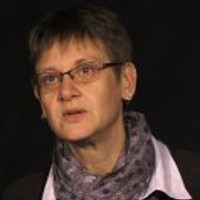
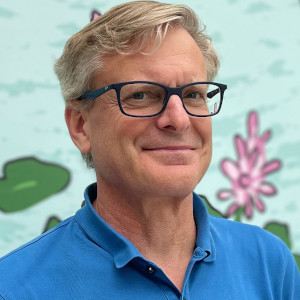
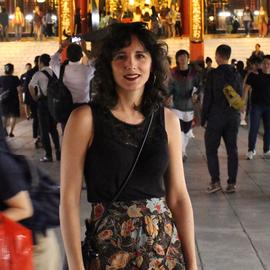
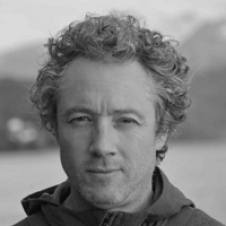
Nicolas Mathevon is a Professor at the University of Saint-Etienne, with a focus on Animal Behavior and Bioacoustics . He currently serves as Director of Studies at Ecole Pratique des Hautes Etudes and leads the ENES Team . His research explores acoustic communication across diverse species, including crocodiles, seals, penguins, and humans, with particular emphasis on vocal recognition, signal evolution, and neurobiological underpinnings. Major collaborations include Dr. T. Aubin (CNRS), Dr. I. Charrier (marine mammals), Dr. N. Grimault (crocodilian bioacoustics), and Prof. D. Reby (human communication). He also co-edits a new book, The Voices of Nature , published by Princeton University Press. His recent work spans ecoacoustic monitoring for conservation, multi-modal communication in crocodiles, and cross-species analysis of distress signals in bonobos, chimps, and humans. Neurobiological studies include brain activation patterns in response to vocalizations and sound localization mechanisms in reptiles. Scientific Awards include senior membership in the Institut universitaire de France .
Hélène Morlon is a Professor at the Biology Department of École normale supérieure (ENS) - PSL Research University Paris. She leads the Biodiversity Modeling team within the Center for Computational Biology, focusing on integrating ecological and evolutionary processes to explain biodiversity patterns through mathematical and bioinformatics approaches. Specializes in molecular phylogenies, speciation, extinction, and dispersal mechanisms Collaborates with mathematicians, phylogeneticists, and field ecologists Her research reveals non-equilibrium dynamics in biodiversity, challenging classical models by demonstrating speciation rate declines and climate-driven phenotypic evolution. She has developed probabilistic models applied to amphibians, mammals, birds, plants, and microorganisms. Scientific Awards: ERC Consolidator Grant (2013) Chaire d'Excellence en biologie/santé (France Innovation Santé 2030) ERC Advanced Grant (2024) for project PlankDiv Her work bridges macroecology, macroevolution, and conservation biology, with notable contributions to understanding tropical biodiversity gradients and climate impacts on evolutionary rates.
Nathalie Frascaria-Lacoste is a Professor at AgroParisTech and Director of the UMR ESE (Ecology, Society, Evolution) since 2022. She previously served as Assistant Professor at ENGREF (Paris/Nancy) and Deputy Director of UMR CNRS/UPS/AgroParisTech 8079 for nearly two decades. Her research focuses on three core areas: (1) socio-ecosystem dynamics related to biodiversity and climate change, (2) environmental assessment processes in French public policies, and (3) urbanization impacts on biodiversity with decision-making tools. She has coordinated interdisciplinary projects like the « Manuel de la Grande Transition » and serves on scientific councils for institutions like the Yves Rocher Foundation and Campus de la Transition. Current affiliations: AgroParisTech, UMR ESE, Université Paris-Saclay Former affiliations: ENGREF, CNRS Noteworthy grants include VINCI Chairs (2009-2012, 2014-2019), LabEx funding (INDISS/ACT), ITTECOP grants, and ANR EVNATURB. Her editorial roles include the NSS journal and scientific councils at INRAE and ACT department. Prominent scientific award: Chevalier in the National Order of Merit (2016). Supervision includes 5 current PhD students and 6 former PhD/postdocs. She collaborates with institutions like INRAE, CNRS, and the Yves Rocher Foundation.
Céline Clauzel is a Professor of Geography at the University of Paris 1 Panthéon-Sorbonne and a member of the Laboratory for Social Dynamics and Space Recomposition (LADYSS). She holds a Junior membership in the University Institute of France (IUF, 2023). Her research focuses on spatial modeling of ecological networks, biodiversity management, and human-wildlife interactions, with a geographic emphasis on France, China, and urban environments. Research Projects: Co-leader of the COOLSCHOOLS project (2022–2025) and leader of the INTERFACE project (2022–2023). Key roles in TRAMARE, REAUMUR, and ecological transparency studies for transportation networks. Administrative Roles: Member of LabEx DynamiTe Steering Committee, Scientific Council of the Foundation for Research on Biodiversity (FRB), and elected member of LADYSS laboratory council. Her work bridges ecology and urban planning, emphasizing decision-support tools for biodiversity management. Recent studies explore urban green spaces, wildlife corridors, and citizen science applications in biodiversity monitoring. Awards: Junior IUF membership (2023). Supervises doctoral students focusing on topics like railway permeability, school biodiversity engagement, and connectivity modeling in urban environments. Collaborates with institutions like SNCF, CDC Biodiversité, and the Morvan Regional Natural Park. Active in interdisciplinary initiatives, including co-creating platforms for researchers and practitioners to address ecological challenges in infrastructure and urban development.
Paul Leadley is a Professor at the University of Paris-Saclay, France, where he directs the Population and Community Ecology group within the Ecology, Society and Evolution Laboratory (IDEES). His research focuses on global change impacts on terrestrial ecosystems, biodiversity, and ecosystem functioning through field experiments and mathematical modeling. His educational background includes a B.S. in Science from Pennsylvania State University (1981), an M.S. in Botany from North Carolina State University (1985), and a Ph.D. in Ecology from San Diego State University and UC Davis (1993). Prior to his professorship, he worked as a research technician at San Diego State University, Smithsonian Environmental Research Center, and New Mexico State University, followed by post-doctoral research at the University of Basel. Leadley investigates climate change and rising CO2 impacts on plant diversity, biodiversity-ecosystem functioning relationships, and nutrient competition between plants and soil microorganisms. His experimental work centers on California and temperate grasslands, examining fire, temperature, CO2, nitrogen deposition, and precipitation interactions. He develops multi-scale models from rhizosphere nutrient fluxes to regional climate change projections, collaborating with institutions like INRA, Stanford University, and Northern Arizona University. His research integrates field experiments with mathematical modeling to quantify uncertainties in global change projections. His recent publications (2008-2012) reveal consistent themes: climate change impacts on biodiversity via species distribution modeling, interactive effects of multiple global change drivers on soil nitrogen cycling, and development of biodiversity scenarios for policy. Key methodological approaches include multi-model comparisons, experimental manipulations of grassland ecosystems, and trait-based biodiversity assessments. Scientific Awards: No specific awards listed in the provided text. Leadley has directed five Ph.D. students: Alexandra Gastine, Romain Barnard, Xavier Raynaud, Audrey Niboyet, and Sandrine Fontaine. He has secured major research grants including QDiv (770 k€, 2005-2009), SCION (470 k€, 2010-2012), and HumboldtCES (450 k€, 2010-2012). Current projects focus on biodiversity modeling (MOBILIS), biome boundary shifts, and climate change impacts on forests. He participates in international assessment processes including IPBES and IPCC. He leads the Population and Community Ecology team at IDEES Laboratory, comprising approximately 30 researchers, engineers, technicians, and graduate students. The team operates experimental sites in California grasslands and collaborates with national networks including FRB, AllEnvi, and GIS Climat, Environnement, Société. Current initiatives include eco-evolutionary approaches to climate change impacts and development of adaptive forest management strategies.
Bruno TASSIN is a Professor at École nationale des ponts et chaussées and serves as Research Director at the Ministry of Ecological and Inclusive Transition. His primary affiliation is with the Department of City Environment Transport Information. He leads research at the Water, Environment and Urban Systems (Leesu) laboratory and co-directs the Urban Futures Laboratory of Excellence (Labex). He also serves as deputy director of the EFLUVE Observatory of Universe Sciences. His work focuses on urban hydrology, water contamination dynamics, and microplastic pollution in urban watersheds. Since 2012, he has co-led a research program on plastics in urban waterways with Johnny Gasperi. He is a member of the ASTEE research committee and vice-president of the scientific council of the Seine Normandy water agency. Research interests include microplastic dispersion mechanisms, estuarine contamination, and policy applications for pollution mitigation. His projects integrate interdisciplinary approaches to address environmental challenges in urban and aquatic systems, emphasizing real-world policy support. Publications highlight advancements in understanding microplastic transport, estuary dynamics, and the impact of urban runoff. Key contributions include studies on the Seine River Basin and tropical river-estuarine systems, contributing to global plastic pollution discourse.
Michel Prieur is a prominent jurist and faculty member at the University of Limoges, where he served as Dean of the Faculty of Law and Economics (1990) and directed the Centre de recherches en droit de l'environnement, de l'urbanisme et en droit économique. He is also President of the Société française pour le droit de l'environnement. His career spans over four decades, with contributions to environmental law, international environmental governance, and urban planning. University: University of Limoges Roles: Professor, Dean, Research Director, Society President Key Affiliations: CRIDEAU (Centre de recherches interdisciplinaires en droit de l'environnement), CIDCE (Centre international de droit comparé de l'environnement) Research interests focus on environmental law frameworks, international conventions (e.g., Aarhus Convention), climate displacement, and sustainable development. He has authored over 120 publications, including books on environmental codification, environmental justice, and comparative law. His work emphasizes legal mechanisms for environmental protection, such as impact assessments, public participation, and non-regression principles. Key contributions include the 2007 'Pour un droit commun de l'environnement' and the 2012 'La non régression en droit de l'environnement.' Labs/Teams: CRIDEAU (focused on environmental legal research) and CIDCE (comparative international environmental law).
School for Advanced Studies in Public HealthFrance
Marie-Florence THOMAS is a Professor at the School of Public Health, affiliated with the LERES Laboratory for Study and Research in Environment and Health, UMR 1085 IRSET, and the Observatory of the Environment and Sustainable Development. She holds a Doctorate in Process Engineering, a Master’s in Air and Water, and a DEA in Hydrology. Education Doctorate in Process Engineering Masters in Air and Water DEA in Hydrology Her research focuses on water and climate change , water quality measurement , urban water systems , and water risk management . She employs a multidisciplinary approach integrating environmental sciences, public health, and policy analysis. Recent projects include PHARE (HAloacetic acid production under climate change), URB-Bain (urban swimming and climate change), Aladins (climate vulnerability modeling in Brittany), and Expo-Eau (exposure to disinfection by-products). Her scientific expertise spans water quality monitoring, microbial contamination, and health determinants in urban environments. She serves on the Creseb Scientific Committee, the ANR’s Environmental Technologies Evaluation Committee, and the EHESP Board of Directors. Her work emphasizes interdisciplinary collaboration and decision-support tools for climate resilience. She teaches in academic, professional, and continuing education programs, including modules for Health Studies Engineers, the Master’s in Water Sciences, and the Master’s in Public Health. Her pedagogical approach integrates water quality, risk control, and sustainable urban practices.
Helmut Meiss serves as an Assistant Professor at the University of Lorraine's University Institute of Technology (IUT) Nancy-Brabois, where he directs the DUT Biology with Agronomy option study program. His research focuses on conservation biological control of crop pests and weeds through natural enemies within innovative cropping systems, bridging ecological science and agricultural practice. Dr. Meiss's work emphasizes biological pest control and weed management in sustainable agriculture, investigating how landscape features, crop rotations, and biodiversity enhance ecosystem services. His research integrates field studies with predictive modeling—particularly machine learning—to develop practical tools for farmers, as evidenced by his leadership in the ARENA project which establishes observation networks for natural pest regulation. Analysis of his 15 most recent publications reveals consistent themes in cereal aphid regulation, weed dynamics in cropping systems, and data-driven approaches to agri-environmental indicators. His work demonstrates a strong trajectory toward generic predictive models for pest control and the integration of biocontrol into farm-level decision-making, with increasing emphasis on ecosystem service quantification since 2017. Dr. Meiss co-supervises PhD candidate Eric STELL on predicting conservation biological pest control in cereal crop mixtures. His involvement in the ARENA project indicates collaborative grant-funded research, though specific funding sources aren't detailed in available materials. He actively contributes to farmer advisory systems through biodiversity indicators and crop management tools. As part of a multidisciplinary research group organized around three thematic axes, he participates in the ARENA network for pest biocontrol assessment and engages in public outreach including school workshops, biodiversity exhibitions, and science-society initiatives like the 'Grand Nancy Terre de pollinisateurs' project.
Félix Rey is a leading Research Professor at the Structural Virology Unit within the Virology Department of the Institut Pasteur in Paris, France. He spearheads multidisciplinary studies on viral and cellular membrane fusion mechanisms, with a focus on emerging viruses such as Chikungunya , Dengue , and SARS-CoV-2 . His research explores: Structural biology of virus envelope glycoproteins (e.g., Chikungunya p62-E1, Hepatitis C E2, Foamy virus Env). Molecular interactions in viral entry and neutralization. Cell-cell fusion mechanisms in fertilization and development. Recent publications highlight structural insights into: 2025 : SARS-CoV-2 spike protein conformational dynamics and ACE2 receptor interactions. 2024 : Foamy virus fusion protein evolution, TMPRSS2's role in HKU1 coronavirus entry. 2023 : Yellow fever virus maturation, pan-hantavirus neutralization antibodies. He collaborates with teams across France , Southeast Asia , and West/Central Africa through the Pasteur International Center for Research on Emerging Infectious Diseases . Current advisees include Paul Courrieu and Marius Allombert (Master's students).
Camilla Fiorini is an Associate Professor at the National Conservatory of Arts and Crafts (CNAM) in Paris, where she conducts research at the Mathematical and Numerical Modeling Laboratory (M2N). She serves as Principal Investigator for the ANR-funded SPARCL project (2025-2029) focusing on structure-preserving reduced order models for conservation laws. Her academic background includes a PhD in Applied Mathematics from the University of Versailles and both MSc/BSc degrees in Mathematical Engineering from Politecnico di Milano. Her research centers on computational fluid dynamics, numerical analysis of PDEs, and sensitivity methods, with specific applications in uncertainty quantification and reduced order modeling. Current projects develop novel approaches for conservation laws that maintain structural properties while improving computational efficiency and reliability. Fiorini's publication record demonstrates consistent focus on sensitivity analysis techniques for complex fluid systems, shock-capturing methods, and uncertainty propagation in hyperbolic PDEs. She received the SMAI-GAMNI PhD Award 2019 (French ECCOMAS Award) for her doctoral dissertation on sensitivity analysis for nonlinear hyperbolic systems. As Principal Investigator of the SPARCL project, she leads a team developing new reduced basis construction techniques for conservation laws. Fiorini actively advises graduate researchers including PhD students Nathalie Nouaime (2021-2024) and Nicolas Lepage (2022-present), plus multiple Master's candidates. Her research group collaborates with institutions including Inria, Sorbonne University, ONERA, and CEA. Current projects include ANR JCJC-funded SPARCL and ANR AHEAD initiatives. She leads the SPARCL research group at M2N laboratory, collaborating with researchers including Alessia Del Grosso, Iraj Mortazavi, and Taraneh Sayadi on reduced order modeling techniques. The team focuses on developing computationally efficient ROMs that preserve physical structures in conservation laws.
Étienne Maclouf is a Professor of Management Sciences at IAE La Rochelle and an associate researcher at the Panthéon-Assas Management Sciences Research Laboratory (LARGEPA) and CESCO (CNRS-Museum national d'Histoire naturelle). His work bridges management science with ecology, health sciences, and conservation biology, focusing on industrial trajectories in the Anthropocene. Doctorate in Management Sciences, Paris 1 Panthéon-Sorbonne (2001) Research Master's in HR Management, Paris 1 Panthéon-Sorbonne Master's in Ecology, Biodiversity, Evolution, National Museum of Natural History Habilitation à Diriger des Recherches (HDR), Paris 2 Panthéon-Assas His research explores ecological transition , environmental innovation , and CSR , emphasizing interdisciplinary approaches to reconcile management with life sciences. Recent work includes analyzing the One Health perspective during the Covid crisis and critical performativity in sustainable practices. Selected scientific recognition: FNEGE 2021 Award (Essays category) for 'Why Industrial Organizations Won't Save the Planet' He supervises PhD candidates in biosocial organizations, agro-environmental policies, digital healthcare, and participatory science programs. His career integrates teaching (HR, public management, strategy) and leadership as IAE La Rochelle Director.
Nils Christian Stenseth is a renowned Norwegian biologist and Professor of Population Ecology and Zoology at the University of Oslo since 1980. He serves as Director of the Centre for Ecological and Evolutionary Synthesis (CEES) , a Research Council of Norway Centre of Excellence, and holds the role of Chief Scientist at the Norwegian Institute of Marine Research. His research spans theoretical and empirical ecology, with notable contributions to the Red Queen Hypothesis and population cycles of species like the Norwegian lemming. Education: B.Sc. (1972, Biology/Zoology/Mathematics), Ph.D. (1978). Advisor: John Maynard Smith (theoretical evolution). Stenseth’s work bridges ecology, evolution, and environmental science. His 1979 Oikos paper on species extinction and the Red Queen Hypothesis remains influential. He transitioned from theoretical models to empirical field studies, leading interdisciplinary teams at CEES. Awards: Doctor Honoris Causa (ENS de Lyon, 2011), Honorary Doctorate (University of Antwerp), and membership in premier academies like the French Academy of Sciences and Academia Europaea. Grants and collaborations are not detailed, but his leadership in Norway’s marine research and CEES underscores significant institutional backing. His lab, CEES, focuses on ecological and evolutionary synthesis across disciplines.
Camille Berthelot is a Principal Investigator and head of the Comparative Functional Genomics research group at the Institut Pasteur in Paris, France. Her work lies at the intersection of evolutionary biology, genomics, and reproductive physiology, with a focus on understanding how genomic changes drive evolutionary innovations in vertebrates, particularly the evolution of menstruation in primates. Her research leverages cutting-edge technologies including single-cell RNA sequencing, organoid models, and computational frameworks to compare gene expression and regulation across species such as humans, macaques, and mice. She investigates how evolutionary changes in gene function contribute to novel traits and how these relate to diseases like endometriosis. A major focus is the use of menstrual fluid as a non-invasive biomarker source for endometriosis, a direction highlighted in her systematic review published in Reproductive Biology and Endocrinology . Her recent publications span high-impact journals such as Science , Genome Research , and Nature Ecology & Evolution , covering topics from teleost fish phylogeny to regulatory evolution in mole-rats. These works reveal a consistent trend in using comparative genomics to decode deep evolutionary questions, often in collaboration with institutions like QMUL and INSERM. ERC Starting Grant (EVOMENS) – Decoding the genetics of menstruation evolution in primates Collaborative project on hypoxia adaptation in mole-rats Development of bioinformatics tools like FINSURF for non-coding variant classification She actively mentors a team of postdocs, PhD students, and master’s interns, including Claire Lavergne, Leo Zeitler, and Eulalie Liorzou. Former members such as Malgorzata Gazda and Axelle Brulport have gone on to independent academic positions, reflecting her role in training next-generation scientists. Camille Berthelot returned from maternity leave in June 2024 and remains actively engaged in research, publication, and team leadership at the Institut Pasteur.
Vinod Kumar SARANATHAN holds the CNRS Junior Professor Chair at the University of Tours (France), leading the Evolutionary Photonics lab within the Institut de Recherche sur la Biologie de l'Insecte (IRBI). His academic journey includes previous roles as Associate Professor at Krea University (India), Assistant/Research Assistant Professor at Yale-NUS College (Singapore), and a Royal Society Newton Fellowship at the University of Oxford (UK). Research focuses on structural coloration in arthropods and birds, blending evolutionary biology, developmental biology, and soft matter physics. Key themes include the evolution of photonic nanostructures, biomimetic material synthesis, and self-assembly mechanisms. Techniques employed include synchrotron SAXS, electron microscopy, X-ray tomography, and computational modeling. Publications span structural coloration in weevils, butterflies, and birds, with insights into fossil color preservation and developmental genetics. Collaborations bridge biology, physics, and engineering to translate natural nanostructures into sustainable materials. Current grants and projects emphasize biomimetic fabrication of photonic materials and omics approaches to developmental coloration. Lab members include PhD students and postdocs working on structural biology, materials characterization, and evolutionary genomics.