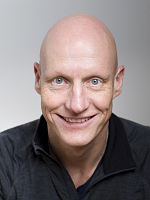
Paolo Giaccone is a Full Professor at the Department of Electronics and Telecommunications (DET) of Politecnico di Torino. He serves as Course Coordinator for the Master's Degree in Communications Engineering and contributes to teaching in the College of Electronic, Telecommunications and Physics Engineering. His research focuses on cloud computing, 5G networks, programmable data planes, WiFi-based crowd monitoring, and network softwarization . His recent publications highlight edge computing, microservice orchestration, and resource optimization in cloud and network systems. Collaborations with researchers like Carla Chiasserini and Holger Karl dominate his work. He has received honors such as the Open badge Learning to Teach (L2T) and served as Associate Editor for IEEE/ACM Transactions on Networking. He advises PhD candidates including Antonio Calagna and Madhura Adeppady, and leads projects like SmartShires and TrialsNet for next-generation networks.
Tine Vertommen is a Researcher in the Care and Well-being department at Thomas More University of Applied Sciences , Belgium, and a criminology expert. She coordinates the Safeguarding Sport & Society research line and leads the International Research Network on Violence and Integrity in Sport (IRNOVIS), funded by the Research Foundation Flanders. Dr. Vertommen holds a MA in Ethics, MSc in Criminology, and PhD in Medicine and Health Sciences. Her research focuses on the prevalence and prevention of interpersonal violence against children and adolescents in sport , including developing the Interpersonal Violence in Sport Questionnaire and bystander intervention programs. Member, Council of Europe's Safe Sport Pool of International Experts Member, European Commission High-Level Expert Group on Gender Equality in Sport Academic Advisory Board, IOC Certificate course for Safeguarding Officer in Sport Lead author, IOC Consensus Statement on Safeguarding in Sport (2023) Her recent work emphasizes bystander interventions and cross-national prevalence studies , with publications in British Journal of Sports Medicine , Child Abuse & Neglect , and Frontiers in Psychology . She collaborates with international bodies like the IOC and Flanders Research Foundation to advance athlete safety. Developed first large-scale study on interpersonal violence in Dutch/Belgian sports Co-developed global standard for violence assessment in sports Focus on mental health impacts and policy compliance
Dr. François Audibert is a full Professor at the Faculty of Medicine, Université de Montréal, and Head of the Maternal-Fetal Medicine Division at the Department of Obstetrics and Gynecology. He is affiliated with CHU Sainte-Justine as Chief of the Fetal and Maternal Medicine Service and a member of the North American Fetal Therapy Network. His clinical and research focus bridges Obstetrics, Gynecology, Epidemiology, and Biostatistics, with expertise in congenital anomalies, prenatal screening, gestational health policies, and fetal therapy. 2007-2012: IRSC Salary Award 2005: CREOG Excellence in Resident Training Award 2005: Université de Montréal Jacques Van Campenhout Award Dr. Audibert’s research specializes in predicting preeclampsia and fetal growth restriction using serum biomarkers and Doppler velocimetry, evaluating provincial trisomy 21 screening policies, and advancing fetal therapy for twin pregnancies. His work spans maternal-fetal medicine, public health, and diagnostic techniques. His research projects include large-scale studies like the PULSE study (2021-2024) on early preeclampsia prediction via arterial stiffness, and the Montreal Emerging Research Team in Maternal Fetal Medicine (MERe) (2016-2022). He has secured grants from Canadian Institutes of Health Research (CIHR) and Genome Quebec for initiatives in prenatal genomics and perinatal outcome optimization. Dr. Audibert has supervised Master’s theses on angiogenic biomarkers in preeclampsia (2012), first-trimester screening (2010), and hypertensive disorder prediction (2009). His collaborations include teams at CHU Sainte-Justine, University of British Columbia, and Genome Canada-funded consortia.
Rochelle Winikoff is an Assistant Clinical Professor in the Department of Pediatrics within the Faculty of Medicine, affiliated with CHU Sainte-Justine in Montreal, Canada. She specializes in hematology-oncology with a focus on hemostasis disorders. Dr. Winikoff completed her medical degree (1995) and Master of Science in Epidemiology and Biostatistics (2003) at McGill University, followed by specialized training in internal medicine, adult hematology, and hemostasis pathologies. Her research focuses on: Hemostasis abnormalities in women and children Von Willebrand Disease management Pediatric thrombotic thrombocytopenic purpura Bleeding disorders in obstetric and gynecological contexts Development of international clinical guidelines She leads the Interdisciplinary Women's Hemostasis Program and directs clinical programs for von Willebrand Disease and Pediatric TTP at CHU Sainte-Justine. Her publication record demonstrates consistent focus on bleeding disorders across pediatric and obstetric contexts, with recent work expanding into COVID-19 coagulopathies and international classification systems. Research themes include: Prophylactic management of inherited bleeding disorders Consensus guidelines for menorrhagia/postpartum hemorrhage Gender-specific approaches to hematological care International collaborative research networks Dr. Winikoff holds leadership positions including: Chair of the Women and Bleeding Disorders Committee (AHCDC) Co-chair of ISTH Women's Health Issues Subcommittee Honorary chair of Code Red program (Canadian Hemophilia Society) Active member of Canadian Pediatric Thrombosis Network She regularly presents at international conferences on women's hematology topics.
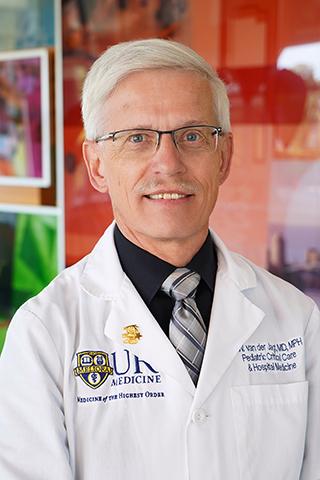
Elise van der Jagt, M.D., M.P.H. serves as Professor (Part-Time) in the Department of Pediatrics, Critical Care at the University of Rochester School of Medicine and Dentistry. She is Chief of Pediatric Hospital Medicine and Pediatric Sedation Officer at UR Medicine, with 35 years of clinical experience spanning pediatric critical care, hospital medicine, transport medicine, and procedural sedation. She pioneered pediatric critical care and hospital medicine as formal disciplines at the institution. MD: University of Maryland School of Medicine (1974) Internship, Residency, Fellowship: University of Rochester Medical Center (1974-1982) Dr. van der Jagt's research focuses on Pediatric Resuscitation, Pain/Sedation Management, Hospital Medicine, Quality Improvement, and Healthcare Simulation. As a decade-long member of the American Heart Association Pediatric Sub-Committee, she contributed to international resuscitation guidelines. Her scholarly work includes site leadership for the THAPCA project and development of simulation-based emergency training. Recent publications demonstrate sustained leadership in pediatric resuscitation science, with emphasis on therapeutic hypothermia, septic shock management, and rapid response systems. Her work consistently addresses evidence-based protocol development for critical pediatric emergencies. Best Doctors in America (2007) Miracle Maker Award-Outstanding Physician Achievement (2000) Robert Wood Johnson Foundation Fellowship (1980-1982) Alpha Omega Alpha Honor Medical Society (1974) 22 total awards spanning teaching, service, and clinical excellence Dr. van der Jagt actively contributes to quality improvement through the GCH Quality and Safety Committee and Resuscitation/Rapid Response Team Committees. She oversees all pediatric procedural sedation at the Children's Hospital and develops research on Pediatric Rapid Response Team indications. Her leadership extends to national guideline development through the American Heart Association and International Liaison Committee on Resuscitation. She directs the Pediatric Hospital Medicine division and maintains active involvement in medical education, having received multiple teaching awards including the Medical Student Teaching Award (1980) and Morning Report Most Valuable Player Teaching Award (2022).
Na Li is an Adjunct Assistant Professor in the Department of Computing and Software at McMaster University's Faculty of Engineering. Her interdisciplinary research bridges computational methods with clinical hematology through extensive collaborations with transfusion medicine experts. Key contributions in biostatistical modeling for immune thrombocytopenia diagnosis Innovations in healthcare logistics for blood product management Pioneering AI-human collaboration frameworks for electronic health record analysis Her scholarly work spans machine learning applications in disease detection, operational research for blood inventory optimization, and clinical decision support systems development. Recent publications demonstrate integration of large language models with medical expertise for improved diagnostic accuracy. Notable research themes include: Pandemic resource allocation fairness Perioperative anticoagulant management Platelet transfusion analytics Blood product demand forecasting Privacy-preserving federated learning Her work has been cited extensively across transfusion medicine , critical care , and healthcare technology domains, with implementations in major clinical trials and policy documents.
Elizabeth Pike serves as Professor of Sport, Health and Exercise at the University of Hertfordshire within the School of Life and Medical Sciences and Department of Psychology, Sport and Geography. She heads the Institute of Sport and leads the Sport and Social Inclusion Research Group (SSIRG), having joined Hertfordshire in 2017 after positions at St Mary's University and the University of Chichester. Her global influence extends through presidency of the International Sociology of Sport Association (ISSA), co-founding the Anita White Foundation, and directing the IOC-funded Women in Sport High Performance pathway (WISH). Her research centers on critical sociological analysis of sport through three interconnected pillars: gender equity (particularly women's leadership and participation), aging and physical activity (including dementia care applications), and theoretical applications of Erving Goffman's work. She employs symbolic interactionist and critical theory frameworks to examine how sport both reflects and shapes societal structures, with recent focus on post-pandemic recovery, geopolitical tensions in mega-events, and Global South perspectives. Notable recognition includes the 2024 IOC Gender Equality Award, 2023 WiSEAN Top 10 honor, 2021 Athena Swan Award, and 2019 RSA Fellowship. Her 2024-2025 publications analyze Paris Olympics gender claims, dementia-friendly physical activity models, and 30 years of IWG progress. Fellowship of the Royal Society for the encouragement of Arts, Manufactures and Commerce (RSA) (2019) Life and Medical Sciences Athena Swan Award (2021) WiSEAN Top 10 Individuals for Women's Sport Contribution (2023) IOC Gender Equality, Diversity and Inclusion Award (2024) Pike actively mentors emerging scholars globally, having supervised 10 PhD completions and currently guiding 6 doctoral candidates. Her research funding includes ESRC grants for dementia physical activity studies and international projects on aging in Japan/UK. She chairs the Women in Sport High Performance pathway (WISH) supported by Olympic Solidarity and leads the IWG UK Secretariat 2022-2026. As head of SSIRG, she coordinates an international team of researchers, policymakers, and practitioners focused on sport-based social inclusion. Her group's work includes the Consensus Statement on Physical Activity and Ageing and Alzheimer's Society advisory contributions, with field operations spanning dementia care communities and Global South leadership academies.
Peter Kuhn is a University Professor at the University of Southern California with appointments spanning Biological Sciences, Medicine, Biomedical Engineering, Aerospace and Mechanical Engineering, and Urology. He serves as the Director of the Convergent Science Institute in Cancer (CSI-Cancer) at USC's Michelson Center for Convergent Biosciences, where he leads groundbreaking research in cancer diagnostics and treatment. His interdisciplinary approach bridges physics, engineering, and medicine to develop innovative cancer care solutions. Dr. Kuhn's research focuses on liquid biopsy technologies, mathematical oncology, and digital health applications for cancer care. His work centers on redesigning cancer care through convergent science, with particular emphasis on early detection, disease forecasting, and personalized treatment strategies. He has pioneered the use of aqueous humor as a liquid biopsy for retinoblastoma and developed the Digital Health Companion platform to objectively assess patient performance status. His team's mathematical models predict cancer metastasis patterns across various cancers including bladder, breast, and lung cancer, transforming how clinicians understand and manage cancer progression. Analysis of Dr. Kuhn's recent publications reveals a strong trajectory toward multi-analyte liquid biopsy approaches, integrating single-cell analysis with genomic and proteomic data across various cancer types. His work increasingly focuses on clinical translation, with numerous publications addressing standardization frameworks (through the BLOODPAC consortium), diagnostic validation, and implementation of liquid biopsy in routine clinical practice. The research spans from fundamental cancer biology to practical clinical applications, with growing emphasis on digital health integration and AI-driven cancer forecasting. Dean's Professor of Biological Sciences (2014-2017) University Professor designation across multiple disciplines National Academy of Inventors Senior Member (Class of 2024) Recipient of numerous research grants from NIH, DoD, and industry partners Dr. Kuhn mentors a large research team including multiple graduate students across engineering and biological sciences disciplines, as well as numerous undergraduate researchers. His CSI-Cancer institute has secured significant funding for projects including the ATOM-HP study on objective performance status measurement, INTERCEPT early detection of breast cancer, and the ATEZO trial for at-home cancer immunotherapy. The institute collaborates with major medical centers including Cedars-Sinai, Children's Hospital Los Angeles, and Stanford University. As Director of CSI-Cancer, Dr. Kuhn leads a multidisciplinary team developing innovative approaches to cancer care. The institute's work spans liquid biopsy development, mathematical oncology modeling, and digital health technologies. Key initiatives include the Digital Health Companion platform, disease forecasting models for various cancers, and the Convergent Science Cancer Consortium funded by the Department of Defense. The team operates state-of-the-art laboratories for single-cell analysis and collaborates closely with clinical partners to translate research findings into patient care improvements.
Tonje Lossius Husum is a Professor at Oslo Metropolitan University, specifically within the Faculty of Health Sciences, Department of Nursing and Health Promotion. She serves as Head of Studies in her area of responsibility and maintains an active research profile with numerous publications appearing in 2024-2025. Her office is located at Pilestredet 32, 0166 Oslo (Office number: N050.121) and she can be reached via email at tonjelossius.husum@oslomet.no or by phone at +47 412 80 305 (mobile) or +47 672 36 300 (office). Professor Husum's research primarily focuses on coercion in mental health care, violence risk assessment, and interventions to reduce involuntary psychiatric admissions. She leads the ReCoN (Reducing Coercion in Norway) intervention project, which aims to develop and implement strategies in primary mental health care to reduce involuntary admissions. Her work spans multiple methodologies including prospective naturalistic studies, cluster randomized controlled trials, scoping reviews, and qualitative investigations involving multiple stakeholders in the mental health system. Her recent publication record demonstrates strong activity in the field, with a particular emphasis on youth mental health services, violence risk assessment tools (particularly the Violence Risk Assessment Checklist for Youth), and implementation science approaches to reducing coercion. The ReCoN intervention appears to be a major focus of her current research program, with multiple publications examining its development, implementation process, and outcomes across Norwegian municipalities. Through her leadership of the ReCoN project and numerous publications on coercion reduction, Professor Husum has established herself as a significant contributor to mental health services research in Norway, particularly in the areas of reducing coercive practices and improving risk assessment methodologies in both youth and adult mental health settings.
Larry Lands, MD, PhD is a Professor in the Department of Pediatrics, Faculty of Medicine and Health Sciences at McGill University and a Senior Scientist at the Research Institute of the McGill University Health Centre (RI-MUHC) , Glen site. He leads the Translational Research in Respiratory Diseases Program within the Centre for Translational Biology, focusing on chronic pediatric lung diseases. Research Interests Clinical & Translational Research: Investigating cystic fibrosis, primary ciliary dyskinesia, and severe asthma in children. Novel Therapeutics: Developing inhalable nucleic acid and small-molecule therapies to control lung inflammation and repair airway damage. Exercise Physiology: Examining factors limiting exercise capacity in adolescents with obesity and other at-risk populations. Diagnostic Innovation: Pioneering oscillometry as a simple, child-friendly lung-function assessment tool for infants and children. Recent Research Trends His 2024–2025 publications reveal an intensified focus on cutting-edge CFTR modulator trials (e.g., elexacaftor-tezacaftor-ivacaftor comparisons), mucolytic microsphere therapies (CIL-05), and the first Canadian clinical practice guidelines on cystic-fibrosis-related diabetes. Additional work explores lung ultrasound for PCD/CF, post-lung-transplant weight dynamics, and spectral oscillometry in obese adolescents, underscoring a translational pipeline from bench to bedside. Scientific Awards & Honors No specific awards are listed in the provided text. Advising & Grant Activity While specific trainees and grants are not enumerated, his role as Senior Scientist and Professor implies active mentorship of graduate students, clinical fellows, and post-docs within the RI-MUHC and McGill University ecosystems. Labs & Teams He heads the Translational Research in Respiratory Diseases Program at the RI-MUHC, integrating bench scientists, clinical coordinators, and imaging specialists to advance pediatric respiratory medicine.
Dr. Erin P. Ward is an Assistant Professor in the Department of Surgery at the University of Utah School of Medicine, specializing in Surgical Oncology at the Huntsman Cancer Institute. She is a board-certified surgical oncologist with expertise in the treatment of abdominal cancers, particularly appendiceal cancer, neuroendocrine tumors, gastric cancer, and metastatic colorectal cancer. Dr. Ward is recognized as an expert in peritoneal surface malignancies and advanced therapies including cytoreduction and hyperthermic intraperitoneal chemotherapy (HIPEC). Dr. Ward's educational background includes: Medical Degree: College of Human Medicine at Michigan State University Undergraduate: Physiology and Psychology with Specialization in Bioethics, Humanities and Society from Michigan State University Residency: General Surgery at University of California San Diego Fellowships: Complex General Surgical Oncology and Hepato-Pancreatic Biliary Surgery at Medical College of Wisconsin, plus a two-year research fellowship at University of California San Diego Dr. Ward's primary research focus centers on defining the impact of psychosocial health on both short-term and long-term outcomes for cancer patients. She serves as one of two Commission on Cancer Liaison Physicians at the Huntsman Cancer Institute and is actively involved in developing consensus guidelines for the management of various peritoneal surface malignancies. Her clinical expertise spans minimally invasive surgery, peritoneal-based malignancies, and HIPEC procedures, with special attention to patient-reported outcomes and decision-making processes. Her recent publications (2021-2025) demonstrate a strong focus on consensus guidelines for managing appendiceal tumors, peritoneal metastases, and other gastrointestinal malignancies. These works reflect her leadership in establishing standardized treatment approaches for complex surgical oncology cases, particularly those involving peritoneal surface disease. Her research spans both technical surgical aspects and patient-centered outcomes, including decision regret and psychosocial impacts of cancer treatment, showing a comprehensive approach to improving cancer care. Dr. Ward is board certified by the American Board of Surgery in both General Surgery and Complex General Surgical Oncology. She is actively involved in multiple national consensus guideline development efforts through the Peritoneal Surface Malignancies Consortium Group, contributing to evidence-based standards of care for rare and complex cancers. As an educator and clinician, Dr. Ward is committed to advancing the field of surgical oncology through both clinical practice and research. Her work bridges technical surgical expertise with attention to patient experience and psychosocial outcomes, reflecting a comprehensive approach to cancer care that addresses both the physical and emotional aspects of the disease.
Dr Ryan Ting is a Researcher in the Discipline of Surgery at the School of Clinical Medicine, University of New South Wales . His work bridges clinical orthopaedics, trauma research, and biomechanical analysis. Education: BMed, MD Dr Ting’s research focuses on orthopaedics , trauma surgery , and postinjury multiple organ failure . He investigates surgical timing optimization in critical care and biomechanical innovations in shoulder procedures like the Latarjet technique and rotator cuff repairs. His recent publications highlight collaborations with international experts on topics spanning implant materials, graft resorption, and patient-reported outcomes. His articles reflect expertise in reverse total shoulder arthroplasty , rotator cuff repair , and polytrauma management . Key themes include biomechanical engineering , clinical decision-making , and epidemiological trends in postinjury complications. Awards: Royal Australasian College of Surgeons 2023 Travel Grant Best Podium Presentation Award Discipline of Surgery 2025 Publication of the Year (Early- and Mid-Career Researcher Category) Dr Ting contributes to clinical guidelines such as the Orthogeriatric Hip Fracture Care: Clinical Practice Guide (2023-2027 Edition) by NSW Ministry of Health. He also engages in teaching, serving as an Anatomy Demonstrator (Musculoskeletal) and Quality Medical Practice Tutor .
Craig Tschautscher, MD, is an Assistant Professor (CHS) in the Department of Emergency Medicine at the University of Wisconsin–Madison School of Medicine and Public Health. He serves as the Director of Prehospital Resident Education and Medical Director for Berlin EMS and Southern Green Lake County Ambulance, focusing on advancing prehospital care and aeromedical transport. Undergraduate: University of Minnesota MS in Clinical Research: University of Minnesota School of Public Health MS in Biology: Minnesota State University-Mankato Medical School: Wayne State University School of Medicine Residency: Mayo Clinic School of Graduate Medical Education Fellowships: Hennepin Healthcare (EMS/Prehospital Research), UW Hospitals and Clinics (Med Flight) Diploma in Retrieval and Transport Medicine (DRTM): Royal College of Surgeons of Edinburgh Dr. Tschautscher’s research centers on prehospital care, critical care transport, and retrieval medicine. He has led studies on simulation-based training, ventilator management, and trauma resuscitation. His work emphasizes improving documentation standards via the GAMUT metric and optimizing care for agitated patients during transport. His recent publications highlight a focus on simulation training, trauma care, and quality improvement in aeromedical transport. Topics include airway management, cardiogenic shock stabilization, and leadership skill development in high-pressure prehospital teams. Diploma in Retrieval and Transport Medicine (DRTM), Royal College of Surgeons of Edinburgh Examiner for the DRTM examination Board of Trustees, Air Medical Physician Association As a Co-investigator for the Wisconsin STARS grant, Dr. Tschautscher contributes to simulation training initiatives aimed at enhancing rural prehospital care for children. His clinical practice involves leading critical care transport teams, dual certification in Emergency Medicine and EMS, and advancing ultrasound applications in prehospital settings.
Jan Oldenburg serves as Professor II in the Division of Medicine and Laboratory Sciences at the University of Oslo's Faculty of Medicine, based at Akershus University Hospital. His clinical and research activities focus on urologic malignancies with particular emphasis on testicular, prostate, and renal cancers. His research interests center on urologic oncology , specifically the management of testicular germ cell tumors, prostate cancer therapeutics, and renal cell carcinoma. Key areas include platinum-based chemotherapy toxicity, cancer survivorship issues, and the development of evidence-based clinical guidelines. His work frequently addresses long-term complications in cancer survivors such as neurotoxicity, ototoxicity, and endocrine dysfunction. His publication portfolio demonstrates consistent leadership in major international guideline initiatives, including the EAU-EANM-ESTRO-ESUR-ISUP-SIOG prostate cancer guidelines and ESMO-EURACAN testicular cancer guidelines. Recent work shows increasing focus on targeted therapies (PARP inhibitors), immunotherapy combinations, and real-world evidence in metastatic disease settings. As an active contributor to clinical guideline development, he participates in multiple European Association of Urology and ESMO consensus panels. His research utilizes Norwegian cancer registries and population-based cohorts to investigate survivorship issues and treatment outcomes. He maintains active clinical trial involvement, particularly in phase III studies evaluating novel combinations for metastatic prostate cancer (TALAPRO-2) and advanced urothelial carcinoma (CheckMate 901). His work bridges clinical practice with translational research through the Translational Cancer Research group at Akershus University Hospital.
Professor Rob Krams is Chair of the Division of Bioengineering and Scientific Director of the CVDHub at Queen Mary University of London's School of Engineering and Materials Science. His research integrates engineering and molecular biology to study cardiovascular biomechanics, epigenetic regulation, and atherosclerosis. With over 500 publications, he focuses on mechanotransduction, shear stress effects on vascular biology, and advanced imaging techniques. Research Interests: His lab investigates how mechanical forces influence gene expression in endothelial cells using CRISPR, high-throughput screening, and fluid-structure interaction modeling. Key areas include non-coding RNA networks, synthetic biology approaches for vascular repair, and multi-scale computational models bridging cellular responses to hemodynamics. Publication Trends: Recent work emphasizes machine learning applications in hemodynamics, deep learning for plaque classification, and novel imaging techniques for shear stress quantification. His articles consistently explore intersections of computational modeling, molecular biology, and translational cardiology. Awards & Recognition: Established Investigator Award (2003–2008) Associate Editor for 12 scientific journals Research Infrastructure: Leads a multidisciplinary team at the Centre for Bioengineering, developing pipelines for in vivo endothelial cell isolation, RNA analysis, and CRISPR validation. Collaborates globally on projects involving intravascular imaging, animal models of atherosclerosis, and biomechanical diagnostics.