Mattia Zanella is a Researcher at the Department of Mathematics, University of Pavia, within the 'Methods and Models for Applied Sciences' group. His work focuses on kinetic theory, computational methods, and their applications to epidemic dynamics, opinion formation, and socio-economic systems. He develops mathematical models to study emergent phenomena in complex systems, with particular emphasis on uncertainty quantification and control strategies. Research interests include kinetic equations (Fokker-Planck, Boltzmann-type models), agent-based systems, and data-driven approaches for understanding collective behavior. His studies address topics such as epidemic spreading, wealth distribution, traffic flow, and social networks, often integrating stochastic processes and numerical analysis. Key contributions involve analyzing consensus dynamics, optimizing control mechanisms for epidemic models, and modeling the impact of social heterogeneity on disease transmission. His work bridges theoretical developments with practical applications, such as biomedical image segmentation and policy evaluation in public health. Recent publications emphasize the interplay between opinion dynamics and epidemic control, uncertainty quantification in kinetic equations, and the mathematical modeling of socio-economic systems. Zanella collaborates on interdisciplinary projects, applying advanced computational techniques to real-world problems in epidemiology, engineering, and urban studies.
Nina Baranchuk is an Associate Professor of Management at the Naveen Jindal School of Management, University of Texas at Dallas. She holds a Ph.D. in Economics from Washington University in St. Louis (2004), alongside MA degrees in Economics from Washington University (2000) and New Economic School (Moscow, 1998), and an M.S. in Mathematics from Moscow State University (1998). Her research focuses on corporate governance, agency theory, contracting mechanisms, investment strategies, applied econometrics, and microeconomic theory. Notable contributions include studies on CEO compensation design, board consensus dynamics, and the impact of disclosure policies on investment efficiency. Dr. Baranchuk has held roles including Visiting Assistant Professor at UT Austin (2008-2009) and has been at UT Dallas since 2004. She teaches graduate and undergraduate courses in corporate finance, microeconomics, and financial strategy. Her work has been supported by multiple research grants from Washington University, including summer research awards (2001-2003) and a continuing fellowship (2002-2003). Her publications span top journals like the Review of Financial Studies and Journal of Economic Theory , addressing topics such as super-manager economics, renegotiation-proof contracts, and product quality signaling. Recent research explores creditor behavior in bankruptcy contexts and revenue-sharing models in the motion picture industry.
Yilun Shang is an Associate Professor in the Department of Computer and Information Sciences at Northumbria University. Previously, he held an Associate Professor position at Tongji University's School of Mathematical Sciences (2014–2018). His research interests span complex systems, network science, and nonlinear dynamics. He earned a PhD in Applied Mathematics from Shanghai Jiao Tong University in 2010, followed by postdoctoral appointments at institutions including the University of Texas at San Antonio and the Hebrew University of Jerusalem. Shang's work focuses on three core areas: (1) properties of complex networks (e.g., robustness, percolation, epidemic models), (2) mathematical properties of random graph models (e.g., degree distribution, connectivity, algebraic indices), and (3) nonlinear dynamics in multi-agent systems (e.g., synchronization, consensus algorithms). He has organized international conferences and delivered invited talks on topics like Estrada indices in random graphs. His academic achievements include the 2016 Dimitrie Pompeiu Prize and a presentation at the 2018 International Congress of Mathematicians. He advises postgraduate students in complex networks and systems and investigates resilient consensus protocols, graph metrics, and topological indices with applications in chemistry and engineering.
Ross Maciejewski is an Ira A. Fulton Professor of Computer Science at Arizona State University (ASU), leading the School of Computing and Augmented Intelligence. He serves as Director of the Department of Homeland Security-funded Center for Accelerating Operational Efficiency. His research focuses on visual analytics, geographical visualization, and predictive analytics, with applications in homeland security, public health, dietary analysis, and the food-energy-water nexus. He holds affiliations with the Center for Biodiversity Outcomes, Water Institute, and Global Futures Scientists program. Education: PhD (2009), M.S. (2004), and B.S. (2001) in Computer Science/Engineering from Purdue University and the University of Missouri. He advises students through courses like CSE 792 (Research) and CSE 499 (Individualized Instruction), and has led over 20 funded projects including NSF grants and industry collaborations. Research Interests: Visual analytics, predictive modeling, and interdisciplinary problem-solving. His lab, VADER, develops tools for decision support in complex systems. Key innovations include FEWSim (food-energy-water nexus simulations) and LossLens (machine learning diagnostics). Awards: NSF CAREER Award (2014), Best Paper (EuroVis 2017), ACM CHI Honorable Mentions (2018, 2022) Grants: INFEWS/T2 (2016-2021), NSF CAREER (2014-2019) Labs/Teams: Visual Analytics and Data Exploration Research (VADER) Lab
Ines Lindner is an Associate Professor of Mathematical Economics at the Vrije Universiteit Amsterdam's School of Business and Economics (SBE). She earned her Diplom-Mathematikerin from the University of Hamburg in 1998 and a Ph.D. in Mathematical Economics in 2003. Her research focuses on social and economic networks, collective action, voting power dynamics, and technological innovation's impact on inequality. Lindner leads the SBE Innovation Center, which won the VU Innovation Prize in 2017 for the Online Summer Prep-Campus SBE. She is also a Tinbergen Institute Research Fellow. Her work bridges theoretical economics with practical applications, including analyzing network structures in social learning, fake news diffusion, and small-world effects on economic growth. Lindner has published in top journals like Journal of Development Economics and International Economic Review . She co-organizes major events like the TI Dutch Network Economics Day and the Networks Match Making Event, fostering interdisciplinary collaboration. Research highlights include quantifying bot influence on social consensus, modeling naive learning in networks, and exploring how small-world networks affect innovation diffusion and inequality. Lindner’s contributions to economic theory and network science have been recognized through awards and collaborative projects, including an NWO-funded study on social network analysis in organizations.
Michael Bertolacci is a Senior Research Fellow at the School of Mathematics and Applied Statistics, University of Wollongong. He holds a PhD from the University of Western Australia (2016–2020). His research focuses on large-scale spatio-temporal problems in environmental statistics, including hierarchical Bayesian models for rainfall analysis, nonstationary time series methods, and flux inversion for trace gases. Current work emphasizes offshore engineering applications. He has secured funding from the University of Wollongong and NASA, collaborating on projects like WOMBAT v2.0, a Bayesian flux-inversion framework. His GitHub repositories reflect computational contributions to statistical methods and geospatial modeling.
Prof. Olgierd Unold is a faculty member at the Faculty of Information and Communication Technology at Wrocław University of Science and Technology, where he is affiliated with the Department of Computer Engineering. He holds the academic rank of Professor and conducts research in machine learning, computational intelligence, and bioinformatics. Research Interests: Machine Learning, particularly Grammatical Inference Computational Intelligence: Evolutionary Algorithms, Learning Classifier Systems, Fuzzy Rule Systems Bioinformatics and DNA Computing Natural Language Processing and Pattern Recognition His recent publications demonstrate a strong focus on applying AI techniques to bioinformatics, log analysis, formal language inference, and optimization problems. The work spans from theoretical algorithm development to practical applications in software reliability and biological data classification. Scientific Awards: No awards listed in the provided text. Advising and Grants: Prof. Unold has supervised or collaborated with numerous researchers and students, including Wojciech Wieczorek, Norbert Kozłowski, and Łukasz Śmierzchała, on projects involving classifier systems, grammatical inference, and bioinformatics. While specific grants are not mentioned, his consistent publication output suggests active research funding. Labs and Research Teams: He is part of the research ecosystem within the Department of Computer Engineering, contributing to projects in AI, machine learning, and computational intelligence, likely involving student-led and collaborative research initiatives.
Daniele Taufer is a postdoctoral researcher affiliated with the NUMA research unit at KU Leuven (Belgium) since 2022, supported by the FWO (Flemish Fund for Scientific Research) under project 12ZZC23N. Previously, he worked at CISPA (Germany) from 2020 to 2022 as a postdoc on elliptic curve cryptography within the ERC-669891 project, supervised by Antoine Joux. Education: Ph.D. in Mathematics (2016–2020), University of Trento (IT), cum laude, thesis: "Elliptic Loops" (supervised by Massimiliano Sala) Master in Mathematics (2014–2016), University of Duisburg-Essen (DE) and University of Leiden (NL) via the ALGANT double-degree program, thesis: "Algebraic aspects of the Number Field Sieve" (supervised by Hendrik W. Lenstra) Bachelor in Mathematics (2011–2014), University of Padova (IT), thesis: "Gröbner bases and applications" (supervised by Alberto Tonolo) Research interests span computational and commutative algebra, applied algebraic geometry, and cryptographic applications. Key areas include symmetric tensor decomposition (Waring, tangential, Chow, cactus ranks), effective decomposition algorithms (apolarity, Hankel operators), and algebro-geometrical properties of apolar schemes. His work bridges theoretical algebra and practical cryptography, particularly focusing on elliptic curves and their applications in blockchain and isogeny-based systems. Recent scientific contributions examine decompositions of symmetric tensors, elliptic curve discrete logarithm problems (ECDLP), and group structures over discrete rings. His algorithmic developments leverage apolarity and Hankel operators for computational efficiency. Scientific accolades: Maître de conférences qualification (2025) in Mathematics and Applied Mathematics sections Member of the SIAM Activity Group on Algebraic Geometry Labs and teams include the NUMA group at KU Leuven and the ERC-669891 project at CISPA.
Yuhua Zhu is a tenure-track Assistant Professor in the Department of Statistics and Data Science at the University of California, Los Angeles (UCLA). Her research focuses on the intersection of partial differential equations (PDEs) and machine learning, with particular emphasis on using differential equations to analyze and design efficient reinforcement learning and optimization algorithms. Education: Ph.D. in Mathematics, University of Wisconsin-Madison (2019), advised by Shi Jin M.S. in Mathematics, University of Wisconsin-Madison (2015) B.S. in Mathematics, Shanghai Jiao Tong University (2014) Postdoc at Stanford University (2019–2022), mentored by Lexing Ying Research Interests: Her work spans sequential decision-making (e.g., continuous-time reinforcement learning, multi-armed bandits), optimization (gradient-free methods, asynchronous-SGD, convergence analysis), and uncertainty quantification in kinetic equations (sensitivity analysis, high-dimensional uncertainty). She develops PDE-based frameworks for model-free reinforcement learning and consensus-based optimization methods for distributed learning systems. Recent Work Trends: Her publications emphasize PDE-driven approaches to reinforcement learning, consensus-based optimization in federated learning, and uncertainty quantification in kinetic equations. Recent topics include addressing adversarial attacks in federated learning, high-order discretization in policy evaluation, and stabilization of kinetic equations with reflective boundary conditions. Awards & Grants: No specific awards mentioned in the text. Current recruiting focuses on graduate students in reinforcement learning and optimization for machine learning problems. Labs & Collaborations: Collaborations include work with Jose Carrillo, Shi Jin, Lexing Ying, and others on consensus-based methods and kinetic theory applications in machine learning.
Dr Liz Halstead is an Associate Professor at the UCL Institute of Education (IOE) in the Psychology & Human Development department. She specializes in sleep and mental health, combining clinical practice as a Cognitive Behavioral Therapist for Insomnia with research on resilience and well-being in at-risk populations. Her roles include directing the Anxiety, Sleep and Well-being (ASWell) laboratory, leading postgraduate teaching assistants, and serving as the IOE's Mental Health and Well-being Equity Lead. Education: PhD in Resilience, Well-being, and Behavioral Problems in Children with Intellectual and Developmental Disabilities (Bangor University). Professional qualifications include a Postgraduate Certificate in Higher Education and certification in PEERS® (Programme for Education and Enrichment of Relational Skills). Research Focus: Her work investigates sleep disruptions in populations such as veterans, autistic individuals, and families with neurodevelopmental disorders. Notable projects include developing a mobile app for sleep data collection in veterans and exploring cross-cultural sleep patterns in children with ASD. She emphasizes telehealth interventions and interdisciplinary collaborations at UCL. Professional Contributions: Supervises students across undergraduate to doctoral levels, focusing on personalized academic support. Proud of leading the veteran sleep app project, which involved global teamwork and bridged clinical and technological expertise. Engages in advocacy for persons with disabilities and mental health equity. Labs/Teams: Leads the ASWell lab and collaborates with UCL’s interdisciplinary networks. Her work aligns with UN Sustainable Development Goal 3 (Good Health and Well-being).
Jungpil Hahn is a Provost's Chair Professor at the National University of Singapore (NUS) School of Computing, where he holds multiple leadership positions including Vice-Dean of Communications, Director of the NUS Fintech Lab, Deputy Director of AI Singapore (AI Governance), and Deputy Director of the Centre for Technology, Robotics, Artificial Intelligence & the Law. Previously, he served as Head of the Department of Information Systems and Analytics from July 2015 to June 2021. Before joining NUS, he was an Assistant Professor at Purdue University's Krannert School of Management and a Visiting Assistant Professor at Carnegie Mellon University's Tepper School of Business. Ph.D. in Information & Decision Sciences, University of Minnesota (2003) M.B.A. in Business Administration, Yonsei University, Seoul (1998) B.B.A. in Business Administration, Yonsei University, Seoul (1998) Professor Hahn's research spans multiple cutting-edge domains, with a particular focus on organizational learning in digital contexts, open innovation, and the impact of emerging technologies on business processes. His work examines how organizations adapt to technological change, with special attention to decentralized autonomous organizations (DAOs), blockchain governance, and the effects of privacy-enhancing technologies on business analytics. He investigates the intersection of human behavior and technology, particularly in crowdsourcing platforms and software development teams, exploring how team composition, knowledge diversity, and organizational structures impact innovation outcomes. His research also addresses practical challenges in data science, including missing data problems and the impact of privacy technologies on firms' analytics capabilities. His recent publications reveal a strong trend toward studying decentralized organizational forms enabled by blockchain technology, with multiple papers examining DAOs and consensus mechanisms. There's also a clear focus on the practical challenges of implementing AI and data analytics in business settings, particularly around data quality issues and the impact of privacy technologies. His work bridges theoretical organizational science with practical business applications, often using simulation-based approaches to develop and test theories. Recipient of multiple Best Paper Awards at ICIS (2020-2023) AIS Distinguished Member (2022) Faculty Teaching Excellence Award at NUS School of Computing (2014) Best 2013 Published Paper Award from Academy of Management's OCIS Division Best Reviewer Award from INFORMS Information Systems Society (2009) Professor Hahn has successfully mentored numerous PhD students who have secured prestigious academic positions at institutions worldwide, including the University of Colorado, Georgia State University, and Central University of Finance and Economics. His research is supported by significant grants focused on digital transformation, blockchain applications, and AI governance. He serves as Senior Editor of MIS Quarterly and has previously served as Associate Editor of Information Systems Research, demonstrating his leadership in the academic community. His research projects often involve interdisciplinary collaboration with computer scientists, economists, and legal scholars. He leads the Garbage Can Lab (https://garbcan.com/), which conducts research on complex socio-technical systems using an 'organized anarchy' approach inspired by the Garbage Can Model of Organizational Choice. The lab brings together researchers from diverse backgrounds to tackle problems related to digital transformation, platform innovation, computational social science, and data science. Current projects include studying organizational learning in DAOs, AI-enabled organizational decision-making, interventions for crowdsourcing platforms, and the impact of privacy technologies on business analytics.
Dr. Daniel Waschbusch is a Professor and Vice Chair for Research in the Department of Psychiatry and Behavioral Health at Pennsylvania State University. He holds affiliations with the Division of Child Outpatient Services and the Penn State Neuroscience Institute. His primary focus is advancing treatments for children/adolescents with disruptive behavior disorders (ADHD, ODD, CD), particularly examining how callous-unemotional traits influence treatment outcomes. He has led NIH-funded projects including a 2010-2014 study developing novel behavioral protocols for conduct problems. Education: Bachelor of Science in Psychology, University of Wisconsin-Madison (1990) PhD in Clinical/Developmental Psychology, University of Pittsburgh (1998) Internship in Clinical Child/Adolescent Psychology, University of Mississippi Medical Center (1998) Research Interests: Evidence-based treatment adaptation for ADHD/ODD/CD Neurobehavioral mechanisms of callous-unemotional traits Multi-informant assessment methodologies Cross-diagnostic symptom overlap (e.g., CDS vs autism) Grants & Projects: Ongoing Rural Housing Service award (PI since 1999) NIMH-funded treatment protocol development (Co-PI 2010-2014) Professional Credentials: ABPP Certified Clinical Child & Adolescent Psychologist (2016) Pennsylvania Licensed Psychologist (2013) Key Research Areas: His 215+ publications span behavioral assessment methods, treatment efficacy studies, and longitudinal analyses of developmental psychopathology. Recent work emphasizes neurocognitive correlates of disruptive behaviors and measurement tool validation.
Dr. Andrew Dhawan is a Physician Scientist at the Cleveland Clinic, holding appointments in the Lerner Research Institute and Taussig Cancer Center. He serves as Assistant Staff in the Rose Ella Burkhardt Brain Tumor and Neuro-Oncology Center, where he leads the Dhawan Laboratory focused on biomarker development for neuro-oncologic and neuro-genetic diseases that currently lack effective long-term treatments. Dr. Dhawan's educational background includes: MD from Queen's University, Kingston, Ontario (2016) DPhil in Oncology from University of Oxford (2017) Residency in Neurology at Cleveland Clinic (completed 2022) Fellowship in Neuro-Oncology at Cleveland Clinic (completed 2023) Dr. Dhawan's research is highly interdisciplinary, combining his background in mathematics and computer science with clinical neurology. His laboratory develops, validates, and implements biomarkers for neuro-oncologic and neuro-genetic diseases, with particular focus on glioblastoma, PTEN hamartoma tumor syndrome, and tuberous sclerosis complex. The lab employs a multi-faceted approach integrating applied mathematics, computer science, data science, genomics, wet lab biology, and patient registry studies to identify and test biomarkers. This work aims to improve diagnosis, prognosis estimation, treatment monitoring, and clinical trial design for challenging neurological conditions. Analysis of Dr. Dhawan's recent publications reveals a strong focus on neurogenetic disorders and sex differences in brain cancer. His work bridges computational biology with clinical neurology, developing gene signatures and non-coding RNA biomarkers. A significant portion of his research examines microRNA-mediated mechanisms in glioblastoma and the development of clinical risk models for rare neurologic disorders. His publications demonstrate an interdisciplinary approach that combines wet lab biology with computational analysis to address critical problems in neuro-oncology. Dr. Dhawan has received numerous prestigious awards including: Early Stage Clinician Scientist Career Development Award from the Neurological Institute at Cleveland Clinic (2024-2027) Clinical Research Training Scholarship from the American Academy of Neurology (2023-2025) PTEN Research Young Investigator Award from the Developmental Synaptopathies Consortium (2022-2024) Futures in Neurologic Research Scholarship from the American Academy of Neurology (2022) Dr. Dhawan actively mentors graduate students and postdoctoral candidates in his laboratory. His research is supported by multiple grants including the Early Stage Clinician Scientist Career Development Award and the PTEN Research Young Investigator Award. He collaborates extensively with researchers at Cleveland Clinic and other institutions on projects related to glioblastoma, glioma, meningioma, PTEN hamartoma tumor syndrome, tuberous sclerosis complex, and leptomeningeal carcinomatosis. He serves on the editorial board of npj Genomic Medicine and is an active member of the Society for Neuro-Oncology and American Academy of Neurology. The Dhawan Laboratory is a dynamic research environment that brings together experts from diverse fields including cancer biology, non-coding RNA biology, evolutionary biology, bioinformatics, data science, and applied mathematics. The lab has developed sigQC, an R package for the quality control assessment of gene signatures that is now used by researchers worldwide. Current research directions include investigating geographic conditions and neurologic disease, developing risk models using genomic profiling and wearable devices, and improving care for individuals with rare neurologic disorders through the development of clinical care guidelines.
Professor Tomasz Radzik is a Professor of Computer Science at King's College London's Department of Informatics, within the Faculty of Natural, Mathematical & Engineering Sciences. His research focuses on algorithm design, network optimization, wireless communication algorithms, and data structures. He holds a PhD from Stanford University and an MSc from the University of Warsaw. Education: Doctor of Philosophy, Algorithms for Some Linear and Fractional Combinatorial Optimization Problems, Stanford University (1992) Master of Science, Communication and Routing in Synchronous Parallel Machines, University of Warsaw (1985) Research Interests: Radzik's work spans algorithm design for network protocols, distributed systems, and wireless communication. He explores practical implementations of algorithms and their experimental evaluation. His current projects include the Finance Hub (FinTech), Machine Learning, and Algorithms and Data Analysis groups. Grants & Projects: Concept drift in distributed IIoT networks (Toshiba Research Europe, 2021–2025) Randomized Algorithms for Computer Networks (EPSRC, 2014–2017) Expander and Random Walks research (EPSRC, 2011–2014) Collaborations & Labs: Radzik leads King's College's Algorithms and Data Analysis group. His work intersects with the Finance Hub and Machine Learning initiatives, focusing on FinTech and distributed computing challenges.
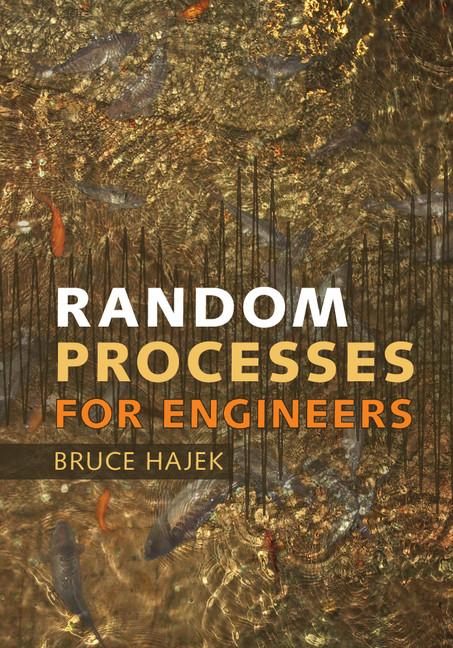
Bruce Hajek is the Leonard C. and Mary Lou Hoeft Endowed Chair in Engineering and Professor of Electrical and Computer Engineering at the University of Illinois at Urbana-Champaign (UIUC), affiliated with the Coordinated Science Laboratory. He holds a PhD in Electrical Engineering from the University of California, Berkeley (1979). His research spans communication networks, stochastic processes, game theory, wireless systems, and data science. He has authored influential works, including the textbook Random Processes for Engineers (2015). Hajek's roles include Department Head of ECE (2019–2024) and membership in prestigious organizations like the National Academy of Engineering (since 1999) and IEEE. He has received accolades such as the ACM SIGMETRICS Achievement Award (2015), Guggenheim Fellowship (1992), and IEEE Fellow distinction (1989). His research interests emphasize stochastic analysis, network dynamics, and algorithmic game theory. Notable contributions include foundational work in random graph matching, blockchain protocols, and statistical inference. Teaching excellence awards span decades at UIUC, and his service includes leadership roles in the IEEE Information Theory Society. Hajek's interdisciplinary expertise bridges theory and applications, impacting fields from wireless communications to machine learning. His work on semidefinite programming for community detection and auction mechanisms exemplifies his innovative problem-solving approach.