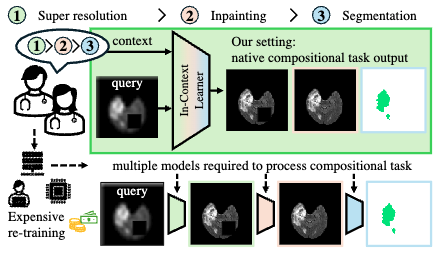
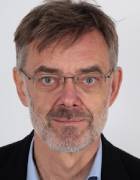
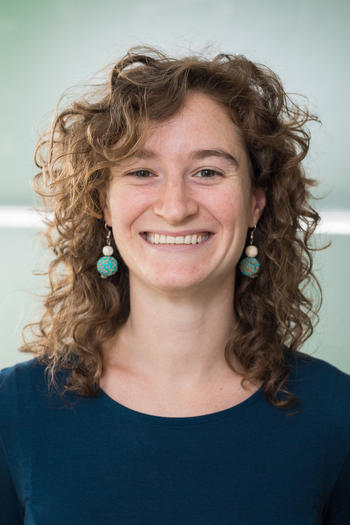
Prof. Dr. Erik Rodner is a faculty member at the University of Applied Sciences Berlin (HTW Berlin), where he serves as a Professor for Machine Learning and Data Science. He also contributes to the School of Engineering Sciences - Technology and Life. His research spans computer vision, machine learning, and biomedical applications, with a focus on learning with limited data, robust visual recognition models, and medical image analysis. He has developed innovative methods for medical diagnostics, industrial classification, and anomaly detection. Recent publications (2025-2016) highlight his expertise in visual in-context learning, semi-weakly segmentation, and active learning frameworks. He has collaborated with institutions such as ZEISS Group, Friedrich Schiller University Jena, and UC Berkeley. Scientific Awards: Award for Excellent Teaching (2023)
Dr. Constantin Christof is a Lecturer (Akademischer Rat auf Zeit) at the Department of Mathematics , Technische Universität München , with prior roles as a W2 Stand-in Professor at Universität Augsburg and Research Associate at TUM and TU Dortmund. His research focuses on Optimal Control of PDEs , Variational Inequalities , and Nonsmooth Optimization , with applications in Non-Newtonian Fluids and Neural Networks . May 2015 - July 2018: Dr. rer. nat. in Mathematics, TU Dortmund Oct. 2013 - July 2014: MAST (Part III of Mathematical Tripos), University of Cambridge Oct. 2009 - Sept. 2012: B.Sc. in Technomathematics and Mathematics, TU Dortmund Christof's work bridges Finite Element Error Analysis , Sensitivity Analysis , and Physics-Guided Machine Learning , particularly in problems involving Contact Mechanics and Parabolic PDE Constraints . His recent publications address challenges in Semilinear Elliptic PDEs , Obstacle Problems , and Nonsmooth Superposition Operators , with a focus on theoretical and numerical advancements. Scientific awards include the Dissertation Award and Best Graduate Award from TU Dortmund, and the Award for Academic Excellence by the Minister President of North Rhine-Westphalia. He has supervised 11 theses at the Master's and Bachelor's levels, covering topics from Neural Network Surrogate Models to Bingham Fluid Simulations .
Georgina Hall serves as Assistant Professor of Decision Sciences at INSEAD, holding the prestigious Patrick and Valentine Firmenich Fellowship for Business and Society. She officially joined the institution in September 2019 after completing a postdoctoral position at INRIA's DYOGENE team from January to September 2019. Her educational background includes a PhD from Princeton University's Department of Operations Research and Financial Engineering (2018), where she was a Gordon Y.S. Wu fellow under Professor Amir Ali Ahmadi's supervision. She earned both her Bachelor of Science (2011) and Master of Science (2013) from Ecole Centrale Paris, where she was valedictorian. Dr. Hall's research focuses on optimization theory, particularly polynomial optimization , semidefinite programming , and convex relaxations of NP-hard problems . Her work bridges theoretical mathematics with practical applications in business decision-making. She has made significant contributions to shape-constrained regression using sum of squares polynomials, demonstrating how semidefinite programming hierarchies can effectively fit shape-constrained polynomials to noisy data. Her recent publications reveal a research trajectory that increasingly connects optimization theory with machine learning applications and supply chain decision-making. The 2025 Operations Research paper on shape-constrained regression represents her theoretical contributions, while the Management Science paper demonstrates practical business applications of her optimization framework. Her scientific recognition includes: Médaille de l'Ecole Centrale from the French Académie des Sciences Princeton School of Engineering and Applied Sciences Award for Excellence 2016 Informs Computing Society Prize for Best Student Paper Multiple teaching awards from Princeton University Patrick and Valentine Firmenich Fellowship for Business and Society Dr. Hall teaches Probability and Statistics at the PhD level and has received significant recognition for her teaching excellence, including the Princeton University's Engineering Council Teaching Award and the Excellence in Teaching Award from the Princeton Graduate School. Her research has practical applications in areas including optimal transport maps for color transfer tasks and estimating optimal value functions for conic programs, with real-time applications in inventory management contract negotiation.
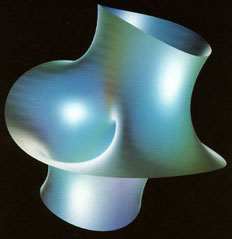
Ulrich Dierkes is a Professor in Mathematical Computer Science at the University of Duisburg-Essen, specializing in geometric analysis and variational problems. His research investigates minimal surfaces, singular PDEs, and multidimensional optimization. Research Focus: Key contributions include foundational work on singular minimal surfaces, Bernstein theorems in controlled growth settings, and n-dimensional extensions of classical variational problems. Recent studies resolve questions about cylindrical and symmetric minimal surfaces. Publications: Authored seminal monographs like 'Minimal Surfaces' (Springer, 2010) and published extensively on geometric PDEs. Articles emphasize existence theorems, regularity, and singular solutions in variational calculus.
Professor Ralf Werner serves as Professor of Business Mathematics at the University of Augsburg, where he leads the Computational Statistics and Data Analysis working group within the Institute of Mathematics at the Faculty of Mathematics, Natural Sciences and Technology. His academic career spans both theoretical research and practical industry applications in quantitative finance. Werner's research interests encompass: Computational Statistics and Data Analysis Optimization under Uncertainty Financial Engineering and Risk Management Actuarial Science and Insurance Mathematics Portfolio Optimization and Asset Allocation His scholarly output demonstrates a consistent focus on robust mathematical methods applied to financial problems, particularly in replicating portfolios for insurance applications, credit risk modeling, and statistical approaches to financial risk management. Werner's publications appear in leading journals across operations research, mathematical finance, and actuarial science. Professional qualifications include his habilitation at the Karlsruhe Institute of Technology (2011) and doctorate from Friedrich-Alexander University Erlangen (2001). He maintains active industry connections through his role as Scientific Advisor for DEVnet since 2010. Werner serves as Internship Coordinator and DAV (German Actuarial Society) correspondent, supporting students pursuing actuarial careers. He is an active member of multiple professional organizations including the Society for Operations Research (GOR), German Mathematical Society (DMV), and German Society for Insurance and Financial Mathematics (DGVFM).
Paul Breiding is a Professor for Mathematical Methods in Data Science at the University of Osnabrück, within the Faculty of Mathematics/Computer Science/Physics. He is part of the Applied Algebra and Data Analysis working group and the Research Unit Data Science. His research focuses on nonlinear algebra, metric algebraic geometry, and their applications in numerical methods and data science. He is a Fellow of the Junge Akademie Mainz and co-authored the book 'Metric Algebraic Geometry' with Kathlen Kohn and Bernd Sturmfels. His work includes developing the software HomotopyContinuation.jl (v.2.11), which is widely used for numerical algebraic geometry. His research interests span algebraic geometry, tensor decompositions, and computational methods. Recent publications investigate geometric properties of algebraic varieties, condition numbers in tensor approximations, and probabilistic aspects of algebraic structures. Key contributions include studies on the reach of algebraic manifolds, typical ranks of random tensors, and sensitivity analysis in numerical algorithms. His work bridges theoretical algebraic geometry with practical computational tools for data science applications. Software: HomotopyContinuation.jl (v.2.11) Labs/Teams: Applied Algebra and Data Analysis, Research Unit Data Science
Robert Stelzer is a Professor and Head of the Institute of Mathematical Finance at Ulm University. His research focuses on stochastic processes, financial mathematics, and statistical methodologies. He has supervised numerous PhD students and organized international scientific events. Key contributions include work on multivariate stochastic volatility models, Lévy processes, and time series analysis. Awards include the Förderpreis and Promotionspreis for his doctoral work. He holds editorial roles in leading journals and actively participates in academic service. Research interests span financial mathematics, stochastic volatility, and extreme value theory. His publications explore CARMA processes, supOU models, and geometric ergodicity. Teaching includes courses on financial mathematics, stochastic analysis, and econometrics. Supervised students have contributed to advancements in stochastic finance and statistical theory. Organized events include workshops on extreme value theory and financial mathematics. Editorships include Statistics and Risk Modeling, reflecting his leadership in statistical research. His work bridges theoretical probability and practical applications in finance and risk management.
Lennart Binkowski is a doctoral candidate and scientific staff member at the Institute of Theoretical Physics , part of the Faculty of Mathematics and Physics at Leibniz University Hannover. His research focuses on quantum computing, particularly quantum algorithms and combinatorial optimization. University: Leibniz University Hannover School: Faculty of Mathematics and Physics Department: Institute of Theoretical Physics Email: lennart.binkowski@itp.uni-hannover.de Lennart's research interests span quantum algorithms, quantum walks, and optimization frameworks. His work explores quantum programming languages, Pauli transfer matrices, and hybrid quantum-classical systems. Recent publications highlight advancements in QAOA, quantum permutation generation, and tensor network applications. Lennart's 15 most recent articles focus on quantum computing trends, including algorithm design, constraint handling, and tensor structures. No scientific awards are mentioned in the provided data. Contact details: Schneiderberg 32, 30167 Hanover, Germany (Building 3702, Room 013).
Sergiy Bogomolov is an Associate Professor in Cyber-Physical Systems at the School of Computing, Newcastle University, UK. His research focuses on developing algorithms and tools for modeling and analyzing complex systems, with a particular emphasis on formal verification, control theory, and artificial intelligence applications in cyber-physical systems. He has over 40 publications in top venues such as EMSOFT, HSCC, AAAI, and IJCAI, and has won multiple awards including Best Paper awards at HSCC'16 and HVC'14. His work emphasizes scalable solutions for hybrid systems analysis and has been supported by agencies like the US Air Force and the Australian Defence Science and Technology Group. Education: PhD and M.Sc. from the University of Freiburg, Germany. He previously held positions at ANU (Australia) and IST Austria as a postdoc. Research interests include hybrid systems reachability analysis, safety verification, and the integration of AI techniques with formal methods. His software contributions include SpaceEx extensions and the JuliaReach toolbox. Scientific awards include Best Repeatability Evaluation Package Award (HSCC'16), Best Tool Award (ARCH'16), and Best Paper Award (HVC'14). He advises PhD students Kostiantyn Potomkin and Abdelrahman Hekal, and collaborates on projects like parameter synthesis and autonomous systems safety.
Prof. Dr. Wolfgang Polifke is a Professor in the Department of Thermofluid Dynamics at the TUM School of Engineering and Design, Technische Universität München. His research focuses on thermoacoustic instabilities, aeroacoustics, and turbulent flow dynamics. He earned his doctorate from the City University of New York in 1990, specializing in turbulent flow helicity, and later held a research position at ABB in Switzerland. He joined TUM in 1999 and served as Editor-in-Chief of the International Journal of Spray and Combustion Dynamics (2016–2021). His awards include the ASME/IGTI Best Paper Award (2024), the School of Engineering Supervisory Award (2023), and Fellow of The Combustion Institute (2021). His work explores combustion instabilities, flame dynamics, and hydrogen-enriched fuels, with contributions to computational fluid dynamics and machine learning applications in combustion analysis. Education: Bachelor/Master studies in Physics at University of Regensburg, University of Colorado Boulder, and City University of New York (1981–1987) PhD in Physics from City University of New York (1990), dissertation on turbulent flow helicity Research Interests: Combustion instabilities, thermoacoustic modeling, aeroacoustics, turbulent flame dynamics, hydrogen-enriched combustion systems, and application of advanced numerical methods (e.g., LES, machine learning) to combustion analysis. Publications: Recent work addresses hydrogen effects on flame dynamics, entropy wave generation, and nonlinear flame behavior. Key trends include exploring sustainable fuels, improving combustion stability, and developing predictive models for industrial applications. Awards: Best Paper Award (Combustion, Fuels & Emissions Committee of ASME/IGTI) – 2024 Golden Apprenticeship Teaching Award – 2002/2004/2006 Fellow of The Combustion Institute – 2021 Grants & Labs: Leads the Thermofluid Dynamics group at TUM, focusing on experimental and numerical studies of combustion systems. Collaborates with industry on combustion instability mitigation and clean energy technologies.
Prof. Giulia Codenotti is a Junior Professor in the Discrete Geometry and Topological Combinatorics Group at the Institute of Mathematics, Freie Universität Berlin. Her research focuses on lattice polytopes, convex geometry, and simplicial complexes, with an emphasis on unimodular covers, triangulations, and algebraic-topological invariants. She holds an office at Arnimallee 2, Room 105/103, and can be reached at giulia.codenotti@fu-berlin.de. Her academic roles include teaching courses like "Discrete Geometry 1" and supervising research in combinatorial and convex geometry. Prior to her position at FU Berlin, she taught at Goethe University Frankfurt, leading seminars and exercise sessions in discrete mathematics and geometric optimization. Research Interests: Discrete and combinatorial geometry Lattice polytopes and their subdivisions Triangulations and unimodular covers Algebraic and topological invariants of simplicial complexes Covering minima and convex body geometry Outreach Activities: Soapbox Science Berlin (2019) - Public engagement on higher-dimensional geometry Girls' Day initiatives for promoting STEM among schoolgirls Co-creator of Polytopia, a project showcasing polyhedrons to the public Teaching Philosophy: Emphasizes foundational concepts in discrete geometry through problem-solving, with active participation in exercise sessions and rigorous assessment criteria including coursework and exams.
Prof. Dr. Florian Jarre is affiliated with the Mathematical Institute at Heinrich-Heine-Universität Düsseldorf, specializing in mathematical optimization. His research spans conic optimization, interior point methods, semidefinite programming, and nonlinear optimization with applications in computational mathematics. Research interests focus on theoretical and applied aspects of optimization algorithms, including convergence analysis of iterative methods, complexity theory for convex problems, and development of efficient computational techniques for large-scale optimization challenges. Work extends to applications in machine learning and systems biology. Publications demonstrate consistent focus on optimization theory advancements, particularly in interior-point methods and convex programming. Recent work explores connections between optimization and machine learning, including SVM training methods and stochastic gradient descent variants.
Dr. Hee Yoon is a postdoctoral researcher at the Institute of Fluid Mechanics, Faculty of Mechanical Engineering, Technische Universität Braunschweig. She completed her doctoral studies at the University of Tokyo's Department of Aeronautics and Astronautics and previously earned a master's degree from Seoul National University (SNU) in Mechanical and Aerospace Engineering. University of Tokyo PhD (2024) Seoul National University MSc (2017) Her research focuses on hypersonic flow dynamics and drag reduction technologies for aerospace applications. She conducts both experimental and computational analyses of turbulent transition phenomena in hypersonic inlet designs, with particular emphasis on counter-flow jet mechanisms and low Reynolds number regimes. Recent publications demonstrate her expertise in numerical simulation methods (AIAA AVIATION 2023, Physics of Fluids 2024, AIP Conf. Proc. 2024) and computational fluid dynamics for aerospace systems. Her work spans both fundamental flow physics and applied aerodynamic optimization . Scientific Recognition: 2025: International Strategy Forum (ISF) Fellow (1 of 100 globally) 2024: Korea Foundation Global Fellow Dr. Yoon's practical experience includes two years as a researcher at Korea's Agency for Defense Development (ADD) and teaching roles at Woosong University and Ewha Womans University, where she instructed fluid mechanics and thermodynamics courses. Her current work contributes to TU Braunschweig's strategic research focus on mobility engineering and advanced aerospace technologies .
Bruno F. Lourenço serves as Associate Professor at The Institute of Statistical Mathematics (ISM) and SOKENDAI (The Graduate University for Advanced Studies), holding dual appointments in the Department of Fundamental Statistical Mathematics and Department of Statistical Science. He concurrently holds a Visiting Associate Professor position at RIMS-Kyoto University through March 2026. His research centers on conic optimization theory, with specialized focus on conic linear programming (including regularization techniques and ill-posedness treatment), nonlinear conic programming (algorithm development and optimality conditions), and the geometric properties of convex sets. His work consistently addresses error bounds in optimization frameworks and extends into nonsmooth optimization methodologies, contributing to both theoretical foundations and computational applications in mathematical programming. Recent publications (2024-2025) reveal concentrated research on specialized cone structures including hyperbolic, copositive, and homogeneous cones. Key thematic trends encompass facial geometry analysis, duality gap resolution in semidefinite programming, constraint qualification-free error bounds, and projection methods for hyperbolicity cones. His work demonstrates strong integration of algebraic geometry with optimization theory, particularly through polynomial representations and symmetry properties of cones. Scientific Awards: No scientific awards were documented in the provided materials. Advising and Grants: The source documentation contains no explicit references to graduate students supervised, research grants administered, or external funding sources. His active publication record and leadership of the Statistical Decision-Making Group suggest ongoing research activity, but specific mentorship or grant details remain unreported in this context. Labs and Teams: Dr. Lourenço leads the Statistical Decision-Making Group at ISM, which focuses on developing optimization frameworks for statistical inference problems. The group's recent output indicates strong emphasis on conic programming applications to statistical modeling, with particular attention to computational tractability and theoretical guarantees in high-dimensional settings.
Kerstin Borras is a Professor of Physics at RWTH Aachen University and a Leading Scientist at DESY, Germany's national research center for particle accelerators. She specializes in experimental particle physics, particularly in the analysis of the Standard Model and the strong interaction, with extensive experience in detector development for high-energy physics experiments. Affiliations: DESY (German Electron Synchrotron) RWTH Aachen University CMS Experiment Collaboration at CERN's LHC Her research focuses on CMS experiment operations at the LHC, including detector design, data analysis, and quench protection for superconducting magnets. She has led the DESY CMS group and serves as Deputy Spokesperson for the CMS collaboration. Borras' work bridges accelerator physics and detector technology, emphasizing superconducting RF cavities and material science for particle accelerators. Key contributions include advancing Nb3Sn magnet technologies, optimizing quench protection systems, and developing thin-film superconductors for next-generation accelerators. She actively participates in international committees like the Helmholtz Think Tank and the European Committee for Future Accelerators (ECFA). Research Themes: High-energy collider physics Superconducting magnet systems Detector development for particle physics experiments Material science for accelerator components