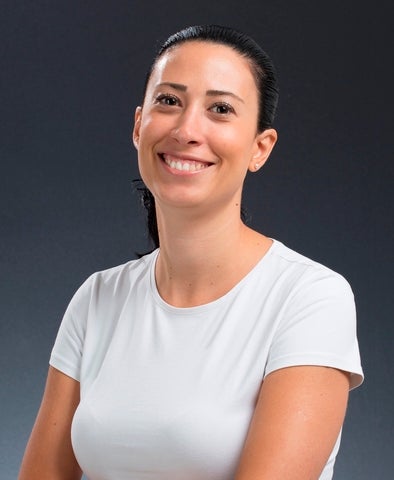
Mike Kosek (Dr. rer. nat.) is a Research Fellow at the Chair of Connected Mobility (Department of Informatics) at the Technical University of Munich (TUM). His research focuses on transport protocols, congestion control, internet architecture, and internet measurements. Research Interests: Transport protocol design and analysis Congestion control mechanisms Internet architecture and measurement Network performance optimization DNS protocol behavior and privacy Applications in satellite and aerial communication Recent Research Trends: His publications emphasize QUIC protocol analysis, DNS over QUIC investigations, cross-layer protocol interactions, and satellite communication adaptations. Key methodologies include real-world measurements, protocol design extensions, and dataset creation for reproducibility. Contact: E-mail: kosek@in.tum.de Phone: +49 89 289-18665 Office: 01.05.038, Boltzmannstr. 3, 85748 Garching
Birgitte Bak-Jensen is a Professor at the Department of Energy, Aalborg University, where she has worked since 1988. She specializes in intelligent control of power distribution systems, with research focusing on grid stability, power quality, and integration of dispersed generation and smart grid technologies. Her work also addresses multi-energy system interactions between electrical grids, heating, and transport sectors. Projects : Led EU H2020 projects (SERENE, SUSTENANCE) and Danish initiatives (EFFORT, SMARTCE2H) Publications : Over 250 papers on distribution grid control and smart energy systems Her research combines renewable energy integration , electric vehicle grid interaction , and energy storage optimization . Recent work includes explainable AI for wind forecasting and voltage control strategies for EV charging. 2025 Awards : Best Student Paper Award (2023), Best Paper Award (2021), CIGRE Technical Council Award (2018) Organizational Roles : Vice Head of AAU Energy Research, leadership positions in IEEE and CIGRE
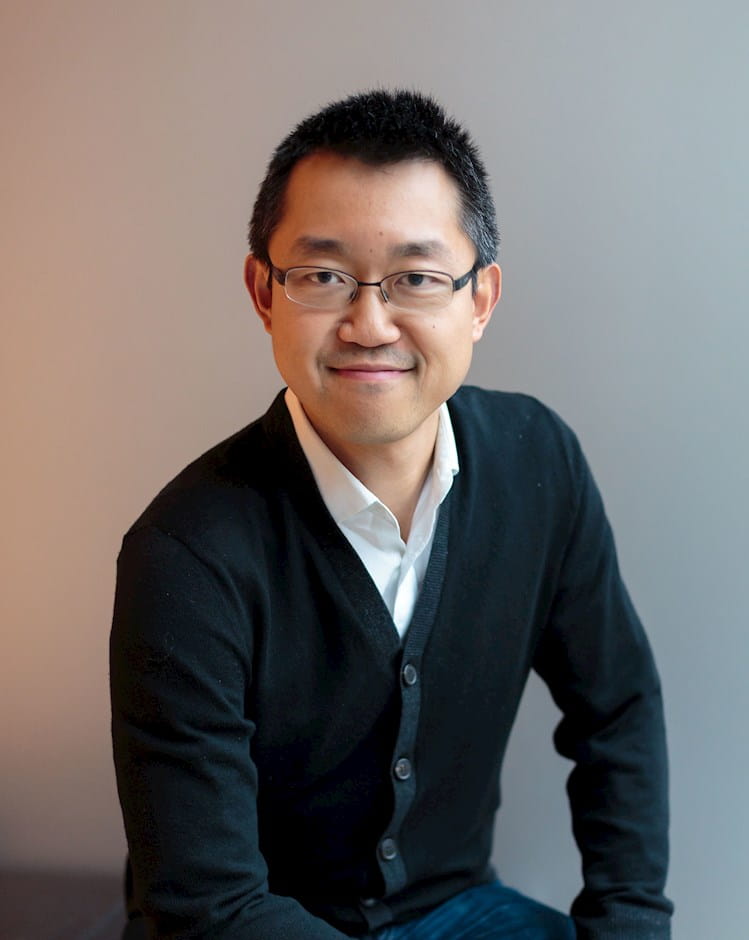
Francis Y. Yan is an Assistant Professor of Computer Science at the University of Illinois Urbana-Champaign (UIUC), holding an affiliate appointment in Electrical & Computer Engineering within the Grainger College of Engineering. He leads the Illinois Networked Systems and AI (NSAI) research group, focusing on building intelligent networked systems that are safe, robust, and performance-optimized through practical machine learning integration. Prior to joining UIUC in January 2025, he served as a Senior Researcher at Microsoft Research Redmond under Victor Bahl. His educational background includes: Ph.D. in Computer Science from Stanford University (2020), advised by Keith Winstein and Philip Levis B.S. in Computer Science (Yao Class) and B.A. in Economics from Tsinghua University (2015) Additional undergraduate studies at MIT Yan's research adopts a holistic approach to practical machine learning for networked systems, emphasizing judicious application rather than indiscriminate use. He builds real-world systems and research platforms to lay ML foundations, devises deployable algorithms using domain insights, and validates performance through extensive empirical evidence. His work consistently addresses operator concerns regarding ML deployment—focusing on safety, robustness, generalization, and efficiency—while strategically combining ML with classical networking and systems techniques. Analysis of his 15 most recent publications (2023-2025) reveals dominant themes in resource allocation for microservices (DeDe, Autothrottle), real-time video optimization (Mowgli, GRACE), and LLM-driven network algorithm design. His work bridges theoretical advances with industrial deployment, evidenced by platforms like Puffer (400,000+ users) and OpenNetLab that have become community standards for validating congestion control algorithms. His research has been recognized with top honors: USENIX NSDI Outstanding Paper Award (2024) for Autothrottle APNet Best Paper Award (2022) IRTF Applied Networking Research Prize (2021) USENIX NSDI Community Award (2020) USENIX ATC Best Paper Award (2018) for Pantheon Yan actively recruits master's and undergraduate researchers for his NSAI group, prioritizing self-motivated students for projects in networked systems and AI. His research is supported by industry collaborations (notably Microsoft) and manifests in deployable platforms like Puffer—which has enabled award-winning research at NSDI and SIGCOMM—and OpenNetLab for real-time communications. His work directly impacts production systems including Microsoft Teams and Bing. He founded and directs the Illinois Networked Systems and AI (NSAI) research group, which operates critical infrastructure including Puffer (a live TV service and research platform) and OpenNetLab. These platforms facilitate community-wide validation of novel algorithms, with Puffer alone supporting multiple best-paper awards at top conferences. Current workstreams span cloud resource management (Teal, Autothrottle, DeDe), low-latency video (Puffer, Tambur, Mowgli), and LLM-augmented systems (Nada, Designing Network Algorithms via LLMs).
Carolina Osorio is a Professor at HEC Montréal, holding the Scale AI Research Chair in Artificial Intelligence for Urban Mobility and Logistics. She is affiliated with the Department of Decision Sciences and is a member of the Group for Research in Decision Analysis (GERAD) and the Interuniversity Research Centre on Enterprise Networks, Logistics and Transportation (CIRRELT). Her research focuses on transportation optimization, urban mobility, and data-driven simulation-based methods. She has been recognized among the world’s most influential researchers in 2023 and 2024. Education: Ph.D. in Mathematics, École Polytechnique Fédérale de Lausanne (EPFL) M.Sc. in Statistics, University College London (UCL) Bachelor’s in Engineering, École nationale supérieure d'informatique et de mathématiques appliquées de Grenoble (ENSIMAG) Research Interests: Her work emphasizes scalable transportation modeling, simulation-based optimization, and AI applications for urban logistics. She develops methods for large-scale network analysis, traffic demand estimation, and sustainable urban mobility solutions. Key areas include traffic signal optimization, car-sharing service design, and high-dimensional stochastic systems. Publications: Recent articles highlight advancements in scalable traffic demand estimation, Bayesian optimization for transportation systems, and simulation-based toll optimization. Her work addresses challenges in global highway networks, urban congestion dynamics, and multi-city calibration. Awards: Scale AI Research Chair (Artificial Intelligence for Urban Mobility and Logistics) Recognition as a world-leading researcher in transportation science Advising & Grants: Osorio collaborates on projects funded by Scale AI and leads research initiatives through GERAD and CIRRELT. Her supervision activities include teaching courses such as Decision Analysis and Sample Efficient Optimization at HEC Montréal. Labs & Teams: She contributes to interdisciplinary teams at GERAD and CIRRELT, focusing on integrating advanced analytics into urban transportation systems.
Krishna Jagannathan is a full-time Professor in the Department of Electrical Engineering at the Indian Institute of Technology Madras (IIT Madras), India. He specializes in stochastic modeling, communication networks, information theory, and queuing theory. He obtained his B.Tech from IIT Madras in 2004, followed by S.M. and Ph.D. degrees from MIT in 2006 and 2010, respectively. After post-doctoral positions at Caltech and MIT, he joined IIT Madras in 2011. Education: B.Tech in Electrical Engineering, IIT Madras (2004) S.M. in Electrical Engineering and Computer Science, MIT (2006) Ph.D. in Electrical Engineering and Computer Science, MIT (2010) Research Interests: His research focuses on stochastic modeling and analysis of communication networks , information theory , and queuing theory . He has made significant contributions to understanding network performance, resource allocation, and risk-aware decision-making in complex systems. He leads the Networks and Stochastic Systems lab at IIT Madras, mentoring a large cohort of Ph.D. and M.S. students working on cutting-edge problems in networking, optimization, and stochastic systems. Scientific Awards: Best Paper Award at WiOpt 2013, Tsukuba, Japan Young Faculty Recognition Award for Excellence in Teaching and Research, IIT Madras (2014) Teaching & Mentorship: He has taught a wide range of courses including Probability Foundations , Stochastic Modeling and Queuing Theory , Convex Optimization , and Signals & Systems , consistently receiving high teaching evaluations. He has supervised over 15 Ph.D. and M.S. students to completion and continues to guide several active researchers.
Dr. Saiedeh Razavi is an Associate Professor and the inaugural Chair in Heavy Construction at McMaster University's Department of Civil Engineering, directing the McMaster Institute for Transportation and Logistics (MITL). She holds a multidisciplinary background with degrees in Computer Engineering (B.Sc., Sharif University), Artificial Intelligence (M.Sc., Iran), and Civil Engineering (Ph.D., Waterloo). Her research focuses on smart infrastructure, connected mobility, and construction safety, funded by NSERC and the Ontario Ministry of Transportation. Key areas include transforming construction management through AI, autonomous vehicles, and smart work zones. Education: B.Sc. (Sharif), M.Sc. (Iran), Ph.D. (Waterloo) Research Interests: Smart cities, connected vehicle systems, data fusion, risk analysis, and sustainable logistics Leadership Roles: Director of MITL, Associate Chair (Research), and lead of national/international multidisciplinary projects Her work bridges academia, government, and industry to enhance mobility and safety. Notable grants include NSERC funding for transformative transportation systems. Awards include teaching excellence and innovation in team-based projects. Grants & Projects: NSERC, Ontario Ministry of Transportation, and industry collaborations Labs/Teams: MITL, CPS-based construction safety initiatives, and autonomous vehicle research groups
Yashar Ganjali is Professor in the Department of Computer Science at the University of Toronto, where he leads research on computer networks and distributed systems. His work focuses on improving efficiency in data center operations through innovative algorithmic approaches. Research areas include: Machine learning applications for network optimization SDN controller architectures and load migration Congestion control mechanisms for high-speed networks Data center traffic engineering and resource allocation Recent projects explore joint time-space scheduling for distributed ML training, network-aware transport protocols, and reinforcement learning for congestion management. His team collaborates with industry partners including Google to develop practical solutions for cloud infrastructure challenges.
Professor Chin Hoong Chor is a Professor in the Department of Civil Engineering at the National University of Singapore (NUS), affiliated with the Faculty of Engineering. He specializes in transportation systems modeling, safety assessment, and congestion management. As a registered professional engineer and road safety auditor, he has contributed to numerous projects with Singapore’s land authorities and private companies. He holds leadership roles including Vice Chairman of the Chartered Institute of Logistics and Transport and Editorial Board membership for the International Journal of Transport Management. Qualifications include a BEng and MEng from NUS and a PhD in Transportation Engineering from the University of Southampton. His research interests span vehicle detection using image processing, traffic conflict analysis, and public transport optimization. Notable awards include the NUS Faculty Innovative Teaching (Gold) Award (2001/2002) and the UK Institution of Civil Engineers Webb Prize (2003). Education: BEng in Civil Engineering, National University of Singapore MEng in Civil Engineering, National University of Singapore PhD in Transportation Engineering, University of Southampton His research focuses on quantitative safety analysis, traffic flow modeling, and smart city initiatives. Recent work explores maritime collision risk modeling and sentiment analysis for transportation planning. He actively contributes to government committees and has authored over 40 peer-reviewed papers on traffic management and safety. Awards: Faculty Innovative Teaching (Gold) Award, 2001/2002 UK Institution of Civil Engineers Webb Prize 2003 Prof Chin has undertaken traffic impact studies and road safety reviews in Singapore, collaborating with public and private sectors. His work bridges academic research and practical policy implementation, emphasizing sustainable urban mobility solutions.
Jean Walrand is a Professor in the Department of Electrical Engineering and Computer Sciences (EECS) at the University of California, Berkeley. His research focuses on communication networks, performance evaluation, game theory, and stochastic networks. He has authored several influential books, including Communication Networks: A Concise Introduction and Probability in Electrical Engineering and Computer Science , and holds numerous patents in network resource management. Ph.D. in EECS from UC Berkeley IEEE Fellow and recipient of the Stephen O. Rice Prize INFORMS Lanchester Prize for operations research contributions His research interests span communication networks, queueing theory, congestion control, wireless network scheduling, and economic models for network resource allocation. Walrand's work has significantly impacted network design and optimization, particularly in distributed algorithms and game-theoretic approaches. His recent publications emphasize network architecture, delay variability reduction, and distributed optimization algorithms. Walrand has mentored over 20 Ph.D. students, including notable contributors to wireless networks and network economics. IEEE Koji Kobayashi Award (2012) ACM Sigmetrics Achievement Award (2013) INFORMS Lanchester Prize for Communication Networks book As advisor to students like Libin Jiang and Hoi-Sheung Wilson So, Walrand has shaped research in wireless MAC protocols, bandwidth trading, and network security. His technical reports and patents address practical challenges in switch fabric design, bandwidth allocation, and power management.
Sibel Alumur Alev is an Associate Professor and Associate Chair of Graduate Studies at the University of Waterloo. Her research focuses on logistics network design, hub location optimization, and sustainable transportation systems. She actively contributes to the fields of operations research and supply chain management, with a strong emphasis on addressing uncertainty in network design and strategic infrastructure planning. Her work spans applications in autonomous mobility systems, electric vehicle charging infrastructure, healthcare logistics, and pandemic response. She has published extensively on hub-and-spoke network models, reverse logistics for environmental sustainability, and multi-period resource allocation strategies. Notable areas of interest include the integration of stochastic and robust optimization methodologies into real-world logistics challenges. Dr. Alev’s research also bridges academic and industrial needs, addressing practical problems such as optimal testing center locations during pandemics and strategic freight hub expansions. Her contributions have been featured in peer-reviewed journals and conference proceedings, reflecting her commitment to advancing both theoretical and applied aspects of logistics and operations research.
Yuan Zhong is an Associate Professor of Operations Management at the University of Chicago Booth School of Business . He previously held positions as an Assistant Professor at Columbia University’s Department of Industrial Engineering and Operations Research and was a Postdoctoral Scholar at UC Berkeley’s Computer Science Department. Education: PhD in Operations Research, MIT (2012) MA in Mathematics, Caltech (2008) BA in Mathematics, University of Cambridge (2006) His research focuses on applied probability and stochastic system design , with applications in cloud computing , supply chain management , and e-commerce logistics . Recent work explores multi-period production systems and dynamic resource allocation in data centers and healthcare operations . Recent publications analyze cloud value chains , sparse graph design for delivery networks, and process flexibility in manufacturing. He has contributed to journals like Operations Research , Annals of Applied Probability , and Stochastic Systems . Scientific Awards: 2012 Kenneth C. Sevcik Outstanding Student Paper Award Best Student Paper Award at ACM Sigmetrics (2012) He teaches courses in business process fundamentals and queueing theory , with a future schedule including Operations Management: Business Process Fundamentals (2025–2026). No explicit student advising list was provided.
Christos G. Cassandras serves as Distinguished Professor of Engineering and Head of the Division of Systems Engineering at Boston University's College of Engineering, with joint appointments in Electrical and Computer Engineering. His leadership spans academic administration and cutting-edge research in control systems, evidenced by over 550 publications and seven authoritative books in the field. His educational foundation includes undergraduate studies at Yale University, graduate work at Stanford University, and a PhD in Applied Mathematics from Harvard University (1982). This multidisciplinary background underpins his research approach. Dr. Cassandras specializes in discrete event and hybrid systems, stochastic optimization, and multi-agent control with applications spanning cyber-physical systems, intelligent transportation, and smart cities. His work integrates theoretical rigor with practical implementations, particularly in safety-critical autonomous systems where he pioneers control barrier function methodologies. Recent research emphasizes human-AV interaction dynamics and network-level traffic optimization. Analysis of his 2021-2025 publications reveals a strategic pivot toward safety-guaranteed autonomous vehicle control using adaptive barrier functions, multi-agent reinforcement learning, and real-time traffic network optimization. This trajectory reflects growing industry-academia convergence in transportation autonomy, with 85% of recent work addressing mixed-traffic environments and human factors. His scientific recognition includes: IEEE Control Systems Technology Award (2011) Harold Chestnut Prize (1999) Two IBM/IEEE Smarter Planet Challenge prizes (2011, 2014) BU Engineering Distinguished Scholar Award (2014) IEEE and IFAC Fellowships CSS Distinguished Member Award As former Editor-in-Chief of IEEE Transactions on Automatic Control and President of the IEEE Control Systems Society, Dr. Cassandras has shaped global research directions. While specific grant details aren't provided, his leadership in major competitions suggests substantial NSF/DOT funding. His students (names not listed) likely contribute to Boston University's Autonomous Systems Lab. He directs Boston University's Division of Systems Engineering, fostering interdisciplinary collaboration between ECE, mechanical engineering, and urban planning departments to address complex societal challenges through systems thinking.
Anthony D. Joseph is a Chancellor's Professor in the Department of Computer Science at the University of California, Berkeley, within the College of Engineering. He is a faculty member in the Computer Science Division and part of the RISE Lab and AMP Lab at UC Berkeley. His research spans multiple domains in computer science with a focus on security, distributed systems, and networking. Education: 1998, Ph.D., Computer Science, MIT 1988, S.M./S.B., Electrical Engineering and Computer Science/Computer Science and Engineering, MIT Professor Joseph's primary research interests include Computer and Network Security, Distributed Systems, Mobile Computing, Wireless Networking, Software Engineering, Operating Systems, Genomics, Secure Machine Learning, and Datacenters. His work has significant implications for both theoretical computer science and practical applications in industry. He leads multiple research projects including Mesos, SecML (Secure Machine Learning), D-Trigger, DETER, and Tapestry/Brochure. His research has been instrumental in advancing the fields of distributed systems and security, particularly in the context of machine learning applications. His publications reflect a strong focus on the intersection of security and distributed systems, with recent work emphasizing secure machine learning techniques and resource management in data centers. Professor Joseph's research has evolved from foundational work in networking and distributed systems to addressing contemporary challenges in cloud computing and AI security. Scientific Awards: Diane S. McEntyre Award for Excellence in Teaching Computer Science (2007) NSF Faculty Early Career Development Award (CAREER) (2000) Okawa Research Grant (1999) Professor Joseph has advised numerous graduate and undergraduate students, many of whom have gone on to make significant contributions in academia and industry. His research has been supported by various grants, including the NSF CAREER award. He has been actively involved in teaching core computer science courses including CS162: Operating Systems and Systems Programming and CS262: Advanced Topics in Computer Systems. He leads several research groups including the AMP Lab (which focuses on data analytics) and has been instrumental in projects like Mesos (for resource sharing in data centers) and SecML (focusing on the security of machine learning systems). His labs work on cutting-edge problems at the intersection of systems, networking, and security, with applications ranging from cloud computing to critical infrastructure protection.
Dr. Xiaopeng Li is the Harvey D. Spangler Professor in the Department of Civil and Environmental Engineering at the University of Wisconsin-Madison, with an affiliation in the Department of Electrical and Computer Engineering. He leads the USDOT Rural Autonomous Vehicle Program and previously directed the National Institute for Congestion Reduction. He earned his B.S. in Civil Engineering from Tsinghua University (2006), M.S. in Civil Engineering (2007), M.S. in Applied Mathematics (2010), and Ph.D. in Civil Engineering (2011) from the University of Illinois at Urbana-Champaign. His research focuses on modeling and field experiments for connected, electric, and automated vehicles (CAVs), infrastructure systems analysis, and interdependent network modeling. He has pioneered physics-enhanced machine learning frameworks for vehicle control and developed simulation tools for CAV deployment. His 2025-2024 publications highlight advancements in Connected vehicle trajectory modeling Energy consumption optimization Edge computing for autonomous operations Residual learning control systems Equity analysis in AV deployment Communication technologies for V2X Awards include: TRB Best Paper Award (2025) NSF CAREER (2015) ASCE Fellow (2024) IEEE Senior Member (2022) Multiple institution-specific fellowships He has advised 15+ graduate students, secured $35M+ in grants from NSF, USDOT, and industry partners, and chairs the IEEE ITSS Emerging Transportation Technology Testing committee. His work addresses real-world AV implementation, safety validation, and sustainable transportation systems.
Alan Briones Delgado is a researcher at the La Salle School of Engineering , Universitat Ramon Llull , with a focus on Internet of Things , Cybersecurity , and Transport Protocols . His work spans projects funded by the European Commission and national grants, including EXCEL4HOUSING4.0 , WeB-Nimbus , and NG-SOC , addressing challenges in cloud computing education, ecological monitoring, and security operations. His research integrates Artificial Intelligence and Wireless Sensor Networks for sustainable solutions. Key research areas include Quality of Service in heterogeneous networks, Environmental Conservation via IoT, and Teaching and Learning strategies for Big Data. Projects like EcoSentinel and BTL-COP highlight his commitment to Environmental Monitoring and Community Policing applications. His collaborations extend to institutions in the UK , Albania , and Western Balkans . Contact: alan.briones@salle.url.edu