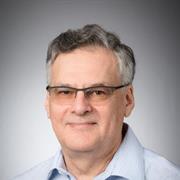
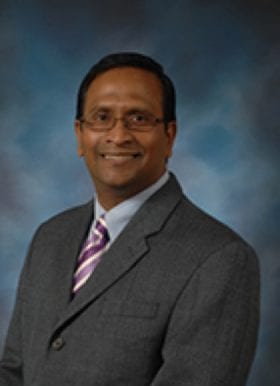
Alan Wassyng is a Professor in the Department of Computing and Software at McMaster University's Faculty of Engineering. With over four decades of academic contributions, he specializes in formal methods, safety-critical systems, and software assurance cases. Key research intersections: Automotive software safety Medical device software certification Cyber-physical systems engineering Model-driven development with domain experts His scholarly work emphasizes rigorous methodologies for software verification, particularly through tabular expressions and Workflow+ models. Recent projects include a $2M GM Canada partnership to advance automotive safety systems. Teaching leadership spans interdisciplinary capstone projects in biomedical engineering, covering software design, safety-critical development, and mechatronics applications.
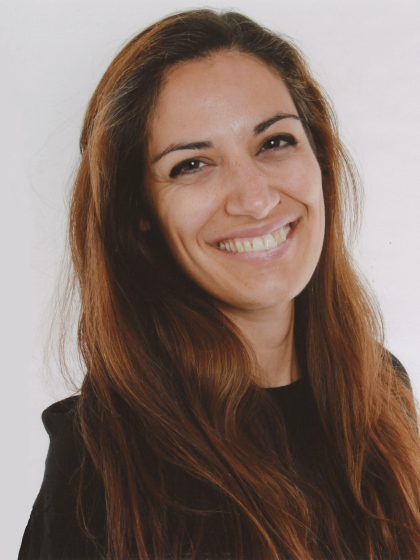
Tijs Slaats is an Associate Professor in the Software, Data, People & Society section at the Department of Computer Science, University of Copenhagen. His research focuses on Business Process Management with particular emphasis on declarative and hybrid process notations to provide flexible workflow support for knowledge workers, funded by the Danish Council for Independent Research. His educational background includes: M.Sc. in Information Technology from IT University of Copenhagen Ph.D. in Computer Science from IT University of Copenhagen (supervised by Thomas Hildebrandt) Dr. Slaats specializes in declarative process modeling, particularly Dynamic Condition Response (DCR) graphs which enable flexible workflow systems. His work bridges theoretical foundations with practical applications in cross-organizational settings. Recent research extends into blockchain technologies, smart contracts, and applications in sensitive domains like asylum processing and refugee law. He combines formal methods with empirical evaluation to ensure both correctness and usability of workflow systems. His publication pattern shows increasing application of process mining techniques to blockchain technologies and socially impactful domains, while maintaining core research in Business Process Management. Notable trends include integration of DCR graphs with smart contracts, privacy-preserving techniques for asylum data, and object-centric approaches to process discovery. Research funding includes: Hybrid Business Process Management Technologies project (Danish Council for Independent Research) Technologies for Flexible Cross-organizational Case Management Systems (FLExCMS) industrial Ph.D. project Alongside his academic work, Dr. Slaats maintains strong industry connections through Exformatics A/S where he developed the DCR Graphs workflow solution (www.dcrgraphs.net), and previously worked as a software engineer in the Dutch e-commerce sector. His dual expertise in academia and industry ensures his research addresses real-world workflow challenges while maintaining theoretical rigor.
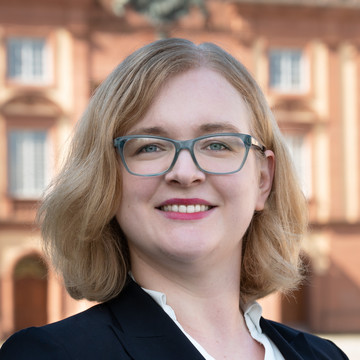
Prof. Dr. Jana-Rebecca Rehse serves as Assistant Professor for Management Analytics at the University of Mannheim Business School, where she leads the Chair of Management Analytics within the Information Systems department. Her academic work bridges theoretical research with practical business applications, focusing on data-driven approaches to business process optimization. Her primary research interests encompass User Behavior Mining , Process Mining , and AI applications in business process management . Rehse investigates how organizations can leverage process mining techniques to extract meaningful insights from event logs, with particular attention to conformance checking, process resilience assessment, and the practical implementation challenges businesses face when adopting these technologies. Her work frequently addresses the intersection of human behavior and process execution, examining how user interactions with IT systems can be analyzed to improve process design and user experience. Analysis of her recent publications reveals a clear research trajectory toward increasingly sophisticated integration of artificial intelligence with traditional process mining techniques. Starting with foundational work on reference model mining and process discovery methodology, her research has evolved to address cutting-edge applications of generative AI, explainable AI, and predictive analytics in business process contexts. The majority of her work appears in top-tier information systems and business process management journals including Information Systems, Process Science, and ACM Transactions publications, demonstrating her significant contributions to the field. Professor Rehse actively collaborates with industry partners including Siemens and MEHRWERK, offering thesis opportunities and research projects that address real-world business challenges. Her current call for applications includes work-study programs at Siemens and master thesis topics focused on conformance checking in cooperation with MEHRWERK. She has recently introduced innovative thesis topics exploring the use of Generative AI for Emotion Identification, reflecting her forward-looking research agenda that anticipates emerging technological trends and their business implications.
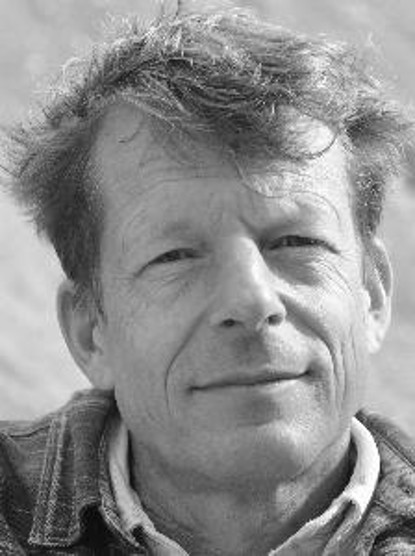
Prof. Martin Otto is a Professor of Mathematics at the Technische Universität Darmstadt, specializing in Logic and Mathematical Foundations of Computer Science. He holds a position in the Department of Mathematics (Fachbereich 4) and serves as Dean of Studies. His academic journey includes a PhD from the University of Freiburg (1990), habilitation from RWTH Aachen (1996), and prior roles as a Lecturer/Reader at Swansea University (1999–2003). Research Interests: Mathematical Logic, Model Theory, Complexity Theory, Algorithmic Model Theory, Finite Model Theory, and Logic in Computer Science. Notable contributions include work on bisimulation, guarded logics, and inquisitive semantics. His research bridges structural properties in mathematics and computational expressiveness. Teaching: Courses span Mathematical Logic, Model Theory, Linear Algebra, and Modal Logics. Recent offerings include Introduction to Mathematical Logic (2024/25), Logic & Knowledge Representation, and advanced seminars on model-theoretic topics. Publications: Over 50 peer-reviewed papers in journals like the Journal of Symbolic Logic, and conference proceedings such as LICS and CSL. Key works address guarded fragments, bisimulation invariance, and finite model theory applications. Affiliations: Member of the Logic Group at TU Darmstadt. Editorships include the Bulletin of Symbolic Logic and Lecture Notes in Logic. Organized workshops like AlMoTh 2020 (cancelled due to pandemic) and participated in Simons Institute programs (2016).
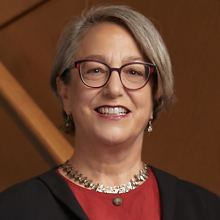
Professor Moe Thandar Wynn is a Co-Director of QUT's Centre for Data Science and holds a Professorship in the School of Information Systems at Queensland University of Technology (QUT). She leads the Process Science Academic Program and serves as the Academic Lead of Research for the School of Information Systems. Her expertise spans Process Mining, Data Quality, and Robotic Process Automation (RPA). Prof Wynn has attracted over AUD 6 million in research funding and holds an h-index of 41 with 8700+ citations. She is a member of the Australian Research Council College of Experts (2023–2025) and has received prestigious awards including the QLD Women in Technology Excellence Award (2024). Her research focuses on formal foundations of process modeling, verification, and automation. She has contributed to international conferences as a co-chair and program committee member, and co-edited special issues on RPA and process dynamics. Prof Wynn collaborates with industries like healthcare, insurance, and agriculture to optimize business processes through data-driven insights. Current research includes privacy-preserving process mining and quality-driven event log enhancement. Education: PhD (QUT, 2006), M. Information Technology (Research, QUT) Key Projects: Hospital Capacity Optimization, Liquid Process Model Collections, Risk-Aware BPM Supervision: Over 10 completed PhD/MSc students in process mining and analytics Awards: Multiple QUT Excellence Awards, ARC College Membership Her lab focuses on advancing process intelligence and RPA, with ongoing efforts in data quality frameworks and process mining standards (e.g., IEEE XES). She actively participates in industry partnerships, such as the CRC Food Agility project, to bridge research and real-world applications.
Ko, Jonghyeon is a researcher affiliated with the Ulsan National Institute of Science and Technology (UNIST) , specifically the Department of Materials Science and Engineering within the College of Natural Science and Engineering. His work spans multiple disciplines including process mining, anomaly detection, blockchain technology, AI computing, and environmental engineering. His research interests include: Anomaly detection in business process event logs Blockchain-based systems for nuclear/radioactive waste management AI computing using neuromorphic devices Statistical leverage and information-theoretic approaches to process mining Optimization of autonomous vehicle safety systems Recent publications demonstrate expertise in developing formal languages for data quality simulation, probabilistic trace alignment methods, and practical tools for anomaly detection like AIR-BAGEL. While no explicit scientific awards are mentioned in the text, his work has been published in venues such as Information Systems , npj Unconventional Computing , and Expert Systems with Applications .
Renata Medeiros de Carvalho is an Assistant Professor at Eindhoven University of Technology (TU/e), affiliated with the Process Analytics and EAISI Health groups. She holds a PhD in Computer Science from Federal University of Pernambuco (Brazil), an MSc and BSc in Computer Engineering from University of Pernambuco, and has conducted postdoctoral research at UQAM (Canada). Her research focuses on adaptive and declarative business processes, with particular emphasis on healthcare and data privacy. Education: PhD in Computer Science, Federal University of Pernambuco (2015) MSc in Computer Engineering, University of Pernambuco BSc in Computer Engineering, University of Pernambuco Research Interests: Flexible business processes and Process Mining Declarative modeling (e.g., OCBC language) Healthcare process optimization GDPR compliance frameworks Key Projects: PATIENCE 2 : Patient-centric healthcare through nomadic sensing BPR4GDPR : GDPR compliance toolkit Awards: Xerox University Affairs Committee Grant NSERC Engage Grant Teaching & Leadership: Local coordinator for EIT Digital Data Science and Erasmus Mundus BDMA master programs Teaches courses like Advanced Process Mining and DBL Data Challenge
Rayna Dimitrova is a Tenure-track faculty member at the CISPA Helmholtz Center for Information Security in Saarbrücken, Germany. Previously, she held positions as Lecturer (Assistant Professor) at the University of Sheffield and University of Leicester, and postdoctoral roles at the University of Texas at Austin and the Max Planck Institute for Software Systems. She earned her PhD from Saarland University. Her research focuses on formal methods, including verification and synthesis of reactive systems, applications to control and robotics, quantitative analysis of probabilistic systems, and information-flow security. Key interests include strategic synthesis under partial observability, probabilistic uncertainty, and continuous dynamics, with applications to autonomous systems. She has served in numerous prestigious roles, including PC co-chair for VMCAI 2024, HYPER 2023, and SMT 2018. Her awards include the RS3 Best Paper Award (VMCAI 2012) and nominations for ETAPS (TACAS 2015) and EMSOFT (2014) Best Paper Awards. Her research group includes PhD students Rafael Dewes, Philippe Heim, and Saleh Soudijani. She has taught courses on reactive synthesis, program analysis, and decision procedures at multiple institutions, including the University of Sheffield and TU Kaiserslautern.
Lisa Cohen is an Associate Professor of Organizational Behaviour and Desautels Faculty Fellow at McGill University's Desautels Faculty of Management, where she also serves as Acting Associate Dean of Research. She holds a PhD in Business Administration from the University of California, Berkeley, an MBA from Duke University, and a BA in Sociology from Kalamazoo College. Her research focuses on job design, organizational structure, and the dynamics of work in entrepreneurial contexts. Education : PhD, Business Administration, Haas School of Business, University of California, Berkeley (USA) MBA, Fuqua School of Business, Duke University (USA) BA, Sociology, Kalamazoo College (USA) Research Interests : Cohen investigates how tasks are bundled into jobs and jobs into organizations, emphasizing startups and top management teams. Her work explores hiring processes, the impact of AI on work structures, and the coevolution of tasks and expertise. She has published in top journals like Academy of Management Journal , Administrative Science Quarterly , and American Journal of Sociology . Awards & Grants : SSHRC Insight Grant (2020-2025): Task Mobility SSHRC Insight Grant (2013-2018): Beyond Warm Bodies 2016-2021: Desautels Faculty Fellow 2013 Best Paper Award, Administrative Sciences Association of Canada Advising & Labs : Cohen has advised across startups and large firms, focusing on management team structures. She collaborates with the McGill Dobson Centre for Entrepreneurship and is affiliated with the Delve Initiative exploring modern work dynamics.
S. Murty Goddu, PhD is a Professor of Radiation Oncology at Washington University School of Medicine. He earned his BS, MS, and PhD in Physics and Nuclear Physics from Andhra University, India, and completed a residency in medical physics at Washington University. His work focuses on quality assurance (QA) for radiation therapy systems, including linear accelerators, helical tomotherapy, and proton therapy. He has contributed to developing QA tools for 3D-conformal therapy, IMRT, Gamma-Knife, brachytherapy, and radiopharmaceutical treatments. Education: BS, Physics: Andhra University (1983) MS, Nuclear Physics: Andhra University (1985) PhD, Nuclear Physics: Andhra University (1991) Residency, Medical Physics: Washington University School of Medicine (1999) Certifications: American Board of Radiology, Therapeutic Medical Physics (2001) His research emphasizes improving patient safety through QA innovations, such as automated commissioning of radiotherapy systems, electronic chart checks, and deformable image registration. He has published extensively on topics like CBCT volumetric coverage extension , metal artifact reduction , and monitor unit calculations . Selected publications highlight advancements in: Proton therapy commissioning Helical tomotherapy QA Y-90 microsphere delivery protocols Bone marrow radiotoxicity studies Deformable image registration software (DIRART) Multimodality image registration He has collaborated with institutions on clinical trials and protocols for adaptive radiotherapy, dose calculation validation, and patient-specific QA. His work bridges physics, engineering, and clinical oncology to enhance treatment accuracy and safety.
Cristina Batista Paulino is an Associate Professor and Head of the cryo-EM unit at the University of Groningen's Faculty of Science and Engineering. She leads the Enzymology group within the Groningen Biomolecular Sciences and Biotechnology department. Her research focuses on structural biology, particularly membrane proteins and cryo-electron microscopy, elucidating transport mechanisms in membrane proteins. Education: PhD in Biophysics (2014, Max-Planck Institute under Prof. Werner Kühlbrandt), postdoc at the University of Zurich (Prof. Raimund Dutzler). Joined the University of Groningen as an Assistant Professor in 2017, promoted to Associate Professor thereafter. Research Interests: Structural-functional studies of membrane transporters and channels, cryo-EM applications in membrane biology, and protein-lipid interactions. Key projects include understanding the structure-function relationship in ABC transporters and ion channels. Grants & Awards: ENW-KLEIN grant (2021, €700k) for OpuA transporter research, NVBMB Prize 2020, Marie Skłodowska-Curie Fellowship (2017). Labs/Teams: Heads the cryo-EM facility, collaborates with the Electron Microscopy Group and Membrane Enzymology Group.
João Caldeira is an Associate Researcher at ISTAR-Iscte (Research Center in Information Sciences, Technologies and Architecture), where he focuses on Process Science , Process Mining , and Software Development Analytics . He holds a PhD in Information Science and Technology from ISCTE - University Institute of Lisbon, a Master's in Computer Engineering from Universidade Nova de Lisboa, and a Bachelor's in the same field from the same institution. João is a Visiting Assistant Professor at ISCTE, teaching process modeling and software development topics, and a Professor at IPAM/Univ. Europeia, where he lectures on Blockchain and Digital Payments. Research Interests : João's work bridges Big Data , Machine Learning , and Process Mining to enhance software development practices. His research includes Augmented Business Process Management and Software Systems Engineering , with a focus on extracting process insights from refactoring and team efficiency. Publications & Projects : João has contributed to journals like Computer Standards and Interfaces and Archives of Computational Methods in Engineering . His project DataScience4NP explores visual programming paradigms for non-programmers in Data Science, proposing parameterized workflow templates for increased reuse. Academic Roles & Mentorship : He has guided multiple Master's dissertations at ISCTE, including topics like BPM with adaptive SLA and Process Mining for vaccine distribution . João serves as an official reviewer for journals such as Journal of Systems and Software and IEEE Access .
Stefanie Jasser, MSc, is a researcher in the Software Engineering and Construction Methods (SWK) group at the University of Hamburg, Department of Informatics. Her work focuses on integrating security into software architecture design and evolution, with a particular emphasis on modeling security constraints and ensuring conformance. Her research interests include: Security by Design in Software Engineering Architectural Constraints for Security Secure Software Evolution Mitigating Code Vulnerabilities Her publications highlight trends in architectural security rules, legacy system protection, and constraint-based approaches to software development. She also contributes to teaching roles in software engineering and architecture at both University of Hamburg and NORDAKADEMIE.
Gyunam Park is a Research Group Lead and Process and Data Scientist at Fraunhofer FIT and a Scientific Assistant at the Chair of Process and Data Science at RWTH Aachen University, a leading institution in computer science and engineering. He is actively involved in both research and teaching, contributing to the advancement of process mining, data science, and artificial intelligence. His work bridges academic research and industrial applications, particularly in SAP ERP systems and digital twins of organizations. Research Interests: Gyunam Park’s research focuses on Action-Oriented Process Mining (AOPM) , Object-Centric Process Analysis , and Responsible Machine Learning . He aims to transform process mining insights into actionable management decisions, ensuring transparency, fairness, and compliance. His work enables organizations to monitor operational constraints, generate corrective actions, and assess their impact using data-driven methods. Publication Trends: His recent publications emphasize object-centric approaches to process mining, predictive monitoring, constraint checking, and integration with AI planning. There is a strong trend toward preserving structural information in event logs, improving machine learning performance, and applying these techniques to real-world systems like SAP ERP and after-sales service processes. Scientific Awards: No awards are explicitly mentioned in the provided text. Advising and Grants: While no formal students are listed, Gyunam Park leads research projects and collaborates with industry partners such as Samsung Electronics and SAP. His projects involve root cause analysis, resource optimization, and educational data mining. He has developed open-source tools like ProAct and OCPA , indicating active grant or institutional support for software development and research dissemination. Labs and Teams: He is a core member of the Process and Data Science (PADS) group led by Prof. Wil van der Aalst at RWTH Aachen University and leads a research group at Fraunhofer FIT. These teams focus on cutting-edge research in process mining, data science, and AI, with strong industry collaborations and regular contributions to top conferences and journals.
Lu Feng is an Associate Professor of Computer Science at the University of Virginia, affiliated with the Link Lab, a center specializing in Cyber-Physical Systems (CPS). She holds a Ph.D. in Computer Science from the University of Oxford. Her research focuses on ensuring safety and trustworthiness in CPS, with applications in medical devices, autonomous robotics, and smart cities. She has received prestigious awards including the NSF CRII Award (2018) and NSF CAREER Award (2020). Her work integrates formal methods, AI, and robotics to address challenges in CPS assurance and human-machine collaboration. Notable contributions include developing risk-assessment tools for heart failure patients, predictive monitoring frameworks for CPS, and trust-aware planning algorithms for autonomous systems. She has pioneered frameworks like DP-RuL for clinical decision support systems and IrrMap for precision agriculture. Her research bridges theoretical foundations (e.g., model checking, reinforcement learning) with practical applications in healthcare, transportation, and urban systems. She collaborates across disciplines, contributing to initiatives like the Link Lab’s smart city simulations and safety-critical medical CPS assurance. Education: Ph.D., Computer Science, University of Oxford Awards: NSF CRII (2018), NSF CAREER (2020) Labs: Link Lab (Cyber-Physical Systems Center) Focus Areas: Runtime safety, human-AI trust, medical device assurance, smart city systems