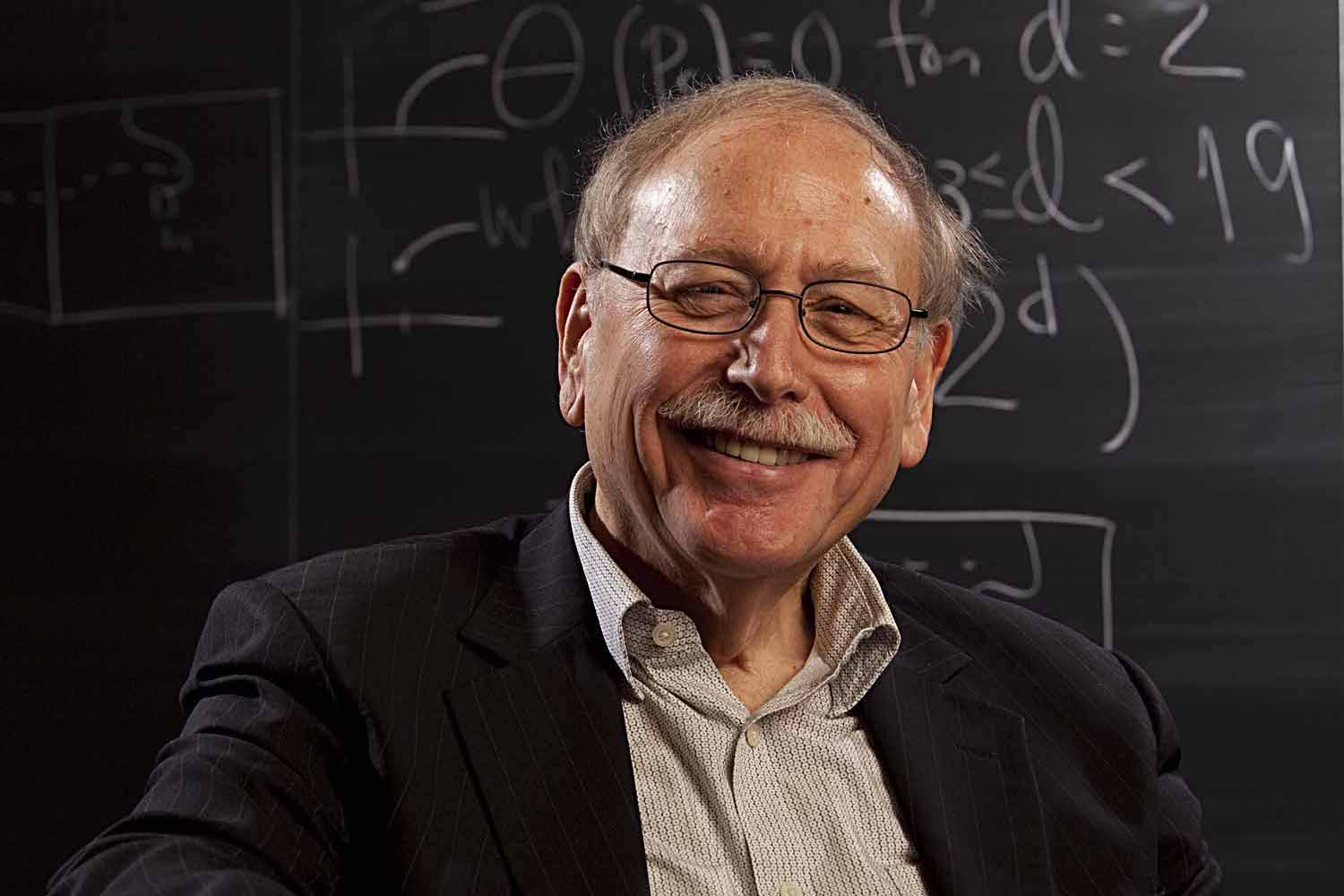
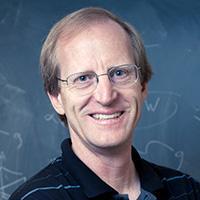
Charles M. Newman is a Silver Professor of Mathematics at the Courant Institute of Mathematical Sciences, New York University. He has held this position since 1989, serving as Department Chair since 1998. His academic background includes a B.S. in Mathematics and Physics from MIT (1966) and a Ph.D. in Physics from Princeton University (1971). His research focuses on probability theory applied to statistical physics models (e.g., Ising models, spin glasses, percolation) and explores connections between the Riemann Hypothesis and statistical mechanics. Key contributions include studies on phase transitions, metastability, and critical phenomena in disordered systems. Notable publications include works on the Brownian web, percolation theory, and spin glass dynamics. His research has been supported by grants and collaborations with institutions globally. Newman has also contributed to educational initiatives, teaching advanced probability courses at NYU. He maintains active involvement in editorial boards and professional societies such as the Institute of Mathematical Statistics.
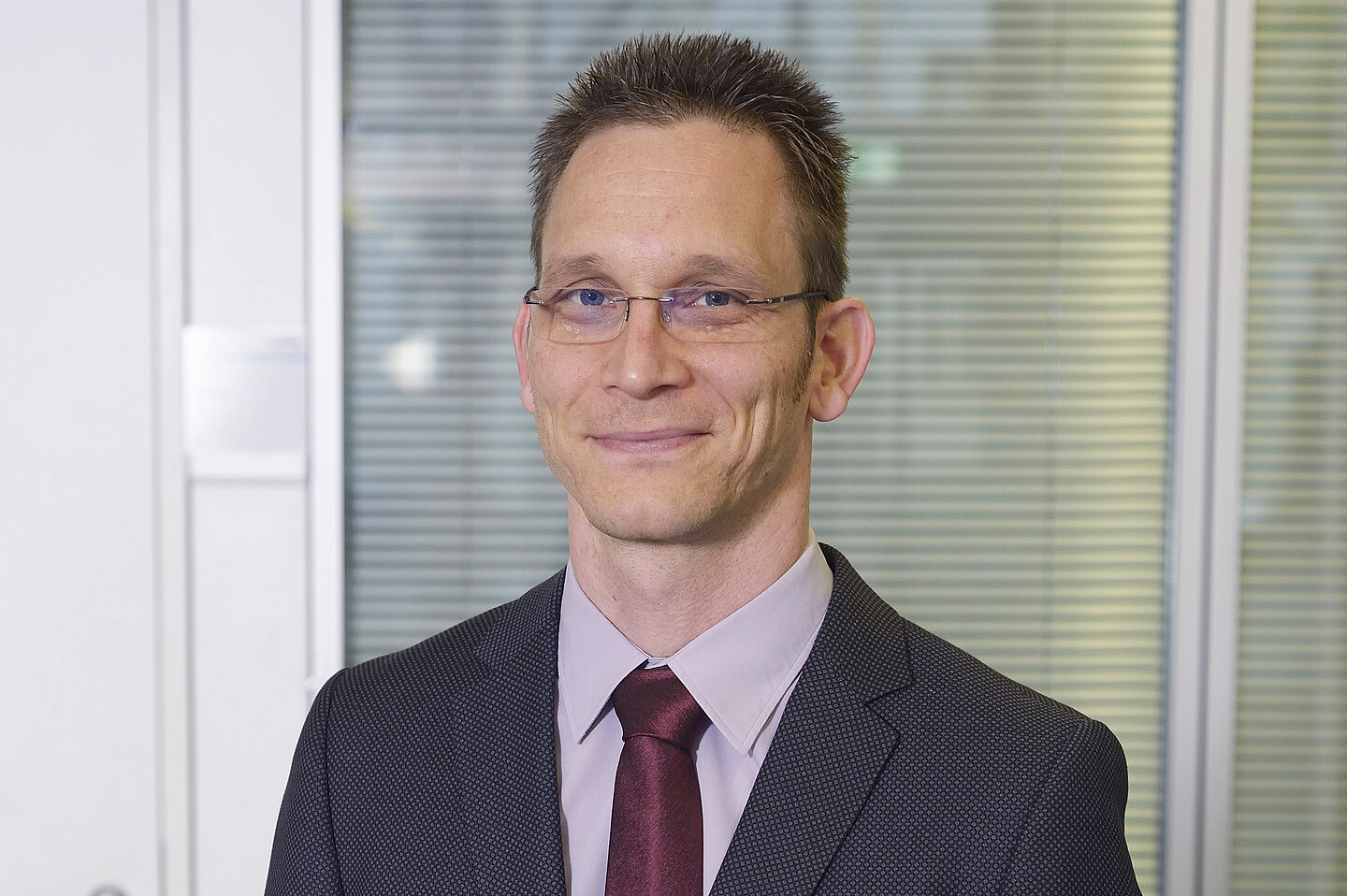
Prof. Dr. Konrad Schöbel is a Professor of Mathematics in Information and Communication Technology at the Faculty of Digital Transformation of Leipzig University of Applied Sciences (HTWK Leipzig) . His role involves teaching courses in mathematics and simulation, while also serving as a member of the Faculty Council and Deputy Chairman of the Examination Board. He is affiliated with the Mathematical and Natural Sciences Center of HTWK. Research Interests : Simulation of physical systems Image processing Inverse problems Classification of separable and superintegrable systems Differential and algebraic geometry Scientific consulting for SMEs Recent Publications focus on superintegrable systems, conformal geometry, and algebraic methods in mathematical physics, with collaborations spanning institutions like the University of New South Wales and Universität Hamburg. His work also includes patents in computational imaging and photolithography.
Eero Saksman is a Professor at the Department of Mathematics and Statistics , University of Helsinki . He is affiliated with the Faculty of Science and serves as a supervisor for the Doctoral Programme in Mathematics and Statistics . His research focuses on Mathematics , Statistics and probability , with specific expertise in Geometric Analysis , Partial Differential Equations , and Gaussian Multiplicative Chaos . Research Outputs : Active in 2025 with studies on stochastic pressure equations with log-correlated Gaussian coefficients, quasiconformal mappings in Triebel-Lizorkin spaces, Nevanlinna measures structure, and interdisciplinary projects like the Centre of Excellence in Randomness and Structures (FiRST) . Academic Collaborations : Involved in international collaborations with institutions such as Kings College London , EPFL , and University of Geneva . Scientific Awards : Recipient of the Lorenz Lindelöf Prize (2013) Magnus Ehrnrooth Prize (2018) Nevanlinna Prize for best dissertation (1995) Väisälä Prize for Mathematics (2007) Academic Activities : Regularly participates in conferences like the Barcelona Analysis Conference , Modern Aspects of Complex Analysis , and serves on doctoral evaluation committees.
Kapila Rohan Attele is a Professor in the Department of Computing, Information and Mathematical Sciences at Chicago State University, part of the College of Arts & Sciences. He has been a key academic and administrative figure since 1998, serving as Department Chair from 2007 to 2022. His research bridges pure mathematics and applied computational sciences, with international collaborations, particularly with Indian institutions. Research Interests: His primary research areas include Several Complex Variables, Operator Theory, Functional Analysis, and Computational Algebra. He has extended these into Mathematical Biology and Data Science, integrating mathematical rigor with real-world applications in image processing, environmental modeling, and stochastic geometry. His work reflects deep theoretical foundations and interdisciplinary innovation. The recent publications and projects show a strong trend toward applied mathematics and international educational development. While early works focus on operator models and function spaces, later outputs include interdisciplinary applications and higher education policy, especially in U.S.-India academic partnerships. This evolution highlights a shift from pure analysis to broader societal and educational impact. PI, Obama–Singh 21st Century Knowledge Initiative grant ($250,000) PI, NSF SMARTER grant ($506,000) PI, NSF MCDC Data Science grant (with Northwestern University) PI, Department of Education grant 'Minority Retirement Security' ($565,000) Dr. Attele has advised doctoral candidates externally and contributed to international academic capacity building. He has led grant-funded initiatives focused on STEM education, data science training, and international student recruitment. His leadership in arranging high-profile visits, signing MoUs with JNTU-Kakinada, JNTU-Anantapur, and Telangana University, and hosting Vice Chancellors and Chief Ministers underscores his role in program branding and global outreach. He has been instrumental in organizing U.S.-India cultural events, webinars, and academic summits. Through the Center for Teaching & Research and international partnerships, he fosters a collaborative academic environment that supports student success, faculty exchange, and technological advancement at Chicago State University.
Karl-Theodor Sturm is a Full Professor at the Institute for Applied Mathematics of the University of Bonn, where he has been since 1997. His research focuses on Stochastic Analysis , Geometric Analysis , and Metric Measure Spaces , particularly in the context of Ricci Curvature , Optimal Transport , and Liouville Quantum Gravity . He currently serves as Director of the Hausdorff Research Institute for Mathematics (since 2024) and previously coordinated the Hausdorff Center for Mathematics (2012–2019). As Principal Investigator of the ERC Advanced Grant Metric measure spaces and Ricci curvature - analytic, geometric and probabilistic challenges (2016–2022), he advanced interdisciplinary research at the intersection of geometry, probability, and analysis. Research Themes : Synthetic Ricci curvature, Optimal transport, Stochastic analysis on singular and random spaces, Dirichlet forms, Geometric inequalities. Recent Publications : Highlighted works include studies on heat flows on nonconvex domains, Wasserstein diffusions, and conformally invariant random fields in quantum gravity. His work often bridges probabilistic methods with geometric and analytic structures. Scientific Awards : Notable accolades include the Heisenberg Fellowship of the DFG (1994) and the ERC Advanced Grant (2016–2022). He has declined offers from prestigious institutions like Imperial College London, Northwestern University, and the University of Kansas. Teaching and Leadership : He leads graduate seminars (e.g., on Gaussian Free Fields and Liouville Quantum Gravity) and advanced courses in geometric analysis. As Managing Director of his institute and member of scientific committees (e.g., Mathematische Forschungsinstitut Oberwolfach), he shapes academic governance.
Lance J. Dixon is a Professor at SLAC National Accelerator Laboratory , operated by Stanford University. His research focuses on theoretical elementary particle physics , particularly higher-order calculations in perturbative QCD, Standard Model Higgs physics, and gauge-gravity dualities. Current affiliation: SLAC National Accelerator Laboratory, Stanford University Email: lance@slac.stanford.edu Phone: (650) 926-2627 Research Interests include: Scattering amplitudes in quantum field theory Precision Higgs and Standard Model calculations Theoretical methods for collider physics Interconnections between gauge theory and gravity Early universe cosmology applications Publications span multi-loop amplitudes in N=4 SYM, Higgs boson phenomenology, and quantum gravity relations. Key contributions include: High-order QCD corrections for collider observables Hexagon function formalism for amplitude bootstrapping Antipodal duality in eight-loop amplitudes Multi-Regge limit analyses Software Tools developed: Vrap : NNLO Drell-Yan rapidity distributions Hexagon function libraries for amplitude calculations
F. Javier Arsuaga is a Professor in the Department of Molecular and Cellular Biology at the University of California, Davis, with affiliations in the Mathematics Department and multiple graduate groups including Biochemistry, Molecular, Cellular and Developmental Biology; Biostatistics and Statistics; and Mathematics. Position: Professor of Molecular and Cellular Biology Institution: University of California, Davis Office: Briggs Hall 0009 and MSB 2115 Email: jarsuaga@ucdavis.edu Graduate Group Affiliations: Biochemistry, Molecular, Cellular and Developmental Biology; Biostatistics, Statistics; Mathematics Dr. Arsuaga received his BS in Mathematics from Universidad de Zaragoza, Spain in 1993 and his PhD in Mathematics from Florida State University in 2000. His academic journey reflects a unique interdisciplinary path that bridges pure mathematics with molecular biology. His research focuses on developing mathematical and computational methods to address questions related to the 3D structure of chromosomes. The three-dimensional organization of the genome plays a critical role in cellular processes such as transcription, replication, and repair. His work has particular relevance to understanding DNA packaging in bacteriophages, mitochondrial DNA in trypanosomes (kDNA), and yeast. Dr. Arsuaga employs tools from low-dimensional topology, computational knot theory, random knotting, algebraic topology, persistence homology, combinatorics, statistics, and Monte Carlo methods. His laboratory, the Topological Molecular Biology Lab, is deeply committed to promoting diversity in mathematics and the sciences. An analysis of his recent publications reveals a consistent focus on applying topological methods to biological problems, particularly in three main areas: DNA topology in viral systems, kinetoplast DNA network analysis in trypanosomes, and cancer genomics. His work demonstrates how mathematical approaches can provide novel insights into genome organization, with applications ranging from understanding basic biological mechanisms to identifying patterns in cancer genomes. 2018 Plenary speaker: Abel Symposium, Geiranger, Norway 2018 Plenary speaker: Encuentros en Algebra Computacional y Aplicaciones (EACA), Zaragoza, Spain 2013-2014 Long Term Visitor of the Institute of Mathematics and Its Applications (IMA), Minneapolis, MN 2012 Plenary speaker: Conference in Computational Physics, Kobe, Japan 2011 Research selected by NSF for the NSF highlights As an advisor, Dr. Arsuaga has mentored numerous students including Maxime Pouokam and Rachael Phillips who completed Master's theses under his guidance. His laboratory has been supported by multiple National Science Foundation grants including DMS1519375, DMS1057284, and DMS0920887. He co-organizes the Biology and Mathematics in the Bay Area (BaMBA) conference, which encourages dialogue between researchers from different disciplines. His lab is known for being interdisciplinary and vertically integrated, bringing together mathematicians, biologists, and computational scientists to tackle complex biological problems. The Topological Molecular Biology Lab conducts research at the interface of mathematics and molecular biology, focusing on applications of topological methods to understand genome organization, study genome rearrangements in cancer, and model enzymatic actions such as those of recombinases and topoisomerases. The lab is known for developing innovative mathematical approaches to analyze complex biological structures and has made significant contributions to understanding DNA topology in various biological contexts.
Luis Alberto Ibort Latre is a Full Professor at the Department of Mathematics, Universidad Carlos III de Madrid. His research spans quantum mechanics, mathematical physics, and geometric quantization, with a focus on algebraic structures, control theory, and noncommutative geometry. He has contributed to the development of Schwinger's picture of quantum mechanics, groupoid theory applications, and boundary dynamics in field theories. Research Interests: Quantum Foundations, Geometric Quantization, Control Systems, Information Geometry, Differential Geometry, and Mathematical Physics. Key Collaborations: Quantum Information Technologies Madrid, CAM, and AEI-funded projects. Books Authored: An Introduction to Groups, Groupoids and Their Representations (2019), Geometry from Dynamics, Classical and Quantum (2015).
Anqi Liu (Angie) is an Assistant Professor in the Department of Computer Science at the Whiting School of Engineering, Johns Hopkins University. She is affiliated with the Data Science and AI Institute, Mathematical Institute for Data Science (MINDS), and Institute for Assured Autonomy (IAA). Her research focuses on developing principled machine learning algorithms for reliable, trustworthy, and human-compatible AI systems in high-stakes applications. PhD in Computer Science from University of Illinois Chicago Postdoctoral Research at Caltech's Department of Computing and Mathematical Sciences Her work emphasizes robustness to changing data environments, uncertainty quantification, and human-AI interaction. Key methodologies include distributionally robust learning, active learning, safe exploration, fair machine learning, and conformal prediction. Applications span healthcare (NIA/NIH-funded), robotics, and computational social science. Amazon Research Award Johns Hopkins + Amazon Initiative for AI Faculty Research Johns Hopkins Discovery Award Institute for Assured Autonomy Challenge Grant She advises PhD candidates in AI safety and fairness, with students co-advised by faculty in Human-Robot Interaction and Computational Linguistics. Collaborations include Center for Language and Speech Processing (CLSP) and Laboratory for Computational Sensing and Robotics (LCSR).
Danica Fatić is a Teaching Assistant at the Department of Mathematics, Faculty of Technical Sciences in Čačak, University of Kragujevac. Born in 1986 in Čačak, she completed both her undergraduate and master's studies at the Faculty of Mathematics, University of Belgrade. She has been working at the Faculty of Technical Sciences since 2017, initially as a teaching associate and promoted to assistant in 2019. Currently, she is pursuing her doctoral studies at the Faculty of Natural Sciences and Mathematics, University of Kragujevac. Education: Undergraduate studies: Faculty of Mathematics, University of Belgrade Master's studies: Faculty of Mathematics, University of Belgrade (2019) Doctoral studies: Faculty of Natural Sciences and Mathematics, University of Kragujevac (ongoing) Danica's research spans applied mathematics with dual focus areas. Her theoretical work centers on regular variability theory, Karamata's framework, and index function operators in mathematical analysis. Simultaneously, she applies mathematical principles to practical problems through operational research, particularly in multi-criteria decision making. Her publications demonstrate expertise in translationally regularly varying functions and their applications to tourism development and planning problems. She teaches Mathematics 1, Mathematics 2, and Practical Course in Mathematics 1 at the undergraduate level. An analysis of her publication timeline reveals an evolving research trajectory. From 2019-2021, her work focused primarily on theoretical mathematics, particularly regular variation theory. Since 2022, she has increasingly published on applied operational research topics, especially multi-criteria decision making methods for tourism planning and development. Her recent 2023-2025 publications show sophisticated integration of mathematical theory with real-world applications, particularly in weighting coefficient determination methods and tourism site development. Professional Activities: Teaching Assistant at Department of Mathematics, FTN Čačak (2019-present) Teaching Associate at FTN Čačak (2017-2019) Teaches Mathematics 1, Mathematics 2, and Practical Course in Mathematics 1 Danica maintains active research collaborations with mathematicians including Lj. Kočinac, D. Đurčić, M. Žižović, and D. Pamučar. Her office is located in room 131 at the Faculty of Technical Sciences in Čačak, Saint Sava 65, where she continues to develop both her theoretical mathematics research and applied operational research projects while completing her doctoral dissertation.
Franck Gabriel is an Associate Professor at University Claude Bernard Lyon 1 , affiliated with the Institut de Science Financière et d'Assurances (ISFA) . His research bridges Machine Learning , Economics/Blockchain , Mathematical Physics , and Random Matrices , with notable work on neural tangent kernels, DeFi protocols, and asymptotic matrix theory. Research Focus : Machine Learning: Theoretical analysis of neural networks, kernel methods, and generalization bounds. Blockchain Economics: Decentralized finance, staking mechanisms, and smart contract design. Mathematical Physics: Holonomy fields, Yang-Mills theory, and random matrix asymptotics. Recent Publications highlight trends in denoising diffusion models, free probability in matrix theory, and DeFi credit systems. His work often integrates cross-disciplinary approaches, merging deep learning with financial technology and quantum field theory. Scientific Awards : 2025 AI 2000 Most Influential Scholar Award in Theory 2024 AI 2000 Most Influential Scholar Award in Theory 2023 AI 2000 Most Influential Scholar Award in Theory As an organizer of the ISFA Seminar , he fosters interdisciplinary discussions in insurance, economics, and machine learning. His collaborations span institutions like Ecole Polytechnique Fédérale de Lausanne, Courant Institute, and EPFL.
Kristina Monakhova is an Assistant Professor in the Department of Computer Science at Cornell University, where she leads the Computational Imaging Lab. Her research focuses on co-designing optics and algorithms to develop advanced imaging systems such as smaller, more capable cameras and microscopes. Education: PhD in Electrical Engineering and Computer Sciences from UC Berkeley (2020), supported by the NSF GRFP fellowship. Postdoctoral work at MIT (2020-2022) with the MIT Postdoctoral Fellowship for Engineering Excellence. Affiliations: Cornell University (2022-present), MIT (2020-2022), UC Berkeley (2015-2020). Monakhova’s research spans computational imaging, physics-informed machine learning, and adaptive acquisition methods. She integrates deep learning with optical system design to address challenges in low-light imaging, hyperspectral acquisition, and microscopy. Her work emphasizes trustworthiness through uncertainty quantification, reducing model hallucinations in medical and scientific applications. Her recent publications focus on single-shot HDR imaging, uncertainty-driven microscopy, and isotropic 3D deblurring. These studies leverage optical innovations (e.g., spectral filter arrays, global reset release shutters) paired with tailored neural networks for real-time, high-fidelity imaging. Scientific Awards NSF GRFP Fellowship (PhD) MIT Postdoctoral Fellowship for Engineering Excellence Monakhova mentors PhD students including Shamus Li, Cassandra Ye, Yujin Lee, and Hasindu Kariyawasam. She has taught courses like CS6662: Computational Imaging (Cornell, Fall 2024) and guest lectured on computational systems at MIT and UCSD. Her lab collaborates on interdisciplinary projects bridging optics, machine learning, and biomedical imaging.
Edward Crane is a Senior Heilbronn Research Fellow at the University of Bristol, affiliated with the Department of Mathematics. His research spans probability theory, circle packings, geometric function theory, and dynamical systems. University of Bristol Heilbronn Institute for Mathematical Research Research interests include: Probability and Stochastic Processes Circle Packings and Geometric Function Theory Complex Dynamics and Conformal Geometry Applications of Hyperbolic Metrics Recent articles focus on forest fire models, branching processes, colliding particle dynamics, and conformal geometry. Key contributions include work on Smale's mean value conjecture, rigidity in sphere configurations, and hyperbolic convexity criteria. Scientific achievements include the Heilbronn Research Fellowship. He has organized major conferences like PAD21@Bristol (2021) and contributed to educational resources through graduate lecture courses such as Dynamics of Rational Functions (2007).
Dmitriy Zanin is a Senior Lecturer in the School of Mathematics and Statistics at the University of New South Wales (UNSW), Faculty of Science. He is an active member of the Functional and Harmonic Analysis Group, which specializes in theoretical studies of functions and operators with applications spanning quantum physics and signal processing. His academic role involves research and instruction in advanced mathematical theories within a globally recognized institution. Zanin's research is deeply rooted in functional and harmonic analysis, extending into operator theory, noncommutative geometry, and mathematical physics. Key domains include: Operator algebras (von Neumann algebras, symmetric operator spaces) Noncommutative geometric structures (quantum tori, spectral invariants) Functional inequalities and embedding theorems Applications to quantum systems and signal processing frameworks His work consistently bridges abstract mathematical constructs with physical models. Analysis of Zanin's 15 most recent publications (2024–2025) reveals a strong focus on operator-theoretic frameworks in noncommutative settings. Predominant themes include: Sobolev embeddings and interpolation inequalities on quantum spaces Compactness criteria in quasi-Banach operator algebras Schatten-class commutator estimates and trace formulas Geometric invariants of deformed noncommutative manifolds This corpus demonstrates rigorous theoretical development at the intersection of functional analysis and quantum geometry.
Prof. Dr. Sören Schlichting is a leading researcher in the Faculty of Physics at Bielefeld University , specializing in heavy-ion collisions , quark-gluon plasma , and non-equilibrium QCD dynamics . He actively contributes to collaborative projects such as the Transregio 211 Strongly Interacting Matter under Extreme Conditions and serves in academic committees including the Faculty Conference and Academic Advisory Board . Research Interests : Heavy-ion collision dynamics and quark-gluon plasma formation QCD kinetic theory and hydrodynamic modeling Spectral functions of non-Abelian gauge theories Chiral instabilities and critical phenomena Pre-equilibrium evolution and equilibration mechanisms Dilepton and photon probes of plasma anisotropy Article Trends reveal a focus on: Quantifying transverse flow and hydrodynamic validity in high-energy collisions Non-perturbative spectral function calculations Stochastic baryon transport and chiral dynamics Jet quenching and momentum broadening in non-Abelian plasmas Universal scaling laws in kinetic theories Scientific Awards : Zimányi Medal (2022) Key Collaborations include institutions like CERN, MIT, and the University of Cape Town, with frequent contributions to Physical Review , Journal of High Energy Physics , and EPJ Web of Conferences . His work bridges theoretical nuclear physics with experimental heavy-ion phenomenology , emphasizing real-time lattice simulations and kinetic modeling.