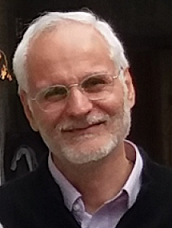
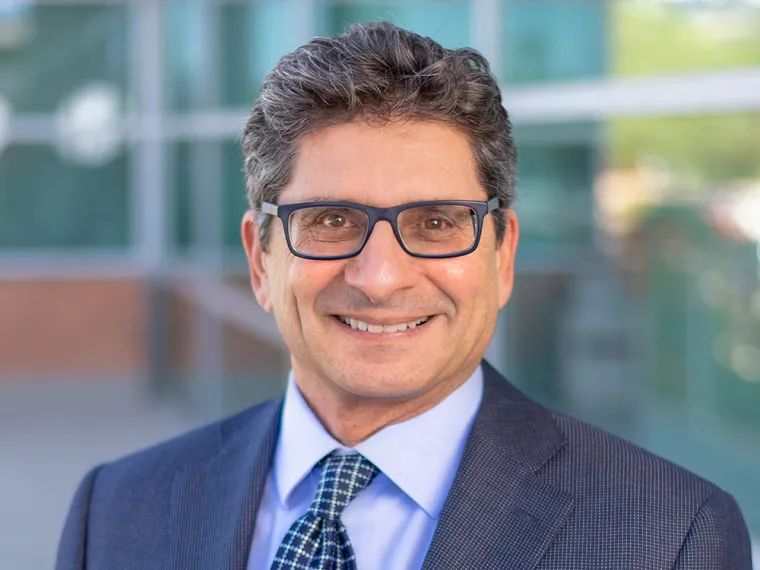
Sami Kurki is a Professor and Director at the Ruralia Institute in Seinäjoki and the Helsinki Institute of Sustainability Science (HELSUS) at the University of Helsinki. He specializes in sustainability science, rural entrepreneurship, environmental policy, and conservation conflicts. His work bridges interdisciplinary research with practical applications in food systems, wildlife management, and innovation ecosystems. Research interests include: Sustainable food systems and organic farming Rural business development and entrepreneurship Wildlife-human interactions (e.g., moose, wolves, forest grouse) Consumer behavior and prosocial status signaling Policy frameworks for sustainable land use Stigma management in emerging industries Recent publications focus on interdisciplinary collaboration (e.g., Ratkaisujen rajapinnoilla ), sustainable hunting tourism ( Sustainable Hunting Tourism ), and equitable transitions ( Oikeudenmukainen vihreä siirtymä ). His work emphasizes bridging academic knowledge with practical solutions for rural communities and policymakers. Awards : Artturi Leinonen Cultural Award (2011), Knight First Class of the Order of the Lion of Finland (2019). Active in ministerially funded projects (e.g., Development of Local Food Use ), supervises doctoral programs in Environmental Sciences and Renewable Resources. Leads initiatives like the Innovative Strategies for Public Catering project across the Baltic Sea region. Lab/teams: HELSUS, Ruralia Institute, and collaborative networks in sustainable food systems and rural innovation.
David Sander is a Professor at the Faculty of Psychology and Educational Sciences, University of Geneva, affiliated with the Department of Psychology and the Centre interfacultaire en sciences affectives. He leads the Emergence et expression de l'émotion (E3 Lab) research group. His work focuses on affective neuroscience, emotional processing, and their applications in health, education, and social behavior. With 185 publications and 141 supervised works, his research spans topics like emotion appraisal mechanisms, reward systems, and developmental psychology. Key themes include neural correlates of emotional responses (e.g., amygdala activity), behavioral effects of sensory stimuli (odors, visual cues), and interventions addressing mental health and physical activity. His studies employ fMRI, EEG, and clinical trials, often integrating interdisciplinary methods. Notable contributions include frameworks for understanding emotional valence, appraisal-driven brain processes, and the role of affect in decision-making. Recent articles highlight innovative methodologies (e.g., virtual reality for pediatric pain management) and societal impacts (e.g., materialism’s influence on consumer behavior). His work bridges basic science and applied contexts, such as improving education through emotional development strategies and addressing obesity via neural mechanisms.
Professor Kathy Douglas is the Associate Deputy Vice Chancellor, Learning, Teaching & Quality in RMIT University's College of Business and Law. She leads initiatives in pedagogy innovation, program development, and educational governance. With over 20 years in dispute resolution (ADR), her research spans legal education, mediation practices, and technology-enhanced learning. Previously, she served as Dean of the Graduate School of Business and Law (2018–2022), receiving the 2020 Vice Chancellor’s Leadership Award for Imagination. Her work integrates transformative educational experiences with impactful research, focusing on community, industry, and staff engagement. Research Interests: Alternative Dispute Resolution (ADR) practices and education Legal pedagogy and blended learning Technology’s role in dispute resolution and legal training Mediation ethics and emotional intelligence Awards: Vice Chancellor’s Leadership Award for Imagination (2020) Advising & Grants: Supervises research projects in mediation and legal practice innovation Prior grants focused on ADR training and educational technology integration Labs/Teams: Leads the College’s Learning & Teaching Quality portfolio, collaborating with academic boards and industry partners.
Stuart Gordon is a Professor in Managing Humanitarianism and Programme Director for the International Development and Humanitarian Emergencies MSc at the London School of Economics and Political Science (LSE). His academic affiliations include the Department of International Development at LSE, where he also coordinates consultancy programs. He holds roles as an Associate Fellow at Chatham House and Senior Fellow of the Higher Education Academy. His research focuses on humanitarian governance, civil-military interaction, and the impact of counter-terrorist legislation on humanitarian operations. Prior to academia, he served as a senior adviser on UK Afghanistan strategies and held roles in the UK Armed Forces (RAF and Army), retiring as a Lieutenant Colonel. He has conducted fieldwork in conflict zones such as Afghanistan, Syria, and Somalia. Key areas of expertise include humanitarian accountability, risk management in crisis responses, and health emergencies like Ebola. He co-directs the LSE-ODI Senior Level Course on Conflict and Humanitarian Response with Sara Pantuliano and sits on the editorial board of the Disasters journal. His work bridges humanitarian principles, security policies, and practical challenges in conflict settings. Notable contributions include analyzing the unintended consequences of civil-military cooperation in peace operations and the impact of financial de-risking on Syrian humanitarian aid. His publications span over three decades, addressing themes from Afghanistan stabilization to medical ethics in conflict zones.
Henry GAO is a Professor of Law and Lee Kong Chian Fellow at the Yong Pung How School of Law, Singapore Management University (SMU), where he has held the position since July 2022. Previously, he served as Associate Professor (2010–2022) and Assistant Professor (2005–2007) at HKU and other institutions. His expertise spans WTO law, international trade, Chinese legal systems, and law & economics. Education: JD (Vanderbilt, 2002), LLM (UCL, 1999), LLB (China Youth University, 1998) Research focuses on WTO governance reforms, China’s trade strategies, digital trade regulations, and the role of state-owned enterprises. He leads over 150 publications, including books like Between Market Economy and State Capitalism (2022) and Paradigm Shift in International Economic Law (2017). Recently, he addresses post-Ukraine War trade dynamics and China’s FTA strategies. Recipient of prestigious awards including the Raymonde I. Paul Scholarship (2002) and Dean’s Scholarship (Vanderbilt, 1999–2002). Active globally as editorial board member of journals like American Journal of International Law and advisor to organizations such as the World Bank and UNESCAP. Teaches courses on WTO law, Chinese law, and international trade policy. Engaged in policy advising, including China’s WTO compliance, digital trade negotiations, and regional trade agreements like RCEP and CPTPP.
Hager Ali is a Doctoral Researcher at the German Institute for Global and Area Studies (GIGA), specifically affiliated with the GIGA Institute for Middle East Studies, and is part of the GIGA Doctoral Programme since October 2018. Ali also serves as an External Editor for the thematic series "Autocracies with Adjectives" at the Loop, ECPR's Political Science Blog since March 2022, and maintains a career as a freelance journalist since 2010. German Institute for Global and Area Studies (GIGA) - Institute for Middle East Studies (2018-present) Central European University (CEU) - Teaching appointments (2025) Institute for Peace Research and Security Policy (IFSH) - Teaching appointments (2024) Ali's research focuses on civil-military relations in the Middle East and North Africa, military coups and civilian control of armies, authoritarian regimes and institutions, regime stability and destabilization, party systems and cleavages, and German military deployments in the MENA-Region and Sahel. The doctoral dissertation examines "Praetorianism in the MENA-Region: Military Governance and Civilian Control across Regime Types." Ali's work demonstrates sophisticated methodological approaches to understanding authoritarian resilience and military politics through comparative analysis. Ali's publication record reveals a consistent focus on Sudanese politics and civil-military relations, with increasing attention to contemporary conflicts since 2022. The research combines theoretical insights from comparative authoritarianism studies with detailed empirical analysis of military institutions and political transitions in the Middle East and North Africa. Recent work shows a growing emphasis on practical policy implications, particularly regarding peace negotiations in Sudan and the role of civilian actors in conflict resolution. Shortlisted for the Best Blog Award of 2022 by ECPR's Political Science Blog "The Loop" (2023) Ali actively contributes to academic discourse through conference presentations, policy papers, and media commentary. Recent engagements include serving as a discussant at the ECPR General Conference 2024 on "Trends in autocratic practices and behaviors" and scheduled lectures on the Sudan conflict in 2025. Ali has established collaborations with institutions like the German Institute for International and Security Affairs (SWP) and maintains strong connections with academic networks across Europe. As a member of the GIGA research programme on Accountability and Participation, Ali contributes to interdisciplinary research on governance and political institutions. Ali participates in multiple ECPR Standing Groups including Political Methodology, Political Violence, Comparative Political Institutions, and Critical Peace and Conflict Studies, demonstrating engagement with diverse methodological and theoretical approaches to political science research.
Don Davis is a Professor in the Department of Counseling at Georgia State University's College of Education & Human Development. He serves as program coordinator for Counseling Psychology and teaches in Clinical Mental Health and Counselor Education programs. Research Focus: Dr. Davis directs the Humility and the Advancement of Positive Psychology Interventions (HAPPI) Lab, which conducts basic and applied research on virtues including humility, forgiveness, and gratitude. His work also examines spirituality as an aspect of diversity in counseling. He leads a $6 million John Templeton Foundation grant project investigating intellectual humility development and intervention contexts. Publications explore cultural humility in clinical supervision, religious/spiritual struggles, existential humility, and multicultural counseling processes. Recent work examines how virtues like humility and gratitude impact therapeutic relationships and psychological well-being across diverse populations. Key Research Areas: Positive Psychology Interventions Cultural Humility in Counseling Spirituality and Mental Health Virtue Development in Clinical Practice
Madis Talmar is an Assistant Professor of Innovation and Entrepreneurship at Eindhoven University of Technology (TU/e) , affiliated with the Industrial Engineering and Innovation Sciences (ITEM) Group . He holds a Ph.D. from TU/e and a D.Sc. from Aalto University (2018), focusing on organizing innovation in transitioning domains. His teaching includes the Introduction to Technology Entrepreneurship course (425+ students) and the Data Entrepreneurship in Action III at the Jheronimus Academy of Data Science. He has been nominated for the Industria Teaching Award three times (2017–2019). His research centers on innovation ecosystems , open innovation programs , and energy transition dynamics . He pioneered the Ecosystem Pie Model (published in Journal of Business Venturing Design ), a tool for analyzing innovation ecosystems. He supervises 2 PhD students and 1 PDEng, contributing to projects like the SMART-SPACE Interreg initiative . His sectoral expertise spans energy and mobility, with consultancy work for corporations in Spain, Germany, Sweden, and Belgium. Madis has authored over 70 student theses across levels and co-founded three startups. His awards include a nomination for the Best TU/e PhD Dissertation Award (2019) and a Best Paper Award nomination (2019). He also chairs entrepreneurship education initiatives like the 4TU Entrepreneurship Research Network and organizes conferences on topics like regional energy strategy.
Philippa Webb is a Professor of Public International Law at the Blavatnik School of Government, University of Oxford, and an Associate Member of the Faculty of Law. She is a Fellow of Exeter College and a barrister at Twenty Essex. Her roles include membership in the UK Attorney-General’s Public International Law Panel of Counsel. Her research focuses on Public International Law domains such as state immunities, human rights, dispute settlement mechanisms, and international criminal law. She has held senior legal roles including Special Assistant to former ICJ President Judge Rosalyn Higgins and legal adviser to the Chief Prosecutor at the International Criminal Court. She regularly appears before major international tribunals including the International Court of Justice, European Court of Human Rights, and UK Supreme Court. Her work bridges academic scholarship with practical legal advocacy in complex transnational cases. Key publications include landmark texts on state immunity, UN law, and fair trial standards in international contexts. Her writing emphasizes interdisciplinary approaches to resolving conflicts between legal systems and upholding human rights norms.
Francesca Marazzi is an Assistant Professor at the University of Rome Tor Vergata's Department of Economics and Finance. She holds affiliations with the CESifo Research Network (as an affiliate), the CESIEG research centre at LUISS Guido Carli University (Deputy Director), and the DEMA P research cluster at Middlesex University, London. Her research focuses on behavioral and experimental economics, particularly exploring dishonest behavior, responsibility avoidance, and health economics issues like women's health and obesity interventions. She teaches courses such as 'Coding for Economic Applications' and 'Research Methods for Social Sciences' at both bachelor's and master's levels. Her work bridges theoretical models with empirical experimentation, addressing topics like corruption, public goods provision, and policy design. Notable contributions include studies on transparency's impact on bribery, pandemic-related behavioral changes, and the effects of soft drink taxation on adolescent health. She actively participates in interdisciplinary projects, such as the CREA initiative integrating AI and mathematics for fairness assertions, and the LongITools exposome analysis in chronic disease research. Marazzi's academic output emphasizes experimental methodologies, with recent focus on pandemic-driven behavioral shifts, financial stability mechanisms, and innovative governance metrics leveraging earth observation data post-wildfires. Her research portfolio reflects a commitment to applied microeconomic analysis with direct societal relevance.
George Vouros is a Professor in the Department of Digital Systems at the University of Piraeus, Greece. He is the head of the AI Lab (http://ai-group.ds.unipi.gr/ai-group/) and director of the MSc in Artificial Intelligence program in collaboration with the Institute of Informatics and Telecommunications at NCSR Demokritos. He completed his BSc in Mathematics (1986) and PhD in Artificial Intelligence (1992) at the University of Athens. His research focuses on Expert Systems, Knowledge Management, Multi-Agent Systems, Reinforcement Learning, and Mobility Analytics. He has served as program chair and committee member for major conferences (AAMAS, AAAI, IJCAI) and editorial roles in journals like Discover Artificial Intelligence (Springer Nature) and Information (MDPI). He has supervised 13 PhD students and currently oversees 4. His work spans EU-funded projects and national initiatives, emphasizing scalable mobility analytics, air traffic management automation, and ontology engineering. He is also President of the Hellenic A.I. Society and actively promotes interdisciplinary applications of AI in healthcare, transportation, and environmental monitoring. Recent research highlights include deep reinforcement learning for tactical air traffic conflict resolution, LLM-integrated ontology engineering, and multimodal generative adversarial imitation learning for flight trajectory modeling. His work bridges theoretical advancements with real-world applications in critical infrastructure systems.
Gerd Althoff is a distinguished Professor of Medieval History at the University of Münster, where he has served as Director of the Institute for Early Medieval Studies since 1997. He is actively involved in the Cluster of Excellence "Religion and Politics in Pre-Modern Cultures," leading research projects on religious categories of historical interpretation and the role of the Church in political decision-making. Previously, he held professorships at the universities of Bonn (1995) and Gießen (1990), establishing himself as a leading authority in medieval studies across German academia. Althoff's academic journey began with his Abitur at Amtsgymnasium Ibbenbüren in 1963, followed by studies in History and German Studies at the universities of Münster and Heidelberg (1965-1970). He earned his PhD from the University of Münster in 1974, served as an Assistant Lecturer at the University of Freiburg/Breisgau (1974-1980), and completed his postdoctoral lecture qualification (Habilitation) at the same institution in 1981. His academic career spans over five decades, marked by significant contributions to medieval historiography. Professor Althoff's research focuses on the intricate dynamics of medieval power structures, particularly examining how rituals, symbolic communication, and conflict resolution shaped political authority in the Middle Ages. His work explores the interplay between religious and secular power, with special attention to the Ottonian and Salian periods of German history. He investigates how medieval societies conceptualized divine justice, royal authority, and the mechanisms of trust-building that maintained social cohesion. His approach combines meticulous archival research with theoretical frameworks from sociology and communication studies, offering fresh perspectives on medieval political culture. Althoff's extensive publication record reveals a consistent focus on how power was negotiated, displayed, and maintained through ritualized practices in medieval Europe. His recent works demonstrate growing interest in the religious dimensions of historical interpretation, particularly how medieval thinkers understood divine intervention in worldly affairs. The recurring themes across his scholarship include the fluid boundaries between church and state, the performative aspects of political authority, and the evolving structures of medieval governance. His comparative approach, examining both German and broader European contexts, has significantly advanced our understanding of medieval political culture. Research Prize of the University of Münster (2005) Throughout his career, Professor Althoff has supervised numerous doctoral students whose work reflects his diverse research interests, from political rituals to religious authority in medieval Europe. His leadership extends to major collaborative research initiatives, including serving as Spokesperson for the Cluster of Excellence "Religion and Politics in Pre-Modern Cultures" (2007-2011) and as co-initiator and speaker of Collaborative Research Centre 496 "Symbolic Communication and Social Value Systems from the Middle Ages to the French Revolution" (1997-2003). His international recognition is evidenced by invitations as Visiting Professor at prestigious institutions including the École des Hautes Études en Sciences Sociales in Paris (1998) and the University of California, Berkeley (1995). As Director of the Institute for Early Medieval Studies at the University of Münster, Althoff has fostered a vibrant research environment focused on interdisciplinary approaches to medieval studies. His institute has been instrumental in advancing the field through graduate programs including "Written Culture and Society in the Middle Ages" and "Social Symbolism in the Middle Ages." The collaborative research culture he has cultivated continues to produce significant scholarship on medieval political, religious, and social structures.
Dr. Jonathan Beloff is a Researcher at King's College London's School of Security Studies , focusing on the regional politics and security of the African Great Lakes . His current AHRC-funded project, Military Strategies During the Genocide Against the Tutsis in Rwanda , examines the Rwanda Patriotic Army's decision-making during the 1994 genocide. He holds a PhD in Politics and International Studies from SOAS , a Master’s in Global Affairs from New York University , and a BA in Politics from Richard Stockton University . Research Interests : Central African politics, security and development, post-genocide reconstruction in Rwanda, Global North-South relations, African foreign relations, and regional dynamics in East and Central Africa. His work bridges empirical analysis of military strategy, political development, and international engagement, with particular emphasis on Rwanda's geopolitical positioning. Publications include a 2021 book on Rwandan elite perceptions of global engagement and peer-reviewed articles on topics ranging from genocide denial securitization to cross-regional security challenges in Puntland and the DRC. He also contributes to edited volumes and public discourse via outlets like The Conversation .
Clara Neupert-Wentz serves as an Associate Professor in the Department of Political Science at Aarhus University, Denmark. Her academic profile emphasizes interdisciplinary research at the intersection of political institutions and societal conflict dynamics, with primary focus areas spanning peace and conflict studies, informal governance structures, and gender norm systems. Her research critically examines traditional political systems—particularly in African contexts—analyzing how informal institutions mediate communal violence, self-determination demands, and constitutional recognition of indigenous rights. Key investigations include the destabilizing effects of polygynous practices on demographic balances, the collision of customary and state legal frameworks, and the adaptive strategies of traditional authorities amid modern governance challenges. Methodologically, her work combines comparative case studies with theoretical frameworks from institutional political science. Publication trends reveal sustained engagement with traditional authority structures across historical (Holy Roman Empire) and contemporary African settings, consistently probing how normative systems influence conflict resolution pathways. Her 2019 study on polygyny-driven intergroup violence exemplifies this focus on micro-level demographic triggers of communal strife. Professional activities include collaborative research with institutions like the University of Konstanz (evidenced by co-authorship with Holzinger) and methodological contributions to political science through journal publications in top-tier outlets including Journal of Conflict Resolution and American Journal of Political Science.
Barry Goldman serves as Associate Professor of Management and Organizations at the University of Arizona's Eller College of Management, where he has held faculty position since 1998. His academic home resides within the Department of Management and Organizations, focusing on the intersection of legal frameworks and organizational behavior. Previously, he practiced as an attorney with the U.S. General Accounting Office and private law firms before transitioning to academia. His educational background includes dual advanced degrees from the University of Maryland: a PhD in Human Resources and Organizational Behavior alongside a Juris Doctor (JD). This unique combination forms the foundation of his interdisciplinary research approach. Goldman's research centers on human resource management, conflict resolution, and organizational justice, with particular emphasis on employee legal-claiming behaviors , negotiation dynamics , and social exchange theory . His work examines how individuals perceive fairness in workplace disputes, the psychological underpinnings of negotiation approaches across professional groups, and the complex interplay between legal systems and organizational justice. Recent publications increasingly address diversity issues in hiring practices and systemic justice reform. Analysis of his publication trajectory reveals consistent focus on workplace dispute resolution mechanisms, with growing attention to intersectional discrimination and technology-mediated conflicts. His research bridges psychological theory with practical legal applications, demonstrating how social exchange principles shape responses to perceived injustice. His scientific recognition includes: Top 1 percent (#40) Most Cited Management Author (2000-2004) Best Paper Award in International Journal of Conflict Management (2017) Highly Commended Award from International Journal of Conflict Management Goldman maintains active professional engagement through editorial roles at Journal of Applied Psychology and Journal of Management, while serving as Senior Book Editor for International Journal of Conflict Management. His practical application extends to extensive executive education consulting and expert witness activities in employment law cases, demonstrating the real-world impact of his theoretical work. He previously chaired the Conflict Management Division of the Academy of Management for a five-year term.