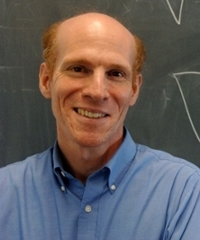
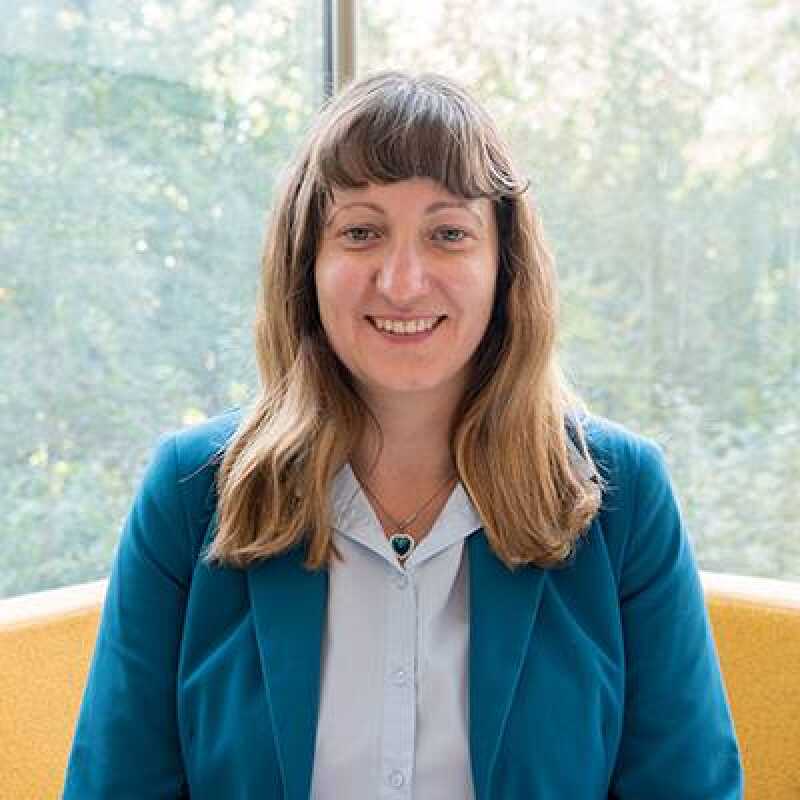
Allan Greenleaf is Professor of Mathematics and Co-director of Graduate Studies at the University of Rochester's Department of Mathematics, School of Arts & Sciences. He received his AB/SM from the University of Chicago (1977) and PhD from Princeton University (1981), followed by an NSF Postdoctoral Fellowship at MIT. His research specializes in harmonic analysis and microlocal analysis applied to integral geometry and inverse problems. Recent work focuses on degenerate Fourier integral operators, X-ray transforms underlying CAT scanning, and transformation optics for invisibility/cloaking. Publications demonstrate consistent exploration of configuration sets, microlocal techniques in tomography/seismology, and quantum integrable systems. Awards: Sloan Research Fellowship (1990-91)
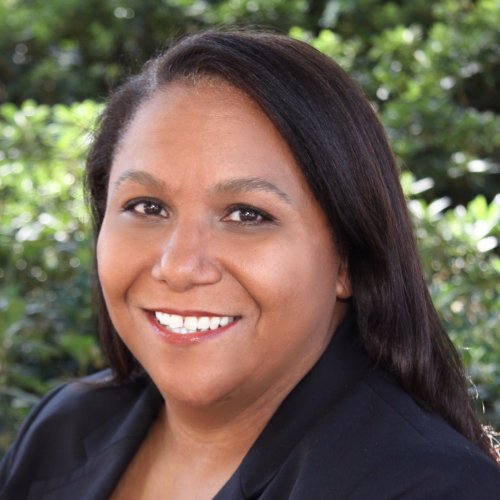
Manuel Del Pino is Professor at the University of Bath's Department of Mathematical Sciences and Royal Society Professor specializing in nonlinear partial differential equations. His research focuses on singularity formation, geometric evolution equations, and asymptotic analysis in fluid dynamics and mathematical physics. His investigations encompass blow-up phenomena in heat equations, vortex dynamics in Euler flows, and minimal surface theory. Current projects examine infinite-time singularity formation in parabolic equations and asymptotic properties of vortex configurations. Del Pino has received the Royal Society Professorship and leads multiple grants including 'Asymptotic patterns in nonlinear evolution problems' (EPSRC). He maintains collaborations with researchers globally through projects on singularity formation in PDEs.
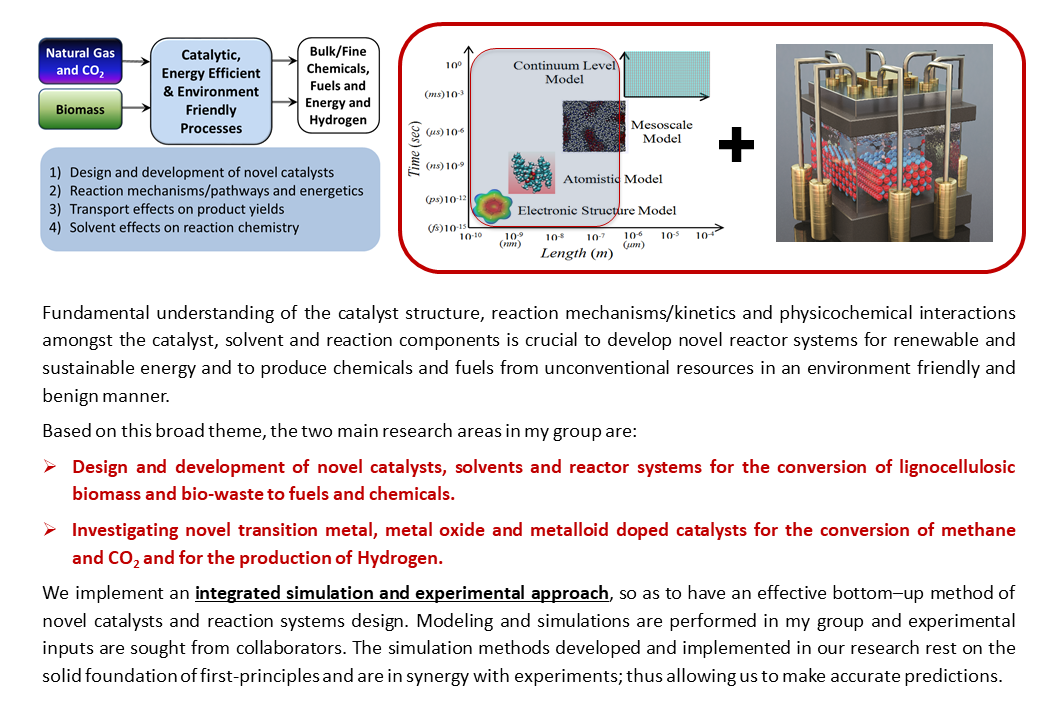
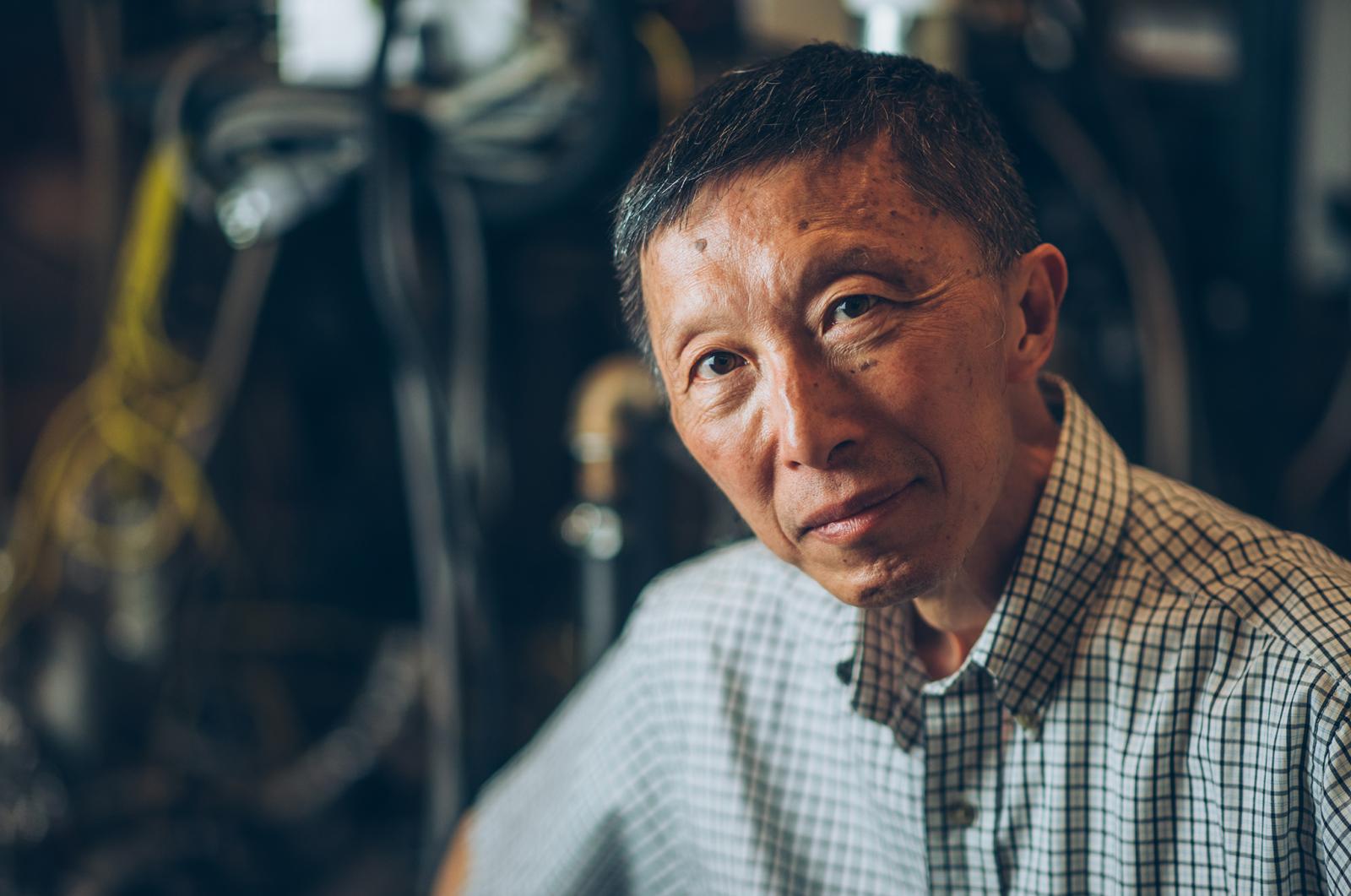
Dr. Samir H. Mushrif is a Professor in the Department of Chemical and Materials Engineering at the University of Alberta . Prior to this role, he served as faculty at the School of Chemical and Biomedical Engineering at Nanyang Technological University (NTU), Singapore . He holds a PhD in Chemical Engineering from McGill University and completed postdoctoral research at the University of Delaware, USA . Education : PhD (Chemical Engineering, McGill University), Postdoc (University of Delaware) His research focuses on computational catalysis , molecular modeling , and reaction engineering for biomass conversion and CO2 reduction . He develops novel catalysts, solvents, and reactor systems using integrated quantum mechanical and classical molecular simulations , synergized with experimental data to enable sustainable energy and chemical production . Recent publications highlight trends in condensed phase chemistry for biomass reactions, machine learning applications in solvent configuration prediction, and mechanistic studies of lignin-carbohydrate complex deconstruction. His work bridges methane activation on metal oxides, hydrodeoxygenation of bio-oil compounds, and polymerization pathways in lignin structures. Scientific Awards include: NSERC Doctoral and Post-doctoral Fellowships Discovery International Award 2017 (Australian Research Council) NANYANG EDUCATION AWARD 2016 (Singapore) SCBE Teaching Excellence Awards (Silver 2015, Gold 2016) Bharat Gaurav (Pride of India) Award 2014 Dr. Mushrif's NSERC Discovery Grant (2018), CFI John R. Evans Leaders Fund Grant (2022), and AcRF Tier-2 Grant (Singapore, 2015) have advanced his work. Current PhD and Master's students include José Carlos Velasco Calderón , Arul Mozhi Devan Padmanathan , and Sagar Bathla , among others. The CARES Lab (Catalysis Research for Sustainability) under his leadership combines ab initio molecular dynamics , machine learning potentials , and Density Functional Theory to design materials for renewable energy . Collaborations span institutions in France , Canada , India , and the UK .
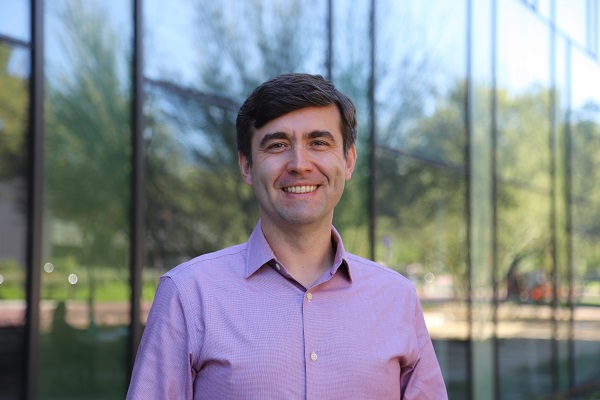
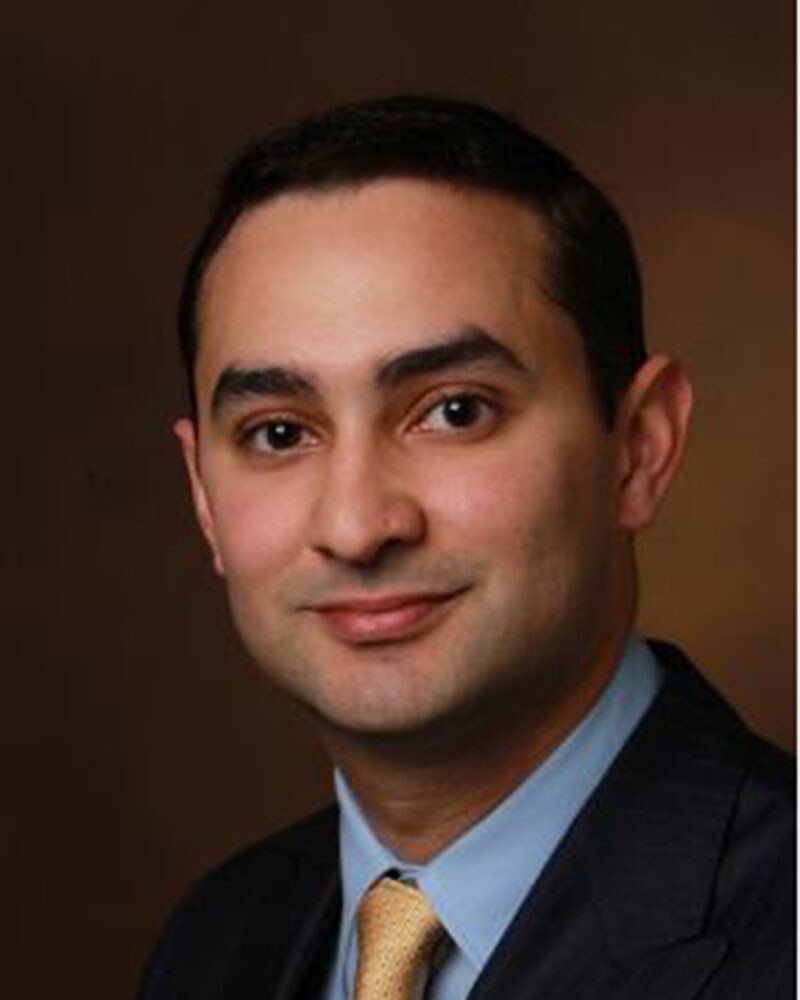
Dr. Konstantin (Kostia) M. Zuev serves as Teaching Professor in the Computing + Mathematical Sciences Department at California Institute of Technology , where he has made significant contributions to network science and computational statistics since 2016. His dual PhDs in Mathematics (Moscow State University, 2008) and Civil Engineering (HKUST, 2009) underpin his interdisciplinary research spanning differential geometry, stochastic simulation, and network dynamics. Education PhD in Mathematics, Lomonosov Moscow State University (2008) PhD in Civil Engineering, Hong Kong University of Science & Technology (2009) His research focuses on network science , particularly course-prerequisite networks and complex financial systems , with recent work extending to network navigability in cosmological models and rare event simulation. Over his career, he has developed innovative Bayesian inference methods and geometric preferential attachment theories while maintaining active collaborations across mathematics, physics, and biomedical domains. Recent publications highlight network analysis in education ( 2023 ), hyperbolic graph theory ( 2024 ), and pandemic-informed cancer mortality studies ( 2023 ). His 15 most recent articles demonstrate methodological innovations across disciplines including statistics, physics, finance, and cosmology. Scientific recognition includes Humboldt Research Fellowship (2021) Carver Mead Seed Fund Grant (2023) ASCIT Teaching Award (2018, 2023) Northrop Grumman Teaching Excellence Prize (2019) As Graduate Option Representative for Information and Data Sciences at Caltech and faculty advisor for multiple student organizations including the Caltech Karate Club and Caltech Chess Club , he actively bridges academic rigor with community engagement through outreach initiatives like the virtual math education channel and university math circles for K-12 students.
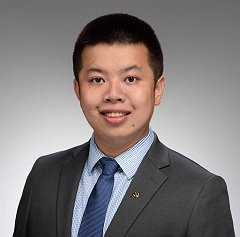
Toby Jia-Jun Li is an Assistant Professor in the Department of Computer Science and Engineering at the University of Notre Dame, where he leads the SaNDwich Lab. He also serves as the Director of the Human-Centered Responsible AI Lab in the Lucy Family Institute for Data & Society and is a Faculty Fellow at the Institute for Educational Initiatives (IEI). Previously, he was affiliated with Carnegie Mellon University's Human-Computer Interaction Institute (HCII) and GroupLens Research. Dr. Li's research spans the intersection of Human-Computer Interaction (HCI), End-User Software Engineering, Machine Learning (ML), and Natural Language Processing (NLP), with recent work focusing on addressing societal challenges in the future of work through human-AI collaborative approaches. His work has resulted in over 40 publications at premier venues including CHI, UIST, CSCW, ACL, and ICSE, with 8 papers winning Best Paper or Honorable Mention awards. His recent publications demonstrate a strong focus on human-AI collaboration across various domains, including code understanding, privacy, accessibility, and creative tools. The work shows a trajectory toward increasingly sophisticated integration of human-centered design with AI capabilities, particularly using large language models to enhance human productivity and address societal challenges. Google Research Scholar Award recipient Recipient of Yahoo! Fellowship ($100,000/year) Best Paper Award at UIST 2020 Best Paper Honorable Mention Award at CHI 2021 Best Paper Award at CSCW 2024 Best Paper Award at CHI 2025 Dr. Li actively mentors Ph.D. students and has established collaborations with Google, Microsoft Research, IBM Research, Adobe, Verizon, and J.P. Morgan. His research has been supported by NSF, Google Research Scholar Program, AnalytiXIN Initiative, Yahoo! InMind project, and J.P. Morgan. He is currently recruiting Ph.D. students and undergraduate researchers for his SaNDwich Lab, which focuses on developing interactive systems to empower individuals to create, configure, and extend AI-powered computing systems.
Dr. Paola Madini serves as Senior Lecturer in Accounting within the Department for Accounting and Finance at Kent Business School, University of Kent. Holding a PhD from Bocconi University and PGCHE from Kent, she specializes in management control systems with prior academic appointments at ESADE and SDA Bocconi School of Management. Education: PhD in Business Administration and Management (Accounting and Control specialization), Bocconi University PGCHE, University of Kent Fellow of the Higher Education Academy Her research examines management control systems (MCS) design and behavioral implications, focusing on budgeting processes, performance measurement, and inter-organizational relationships. Using field-based case studies and surveys with finance professionals, she bridges academic theory with practical applications in accounting management. Recent work investigates pandemic impacts on UK healthcare organizations' MCS and explores management accounting education through participative teaching methodologies and flipped learning approaches. Publication analysis reveals consistent contributions to management accounting literature, with recurring themes in MCS configurations (coercive, enabling, diagnostic, interactive), budgetary design, and industry-specific applications in fashion/retail sectors. Her work demonstrates evolving focus from traditional budgeting processes toward contemporary challenges like emerging market dividend policies and pandemic-driven organizational adaptations. Scientific Awards: Distinguished Reviewer Award 2017 (Journal of Management Control) Runner up reviewer 2015 (Journal of Management Control) She actively supervises postgraduate research including six Master's theses on managerial reporting systems in retail, fashion company accounting implementations, and neo-colonial accounting education frameworks. Industry collaborations include IBM Italy (integrative finance organizations), DocFlow (document management systems), and CIMA (fashion company accounting systems), with current projects examining pandemic impacts on UK healthcare management control systems. As member of the McGraw Hill Higher Education Advisory Board and conference committees (Socialising Business Research, AAA Annual Meeting), she contributes to academic community development while advising publishers on management accounting textbook development and portfolio strategies.
Prof. Igors Gorbovickis is an Associate Professor of Mathematics at the Department of Mathematics, School of Computer Science and Engineering, Constructor University (formerly Jacobs University Bremen). His research focuses on complex dynamical systems, including topics such as renormalization theory, bifurcation analysis, Julia sets, and applications to mathematical physics. He also contributes to discrete geometry, particularly exploring conjectures like the Kneser-Poulsen problem. His work bridges pure mathematics with interdisciplinary applications, emphasizing rigorous analysis of nonlinear systems and geometric configurations. Key areas of investigation include critical point accumulations, Hausdorff dimension estimates, and equidistribution phenomena in parameter spaces. Recent publications highlight advancements in understanding chaotic systems, circle maps, and the interplay between algebraic structures and dynamical behavior. Prof. Gorbovickis collaborates internationally, with co-authored papers appearing in journals like Advances in Mathematics , Ergodic Theory and Dynamical Systems , and Nonlinearity . His office is located at Research I, Room 128 on the Constructor University campus in Bremen, Germany.
Craig Carter is the John G. and Barbara A. Bebbling Professor of Supply Chain Management at Arizona State University’s Department of Supply Chain Management. He holds the Harold E. Fearon Fellow of Purchasing Management title. His research focuses on sustainable supply chain management, ethical buyer-supplier relationships, environmental supply chain practices, and diversity sourcing. He has advised on over 100 Fortune 1000 firms globally and served as an editor for multiple journals, including the Journal of Supply Chain Management and Decision Sciences Journal. Education: Ph.D. in Business from Arizona State University (1996), B.S. in Business from the University of Maryland (1990). His industry experience includes roles at Ryder Systems and the U.S. Department of Transportation. Research emphasizes unintended consequences of sustainability initiatives, behavioral decision-making in supply chains, and supply chain leakage of greenhouse gas emissions. His work bridges theoretical frameworks (e.g., configurational approaches) with practical applications, such as mitigating supply risk and enhancing collaboration. Recent publications explore topics like honesty contagion in negotiations and informal exchanges impacting sourcing collaboration. He has been recognized for editorial contributions and has been actively involved in shaping supply chain management’s academic trajectory through thought leadership. Courses taught include Strategic Procurement, Global Supply Operations, and seminars on supply chain theory. His work often integrates empirical research with real-world case studies, emphasizing actionable insights for practitioners.
Professor Amin Abbosh is a faculty member at the School of Electrical Engineering and Computer Science, University of Queensland. His research focuses on Medical Microwave Imaging and Millimeter-wave Engineering, with contributions to advanced imaging systems, antenna design, and communication technologies. He leads projects in electromagnetic medical sensing, including portable brain scanners and wearable diagnostic systems. His work integrates applied electromagnetics with AI-driven algorithms, addressing challenges in stroke detection, liver health monitoring, and deep vein thrombosis diagnosis. With over 16 patents and collaborations across biomedical and engineering domains, his research bridges clinical needs with cutting-edge electromagnetic techniques. Key projects include the development of low-cost healthcare monitoring systems and reconfigurable antennas for satellite communications. Research interests span medical imaging systems, antenna array design, and signal processing for healthcare applications. His team innovates in areas like phased arrays, dielectric property analysis, and non-invasive diagnostics. Recent advancements include synthetic microwave focusing techniques and self-supervised deep learning models for clutter removal in imaging. Publications highlight contributions in IEEE journals and conferences, emphasizing clinical applications and device prototyping. Collaborations with institutions like the University of Queensland’s medical faculty and industry partners ensure practical implementation of his research.
Giorgio Grisetti is a Full Professor at Sapienza University of Rome within the Department of Systems and Computer Science, maintaining active research roles in the RoCoCo lab at Sapienza since November 2010 and the Autonomous Intelligent Systems Lab at Freiburg University where he previously served as a Post Doc under Wolfram Burgard starting in 2006. His educational background includes a M.Sc. in Computer Engineering from the University of Rome (2001) and a Ph.D. from Sapienza University of Rome's Intelligent Systems Lab (2006), supervised by Daniele Nardi. His doctoral thesis focused on SLAM using Rao-Blackwellized particle filters. Dr. Grisetti's research centers on mobile robotics with emphasis on robust solutions for autonomous navigation systems. His work spans theoretical and practical advancements in Simultaneous Localization and Mapping (SLAM), robot localization, path planning, and sensor fusion, particularly leveraging LiDAR and multi-sensor configurations. Recent publications demonstrate strong focus on optimization techniques, sensor calibration, and real-time performance for autonomous systems operating in complex environments. His publication trends reveal deep specialization in LiDAR-based SLAM (7 of 15 recent articles), bundle adjustment methods (4 articles), and sensor calibration/perception (3 articles), with consistent contributions to top robotics venues like IEEE Robotics and Automation Letters and ICRA. Key recognitions include: Nomination for the best IROS paper award (2010) Open Source achievement award from Willow Garage (2010) Best paper award at the International Conference and Exhibition on Unmanned Areal Vehicles (2010) Best Paper award at ICRA 2009 (2009) His research is conducted through the RoCoCo lab at Sapienza University of Rome and the Autonomous Intelligent Systems Lab at Freiburg University, focusing on developing foundational algorithms for mobile robot autonomy. Current projects emphasize robust perception systems, optimization frameworks for sensor fusion, and practical implementations for real-world navigation challenges.
Prof. Dr. Christian Breitsamter is a Professor at the Technische Universität München (TUM), leading the Chair of Aerodynamics and Fluid Mechanics within the TUM School of Engineering and Design. He has held this position since 2007 and has been a member of key committees such as the ICAS Programme Committee and STAB-Programmleitung. His research focuses on aerodynamics of aircraft and rotorcraft configurations, including vortex dynamics, aeroelasticity, and fluid-structure interaction. Education: PhD in Aerodynamics (1997) Master’s in Aerospace Engineering (1989) Research Interests: Prof. Breitsamter’s work spans experimental and numerical studies of high-agility aircraft, helicopter aerodynamics, and advanced wing designs. Key areas include leading-edge vortices, gust load mitigation using flexible wings, and flow control techniques. His group investigates cutting-edge topics like deep learning for buffet prediction and hybrid neural networks for aerodynamic modeling. Awards: Willy Messerschmitt Preis (1999) AIAA Associate Fellow (2007) Advising & Grants: While specific student names are not listed, his research involves collaborative projects with industry partners (e.g., RACER Compound Helicopter) and EU initiatives like the FURADO program. His team contributes to the NFDI4ING infrastructure for engineering data. Labs/Teams: Active in the Aerodynamics Wind Tunnel facilities (Windkanäle A/B/C) and leads the SAGITTA flying wing demonstrator project. His group also explores membrane wings and elasto-flexible morphing technologies.
Mark Baker is a Professor of Linguistics and Cognitive Science at Rutgers University. His work focuses on comparative syntax, linguistic universals, semantic roles, and the study of Amerindian and African languages. He holds the title of Distinguished Professor and maintains an office in Scott Hall. As of 2021, his office hours were by appointment due to sabbatical leave. His research interests include syntactic diversity, its limits, and patterns across languages. Notable themes in his work involve logophoric pronouns, switch-reference mechanisms, and the relationship between case systems and agreement structures. He has contributed to discussions on language typology, formal syntax, and the cognitive foundations of linguistic structures. Baker teaches advanced syntax courses and has published extensively on topics ranging from Panoan languages to theoretical models in generative grammar. His recent articles explore syntactic variation, morphosyntactic alignment, and interdisciplinary connections between linguistics and cognitive science. He serves on editorial boards and has reviewed for journals such as Journal of East Asian Linguistics and Yearbook of Corpus Linguistics and Pragmatics . His work bridges formal linguistic theory with empirical cross-linguistic analysis, emphasizing the interplay between universal grammatical principles and lineage-specific traits.
Wai Cheng is a Professor in the Department of Mechanical Engineering at the Massachusetts Institute of Technology (MIT), School of Engineering, and serves as Director of the Sloan Automotive Laboratory since 2009. His educational background includes: B.Sc. from California Institute of Technology (1974) M.Sc. from Massachusetts Institute of Technology (1975) Ph.D. from Massachusetts Institute of Technology (1979) Professor Cheng's research centers on internal combustion engines , with expertise in engine performance, emissions, and combustion science. His work investigates cold-start phenomena in gasoline direct injection (GDI) engines, soot formation mechanisms, knock dynamics, and the impact of alternative fuels like ethanol. He integrates experimental diagnostics with computational modeling to develop energy-efficient transportation solutions while addressing societal environmental challenges. Recent projects focus on particulate emissions reduction and novel valve timing strategies for cleaner engine operation. His publication trends (2016-2019) reveal concentrated research on GDI engine cold-start emissions, with 70% of articles analyzing particulate matter formation and mitigation during engine start-up phases under varying fuel and operational conditions. Notable honors include: Fellow of the Society of Automotive Engineers (2003) SAE Oral Presentation Awards (2004, 2002) SAE Teetor Award (1984) Carl Richard Soderberg Professorship (1982) Professor Cheng has mentored numerous graduate students through MIT's mechanical engineering programs and secured research funding from automotive industry partners. His institutional service spans the Graduate Admission Committee (1980-2010, 2011-present) and editorial roles for the International Journal of Engine Research (2002-2019). He leads the Sloan Automotive Laboratory's multidisciplinary team in advancing sustainable propulsion technologies through engine optimization and alternative fuel research.
Daniel Balasubramanian is an Adjunct Associate Professor of Computer Science and Research Scientist at Vanderbilt University's School of Engineering. His research focuses on cybersecurity, software verification, and cyber-physical systems, with expertise in symbolic execution, code analysis, and formal methods. He contributes to advancing secure systems through frameworks like RAMPART for adversarial defense and Syntheto for formal verification. His work intersects edge computing, hardware security, and autonomous systems resilience. Research Interests: Cybersecurity (including ethical hacking, network defense), formal methods (verification, theorem proving), edge computing (tinyML, cloud integration), and cyber-physical systems (emulation, testbeds). His recent work emphasizes assurance provenance in software documentation and adversarially robust autonomous systems. Publications since 2019 highlight contributions to cybersecurity testbeds, reinforcement learning for penetration resistance, and hardware security against rowhammer attacks. He has explored domain-specific languages (Syntheto), incremental modeling techniques (differential-formula), and cloud-edge service resilience against adversarial perturbations. Labs/Teams: Affiliated with the Institute for Software-Integrated Systems (ISIS), focusing on integrating software with physical systems through model-driven approaches and cybersecurity innovations.
Associate Professor Oliver Diessel is a faculty member at the University of New South Wales (UNSW) within the School of Computer Science and Engineering. He has been actively teaching and conducting research at UNSW since at least 2000, with teaching experience spanning various computer architecture and digital systems courses. Dr. Diessel completed his education at the University of Newcastle, Australia, earning a B.E. (Computer, Hons) and B.Math. in 1991, followed by a PhD in 1998. His academic career has focused on reconfigurable computing systems and computer architecture. His primary research interests center around the design, test, and implementation of digital systems in reconfigurable logic devices called Field-Programmable Gate Arrays (FPGAs). Specifically, he focuses on dynamically reconfigurable digital systems where circuits can be modified while the system is operational. His work aims to develop architectures, design methods, and tools that enhance the benefits and reduce the costs of reconfigurable systems. Current research projects include fault-tolerant FPGA-based systems for space applications and fine-grained accelerators for heterogeneous devices. Dr. Diessel has published extensively with 2 books, 1 book chapter, 16 journal articles, 67 conference papers, 1 edited conference proceedings, and 7 conference presentations to his credit. His publications reflect a strong emphasis on reconfigurable technology, computer architecture, and electronic design automation. As a supervisor, Dr. Diessel currently mentors two MPhil students: Tong Wu working on Runtime reconfiguration and Junning Fan working on Fault-tolerance of FPGA-based applications. He has previously supervised six students to completion. His supervision interests include reconfigurable technology and systems, electronic design automation, and computer architecture. Dr. Diessel is an active member of the professional community, serving on the Editorial Board of ACM Transactions on Reconfigurable Technology and Systems and as an IEEE Member. He has taught numerous courses including Configurable Systems (COMP4601), Computer Architecture (COMP3211, COMP4211), Digital Systems (COMP3222), and FPGA Implementation of Digital Systems using Verilog.