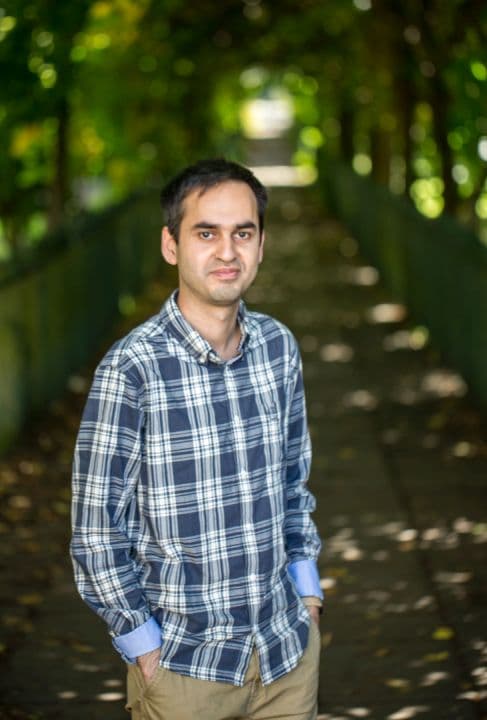
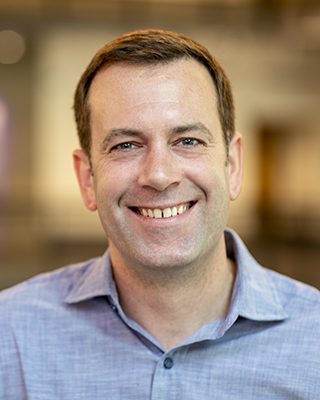
Jiri Srba is a Professor at Aalborg University's Department of Computer Science, part of the Technical Faculty of IT and Design. He leads research in the Distributed, Embedded and Intelligent Systems group and contributes to projects like "ControLing wAter In an uRban Environment" and "Collective Adaptive System SynThesIs using Non-zero-sum Games". His office is located at Selma Lagerløfs Vej 300, 9220 Aalborg Øst, Denmark. Contact him at +4599409851 or srba@cs.aau.dk. His core research focuses on formal methods and applied computer science: Model checking and verification of concurrent systems Petri nets and their applications Network protocol verification and synthesis Distributed system correctness Automated reasoning for industrial systems His publication record shows strong emphasis on network verification, model checking optimization, and applying formal methods to environmental systems. Recent work integrates computer science with sustainable engineering, particularly in water management systems and energy control.
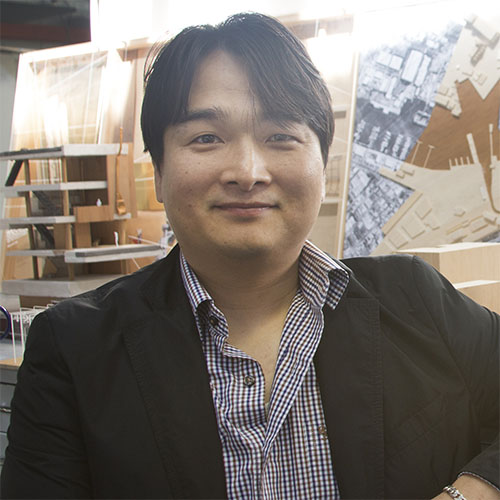
JuHyun Lee is an Associate Professor of Architecture and Computational Design in the School of Built Environment at the Faculty of Arts, Design and Architecture (ADA), University of New South Wales (UNSW) Sydney, where they also hold the prestigious title of Scientia Academic. With a professional background in architecture and construction (1998-2002), they have held academic positions across Australia including a five-year post-doctoral fellowship at the University of Newcastle (2012-2017) and a senior research fellowship at the University of South Australia (2018), following earlier research and teaching roles in South Korea (2003-2011). Lee specializes in architectural design computing, design cognition, and urban complexity, integrating computational methods, cognitive science, and architectural theory to advance architectural intelligence and human-centered design. Their research spans architectural visualization, analysis and design methods, algorithm/protocol design, and data visualization with computational approaches. They have established a strong research program examining the intersection of language, culture, and design cognition, particularly focusing on cross-cultural design communication between Australia and Korea. Lee's recent publications demonstrate a clear trajectory toward increasingly sophisticated integration of computational methods with architectural design theory, particularly in the areas of shape grammar, space syntax, and machine learning applications. Their work shows consistent focus on practical applications of computational design methods to real-world architectural problems, with growing emphasis on cross-cultural collaboration and intelligent design systems. The research portfolio reveals a deepening engagement with AI and machine learning techniques applied to architectural design assessment and generation. Scientia Academic at UNSW Sydney Associate Fellow of the Higher Education Academy (AFHEA, 2020) As an educator, Lee develops cutting-edge courses in computational design and Building Information Modeling (BIM), integrating experiential learning and industry engagement. They have secured over $11 million in research funding, including multiple ARC Discovery Projects and an Australia-Korea Foundation grant. Lee co-directs the Advanced Architectural Analytics Laboratory (A 3 LAB), leading interdisciplinary research on design automation, spatial analysis, and machine learning applications in architecture, while also leading cross-cultural initiatives like the Australia-Korea Architects' Network (AKAN). Lee supervises multiple HDR students working on culturally sustainable urban design, socio-spatial patterns in public housing, and computational layout generation. Their research has significant implications for improving design communication across cultural boundaries and developing more coherent, clear, and accessible built environments through computational design approaches.
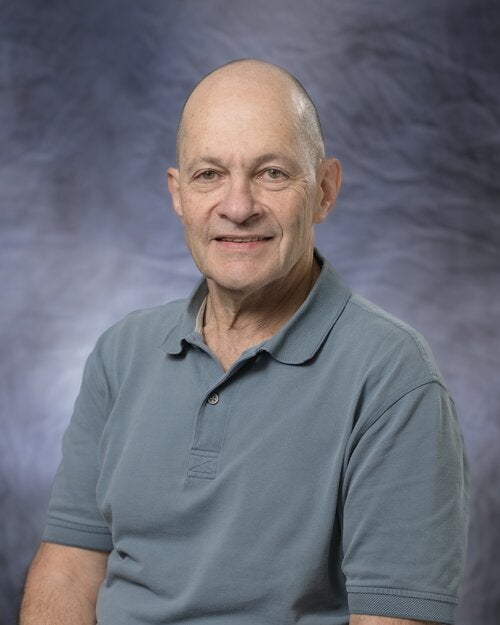
Jack Huizenga is an Associate Professor in the Department of Mathematics at The Pennsylvania State University. His research focuses on algebraic geometry, particularly Hilbert schemes of points, moduli spaces of vector bundles, and interpolation problems. He is a co-organizer of the Algebra and Number Theory Seminar at Penn State. Education: Ph.D., Harvard University (2012). He has designed courses introducing algebraic geometry through linear algebra and interpolation problems, such as Polynomial Interpolation: An Introduction to Algebraic Geometry . Research Interests: Algebraic Geometry, with a focus on Brill-Noether theory, moduli spaces, vector bundles on surfaces, and birational geometry. His work explores geometric structures like Hilbert schemes, projective plane blowups, and stability conditions of sheaves. Publications highlight advanced topics in algebraic geometry, including cohomology of vector bundles, Seshadri constants, and geometric interpolation problems. He has collaborated extensively with researchers like Izzet Coskun on foundational problems in moduli spaces and stability conditions. No scientific awards are explicitly listed in the provided information. His advising and grant activities are not detailed here, though he has authored lecture notes and exercises for specialized courses. He maintains a research website at https://sites.psu.edu/jhuizenga/ .
Alessandro Rigolon is an Associate Professor and MCMP Program Coordinator in the Department of City and Metropolitan Planning at the University of Utah, where he has been on the faculty since 2019. A dual-PhD scholar (Design & Planning, University of Colorado Denver; Architecture, University of Bologna), he is internationally recognized for research on environmental justice, green-space equity, and the public-health consequences of urban greening. Education: Ph.D. in Design and Planning, University of Colorado Denver (2015) Ph.D. in Architecture, University of Bologna, Italy (2012) B.Arch. & M.Arch. in Architecture and Urban Design, University of Bologna, Italy (2007) Research Interests: Rigolon’s work sits at the intersection of environmental justice, urban planning, and public health. He investigates four interconnected themes: (1) policy drivers of inequity in green-space provision; (2) the mechanisms and resistance to green gentrification; (3) green infrastructure’s role in equitable climate adaptation; and (4) health impacts of urban nature on marginalized communities. His studies span multiple scales—from census microdata in Miami-Dade County to machine-learning analyses across 263 Chinese cities—deploying mixed-methods, spatial analytics, and community-engaged research. Publications & Impact: Across 89 peer-reviewed outputs, recent work (2024-2025) reveals complex pathways by which gentrification both precedes and follows greening, quantifies disparities in park access among racial/ethnic groups, and evaluates policies aimed at achieving green-space equity. Collectively, these studies highlight the need for fine-scale spatial data, intersectional analyses, and robust procedural justice when designing equitable greening interventions. Scientific Awards & Recognition: Stanford/Elsevier Top 2 % Scientist (2024) Clarivate Highly Cited Researcher (2024) APA-Utah High Achievement Award (2022) Urban Studies Editor’s Featured Articles (2021) University of Utah Celebrate U Researcher Honoree (2020) Arnold O. Beckman Award (2019) Grants & Advising: Rigolon currently leads or co-leads six funded projects totaling over one million dollars from the Center for Equitable Transit-Oriented Communities, Center for Climate Smart Transportation, Prevention Institute, and University of Illinois. These grants support interdisciplinary teams examining transit-oriented green gentrification, climate adaptation for active transportation, and equitable park policy implementation. Graduate students and post-docs are active collaborators on all projects. Teaching & Community Engagement: He teaches graduate courses including Design Ecologies , Plan Making , Professional Project Studio , and Research Design . Through studio courses, students partner with local governments (South Salt Lake City, Liberty Wells Community Council) to produce actionable plans advancing environmental justice.
Dr. Ava Fatah gen. Schieck is a Professor of Media Architecture and Urban Digital Interaction at The Bartlett School of Architecture, University College London (UCL) , where she has been affiliated since 2001. She teaches in the MSc Architectural Computation program, focusing on embodied interactions and urban digital experiences. Education: ATQ03 - Recognised by the HEA as a Fellow (UCL, 2008) Certificate in Learning and Teaching (UCL, 2007) Master of Science (UCL, 2001) Her research explores the intersection of architecture, digital media, and urban spaces. Key themes include: Mediated spatial experiences in museums and public environments Embodied interactions through dance, movement, and performative design Urban screens and community-centered digital installations Smart city critiques focusing on marginalized communities Pervasive computing's impact on social dynamics Her publication corpus (149+ outputs) predominantly addresses media architecture, HCI, museum technology, and sensory interactions , with recent work emphasizing olfactory interfaces, pandemic urbanism, and heritage digitization. Awards & Honors: Fellow of the Royal Society of Arts (FRSA, 2023) Projects & Grants: As Principal Investigator for the EPSRC-funded 'Screens in the Wild' , she examines networked urban screens for community engagement. She previously led the 'SCREAM' project (UrbanBuzz program) and contributed to EPSRC's 'Urban Design and Pervasive Systems'. She reviews grants for EPSRC, UKRI, SNSF, and other international bodies. She directs research through UCL's Space Research Group and VR Centre for the Built Environment , collaborating globally. As program chair for the Media Architecture Biennale (2012-2020), she fosters interdisciplinary dialogue across architecture, HCI, and interaction design.
Steven Bradlow is a Professor in the Department of Mathematics at the University of Illinois at Urbana-Champaign (UIUC), affiliated with the College of Liberal Arts & Sciences. His research focuses on differential geometry, gauge theory, algebraic geometry, and topology, with particular emphasis on Higgs bundles, moduli spaces, and geometric structures. He holds a PhD from the University of Chicago (1988) and has held additional campus roles as a Professor of Mathematics. Research Interests: Bradlow’s work explores advanced topics such as holomorphic vector bundles, stability conditions, and geometric invariant theory. His studies of Higgs bundles integrate techniques from algebraic geometry, differential geometry, and mathematical physics, addressing questions related to moduli spaces, spectral curves, and representation varieties. He investigates exotic components of surface group representations and their connections to Teichmüller theory, contributing to the broader understanding of geometric structures and their topological properties. Recent Work Trends: Recent publications highlight his focus on Cayley correspondences, higher rank Teichmüller spaces, and uniformization techniques for branched surfaces. His collaborative projects often bridge algebraic and differential geometry, with applications to gauge theories and geometric analysis. He has also contributed to editorial work honoring peers like Karen Uhlenbeck and Oscar García-Prada. Grants & Advising: While specific grant details are not listed, Bradlow has been involved in NSF-funded initiatives (e.g., EMSW21-MCTP, RNMS: Geometric Structures). His advising contributions are reflected in co-authored works with students/postdocs such as Brian Collier and Oscar García-Prada. He is associated with research networks exploring geometric representation theory and mathematical collaborations. Labs/Teams: Active within UIUC’s Department of Mathematics, Bradlow collaborates with researchers in geometry and topology. His work often intersects with interdisciplinary groups studying geometric structures, though specific lab affiliations are not detailed here.
Matt Kerr is a Professor of Mathematics at Washington University in St. Louis, where he has been a faculty member since 2010. He earned his Ph.D. in Mathematics from Princeton University in 2003 and held previous positions at UCLA, the Max Planck Institut, the University of Chicago, and Durham University. Professor Kerr's research centers on Algebraic Geometry and Hodge Theory, with particular expertise in Algebraic Cycles, Moduli Spaces, Normal Functions, and Arithmetic Geometry. His work explores the deep connections between topological invariants of algebraic varieties and their finer analytic and arithmetic properties, contributing to fundamental questions like the Hodge conjecture. An analysis of Kerr's recent publications (2020-2025) reveals a sustained focus on degenerations of Hodge structures, compactifications of moduli spaces, and arithmetic aspects of algebraic cycles. His research trajectory shows increasing sophistication in applying Hodge-theoretic methods to problems in mirror symmetry, Calabi-Yau varieties, and quantum curves, while maintaining connections to classical problems in algebraic geometry. Professor Kerr has secured significant research funding through multiple NSF grants, including 'Algebraic cycles, Hodge theory, and arithmetic' (2011-14), 'FRG: Hodge theory, moduli, and representation theory' (2014-19), 'Asymptotic Hodge theory, fibered motives, and algebraic cycles' (2021-24), and 'Algebraic cycles and normal functions' (2025-27). He has mentored numerous postdoctoral researchers and PhD students, including current advisees Devin Akman and Rachel Wu, and has graduated PhD students such as Ryan Keast, Genival da Silva Jr., and Xiaojiang Cheng. Active in the mathematical community, Kerr organizes major conferences including the Western Algebraic Geometry Symposium (2023), a special session on 'Hodge Theory, Algebraic Cycles, and Arithmetic' for the AMS Central Sectional Meeting (2025), and 'Hodge-theoretical and Combinatorial Aspects of Mirror Symmetry' (2026). His teaching includes undergraduate honors mathematics courses and graduate-level algebraic geometry.
Dr. Danial Chitnis is a Chancellor's Fellow and Lecturer in Electronics at the School of Engineering, University of Edinburgh. He holds a DPhil in Engineering Science from the University of Oxford (2013) and has expertise in microelectronics, biomedical engineering, and quantum imaging. His research focuses on SPAD arrays, time-of-flight sensors, and wearable optical systems for biomedical applications. Education: BSc in Electronics Engineering, Chamran University of Ahvaz (2002–2007) MSc in Advanced Microelectronics Systems Engineering, University of Bristol (2007–2008) DPhil in Engineering Science, University of Oxford (2009–2013) Research Interests: Single-Photon Avalanche Diode (SPAD) arrays for optical communications and biomedical imaging Quantum-enhanced imaging via QuantIC Hub Wearable sensors for near-infrared spectroscopy (NIRS) AI-driven automation in test and measurement systems Articles Trends: Recent work emphasizes AI integration in electronics design, photon-counting receivers for 6G networks, and portable biomedical devices. Notable contributions include SYCL-based acceleration of circuit simulations and FPGA-driven time-to-digital converters. Grants & Collaborations: Principal Investigator of multiple grants, including EPSRC-funded projects on AI-enhanced human-machine interfaces and quantum technology applications. Collaborates with UCL, QuantIC, and industry partners like Keysight Technologies. Labs/Teams: Co-investigator at QuantIC, the UK Quantum Technology Hub in Quantum Enhanced Imaging. Leads interdisciplinary research on detector arrays and systems for quantum physics and consumer cameras.
Byron Boots is the Amazon Professor of Machine Learning in the Paul G. Allen School of Computer Science and Engineering at the University of Washington, where he directs the UW Robot Learning Laboratory. He also serves as a Principal Research Scientist in the Seattle Robotics Lab at NVIDIA Research and co-chairs the IEEE Robotics and Automation Society Technical Committee on Robot Learning. Dr. Boots received his Ph.D. from the Machine Learning Department in the School of Computer Science at Carnegie Mellon University, where he was a member of the Sense, Learn, Act (SELECT) Lab co-directed by Carlos Guestrin and his advisor Geoff Gordon. Prior to joining the University of Washington faculty, he was an Assistant Professor in the School of Interactive Computing within the College of Computing at Georgia Tech, and before that, he completed a post-doc in the Robotics and State Estimation Lab directed by Dieter Fox at the University of Washington. Professor Boots' research focuses on the intersection of machine learning, artificial intelligence, and robotics, with particular emphasis on developing theory and systems that tightly integrate perception, learning, and control. His work spans computer vision, state estimation, localization and mapping, high-speed navigation, motion planning, and robotic manipulation. His group develops algorithms drawing from deep learning and neural networks, nonparametric statistics, graphical models, nonconvex optimization, quantum physics, online learning, reinforcement learning, and optimal control. The research demonstrates a strong theoretical foundation while maintaining practical relevance to real-world robotic systems. His recent publications reveal a clear trend toward integrating advanced machine learning techniques with robotics, particularly in model predictive control, motion planning, and learning-based approaches to robot control. His work shows increasing focus on developing theoretically grounded methods that can handle the complex, nonlinear dynamics of real-world robotic systems while maintaining computational efficiency. The publications span top venues including ICRA, CoRL, IROS, and NeurIPS, demonstrating broad impact across multiple subfields of robotics and AI. Finalist for Best Systems Paper at Conference on Robot Learning (CoRL-2021) Multiple papers selected for oral presentations at top robotics conferences Work recognized for theoretical contributions and practical applications in robot learning As director of the UW Robot Learning Laboratory, Boots leads a vibrant research group focused on fundamental and applied research in robot learning. The lab maintains strong collaborations with NVIDIA Research and has produced numerous high-impact publications that bridge theory and practice. Professor Boots teaches courses in autonomous robotics, machine learning, and reinforcement learning, contributing to both undergraduate and graduate education at the University of Washington.
Dr. Sam Ferguson is a Senior Lecturer at the School of Computer Science, University of Technology Sydney (UTS), with a multidisciplinary background in music performance, cognitive science, and psycho-acoustics. His research explores the intersection of sound, music, and human experience through creative coding, machine learning, and interactive systems. Key Research Areas: Sound and Music Computing, Human-Computer Interaction, Creative Coding, Cognitive Science, Installation Art, and Acoustics. Current Projects: ARC Linkage project on creative coding and multiplicitous media; industry collaborations on IoT-based audiovisual systems. Recent Publications: Focus on spatial audio complexity, gestural interaction with networked sound, music emotion recognition frameworks, and robotic performance through genre-based cultural platforms. Leadership Roles: Director of Teaching & Learning Engagement; former Deputy Head of School (Teaching and Learning); active in ACM Creativity and Cognition Steering Committee. Teaching: Courses like Digital Media Studio , Prototyping Physical Interaction , and Data Processing using R within UTS's interdisciplinary Software Development Studio.
Dr. Goetz Bramesfeld serves as a Professor in the Department of Aerospace Engineering at Toronto Metropolitan University, where he leads research in applied aerodynamics and unconventional flight systems. His expertise spans flight vehicle design, small UAV development, and motorless flight dynamics, with particular emphasis on energy harvesting from atmospheric phenomena. Bramesfeld's educational background includes a PhD (2006) and MS (1999) from The Pennsylvania State University, and a BEng (1998) from Technische Universität Braunschweig. His research interests focus on applied aerodynamics , flight dynamics , and energy-efficient aircraft design , with notable contributions to sailplane optimization, gust energy extraction, and microwave-powered UAV concepts. His work bridges theoretical aerodynamics with practical applications in both terrestrial and planetary exploration contexts. Analysis of his publication record reveals consistent innovation in energy harvesting flight systems, particularly through gust energy extraction and unconventional propulsion methods. His research evolves from traditional sailplane optimization toward cutting-edge concepts like microwave-powered aircraft and planetary exploration gliders, maintaining strong connections between fundamental aerodynamics and real-world flight applications. Bramesfeld actively supervises graduate students through the Applied Aerodynamics Laboratory of Flight (AALF) and maintains significant professional engagement as a Senior Member of the American Institute of Aeronautics and Astronautics (AIAA), member of the Canadian Aeronautics and Space Institute (CASI), Associated Editor for the Technical Soaring Journal, and board member of the Organisation Scientifique et Technique du Vol à Voile (OSTIV).
Herman Bruyninckx is a Part-Time Full Professor at Eindhoven University of Technology (TU/e) in the Mechanical Engineering department, specifically within the Control Systems Technology group and EAISI High Tech Systems initiative. He also serves as a professor (Hoogleraar) at KU Leuven in Belgium. Academic focus on robotics, control systems, and multi-agent coordination Active research in model predictive control , semantic mapping , and dynamic constraint algorithms Recent publications address industrial automation , agro-food robotics , and haptic technology Research Highlights : Developed hybrid decision-making frameworks for multi-agent navigation Innovated swing-free control methods for robotic pick-and-place operations Formulated constrained dynamics algorithms with LQR-Gauss principle integration Created ExoTen-Glove for haptic feedback in virtual environments Collaborative Projects : Coordinated with researchers like René van de Molengraft , Elena Torta , and Koen de Vos Contributed to NWO/TTW FlexCRAFT project for cognitive robotics in agro-food technology
Olga Khessina is an Associate Professor of Business Administration at the University of Illinois at Urbana-Champaign's Gies College of Business. She currently serves as Director of Graduate Studies and has held academic roles at Cornell University and Georgetown University. Her research focuses on organizational and industrial evolution, product naming strategies, market stigma, and regional identities in industries like craft beer, medical cannabis, and biotechnology. Khessina has been recognized with awards including the ISOI Best Paper Award (2025) and has advised on grants from the Gies College of Business. She teaches courses on organizational design, graduate research methods, and organizational behavior. Education Ph.D., Business Administration, University of California at Berkeley, 2003 M.A., Sociology, Columbia University, 1998 Specialist, Sociology, Moscow State University, 1995 Research Interests Khessina explores how organizational identities and naming strategies influence market dynamics, particularly in controversial or emerging industries. Her work examines stigma reduction in medical cannabis markets, the role of emotional branding in craft beer, and the impact of political polarization on industry legitimacy. She also investigates regional industrial clusters and their cultural embeddedness, such as the co-evolution of movie theaters and television programming industries. Awards & Grants ISOI Best Paper Award (2025) Gies Research Grant Awards (2024, 2025) Nominated for Excellence in Graduate Mentoring (2023) Advising & Service As Director of Graduate Studies, Khessina oversees doctoral training and curriculum development. She has reviewed grants and serves on editorial boards, including for Organization Science (2012–2023). Her advising focuses on balancing innovation risks and organizational survival in high-velocity markets. Labs/Teams Khessina collaborates with interdisciplinary teams on projects like Conquering the Divide (medical marijuana destigmatization) and Roadblock on the Highway to Heaven (religious effects on controversial industry clusters).
David Warsinger is an Assistant Professor of Mechanical Engineering at Purdue University's College of Engineering, located in West Lafayette, IN. He holds a Ph.D. from MIT and degrees from Cornell University. His research focuses on thermofluids, nanotechnology, and membrane science applied to water treatment, energy systems, and sustainable technologies. Key areas include desalination innovation, the water-food-energy nexus, and HVAC efficiency. He leads the Warsinger Lab, which develops advanced membrane materials, dehumidification systems, and renewable energy integration for desalination. Education: Ph.D., Mechanical Engineering (MIT), M.Eng. and B.S. (Cornell University). Awards include the MIT Outstanding UROP Mentor (2015), UCOWR Dissertation Award (2016), and Purdue's Early Career Teaching Award (2025). His lab collaborates on grants from DOE, NSF, and industry, with recent focus on batch reverse osmosis, solar desalination, and membrane-based HVAC systems. Research emphasizes high-impact applications like atmospheric water harvesting, photocatalytic air purification, and CO₂ removal for space exploration. The lab's capabilities include membrane testing, multiphysics modeling, and partnerships with ARUP for sustainable building design. Current projects include NSF-funded ReNEW initiatives and innovations in wave-powered desalination. Awards include over $4M in grants, including a 2025 $75k Showalter Grant and a 2022 DOE $2.4M award. His lab publishes in top journals and presents at ASME, NAMS, and international conferences. Undergraduate and graduate training emphasizes diversity and entrepreneurship, with alumni securing roles at top universities and companies like SpaceX.
Shuaishuai Wang is a Lecturer in Digital Media and Culture at the University of Manchester, specializing in platform studies, critical algorithm studies, and queer media. His research explores queer communities' digital presence across platforms like Douyin, TikTok, and Blued, with a focus on algorithmic governance, data-driven social media operations, and geopolitical-economic contexts. He holds a PhD in Media Studies from the University of Amsterdam and previously served as Assistant Professor at Xi’an Jiaotong-Liverpool University and Lecturer at the University of Amsterdam. Shuaishuai leads two university-funded projects: 'Douyin Data Economies' (100,000 CNY) and 'Algorithmic Configurations of Sexuality' (30,000 Euros). His work appears in journals like Big Data & Society , Television & New Media , and Social Media + Society , and he contributes to media outlets including The Conversation and Sixth Tone. His research interests emphasize the interplay between algorithms, queer identities, and platform economies. Recent studies analyze Douyin's shift to e-commerce, LGBTQ+ visibility challenges in algorithmic systems, and the political dimensions of TikTok. He has also examined business models of LGBTQ platforms and the impact of censorship on digital queer spaces. Key grants include projects investigating data economies and algorithmic configurations of sexuality, reflecting his commitment to understanding technology's societal implications. Collaborations span global institutions, with notable work on misinformation, playful political performances, and transgressive digital cultures.