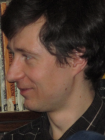
Smajil Halilovic is a Researcher at the Chair of Renewable and Sustainable Energy Systems at the Technical University of Munich . His work focuses on energy systems modeling and optimization, particularly for geothermal and renewable energy integration. Current projects include Geo.KW , a coupled hydrothermal and infrastructure model for urban-scale geothermal use Research emphasizes optimization techniques for groundwater heat pump systems Key contributions in PDE-constrained optimization and thermal resource assessment Halilovic has published extensively in Renewable Energy and Energy Conversion and Management , with recent work on spatial optimization of geothermal systems and urban heat planning. His collaborations with Prof. Thomas Hamacher and Kai Zosseder highlight his role in advancing sustainable energy infrastructure. He teaches Mathematical Modeling of Complex Systems in the Energy Field and contributes to interdisciplinary projects like the Interdisciplinary project internship: Concept development of a renewable energy system in a developing country . His publications demonstrate expertise in geothermal integration, optimization algorithms, and urban energy modeling.
Lisa Hultman serves as a Professor at Uppsala University's Department of Peace and Conflict Research, where she leads groundbreaking research on peacekeeping operations, civilian protection, and conflict dynamics. Her work bridges academic rigor with practical policy implications for international peace and security institutions. Professor Hultman's research focuses on the empirical analysis of UN peacekeeping effectiveness, particularly examining how different mandate configurations impact violence against civilians and local conflict trajectories. Her work demonstrates sophisticated methodological approaches, frequently utilizing geocoded data and large-N quantitative analyses to assess peacekeeping outcomes at subnational levels. Key contributions include developing innovative datasets like the Geocoded Peacekeeping Operations (Geo-PKO) and examining the economic dimensions of peacekeeping deployments on local development. Her publication record reveals consistent engagement with critical questions in peace and conflict studies, with recent work exploring mandate complexity in UN operations, the relationship between peacekeeping and civilian protection norms, and forecasting models for political violence. Her research often involves extensive collaboration with leading scholars in the field, resulting in publications in top political science journals including the American Political Science Review , American Journal of Political Science , and Journal of Peace Research . Professor Hultman's influential 2019 book "Peacekeeping in the Midst of War" (co-authored with Jacob Kathman and Megan Shannon) synthesized years of research on peacekeeping effectiveness. Her work has been widely cited and referenced in both academic literature and policy discussions, demonstrating significant real-world impact on understanding how international interventions can effectively protect civilians and reduce violence in conflict zones.
Arthemy Kiselev is an Assistant Professor at the University of Groningen's Faculty of Science and Engineering, specifically within the Department of Mathematics at the Johann Bernoulli Institute. He has been working at the Chair of Algebra since January 2011, contributing significantly to mathematical physics research. His educational background includes: (Under)graduate studies at Lomonosov Moscow State University (summa cum laude, 2001) and Independent University of Moscow PhD in mathematical physics (2004) Professor Kiselev's research focuses on the interface of (super)geometry and quantisation, particularly examining the (non)commutative geometry of Kontsevich's deformation and Batalin-Vilkovisky's approaches to quantisation of gauge field models. His work centers on deformation quantisation, BV quantisation, geometry of differential equations, Poisson geometry, and brackets. He has developed algebraic and geometric tools for the mathematical language of fundamental physics, with particular emphasis on the geometry of variations in Batalin-Vilkovisky formalism and Kontsevich's deformation quantization. His fingerprint in research shows strong connections to Cocycle Mathematics (100%), Poisson Bracket Mathematics (95%), Vector Field Mathematics (77%), Manifold Mathematics (65%), Poisson Structure Mathematics (51%), and Partial Differential Equation Mathematics (41%). His recent publications (2023-2024) demonstrate continued exploration of Kontsevich graphs acting on Nambu-Poisson brackets, star-products for affine Poisson brackets, and associativity properties in deformation quantization. These works show a consistent focus on understanding the mathematical structures underlying quantization procedures, with particular attention to graph complexes, cocycles, and their applications to Poisson geometry. His research reveals deep connections between algebraic structures, differential geometry, and theoretical physics. Scientific recognition includes: NWO VENI post-doctoral grant at Mathematical Institute Utrecht (2008-2010) Throughout his career, Kiselev has given 107 international talks at mathematics and theoretical physics research seminars. His collaborative work with PhD and master's students, such as M.S. Jagoe Brown and F. Schipper, has produced significant results in Poisson geometry and deformation quantization. His research has been supported by various institutions including visits to prestigious centers like IHES (France), MPIM (Germany), CRM (Montreal, Canada), and SISSA (Trieste, Italy). He has held positions at institutions including ISPU in Ivanovo, Russia (as docent since 2009). Kiselev is an active member of the Geometry and Quantum Theory (GQT) research group, contributing to the vibrant mathematical physics community at Groningen. His work continues to bridge abstract mathematical structures with fundamental physical theories, particularly through the lens of deformation quantization and Poisson geometry.
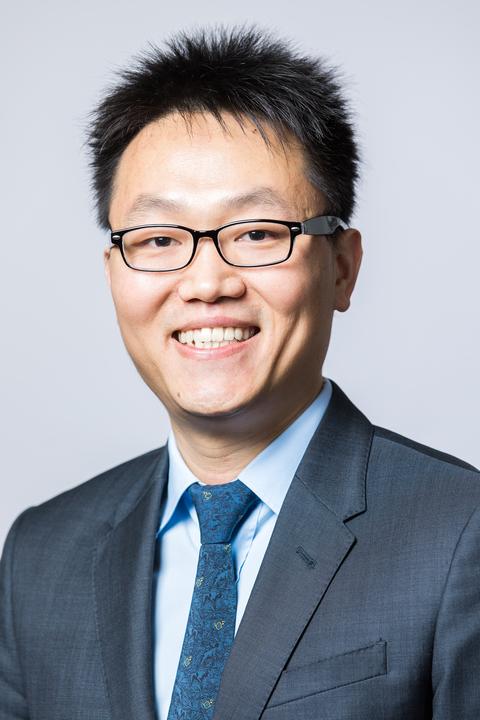
Dr. Lipeng Wan is a tenure-track Assistant Professor of Computer Science at Georgia State University (GSU), located at 25 Park Place, room 733. He holds a B.Eng. in Communication Engineering from Nanjing University of Science and Technology (2008), an M.Eng. in Information and Communication Engineering from Southeast University (2011), and a Ph.D. in Computer Science from the University of Tennessee, Knoxville (2016). Prior to joining GSU, he served as a Computer Scientist at Oak Ridge National Laboratory (ORNL), first as a postdoctoral researcher (2016–2018) and later as a full-time research staff member (2018–202?). His research focuses on big data management and analytics , high-performance and data-intensive computing , and resilience and performance optimization for distributed systems . Key interests include scientific data workflows, I/O innovations for exascale systems, and error-controlled data compression frameworks like MGARD and HPDR. Dr. Wan’s recent work emphasizes adaptive data transmission (e.g., JANUS), load balancing in cloud environments (SciLance), and optimizing file access patterns on HPC systems. His publications address challenges in exascale computing, including I/O performance, geographically distributed data management, and feature-preserving compression for climate simulations. He leads research at GSU in collaboration with national labs like ORNL, focusing on advancing scalable data management techniques for high-performance computing applications.
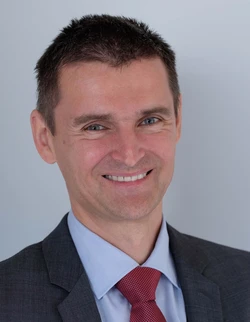
Prof. Ondrej Vaculin, Ph.D., is a Professor at Technische Hochschule Ingolstadt (THI), specializing in passive vehicle safety, mechatronic systems, and automated driving. He joined THI in 2018 and previously held roles at TÜV SÜD Prague (2008–2018) as Vice President for Safety and Security in Automotive, and as a researcher at Czech Technical University (2005–2008) and DLR Oberpfaffenhofen (2000–2005). His research focuses on enhancing vehicle safety through advanced simulation, sensor integration, and machine learning applications. Education: Ph.D. in Mechanics of Solids, Deformable Bodies and Continua from Czech Technical University in Prague (2001), and a degree in Technical Cybernetics from the Faculty of Electrical Engineering at the same university (1991). His work bridges theoretical research and practical implementation, addressing challenges in automated driving systems, crash simulation, and human body diversity in safety design. Research interests include passive safety systems, autonomous vehicle dynamics, and infrastructure integration for safety enhancements. Recent publications emphasize collaborative smart infrastructure, sensor fusion for free space detection, and machine learning in crash detection. He actively contributes to FISITA, serving as a Council Delegate and member of technical committees. Awards/memberships: Active in FISITA, holding leadership roles in technical committees. No explicit awards listed, though his contributions to automotive safety standards are notable. Grants and advising: While no specific grants or students are detailed, his extensive industry and academic collaborations (e.g., IN2Lab testing field projects) highlight his role in applied research and development.
Dr. Sharmin Jahan serves as a tenure-tracked Assistant Professor in the Department of Computer Science at Oklahoma State University since August 2022. Her research centers on dynamic security assurance for autonomous systems (self-adaptive systems) through explainable AI models that interpret uncertain operational environments to enable autonomous security decision-making and compliance maintenance. Her educational background includes a Ph.D. and Master's in Computer Science from the University of Tulsa (2018-2021), and a B.Sc. in Computer Science and Engineering from Bangladesh University of Engineering and Technology (2007-2012). She teaches Introduction to Computer Security (CS 4243/5243) and leads Dr. Jahan's Lab focused on security for autonomous systems. Research interests span Explainable AI in Cyber Security, IoT Security, Self-Protecting Systems, and Micro-service Security. Her work develops frameworks that embed security awareness in dynamic systems, using XAI to interpret environmental uncertainty and maintain security compliance through autonomous adaptation. Current projects explore machine learning models for security analysis and XAI challenges in domain-specific security applications. Recent publications (2025-2020) demonstrate concentrated research on security assurance in self-adaptive systems, particularly for IoT and microservice architectures. Key trends include XAI-driven anomaly detection, security profile extraction from operational data, and risk-adaptive access control. Subfield specializations cover service mesh security, blockchain-based access frameworks, runtime trust evaluation, and autonomous threat containment. Scientific awards include: Principal Investigator for 2023 Arts and Sciences Summer Research Award on XAI-enhanced security awareness in autonomous systems Senior personnel on 2022 NSF RET Grant for Big Data and Machine Learning research experiences She advises M.Sc. student Masrufa Bayesh and teaches graduate/undergraduate security courses. Her lab actively investigates frameworks for security assurance in dynamic environments, with emphasis on IoT and microservice architectures requiring continuous adaptation to environmental changes while maintaining security compliance. Dr. Jahan's research team develops analysis and assessment models to determine security compliance degradation risks and optimal adaptation strategies, enhancing system resiliency through separate analytical frameworks integrated with her PhD-developed assessment methodology.
Dr. Asteris Apostolidis is a Senior Research Fellow at the Faculty of Technology, Amsterdam University of Applied Sciences (AUAS), and serves as Lead for Technical Innovation at KLM Royal Dutch Airlines. His expertise spans aviation engineering, artificial intelligence, and sustainable technologies. He co-chairs the SAE G-34/EUROCAE WG-114 committee for AI certification in aviation and has held roles including Associate Professor and Lab Lead at AUAS. Education: PhD in Computational Aerothermodynamics (Cranfield University, 2015) MSc in Aerospace Propulsion (Cranfield University, 2010) Dipl.-Ing. in Mechanical Engineering (Aristotle University of Thessaloniki, 2009) His research focuses on Aviation Maintenance, Sustainable Aircraft Architectures, AI Integration, and Digital Twins . He has pioneered projects with KLM, Airbus, and Rolls-Royce, addressing challenges like gas turbine performance modeling and predictive maintenance. His recent work explores electric aircraft operations for interisland mobility and trustworthy AI-driven prognostics for gas turbines. Awards: Recipient of the Outstanding Contribution in Reviewing (2019), MSc Research Grant (2009), and PhD Research Grant (2010). Collaborations: Active partnerships with TU Delft, Royal Netherlands Aerospace Centre (NLR), and SAE International. Leads initiatives in innovation strategy and sustainability transformation across academia and industry.
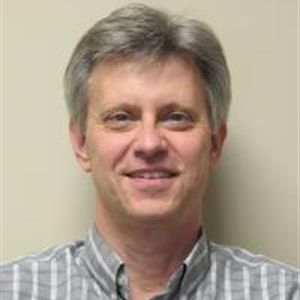
Edmund R. Nowak is a Professor and Department Chair in the Department of Physics & Astronomy at the University of Delaware . His research focuses on spintronic nanostructures , magnetic tunnel junctions , vortex dynamics in superconductors , and granular media dynamics . He has contributed significantly to understanding noise mechanisms in magnetic devices and the development of ultra-sensitive magnetic field sensors. His work also spans material synthesis and characterization of novel semiconductor compounds, such as gallium pnictides and layered materials like BaGa₂Pn₂. His academic leadership includes chairing the Physics & Astronomy department, where he oversees both educational and research initiatives. His research has been published widely, with a focus on experimental and theoretical studies of magnetic nanodevices and their applications in spintronics and sensor technology. Notable contributions include advancing techniques to suppress noise in magnetic tunnel junctions, optimizing sensor performance for picoTesla-level detection, and investigating the effects of annealing on magnetic materials. His interdisciplinary approach bridges condensed matter physics, materials science, and device engineering. Edmund R. Nowak collaborates with industry and academic partners to translate fundamental research into practical applications, such as biodetection systems and low-power magnetometers. His lab at the University of Delaware is equipped for advanced material fabrication, magnetic characterization, and noise analysis.
Dr. Juan Carlos De Luna Ducoing is a Research Fellow at the University of Surrey, specializing in advanced wireless communication systems with a focus on MIMO (Multiple-Input Multiple-Output) technologies. His work integrates neuromorphic computing, quantum annealing, and non-linear processing to enhance the efficiency and scalability of next-generation wireless networks. Research Interests: MU-MIMO detection and precoding Neuromorphic computing applications Quantum computing in wireless systems 6G network architectures Non-linear signal processing Hardware-software co-design (e.g., SWORD platform) Key Publications: His recent work includes NeuroMIMO (2024), which explores neuromorphic principles for power-efficient MU-MIMO detection, and Scalable MU-MIMO User Scheduling (2023), addressing resource allocation in dense networks. He also contributed to quantum annealing-based detection (2022) and Gyre Precoding (2021), achieving significant SNR gains. Collaborations: Works closely with Konstantinos Nikitopoulos and the SWORD research team to develop open-source platforms for rapid prototyping of advanced communication systems.
Christian Fager is a Full Professor at the Department of Microwave Electronics, Chalmers University of Technology, Sweden. He has been affiliated with Chalmers since completing his Ph.D. there in 2003. As Head of the Microwave Electronics Laboratory, his research focuses on nonlinear transistor modeling, energy-efficient power amplifier architectures, and distributed MIMO systems. He has co-invented 8 patents and published over 250 papers, including a seminal book on Nonlinear Transistor Model Parameter Extraction Techniques (Cambridge University Press, 2011). Dr. Fager holds editorial roles as Associate Editor of IEEE Microwave Magazine and member of the MTT-S Technical Coordination Committee on Wireless Communications. He is a Board Member of the European Microwave Association (EuMA) and has chaired multiple IEEE topical conferences. His awards include the Chalmers Supervisor of the Year (2018), inaugural Area of Advance Award (2010), and IEEE IMS Best Student Paper (2002). He leads research initiatives in distributed antenna systems, digital pre-distortion, and GaN/SiGe-based high-efficiency amplifiers, with projects involving testbed development for 5G/6G applications. His work bridges theoretical modeling and practical implementation in RF/microwave systems, emphasizing thermal and multi-physical simulation integration.
Frank Papenmeier is a Professor in the Department of Psychology at the University of Tübingen, within the Faculty of Science. His research focuses on event cognition, human-robot interaction, visual working memory, and visual attention. He coordinates the 'Coordination Cognitive Psychology and Research Methods' research group. His work explores how people perceive and interact with dynamic environments, including studies on event segmentation, cognitive offloading, and aesthetic judgments. He has contributed to over 100 peer-reviewed articles, with recent work addressing topics like the impact of framing on art perception and the role of AI in education. Papenmeier's research integrates experimental methods with interdisciplinary approaches, including collaborations on teleoperation systems and AI-based tutoring. He has presented at major conferences such as the European Society for Cognitive Psychology and the Psychonomic Society. His lab emphasizes methodological rigor, evidenced by contributions to replication databases and open science initiatives. Education: Not explicitly stated in the text, but his titles include Dr. rer. nat. (Doctor of Natural Sciences) and Diplom-Psychologe (Psychology Diploma). Research Interests: His primary areas include event cognition, human-robot interaction (e.g., helping behavior toward robots), visual working memory (e.g., spatial configuration processing), and cognitive offloading (e.g., impact on memory and performance). He also investigates aesthetic judgments and narrative comprehension through eye-tracking and experimental paradigms. Articles Trends: Recent work addresses applied topics like cookie consent interfaces, AI in education (e.g., R programming tutors), and perceptual effects in 3D cinema. His studies often bridge cognitive theory with real-world applications, such as usability design and social robotics. Labs/Teams: Leads the research group 'Coordination Cognitive Psychology and Research Methods' at the University of Tübingen. Collaborates with interdisciplinary teams on projects involving robotics, AI, and human-computer interaction.
Stefano Martiniani is an Assistant Professor of Physics, Chemistry, Mathematics, and Neuroscience at New York University, affiliated with the Center for Soft Matter Research and the Simons Center for Computational Physical Chemistry. His interdisciplinary research explores computational physics of complex systems, including neural circuit theories, non-equilibrium statistical mechanics, and AI-driven materials discovery. He has pioneered methods for analyzing high-dimensional energy landscapes and received prestigious awards like the NSF CAREER Award (2024) and IUPAP Early Career Prize (2023). Education: PhD in Physics (2017), University of Cambridge MPhil in Physics (2013), University of Cambridge BSc in Physics (2012), Imperial College London Research Interests: His work bridges statistical physics and artificial intelligence, focusing on: Engineering disordered materials with tailored spectral properties Quantifying entropy production in active matter Developing open science frameworks like ColabFit for machine learning interatomic potentials Neural circuit models for cortical communication Grants & Collaborations: Funded by NSF, NIH, Chan Zuckerberg Initiative, and Simons Foundation. Leads interdisciplinary teams in computational physics, AI, and materials science. Labs/Initiatives: Core member of NYU's Center for Soft Matter Research; develops software tools like FReSCo and KLIFF-Torch for computational materials science.
Prof. Mastroddi Franco is a Full Professor at the Department of Mechanical and Aerospace Engineering (DIMA) of Sapienza University of Rome, affiliated with the Faculty of Civil and Industrial Engineering. His expertise spans aerospace engineering, aeroelasticity, and multidisciplinary design optimization. He contributes to training programs such as the 2nd-level Master's in 'Satellites and Orbiting Platforms' and 'Energy Efficiency and Renewable Energy Sources'. His research focuses on fluid-structure interactions, sloshing dynamics in aircraft tanks, and sustainable aircraft design. He has led studies on green aviation technologies, launch vehicle aerodynamics, and numerical modeling techniques like Smoothed Particle Hydrodynamics (SPH). Research Interests: Aeroelastic Stability and Response Hydrogen-Powered Aircraft Systems Neural Network Applications in Fluid Dynamics Green Energy Integration in Aviation Reduced-Order Modeling for Complex Systems Publications highlight contributions to sloshing dynamics, hybrid aircraft design, and computational methods for hypersonic systems. Awards: None explicitly mentioned. Grants and advisory roles include participation in the 'Premio Liviu Librescu' thesis award committee (2010). He collaborates on projects involving structural damping models and multi-objective optimization for aerospace systems.
Dr. Wei Sun is a Chancellor's Fellow (equivalent to Assistant Professor) in Energy Systems Integration at the University of Edinburgh's School of Engineering. His research specializes in low-carbon energy systems with high renewable penetration, utilizing data science and optimization techniques. He contributes to major initiatives like the National Centre for Energy Systems Integration (CESI) and Hydrogen’s Value in Energy Systems (HYVE). Research encompasses network integration of distributed energy resources, climate impacts on renewables, and multi-vector energy systems. Recent publications focus on hybrid energy storage, hydrogen integration, and machine learning applications for system optimization. He holds professional credentials as a Chartered Engineer (CEng) with memberships in IET and IEEE. Teaching includes Hydropower Design Projects and Renewable Energy Fundamentals. Visiting research affiliations include University College London, enhancing collaborative networks in energy systems research.
SATO Jun holds the position of Professor at the Department of Information Engineering (メディア情報分野) within the Faculty of Engineering at Nagoya Institute of Technology. He received his Ph.D. in Information Engineering from the University of Cambridge (1993–1996) and previously served as a Research Assistant at Cambridge (1996–1998). His research focuses on perceptual information processing and intelligent informatics, with specializations in computer vision, 3D reconstruction, and optical engineering applications. He has authored influential books like Computer Vision - Geometry of Vision (1999) and Computer Graphics (2017), and contributed to international publications such as Springer's Computer Vision: A Reference Guide (2020). Key professional roles include serving as President of the IEEE Nagoya Branch since 2023, Associate Editor of the International Journal of Computer Vision (Springer, 2010–present), and committee member for various organizations including Japan's Ministry of Education (2015–present) and the Nagoya City Business Potential Evaluation Committee (2008–2015). He has been recognized with prestigious awards including the BMVC Best Science Paper Prize (1994, 1997) and ITE Niwa-Takayanagi Prize (2015). His research extends to industrial collaborations, evidenced by patents like the "3D Information Presentation Device" (2014–2017) and "Position Detecting Device" (2016–2019). Recent work emphasizes applications in automotive safety, occluded object reconstruction, and novel imaging systems using advanced optical configurations and neural networks.