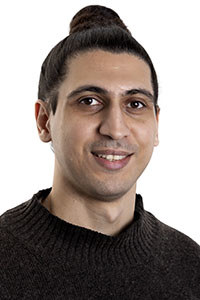
Kanchana Dissanayake is an Associate Professor in Textile Management at the Department of Business Administration and Textile Management, Faculty of Textiles, Engineering and Business, University of Borås. Previously, she served as a Postdoctoral Fellow at the University of Borås (2022–2023) and as a Senior Lecturer at the Department of Textile and Clothing Technology, University of Moratuwa, Sri Lanka (2013–2021). She holds a PhD in Sustainable Consumption from the University of Manchester, UK, and a degree in Textile and Clothing Engineering from the University of Moratuwa. Education: PhD in Sustainable Consumption (University of Manchester), Textile and Clothing Engineering (University of Moratuwa) Kanchana's research centers on sustainable and circular supply chains in the textile and clothing industry, with a focus on dynamic capabilities, stakeholder value alignment, and digital transformation. Her work bridges nonprofit and for-profit organizational strategies in circular economy adoption, emphasizing stakeholder collaboration and policy implications. Key Research Themes: Sustainable supply chain configurations for textile recycling Digital twin and 3D modeling for sustainable fashion Paradoxes in scaling circular business models Just transitions in circular economy practices Kanchana co-supervises doctoral students at the University of Borås, including Golzar Daneshzad, Mohammadreza Dehghannejad, and Quazi Shahrul Islam. She has secured funding from the Kamprad Family Foundation for the CLOSeD project and contributed to EU-funded research on apparel sales forecasting.
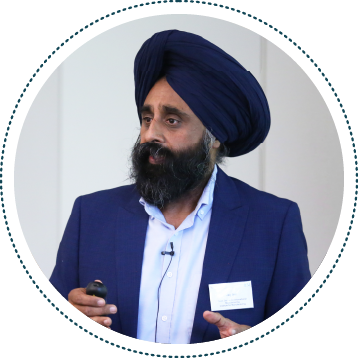
Dr. Jagjit Singh Srai is a Director of Research (Professor equivalent) in the Department of Engineering at the University of Cambridge and Head of the Centre for International Manufacturing at the Institute for Manufacturing (IfM). His research focuses on the analysis, design, and operation of international manufacturing supply networks, with an emphasis on advanced production and digital technologies. He leads IfM’s Digital Supply Chains Consortium, collaborating with global firms like Caterpillar, IKEA, and Unilever, and teaches on the course 'Digitalisation of End-to-End Supply Chains.' Dr. Srai is Co-Chair of the World Economic Forum Council on the Future of Advanced Manufacturing and Production and contributes to UNCTAD’s annual industrial development reports. His interdisciplinary work spans healthcare and food/FMCG sectors, supported by grants including EPSRC Made Smarter Innovation projects and Innovate UK Smart Pharma Supply Chain. He has held senior roles at Unilever prior to academia, managing complex supply chains across global operations. Expertise Areas: Supply Chain Management, Digital Manufacturing, Sustainable Supply Chains, Advanced Manufacturing, Network Design, Food Security. Selected Scientific Awards: Fellow, Institute of Chemical Engineers (FIChemE) Chartered Engineer (CEng) Highly Commended Paper Award, Emerald Publishers (2016)
Norbert J. Mauser is a Professor of Mathematics at the University of Vienna 's Faculty of Mathematics. He serves as Director of the Wolfgang Pauli Institute and Co-Director of the Jungen Kurie at the Austrian Academy of Sciences. Mauser coordinates major EU projects like HYKE and DEASE , focusing on hyperbolic and kinetic equations, differential equations, and their applications in science and engineering. Research Interests : Mauser specializes in Partial Differential Equations (PDEs) , particularly Nonlinear Schrödinger Equations (NLS) , with applications in Quantum Physics and Computational Materials Science . His work spans mathematical modeling , numerical methods , and asymptotic analysis , addressing problems in micromagnetism , quantum correlation , and nonrelativistic limits . He explores Wigner transforms , stochastic NLS , and multi-configuration Hartree-Fock equations for quantum systems. Scientific Contributions : Grants & Projects : Principal Investigator for START Award , FWF , WWTF , and ANR-FWF projects on quantum dynamics, correlation, and nano-sensors. Collaborations : Active in international networks including CNRS Groupement de Recherche on kinetic equations and quantum physics. Publishing : Senior editor for journals like Asymptotic Analysis and Communications in Mathematical Sciences . Labs & Teams : Leads projects under Vienna Computational Materials Laboratory (ViCoM) and contributes to multi-scale modeling of nano-biosensors. His research integrates computational methods with theoretical physics, emphasizing quantum systems and nonlinear PDEs.
Dr. Luciana Basualdo Bonatto is a researcher at the Mathematical Institute , University of Oxford , specializing in topology and its intersections with algebraic structures. She contributes to the Topology research group and has published extensively on configuration spaces, operad theory, and manifold topology. Her research interests include: Configuration Spaces Diffeomorphism Groups Homological Stability Embedding Calculus Knot Theory Operad Theory Her recent publications span mathematical topology and computational applications, including a 2023 study on moduli spaces and a 2021 work on multi-agent consensus algorithms. She collaborates internationally with researchers like Nathalie Wahl and Safia Chettih. She is affiliated with Oxford's Topology research group and works from the Andrew Wiles Building, Radcliffe Observatory Quarter.
Gui-Qiang G. Chen is a Professor at the Mathematical Institute , University of Oxford, and a Professorial Fellow of Keble College. He serves as Director of the Oxford Centre for Nonlinear Partial Differential Equations (OxPDE) , focusing on nonlinear PDEs, hyperbolic conservation laws, and their applications to fluid dynamics, geometry, and mathematical physics. His research spans Partial Differential Equations , Nonlinear Analysis , Shock Wave Theory , and Free Boundary Problems , with recent work on stochastic PDEs , geometric PDEs , and numerical analysis . His publications cover topics like transonic shocks , hypersonic flow , and compressible fluid dynamics . Gui-Qiang Chen has co-authored 15+ major publications since 2007, including research monographs on shock reflection-diffraction and Prandtl-Meyer reflection configurations , and his work appears in leading journals like Annals of Mathematics and Communications on Pure and Applied Mathematics . Awards and fellowships include: 2024 Polya Prize (London Mathematical Society) Doctor of Science (Oxford, 2024) Member of Academia Europaea (2022) Member of the European Academy of Sciences (2020) Fellow of the American Mathematical Society (2017) SIAM Fellow (2013) Chinese National Prize of Sciences (1990) He supervises DPhil/PhD students in nonlinear PDEs and related fields, and his research is supported by Oxford's mathematical infrastructure and international collaborations.
Terry van Dijk serves as a faculty member at the University of Groningen's Faculty of Spatial Sciences within the Urban and Regional Studies Institute. His academic profile demonstrates active engagement in spatial planning research with significant scholarly output including 96 publications and ongoing supervision of PhD candidates like Nika Lindhout. Recent activities include invited presentations at international forums such as the 39e Rencontre d'agences d'urbanisme (2018) and guest lectures on water governance and intercultural perspectives (2015-2016). Dr. van Dijk's research interests span multiple dimensions of spatial planning with particular emphasis on boundary-spanning design approaches, land use challenges, and climate adaptation strategies. His fingerprint analysis reveals dominant expertise in Land Use (100%), Dutch Studies (95%), Spatial Planning (77%), Planning Process (76%), Planning Practice (53%), and Central/Eastern Europe contexts (45%). This multidisciplinary focus connects theoretical frameworks with practical applications in urban development. His recent publications demonstrate evolving research trajectories from traditional spatial planning toward innovative design-led approaches for complex challenges like climate adaptation and child-friendly urbanism. The 2025 publications particularly highlight boundary-spanning competencies in urban climate adaptation and process architecture for consensus-building in land consolidation projects, showing a consistent thread of integrating stakeholder perspectives through spatial design solutions. As a PhD supervisor and academic presenter, Dr. van Dijk maintains active engagement with both scholarly communities and practical planning contexts. His media contributions, including expert commentary on projects like the Lelylijn (2021), demonstrate applied relevance of his research to contemporary spatial challenges in the Netherlands.
Nicolai Fabian is a researcher at the Faculty of Economics and Business, University of Groningen, specializing in Digital Transformation and its intersections with organizational strategy, ethics, and technology. His work addresses critical challenges in digital governance, artificial intelligence applications, and business model innovation for SMEs. Key Research Areas: Digital Transformation, Knowledge Engineering, AI Ethics, and Digital Governance. Recent Collaborations: Frequent co-authorship with scholars like Dong, Broekhuizen, and Verhoef on topics spanning cybersecurity, digital trace data, and platform dynamics. Research Trends (2022–2025): Focuses on the dual-edged impacts of digitalization, from economic value creation in SMEs to dystopian risks in AI and cybersecurity. Explores how organizations adapt to digital disruption through strategic learning, ethical frameworks, and data-driven governance. Network & Visibility: Active in international collaborations and cited across multidisciplinary domains, reflecting his engagement with global research communities.
Holger Dullin is a Professor of Applied Mathematics at the School of Mathematics and Statistics, University of Sydney. His research focuses on Hamiltonian dynamical systems, integrable systems, and their applications in mechanics, fluid dynamics, and biomechanics. He serves as a member of the Sydney Southeast Asia Centre and the Applied Mathematics Research Group. Member of Sydney Southeast Asia Centre Member of Applied Mathematics Research Group Research Interests include: Hamiltonian systems and integrability Quantum and classical monodromy Geometric phase phenomena N-body and rigid body dynamics Volume-preserving mappings His work spans from fundamental mathematical physics to interdisciplinary applications in biomechanics and space engineering , with recent studies on light sail stabilization and geometric phase optimization in diving. Publications cover 2024 to 2003, showing sustained contributions to nonlinear dynamics , stability analysis , and symplectic geometry . Teaching includes advanced courses in Hamiltonian dynamics and nonlinear ODEs. Current research students include Babak Attarha and Gleb Palshin , with past supervision of William Tong (PhD 2016) on geometric phases in diving.
Radisav Vidic is the Nickolas A. DeCecco Professor in the Department of Civil and Environmental Engineering at the University of Pittsburgh's Swanson School of Engineering. With over three decades of academic and research experience, he has established himself as a leading expert in environmental engineering, particularly in water treatment technologies for unconventional gas extraction wastewater. His research interests focus on membrane distillation processes, produced water treatment from hydraulic fracturing operations, management of naturally occurring radioactive materials (NORM), and sustainable water reuse strategies. Vidic's work bridges fundamental science with practical engineering solutions for the challenges posed by shale gas development. Vidic's recent publication record demonstrates a strong emphasis on solving critical problems in membrane distillation technology for treating high-salinity produced waters. His research spans fundamental investigations of scaling mechanisms, optimization of system configurations, and development of practical treatment solutions for the oil and gas industry. A significant portion of his work addresses the unique challenges of treating Marcellus Shale produced water, including radioactive contaminants and scaling issues. William Kepler Whiteford Professor, University of Pittsburgh (2012, 2008) Professor of the Year, American Society of Civil Engineers, Pittsburgh Section (2008) Fulbright Scholarship, University of Belgrade (2003) Outstanding Doctoral Thesis Award (1993) Multiple William Kepler Whiteford Faculty Fellowships (1994, 1996, 1998) As an advisor, Vidic has mentored numerous graduate students, with several receiving awards for their research. His work has attracted significant funding from both government agencies and industry partners, supporting laboratory and pilot-scale research on advanced water treatment technologies. His research group collaborates with experts in chemistry, materials science, and environmental health to address complex water challenges.
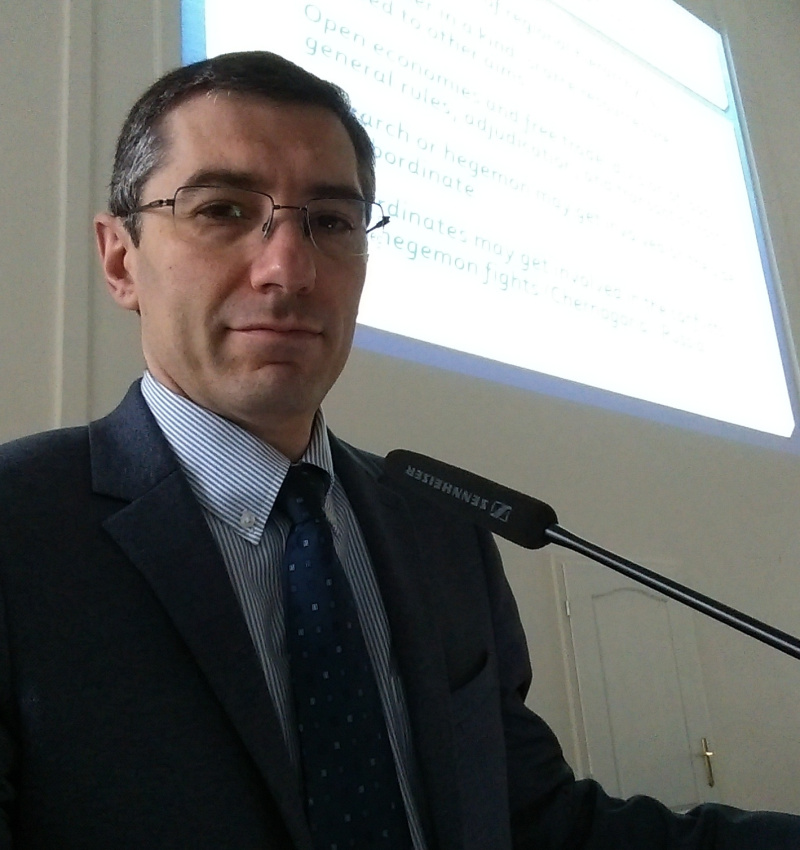
Vahagn Roberti Aglyan serves as Associate Professor and Head of the Department of Public Administration within the Faculty of International Relations at Yerevan State University, Armenia, a position held continuously since 2009. His institutional affiliation centers on advancing public administration education and research within post-Soviet contexts while examining Armenia's geopolitical positioning. His academic foundation includes: Postgraduate studies (1993-1998) in the Department of International Relations at Yerevan State University, earning a Certified Specialist degree Advanced postgraduate research (1998-2001) in the Department of Theory and History of International Relations at Yerevan State University under Prof. E. Zohrabyan, focusing on “The Russian Federation and regional armed conflicts in Transcaucasia (1991-1994)” Specialized training at Arizona State University’s Faculty of Public Administration (2005) Aglyan’s research traverses public policy analysis, US foreign policy frameworks, and hierarchical international systems theory, with concentrated expertise in Armenian-Russo-American triangular relations. His work critically examines policy convergence mechanisms within asymmetric power structures, post-socialist governance models, and the evolving welfare state paradigms in comparative perspective. This intellectual trajectory reflects deep engagement with both theoretical frameworks and empirical regional dynamics. Analysis of his 15 publications (2015-2025) reveals persistent thematic threads: structural power dynamics in Russia-Armenia relations, US strategic recalibrations in Eurasia, and public administration challenges in post-conflict societies. His scholarship demonstrates methodological versatility across English, Russian, and Armenian academic discourses, with increasing attention to contemporary governance dilemmas like universal basic income implementation and networked policy design. Professional activities include participation in international conferences such as the 2022 YSU symposium “Armenia, the United States, and Regional Transformations in Eurasia,” though no doctoral advisees or major research grants are documented. His departmental leadership role suggests primary research execution within Yerevan State University’s institutional framework without dedicated lab structures.
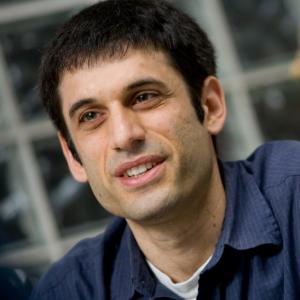
Robert D. Kleinberg is a Professor of Computer Science at Cornell University's Department of Computer Science and a member of the field of Information Science. He received his Ph.D. from MIT in 2005 and previously worked at Akamai Technologies designing internet content delivery networks. His research bridges theoretical computer science and practical applications in electronic commerce, networking, and information systems. Research Interests: Kleinberg's work focuses on the design and analysis of algorithms, with special emphasis on economic aspects of algorithms, online learning, random processes in networks, and applications to electronic commerce and information retrieval. His research combines theoretical rigor with real-world impact, exploring how algorithmic principles can optimize complex systems. Publication Trends: Kleinberg's recent publications demonstrate a consistent focus on online optimization, algorithmic fairness, network design, and learning algorithms. His work frequently appears in top-tier venues spanning theoretical computer science (STOC, FOCS), machine learning (NeurIPS, COLT), and networking (NSDI). The publications reflect interdisciplinary approaches combining computer science, economics, and applied mathematics. Awards and Honors: Microsoft Research New Faculty Fellowship Alfred P. Sloan Foundation Fellowship NSF CAREER Award Best Paper Award at ACM EC 2014 Advising and Academic Leadership: Kleinberg actively mentors Ph.D. students and postdoctoral researchers, with current advisees including Raunak Kumar, Princewill Okoroafor, and Tegan Wilson. He has supervised numerous graduates who now hold academic positions worldwide. His teaching includes core algorithm courses (CS 4820, CS 6820) and specialized topics at both undergraduate and graduate levels.
Dr. James N. Gilmore is an Associate Professor of Media and Technology Studies and Graduate Coordinator in the Department of Communication at Clemson University's College of Behavioral, Social and Health Sciences. He joined Clemson in 2018 after completing his PhD at Indiana University and has established himself as a leading scholar in media technology studies, with expertise in wearable technologies, datafication, and media infrastructure. Dr. Gilmore's educational background includes: Ph.D. in Communication and Culture from Indiana University (2018) M.A. in Film and Television from University of California, Los Angeles (2013) B.A. in Film and Media Studies from University of South Carolina (2011) His research focuses on the cultural politics of media and communication technologies, particularly how computational technologies convert human behavior to data (datafication). Dr. Gilmore examines how everyday devices like smartwatches, fitness trackers, and body cameras reinforce systems of normalcy, surveillance, and solutionism across health, labor, accessibility, law enforcement, and other domains. His work bridges theoretical frameworks from media studies, cultural studies, and science and technology studies to analyze the social implications of emerging technologies. Dr. Gilmore's publications demonstrate consistent engagement with emerging technologies across multiple domains. His recent work spans wearable technologies, virtual reality, AI platforms like ChatGPT, streaming services, and smart home devices, revealing patterns in how technologies mediate everyday life while raising critical questions about privacy, surveillance, accessibility, and corporate power. His scholarship consistently connects technological developments to broader social, political, and cultural contexts. Dr. Gilmore has received numerous honors and awards for his research and teaching: Top Paper Award, Popular Communication Division, Southern States Communication Association (2024) Outstanding Teaching of the Year (Junior Tenure-Track), College of Behavioral, Social, and Health Sciences (2022-2023) Outstanding research publication award for 'Securing the kids' (2022) Research Faculty Spotlight (Spring 2021) Ray Camp Award for Most Outstanding Research Paper (2018) As Graduate Coordinator, Dr. Gilmore actively mentors students, with numerous co-authored publications featuring graduate and undergraduate researchers. His students have contributed to research on AI adoption, virtual reality, wearable technologies, and platform politics. Dr. Gilmore has secured internal research funding at Clemson University, including recognition through the university's research reporting system. His book projects, including the forthcoming DeGruyter Handbook of Wearable Technologies and Society, represent significant scholarly contributions that bring together international researchers. Dr. Gilmore leads research initiatives focused on wearable technologies and media infrastructure, with his recent book 'Bringers of Order' establishing him as a leading voice in wearable technology studies. He is currently editing a comprehensive handbook that will expand this research area significantly.
Prof. Miro Zeman serves as a Professor in the Photovoltaic Materials and Devices research group within the Department of Electrical Engineering, Mathematics and Computer Science at Delft University of Technology. With an extensive publication record of 559 research outputs including articles, conference contributions, patents, and datasets, he maintains active leadership in photovoltaic research. His research spans photovoltaic materials science , solar cell engineering , and renewable energy systems . Specializing in crystalline silicon solar cells, thin-film technology, and tandem cell configurations, his work addresses fundamental semiconductor physics alongside practical implementation challenges. Recent research focuses on impedance spectroscopy of PN junctions, defect analysis in transition metal oxides, and integration of power electronics with photovoltaic modules. Zeman's publication portfolio reveals consistent contributions to high-impact journals including Solar Energy Materials and Solar Cells , ACS Applied Energy Materials , and EPJ Photovoltaics . The research demonstrates strong interdisciplinary connections between semiconductor physics, materials engineering, and energy system integration, with particular emphasis on improving efficiency metrics and practical implementation of photovoltaic technologies across diverse environmental conditions. His research group has produced 37 supervised academic works and maintains active collaboration with industry and academic partners globally, as evidenced by the extensive network visualizations in his profile. The Photovoltaic Materials and Devices laboratory at TU Delft serves as the primary research environment for his team's investigations into next-generation solar technologies.
Francesca Froy is a Departmental Lecturer for the Master's in Sustainable Urban Development at the University of Oxford's Department for Continuing Education and a Fellow of Kellogg College. She holds honorary positions as Lecturer at the Bartlett School of Planning and Senior Research Fellow at the Bartlett School of Architecture, University College London. Previously, she spent over twenty years in policy analysis, including as a senior policy analyst at the OECD where she led international reviews on local policy implementation, employment strategies, and local governance for the Centre for Entrepreneurship, SMEs, Regions and Cities. Her research focuses on three interconnected strands: Urban morphology and spatial organization of cities Evolutionary economic geography and economic diversification Local governance of economic and spatial complexity She applies these through practical work as an Associate at Space Syntax, a planning and architecture consultancy. Her publications predominantly explore urban complexity through spatial and economic configurations, with recent works examining green industrial transitions (2023), knowledge networks in regional development (2023), and theoretical frameworks for urban systems (2023). Her forthcoming book (2025) synthesizes these themes through a configurational analysis of postindustrial cities. She welcomes doctoral students interested in urban complexity, evolutionary economic geography, nature-based infrastructures, and governance systems. She has extensive international research experience through OECD and European Commission projects.
Abdelkader Mekrache is a doctoral researcher in the Communication Systems department at EURECOM. His work focuses on integrating artificial intelligence (AI) and large language models (LLMs) into next-generation (6G) network management frameworks, emphasizing intent-driven systems, zero-touch automation, and explainable AI (XAI) for enhanced trustworthiness. Institution: EURECOM Email: Abdelkader.Mekrache@eurecom.fr Research Interests: Mekrache's research explores AI-driven solutions for telecommunications, including: Intent-based networking for 6G LLM-powered operations support systems Explainable AI (XAI) for network transparency Deep reinforcement learning (DRL) for task scheduling Machine reasoning in FCAPS models Edge computing and network-compute abstraction Publication Trends: His recent work highlights the convergence of AI/LLMs with telecommunications, particularly in automating network management for 6G systems through intent-driven architectures and trustworthy AI paradigms.