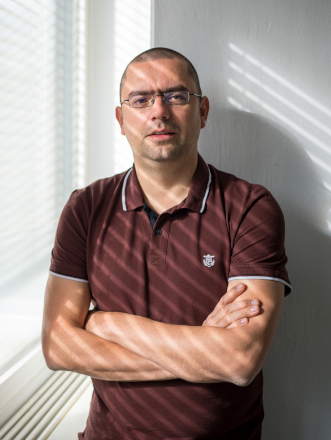
Maurits Haverkort is a Professor at the Institute for Theoretical Physics, Heidelberg University (Germany). His research focuses on quantum many-body systems , strongly correlated electrons , and X-ray spectroscopy of complex materials under strong fields. University of Cologne (PhD in Physics, 2005) University of Groningen (M.Sc. in Physics, 2002) Research Interests : He investigates orbital and magnetic properties in heavy fermion systems , actinide materials , and correlated oxides using resonant inelastic X-ray scattering (RIXS) , ARPES , and computational tools like Quanty . His work spans crystal field theory , spin-orbit coupling , and ultrafast electron dynamics . Scientific Awards & Activities : 2018 – Editorial Board Member, Physical Review Letters 2017 – Beam Time Allocation Panel, ESRF Grenoble 2016–2018 – Swedish Research Council Panel NT-4 2012–2016 – Scientific Selection Panel, Helmholtz-Zentrum Berlin Recent Publications highlight 5f electron counting , photon-modulated bonding , and precision neutrino mass experiments , reflecting his expertise in quantum materials and advanced spectroscopy .
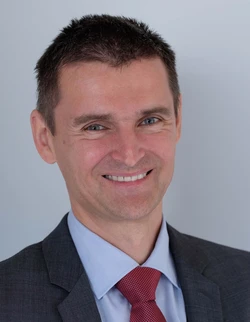
Andreas Strohmayer is a Professor and Managing Director of the Institute of Aircraft Design at the University of Stuttgart, leading research in aircraft design, electric/hybrid propulsion, and lightweight construction. His work focuses on sustainable aviation solutions, including electric aerotow systems, hydrogen tank integration, and hybrid-electric regional aircraft. He previously held senior industry roles at Grob-Werke, Sky Aircraft, and SST Flugtechnik before joining academia in 2015. Education & Career: 1989–1995: Studied Aerospace Engineering at TU Munich 1995–2002: Research Assistant at TU Munich's Aerospace Chair 2002–2009: Managing Director of Grob Aerospace GmbH 2009–2013: Deputy Director at Sky Aircraft (Metz) 2013–2015: Vice President at SST Flugtechnik GmbH 2015–Present: Full Professor at University of Stuttgart Research Focus: Electric and hybrid-electric propulsion systems Lightweight structural design and simulation Flight testing of demonstrators like the e-Genius-Mod Hydrogen storage integration in aircraft fuselages Aerodynamic optimization and wing tip propulsion Open-source tools for aircraft design (SUAVE) Recent Projects: Development of the e-Genius-Mod for electric aerotow and autonomous flight Hydrogen tank modeling for zero-emission aviation FUTPRINT50 initiative for 50-seat regional aircraft sustainability Investigation of distributed electric propulsion systems Academic Contributions: Over 50 peer-reviewed publications since 2015 Active in industry-academia collaborations (EASN, European projects) Supervisor of numerous master's and Ph.D. students Teaching courses on aircraft design and propulsion systems
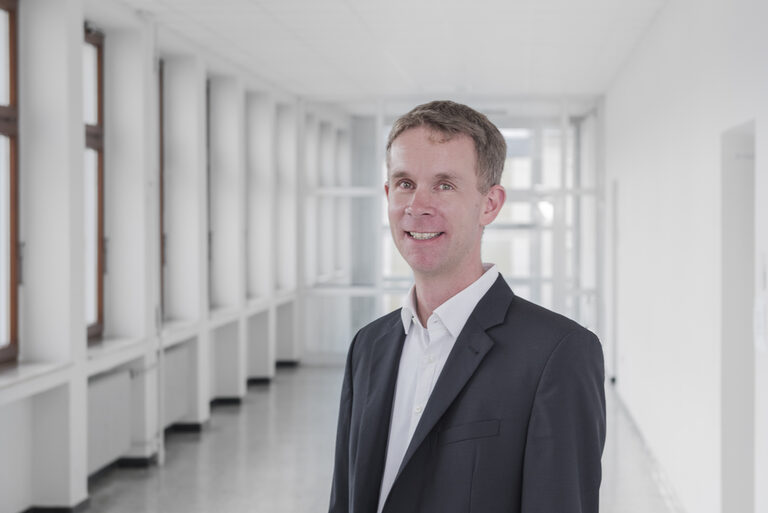
Sven Apel is Professor of Computer Science at Saarland University, where he holds the Chair of Software Engineering and directs the Saarbrücken Graduate School of Computer Science within the Saarland Informatics Campus. His research aims to advance software engineering into an era of intensive automation by developing methods, tools, and theories for building efficient, reliable, and maintainable software systems, with a strong emphasis on the human factor and interdisciplinary inquiry. His primary research interests include software variability and configuration, AI-based program generation and optimization, socio-technical software analysis, and the application of empirical and neurophysiological methods to study program comprehension. He actively collaborates with industry partners such as Siemens AG, Bosch Engineering, and Airbus Helicopters to apply his research in real-world contexts. His recent publications demonstrate a strong trend towards integrating artificial intelligence and neurocognitive methods into software engineering, focusing on configurable systems, performance modeling, debugging processes, and the scientific validity of empirical studies. His work spans top venues like ICSE, FSE, ASE, and IEEE TSE. ERC Advanced Grant “Brains On Code” ASE Fellow ACM Distinguished Member Hugo Junkers Award for Research and Innovation Heisenberg Professorship (DFG) Emmy-Noether Fellowship (DFG) Best Doctoral Dissertation Awards (University of Magdeburg, Ernst-Denert Foundation, 2007) Most Influential Paper Awards (SPLC'19, ICPC'22, GPCE'23) ACM SIGSOFT Distinguished Paper Awards (ICSE'15, ICSE'21) Best Paper Awards (SPLC'11, Modularity'15, Academy of Management'18) Distinguished Reviewer Awards (ASE'18, ICSE'24, FSE'24) Sven Apel has secured significant research funding, including an ERC Advanced Grant (€2.5M) and multiple DFG grants as Principal Investigator and Project Leader. He has advised numerous PhD and Master’s students and is actively involved in the academic community through program committees for major conferences like ICSE, FSE, and ASE. His work is conducted within a collaborative environment that includes close partnerships with researchers at the Max Planck Institute for Informatics and other institutions within the Saarland Informatics Campus.
Prof. Ondrej Vaculin, Ph.D., is a Professor at Technische Hochschule Ingolstadt (THI), specializing in passive vehicle safety, mechatronic systems, and automated driving. He joined THI in 2018 and previously held roles at TÜV SÜD Prague (2008–2018) as Vice President for Safety and Security in Automotive, and as a researcher at Czech Technical University (2005–2008) and DLR Oberpfaffenhofen (2000–2005). His research focuses on enhancing vehicle safety through advanced simulation, sensor integration, and machine learning applications. Education: Ph.D. in Mechanics of Solids, Deformable Bodies and Continua from Czech Technical University in Prague (2001), and a degree in Technical Cybernetics from the Faculty of Electrical Engineering at the same university (1991). His work bridges theoretical research and practical implementation, addressing challenges in automated driving systems, crash simulation, and human body diversity in safety design. Research interests include passive safety systems, autonomous vehicle dynamics, and infrastructure integration for safety enhancements. Recent publications emphasize collaborative smart infrastructure, sensor fusion for free space detection, and machine learning in crash detection. He actively contributes to FISITA, serving as a Council Delegate and member of technical committees. Awards/memberships: Active in FISITA, holding leadership roles in technical committees. No explicit awards listed, though his contributions to automotive safety standards are notable. Grants and advising: While no specific grants or students are detailed, his extensive industry and academic collaborations (e.g., IN2Lab testing field projects) highlight his role in applied research and development.
Prof. Dr. Martin Hirsch is an academic researcher active in interdisciplinary domains spanning computer science, systems engineering, and embedded systems. His work focuses on formal methods for autonomous systems, digital twin synthesis, and integrated product line development. Research interests include: Model-based development of safety-critical systems Formal verification techniques Hardware-software co-design methodologies Multi-agent coordination in emergency scenarios Publications demonstrate expertise in system modeling, configuration engineering, and autonomous safety protocols. Collaborations with institutions like Fachhochschule Dortmund and Schloss Dagstuhl indicate strong industry-academia connections.
Ben Hermann is a Professor for Secure Software Engineering at Technische Universität Dortmund, Germany, with research focusing on the intersection of programming languages and security. His work primarily centers on vulnerability detection using static analysis, risk assessment of software libraries, security guarantees in type systems, and language-based security. His academic journey includes a doctoral degree from Technische Universität Darmstadt in 2016, followed by postdoctoral work in Eric Bodden's Secure Software Engineering Group at the Heinz Nixdorf Institute. Since 2020, he has held a tenure-track professorship at TU Dortmund, after serving as an interim Professor for IT Security at Paderborn University from October 2019 to September 2020. Hermann's research portfolio demonstrates consistent output in static program analysis frameworks, particularly with contributions to Soot and PhASAR. His work spans vulnerability detection, analysis reusability, and research quality in computer science, with emphasis on artifact evaluation. His recent publications show progression from framework development toward security applications and research methodology. Hermann has been actively involved in numerous conferences including ASE, ICSE, ECOOP, and SPLASH, often serving in program committees and as session chair. His research group at TU Dortmund includes students like Maximilian Krebs who presented work on energy consumption prediction of programs. He maintains an active presence in the academic community, advocating for research quality and reproducibility, and serves in various organizational roles including Doctoral Symposium Chair and Diversity & Inclusion Chair for conferences.
Dr. Ying Wang is an Associate Professor and doctoral supervisor at the Software College of Northeastern University (China), where she has been working since February 2019. She serves as Assistant Dean at the School of Software and is an active member of several CCF committees including the System Software Committee, Software Engineering Committee, Open Source Development Committee, and Women's Committee. Dr. Wang received her Ph.D. in Software Engineering from Northeastern University in January 2019 under the supervision of Professor Zhiliang Zhu. She completed postdoctoral research at the Hong Kong University of Science and Technology (HKUST) from 2022 to 2023 under Professor Shing-Chi Cheung and was a visiting scholar at Microsoft Research Asia through the StarTrack Program in 2021. Her research focuses on intelligent software development technologies, large AI models, open source software big data analysis, and software supply chain security. She has made significant contributions to the governance of open source software ecosystems across multiple programming languages including Java, C#, Python, Go, JavaScript, Android, and Rust. Her work has led to the development of practical tools like 'League of Legends' for monitoring dependency defects in open source ecosystems, with several technologies commercialized by Huawei and Microsoft. Dr. Wang's recent publications demonstrate her expertise in cross-language dependencies, software component analysis, software refactoring, and the application of large language models in software engineering. Her work spans both theoretical foundations and practical applications, with a strong emphasis on real-world impact through industry collaboration. Among her notable achievements are the ACM SIGSOFT Distinguished Paper Awards at ICSE 2021 and ESEC/FSE 2023, making her the first researcher from Northeastern University to receive this honor. She has also received multiple awards for her doctoral dissertation and prototype implementations. Dr. Wang actively contributes to the academic community as an Associate Editor for IEEE Transactions on Software Engineering and serves on program committees for top conferences including ASE, ICSE, and ESEC/FSE. She mentors a large group of doctoral and master's students, with many alumni securing positions at major technology companies including Huawei, Microsoft, Alibaba, and Tencent.
Darko Marinov is a Professor in the Siebel School of Computing and Data Science at the University of Illinois Urbana-Champaign, where he conducts research focused on improving software quality through advanced testing techniques. His work addresses fundamental challenges in software testing including flaky tests, regression test prioritization, and configuration testing. Dr. Marinov's research interests span multiple areas of Software Engineering , with particular emphasis on: Software Testing and Quality Assurance Regression Test Prioritization and Selection Flaky and Non-Deterministic Tests Configuration and Variability Testing Test Suite Optimization Software Reliability and Defect Detection His extensive publication record demonstrates consistent contributions to the field, with research trends showing evolution from foundational testing techniques to addressing modern challenges in software testing, particularly focusing on reliability issues in continuous integration environments and the growing complexity of test suites in large software systems. Dr. Marinov has received numerous prestigious awards recognizing the impact of his work: Two ACM SIGSOFT Impact Paper awards (2012, 2019) ASE Most Influential Paper Award (2015) FSE Test-of-Time Honorable Mention (2024) Seven ACM SIGSOFT Distinguished Paper awards CHI Best Paper Award (2017) Elected Fellow of Automated Software Engineering (2023) His research has been generously supported by major technology companies and government agencies including NSF, Boeing, Facebook, Google, Huawei, IBM, Intel, Microsoft, Qualcomm, Samsung, and SRC. Dr. Marinov actively contributes to the academic community through conference organization, serving as Area Chair for ASE 2025 and Program Committee member for multiple conferences including FSE 2026. His mentoring excellence has been recognized through various awards, highlighting his commitment to guiding the next generation of software engineering researchers.
Randy Verdecia-Peña is a researcher specializing in wireless communication and 5G technologies, focusing on millimeter-wave (mmWave) systems, software-defined radio (SDR), and network protocols. His work emphasizes practical experimentation with advanced signal processing techniques, including machine learning for channel estimation and hardware prototyping for integrated access and backhaul (IAB) architectures. Key contributions include phased array-aided 5G prototypes, flexible layer 2 protocols, and cooperative relay node design in both indoor and outdoor environments. Collaborations frequently involve hardware validation and performance analysis across frequencies like 26 GHz and 60 GHz.
Constanza Rodriguez Piceda is a researcher at the Deutsches GeoForschungsZentrum (GFZ) in Potsdam, Germany, affiliated with the Department of Basin Modelling. She holds a PhD in Geophysics from Universität Potsdam (2022) and is associated with University of Plymouth (email: constanza.rodriguez@plymouth.ac.uk ). Her research focuses on geodynamics, lithospheric modeling, subduction zone processes, and paleomagnetism. Education: PhD in Geophysics (Universität Potsdam, 2022) Research Areas: Southern Central Andes geodynamics, 3D gravity/rheological modeling, lithospheric strength analysis, mantle hydration, Cambrian paleogeography, and tectonic evolution. Publications: 15+ peer-reviewed articles on lithospheric-scale modeling, seismicity distribution, paleomagnetic constraints, and geodynamic simulations of subduction zones. Key collaborations include institutions like Universidad de Buenos Aires, Technical University of Munich, and GFZ.
Benjamin Uekermann is a Jun.-Prof. (Assistant Professor) at the University of Stuttgart's Institute for Parallel and Distributed Systems (IPVS), part of the Faculty of Computer Science, Electrical Engineering, and Information Technology. His work focuses on sustainable simulation software ecosystems , particularly advancing the preCICE coupling library for multi-physics and multi-scale simulations. He leads research in partitioned simulation coupling , reproducible software practices, and high-performance computing tools. His research interests include Parallel computing and distributed systems Numerical methods for coupled PDE-based simulations Scientific software sustainability and open-source frameworks Data-driven adaptive algorithms Validation and testing of simulation ecosystems Recent work emphasizes reproducibility via NixOS integration, user-friendly tools like MetaConfigurator and ASTE, and multi-X coupling across scales and physics domains. His preCICE library enables seamless integration of solvers like OpenFOAM and FEniCS for fluid-structure interaction, CFD/CSD, and thermohydraulics. Key contributions include scalable radial-basis interpolation methods, quasi-Newton acceleration schemes, and geometric multi-scale coupling frameworks. He actively develops educational materials on open-source scientific computing and advocates for sustainable research software practices.
Prof. Timo Hönig is a Professor leading the Bochum Operating Systems and System Software (BOSS) Research Group at Ruhr-Universität Bochum (RUB). Previously, he served as an Assistant Professor at Friedrich-Alexander-University Erlangen-Nürnberg (FAU), where he was part of Department of Computer Science 4. His research focuses on Energy-Aware Computing Systems, Operating Systems, and System Software design with applications in embedded and real-time systems. Key research projects include the DFG Collaborative Research Center/TR 89 (Invasive Computing) and the DFG SPP 1914 (Latency- and Resilience-Aware Networking). He has received notable awards such as the SOSP SRC Gold Medal (2019) and the ISORC Best Paper Award (2017). He actively contributes to conferences like ACM EuroSys and USENIX ATC, and has led initiatives like the Albatross runtime system for energy-efficient HPC clusters. Teaching includes courses on Energy-Aware Computing and Operating Systems Technology. His work bridges theoretical system software design with practical applications in energy efficiency and heterogeneous architectures. The BOSS group explores future system software challenges for many-core and NVM-based systems.
Paul Rozbitski is a Researcher at the School of Business and Economics at Technische Hochschule Mittelhessen , focusing on digital transformation of small and medium-sized enterprises and public administration. Digitalization and digital transformation Impact of low-code/no-code platforms IT consulting and software implementation System modeling for urban development His 2025 publication on data-driven traffic management highlights his work in smart cities and mobility solutions. Paul’s research also intersects with bridging skills shortages via citizen developer platforms and requirements analysis for system configuration.
Dr. Michael Strauch is a researcher at the Department of Computational Landscape Ecology, Helmholtz Centre for Environmental Research – UFZ, Leipzig, Germany. He specializes in integrated process-based watershed modeling and multi-objective optimization of land-use allocation, focusing on the impacts of land use intensity, landscape composition, and configuration on water-related ecosystem services, agricultural production, and biodiversity. His work involves coupling simulation models with heuristic search algorithms using the generic model integration tool CoMOLA and advancing the Soil and Water Assessment Tool (SWAT) . Key Research Areas: Trade-offs and synergies among ecosystem services Stakeholder-driven land use strategies Climate change adaptation in water resources SWAT+/CoMOLA tool development Recent publications highlight his contributions to optimizing agri-environmental practices (2025), addressing soil data gaps in European catchments (2024), and modeling climate-deforestation impacts in Amazonia (2025). His work spans projects like BiodivERsA TALE and OPTAIN , with a focus on multifunctional agricultural landscapes.
Jürgen Schönwälder is a Professor at Jacobs University Bremen, Germany, with affiliations at the University of Osnabrück and TU Braunschweig's Department of Computer Science. His research focuses on network management, protocol design, and internet infrastructure. Key research areas include network management protocols (NETCONF, RESTCONF, YANG), IPv6 performance analysis, cybersecurity, and network configuration. He has contributed extensively to standardization efforts through RFCs and collaborations with institutions like the IETF and Dagstuhl Seminars. Recent publications highlight trends in RESTCONF implementation for constrained devices, active malware analysis using Bayesian models, and metamorphic testing for cryptographic protocols. His work intersects network management, internet infrastructure, and security evaluation. Co-authors like Vaibhav Bajpai, Anuj Sehgal, and Abhilash Hota appear frequently in his research, indicating long-term collaborations. He has participated in editorial roles for journals like IEEE Communications Magazine.