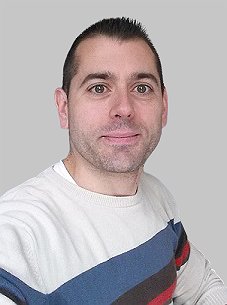
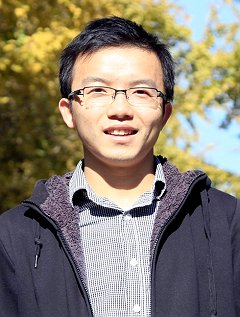
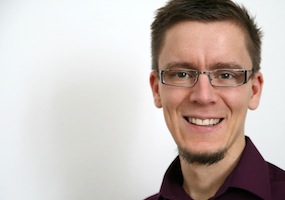
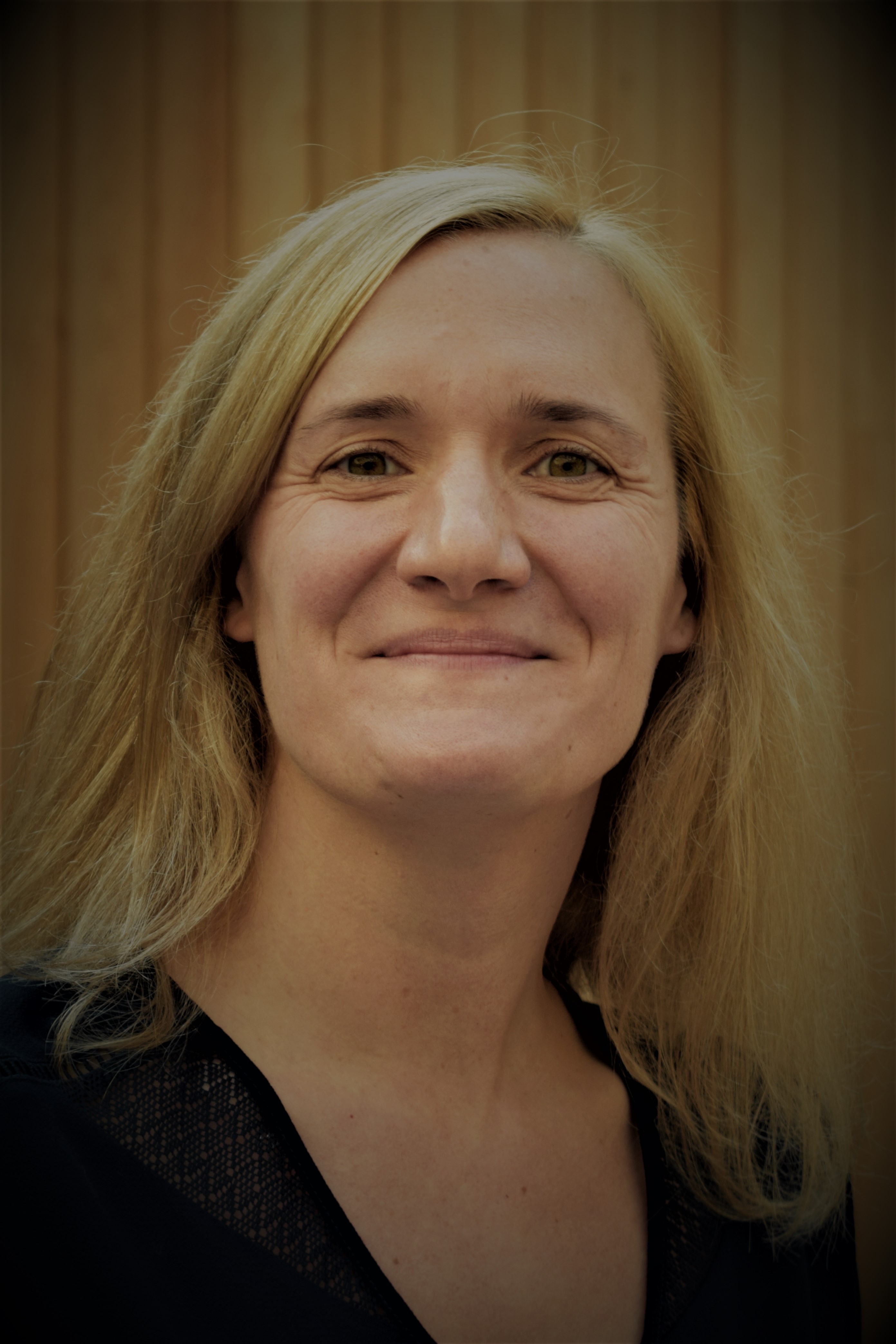
Akash Kumar is a Professor at Ruhr University Bochum, Germany, with affiliations to multiple institutions including TU Dresden and National University of Singapore. His research focuses on computer architecture, hardware acceleration, and approximate computing, with a strong emphasis on FPGA-based systems and neural network optimization. He has contributed extensively to embedded systems, mixed-criticality systems, and security in emerging technologies like reconfigurable nanodevices. His work spans cross-layer approximation methodologies, graph neural networks, and energy-efficient processing for edge AI. Collaborations with industry and academia highlight his leadership in VLSI design and secure hardware implementations. Notable contributions include frameworks for bounding time in mixed-criticality systems and resilient logic locking techniques. Research interests include hardware-software co-design, real-time systems, and efficient neural network architectures. His publications in top-tier conferences (DAC, DATE, FCCM) and journals (IEEE Trans. CAD, ACM TECS) underscore his impact in the field.
Dr. Martin Lange is part of the Project Group Ecological Epidemiology within the Department of Ecological Modelling at the Helmholtz Centre for Environmental Research (UFZ). His research focuses on computational epidemiology, particularly in wildlife and livestock systems. Key areas include disease transmission dynamics, surveillance strategies, and the development of predictive models for infectious diseases like African Swine Fever (ASF) and Bovine Viral Diarrhea Virus (BVDV). Affiliations: UFZ, Department of Ecological Modelling; EcoEpi research group. Education: PhD in Veterinary Epidemiology (2013, TU Bergakademie Freiberg). Research interests span ecological epidemiology, wildlife disease control, and the application of agent-based and individual-based models to understand pathogen spread. Notable contributions include modeling ASF in wild boar populations and BVDV eradication strategies in Ireland. Awards: Received the 2018 UFZ-Wissenstransferpreis (shared with H.H. Thulke) and the Konrad-Bögel-Nachwuchsförderpreis for his doctoral work on eco-epidemiology of wild boar diseases. Also recognized at the DACh Epidemiologietagung 2011. Publications: Over 50 peer-reviewed articles since 2006, emphasizing interdisciplinary approaches to disease modeling and environmental systems. Recent work includes digital twin frameworks for biodiversity monitoring and Python-based model coupling tools like FINAM. Labs/Teams: Active in the EcoEpi group and contributes to projects like BioDT (Biodiversity Digital Twin) and CauSES (Causation in Social-Ecological Systems).
Rémi Badonnel is a Professor in the Department of Computer Science at the University of Lorraine's Faculty of Science and Technology, affiliated with the LORIA research laboratory in France. With over 20 years of research experience, his work focuses on network security, cloud security, and network management systems. His research interests span multiple critical areas of cybersecurity including Network and cloud security architecture Internet of Things security frameworks Software-defined networking security Automated security configuration systems Cybersecurity education and workforce development His work often combines theoretical foundations with practical implementations, particularly in the areas of formal verification for security policies and machine learning applications for threat detection. Analysis of his recent publications (2021-2025) reveals a strong focus on cloud security challenges, particularly around service composition, migration security, and formal verification methods. His work increasingly incorporates AI/ML techniques for security automation while maintaining strong theoretical foundations in network management principles. His research shows consistent collaboration with European institutions, particularly in cybersecurity education initiatives. As an academic leader, he has supervised numerous researchers including Martín Barrère, Anthéa Mayzaud, Adrien Hemmer, and Nicolas Schnepf, who have co-authored multiple publications with him. His editorial roles for IEEE Transactions on Network and Service Management demonstrate his standing in the network security research community.
Adlen Ksentini is a Professor at EURECOM, a leading graduate school and research center in Sophia Antipolis, France, specializing in digital science and communication systems. His extensive research focuses on next-generation mobile networks (5G/6G), network management, and the integration of artificial intelligence with telecommunications infrastructure. Dr. Ksentini actively contributes to major EU research initiatives including 6G-BRICKS and AC3, serving as a key researcher and project leader in the development of future network architectures. Dr. Ksentini's research interests center around network slicing, intent-based networking, edge computing, and the application of machine learning to network management problems. His work bridges theoretical advancements with practical implementations in 5G/6G systems, with particular emphasis on zero-touch network management, energy efficiency optimization, quality of service assurance, and the integration of large language models with network operations. His research has significantly contributed to the development of O-RAN (Open Radio Access Network) frameworks and the evolution of network automation. His recent publication trends reveal a strategic shift toward AI-native network architectures, with increasing focus on integrating large language models (LLMs) with network management systems. His work demonstrates a clear progression from traditional network management approaches to more autonomous, AI-powered systems capable of intent-based configuration, self-optimization, and predictive maintenance. The publications show strong emphasis on practical implementations within the 6G research ecosystem, addressing critical challenges in network slicing, resource allocation, and energy efficiency. As a research supervisor, Dr. Ksentini mentors several PhD students including Abdelkader Mekrache, Karim Boutiba, Bouziane Brik, and Houda Hafi, who frequently appear as co-authors on his publications. His research is primarily funded through major EU research projects such as 6G-BRICKS (Building Reusable Testbed Infrastructures for Cloud-to-Device Breakthrough Technologies) and AC3 (which focuses on Cloud Edge Continuum). Dr. Ksentini is actively involved with the 6G-BRICKS project consortium and the AC3 project team, where he contributes to developing next-generation network architectures that integrate communication, computing, and sensing capabilities. His work within these projects focuses on creating reusable testbed infrastructures and addressing security and trust management challenges in the cloud-edge continuum.
Jürgen Cito is an Associate Professor with tenure at Vienna University of Technology (TU Wien), specializing in software engineering, explainable AI, and performance engineering. He leads research at the IPA Lab (as indicated by his personal website) and maintains a visiting researcher position at Google. His academic journey began with joining TU Wien as an Assistant Professor in Spring 2020, with promotion to Associate Professor announced in April 2024. His research interests span multiple critical areas of modern software development, with particular focus on developer experience, program comprehension, and the intersection of AI with software engineering practices. His work bridges theoretical foundations with practical industrial applications, as evidenced by collaborations with major technology companies. Analysis of his recent publications reveals a strong emphasis on practical tools and methodologies that enhance software quality, performance, and security. His research trajectory shows increasing focus on explainable AI techniques applied to software engineering problems, performance prediction from source code, and automated security testing approaches that leverage large language models. best teaching award for distance learning for Web Engineering (2020) Cito actively contributes to the software engineering community through numerous conference committee roles, including program committee positions at ASE, ICSE, ESEC/FSE, and other major venues. His lab appears to focus on developer tools, program analysis, and AI-assisted software engineering, with connections to both academic and industrial research environments.
Tien N. Nguyen is a Professor in the Computer Science Department at the Erik Jonsson School of Engineering and Computer Science, University of Texas at Dallas. He has been actively contributing to the software engineering research community since 2005, with significant publications and service to major conferences including ASE, ICSE, and ESEC/FSE. His extensive research portfolio spans multiple areas at the intersection of artificial intelligence and software engineering. Dr. Nguyen's research focuses on AI/ML4Code, encompassing Machine Learning, Natural Language Processing for Software Engineering and Software Security. His work specifically addresses Program Analysis, Software Evolution and Mining, Software Security, Software Maintenance, Mining Software Repositories, Version and Configuration Management, and Web Code Analysis and Security. His research has been consistently funded by multiple NSF grants including NSA NCAE-C-002-2021, CNS-2120386, CCF-1723215, CCF-1723432, CNS-1723198, and others dating back to CCLI-0737029. His recent publications demonstrate a strong trend toward leveraging large language models for various software engineering tasks including program analysis, bug detection, code completion, and automated program repair. The research spans both theoretical foundations and practical applications, with numerous papers accepted at top-tier conferences across multiple years. His scientific contributions have been recognized with several prestigious awards: ACM SIGSOFT Distinguished Paper Award at FSE 2024 IEEE Computer Society TCSE Distinguished Paper Award at SANER 2022 ACM SIGSOFT Distinguished Paper and ASE Best Paper Award at ASE 2014 ACM SIGSOFT Distinguished Paper Award at ASE 2012 ACM SIGSOFT Distinguished Paper Award at ESEC/FSE 2009 Dr. Nguyen has served in numerous leadership roles including Program Co-Chair for ICSE 2020 Demonstrations, Doctoral Symposium Co-Chair for ESEC/FSE 2021, NIER Track Chair for ASE 2020, and Tutorials Co-Chair for ASE 2024. He has received multiple NSF grants supporting his research in software analysis, mining, and security. His work with the Boa infrastructure for ultra-large-scale code mining has established significant infrastructure for the research community. His laboratory focuses on AI for software engineering, with particular emphasis on program analysis, software security, and mining software repositories. The research group develops techniques that bridge the gap between artificial intelligence and practical software engineering challenges, creating tools that are both theoretically sound and practically applicable to real-world software development.
Prof. Akash Kumar is a Professor at the Chair of Embedded Systems at Ruhr University Bochum, Germany. He previously held professorships at TU Dresden (2015–2024) and the National University of Singapore (NUS; 2011–2015). His research focuses on design automation of embedded systems, reliability optimization, and approximate computing, with a strong emphasis on FPGA and emerging technologies. He leads projects such as Lean-MICS (DFG-funded) and SecuREFET-II, addressing cross-layer reliability and secure circuits. Education: PhD in Multimedia Multiprocessor Systems from Eindhoven University of Technology (TUe) and NUS (2005–2009), Master of Technological Design (Embedded Systems) from NUS (2003–2004), and B.Eng (Computer Engineering) from NUS (1999–2002, First Class Honours). Research interests span embedded systems, reconfigurable architectures, and hardware-software co-design. His work includes optimizing energy efficiency, fault tolerance, and cross-layer approximation techniques. Recent publications highlight advancements in FPGA-based accelerators, machine learning optimizations, and mixed-criticality systems. Active in grants and leadership, Kumar is Principal Investigator on multiple DFG and industry-funded projects, emphasizing collaborative research in distributed computing and approximate architectures. His contributions bridge theory and practice, with applications in edge AI, IoT, and cybersecurity.
Prof. Dr.-Ing. Frank Thielecke is a full Professor and the head of the Institute of Aircraft Systems Engineering (Flugzeug-Systemtechnik) at Technische Universität Hamburg (TUHH), Germany. His research is centered on advanced aircraft systems, avionics, flight control, and the integration of emerging technologies such as hydrogen and hybrid-electric propulsion. Institution: Technische Universität Hamburg Department: Institute of Aircraft Systems Engineering (Flugzeug-Systemtechnik) Email: frank.thielecke@tuhh.de Office: Neßpriel 5, Room 1.012, 21129 Hamburg His research interests include integrated modular avionics (IMA), model-based systems engineering (MBSE), aircraft load estimation, health monitoring, fault diagnosis, and sustainable aviation technologies. He leads a research group actively contributing to next-generation aircraft design, with a strong focus on digitalization, virtual testing, and system safety. The recent publications highlight a consistent trend in developing model-based tools and architectures for avionics and aircraft systems. Key themes include the design of IMA platforms, virtual integration, system validation, hydrogen aircraft systems, and control algorithms for UAVs and flexible aircraft. His work frequently appears in AIAA, DASC, DLRK, and CEAS conferences and journals. Prof. Thielecke has been involved in numerous collaborative research projects focusing on more-electric aircraft, fuel cell systems, and advanced actuation. He has contributed to the development of frameworks such as ASHLEY and SArA for avionics platform design and systems architecting. His team also works on noise reduction in hydraulic systems and condition monitoring for aircraft subsystems. He supervises a group of researchers and PhD students, many of whom co-author his publications. While specific student names are not listed, long-term collaborators like Oliver Luderer, Thimo Bielsky, Nils Külper, and Philipp Chrysalidis are likely doctoral candidates or postdoctoral researchers in his group. He has secured funding for projects related to hydrogen aircraft, hybrid propulsion, and digital avionics engineering. His lab, the Institute of Aircraft Systems Engineering, operates test benches for avionics, hydraulic systems, and flight control validation. The team uses advanced simulation, co-simulation (e.g., FMI), and hardware-in-the-loop techniques for virtual integration and testing. Ongoing work includes the development of tools for early validation of flight control platforms and automated requirement-based testing.
Professor Matthias Lederer serves as a faculty member at the Weiden Business School of Ostbayerische Technical University Amberg-Weiden, specializing in Business Informatics with a focus on Process Management. His academic position is complemented by extensive industry experience across multiple sectors including IT services, manufacturing, and consulting. Dr. Lederer's research spans four interconnected domains: process analysis and optimization, IT process management, agile process transformation, and didactics for process digitization. His work bridges theoretical frameworks with practical applications, particularly in business process management (BPM), digital transformation, and the integration of agile methodologies into organizational structures. His research demonstrates a clear trajectory toward increasingly sophisticated applications of data science and artificial intelligence in process optimization. Analysis of his recent publications reveals a strong focus on practical implementations of business process management, with particular emphasis on agile transformations, data-driven process design, and the application of AI in business contexts. His work consistently addresses the intersection of academic research and industry practice, with publications appearing in both academic journals and professional conference proceedings. The research demonstrates growing attention to digital platforms, smart manufacturing applications, and sustainable business practices. His scientific recognition includes: Best Program Director award from ISM International School of Management Project Award 'Innovative LernOrte' from OTH Award for Good Teaching from the Bavarian State Ministry Best Paper Award at the 2014 International Conference on Information Systems Multiple professional certifications including Lean Six Sigma Black Belt and OMG-Certified Expert in Business Process Management Professor Lederer has developed significant academic leadership through his role as Chairman of the Institute of Innovative Process Management. His teaching approach integrates practice-integrated methodologies, reflecting his belief in connecting academic concepts with real-world applications. His extensive consulting background with organizations like REHAU AG + Co. and the Bavarian Ministry of Justice informs his academic work and student mentorship.
José Cano Reyes serves as a Reader (Associate Professor) in the School of Computing Science at the University of Glasgow, where he leads the Glasgow Intelligent Computing (GIC) Lab. His academic profile spans multiple premier conferences including ASE, CGO, ICSME, and EASE through 2025, demonstrating active engagement in computer systems research. His research focuses on the critical intersection of hardware and software systems for AI workloads, with core interests in Computer Architecture, Compilers, and Machine Learning. Recent investigations examine deep learning framework conversions, hardware accelerator robustness, and security implications of computational environments. This work addresses fundamental challenges in deploying efficient and reliable AI systems across diverse hardware platforms. Analysis of his 2023-2025 publications reveals a concentrated research trajectory toward optimizing deep learning deployment: 80% of recent work targets framework conversion errors and hardware compatibility issues, with strong emphasis on image recognition systems. Key methodologies include automatic fault localization (40% of publications), performance parameter analysis (30%), and domain-specific compiler techniques (30%). Leads Glasgow Intelligent Computing (GIC) Lab focusing on AI-system co-design Active contributor to ASE, CGO, and ICSME conference committees Maintains research presence through GitHub (jcanore) and Twitter (@jcanore)
Yu Jiang is an Associate Professor at the School of Software, Tsinghua University, China. His research focuses on software security with emphasis on fuzz testing, embedded systems, and database security. He leads the Software System Security Assurance Group which has discovered over 1,000 bugs in major system software with 300+ CVEs registered. Dr. Jiang's research interests include Software Engineering , Embedded Systems Security , and Cross-Layer Fuzzing . His work addresses vulnerabilities in operating systems, databases, communication protocols, and IoT firmware through innovative fuzzing frameworks. Key contributions include semantic-aware fuzzing for heterogeneous software stacks and learning-based vulnerability detection for embedded systems. His recent publications demonstrate strong trends in database security (Hulk, PUPPY, THANOS), ransomware defense (Fawkes, Preventing Disruption), and web security (JANUS). Research spans both theoretical advances in fuzzing techniques and practical industrial applications, with significant impact evidenced by numerous distinguished paper awards. Career Award, NSFC: 2026 Distinguished Paper Award, ISSTA: 2025 First Prize for Technical Invention, CCF: 2024 Distinguished Paper Award, USENIX Security: 2024 SIGSOFT Distinguished Paper Award, FSE: 2022 Dr. Jiang has advised over 50 graduate students including 20 PhD candidates. His research is supported by major grants including NSFC projects ($600,000 for Software Trustworthiness Construction and $350,000 for Distributed Database Reliability), Huawei ($80,000 for LLM-Powered Fuzzing), and Tencent ($120,000 for LLM-Powered Unit Testing). The Software System Security Assurance Group maintains strong industry partnerships with Huawei, Alibaba, Tencent, and Webank. The group operates cutting-edge infrastructure for fuzz testing across multiple domains including database systems, operating kernels, blockchain platforms, and industrial control systems. Current projects integrate LLM technologies with traditional fuzzing techniques to enhance vulnerability detection in complex software stacks.
Simone Ferlin is an Adjunct Senior Lecturer at Karlstad University working with 5G and Internet evolution. She completed her PhD in computer science in 2017 at the Simula Research Lab and Universitetet i Oslo under the supervision of Dr. Ozgu Alay and Prof. Michael Welzl. Her PhD dissertation focused on increasing robustness in multipath transport with MPTCP. Dr. Ferlin's educational background includes a PhD in Computer Science from the Simula Research Lab and Universitetet i Oslo (2017). Her doctoral research centered on enhancing robustness in multipath transport protocols, specifically focusing on MPTCP (Multipath TCP). She also completed undergraduate work that contributed to a book project with Prof. Friedrich Oehme on electronics and circuit technology. Dr. Ferlin's research spans multiple domains at the intersection of networking, systems, and performance engineering. Her primary interests include network and system measurements, performance analysis, security, and congestion control. She investigates how networks like the Internet evolve, examining technology development, adoption patterns, and their impacts on various entities. Additionally, she explores ways to harmonize security and privacy while making them more usable and assessable. Her work particularly focuses on transport layer and multipath transport protocols, examining their performance and security aspects. She also investigates application and transport layer performance, automation, and monitoring. Her research extends to network programming in both Linux kernel and user space, mobile broadband networks from 2G to 5G, and their intersection with the Internet. She is deeply engaged in observability, distributed and system performance monitoring, and automation. Analysis of Dr. Ferlin's recent publications reveals a strong focus on next-generation networking technologies. Her work spans multiple domains including 5G/6G networks, transport protocols (particularly QUIC and MPTCP), network virtualization, container orchestration, and the application of machine learning to networking problems. She has increasingly incorporated large language models into network configuration and automation research. Her publications demonstrate a consistent emphasis on performance measurement, optimization, and security across diverse networking environments from the edge to the cloud. Dr. Ferlin has received notable recognition for her research contributions: Best paper award at IEEE ICIN'21 for 'Learning-based Incast Performance Inference in Software-Defined Data Centers' Applied Networking Research Prize (ANRP)'25 winner for 'NetConfEval: Can LLMs Facilitate Network Configuration?' Dr. Ferlin is actively involved in mentoring the next generation of networking researchers. She has co-supervised numerous Master's and PhD students across multiple institutions including Karlstad University, KTH, TU Berlin, University of Oslo, and universities in Brazil. Her students have worked on diverse topics including NAT64 performance comparison, system tracing visualization, network observability, ML applications to multipath transport, FEC integration with QUIC, high-performance networking for 5G, congestion control, shared bottleneck detection, multipath IoT applications, and container runtime performance. She is also involved in several significant research projects including Vinnova's SEMLA (Securing Enterprises via Machine-Learning-based Automation), Horizon Europe's CODECO (Cognitive Decentralised Edge Cloud Orchestration), and the Knowledge Foundation of Sweden's DRIVE (Data-driven Latency-Sensitive Mobile Services for a Digitized Society). Dr. Ferlin serves as Workshop Chair for ACM SIGCOMM '25, is a member of the ACM/IRTF Applied Networking Research Workshop (ANRW) steering committee, and co-chairs the Internet Congestion Control Research Group (ICCRG) at the IRTF. She previously served as Associate Technical Editor for IEEE Communications Magazine and has been active on numerous program committees for major networking conferences including SIGCOMM, CoNEXT, IMC, and PAM.
Dr. Wanja Hofer is a former research staff member at the Department of Computer Science 4 (Distributed Systems and Operating Systems) at Friedrich-Alexander-Universität Erlangen-Nürnberg (FAU). She specialized in embedded systems, real-time operating systems, and aspect-oriented programming. Her research focused on optimizing hardware-centric systems like Sloth and CiAO, addressing challenges in interrupt handling, scheduling, and software product line variability. Her academic journey includes a PhD in 2014 titled Sloth: The Virtue and Vice of Latency Hiding in Hardware-Centric Operating Systems . She contributed to key projects such as Sloth (time-triggered RTOS) and CiAO (aspect-oriented OS family), emphasizing scalability and configurability for automotive and embedded domains. Hofer also held roles like Web chair for EuroSys 2009 and co-maintained the EuroSys Research Directory. Her teaching involved Basics of Systems Programming in C and OS-related seminars. She advised over 15 graduate students on topics ranging from MPU-based task isolation to filesystem-level variability management. Notable contributions include hardware-accelerated interrupt handling, aspect-oriented OS design, and embedded system energy optimization. Hofer currently works at Brose Fahrzeugteile, applying her expertise in embedded systems and real-time computing to automotive technologies. Her work bridges academic innovation with industrial applications, particularly in safety-critical and resource-constrained environments.
Nele Mentens is a full professor at both KU Leuven and Leiden University, where she leads cutting-edge research in applied cryptography, hardware security, and secure embedded systems. At KU Leuven, she is affiliated with the Faculty of Engineering Technology and the Electrical Engineering Department (ESAT), leading the Emerging Technologies, Systems & Security (ES&S) research group at the Diepenbeek campus. Simultaneously, she holds a full professorship at Leiden University’s Leiden Institute of Advanced Computer Science (LIACS), focusing on applied cryptography and security. She has been instrumental in numerous national and international research initiatives, including Horizon Europe and NWO-funded projects. Full Professor, KU Leuven (since 2023) Full Professor, Leiden University (since 2020) Associate Professor, KU Leuven (2014–2023) Post-doctoral Researcher & Lecturer, KHLim / KU Leuven (2007–2014) Ph.D. in Engineering Science, KU Leuven (2007) M.Sc. in Electrical Engineering, KU Leuven (2003) Her research focuses on secure and efficient hardware design, particularly for cryptographic applications on FPGAs, reconfigurable architectures, IoT security, and neuromorphic computing. She explores physical attack resistance, side-channel analysis protection, and trusted computing architectures, with applications in healthcare, industrial monitoring, and endpoint AI. Her work bridges theoretical cryptography with practical hardware implementations, emphasizing energy efficiency and real-time performance. The 15 most recent publications reflect a strong trend toward secure, energy-efficient, and intelligent embedded systems. Topics include neuromorphic AI accelerators, trusted IoT architectures, dynamic reconfiguration for side-channel protection, and secure medical data processing. These works span disciplines such as computer architecture, cybersecurity, digital design, and embedded systems, with a focus on hardware-software co-design and real-world deployment. Nele Mentens has received recognition for her contributions, including: Best Paper Award, DATE'16 Best Paper Nomination, AsianHOST'17 Best Paper Award, CHES'19 She has supervised over 15 Ph.D. students and post-docs, both current and former, and has served as principal investigator in approximately 25 funded research projects. Her work has attracted significant grants from Horizon Europe, NWO, FWO, and national innovation programs. She actively contributes to the academic community through editorial roles in top journals and leadership in major conferences. Nele Mentens leads the ES&S research group at KU Leuven and collaborates closely with LIACS at Leiden University. Her team includes Ph.D. students, post-docs, and research experts working on projects like NimbleAI, NeuroSoC, and TrustedIoT. She has also established secure electronics labs through infrastructure grants and maintains strong international ties with institutions such as EPFL, Ruhr University Bochum, and ETH Zurich.
Maurits Haverkort is a Professor at the Institute for Theoretical Physics, Heidelberg University (Germany). His research focuses on quantum many-body systems , strongly correlated electrons , and X-ray spectroscopy of complex materials under strong fields. University of Cologne (PhD in Physics, 2005) University of Groningen (M.Sc. in Physics, 2002) Research Interests : He investigates orbital and magnetic properties in heavy fermion systems , actinide materials , and correlated oxides using resonant inelastic X-ray scattering (RIXS) , ARPES , and computational tools like Quanty . His work spans crystal field theory , spin-orbit coupling , and ultrafast electron dynamics . Scientific Awards & Activities : 2018 – Editorial Board Member, Physical Review Letters 2017 – Beam Time Allocation Panel, ESRF Grenoble 2016–2018 – Swedish Research Council Panel NT-4 2012–2016 – Scientific Selection Panel, Helmholtz-Zentrum Berlin Recent Publications highlight 5f electron counting , photon-modulated bonding , and precision neutrino mass experiments , reflecting his expertise in quantum materials and advanced spectroscopy .