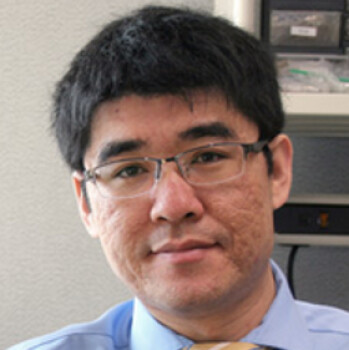
Dr. Yang Hu is an Assistant Professor of Electrical Engineering at the Erik Jonsson School of Engineering and Computer Science, University of Texas at Dallas. His research focuses on autonomous systems, cybersecurity, and cloud computing, with a particular emphasis on rethinking autonomous driving infrastructure through multi-system networking. He has received an NSF CAREER Award for a project aiming to redesign autonomous driving systems using advanced computing and communication technologies, benefiting AR/VR and industrial IoT applications. Dr. Hu’s work bridges semantic gaps in virtual machine introspection and explores dynamic binary instrumentation frameworks like PEMU. His publications span cybersecurity, embedded systems, and graph processing optimizations. The NSF-funded project ($508,339) highlights his leadership in transforming autonomous systems through networked multi-object architectures. His research achievements include contributions to guest OS fingerprinting in cloud environments and efficient graph processing algorithms. Collaborations involve hypervisor-layer automation tools like HyperShell and hybrid techniques for semantic gap reduction.
Sebastian Duchene is a researcher at the Institut Pasteur in Paris, where he serves as Principal Investigator (PI) for the TraM project, which focuses on trait-driven molecular clocks to date the long-term evolution of re-emerging bacterial pathogens. His work integrates genomics, evolutionary biology, and phylodynamics to understand infectious disease dynamics. Institution: Institut Pasteur, Paris Research Focus: Molecular clocks, phylodynamics, genomic epidemiology, bacterial evolution His research interests center on the evolutionary genomics of bacterial pathogens, with a focus on developing and applying computational methods for molecular dating, phylodynamic inference, and genomic surveillance. He investigates how pathogens such as Mycobacterium lepromatosis and Streptococcus pyogenes evolve over time and spread across populations. The trends in his recent publications reveal a strong emphasis on methodological innovation in phylodynamics and molecular clock modeling, including tools like Clockor2 for root-to-tip regression and studies on temporal signal detection. His work bridges computational biology with public health applications, particularly in understanding antibiotic resistance and historical disease spread. His scientific contributions have been published in top-tier journals including Science , Nature , PLoS Computational Biology , and Systematic Biology . Pre-European contact leprosy in the Americas and its current persistence. (Science, 2025) Rifaximin prophylaxis causes resistance to the last-resort antibiotic daptomycin. (Nature, 2024) Clockor2: Inferring Global and Local Strict Molecular Clocks Using Root-to-Tip Regression (Systematic Biology, 2024) How does date-rounding affect phylodynamic inference for public health? (PLoS Comput Biol, 2025) Duchene leads a research team and collaborates with post-doctoral fellows, research engineers, and students. While specific grant details are not listed, his active publication record and PI status suggest ongoing funding for projects in evolutionary genomics and infectious disease modeling. He contributes to open science through publicly available tools like Clockor2. He is part of the research team focused on the evolutionary dynamics of infectious diseases at the Institut Pasteur, working alongside experts in genomics, microbiology, and epidemiology to advance understanding of pathogen evolution and public health threats.
Rich Macfarlane is an Associate Professor at the School of Computing Engineering and the Built Environment , Edinburgh Napier University, UK. He specializes in Cyber-security , Digital Forensics , and Network Security , with extensive experience in ransomware detection, forensic tool evaluation, and cloud-based security training. Research Centres: Centre for Distributed Computing, Networking and Security Projects: Directed KTP initiatives funded by Innovate UK, Data Lab, and Scottish Enterprise Research Interests include: Ransomware attack detection and mitigation Digital forensic tool validation Cloud infrastructure security Entropy-based file analysis Deception techniques for threat identification Article Trends show technical focus on ransomware detection, entropy analysis, digital forensic datasets, and wireless network monitoring. The work combines mathematical modeling , cloud-based platforms , and machine learning applications in forensics. Education & Supervision : Second Supervisor for Matthew Thomson (2023) - Digital Media & AI Forensics Second Supervisor for Philip Penrose (2013-2017) - Large Storage Device Forensics Grants : Managed industry-funded projects totaling £874,436 including KTP with Morgan Stanley (£136,306), Fragment Finder (£228,757), and vSoC development (£119,363).
Dr. Pavlos Papadopoulos is a Lecturer in Cybersecurity at Edinburgh Napier University's School of Computing Engineering and the Built Environment , with a PhD in Privacy-Preserving Systems around Security, Trust and Identity (2022) and MSc in Advanced Security and Digital Forensics (2019). He is an Associate Fellow of the Higher Education Academy and member of the Blockpass Identity Lab . Research Interests : Cybersecurity, Distributed Ledger Technology, Privacy-Preserving Machine Learning, and Network Security Notable Projects : TrueDeploy (funded by Innovate UK, Scottish Enterprise, Royal Academy of Engineering), GLASS (Distributed Data-Sharing Model), and Crossborder Personal Data Federation His work has been recognized with multiple awards including Outstanding Young Person in Cyber (2022) and Start Up of the Year (2025) for TrueDeploy. He has over 30 publications cited 820+ times, with recent focus on Explainable AI for DDoS detection, secure manufacturing frameworks, and EU digital governance transformation. Scientific Contributions: Developed TrueDeploy platform for secure software development Created GLASS model for decentralized governance Advancing privacy-preserving machine learning frameworks Researching blockchain applications in healthcare and public sector
Dr. Nick Pitropakis is an Associate Professor at the School of Computing Engineering and the Built Environment (Edinburgh Napier University). He actively contributes to cybersecurity research through 39 publications, focusing on threat intelligence sharing , cloud security , IoT security , and privacy-preserving technologies . CyberHunt - Automated Threat Hunting for Critical Infrastructures (Funder: Norway RC) TRUST Platform - Crossborder Data Federation (Funder: UKRI) AI-based Biometric Authentication (Funder: Data Lab) His research combines graph theory for attack path analysis and blockchain for secure threat intelligence sharing. Key publication areas include: LLMs in threat hunting Chaotic encryption schemes Adversarial machine learning Distributed ledger applications Scientific contributions span 19 journal articles, 15 conference proceedings, and 2 book chapters. Collaborates with Prof Bill Buchanan and Dr Pavlos Papadopoulos on cybersecurity standardization and trusted computing .
Shruti Tople is a Principal Researcher at Microsoft Research in the Azure Research – Security and Privacy group. She holds a Ph.D. from the School of Computing at the National University of Singapore (NUS) , where she received the Dean's Graduate Research Excellence Award . Her work focuses on quantifying and mitigating information leakage in machine learning models while preserving their utility. Key Research Areas include: Systems Security Privacy in Machine Learning Differential Privacy Causal Learning Transfer Learning for Vision & Language Models Recent Publications address challenges such as membership inference attacks, federated backdoor defense, and privacy-enhanced deep learning. Her open-source projects like Analyzing PII Leakage and RobustDG provide practical tools for differential privacy and domain generalization. She collaborates with interns from institutions like NUS , University of Waterloo , and Imperial College London . Scientific Awards : Dean's Graduate Research Excellence Award (NUS)
Mehmet Tahir Sandıkkaya is an Assistant Professor in the Department of Computer Engineering at Istanbul Technical University (ITU), Faculty of Computer and Informatics. He holds a Ph.D. in Computer Sciences from ITU and has been actively contributing to academia since 2002, progressing from Research Assistant to his current faculty position. He also served as a Doctoral Teaching Staff member at Institut National Polytechnique de Grenoble (Drakkar Lab) from 2018 to 2019. His educational background includes: B.Sc. in Electrical Engineering, Istanbul Technical University (1998–2002) M.Sc. in Computer Sciences (Thesis), Istanbul Technical University (2002–2006) Ph.D. in Computer Sciences, Istanbul Technical University (2006–2016) Dr. Sandıkkaya's research is centered on cybersecurity , cloud computing , information security , and cryptography . His work extends into Internet of Things (IoT) security , malicious behavior detection , and privacy-preserving systems . He employs machine learning techniques for intrusion detection, particularly in web sessions and avionic platforms. His research also addresses security challenges in e-commerce, SMEs, and national critical infrastructures. The analysis of his recent publications reveals a strong focus on practical security solutions, including lightweight authentication for IoT, DDoS detection using network features, and secure cloud architectures. His work increasingly integrates AI and cyber-physical systems for environmental monitoring and sustainable resource management. His scientific recognition includes: IEEE Member since 2001 Principal Investigator on multiple TTO and TÜBİTAK-funded research projects h-index of 8 with over 215 citations (Scopus) Dr. Sandıkkaya actively supervises students and leads significant research initiatives. He has served as Program Chair at ITU in 2018 and is the Principal Investigator (PI) on nine research projects, including "National Critical Infrastructure Cyber Attack System (SİNERJİ SALDIRI)" and "AI-Based Sustainable Basin Management via IoT" . His grants span cybersecurity, cloud design, and embedded systems, reflecting a robust research portfolio with real-world applications. He is affiliated with the Drakkar Research Lab at Institut National Polytechnique de Grenoble and leads cybersecurity research teams at ITU focusing on cloud security, IoT authentication, and avionic system protection. His lab integrates machine learning, formal methods, and system-level security engineering.
Leandros Maglaras is a Professor in the School of Computer Science and Informatics at De Montfort University, where he conducts research in the Cyber Security Centre and Software Technology Research Laboratory. He holds a PhD from the University of Huddersfield and another from the University of Thessaly, and has served as Director of the National Cyber Security Authority of Greece (2017–2019), significantly advancing national cybersecurity preparedness. His research interests include Cybersecurity, Privacy Preservation, Risk Management, Intrusion Detection, Critical Infrastructure Protection, IoT, Blockchain, and Machine Learning . He is a Senior Member of IEEE and actively contributes to editorial boards of journals such as IEEE Access and Elsevier’s ARRAY. The analysis of his recent publications reveals a strong focus on cybersecurity in IoT and critical infrastructures , leveraging advanced techniques like federated learning, blockchain, and machine learning for intrusion detection and privacy preservation. His work spans smart agriculture, vehicular networks, healthcare, and industrial control systems, emphasizing real-world applicability and dataset development. Scientific Awards: Best Paper Award at DCOSS 2019 Maglaras has led numerous EU-funded research projects (e.g., CONCORDIA, COCKPITCI) and served on editorial boards. He has contributed to national policy, including drafting Greece’s Cyber Security Strategy and NIS Directive implementation. He mentors students and collaborates extensively, though specific advisee names are not listed. He is also involved in cyber peacekeeping initiatives and has co-edited books on cybersecurity of critical infrastructures. Labs and Research Groups: Cyber Security Centre (CSC), De Montfort University Software Technology Research Laboratory (STRL)
Merlijn Sebrechts is a postdoctoral researcher and policy officer at Ghent University's Faculty of Engineering and Architecture, Department of Information Technology (EA05). His work focuses on cloud-native technologies, edge computing, and secure system design. Research areas include Kubernetes, WebAssembly, and confidential computing He teaches computer science courses in the Information Engineering Technology program Expertise spans trusted execution environments, software supply chain security, and cloud orchestration His recent publications analyze edge computing security, lightweight virtualization, and intent-based resource management. Key contributions include decentralized orchestration frameworks and benchmarks for cloud performance. Merlijn maintains strong ties to open-source ecosystems through involvement with Kubernetes, Docker, and the Ubuntu community.
Tanya Braun is a Junior Professor in the Institute of Computer Science at the University of Münster, Department of Mathematics and Computer Science. She leads the Data Science research group, focusing on statistical-relational AI, human-aware AI, and text understanding. Her work bridges formal AI methods with real-world applications in healthcare, digital humanities, and public sector systems. Education: Bachelor's and Master's in Computational Informatics, Hamburg University of Technology Doctorate in Computer Science, University of Lübeck (2020), thesis: 'Rescued from a Sea of Queries - Exact Inference in Probabilistic Relational Models' Her research centers on probabilistic inference in relational domains , with a focus on lifted inference techniques that exploit symmetries to scale reasoning. She investigates human-aware AI , particularly how AI systems can reconcile learned models with human expectations to improve explainability and trust. Her work on text understanding addresses challenges in data-scarce settings such as digital humanities, where traditional large language models fail. She has developed methods for identifying and enriching subjective content descriptions, topic modeling in specialized domains, and feedback-driven model improvement. The 15 most recent publications highlight a strong trajectory in lifted inference, model compression, privacy-preserving AI, and explainability . Her work integrates formal AI foundations with practical concerns in high-stakes domains like healthcare. She frequently publishes in top venues such as AAAI, IJCAI, ECAI, and Artificial Intelligence, often in collaboration with Ralf Möller, Marcel Gehrke, and Jan Speller. Scientific Awards: No specific awards listed in the provided text. Tanya Braun actively advises students and leads the HAPPI project, which focuses on human-AI model reconciliation using lifted probabilistic inference. She has supervised multiple theses and mentored researchers including Jan Speller (PostDoc), Nazlı Nur Karabulut, and Sagad Hamid. She has secured funding from the Ministry of Culture and Science of North Rhine-Westphalia for her research. She is deeply involved in academic service: serving as program co-chair for KI 2025, guest-editing special issues in journals like Künstliche Intelligenz and Annals of Mathematics and Artificial Intelligence , and organizing major conferences including ICCS and KR. Labs and Teams: She leads the Data Science Group at the University of Münster, which conducts research in AI, probabilistic modeling, and data science. The group is actively involved in teaching and mentoring students in advanced AI topics.
Johan Gustav Bellika is a Professor of Medical Informatics at the Department of Clinical Medicine, Faculty of Health Sciences, UiT The Arctic University of Norway, and serves as Chief Research Informatics Officer (CRIO) for PraksisNett, a national research infrastructure for primary health care. He has worked at the National Center for e-Health Research at the University Hospital of North Norway since 1997. Master’s (1997) and PhD (2006) in Informatics from UiT Research focus: Privacy-preserving health data reuse and learning healthcare systems Contributed to >100 scientific publications Supervision of Master’s, PhD, and postdocs His work spans health data security , ontology-based terminologies , e-health modernization , and federated learning . Key projects include DigSam (digital security), PraksisNett (primary care research infrastructure), and ASCLEPIOS (secure cloud solutions). Articles highlight expertise in distributed health analytics , patient confidentiality , and clinical decision support systems . Scientific contributions include: Advancing privacy-preserving statistical computation with Statistics Norway Implementing SNOMED CT standardization Developing secure platforms for health data analysis
Prof. Burkhard Corves serves as Director of the Institute of Mechanism Technology, Machine Dynamics and Robotics within the Faculty of Mechanical Engineering at RWTH Aachen University. His academic leadership spans robotics, mechanism theory, and dynamic systems engineering, with significant contributions to industrial automation and sustainable manufacturing applications. His research concentrates on Robotics, Mechanism Design, Machine Dynamics, and Multibody Simulation, with recent emphasis on compliant gripper development for surgical applications, energy-efficient cam mechanisms, and human-robot collaboration systems for inclusive workplaces. Key investigations address data-driven trajectory optimization, sustainable ship recycling processes, and real-time simulation techniques for bicycle and vehicle dynamics. Analysis of his 15 most recent publications (2024-2026) reveals dominant themes in industrial robotics (particularly delta robots and pick-and-place systems), compliant mechanism design for medical applications, and sustainable manufacturing processes. Significant focus appears on real-time multibody simulation for transportation systems, control strategies for vibration suppression, and recycling automation aligned with circular economy principles. Emerging work explores human-robot collaboration for disability inclusion and bioprocessing optimization. Scientific Awards No awards were documented in the provided materials. Advising and Grants Specific student supervision details and grant funding information were not included in the source documentation. Laboratories and Teams Prof. Corves leads the Institute of Mechanism Technology, Machine Dynamics and Robotics (IGMR), directing research in robotic systems for manufacturing, sustainable ship recycling, and bicycle dynamics simulation. The institute actively participates in interdisciplinary projects including Bots2ReC (semi-autonomous asbestos removal) and sustainable EV battery recycling initiatives, with strong emphasis on practical engineering solutions for industrial challenges.
Trivellore Raghunathan is a Professor of Biostatistics and Director of the Survey Research Center at the University of Michigan Institute for Social Research. He holds a secondary appointment as Research Professor in the Joint Program in Survey Methodology at the University of Maryland. His work focuses on collaborative and methodological research across public health, social sciences, and clinical research. Education PhD in Statistics, Harvard University (1987) MS in Statistics, Miami University (1983) MSc in Statistics, Nagpur University (1979) BSc in Mathematics/Physics/Statistics, Nagpur University (1977) Research Interests include missing data analysis, multiple imputation, Bayesian methods, longitudinal studies, small area estimation, and confidentiality in survey data. He developed the IVEware software for multiple imputation analysis. His applied work spans cardiovascular epidemiology, health disparities, and social science research. Affiliations encompass the Center for Research on Ethnicity, Culture and Health (CRECH), Center of Social Epidemiology and Population Health (CSEPH), and University of Michigan Transportation Research Institute (UMTRI). He actively collaborates with institutions like the Cardiovascular Health Research Unit at the University of Washington.
Laurent BOBELIN serves as a Contractual Lecturer-Researcher at INSA Centre Val de Loire, holding dual roles as SDS Board Member and Team Leader. His research is institutionally anchored at LIFO (Laboratoire d'Informatique Fondamentale d'Orléans), a joint research unit between INSA Centre Val de Loire and the University of Orléans, focusing on fundamental computer science. His research portfolio demonstrates deep expertise in Cybersecurity and Cloud Computing , with significant extensions into Formal Methods for complex system architectures. He has pioneered applications in Health Informatics , developing the E-HandicapScale diagnostic platform for disabled patients, and recently expanded into Agricultural Technology with federated learning-based intrusion detection systems. His methodological approach consistently integrates formal verification with practical security enforcement across domains. Analysis of his publication trajectory reveals a strategic evolution from foundational cloud security architectures (2014-2016) toward interdisciplinary applications. His work increasingly bridges cybersecurity with domain-specific challenges—notably in healthcare diagnostics and agricultural IoT—while maintaining rigorous formal methods as the unifying thread. The 2023 agricultural security paper exemplifies his current focus on securing emerging technology ecosystems through distributed learning paradigms. Scientific Awards: No awards were documented in the source materials. Advising and Grants: The provided information contains no details regarding graduate students, research grants, or funded projects. Labs and Teams: As Team Leader and SDS Board Member at INSA Centre Val de Loire, BOBELIN directs research activities within his team while contributing to strategic governance. His primary research affiliation with LIFO connects him to a major French computer science laboratory specializing in algorithms, formal methods, and security, located at the University of Orléans campus (Building IIIA).
Adrien Saumard is a tenured Associate Professor at ENSAI, Bruz, France, and a permanent member of the CREST (Center for Research in Economics and Statistics) laboratory. His academic roles include heading the Department of Statistics since September 2022 and co-organizing the Statistical Seminar in Rennes since 2015. He also held leadership positions in the "groupe stat math" (2016-2022) and managed the "Data Science et Génie Statistique" program (2021-2022). His research spans statistical learning theory , robust learning (MOM principle), empirical process theory , and functional/concentration inequalities . Notably, he integrates Stein's method into his work and explores hyper-parameter tuning and learning with differential privacy . Adrien earned his HDR (Habilitation à Diriger des Recherches) in 2020, France's highest academic qualification enabling him to supervise PhD students. His doctoral advisees include Amandine Dubois (focusing on high-dimensional statistics under confidentiality constraints ) and Edouard Genetay (specializing in robust clustering in large dimensions via the CIFRE program with LumenAI). His career includes postdoctoral positions in Paris, Seattle (Jon A. Wellner's team), and Valparaiso before joining ENSAI in 2015.