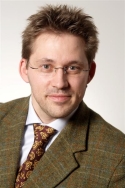
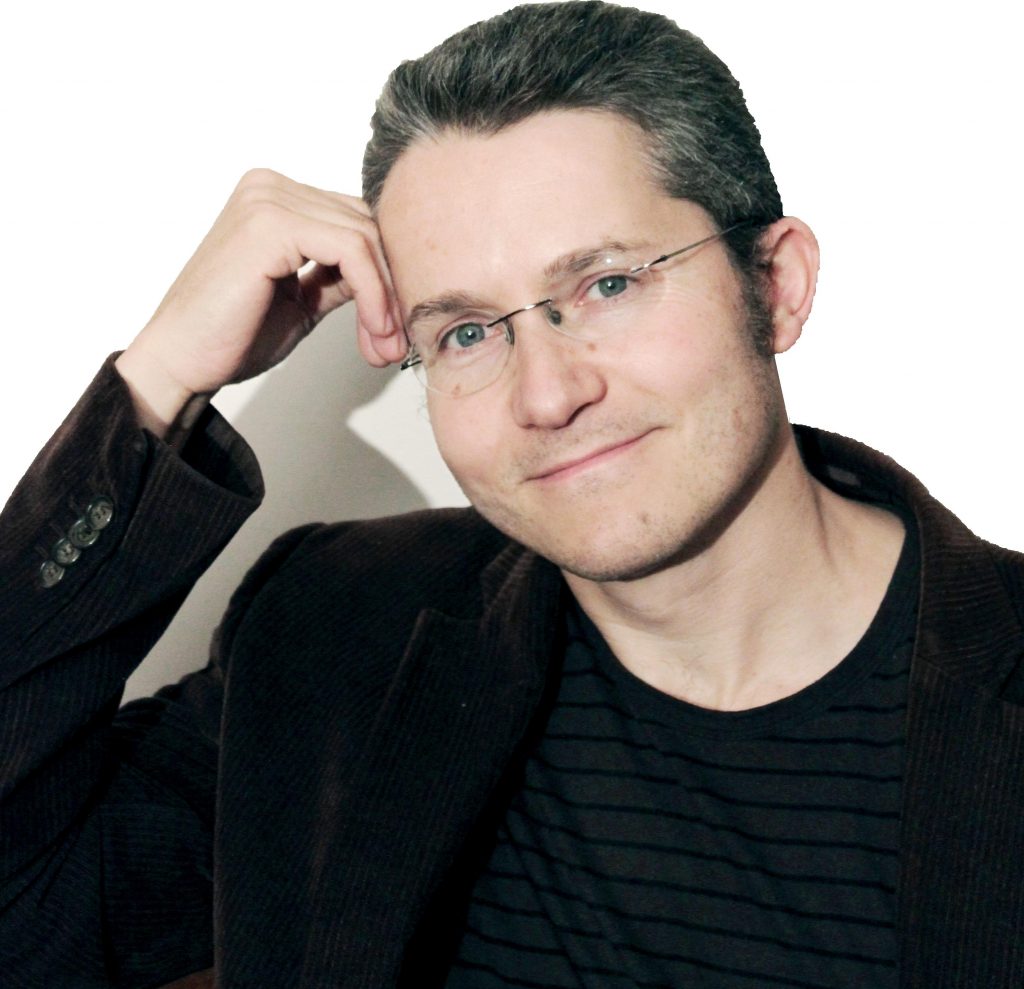
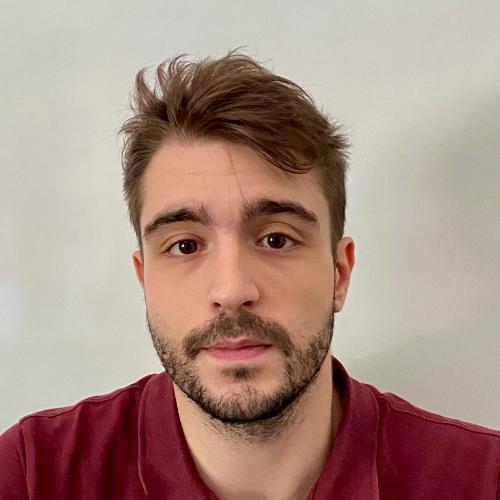
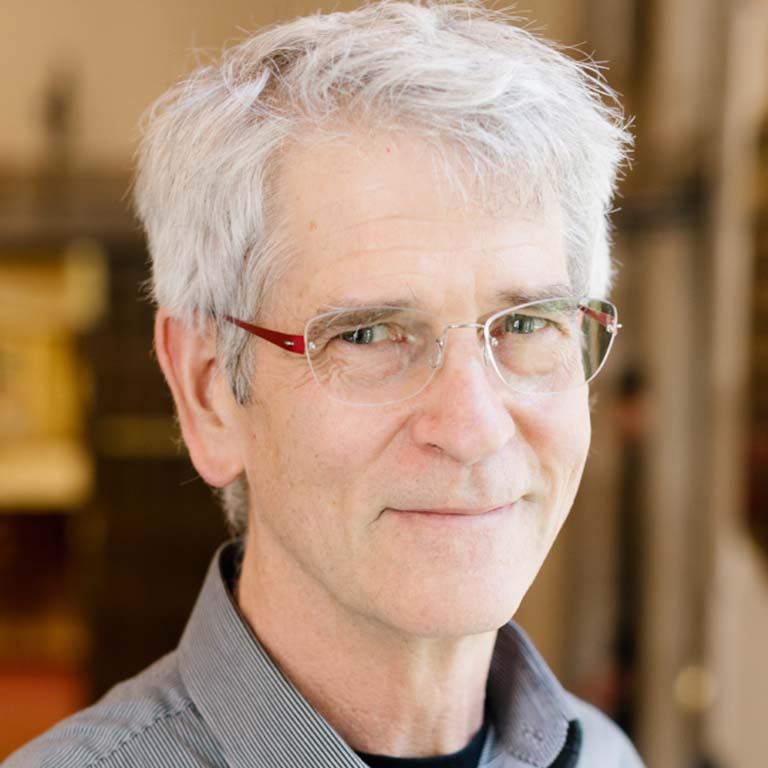
Prof. Dr. Holger Giese is a full Professor at the System Analysis and Modeling Group of the Hasso Plattner Institute for Digital Engineering in Potsdam, Germany. He leads research initiatives in model-driven engineering , self-adaptive systems , and cyber-physical systems , with a focus on causal representations , neuro-symbolic AI , and multi-agent reinforcement learning . His research explores the intersection of formal modeling and machine learning , addressing challenges in: Runtime verification and validation of dynamic systems Model transformation and synchronization Code generation for self-optimizing architectures Probabilistic decision-making under uncertainty Transfer learning for autonomic computing Recent work (2024-2025) emphasizes neuro-symbolic approaches for robust multi-agent systems , spatio-temporal graph modeling for cloud systems, and incremental query evaluation in dynamic environments. Collaborations span institutions like IBM Japan, Krems University, and Humboldt University. He actively teaches courses such as Advanced Topics in Software Engineering , Graph Neural Networks , and AI Ethics Engineering , and leads labs including the Model-Driven Engineering Laboratory (MDELab.de) and Software Engineering for Self-Adaptive Systems (self-adaptive.org) .
Peter J. Riggs is a Visiting Fellow in the Department of Quantum Science & Technology at the Australian National University, where he conducts research at the intersection of physics and philosophy. His academic profile spans both theoretical physics and the philosophy of science, with particular emphasis on foundational questions in physics. His educational background includes previous teaching and research positions at multiple Australian universities, though specific degrees are not detailed in the provided materials. His scholarly contributions are substantial, with three major books to his name: Quantum Causality: Conceptual Issues in the Causal Theory of Quantum Mechanics (Springer, 2009), Natural Kinds, Laws of Nature and Scientific Methodology (Kluwer Academic, 1996), and Whys and Ways of Science: Introducing Philosophical and Sociological Theories of Science (Melbourne University Press, 1992). Riggs' research focuses primarily on the nature of time and space, foundations of physics, relativity theories, conditions of the early universe, fundamentals of energy processes, and the methodology and philosophy of science. His work often bridges the gap between complex theoretical concepts and public understanding through his science communication efforts. An analysis of his recent publications reveals a consistent focus on time-related physics concepts, relativity theories, and quantum mechanics foundations. His work frequently addresses common misconceptions in physics education while advancing theoretical understanding of time's nature. Riggs demonstrates particular expertise in examining how our perception of time relates to physical theories, with publications addressing the 'passage' of time from both physical and psychological perspectives. Listed in the top articles of 2023 of The Physics Educator Over 3800 copies downloaded for 'Energy and Mass Misconceptions' Listed in the top twenty of most downloaded articles of The Philosophical Forum for 2017 Listed in the Best of The Physics Teacher 2015-2016 Riggs serves as an academic referee for numerous prestigious journals including European Journal of Physics , The Physics Teacher , The Journal of Philosophy , and several others. He has received significant attention for his public outreach, regularly delivering lectures on topics ranging from black holes and time travel to the nature of existence and quantum mechanics. His media appearances on ABC Radio National's Late Night Live demonstrate his commitment to science communication for general audiences. His research activities include collaborations with artists through the ANU Vice-Chancellor's College Artist Fellowship scheme and participation in interdisciplinary projects examining the representation of time in art and philosophy. Riggs maintains an active seminar schedule, regularly presenting his research at the Research School of Astronomy and Astrophysics at ANU and other institutions.
Simon-Pierre Chevarie-Cossette is a Full Professor holding the Chair of Practical Philosophy at the University of Neuchâtel, affiliated with the Faculty of Letters and Human Sciences and the Institute of Philosophy. He has served in this position since February 2021, teaching courses in philosophy of action, ethics, epistemology, and logic. Dr. Chevarie-Cossette completed his doctoral studies at the University of Oxford in 2019 under the supervision of John Hyman and Alison Hills, following earlier studies at the University of Montreal (2009-2014). Prior to his current position, he completed a postdoctoral fellowship at King's College London with Maria Alvarez. His research primarily focuses on moral responsibility, situated at the intersection of ethics, philosophy of action, and epistemology. He examines fundamental questions about responsibility through the lens of defenses—excuses, justifications, and exemptions. His innovative 'defense-first approach' challenges traditional frameworks by starting from when responsibility is absent rather than present, offering a novel methodology for analyzing moral accountability. Dr. Chevarie-Cossette is currently leading an SNSF-funded project (2024-2028) titled 'The defence-first approach to responsibility,' which aims to revolutionize how we approach questions of moral responsibility. His scholarly output demonstrates consistent focus across multiple dimensions of responsibility theory, including blameworthiness conditions, the relationship between duty and responsibility, and the implications of determinism for moral accountability. His work connects theoretical philosophical questions with practical ethical considerations. Dr. Chevarie-Cossette has received research funding through the Swiss National Science Foundation (SNSF) supporting his current project. His academic work has been published in prestigious philosophy journals including Philosophical Studies, Canadian Journal of Philosophy, and Pacific Philosophical Quarterly, as well as in book form with recent publications like 'Qu'est-ce que la responsabilité?' (2024).
Laurent Bègue-Shankland is a full Professor at Grenoble Alpes University , Department of Psychology, with a focus on aggression, moral judgment, and alcohol's social psychological effects. He directs the Maison des Sciences de l'Homme Alpes (UGA/CNRS) and is a senior member of the Institut Universitaire de France . Research Interests: Social regulation of aggression, moral cognition, alcohol-violence nexus, video game effects, and belief in a just world. Key Contributions: Experimental studies on alcohol's causal role in aggression, registered replications in social psychology, and theoretical work on moral psychology. Article Trends: Recent work explores animal ethics, evolutionary approaches to binge drinking, and cognitive styles in meat consumption. Long-term studies span Milgram obedience, evaluative conditioning, and hormonal influences on behavior. Scientific Awards: Senior member, Institut Universitaire de France. His research combines experimental paradigms (e.g., Milgram-like studies), large-scale surveys, and interdisciplinary collaborations in criminology, public health, and philosophy.
Matteo Cardellini serves as a Contract Professor in the Department of Naval, Electrical, Electronic, and Telecommunications Engineering (DITEN) and Researcher in the Department of Computer Science, Bioengineering, Robotics and Systems Engineering (DIBRIS) at the University of Genoa's Polytechnic School. He teaches core courses including Algorithms, Artificial Intelligence, and Artificial Intelligence for Robotics II across Computer Engineering and Robotics Engineering degree programs. His research centers on advancing Automated Planning systems with specialization in numeric/temporal planning, PDDL+ frameworks, and Answer Set Programming applications. Key focus areas include developing optimization algorithms for in-station train dispatching, urban traffic management, and healthcare rehabilitation scheduling, leveraging hybrid planning techniques and multi-scale deep learning models to solve complex real-world operational challenges. Recent publications (2020-2025) reveal a concentrated research trajectory in applying symbolic-numeric planning to transportation logistics (60% of output) and healthcare optimization (25%), characterized by innovative constraint-based approaches for dynamic environments. The work consistently bridges theoretical AI advancements with practical implementations in railway operations and medical resource allocation. Scientific Awards: No awards or fellowships documented in source materials Advising and grants information is unavailable in provided texts, with no student listings or funding acknowledgments evident. His research appears conducted within university-affiliated teams focused on AI planning systems, though specific lab structures or collaborative networks aren't detailed in the source documentation.
Kirk Ludwig is the Ruth N. Halls Professor of Philosophy and Director of Graduate Studies at Indiana University Bloomington in the College of Arts & Sciences. He has held this position since joining IU in 2010 after teaching at the University of Florida from 1990 to 2010, where he was the Colonel Alan R. and Margaret G. Crow CLAS Term Professor from 2008-2010. Education: Ph.D., Philosophy, University of California, Berkeley, 1990 B.S., Physics, summa cum laude, University of California, Santa Barbara, 1981 Ludwig's research spans foundational issues in the philosophy of language (particularly logical form and semantics), philosophy of mind and action, epistemology, and metaphysics, with a significant focus on collective intentionality and agency. His work demonstrates how these philosophical domains intersect, particularly in understanding the nature of joint action, social institutions, and linguistic communication. He approaches these topics with analytical rigor while maintaining connections to broader philosophical traditions. His recent publications reveal a consistent trajectory toward understanding collective phenomena, moving from individual to plural agency and then to institutional agency. The articles show increasing sophistication in analyzing how collective intentionality structures social reality, legal norms, speech acts, and corporate entities. His work bridges traditional philosophical concerns with contemporary issues in social ontology, demonstrating how philosophical analysis can illuminate complex social phenomena. Ludwig has made significant contributions as an editor, most notably editing the volume on Donald Davidson in the Cambridge Contemporary Philosophy in Focus series and co-editing the Routledge Handbook of Collective Intentionality with Marija Jankovic. He also co-authored major works on Donald Davidson with Ernie Lepore and has authored two influential books on collective agency: From Individual to Plural Agency: Collective Action 1 (2016) and From Plural to Institutional Agency: Collective Action 2 (2017). As Director of Graduate Studies, Ludwig oversees the philosophy department's graduate program, advising students and shaping the curriculum. His editorial work includes editing the Collective Intentionality category at PhilPapers, demonstrating his leadership in this growing field of philosophical inquiry. His research continues to explore the foundations of collective action and intentionality, with implications for understanding social institutions, legal systems, and corporate entities.
David Speck is a postdoctoral researcher at the University of Basel , Switzerland, affiliated with the Department of Mathematics and Computer Science . He previously held positions at the Machine Reasoning Lab (Linköping University, Sweden) and the Chair of Foundations of Artificial Intelligence (University of Freiburg, Germany), where he earned his PhD in 2022. Bachelor's (2015) and Master's (2018) in Computer Science from the University of Freiburg. PhD (Dr. rer. nat.) in 2022 from the University of Freiburg. His research focuses on Artificial Intelligence , particularly automated planning , symbolic search , and heuristic optimization . He explores techniques like cost partitioning , plan space navigation , and expressive planning formalisms (e.g., axioms, conditional effects, state-dependent costs). Recent work includes modeling matrix multiplication algorithms and analyzing symmetry breaking in planning. From 2021–2025, his publications span conferences like KR , ECAI , AAAI , and journals such as Journal of Artificial Intelligence Research . Key contributions include methods for perfect saturated cost partitioning , symbolic search with performance guarantees , and plan space counting and reasoning . His work often bridges theoretical analysis with practical planner implementations (e.g., AxSAT , SymK ). He collaborates with researchers like Jendrik Seipp , Daniel Gnad , and Malte Helmert , and has contributed to competitive planner development (e.g., Ragnarok , Odin ).
Prof. Dr. Tim Kühl is a Professor for Educational Psychology at Leibniz University Hannover's Faculty of Philosophy, Institute of Psychology, a position he has held since April 2025. Previously, he served as Professor for Educational Psychology: Digital Media at Christian-Albrechts-University of Kiel (2023-2025), Professor for Psychology at Macromedia University, Cologne (2022-2023), and as Acting W3 Professor for Media Education and School Teaching and Learning Processes at the University of Potsdam (2021-2022). His educational background includes a Doctorate in Psychology from Eberhard Karl University of Tübingen (2011) and a Diploma in Psychology from Technical University of Berlin (2005). Prior to his professorial appointments, he worked extensively as a research assistant at the University of Mannheim (2012-2018, 2019-2021) and at the Technical University of Dresden (2011-2012). Prof. Kühl's research focuses on multimedia learning processes, particularly examining how visual-spatial representations like animations impact learning. His work investigates interventions to reduce cognitive load and mind wandering during multimedia learning, explores how difficulties can promote learning, and examines the design of digital teaching formats including explanatory videos. He also studies the use of digital educational technologies such as interactive whiteboards and virtual reality, with particular interest in affective-motivational factors influencing multimedia learning and applications for ADHD populations. His recent publications reveal a strong focus on the intersection of emotional states and learning processes, particularly examining how personalization, emotional design, and affective factors influence learning outcomes with multimedia. His work often explores individual differences, particularly spatial abilities, and their interaction with different learning formats. A recurring theme is identifying boundary conditions for multimedia learning principles, such as when animations offer advantages over static images or when personalized messages might actually hinder learning. Review activities for major journals including Applied Cognitive Psychology, Computers & Education, Educational Psychology Review, Journal of Educational Psychology, and many others Member of the Examination Board for Educational Sciences Deputy of the professors at the Institute of Psychology Prof. Kühl has led significant research projects including 'Learning with Animations Compared to Still Images: Extracting vs. Inferring Information about Dynamic Relationships,' funded by the German Research Foundation (DFG), which yielded five high-profile publications with important theoretical and practical implications for multimedia learning.
Dr. Heike Drexler is a researcher at the Institute of Psychology within the Faculty of Philosophy at Leibniz University Hannover. She has been actively involved in research since 2009, focusing on children's psychological development, self-regulation, and educational anxiety. Her roles include serving as a Research Associate (since 2011) Exchange Coordinator for ERASMUS Academic Advisor for multiple psychology programs Her research interests center on identity development , coping mechanisms , and symbol competence , particularly through analyzing children's drawings. She has explored cognitive-motivational conditions in research-based teaching and developed assessment scales for statistics anxiety in educational contexts. Dr. Drexler's scholarly output includes publications on children's visual narratives, educational psychology, and measurement tools. Her work often combines qualitative drawing analysis with quantitative educational assessments. Notable collaborations include research with Elfriede Billmann-Mahecha and Guido Faber.
Dr. Marie Chabbert is a Research Fellow in the French Section of the Faculty of Modern and Medieval Languages and Linguistics at the University of Cambridge, and a member of St John's College. Her academic work focuses on the intersection of French philosophy, religious studies, and postsecular thought, examining how religious belief has evolved within French intellectual history from the 20th to 21st centuries. Dr. Chabbert's educational background includes: PhD in French Studies from the University of Oxford MSc in Social Anthropology from the London School of Economics MPhil in Comparative European Culture from the University of Cambridge Double-BA in Politics and Lettres Modernes from Sciences Po Paris and La Sorbonne Paris IV Her research explores the debates surrounding religious freedom and pluralism in twentieth and twenty-first century France, particularly examining how thinkers like Georges Bataille, Jacques Derrida, Gilles Deleuze, and Jean-Luc Nancy engage with the concept of the 'death of God' to challenge boundaries between religious and profane, theism and atheism. She is currently investigating a rapprochement between religious faith and scientific reasoning in contemporary French thought in response to ecological concerns and the postsecular condition. Her work bridges French philosophy, religious studies, anthropology of religion, and ecological thought, offering new perspectives on how we understand ourselves and our place in the universe. Dr. Chabbert's publications reveal a strong focus on Jean-Luc Nancy's philosophy, with numerous contributions exploring themes of religion, secularism, and embodiment. Her work demonstrates an ongoing engagement with poststructuralist thought and its implications for understanding religious experience in contemporary society. She has established herself as a significant voice in the study of French philosophical engagements with religious questions, particularly through the lens of deconstruction and postsecular theory. Among her notable recognitions: Selected as one of 18 'Young Religious Leaders' from Europe and the Middle East by the United Nations Alliance of Civilizations and United Nations Counter-Terrorism Center for the Edin programme (2021) Executive Committee member of the European Interfaith Youth Network of Religions for Peace Beyond her academic work, Dr. Chabbert is actively engaged in public discourse as a freelance journalist for Le Monde and a regular contributor to Esprit magazine. She demonstrates a commitment to bridging academic philosophy with contemporary social and religious issues, participating in interfaith dialogue and international peace initiatives. Her work exemplifies the relevance of continental philosophy to pressing contemporary questions about religion, secularism, and ecological responsibility. Dr. Chabbert's research contributes to several intellectual communities at Cambridge, including the Centre for the Study of Global Human Movement and the Cambridge Translation Studies Network, reflecting her interdisciplinary approach to questions of religion, philosophy, and cultural exchange.
Ihab Francis Ilyas is a Professor at the University of Waterloo , affiliated with the Cheriton School of Computer Science . He currently holds the Thomson Reuters Research Chair in Data Quality and is on leave while serving as a Distinguished Engineer, Proactive Intelligence at Apple Inc. . He has co-founded two successful startups— Inductiv (acquired by Apple) and Tamr —and is a Fellow of the Royal Society of Canada , IEEE Fellow , and ACM Fellow . Research Interests : AI for Data Quality and Curation Knowledge Graphs Large-Scale Data Integration Information Extraction Managing Uncertain Data Data Cleaning Error Detection and Repair Probabilistic and Uncertain Data Management Scientific Awards and Recognitions : C.C. Gotlieb Computer Award, 2024 IEEE Fellow, 2021 ACM Fellow, 2020 NSERC-Thomson Reuters Industrial Research Chair, 2018 Google Faculty Award, 2014 Ontario Early Researcher Award, 2008 IBM CAS Faculty Fellow, 2006–2010 Taha Hussein Medal (Egyptian Ministry of Education), 1990 Leadership and Service : Board of Trustees, VLDB Endowment (2016–2021) Vice Chair, ACM SIGMOD (2016–2021) Co-founder, Inductiv (acquired by Apple) and Tamr Co-author of the leading text Data Cleaning (ACM Books) Lead developer of the HoloClean open-source data repair system Contributor to Saga , a next-generation knowledge construction platform at Apple Publications and Trends : His recent research focuses on AI-driven data cleaning, knowledge graph construction, and scalable data integration systems. Collaborative works span probabilistic inference, differentially private data synthesis, error detection, and HTAP workloads. His publications appear in top venues like SIGMOD , VLDB , and ICDE .
Augustine Osman, Ph.D., serves as a Professor in the Department of Psychology within the College for Health, Community and Policy (HCAP) at the University of Texas at San Antonio. His research focuses on developing and validating clinical assessment tools for suicide risk and mental health conditions, with significant contributions to cross-cultural psychometrics. Dr. Osman earned his Ph.D. and M.A. in Clinical Psychology and B.A. in Psychology and Philosophy from West Virginia University. His research portfolio centers on: Test construction and validation for suicide assessment instruments Identifying risk and protective factors for mental health outcomes Applied behavior analysis in clinical contexts Cross-cultural adaptation of psychological measures His recent publications (2021-2025) demonstrate consistent focus on suicide assessment tools, particularly the SBQ-R and Beck Scale optimization. Key trends include: Advanced psychometric techniques (Item Response Theory, Bayesian modeling) US-China comparative validation studies Military and college student populations Short-form scale development for clinical efficiency His work bridges clinical practice with rigorous measurement science. Dr. Osman has presented at major international conferences including the International Society for the Study of Individual Differences (ISSID), American Society for the Psychology of Sport and Physical Activity, and multiple San Antonio Combat PTSD Conferences across venues in Belfast, Toronto, Valencia, and virtual platforms. His research program includes significant grant-supported work on: Cross-cultural suicide assessment validation Trauma-related mental health mechanisms Development of the Multidimensional Inventory of Physical Activity Identity Validation of the Trauma-related Suicide Potential Index Dr. Osman's work directly supports HCAP's mission to address complex social issues through exceptional education and community partnerships.
Thao Nguyen is an Assistant Professor in the Department of Computer Science at Haverford College . She focuses on robotics and artificial intelligence, particularly in areas like visual object search, language-conditioned observation models, and hierarchical planning systems. Her office is located at KINSC L303. Her research bridges human-guided robot learning with advanced state abstractions and multimodal interaction frameworks. Key contributions include integrating gesture-based inputs and natural language queries into robotic object retrieval systems, enabling more intuitive human-robot collaboration. Recent publications highlight her work on language-visual alignment , contextual robotics , and non-Markovian planning . Her projects leverage Bayesian inference, deep learning, and temporal logic to enhance robot perception and task execution.
Dr. Nancy Finkelstein Kline serves as a Part-Time Assistant Professor in Occupational Therapy at SUNY Downstate Medical Center's School of Health Professions, bringing over 40 years of clinical expertise in acute care, rehabilitation, and home care for individuals with brain injuries and neurological disorders. As Co-Director of the HRSA BRIDGE grant, she advances interprofessional training to improve care for older adults in underserved communities. Her academic credentials include a PhD in Occupational Therapy from New York University (1997), MA in Education from Washington University (1985), and BS in Occupational Therapy from Boston University (1981). Advanced certifications encompass NDT (1984), LSVT BIG (2015, 2017), and AOTA Gerontology Board Certification (2018-2027). Dr. Kline's research investigates visual perception and cognition in daily functioning for neurological populations, with emphasis on geriatric applications. Her teaching portfolio spans Cognition and Perception, Neurologic Rehabilitation, and Human Neuroanatomy for occupational therapy students, plus neurology instruction for medical students within Geriatrics & Palliative curricula. Her publication history demonstrates sustained focus on cognitive assessment tools and neurorehabilitation techniques, evolving from foundational work on visual processing validity (2000) to contemporary textbook contributions and assessment instrument development through multiple editions of Asher's Occupational Therapy Assessment Tools. Key professional recognitions include: AOTA Board Certification in Gerontology (2018-2027) LSVT BIG Certification for Parkinson's treatment (through 2028) Dr. Kline actively shapes her field through editorial service on Disability and Rehabilitation's Review Board and AOTA's Gerontology Standard Setting Committee. Her HRSA BRIDGE grant leadership establishes community-based training frameworks while her NDT and LSVT BIG certifications directly inform clinical practice standards for neurological rehabilitation.
Assoc. Prof. Dr. Sasha Laketa is an Associate Professor at the Faculty of Philosophy, University of Banja Luka. She teaches courses such as Analytical Philosophy, Critical Theory of Society, Contemporary Epistemological Theories, Logic, Aesthetics, and Philosophy of Science. Her research focuses on transcendental philosophy, epistemology, and critical theory, often analyzing Kantian, Fichtean, and Heideggerian frameworks. Department: Department of Philosophy Email: sasa.laketa@ff.unibl.org ORCID: https://orcid.org/0009-0004-3407-1760 Her publications examine intersections of transcendental logic, causality debates, and critiques of positivism. She contributes to journals like Filozofska istraživanja , Sineza , and RAD . Recent work includes Kantian constructivism in geometry and Heideggerian transcendental imagination. She participates in academic projects like the international film and identity conference and collaborates on interdisciplinary initiatives. Her teaching methodology integrates critical theory and Marxist philosophy, reflecting her research interests.