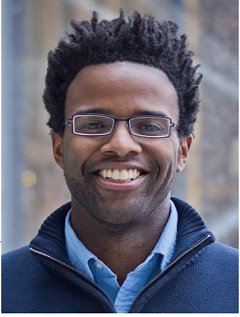
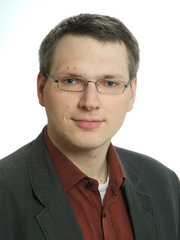
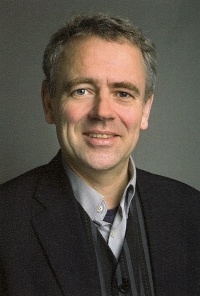
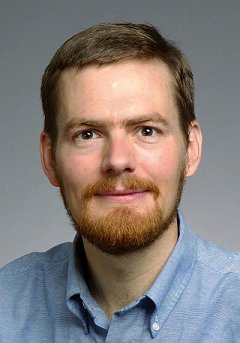
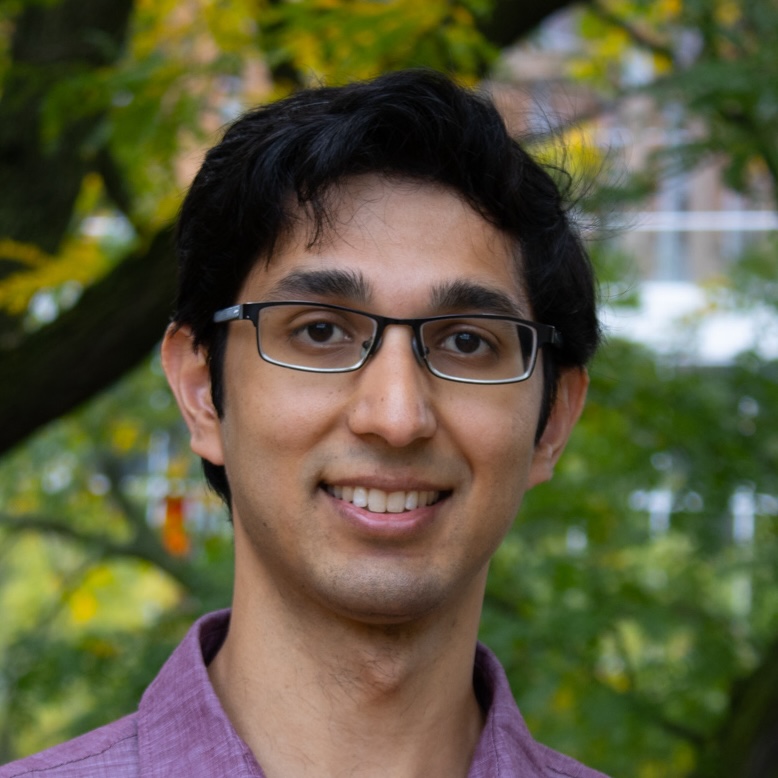
Michael Carbin is the Jamieson Career Development Assistant Professor of Electrical Engineering and Computer Science at the Massachusetts Institute of Technology (MIT) and leads the MIT Programming Systems Group. His research focuses on programming systems that address system uncertainty to enhance performance, energy efficiency, and resilience, particularly in environments involving neural networks , approximate computing , and unreliable hardware . His work spans probabilistic programming , quantum computing , and machine learning systems . Articles highlight contributions in pruning neural networks , quantum data structures , and compiler optimization , reflecting trends in deep learning , formal verification , and language-driven systems . Scientific Awards : MIT Frank E. Perkins Award (2020) Sloan Research Fellowship (2020) Facebook Research Award (2019) NSF CAREER Award (2018) Best Paper Awards at OOPSLA (2013, 2014) He has advised numerous graduate students and postdocs including Eric Atkinson, Cambridge Yang, and Charles Yuan, and served on program committees for conferences like POPL, OOPSLA, and ICLR. His group collaborates with institutions such as MIT CSAIL and explores applications in quantum algorithms and probabilistic inference .
Vijay Laxmi is a Professor in the Department of Computer Science and Engineering at Malaviya National Institute of Technology (MNIT) Jaipur, India. With over a decade of active research publication from 2014-2024, Dr. Laxmi has established themselves as a prominent researcher in network security, Android security systems, and Network-on-Chip architectures. Their work demonstrates consistent collaboration with Manoj Singh Gaur and numerous doctoral students at MNIT Jaipur. Dr. Laxmi's research interests span Network Security, Android Security, Malware Analysis, Network-on-Chip Architectures, Routing Protocols, Side-Channel Attacks, Wireless Networks, and Mobile Security. Their work bridges theoretical security frameworks with practical implementations, particularly in mobile and embedded systems. Recent publications indicate a growing focus on AI-based security approaches including GAN applications for fuzzing and deep learning for image dehazing. The research trajectory shows increasing sophistication in security analysis techniques, evolving from basic malware detection to advanced side-channel attack analysis and sophisticated network security protocols. Recent publications demonstrate expertise in both theoretical frameworks and practical implementations with applications in real-world security challenges. Dr. Laxmi has mentored numerous graduate students including Vineeta Jain, Anugrah Jain, Sonal Yadav, Mohit Singh, and Gaurav Singal, who appear as co-authors across multiple publications. Their collaborative network extends to researchers at international institutions, indicating strong academic connections beyond their home institution.
Björn Brandenburg is a researcher at the Max Planck Institute for Software Systems (MPI-SWS) in Kaiserslautern, Germany. His work focuses on real-time systems, scheduling algorithms, and operating system design, with a particular emphasis on predictable resource allocation and performance guarantees in multiprocessor and cyber-physical environments. His research interests include real-time response-time analysis (e.g., PROSA ), locking protocols for multiprocessor systems, side-channel mitigation in cloud environments, and the verification of real-time scheduling policies. He has contributed to foundational studies on deadline failure probabilities, self-suspending tasks, and predictable real-time Linux implementations. Scientific awards include recognition for outstanding papers on TimerShield (2017) Offline Equivalence (2017) . His work intersects with practical systems like LITMUSRT and ROS 2, aiming to bridge theoretical guarantees with real-world applications in safety-critical and distributed real-time systems.
Manfred Droste is a Professor at the Institute of Computer Science of the University of Leipzig, where he leads the Research Group on Automata and Formal Languages. He serves as Director of the Graduate Centre Mathematics, Computer Science and Natural Sciences and is Vice-speaker of the DFG-Research Training Group Quantitative Logics and Automata. His academic career spans decades of research and leadership in theoretical computer science and algebra. Prof. Droste's research focuses on theoretical computer science, particularly automata theory, logic, algebraic models for concurrent systems, and domain theory. In algebra, his interests include model theory, automorphism groups, and ordered algebraic structures. His work bridges theoretical foundations with practical applications in formal language theory and quantitative systems. His extensive publication record demonstrates a consistent focus on weighted automata, formal languages, and their logical characterizations. Over the years, his research has evolved to address increasingly complex quantitative models, with recent work focusing on weighted complexity classes, weighted linear dynamic logic, and decidability boundaries for weighted automata. Prof. Droste has received significant recognition including election to Academia Europaea, an honorary doctorate from Immanuel Kant Baltic Federal University, and fellowship in the Asia-Pacific Artificial Intelligence Association. These honors reflect his substantial contributions to theoretical computer science. He has supervised numerous PhD students including Dietrich Kuske, Paolo Boldi, and Karin Quaas, many of whom have become prominent researchers. His extensive grant portfolio includes multiple DFG projects on weighted automata and international collaborations through DAAD funding. Prof. Droste leads a vibrant research team including Andrea Hesse, Karin Quaas, Erik Paul, and others. He has organized the international workshop series "Weighted Automata: Theory and Applications" since 2002, fostering global collaboration in this specialized field.
Todd Millstein is a Professor in the Computer Science Department at the University of California, Los Angeles (UCLA), and served as Department Chair from 2022–2025. He is also an Amazon Scholar and a co-founder and former Chief Scientist of Intentionet (now at AWS). His research focuses on making software systems more reliable, particularly through network verification and programming language techniques. He pioneered the Batfish network configuration analyzer, which is used by AWS, Oracle Cloud, and dozens of companies, and received the ACM SIGCOMM Networking Systems Award (2025) for this work. His recent publications span probabilistic programming, network reliability, and interactive program verification, including papers at PLDI 2024 (on bit blasting probabilistic programs), NSDI 2024 (on behavioral testing of BGP), and HotNets 2024 (on network layering). Todd has received prestigious awards such as an NSF CAREER Award , a Microsoft Research Outstanding Collaborator Award , and multiple best paper awards at PLDI, OOPSLA, and SIGCOMM. He has advised Ph.D. students like Ana Brendel and Poorva Garg , and teaches courses such as CS30 (Principles of Computing), CS231 (Types and Programming Languages), and CS239 (Current Topics in PL and Systems). His professional roles include Program Chair for OOPSLA 2014 and ECOOP 2018, and committee member for numerous conferences including PLDI , SPLASH , and LAFI .
Zachary Kincaid is an Associate Professor in the Department of Computer Science at Princeton University's School of Engineering and Applied Science. His research focuses on program analysis, logic, and programming languages, with an emphasis on making program analysis compositional and robust. He received his PhD from the University of Toronto under the supervision of Azadeh Farzan. His work has been implemented in the Duet program analyzer, and he has an Erdős number of 3. Dr. Kincaid's research interests include: Compositional program analysis techniques Algebraic approaches to program analysis Termination analysis and ranking function synthesis Verification of concurrent and parallel programs Automated reasoning and decision procedures Analysis of numerical programs and loops His recent publications show a strong focus on developing novel techniques for program analysis that bridge theoretical computer science with practical verification tools, particularly in nonlinear analysis, quantified reasoning, and compositional verification. Dr. Kincaid has received research support from ONR grant N00014-19-1-2318 for his work on robust program analysis. He has advised graduate students including: Current: Jake Silverman, Nicolas Koh, Nikhil Pimpalkhare Graduated: Shaowei Zhu (PhD 2024, Researcher at Amazon), Charlie Murphy (PhD 2023, Postdoc at University of Wisconsin–Madison) Dr. Kincaid teaches courses including: COS 320 – Compiling Techniques (Spring 2024, 2022, 2020, 2019) COS 516 / ELE 516 – Automated Reasoning about Software (Fall 2025, 2022, 2018) COS 217 – Introduction to Programming Systems (Fall 2024) COS IW – Practical Solutions to Intractable Problems (Fall 2023, Spring 2023, 2018, 2017) COS IW – Little Languages (Spring 2018) COS 597D – Reasoning about concurrent systems (Fall 2016)
Max Planck Institute for Security and PrivacyGermany
Michael D. Ernst is a Professor in the Computer Science & Engineering department at the University of Washington's College of Engineering. His research aims to make software more reliable, more secure, and easier (and more fun!) to produce. Previously, he was a tenured professor at MIT and a researcher at Microsoft Research. Ernst's primary technical interests are in software engineering, programming languages, type theory, security, program analysis, bug prediction, testing, and verification. His research combines strong theoretical foundations with realistic experimentation, with an eye to changing the way that software developers work. He focuses particularly on programmer productivity and developing practical tools that can be integrated into developers' workflows. Analysis of his recent publications (2018-2025) reveals a continued focus on verification techniques, program analysis, and testing methodologies. His work spans from theoretical foundations of type systems to practical applications of NLP for test generation and LLMs for test oracle creation. A consistent theme is developing lightweight, modular approaches that can be practically applied in real-world development environments. Scientific Awards: ACM Fellow (2014) John Backus Award (2009) NSF CAREER Award (2002) ACM SIGSOFT Impact Paper Award (2013) 8 ACM Distinguished Paper Awards across multiple conferences ECOOP 2011 Best Paper Award Microsoft Academic Search ranked #2 in software engineering research (2013) Ernst has received significant research funding including the NSF CAREER Award, supporting his work on program analysis and verification techniques. His research combines theoretical rigor with practical impact, often resulting in tools that are adopted by the software engineering community. He actively collaborates with researchers across institutions and has served in leadership roles for major conferences in programming languages and software engineering. His research group develops practical tools that address real challenges in software development, with a focus on making verification and analysis techniques more accessible to working developers. Current projects include applying machine learning techniques to software engineering problems while maintaining strong theoretical foundations.
Dr. Andrea Bastoni is a Postdoctoral Researcher and Research Fellow at the Chair of Cyber-Physical Systems in Production Engineering at Technical University of Munich (TUM), Faculty of Mechanical Engineering. He is also the CTO and co-founder of Minerva Systems , developing operating system solutions for AI-ready embedded applications. His expertise spans real-time operating systems, cyber-physical systems, and predictable system design for heterogeneous platforms. His research focuses on enhancing predictability of memory hierarchies in complex SoCs through techniques like memory bandwidth regulation and cache partitioning. This work has industrial applications in safety-critical domains such as avionics and railways, where he contributes to certifiable hypervisors and operating systems. As former Software Architect of the PikeOS hypervisor at SYSGO GmbH (2012-2020), he specialized in DO-178C, IEC 61508, and EN 50128 standards. His academic background includes a Ph.D. in Computer Engineering from the University of Rome Tor Vergata (2007-2011), where he developed LITMUS^RT as part of UNC's Real-Time Systems Group during a visiting researcher period (2009-2010). His publications reflect ongoing work on Multicore Real-Time Scheduling , Mixed-Criticality Task Isolation, and Arm DynamIQ shared unit analysis. He actively participates in program committees for conferences like RTSS, DSN, and DATE.
Max Planck Institute for Security and PrivacyGermany
Chang Xu is a Professor and Ph.D. supervisor at Nanjing University, affiliated with the State Key Laboratory for Novel Software Technology, School of Computer Science, and Institute of Computer Software (ICS). He has been a full-time faculty member since 2010, when he joined as an associate professor and was later promoted to full professor in 2015. Education: Ph.D. from The Hong Kong University of Science and Technology (HKUST) in 2008 (advisor: Prof. S.C. Cheung) M.Eng. from Institute of Software, Chinese Academy of Sciences (ISCAS) in 2003 B.Eng. from University of Science and Technology of China (USTC) in 2000 Research Interests: Professor Xu's research focuses on big data software engineering, intelligent software testing and analysis, and adaptive and autonomous software systems. His recent work centers on constructing and providing runtime support for intelligent software in open environments, with emphasis on inconsistency detection and resolution for environments, and quality assurance for adaptive, concurrent, learning-based, smartphone-based, and spreadsheet-based applications. His work bridges theoretical foundations with practical applications in software engineering, particularly in program analysis, software testing, and self-adaptive systems. Scientific Awards: ACM SIGSOFT Distinguished Paper Award from ICSE 2025 Best Student Paper Award from EUROSYS 2025 ACM Distinguished Member in 2024 Best Paper Award from SOSP 2023 Best Paper Candidate from ISSRE 2022 Yangtze River Scholar by the Ministry of Education in 2021 Multiple ACM SIGSOFT Distinguished Paper Awards from conferences including ASE, ICSE National Science and Technology Progress Award (Second Class) in 2011 Academic Service and Advising: Professor Xu has served on numerous program committees for top software engineering conferences including ICSE, ASE, ESEC/FSE, and ISSTA. He is an editorial board member for several journals including Journal of Computer Science and Technology and Frontiers of Computer Science. He has supervised numerous Ph.D. and MSc students, with research topics spanning program analysis, software testing, self-adaptive systems, and more. His students have gone on to successful careers in both academia and industry. Research Groups: Professor Xu is associated with the SPAR research group at Nanjing University and the CASTLE research group at HKUST, focusing on software analysis, reliability, and testing.
Dr. Farzaneh Derakhshan is an Assistant Professor in the Computer Science Department at Illinois Institute of Technology (Illinois Tech), where she explores logical foundations of concurrency and develops formal methods for program verification. She earned her Ph.D. in Pure and Applied Logic from Carnegie Mellon University in 2021 under Frank Pfenning, followed by a postdoctoral fellowship at CMU with Limin Jia and Stephanie Balzer. Current affiliation: Illinois Tech (since ~2021) Previous affiliation: Carnegie Mellon University (Ph.D. and postdoc) Research focus: Type theory, logical verification, and security for concurrent systems Teaching: Courses on programming languages, type systems, and security Her research addresses fundamental challenges in concurrent programming, including: Developing modal logic frameworks for system verification Designing type systems for intermittent computing Creating behavioral type systems for security guarantees Applying relational logic to GPU security and secure compilation Investigating logical foundations of session-typed processes Formal verification of cyclic process networks Current research trends include: Hybrid dynamic verification for parallel systems Logical approaches to side-channel security Formal methods for cyber-physical systems Crash-resilient computing models Security verification in decentralized applications Noninterference proofs in session-typed concurrency Scientific recognition: NSF SaTC CORE Collaborative Award #2350217 Organizing committee member at Dagstuhl Seminar 26071 Professional leadership: Program committee co-chair for PLACES 2025 Committee roles at LICS 2026, ESOP 2026, ICFP 2025, and ECOOP 2025 Regular reviewer for ACM Transactions journals Laboratory involvement: Co-director of behavioral types research at Illinois Tech Collaboration with Carnegie Mellon's formal verification group Key participant in the FACCT workshop
Steve Zdancewic is the Schlein Family President's Distinguished Professor and Associate Chair in the Department of Computer and Information Science at the University of Pennsylvania's School of Engineering and Applied Science. He is a leading researcher in programming languages, formal methods, and computer security with over two decades of impactful contributions to the field. His research interests span programming languages, type theory, logic, computer security, quantum programming, and formal verification. Zdancewic has made significant contributions to information-flow security, memory safety, program synthesis, and the verification of low-level systems. His work often bridges theoretical foundations with practical applications, particularly through the development of verified systems using Coq and other proof assistants. Analysis of his recent publications reveals a strong focus on formal verification techniques, particularly using Interaction Trees and the Coq proof assistant. His research trajectory shows consistent evolution from foundational work on information-flow security toward increasingly sophisticated verification of complex systems including LLVM, quantum computing, and distributed systems. His work demonstrates a commitment to building practically useful verification tools while maintaining rigorous theoretical foundations. Distinguished Paper Award for Semantics for Noninterference with Interaction Trees (ECOOP 2023) Schlein Family President's Distinguished Professor (2021) Distinguished Paper Award for Interaction Trees (POPL 2020) Christian R. and Mary F. Lindback Foundation Award for Distinguished Teaching (2018) IEEE MICRO top picks (2013) Alfred P. Sloan Fellow (2009-2010) NSF CAREER award (2004) Zdancewic has advised numerous PhD students who have gone on to successful careers in academia and industry. His research has been supported by significant grants from NSF, including the NSF Expedition on the Science of Deep Specification. He is actively involved in multiple major research projects including Vellvm (verified LLVM), DeepSpec, and quantum programming verification. Zdancewic also co-organizes Penn's PL Club programming languages research group with Benjamin Pierce and Stephanie Weirich.
Ori Lahav is a faculty member in the School of Computer Science at Tel Aviv University. His research is generously supported by an ERC Starting Grant and an ISF Grant. He actively supervises PhD and MSc students, and seeks highly motivated candidates for postdoc, PhD, and MSc positions in programming language theory, concurrency, and formal methods. Dr. Lahav completed his PhD at Tel Aviv University under the supervision of Arnon Avron. In 2014, he was a postdoctoral researcher at Tel Aviv University hosted by Mooly Sagiv. From 2014 to September 2017, he was a postdoctoral researcher at MPI-SWS in Germany hosted by Viktor Vafeiadis and Derek Dreyer. His primary research areas focus on programming languages and verification, with specialization in concurrency and relaxed memory models. He also has significant interests in proof-theory, semantics of non-classical logics, and automated reasoning. His work bridges theoretical foundations with practical applications in programming language design and implementation. Dr. Lahav's publication record shows a consistent trajectory of high-impact research in top-tier conferences including PLDI, POPL, OOPSLA, and ESOP. His recent work (2023-2025) demonstrates continued leadership in memory models, concurrency semantics, and verification techniques. His research spans both theoretical contributions in denotational semantics and practical tools for verification. Best Paper Award DISC 2024 Best Student Paper Award DISC 2024 Distinguished Artifact Award ESOP 2022 Distinguished Paper Award OOPSLA 2021 Kleene Award for Best Student Paper LICS 2013 Dr. Lahav actively advises students including Yoav Ben Shimon, Yotam Dvir, Amir Karniel, and Roy Margalit (PhD students), Yuval Katsman Ezra (MSc student), and has alumni including Ori Saporta (MSc) and Abhishek Kr Singh (postdoc, now Assistant Professor at IIIT Hyderabad). He has organized significant events including VMCAI 2024 and Dagstuhl Seminars on persistent programming. His teaching portfolio includes courses on Shared Memory Concurrency Semantics, Programming Language Foundations, and Software Foundations in Coq.
Max Planck Institute for Security and PrivacyGermany
Tej Chajed is an Assistant Professor in the Department of Computer Science at the University of Wisconsin-Madison, where he conducts research in formal verification of systems software. His work focuses on building and proving the correctness of critical systems, particularly file systems and concurrent software. Dr. Chajed earned his PhD from MIT in the PDOS group, followed by a one-year postdoc at VMware Research before joining UW-Madison. His academic journey reflects a strong commitment to bridging theoretical formal methods with practical systems implementation. Chajed's research centers on formal verification techniques for systems software, with particular emphasis on concurrent and crash-safe systems . His work aims to eliminate bugs in critical software through mathematical proofs of correctness. Key contributions include DaisyNFS (a verified concurrent file system), the Perennial framework for reasoning about crash safety, and Goose for connecting proofs to Go code. His research spans the intersection of programming languages, operating systems, and formal methods, developing practical tools that bring verification to real-world systems. His recent publications demonstrate a consistent trajectory toward more practical and scalable verification techniques for increasingly complex systems. The research shows progression from foundational verification frameworks to applied work on specific systems like file systems, journaling, and distributed protocols. A notable trend is the focus on making verification more accessible and practical for systems developers, bridging the gap between theoretical formal methods and real-world software engineering. Dr. Chajed serves on numerous program committees including OSDI 2025 PC, PLDI 2024 PC, SySDW 2023 PC, ECOOP 2023 ERC, CPP 2023 PC, POPL 2023 PC, PLDI 2022 PC, POPL 2022 AEC, EuroDW 2021 PC, POPL 2021 AEC, PLDI 2020 AEC, POPL 2020 AEC, and SOSP 2019 AEC, reflecting his standing in the systems and programming languages research community. In teaching, Chajed has developed and instructed courses on systems verification, operating systems, and protocol verification. He previously helped create MIT's 6.826 (Principles of Computer Systems) during his PhD. His passion for technical communication was cultivated during his time as a Communication Fellow in the EECS Communication Lab at MIT, where he continues to offer guidance to students on writing and presentation skills. His research group at UW-Madison focuses on advancing the state of the art in systems verification, with current projects centered around practical verification frameworks for concurrent and crash-safe systems.
Robert Bruce Findler is a Professor of Computer Science at Northwestern University, specializing in programming languages and software engineering. He serves as a core developer of the Racket programming language and has contributed extensively to language design, macro systems, and gradual typing. Affiliation: Department of Electrical Engineering and Computer Science, McCormick School of Engineering Research Interests: Programming Languages (PL), Domain-Specific Languages (DSLs), Macro Systems, Gradual Typing, Contracts His work spans both theoretical and practical domains, including the development of Racket's Redex framework for semantics engineering and innovative approaches to contract systems in gradual typing. He has been actively involved in the PL community through committee memberships and program organization. Recent research focuses on macro systems (Rhombus), contract optimization (Collapsible Contracts), and language interoperability (The Functional, the Imperative, and the Sudoku). His GitHub contributions reflect ongoing development in Racket and related tools. Key Collaborations: Racket development ecosystem, PLDI/POPL/ICFP/SPLASH conferences Committee Roles: ICFP Programme Committee, REBLS Program Committee, POPLmark Retrospective Panelist
Philip Wadler is Professor of Theoretical Computer Science at the University of Edinburgh and Senior Research Fellow at IOHK. He is an ACM Fellow, Fellow of the Royal Society, and Fellow of the Royal Society of Edinburgh. His work spans programming language design, type systems, and formal verification, with significant contributions to Haskell, Java, and XQuery. He has held leadership roles in ACM SIGPLAN and served on editorial boards for major journals. Research Interests: Wadler's research focuses on the foundations of programming languages , including Gradual and session typing Language-integrated query Functional and logic programming XML data models Parametricity and free theorems Verification of smart contracts Publication Trends: Recent articles emphasize type safety, formal verification, and blockchain applications. Key themes include gradual typing (blame calculus), session types for concurrency, and logical foundations of programming. His 2015–2025 papers show sustained focus on type theory and language design . Awards & Recognition: POPL Most Influential Paper (2003 for 1993 work) SIGPLAN Distinguished Service Award Best Paper SBMF 2018 Royal Society-Wolfson Fellowship (2004–2009) ACM Fellow (2007) Fellow of Royal Society of Edinburgh (2005) Advising & Grants: He has supervised numerous PhD students in programs like the Centre for Doctoral Training in Pervasive Parallelism. His EPSRC Programme Grant "From Data Types to Session Types" (2013–2020) funded major advances in concurrency theory. Current work with IOHK explores blockchain verification using Haskell-based Plutus.