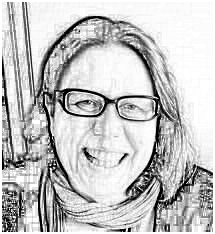
Claudio Antares Mezzina is an Associate Professor in the Department of Pure and Applied Sciences at the University of Urbino Carlo Bo, specializing in theoretical computer science with research focus areas in reversible computation, distributed systems, and formal methods. Research Focus: His work centers on developing formal models for concurrent and distributed systems, particularly exploring reversible computational frameworks, Petri net applications in biochemical systems, and operational semantics for process algebras. Teaching: Mezzina teaches advanced courses including Distributed Applications and Cloud Computing, Software Engineering and Architecture, and Distributed Systems, with materials often available in both Italian and English.
Riccardo Marchesin is a PhD student in Mathematics at the University of Trento, concurrently serving as a Tutor in the Department of Mathematics and Department of Industrial Engineering. His academic role involves supporting teaching activities in courses such as Analisi e geometria (DISPARI) and Informatica . He is affiliated with the doctoral programme in Mathematics at the university's Department of Mathematics. Education: PhD candidate in Mathematics (University of Trento). Research Interests: Combines mathematical foundations (analysis and geometry) with theoretical computer science, focusing on imperative programming principles, recursive definitions, and formal program verification. His teaching activities reflect expertise in both mathematical logic and practical programming constructs. Teaching Contributions: Course Tutor for Analisi e geometria in Industrial Engineering. Course Tutor for Informatica , covering programming fundamentals and formal semantics. Labs/Teams: Not explicitly mentioned in available records.
Pietro Ferrara is an Associate Professor in the Department of Environmental Sciences, Informatics and Statistics at Ca' Foscari University of Venice. His research focuses on applying abstract interpretation-based static analysis to address security vulnerabilities in software systems, particularly in blockchain smart contracts, IoT devices, and distributed systems. He is a member of the Software and System Verification group and has contributed to frameworks like LiSA for multilanguage static analysis. Teaching responsibilities include courses such as Software Architectures, Object-Oriented Programming, and Introduction to Coding and Data Management across undergraduate and graduate programs. His work emphasizes formal verification techniques, cybersecurity, and privacy enforcement in modern software systems. Recent research explores static analysis for detecting concurrency issues in Hyperledger Fabric, vulnerabilities in Go-based smart contracts, and GDPR-compliant privacy analysis. Ferrara collaborates with industry on practical applications of formal methods, including security policy extraction for ROS2 and industrial blockchain software determinism. His research has been published in top venues such as ACM SAC and IEEE Access, with a strong focus on bridging theoretical program analysis with real-world software systems. He maintains an active presence in open-source tools and educational materials for static analysis techniques.
Emanuela Merelli is a Full Professor of Computer Science at the University of Camerino. She leads the BioShape & Data Science Lab, established during her coordination of the EU-FET Project TOPDRIM, which focuses on topology-driven methods for complex systems. Her research integrates formal methods, algebraic topology, and data science to study biological systems like RNA folding and immune responses. She has held a Fulbright Fellowship at the University of Oregon (2005) and remains active in European academic initiatives. Research Interests: Interactive computation, topological field theory of data (TFTD), foundations of learning processes, cell cycle analysis in somatic/cancer cells, and complex systems modeling. Her work bridges theoretical computer science with systems biology, emphasizing topological approaches to data analysis. Awards: Fulbright Fellow (2005), Fellow Member of COST Action CA19122 EUGAIn (promoting gender balance in informatics). She contributes to the European Association for Theoretical Computer Science (EATCS) through leadership roles and educational initiatives. Professional Activities: Promotes open-access publications, organizes international conferences (e.g., ICALP 2022), and develops educational programs like the EATCS Young Researchers School on Complexity and Concurrency. Her work also extends to smart housing technologies for elderly care (Progetto SIAMADA) and seismic engineering applications. Labs & Projects: Leads BioShape Lab exploring topological methods in biology and data science. Coordinates EU-funded projects on RNA structure analysis and complex systems.
Giovanna Guerrini is an Associate Professor in the Department of Informatics, Bioengineering, Robotics, and Systems Engineering (DIBRIS) at the University of Genoa, Italy. She is actively involved in research, teaching, and academic service, with leadership roles in major conferences such as EDBT (Executive Board Member and Treasurer), SOFSEM (Track Chair), and UMAP (Workshop Chair). Her research interests include: Data Management Large Scale and Semantic Data Management Approximate and Adaptive Query Processing Linked Data and Ontology Matching Graph Matching and Geospatial Ontologies Spatio-Temporal Data and Location Inference Computer Science Education and Computational Thinking Her recent publications show a growing focus on computer science education, particularly in using gamified and extended reality environments, Sonic Pi for teaching concurrency, and AI-driven tools for enhancing computational thinking. This reflects a shift toward pedagogical innovation and student-centered learning methodologies. She has been recognized through active participation in top-tier program committees (SIGMOD, ISWC, ICDE) and organizing key workshops and schools (EDBT School 2017, APCSE at UMAP). No formal scientific awards are listed in the provided text. She advises multiple PhD students, both current and past, and contributes to academic grants and collaborative projects, particularly in database education and data science initiatives. She is affiliated with research groups including the DaMA Research Group, Data Science and Engineering Research Program, Big Data Interest Group UniGe, and CINI Big Data Research Lab.