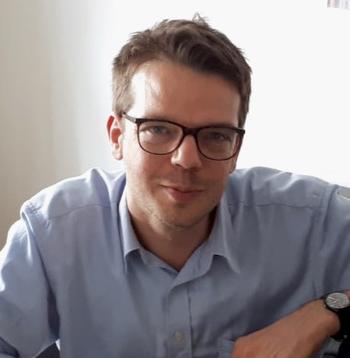
Stefan Winter is a postdoctoral researcher and software engineer at LMU Munich, Germany, with a Ph.D. (Dr.-Ing.) in computer science from TU Darmstadt. He focuses on software dependability, particularly addressing non-deterministic behavior in software systems, such as flaky tests and reproducibility challenges in experimental research. Education: Ph.D. (Dr.-Ing.) in Computer Science from TU Darmstadt under Prof. Neeraj Suri. Current Role: Researcher at LMU Munich in Dirk Beyer’s group. His research spans test automation, robustness testing, fault injection, and operating systems, with a recent emphasis on mitigating flaky tests and ensuring deterministic software behavior. His work has been published in venues like ASE, ESEC/FSE, and ICSE. Stefan actively contributes to the academic community as a committee member, artifact evaluation co-chair, and session chair across conferences such as ECOOP, ISSTA, and SPLASH. He maintains expertise in reproducibility, experimental validity, and software testing frameworks.
Jonathan Crush is University Research Professor and Professor in the School of International Policy and Governance at the Balsillie School of International Affairs , Wilfrid Laurier University . He concurrently holds an Extraordinary Professorship at the University of the Western Cape and an Honorary Professorship at the University of Cape Town . Education Ph.D., Queen’s University, 1984 M.A., Wilfrid Laurier University, 1978 Cert. Ed., Cambridge University, 1976 B.A. (Hons), Cambridge University, 1975 (M.A. 1978) Research Interests Professor Crush’s scholarship is organised around two intertwined themes: Global migration and development: examining South-South migration flows, diaspora engagement, governance frameworks, and the developmental impacts of mobility. Rapid urbanisation and food security in the Global South: analysing urban food systems, food deserts, nutrition transitions, and the political economy of urban poverty. His empirical focus is sub-Saharan Africa, with comparative projects spanning Asia and Latin America. Research Trends Across his recent publications, a clear trajectory emerges: integrating migration studies with urban food security to understand how city growth, informality, and mobility intersect to shape hunger, nutrition, and governance outcomes. The work is policy-oriented, producing handbooks and practitioner reports alongside theoretical contributions. Scientific Awards & Honours SSHRC Partnership Grant 2020 – Migration and Food Security (MiFOOD) Network QES-AS Programme Leadership 2017 – Doctoral & post-doctoral exchanges Extraordinary Professorship, University of the Western Cape, 2018 University Research Professor, Wilfrid Laurier University, 2018-19 Honorary Professorship, University of Cape Town, 2006-2016 CIGI Research Chair in Global Migration and Development, 2012 Queen’s Research Chair in International Migration, 2008 Research Leadership & Teams Professor Crush founded and directs the Southern African Migration Programme (SAMP) , a long-standing consortium of Canadian and African researchers. He co-founded the African Food Security Urban Network (AFSUN) , and established the Hungry Cities Partnership , linking Laurier/Waterloo with partners in Mexico, Jamaica, South Africa, Mozambique, Namibia, Kenya, India and China. He is an active member of the 2030+ Group at BSIA, investigating health-poverty-climate-development nexuses in the Global South.
Christopher Mullington serves as an Honorary Clinical Senior Lecturer in the Department of Surgery & Cancer, Faculty of Medicine, at Imperial College London, and holds a concurrent position as Consultant Anaesthetist at Imperial College Healthcare NHS Trust with clinical expertise in Obstetrics and Trauma. His research program focuses on Applied physiology , Neurophysiology , and Thermoregulation , operating at the intersection of multiple disciplines including Clinical Sciences, Neurosciences, Paediatrics and Reproductive Medicine, Public Health and Health Services, Human Movement and Sports Sciences, and Mechanical Engineering. Primary clinical focus: Obstetric and trauma anesthesia Key research themes: Physiological monitoring systems, neural control mechanisms, temperature regulation in critical care Dr Mullington maintains active affiliations with the Division of Anaesthetics, Pain Medicine and Intensive Care and the MSk Lab at Imperial College London's White City Campus.
Roie Levin is an Assistant Professor at Rutgers University's Department of Computer Science. He received his PhD in Algorithms, Combinatorics and Optimization from Carnegie Mellon University in 2022, advised by Anupam Gupta. Prior to that, he worked at the Allen Institute for Artificial Intelligence (2015-2017) and earned dual BSc degrees in Computer Science/Applied Mathematics and Mathematics from Brown University (2015). Before joining Rutgers, he was a Fulbright Postdoctoral Fellow at Tel Aviv University under Niv Buchbinder. Current Role: Assistant Professor in Computer Science Academic Training: PhD (2022) CMU, BSc (2015) Brown University Postdoctoral: Fulbright Fellow at Tel Aviv University Levin's research focuses on approximation algorithms for uncertain environments (online/dynamic/streaming models) and submodular function optimization. His work spans theoretical foundations and practical implementations across distributed systems, geometric constraints, and reinforcement learning paradigms. Teaching includes graduate and undergraduate algorithms courses (CS 344, CS 513) with emphasis on problem-solving techniques, computational complexity, and modern algorithmic trends. His publications showcase expertise in online algorithms, submodular optimization, and approximation theory with applications in clustering, caching, and machine learning. The 2025 articles demonstrate continued exploration of online consistency and contention resolution, while 2023-2024 works focus on submodular optimization under uncertainty and dynamic environments. Earlier publications (2015-2017) cover semantic parsing, geometric approximation, and planar graph optimization. Fulbright Postdoctoral Fellow Levin's research connects theoretical guarantees with practical implementations, bridging classical algorithm design with modern machine learning applications. His recent work explores primal-dual methods in online settings and robust subspace approximation techniques for streaming data environments.
Tim Twardzik is a Researcher at the Chair of Integrated Systems within the School of Computation, Information and Technology at the Technical University of Munich . His work focuses on hardware acceleration techniques for Linux systems, particularly in optimizing inter-process communication (IPC), event notification mechanisms, and synchronization primitives through FPGA-based and MPSoC architectures. His research explores: Hardware-assisted scheduling for Linux Low-latency system-on-chip (SoC) design User-space event notification acceleration Thread synchronization mechanisms MPSoC-based embedded computing Performance analysis through simulation frameworks Publications highlight his contributions to hardware acceleration trends, with a focus on improving operating system primitives (e.g., futex, epoll) through custom silicon implementations.
Michael Ruth is an Associate Professor and Program Director of Computer Science & Cyber Security in the Department of Computer Science and Information Technology at Roosevelt University, within the College of Science, Health and Pharmacy. He joined the university in 2009 as an Assistant Professor and was promoted to Associate Professor in 2015 after completing his PhD at the University of New Orleans. His educational background includes: Ph.D. in Engineering & Applied Science from the University of New Orleans M.S. in Computer Science from the University of New Orleans Dr. Ruth's research centers on software engineering with specialized focus on software testing and distributed systems. His primary contributions involve developing decentralized regression test selection frameworks for web services, addressing critical challenges in balancing service provider constraints with testing effectiveness. His work explores concurrency management, fault locatability, and benchmark development for web service testing. Analysis of his 11 publications (2005-2010) reveals consistent thematic focus on regression testing methodologies for service-oriented architectures. Key research trajectories include client-side framework development for resumable applications, adaptation of SRMR messaging protocols, and empirical validation of decentralized testing frameworks. His publications demonstrate progressive refinement of techniques for web service testing while maintaining practical applicability in distributed environments. Scientific awards: No scientific awards or fellowships were mentioned in the source materials. Regarding academic advising and research funding, the available documentation does not specify any graduate students supervised or grant awards received. His industrial experience includes software development roles with the US Navy and network engineering at a New Orleans bank prior to his academic appointment. No dedicated research laboratories or specialized teams are described in the provided information, though his academic genealogy traces through notable figures including Frederick Terman and Vannevar Bush.
Madhusudan Parthasarathy is a Professor in the Department of Computer Science at the University of Illinois at Urbana-Champaign, College of Engineering. His research focuses on software verification, formal methods, and logic in computer science, with significant contributions to trustworthy AI systems, program synthesis, and security. Ph.D. in Theoretical Computer Science (2002), Institute of Mathematical Sciences, University of Madras Research interests include automating software verification, building correct-by-design systems, and exploring synergies between machine learning and program synthesis. He pioneered visibly pushdown languages , impacting XML processing and program verification. His tools like VEX and Strand advanced security and heap reasoning. Recent articles focus on blockchain verification, timed automata, and learning logics from data. His work has been widely cited, with the visibly pushdown language paper alone generating over 940 scholarly entries. Best Paper Award, 19th USENIX Security Symposium (2010) He has advised numerous students and postdocs, with former advisees now at institutions like Purdue University and Google. His outreach initiatives include the ConTraIL privacy-preserving contact tracing project and the MASSIVELY EMPOWERED CLASSROOMS MOOC platform for Indian undergraduates. He teaches courses like CS 521: Advanced Topics in Programming Systems and CS 474: Logic in Computer Science , while actively serving on program committees for top-tier conferences such as POPL and PLDI.
Martin Odersky is a Full Professor at École Polytechnique Fédérale de Lausanne (EPFL) in the School of Computer and Communication Sciences, where he heads the Programming Methods Laboratory (LAMP1). He maintains dual teaching appointments in the Systems and Software Engineering (SIN) and Software and Systems Engineering (SSC) sections. Education: Doctorate from ETH Zurich (1989) Odersky's research fundamentally explores the unification of object-oriented and functional programming paradigms. His work spans language design, type theory, compiler construction, and semantic foundations, driven by the thesis that these paradigms are complementary facets of a single computational model. This vision materialized in the Scala programming language, engineered for seamless Java/.NET interoperability while advancing type-safe abstractions for modern software development. His publication trajectory (1997-2005) reveals consistent innovation in bridging theoretical rigor with industrial applicability. Key themes include component-based modularity (Scalable Component Abstractions), dependent type systems for objects, and practical implementations of generics and functional constructs, all converging toward expressive yet safe programming models. Advising and Funding: Odersky has mentored 29 PhD students across his career, including 5 current candidates. His research sustains major funding from the Swiss National Science Foundation, European Commission, and Hasler Foundation, enabling foundational work in language design and implementation. Laboratory: He directs EPFL's Programming Methods Laboratory (LAMP), which drives Scala's evolution and investigates next-generation programming abstractions for concurrency, modularity, and type-driven development.
Eric Van Wyk is a Professor in the Department of Computer Science and Engineering at the University of Minnesota's College of Science and Engineering. His research focuses on programming languages, particularly extensible languages and language tools. He leads the Minnesota Extensible Language Tools (MELT) group and has made significant contributions to attribute grammars, compiler design, and language specification techniques. Professor Van Wyk's research centers on programming languages, especially extensible languages. His team has developed techniques for specifying languages and extensions that add new syntax and semantics to a "host" language. His work focuses on mechanisms guaranteeing that independently-developed domain-specific extensions can be automatically composed into well-defined languages. He has created two major systems: Silver, an attribute grammar specification language enabling highly-modular language specification, and Copper, an integrated parser and context-aware scanner generator that uses parser information to return more discriminating tokens. His publication record shows a clear progression from foundational work on language composition to increasingly sophisticated techniques for metatheoretic reasoning, scope management, and strategic tree rewriting. The research demonstrates a consistent pattern of developing practical tools (Silver, Copper, ableC) alongside theoretical advances in language specification and composition, bridging the gap between formal methods and practical language implementation. Distinguished Paper award at SLE2020 Professor Van Wyk has advised multiple Ph.D. students including Ted Kaminski (2017), Lijesh Krishnan (2012), August Schwerdfeger (2010), Jimin Gao (2007), and Dawn Michaelson (2024). His research has received substantial support from the National Science Foundation through projects such as "FMitF: Track I: ComScaN" (2021-2026), "XPS: EXPL: Enabling An Ecosystem of Parallel Programming" (2016-2021), and "SI2-SSE: Collaborative: Extensible Languages for Sustainability" (2010-2015). He leads the Minnesota Extensible Language Tools (MELT) group, which has developed influential systems for language specification while advancing theoretical understanding of language composition and extensibility. The group's work has established significant contributions to the field of software language engineering with particular expertise in attribute grammars and language composition techniques.
Kathryn (Kate) Henne serves as Professor and Director of RegNet (the ANU School of Regulation and Global Governance) at the Australian National University, where she leads the Justice and Technoscience Lab (JusTech). She concurrently holds an Adjunct Professor position at Arizona State University and serves as Associate Editor of Critical AI. Her research critically examines how technoscientific advancements reshape governance frameworks, with emphasis on developing equitable regulatory policies. Core interests span Regulation , Global Governance , and Technoscience , specifically addressing Algorithmic Ethics , Human-AI Interaction , Automating Governance , and Personalisation systems. Her interdisciplinary approach integrates Criminology and Science and Technology Studies to analyze power dynamics in emerging regulatory landscapes. Professor Henne has received significant recognition including the ANU Futures Award, alongside research funding from major international bodies. Her work demonstrates sustained impact across policy and academic domains. ANU Futures Award She has secured competitive grants from the Australian Research Council, National Science Foundation, American Society of Criminology, Canada Research Chairs Program, Social Sciences and Humanities Research Council, Canada Foundation for Innovation, and Ontario Research Fund. Her supervision and teaching excellence have also been formally recognized. As founder of the Justice and Technoscience Lab (JusTech), she directs collaborative research on technology's sociopolitical dimensions in regulatory contexts, fostering interdisciplinary partnerships across governance and technical domains.
Dr. Sebastian Zerhoch serves as a Researcher at the Institute for Religious Studies within the Department of History and Cultural Studies at Free University of Berlin since October 2016, concurrently holding a 2024-2025 fellowship at Harvard University's Center for Hellenic Studies. His academic trajectory includes extensive research on ancient Greek religious practices and literary traditions. His educational background features: 1998-2005: Studies in Greek Philology, Judaic Studies, and Philosophy at Heidelberg University and Free University of Berlin 2005: Magister Artium in Greek Philology and Judaic Studies, Free University of Berlin 2014: PhD in Greek Philology (Dissertation: Erinys in Epos und Tragödie. Fluchbegriff und personale Fluchmacht ), Free University of Berlin Dr. Zerhoch's research centers on Ancient Greek Religion and Literature , with groundbreaking work on libation rituals as both religious practice and literary metaphor. His investigations span archaic and classical periods, examining divine powers in cultic contexts, mythological frameworks, and textual transmission through palaeographic analysis. His recent publications reveal a methodological synthesis of epigraphic, literary, and historical approaches, with consistent focus on ritual liquids, metaphorical systems, and scholarly reception history. Approximately 60% of his 2020-2024 output directly addresses libation practices across diverse media. His scientific recognition includes: Fellow, Center for Hellenic Studies, Harvard University (2024-2025) Dr. Zerhoch has secured significant research funding through DFG projects including Opfer und Libation im antiken Griechenland and prior contributions to Topoi Cluster's Aetiology of Culture . While no formal advisees are documented, he has instructed 12 graduate-level courses since 2016 covering ancient religion, mythology, and textual analysis. He operates within the Institute for Religious Studies' research collective and maintains active collaborations with Harvard's Center for Hellenic Studies and Berlin's Topoi excellence cluster, focusing on ritual spatiality and knowledge formation in antiquity.
Lei Bu is a Professor and Vice Dean at the Software Institute , Nanjing University . He leads research in formal verification, cyber-physical systems, and software engineering, with a focus on bounded model checking and hybrid system analysis. B.Sc. and Ph.D. in Computer Science from Nanjing University (2004, 2010) Visiting student at Carnegie Mellon University and University of Texas at Dallas His research integrates formal methods and machine learning for verifying complex systems like IoT and software with real-time constraints. Key projects include BACH Toolset and BRICK for reachability analysis. Recent publications demonstrate expertise in hybrid system verification , cache side-channel detection , and parallel code analysis frameworks . His work bridges theoretical advancements with practical applications in safety-critical systems. Zhongchuang Software Talent Award (2023) CCF-IEEE CS Young Computer Scientist Award (2022) High-Tech Software Innovation Awards (2019-2023) As Principal Investigator, he leads major projects funded by National Science Foundation of China and Jiangsu Natural Science Foundation (2020-2027). Current tools include BACH for hybrid systems and MLB for Java symbolic execution.
Lesley De Cruz is a Research Fellow at Vrije Universiteit Brussel's Electronics and Informatics department within the School of Electronics and Computer Science, with concurrent research affiliation at the Royal Meteorological Institute of Belgium since 2012. Current projects include climate-resilient urban modeling through BRGEOZ464 and flood prediction systems under FWOAL1127. Research focuses on AI-driven climate modeling with expertise in nonlinear dimension reduction (DIRESA framework), urban climate resilience, and renewable energy meteorology. Key methodologies integrate deep learning with environmental physics for applications including real-time flood prediction offshore wind farm optimization LEGO-based urban climate prototyping regional climate downscaling Recent publications (2023-2025) demonstrate strong trends in geospatial AI for environmental systems, with 64% focusing on climate change impact analysis, 54% on urban applications, and 51% on control measure development. The DIRESA framework represents a significant contribution to nonlinear dimension reduction in climate informatics. Awards include: Matìère Grise Science Communication Trophy (2024) Major media recognition for breakthrough rainfall prediction model (2021) Supervises multiple PhD candidates and leads public engagement initiatives including CurieuCity and Dag Van de Wetenschap. Current grants total 12 active projects (2021-2029) with €2.8M+ funding, primarily focused on climate adaptation and sustainable technology development. Labs and teams include the Climate Informatics Group at VUB and collaborative networks with Ghent University and the Flemish Institute for Carbon-Aware Technologies.
Alejandro Russo is a Professor at Chalmers University of Technology , specializing in Information Flow Control (IFC) , Secure Programming Languages , and Functional Programming . His research bridges theoretical foundations and practical implementations, focusing on mitigating timing channels , covert channels , and data leakage in concurrent systems. Developed novel frameworks for Differential Privacy with provable accuracy bounds Pioneered COWL integration for browser security and instruction-based scheduling to prevent cache timing attacks Led major projects like HIPSTER (hybrid static/dynamic IFC) and AppFlow (practical IFC deployment) His publications reveal expertise in security libraries for Haskell and Python , with a focus on faceted execution , label manipulation , and mechanized security proofs . Students under his supervision have explored topics ranging from secure eDSLs to privacy-preserving compilation techniques . Scientific awards : Google Research Award (2011) for Python taint analysis Advising and grants : Principal Investigator for VR , STINT , and Google Research Award Supervised 12+ PhD and Master’s students in security and functional programming research
Kristen Bos serves as an Assistant Professor of Indigenous Science and Technology Studies within the Department of Historical Studies at the University of Toronto Mississauga, holding concurrent affiliation with the Women, Gender and Sexuality Studies program. She co-directs the Indigenous-led Technoscience Research Unit, an environmental justice laboratory advancing community-centered research at the University of Toronto. Her scholarship employs Indigenous feminist frameworks to interrogate intersections of colonial oppression, gendered violence, and ecological destruction through archaeological analysis of material culture. Research examines how settler colonial structures shape environmental justice movements while centering Indigenous knowledge systems and northern Alberta's prairie-boreal forest transition landscapes. Methodologically grounded in material culture studies, her work bridges science and technology studies with decolonial praxis. As Co-Director of the Technoscience Research Unit, she cultivates Indigenous-led approaches to environmental justice through collaborative community partnerships and laboratory-based knowledge production.