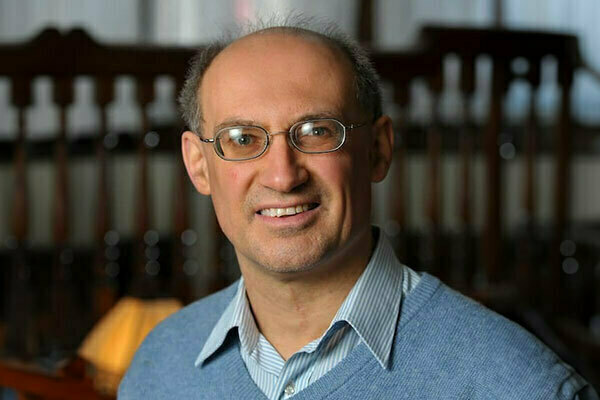
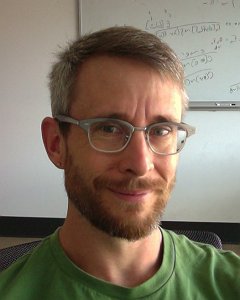
Benjamin J. Delaware is an Assistant Professor of Computer Science at Purdue University. His research focuses on programming languages, formal verification, and tools for ensuring software correctness using mechanized theorem provers. He holds a Ph.D. from The University of Texas at Austin (2013), an MSc from Washington University in St. Louis (2007), and a B.S. from Truman State University (2005). His work emphasizes practical formal methods, including static enforcement of privacy policies, compiler design for oblivious computation, and automated verification techniques. Key contributions include tools like Taypsi, KestRel, and HACCLE. His research bridges theory and practice, addressing challenges in software security, correctness, and efficiency. Publications span top venues like POPL, PLDI, and OOPSLA, reflecting a strong focus on foundational programming language concepts. Collaborations with researchers like Suresh Jagannathan and Qianchuan Ye drive advancements in automated reasoning and secure computation.
Dr. Eduardo Federico Gutiérrez González is an Assistant Professor at the Centre of Theological Formation, Pontificia Universidad Javeriana in Bogotá, Colombia. He concurrently holds a Junior Research Fellowship in Humanities and Social Sciences at Blackfriars Hall, University of Oxford, and serves as a Research Fellow at Georgetown University's Berkley Center for Religion, Peace and World Affairs. His interdisciplinary work bridges academic research, teaching, and international consultancy focused on religion and peacebuilding. Education: DPhil in Theology and Religion, University of Oxford (Expected 2025) Thesis: Vanquishing the Wars Within. Religious Imagination & the Pursuit of Human Consilience (Funded by Porticus Foundation) MSt in Science and Religion, University of Oxford (2020) Thesis: J.R.R. Tolkien’s Concept of Sub-Creation and the Quest for the Religious Imagination MA in Philosophy, Pontificia Universidad Javeriana (2019) Thesis: El escéptico piadoso. Leyendo la experiencia religiosa desde una antropología de la contingencia BA in Philosophy, Universidad de la Sabana (2015) Thesis: La analogía como puente entre fe y razón. Una mirada al Scriptum super sententiis de Sto. Tomás de Aquino Research Focus: His scholarship centers on the transformative potential of religious imagination in conflict resolution, with emphasis on dialogical and analogical reasoning as tools for peacebuilding. Additional domains include spirituality in artistic world-building, theological epistemology, and interdisciplinary approaches bridging philosophy, social sciences, and theology. His methodological framework prioritizes context-sensitive analysis of religious narratives in post-conflict societies. Publication Trends: Recent articles (2022-2023) examine imagination's role in Catholic peacebuilding and Einstein's epistemological frameworks. Earlier works (2017-2018) address transitional justice implementation in Colombia and philosophical analogies connecting social sciences with religious thought. Thematically, publications converge on epistemological intersections between theology, scientific inquiry, and conflict transformation. Projects & Funding: Co-investigator for completed project (2017): Desarrollo e implementación de un modelo de gestión de conflictos socioambientales... addressing territorial conflict resolution in Colombia Principal Investigator for forthcoming project: Seeking the God of Peace. Religious Imaginaries & the Challenge of Peace in Colombia Doctoral research fully funded by Porticus Foundation
Rodrigo Otoni is an Assistant Professor at the University of Groningen's Faculty of Science and Engineering, affiliated with the Bernoulli Institute for Mathematics, Computer Science, and Artificial Intelligence. His research focuses on automated reasoning for verification, synthesis, and certification in computer science. He leads initiatives in formal methods for distributed systems and maintains active profiles on GitHub and LinkedIn. Research Interests: Specializes in theoretical computer science foundations with applied work in model checking and formal verification. Key areas include: Automated theorem proving for system certification Formal specification of distributed protocols Rigorous verification methodologies for concurrent systems
Paul Franks is the Robert F. and Patricia Weis Professor of Philosophy and Judaic Studies, and holds a concurrent appointment as Professor of Religious Studies at Yale University. As Department Chair, he oversees the Philosophy Department's academic programs and initiatives. His research spans German Idealism, Jewish Philosophy, and the intersections between analytic and continental traditions. His scholarly work focuses on Kant, post-Kantian philosophy, neo-Kantianism, phenomenology, and the philosophy of the human sciences. Key contributions include analyses of Fichte, Hegel, and Schelling, alongside studies of Jewish thinkers like Franz Rosenzweig and Salomon Maimon. Franks' publications address skepticism in German Idealism, the legacy of Kabbalistic thought in modern philosophy, and the philosophical implications of Jewish textual traditions. Franks' recent articles explore topics such as analytic approaches to Hasidic thought, the relationship between German Idealism and Judaism, and the methodology of transcendental arguments. He has edited volumes like International Yearbook of German Idealism and authored influential works such as All or Nothing: Systematicity, Transcendental Arguments, and Skepticism in German Idealism . His work bridges historical and contemporary philosophical debates, emphasizing the interplay between systematic philosophy, religious thought, and epistemological inquiry. Franks is affiliated with Yale's Judaic Studies Program and Religious Studies Department, contributing to interdisciplinary dialogues in humanities and philosophy.
Andreas Lööw is a Lecturer at Royal Holloway, University of London , focusing on hardware and software verification. Previously, he was a postdoctoral researcher at Imperial College London under Philippa Gardner , contributing to the Gillian Platform . He completed his PhD at Chalmers University of Technology under Magnus Myreen , specializing in interactive theorem proving and hardware verification. His research explores symbolic execution, separation logic, and formal verification of hardware/software systems. Key projects include Betterlog (Verilog semantics reformulation) and foundational work on the Gillian Platform . 2025 : Compositional Symbolic Execution for Memory Models 2025 : Simulation Semantics of Synthesisable Verilog 2024 : Compositional Symbolic Execution for Correctness/Incorrectness 2023 : Exact Separation Logic (Distinguished Paper at ECOOP'24) 2023 : Hardware Verification of Pipelined Processors 2022 : Verilog Concurrency Analysis 2021 : Verified Verilog Compiler (Lutsig) Scientific Awards : Distinguished Paper at ECOOP 2024 He maintains the vv Verilog visualization tool and collaborates on the Gillian Platform . Contact: andreas.loow@rhul.ac.uk
Amelie Sophie Berz is a DPhil in Law candidate at Worcester College, University of Oxford, researching AI's impact on tort law standards of care. She concurrently serves as a Research Associate for Professor Philipp Hacker (Viadrina), Stipendiary Lecturer in Contract Law at St John's College, and Tutor in Tort Law at Exeter College. Previously, she held lecturing roles at New College and Keble College. Her research is funded by Oxford’s Faculty of Law and focuses on private law theory, behavioral science integration, and AI regulation. Amelie holds a Magister Iuris from Heidelberg University (2022) and a MPhil in Law from Brasenose College, Oxford. She has edited multiple journals, including the Heidelberg Student Law Review, and contributes to the Oxford Business Law Blog. Her work spans EU AI regulation critiques, climate policy challenges, and transparency standards in AI systems. She co-convenes the Private Law Postgraduate Research Students Discussion Group and engages in comparative private law studies. Her publications address topics like the EU AI Act’s flaws, LGAIM transparency, and AI’s obligations in tort law. She has reviewed foundational legal texts and produced pedagogical material for corporate and criminal law education.
Nickolai Zeldovich is the Joan and Irwin M. Jacobs Professor of Electrical Engineering and Computer Science at MIT, and a member of the Computer Science and Artificial Intelligence Laboratory (CSAIL). He received his PhD from Stanford University in 2008 and focuses on building practical secure systems, including encrypted databases, undefined behavior detection tools, formally verified file systems, and cryptocurrency protocols. His work spans both theoretical and applied aspects of computer security and distributed systems. Research interests include: Secure system design Distributed consensus mechanisms Formal verification of software/hardware Cryptographic protocols Privacy-preserving web technologies Publications & Verification Tools Recent work focuses on modular verification of complex systems, including: Shipwright (2025): Byzantine-fault-tolerant distributed system verification PoWER (2025): Crash consistency verification framework K2 Architecture (2023): Trustworthy hardware security modules Grove (2023): Separation-logic-based verification library Tiptoe (2023): Private web search protocols Major Awards Best paper award, ACM SOSP (2011, 2015, 2017) Sloan Research Fellowship (2010) NSF CAREER award (2011) MIT Jamieson Award for Teaching (2024) Active in multiple startup ventures including Algorand (cryptocurrency), MokaFive (virtualization), and PreVeil (end-to-end encryption).
Mark Batty is a Professor in the School of Computing at the University of Kent, specializing in formal methods for concurrent systems. His work bridges hardware-software interfaces, focusing on memory models for C/C++, OpenCL, and architectures including x86, ARM, POWER, and GPUs. As a member of the Programming Languages and Systems Research Group, he develops mathematical specifications and verification tools for real-world concurrency challenges. His research centers on empirical testing of hardware/compiler behavior, formal modeling of system components, and verification of fine-grained concurrent algorithms. Key contributions address relaxed memory semantics, transactional memory, and compositional reasoning for concurrent data structures. His work combines theoretical rigor with practical tool development to ensure correctness in complex concurrent environments. Analysis of his 2015-2025 publications reveals consistent focus on memory consistency models, formal verification of weak memory concurrency, and compiler optimizations. Dominant themes include C/C++11 standards, GPU concurrency semantics, and mechanized verification techniques. His research demonstrates strong industry relevance through collaborations with hardware vendors and contributions to language standards. Mark Batty has received significant recognition: John C. Reynolds Doctoral Dissertation Award (2015) from ACM SIGPLAN CPHC and BCS Distinguished Dissertation Award (2015) Lloyds Register Foundation and Royal Academy of Engineering Research Fellowship (2016) He actively leads major research initiatives and mentors next-generation researchers: Current Funding: EPSRC Standard Grant 'Verifiably Correct transactional memory' (2018), VeTTS Grant 'Specification and verification of C++ data structure libraries' (2018), EPSRC First Grant 'Compositional, dependency-aware C++ concurrency' (2018) PhD Recruitment: Actively seeking candidates for UKRI-funded studentship in Verified Trustworthy Software Systems Batty drives community engagement through Kent Concurrency Workshop (2016) and South of England Programming Language Seminars, fostering national collaboration in programming languages research. His leadership in organizing Royal Society discussions underscores his influence in trustworthy systems verification.
Vittorio G. Hösle is the Paul G. Kimball Professor of Arts and Letters at the University of Notre Dame, holding concurrent professorships in Philosophy and Political Science. He serves as a Faculty Fellow at the Nanovic Institute and the Kroc Institute. His academic roles include founding director of the Notre Dame Institute for Advanced Study (2008–2013) and editorial leadership in interdisciplinary research initiatives. He has guest-taught globally, including in Brazil, India, Russia, Norway, Italy, Switzerland, and the Netherlands. Dr. Hösle’s scholarly interests span systematic philosophy (metaphysics, ethics, aesthetics, political theory) and the history of philosophy (ancient and modern). His research focuses on just war theory, development theories, and interdisciplinary dialogues between philosophy and film, literature, and theology. He has authored over 50 books, including Morals and Politics (2004) and A Short History of German Philosophy (2017), and edited volumes on beauty, goodness, and truth. His work The Dead Philosopher’s Café (2000) is a widely translated introduction to philosophy. Hösle’s awards include the Fritz-Winter Prize from the Bavarian Academy of Sciences and fellowships at the Institute for Advanced Study in Princeton. He was appointed to the Pontifical Academy of Social Sciences by Pope Francis (2013) and its Council (2017). His academic trajectory includes a Ph.D. (1982) and Habilitation (1986) from Tübingen University, Germany.
Veronique Munoz-Darde is Professor of Philosophy at University College London (UCL) since 1994 and concurrently at UC Berkeley since 2009. Her primary institutional affiliations are with the Department of Philosophy in UCL's Faculty of Arts and Humanities and Berkeley's College of Letters and Science. She holds a PhD from the European University Institute (1994) and maintains active transatlantic academic engagement. Her research centers on practical reasoning, ethics, and political philosophy with specific focus areas including: aggregation and numbers in practical reasoning; transitivity of 'better than'; social significance of risk; justification of taxation; nature of regret; social goods like universities and museums; and political ideals of equality, fraternity, and solidarity. Her work bridges abstract ethical theory with concrete political applications, particularly through Rawlsian frameworks. Analysis of her 15 most recent publications reveals consistent engagement with foundational questions of justice through multiple lenses: contractualist thought (Rawls, Scanlon), value theory, institutional design, and moral psychology. Key thematic clusters include the critique and development of egalitarian frameworks, analysis of political emotions (fraternity, regret), and examination of social goods under austerity. Her methodology combines conceptual rigor with attention to real-world political constraints. She has held visiting positions at Harvard University and the École des Hautes Études en Sciences Sociales. Her major publications include the monograph La justice sociale: le libéralisme égalitaire de John Rawls (2001) and the forthcoming The Regulation of Intimacy . Current teaching includes seminars on Equality, Hume's Treatise, Raz's Morality of Freedom, Contractualist thought, and Regulation of Intimacy at both institutions. Her research addresses Sustainable Development Goals 1 (No Poverty), 4 (Quality Education), 5 (Gender Equality), and 10 (Reduced Inequalities), demonstrating commitment to philosophy's practical social relevance. She maintains active scholarly presence through ORCID (0000-0002-3718-0936) and Academia.edu.
Rafael Villena Taranilla is a Professor at Camilo José Cela University (UCJC) and the International University of La Rioja (UNIR), teaching in master's programs on advanced teaching competencies, digital technology in teaching, and inclusive education. He concurrently serves as a primary school teacher, integrating practical classroom experience with academic research in educational technology. His academic credentials include: PhD in Education from the University of Castilla-La Mancha (Outstanding Cum Laude), focusing on Virtual Reality for Social Studies in Primary Education Master's degree in Educational Research and Innovation from the University of Castilla-La Mancha Bachelor's degree in Primary Education with specialization in History, Culture, and Heritage Villena Taranilla's research centers on emerging technologies in education, particularly virtual reality, augmented reality, educational robotics, and artificial intelligence applications for primary education. He investigates their impact on learning outcomes, historical thinking development, and teacher digital competence, with significant contributions to motivation studies and technology acceptance models in educational contexts. His recent publications (2022-2025) demonstrate a concentrated focus on virtual reality for history and social sciences education in primary schools, supported by rigorous meta-analyses and technology acceptance frameworks. The work shows progressive expansion into gamification for historical thinking, augmented reality for geometry instruction, and robotics for computational thinking, reflecting a cohesive interdisciplinary approach bridging education, cognitive science, and technology innovation. His scientific recognition includes: Second prize in the 'Thesis in three minutes' contest (UCLM, 2020) National finalist in the #HiloTesis contest (CRUE Universidades) Villena Taranilla has supervised numerous Master's theses and academic internships across educational innovation programs. He has secured research funding from prestigious entities including FECYT, La Caixa Foundation, and the University of Valencia, while contributing to teacher training initiatives as a digital competence tutor with Castilla-La Mancha's Regional Teacher Training Center. He is an active member of the Labintic research group at the University of Castilla-La Mancha, dedicated to critical ICT integration in teaching. His collaborative research extends to the University of Valencia, where he completed a 2024 research stay and has scheduled another for June-September 2025 under Dr. Pascual D. Diago Nebot's supervision.
Dr. Farzaneh Derakhshan is an Assistant Professor in the Computer Science Department at Illinois Institute of Technology (Illinois Tech), where she explores logical foundations of concurrency and develops formal methods for program verification. She earned her Ph.D. in Pure and Applied Logic from Carnegie Mellon University in 2021 under Frank Pfenning, followed by a postdoctoral fellowship at CMU with Limin Jia and Stephanie Balzer. Current affiliation: Illinois Tech (since ~2021) Previous affiliation: Carnegie Mellon University (Ph.D. and postdoc) Research focus: Type theory, logical verification, and security for concurrent systems Teaching: Courses on programming languages, type systems, and security Her research addresses fundamental challenges in concurrent programming, including: Developing modal logic frameworks for system verification Designing type systems for intermittent computing Creating behavioral type systems for security guarantees Applying relational logic to GPU security and secure compilation Investigating logical foundations of session-typed processes Formal verification of cyclic process networks Current research trends include: Hybrid dynamic verification for parallel systems Logical approaches to side-channel security Formal methods for cyber-physical systems Crash-resilient computing models Security verification in decentralized applications Noninterference proofs in session-typed concurrency Scientific recognition: NSF SaTC CORE Collaborative Award #2350217 Organizing committee member at Dagstuhl Seminar 26071 Professional leadership: Program committee co-chair for PLACES 2025 Committee roles at LICS 2026, ESOP 2026, ICFP 2025, and ECOOP 2025 Regular reviewer for ACM Transactions journals Laboratory involvement: Co-director of behavioral types research at Illinois Tech Collaboration with Carnegie Mellon's formal verification group Key participant in the FACCT workshop
Steve Zdancewic is the Schlein Family President's Distinguished Professor and Associate Chair in the Department of Computer and Information Science at the University of Pennsylvania's School of Engineering and Applied Science. He is a leading researcher in programming languages, formal methods, and computer security with over two decades of impactful contributions to the field. His research interests span programming languages, type theory, logic, computer security, quantum programming, and formal verification. Zdancewic has made significant contributions to information-flow security, memory safety, program synthesis, and the verification of low-level systems. His work often bridges theoretical foundations with practical applications, particularly through the development of verified systems using Coq and other proof assistants. Analysis of his recent publications reveals a strong focus on formal verification techniques, particularly using Interaction Trees and the Coq proof assistant. His research trajectory shows consistent evolution from foundational work on information-flow security toward increasingly sophisticated verification of complex systems including LLVM, quantum computing, and distributed systems. His work demonstrates a commitment to building practically useful verification tools while maintaining rigorous theoretical foundations. Distinguished Paper Award for Semantics for Noninterference with Interaction Trees (ECOOP 2023) Schlein Family President's Distinguished Professor (2021) Distinguished Paper Award for Interaction Trees (POPL 2020) Christian R. and Mary F. Lindback Foundation Award for Distinguished Teaching (2018) IEEE MICRO top picks (2013) Alfred P. Sloan Fellow (2009-2010) NSF CAREER award (2004) Zdancewic has advised numerous PhD students who have gone on to successful careers in academia and industry. His research has been supported by significant grants from NSF, including the NSF Expedition on the Science of Deep Specification. He is actively involved in multiple major research projects including Vellvm (verified LLVM), DeepSpec, and quantum programming verification. Zdancewic also co-organizes Penn's PL Club programming languages research group with Benjamin Pierce and Stephanie Weirich.
Ori Lahav is a faculty member in the School of Computer Science at Tel Aviv University. His research is generously supported by an ERC Starting Grant and an ISF Grant. He actively supervises PhD and MSc students, and seeks highly motivated candidates for postdoc, PhD, and MSc positions in programming language theory, concurrency, and formal methods. Dr. Lahav completed his PhD at Tel Aviv University under the supervision of Arnon Avron. In 2014, he was a postdoctoral researcher at Tel Aviv University hosted by Mooly Sagiv. From 2014 to September 2017, he was a postdoctoral researcher at MPI-SWS in Germany hosted by Viktor Vafeiadis and Derek Dreyer. His primary research areas focus on programming languages and verification, with specialization in concurrency and relaxed memory models. He also has significant interests in proof-theory, semantics of non-classical logics, and automated reasoning. His work bridges theoretical foundations with practical applications in programming language design and implementation. Dr. Lahav's publication record shows a consistent trajectory of high-impact research in top-tier conferences including PLDI, POPL, OOPSLA, and ESOP. His recent work (2023-2025) demonstrates continued leadership in memory models, concurrency semantics, and verification techniques. His research spans both theoretical contributions in denotational semantics and practical tools for verification. Best Paper Award DISC 2024 Best Student Paper Award DISC 2024 Distinguished Artifact Award ESOP 2022 Distinguished Paper Award OOPSLA 2021 Kleene Award for Best Student Paper LICS 2013 Dr. Lahav actively advises students including Yoav Ben Shimon, Yotam Dvir, Amir Karniel, and Roy Margalit (PhD students), Yuval Katsman Ezra (MSc student), and has alumni including Ori Saporta (MSc) and Abhishek Kr Singh (postdoc, now Assistant Professor at IIIT Hyderabad). He has organized significant events including VMCAI 2024 and Dagstuhl Seminars on persistent programming. His teaching portfolio includes courses on Shared Memory Concurrency Semantics, Programming Language Foundations, and Software Foundations in Coq.
Todd Millstein is a Professor in the Computer Science Department at the University of California, Los Angeles (UCLA). He served as the Computer Science Department Chair from 2022-2025 and is also an Amazon Scholar. His research focuses on making software systems more reliable through programming languages techniques, with significant contributions to network verification and probabilistic programming. Millstein received his Ph.D. from the University of Washington Department of Computer Science, where he was a member of the Cecil group led by Craig Chambers. Prior to that, he completed his undergraduate studies at Brown University under the guidance of Paris Kanellakis and Pascal Van Hentenryck. Millstein's research spans several areas of programming languages and systems with a focus on reliability. He has made significant contributions to network verification, developing the Batfish network configuration analyzer which is now managed by Amazon Web Services and forms the basis of Oracle Cloud's Network Path Analyzer. His work has been recognized with the ACM SIGCOMM Networking Systems Award in 2025. He also works on interactive program verification through lemma synthesis and scalable reasoning methods for probabilistic programming languages. His research bridges programming languages theory with practical systems challenges, as highlighted in his SPLASH/OOPSLA 2024 keynote "Everything is a Program (even if it's not)". Millstein's recent publications demonstrate a consistent focus on verification and reliability across multiple domains. His work shows a progression from foundational programming language techniques to practical applications in networking and probabilistic systems. Key themes include data-driven approaches to program analysis, synthesis of verification artifacts, and applying programming languages techniques to non-traditional domains like network configuration. Millstein's scientific achievements have been recognized with numerous prestigious awards including an NSF CAREER Award, an ACM SIGPLAN Most Influential PLDI Paper Award, an ACM SIGCOMM Networking Systems Award, IEEE Micro Top Picks selection, best-paper awards from PLDI, OOPSLA, and SIGCOMM, a Microsoft Research Outstanding Collaborator Award, an Okawa Foundation Research Grant, an IBM Faculty Award, and a Facebook Research Award. He has also received both the Northrop Grumman Excellence in Teaching Award (for junior faculty) and the Eon Instrumentation Inc. Excellence in Teaching Award (for senior faculty) from UCLA Engineering. Millstein advises several Ph.D. students including Ana Brendel, Poorva Garg (co-advised with Guy Van den Broeck), Rajdeep Mondal (co-advised with George Varghese), and Rathin Singha (co-advised with George Varghese). His research has been supported by various grants including an NSF CAREER Award, Okawa Foundation Research Grant, IBM Faculty Award, and Facebook Research Award. He has also been a Co-Founder and Chief Scientist of Intentionet, which was later acquired by Amazon Web Services. Millstein is actively involved in the Batfish project, an open-source network configuration analyzer that has had significant practical impact. Batfish is now managed by AWS, powers Oracle Cloud's Network Path Analyzer, and is used by dozens of companies. His research group continues to work on network reliability, developing techniques for scalable BGP policy verification and behavioral testing of protocol implementations.